7 Must-Have AI Skills to Thrive (and Get Rich) in 2025

As we step further into the AI revolution, it’s no longer a matter of if — it’s how you’ll adapt to the new landscape. Whether you’re a tech entrepreneur, freelancer, or just curious about the future, acquiring the right AI skills now can unlock serious earning potential by 2025.

Based on insights from the popular YouTube video “7 AI Skills You MUST Have to Become Rich in 2025”, here’s a breakdown of the essential skills that will put you ahead of the curve — and maybe even help you build generational wealth.

1. Prompt Engineering: Speak AI’s Language

Prompt engineering is the art of crafting questions and instructions that guide AI models like ChatGPT or Claude to produce high-quality, accurate, and relevant outputs.

Why it matters: Most people use AI like a search engine. But those who understand how to prompt creatively can generate code, automate tasks, write compelling content, or solve complex business problems in minutes — not hours.

Tools to learn:

  • ChatGPT
  • Gemini
  • PromptPerfect

2. Automation Tools: Build Workflows That Work While You Sleep

No-code and low-code automation platforms are transforming the way businesses operate. With tools like Zapier, Make, or n8n, you can connect apps, automate tedious tasks, and even build SaaS-like workflows — without writing a single line of code.

Example use case: Automate lead generation, invoice sending, and email follow-ups in an agency or ecommerce business.

3. AI Agents: Your Next Digital Employee

AI agents are autonomous tools that can perform tasks, interact with APIs, and make decisions based on your instructions. They’re the next evolution of automation, acting more like employees than scripts.

Tools to explore:

  • Lindy.ai
  • AutoGPT
  • AgentGPT

Use case: Set up an agent to handle customer queries, schedule meetings, or perform research.

4. AI Video Creation: Content at Scale

Video is still king in content marketing — and now, you don’t even need a camera. With platforms like Pictory, Runway, and Synthesia, you can generate professional-quality videos using just text prompts or scripts.

Who’s using it? YouTubers, marketers, educators, and even real estate agents are creating daily content using AI tools — fast and at a fraction of traditional costs.

5. AI Voice Generation: Say It with Style

High-quality voiceovers used to cost hundreds of dollars. Now, you can generate ultra-realistic voices using tools like ElevenLabs and Play.ht — perfect for audiobooks, podcasts, YouTube videos, or product explainers.

Pro tip: You can even clone your voice or create a signature brand voice to maintain consistency.

6. AI Image Creation: Design Without a Designer

AI art generators like Midjourney, DALL·E, and Leonardo AI are empowering creators to produce stunning images — fast. Whether you need product mockups, branding material, or original art for your site or socials, these tools deliver.

Why it’s hot: You can generate niche graphics, social media content, or even NFT collections in minutes.

7. AI Coding: Turbocharge Development

AI tools like GitHub Copilot, Cursor, and CodeWhisperer help developers write better code, faster. But even non-coders can now build apps and websites with the help of natural language coding assistants.

Real-world impact: Freelancers are doubling their output, startups are building MVPs in record time, and solopreneurs are launching full platforms with AI help.

Final Thoughts: It’s Time to Act

The gap between those who leverage AI and those who ignore it is growing by the day. These seven skills aren’t just technical tricks — they’re wealth-building tools for the modern world. You don’t need to master all of them, but choosing even two or three can dramatically increase your earning potential by 2025.

Start now. Experiment. Build. Share. The future doesn’t wait — and neither should you.

Embracing AI: Transforming Jobs and Creating New Opportunities

We’ve all heard it: “AI is coming for your job.”

For some, it sparks fear. For others, fascination. But the truth? AI isn’t just replacing jobs—it’s reinventing them, and more importantly, it’s creating entirely new ways to earn a living. Whether you’re in a 9-to-5 grind, freelancing, or dabbling in weekend side hustles, artificial intelligence is opening doors you didn’t even know existed.

Let’s break it down.

The Shifting Job Landscape

AI is changing how work works.

Routine tasks—like data entry, scheduling, and even writing basic reports—are being automated at scale. That means certain roles (especially ones heavy on repetitive tasks) are at risk of becoming obsolete or heavily reduced. But at the same time, new roles are emerging just as fast:

Machine learning operations (MLOps) professionals  
AI specialists and prompt engineers  
AI ethics consultants  
Data curators and AI trainers  
Automation strategists in HR, marketing, and IT  

Even if you’re not “technical,” understanding how AI fits into your industry makes you exponentially more valuable.

AI Isn’t Stealing Jobs—People Who Use AI Might Be

Let’s be real: it’s not AI alone that’s a threat—it’s people who know how to use AI.

Think about a copywriter who uses ChatGPT to draft faster, an analyst who builds predictive dashboards in Power BI using AI features, or a designer who uses AI to prototype faster. They’re not replaced—they’re amplified.

If you’re not learning how to collaborate with AI, you may find yourself replaced by someone who is.

Side Hustles Supercharged by AI

Here’s where it gets exciting: AI isn’t just for the corporate world. It’s a tool for creators, solopreneurs, and side-hustlers to work smarter, not harder.

Some ideas:

1. Content Creation at Scale

AI tools like ChatGPT, Jasper, and Writesonic can help generate blog posts, marketing copy, product descriptions, and even eBooks. Combine this with SEO knowledge, and you’ve got a blogging business or niche content site that earns through affiliate links or ad revenue.

2. AI-Powered Design

Not a graphic designer? No problem. Tools like Midjourney and Canva’s AI features let you create high-quality visuals, logos, and even merchandise mockups. People are selling AI-generated designs on platforms like Etsy, Redbubble, and Shopify.

3. Automation-as-a-Service

Learn Zapier, Make (formerly Integromat), or Notion AI and start offering automation consulting to overwhelmed solopreneurs or small businesses. Many don’t know how to streamline repetitive tasks—they’ll pay someone who does.

4. AI Tutoring or Prompt Coaching

If you’re good at using AI, teach others. Launch a micro-course or offer 1:1 coaching on how to write effective prompts, integrate AI into workflows, or build no-code AI apps. People are making real money doing this.

5. AI-Enhanced Freelancing

Writers, developers, marketers, and designers can all boost productivity by integrating AI into their process. Faster output = more projects = more income.

The Key: Learn to Leverage, Not Fear

The people winning in the AI age aren’t necessarily the most technical—they’re the most adaptable. They’re curious. They tinker. They learn fast.

Whether you’re protecting your career or launching a new income stream, AI isn’t something to ignore—it’s something to master. The best part? You don’t need a PhD in machine learning. You need an internet connection, some curiosity, and the courage to experiment.

Final Thoughts:

The AI revolution isn’t coming. It’s here. The question isn’t whether your job will change—it’s how you’ll evolve with it. Will you watch others ride the wave, or will you learn to surf?

The future isn’t automated. It’s augmented—by you.

How to use ChatGPT

Wondering how to use ChatGPT? We’ll show you

If you’re wondering how to use ChatGPT, you’re not alone.

This intelligent chatbot, developed by OpenAI, took the internet by storm in late 2022, promising a conversational tone thanks to its machine learning. 

It isn’t just there for a quick chat however, as ChatGPT can answer questions on a range of topics; provide definitions, explanations and recommendations; provide problem-solving advice; and even generate text on a given topic (helpful for writing or translating).

This article is here to show you how to use ChatGPT. So, if that’s what you’re here for, all you need to do now is read on.

How to use ChatGPT

Note: the following steps were taken using Chrome browser, but as ChatGPT runs in a web page, you should be able to recreate the steps using a browser on any device.

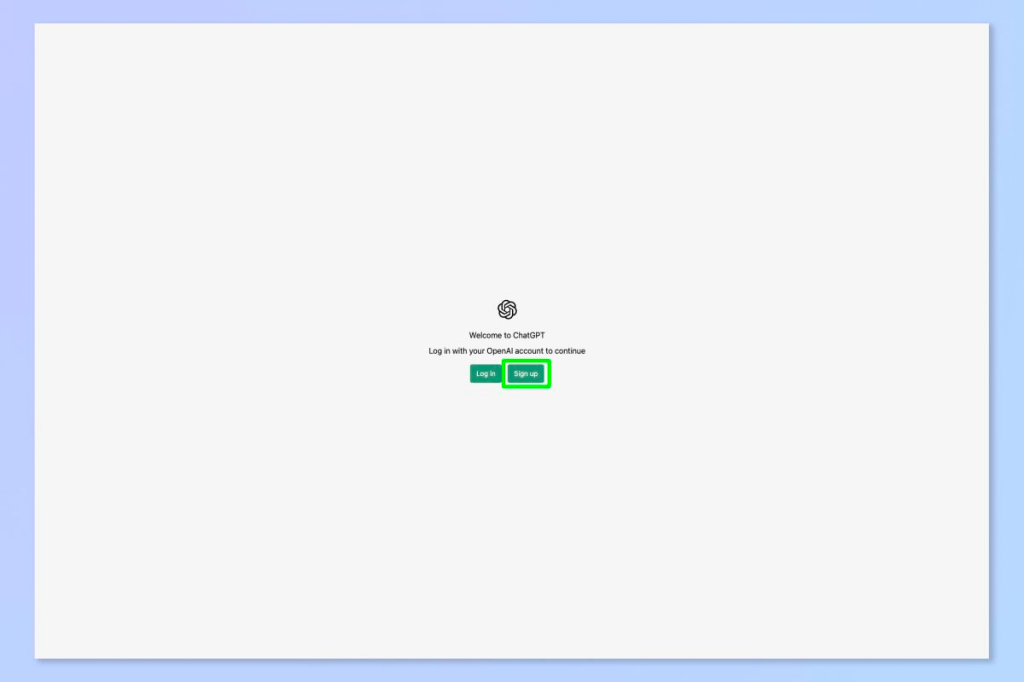
1. Head to chat.openai.com(opens in new tab). You’ll need to have an account to use ChatGPT so either select Log in to use an existing account, or select Sign up to create a new one.

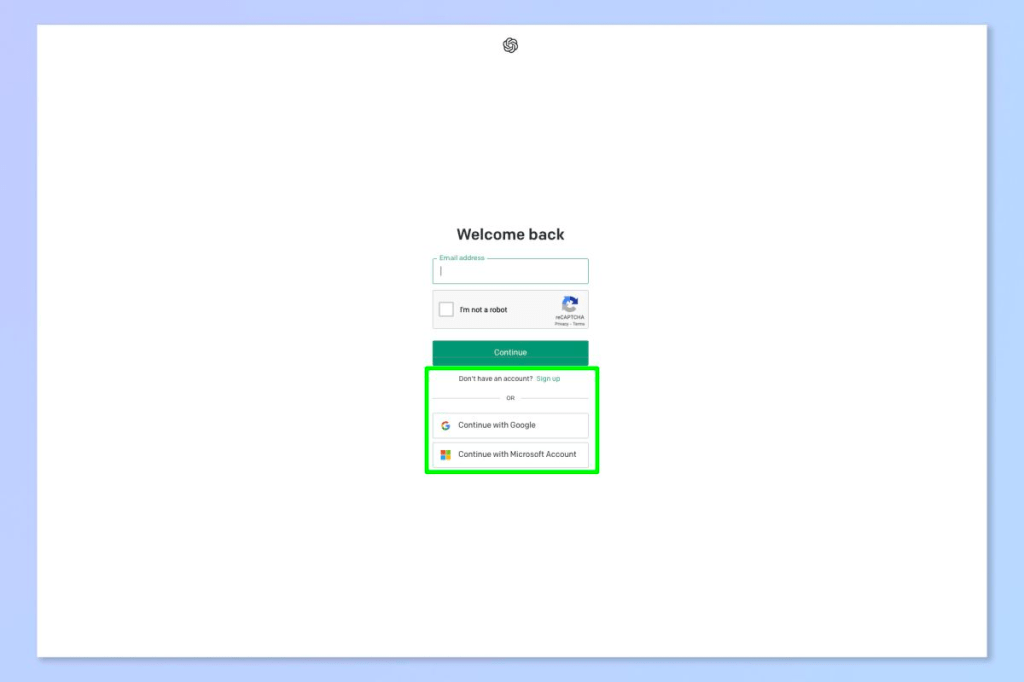
2. Select Sign up again and follow the steps to create an account manually, or select Continue with Google/Microsoft to log in using one of those accounts. Here, we’re using a Google account.

3. Enter your name and select Continue.

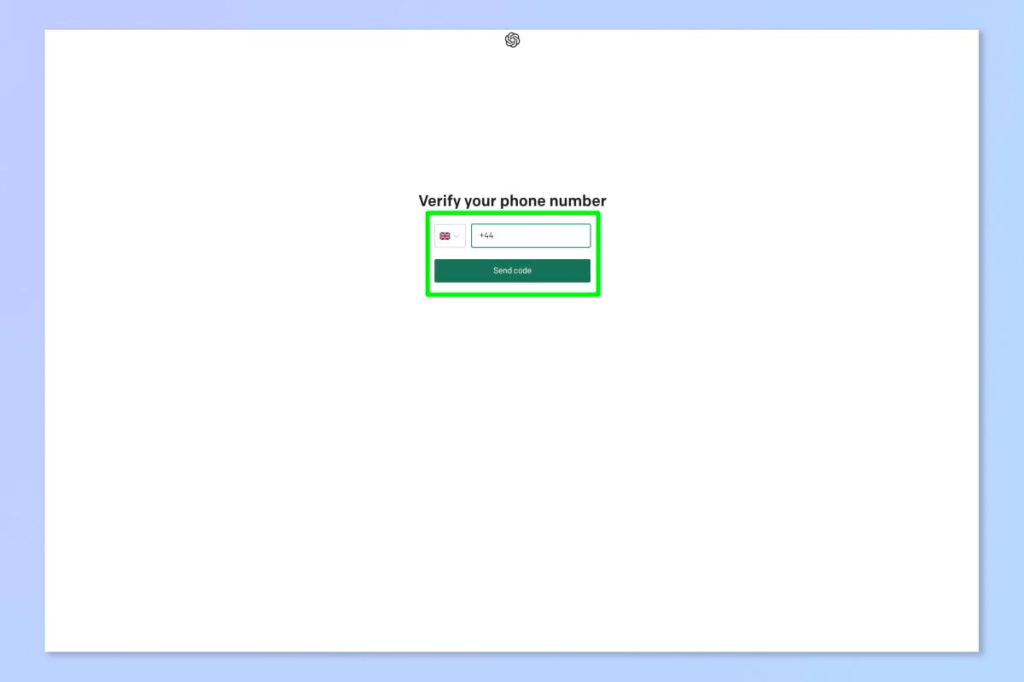
4. You’ll need to link a phone number. Select your region and enter a phone number, then select Send code.

5. Enter the code you receive.

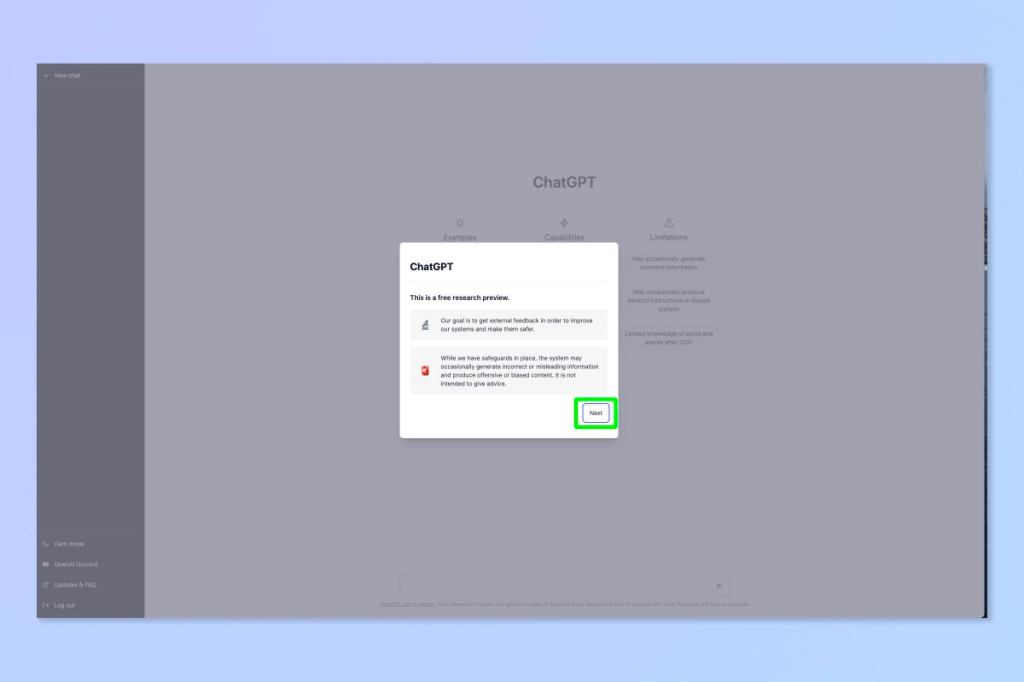
6. You’re in. Read the message that pops up and then select Next.

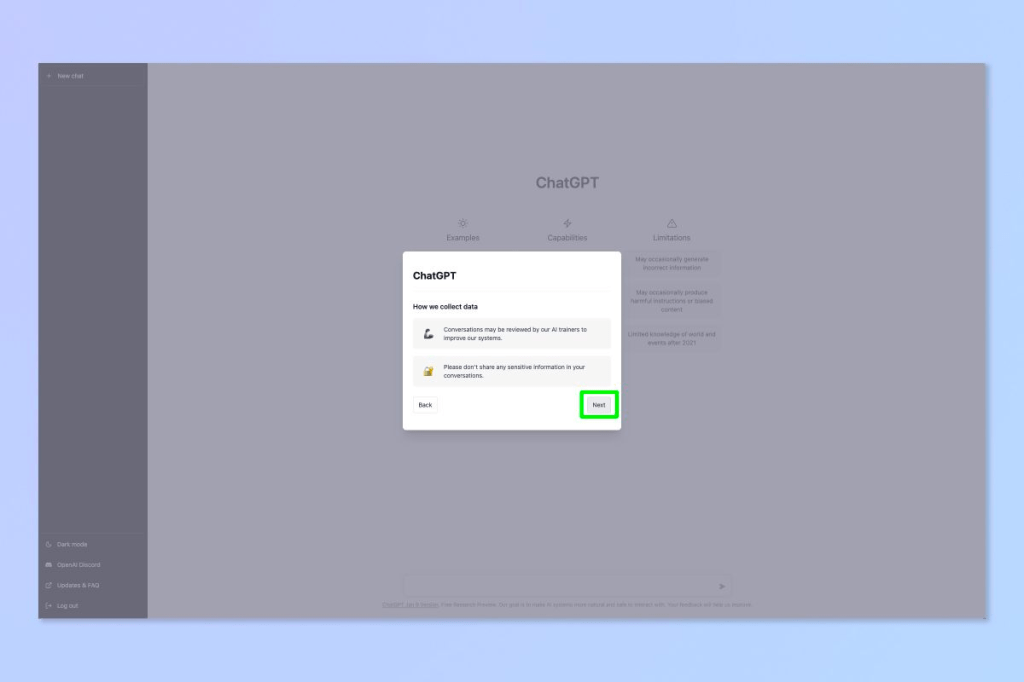
7. Read the second message about data collection and privacy, then select Next.

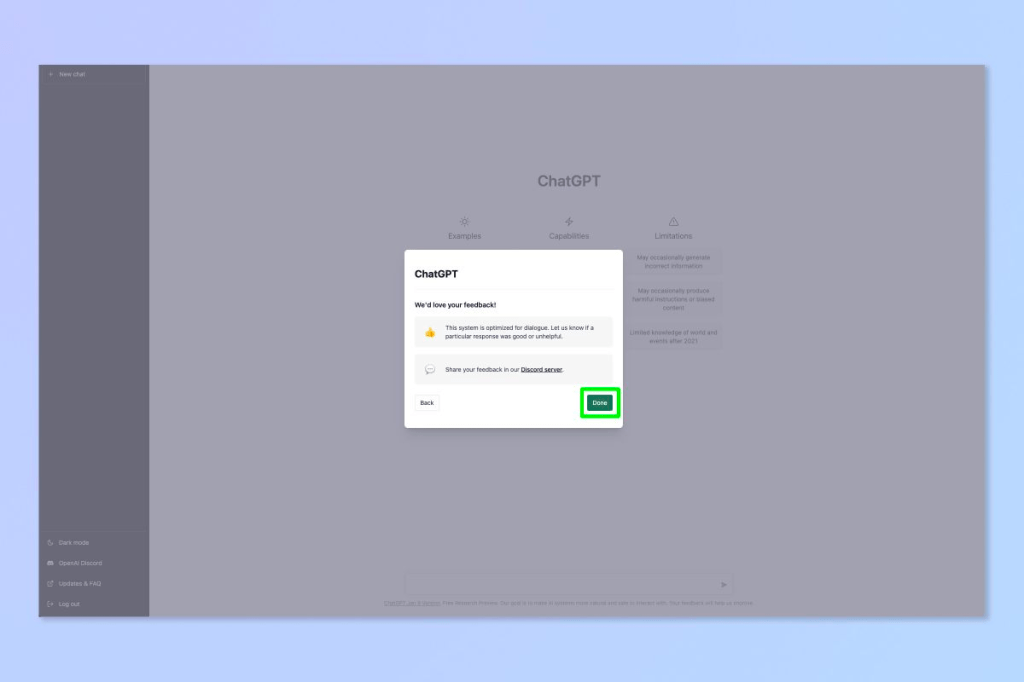
8. Read the third message asking for feedback, then select Done.

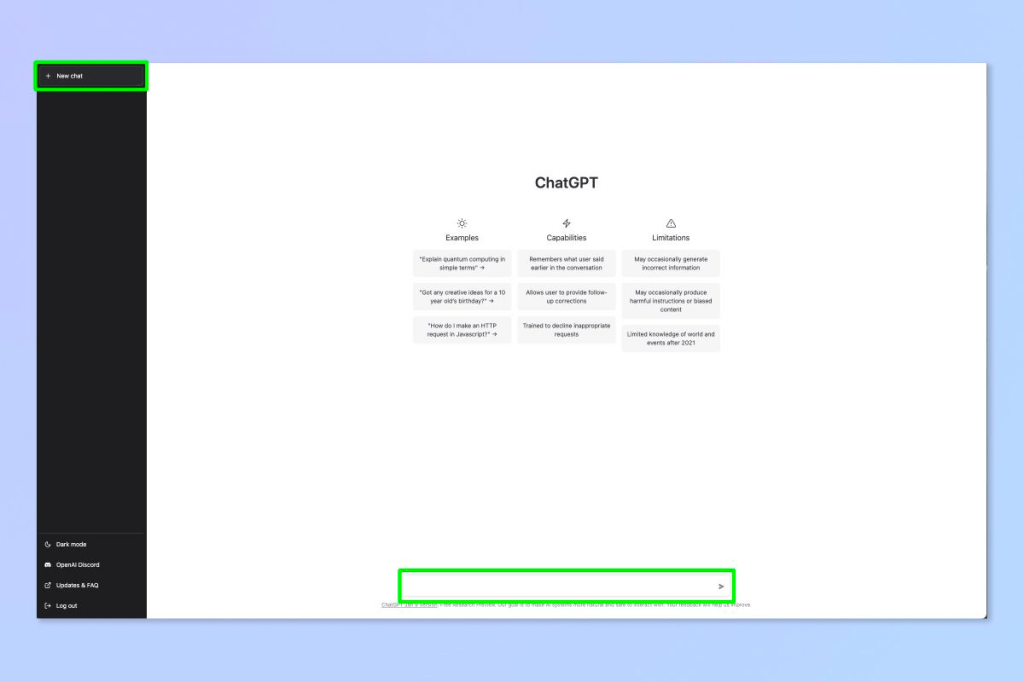
9. Now you’re all set up. Type in a question in the chat box at the bottom to get started. Select New chat in the top left at any time to begin a new conversation. 

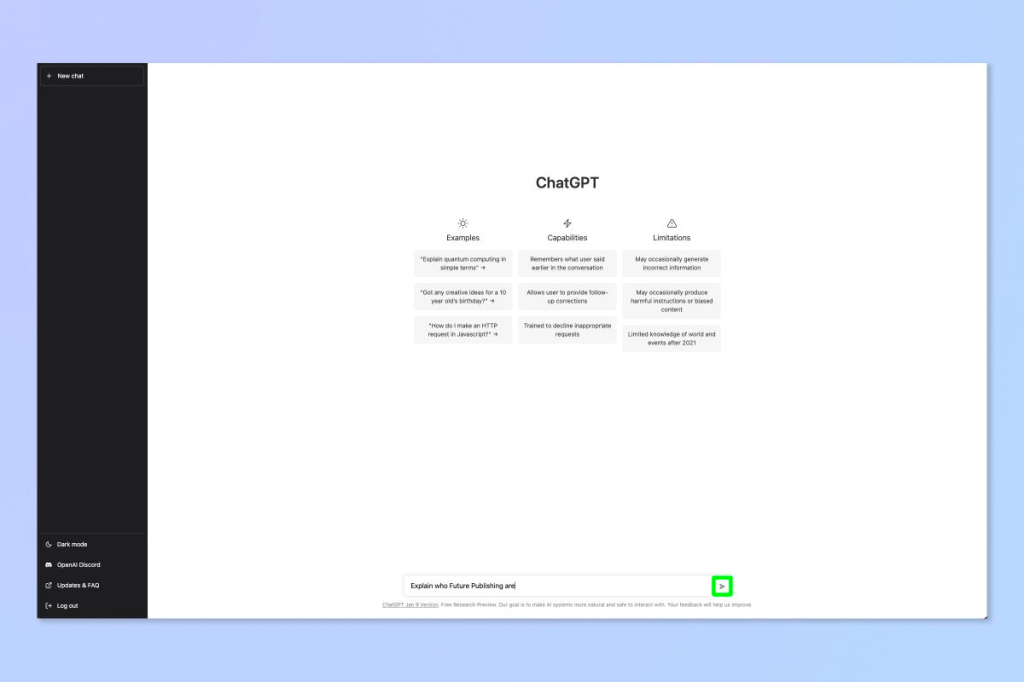
10. Select the send button.

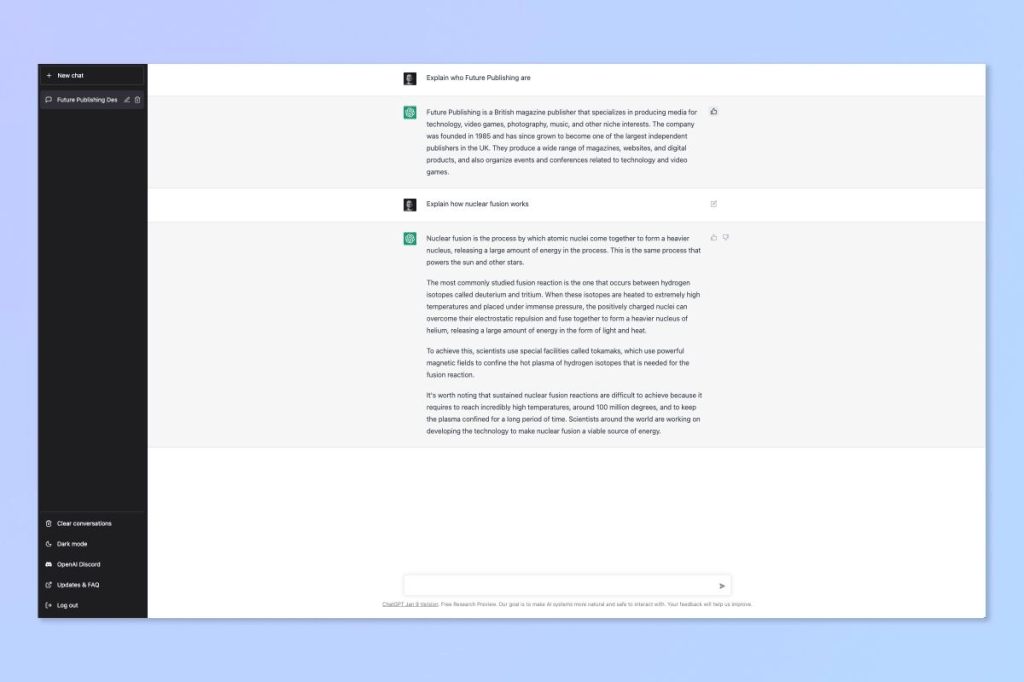
11. See the response. The more complicated your question, the more extensive an answer you’ll receive.

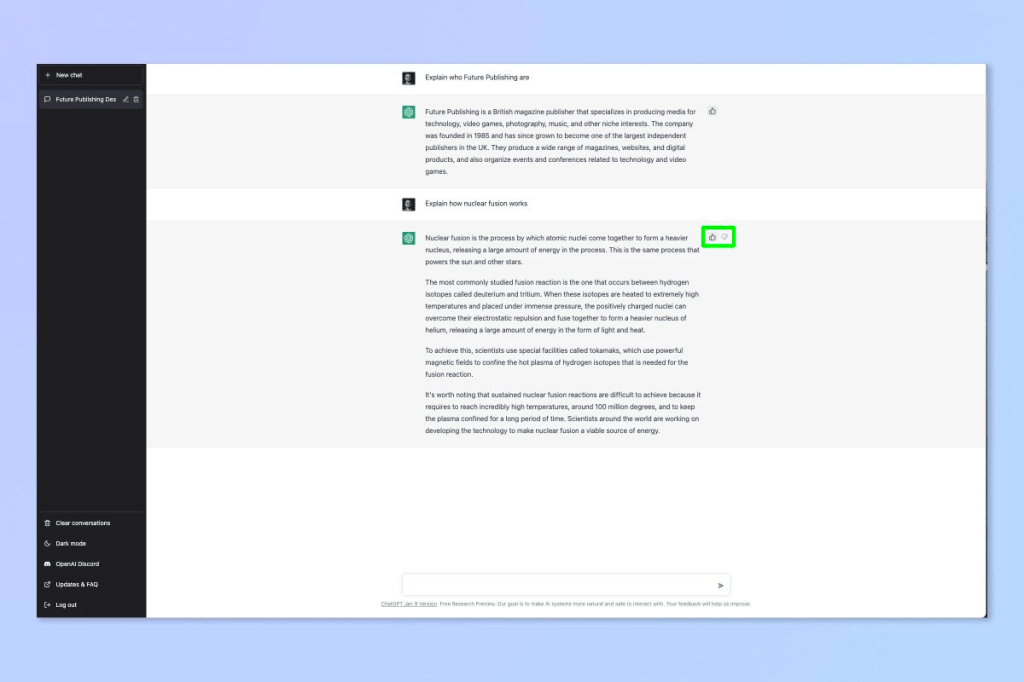
12. OpenAI want feedback for ChatGPT, so select the like/dislike button next to an answer to submit your thoughts.

13. Type your feedback and select Submit feedback.

There you have it — you now know how to use ChatGPT. Enjoy finding out how quantum mechanics works. Bear in mind that ChatGPT will sometimes make stuff up to fill in any gaps it doesn’t know. For that reason, you certainly don’t want to rely on it for any serious work where accuracy is paramount.