
Bitcoin at $63K: The Coiling Spring and What Breaks It This Week

Bitcoin is holding at $63,067. Ethereum sits just below $1,900. XRP is clinging to $1.00 by a thread. Three weeks into August, the crypto market has entered a new phase — not a crash, not a rally, but something arguably harder to trade: a compressed consolidation that is building pressure in both directions simultaneously.

The Fear & Greed Index is at 35, firmly in Fear territory. ETF flows that looked promising at the start of the month have reversed. A White House meeting with crypto executives is scheduled for August 19. And the charts are coiling tighter with every passing session. Here is what the market looks like heading into the week of August 17.

Bitcoin: The $63,000 Battleground

Bitcoin opened Monday at $63,067, essentially flat on the day and down 2.91% on the week. The 24-hour trading volume of $5.46 billion reflects weekend liquidity thinning rather than genuine disinterest — but that thin liquidity is precisely what makes the next directional move dangerous. When volume returns, positions will move quickly.

The technical structure tells a story of compression. Bitcoin is sitting within a narrow band: immediate support at $62,300–$62,500, with a more significant floor at $62,000. Resistance begins at $63,400 and runs to $64,000 — a zone that has rejected every rally attempt since early August. Above that, the 50-day EMA at $64,632 represents the level bulls must reclaim to shift the narrative.

The 200-week simple moving average — historically one of the most watched long-term indicators — is currently sitting in the $63,000–$63,800 zone. Bitcoin is trading directly on top of it. In previous cycles, the 200-week SMA has acted as the ultimate bear market floor; holding above it while compressed in a tight range is a technically neutral-to-cautiously-positive signal. Losing it with conviction would be a different matter entirely.

Prediction market data gives a 91% probability that Bitcoin stays above $62,000 through Monday’s session — but only a 16% chance of breaking above $64,000. The market’s own collective judgment is that this is a holding pattern, not a breakout setup. At least not yet.

On derivatives, the picture carries hidden risk. Binance data shows 67.2% of open accounts are positioned long, creating a 2.05 long-to-short ratio. That level of one-sided positioning is a liquidation trap in waiting — if Bitcoin breaks below $62,300 with any momentum, the cascade of forced long liquidations could accelerate the move faster than the spot price alone would suggest. Funding rates remain subdued at 0.0014% per 8-hour period, which means the cost of holding those longs is low but the exposure is real.

One genuinely bullish signal in the noise: on-chain data shows whale wallets accumulating more than 20,000 BTC in the $63,000 zone over the past week. Large holders buying during a fear-sentiment period is the kind of divergence that has preceded recoveries in previous cycles. It doesn’t mean a recovery is imminent — whale accumulation can persist through further drawdowns — but it does suggest that the $63,000 level has genuine institutional buyers behind it, not just passive holders hoping for better days.

Ethereum and XRP: Different Problems, Similar Ceiling

Ethereum is trading in the $1,880–$1,902 range with immediate support at $1,862 and the critical $2,000 psychological level serving as the ceiling that has capped every attempted recovery since late July. The asset’s RSI has moved back toward neutral after the brief oversold readings earlier in the month, and the price structure is broadly described by analysts as a “decision zone” — the kind of technical setup that either resolves cleanly upward or fails and retests the lower bound of the demand zone at $1,500–$1,600.

Ethereum’s path to $2,000 is not purely technical — it requires a catalyst. The next major one on the calendar is the September 15 CLARITY Act Senate procedural vote, which carries only a 10% probability of passing according to prediction market consensus. ETH’s price has historically been more sensitive to US regulatory developments than Bitcoin’s, given its role as the primary platform for the DeFi and tokenisation ecosystems that are most directly affected by regulatory clarity. A September pass would be a genuine ETH catalyst. A September fail extends the regulatory uncertainty well into Q4.

XRP enters the week in what analysts are calling “its most fragile position since June.” The $1.00 psychological level is the immediate battleground, with the asset trading in a $0.95–$1.05 range after multiple failed breakout attempts. Below $0.95, the next meaningful support sits at $0.80 — and beneath that, the longer-term downside target sits at $0.50–$0.65, a level most XRP holders would prefer not to contemplate. Institutional inflow weakness into XRP-related products is adding pressure; the asset lacks the ETF infrastructure that has cushioned Bitcoin during the August consolidation.

ETF Flows: The Reversal That Matters

The most significant development of the past week is the reversal in Bitcoin ETF flows. Through August 7, the ETF complex had posted $853.5 million in net inflows — a number that supported the narrative of institutional buying on dips. Then, over three consecutive trading days through August 15, that number reversed: approximately $57.63 million in net outflows.

The reversal is not yet large enough to be alarming in absolute terms. $57 million in outflows against $853 million in inflows is a rounding error. But the direction matters. ETF flows have been one of the few reliable bullish signals throughout the August consolidation, and their reversal — even temporarily — removes a psychological floor from the market. When institutional products are net selling, retail sentiment tends to follow.

The pattern to watch: if outflows reverse and inflows resume this week, particularly from BlackRock’s IBIT, the consolidation range may hold. If outflows continue through the August 19 White House meeting without reversal, pressure on the $62,000 support floor will build.

The August 19 White House Meeting

On Wednesday, crypto executives are scheduled to meet with White House officials to discuss policy clarity — specifically around the regulatory classification framework that the CLARITY Act was meant to provide before its Senate stall. The meeting itself is unlikely to produce binding outcomes, but the market reads these signals carefully.

The question is whether the White House signals continued support for the legislative path — pushing for a September vote — or pivots toward executive action on specific issues like stablecoin oversight and ETF expansion. Any indication of accelerated regulatory clarity, even via executive order rather than legislation, would be a near-term bullish catalyst. A vague statement of support with no concrete timelines would likely be received as neutral-to-slightly-negative by a market that has heard a lot of political support without legislative follow-through.

The SEC’s recent delay on its tokenisation exemption framework has already soured sentiment around regulatory timelines. The White House meeting is the next opportunity to reset that sentiment in either direction.

The Technical Divergence Worth Watching

Bitcoin’s daily MACD remains slightly bearish — consistent with the short-term consolidation and pressure. But its weekly MACD turned bullish in mid-July and has held that reading. That timeframe divergence — bearish daily, bullish weekly — is the key tension in the current setup.

In previous cycles, this kind of divergence has resolved toward the longer timeframe: the weekly trend eventually reasserts, daily bearish momentum exhausts itself, and a move higher follows. That is the bull case for the remainder of August. The bear case is that weekly indicators can deteriorate if the daily selling pressure persists long enough — and a sustained break below $62,000 would threaten to flip the weekly picture negative.

The compression itself is the signal. Volatility contraction — Bitcoin trading in an increasingly narrow range — historically precedes a directional expansion. The longer the compression lasts, the more violent the eventual resolution tends to be. The market is coiling. The question of which direction it uncoils in is one that the August 19 meeting, the ETF flow data, and the $62,000 support level will collectively answer over the next seven to ten days.

What to Watch This Week

$62,000 support. The line in the sand for bulls. A clean hold with no intraday wick below $61,500 keeps the consolidation thesis intact. A sustained break below $62,000 with rising volume opens the door to $59,000–$60,000.

ETF flow direction. Watch for whether Monday and Tuesday’s ETF data reverses last week’s outflow trend. Three consecutive outflow days is noise; five or more is a trend worth taking seriously.

The August 19 White House meeting. The tone and specificity of any post-meeting statements will move the market. Watch for concrete timelines on CLARITY Act support or executive actions on stablecoin frameworks.

Ethereum at $1,900. A daily close above $1,900 for the first time since late July would be a meaningful technical signal — not a recovery confirmation, but a first step toward one.

The crypto market in August 2026 is not broken. It is not in freefall. It is waiting — for a catalyst, for a vote, for a policy signal, for an ETF flow reversal. The infrastructure is in place: the whales are accumulating, the stablecoin dry powder remains on the sidelines at $183 billion in Tether market cap alone, and the weekly technical picture has not turned negative. What the market lacks is a reason to move. This week may provide one.


Sources: Sunday Guardian Live · CoinStats · Intellectia AI

Built for Machines: How the Race to Rewire Blockchain for AI Agents Is Reshaping Crypto in 2026

By March 2026, AI agents had executed more than 15 million transactions on public blockchains. Not 15 million instructions. Not 15 million simulated trades in a backtesting environment. Fifteen million real, settled, on-chain transactions — initiated by software, signed by software, confirmed by software — with no human finger tapping a screen at any point in the chain.

That number is both a milestone and a signal. For most of its fifteen-year existence, blockchain was built around a single assumption: the user is a person. Wallets were designed for human memory. Transaction confirmation times were calibrated to human patience. Gas fees were priced for human budgets. In 2026, those assumptions are being torn out and replaced, because the fastest-growing segment of crypto’s user base does not sleep, does not hesitate, and cannot wait 450 milliseconds for a block to confirm.

The AI agent economy has arrived on-chain — and it is forcing a complete reimagination of what blockchain infrastructure needs to look like.


From $9 Billion to $27 Billion in Eighteen Months

The numbers behind the AI agent sector in crypto tell a story of explosive — if volatile — growth. At the start of 2025, the combined market capitalization of crypto AI agent projects sat at roughly $9 billion. By May 2026, that figure had climbed to between $22.6 billion and $27 billion, depending on how broadly you define the category. That is a tripling of sector value in less than 18 months, through a macro environment that has been anything but friendly to speculative assets.

The correction along the way was sharp. In Q1 2026, the sector shed 16% in a single drawdown that wiped out hundreds of zero-usage tokens and left only 919 active projects standing. Analysts who cover the space largely viewed this as healthy consolidation — the weakest projects went to zero, while the protocols with actual on-chain activity held their ground.

Those with real activity include some genuinely large numbers. Virtuals Protocol, which has deployed more than 14,000 AI agent tokens, carries a market cap above $5 billion. Bittensor (TAO), the decentralized network for AI services, generated $43 million in revenue in Q1 2026 alone and trades at a market cap of $3.2 to $3.4 billion. The broader DeFAI category — decentralized finance meets artificial intelligence — comprises approximately 177 tokens with a combined market cap approaching $692 million.

These are not speculative moonshots awaiting some future use case. The usage is happening right now, and the infrastructure being built to support it is where the most significant long-term story lies.


The Infrastructure Problem: Blockchains Were Not Built for This

Here is the core engineering challenge: the blockchain stack that humans built for humans performs poorly when the users are machines operating at machine speed.

Consider what an AI agent running an autonomous DeFi strategy actually needs. It needs real-time address intelligence with confirmation lag measured in single blocks, not minutes. It needs historical data access going back to the genesis block. It needs to simulate transactions before execution to avoid costly errors. It needs webhook-driven event pipelines that can alert it to on-chain changes in under 100 milliseconds. And it needs to manage wallets across fifteen or more blockchains simultaneously without ever exposing a private key to an internet-connected system.

Traditional blockchain applications were built for none of these things. They were built for a human who opens a browser, connects a MetaMask wallet, approves a transaction, and waits a few seconds for confirmation. That user experience is utterly incompatible with an autonomous agent executing hundreds of micro-decisions per hour.

The crypto industry has spent much of 2026 trying to close that gap, and the solutions coming online are substantial. Two new Ethereum standards — EIP-7702 and ERC-7521 — are central to the effort. EIP-7702 grants AI agents session-based transaction permissions without requiring them to hold or expose private keys, solving one of the most serious security problems in agentic crypto. ERC-7521 introduces intent-based smart-contract wallet standards, allowing agents to express what outcome they want rather than specifying every step of how to achieve it. Intent-solver networks built on these standards accumulated $4.1 billion in cross-chain volume over a single 90-day period.


Big Tech Bets: AWS, Coinbase, and Stripe Build the Payment Rails

The most consequential infrastructure announcement of the year came not from a crypto-native startup but from Amazon Web Services. In a move that signaled just how seriously traditional cloud computing is taking the agentic economy, AWS launched Amazon Bedrock AgentCore Payments in partnership with both Coinbase and Stripe.

The product targets sub-$1 microtransactions settled on Base and Solana using USDC stablecoins. The target customer is any developer building an AI agent that needs to pay for things — API calls, compute time, data subscriptions, on-chain actions — without the friction of human authorization at each step. Rather than the agent calling a human to approve a $0.003 payment, it simply pays, instantly, using stablecoins embedded at the infrastructure level.

The underlying mechanism is the x402 protocol, which repurposes HTTP status code 402 (“Payment Required”) to embed stablecoin payment logic directly into standard web requests. An agent hits an API endpoint, the endpoint responds with a 402 and a payment address, the agent pays in USDC, and the API delivers the response — all in a single automated exchange. In its peak week, the x402 protocol processed 500,000 payments. Stripe launched its machine payments product on the Base network on February 11, 2026; MoonPay followed with its own non-custodial agent trading layer on February 24.

Illia Polosukhin, co-founder of the NEAR Protocol, summarized the emerging architecture concisely: “AI is going to be on the front-end, and blockchain is going to be the back-end.” What once seemed like a provocative prediction is, by mid-2026, starting to look like a straightforward description of what is already being built.


BNB Chain’s 100K TPS Bet and the Layer-1 Arms Race

If the payment layer is being rebuilt by big tech, the settlement layer is being rebuilt by the blockchains themselves. In July 2026, BNB Chain announced plans for an entirely new Layer-1 blockchain, running alongside — not replacing — the existing BNB Smart Chain, purpose-built for AI agent workloads.

The performance targets are striking. The new chain aims for more than 100,000 transactions per second — approximately 19 times Bitcoin’s current capacity — with transaction confirmation under 50 milliseconds and block finality under one second. For context, BNB Smart Chain currently achieves 5,200 TPS with 450-millisecond block confirmation, figures that represent a near-doubling of throughput achieved through four technical upgrades in H1 2026 alone.

The most architecturally novel element of the new chain is TxStream, which eliminates public mempools entirely. In conventional blockchain design, unconfirmed transactions sit in a public mempool waiting to be picked up by validators — a window of transparency that MEV (maximal extractable value) bots exploit to front-run profitable trades. TxStream routes transactions directly to block leaders, closing that window and making the network significantly more hostile to the predatory bots that have extracted billions from ordinary users on other chains. The testnet is expected in late 2026, with mainnet targeting early 2027.

BNB Chain is not alone in this race. Multiple platforms — including Tempo, a specialist AI agent execution layer, and protocols leveraging Coinbase’s agent trading infrastructure — are competing to become the default settlement rails for autonomous finance.


Institutions Are Already Inside: 95% of Crypto Hedge Funds Have Gone Agentic

Perhaps the most startling data point from 2026 is the speed of institutional adoption. By April 2026, 95% of crypto-focused hedge funds had adopted agentic AI architectures — meaning their investment operations are now partly or substantially run by AI systems capable of autonomous decision-making. Across institutional trading desks, AI agents are estimated to drive approximately 58% of automated investment decisions.

Chainalysis, the blockchain intelligence firm, launched its own suite of blockchain intelligence agents at its annual Links conference in March 2026 and began rolling them out over the summer. The agents handle investigation workflows that previously took compliance teams days, compressing them into minutes. They automate alert enrichment, generate structured intelligence reports on demand, and run multi-agent monitoring systems across dozens of wallets simultaneously. Crucially, the firm built them around four principles: data quality, contextual reasoning, auditable results, and maintained human control — reflecting an understanding that for regulated institutions, a black-box agent is not an acceptable compliance tool.

Separately, AI agents now account for more than 30% of trading volume on Polymarket, the prediction market platform, a figure that underscores how broadly the trend extends beyond pure DeFi into adjacent corners of the on-chain economy.


What This Means for You

If you hold crypto, trade on-chain, or simply watch the space, the shift toward an AI-native blockchain ecosystem affects you in several concrete ways.

Fee environments will change. As AI agents become high-volume, low-margin users of block space, the economics of gas fees will be pressured. Chains optimized for machine traffic may price block space differently than those designed for human retail users. On some networks, human transaction fees may rise during peak agent activity — a dynamic already occasionally visible on Ethereum.

MEV will mutate. The front-running bots that currently extract value from human traders will increasingly find themselves competing with — or being replaced by — far more sophisticated AI adversaries. Networks like BNB Chain’s upcoming Layer-1 are explicitly designing against this threat, but on chains that do not, the arms race between offensive and defensive AI agents will intensify.

New asset classes are emerging. Grayscale and Bitwise have both filed for spot Bittensor (TAO) ETFs, following the template established by spot Bitcoin ETFs that attracted $12 billion in first-year inflows. If approved, these products would give traditional investors direct exposure to the AI agent economy without touching a crypto wallet — broadening the investor base and potentially importing significant institutional capital.

The long-term scale is hard to overstate. McKinsey projects agentic commerce will reach $3 to $5 trillion globally by 2030. PwC estimates AI agents could contribute $2.6 to $4.4 trillion annually to global GDP. Capgemini forecasts the enterprise agentic AI market alone at $47 billion by 2030, growing at a 44% compound annual rate. Whether those numbers prove right or optimistic by a factor of two, they describe an economy in which the financial rails for machine-to-machine value transfer become critically important infrastructure — and those rails are being built, right now, on public blockchains.


A New User Class, A New Blockchain

Fifteen million transactions. Ninety-five percent institutional adoption. A $27 billion sector built in eighteen months. A new Layer-1 targeting 100,000 TPS. Amazon, Coinbase, and Stripe jointly building payment infrastructure for autonomous agents. These are not predictions about what crypto might become — they are descriptions of what it already is.

The blockchain that emerges from this transition will look substantially different from the one that existed even two years ago. It will be faster, more deterministic, more hostile to human-readable mempools, and optimized for counterparties that measure in microseconds rather than minutes. Human users will still be present — as token holders, as governance participants, as the beneficiaries of yields generated by machine strategies. But as users in the transactional sense, humans are already being outnumbered.

The machines built the internet. Now they are building the financial layer on top of it. Whether that turns out to be something to celebrate or something to manage carefully, the construction is already underway.


Sources:

The Regulator Switch: How the SEC’s Canceled Vote Is Quietly Handing Crypto to the CFTC

One day before it was scheduled to happen, the U.S. Securities and Exchange Commission quietly canceled the most consequential vote it had planned all year. No rescheduling date was announced. No public explanation beyond “an unforeseen scheduling issue.” On August 14, 2026, the SEC’s proposed Regulation Crypto — a framework that would have created formal legal pathways for token fundraising for the first time in U.S. history — simply did not happen.

The cancellation landed the same week the U.S. Senate’s summer recess swallowed the Digital Asset Market Clarity Act, the broader legislative vehicle that would have sorted thousands of digital tokens between SEC and CFTC jurisdiction once and for all. Together, these two non-events are shaping the most important regulatory question in crypto’s near-term future: if neither the SEC nor Congress is setting the rules, who will?

Increasingly, the answer is the Commodity Futures Trading Commission — an agency operating with a single sitting commissioner that is nonetheless positioning itself as crypto’s primary federal overseer.

What Regulation Crypto Would Have Changed

Regulation Crypto — formally listed as RIN 3235-AN38 in the federal rulemaking registry — was not a small tweak to existing securities law. It proposed three distinct exemption pathways that would have fundamentally restructured how crypto projects raise money in the United States.

The startup exemption would have allowed projects to raise up to $5 million over four years using whitepaper-style disclosures, far simpler than the prospectus requirements of traditional securities offerings. The fundraising exemption raised that ceiling to $75 million annually, conditioned on audited financial statements. Most significantly, the decentralization safe harbor would have removed tokens meeting specific “sufficient decentralization” criteria from SEC jurisdiction entirely — essentially creating a legal off-ramp from securities law once a network reached maturity.

The framework’s principal architect was Commissioner Hester Peirce, known in the industry as “Crypto Mom” for her years of advocacy for clear token-offering rules. Which makes the timing of the cancellation particularly pointed: Peirce is expected to leave the SEC for Regent University School of Law in November 2026. Her departure will reduce the commission from three to two active members — a configuration that legal analysts say makes finalizing any major rulemaking legally precarious in the current post-Chevron environment, where courts apply “arbitrary and capricious” review to agency actions with unusual rigor.

The SEC did not withdraw Regulation Crypto. It remains on Reginfo.gov under active review. But with no rescheduled vote and a shrinking commission, the window for SEC-led token regulation is narrowing fast.

The CLARITY Act: Stalled, Not Dead

The legislative backdrop makes the SEC’s retreat even more consequential. The Digital Asset Market Clarity Act — 616 pages of bipartisan legislation that passed the House 294-134 in July 2025 and cleared the Senate Banking Committee 15-9 in May 2026 — missed its August 10 floor vote when the Senate left for its state work period recess without a final vote.

Senate Majority Leader John Thune had publicly committed to a pre-recess vote as recently as August 3. Instead, the chamber filed a cloture motion on August 8 — a procedural step that limits debate but doesn’t guarantee a floor vote — and adjourned. That cloture motion preserves a September 15 procedural vote, but that vote only determines whether debate can begin; it does not pass the bill.

The bill’s three unresolved disputes explain why momentum stalled. Ethics provisions: Democrats demanded conflict-of-interest language after the president’s $1.4 billion crypto-related income disclosure became a flashpoint; the July 22 Republican draft bars federal officials from issuing digital assets while in office, but only through January 20, 2029, with no retroactive penalties. DeFi developer liability: Section 604 shields non-custodial developers from money-transmitter requirements — a provision some Democrats view as an illicit-finance loophole. Stablecoin yield rules: banks want restrictions on exchange-paid crypto rewards; crypto firms oppose them.

Prediction market platform Polymarket now assigns approximately 21% odds to CLARITY Act passage before year-end. Galaxy Research had estimated 50-50 odds as recently as July. Analysts across the board agree that missing the August recess deadline pushes comprehensive legislation to mid-2027 at the earliest, with operational provisions unlikely to take effect before late 2027.

The 16 tokens that would be reclassified as “digital commodities” under CFTC jurisdiction — including Ethereum, Solana, XRP, Cardano, Chainlink, Avalanche, and Polkadot — remain in legal limbo.

The CFTC Moves Into the Vacuum

While the legislative and rulemaking machinery stalls, the CFTC is moving with uncharacteristic speed. The agency is operating with just one sitting commissioner — Michael S. Selig — despite a statutory structure that calls for five. That skeletal leadership hasn’t stopped it from acting.

In May 2026, the CFTC approved the first crypto perpetual futures contract, establishing that perpetuals — derivative instruments that track asset prices without expiration dates and that dominate offshore crypto trading — constitute valid futures under U.S. law. The approval came with 24/7 trading guidance, a direct acknowledgment that crypto markets don’t respect market hours.

This week brings further signals of the CFTC’s expanding ambitions. On August 19, the White House is scheduled to convene a roundtable with digital asset executives — an event that industry sources describe as an informal preview of the administration’s position on the SEC-CFTC jurisdiction question. The following day, August 20, the CFTC holds its inaugural Innovation Advisory Committee session, titled “Crypto’s Regulatory Evolution: From Uncertainty to Clarity.” The 35-member committee includes representatives from Coinbase, Ripple, Gemini, and Solana Labs, and its mandate covers digital assets, AI agents, and prediction markets.

The March 2026 Memorandum of Understanding between the SEC and CFTC — committing both agencies to “clarify, coordinate, and harmonize” digital asset policies across six regulatory areas — now reads less like cooperation and more like a quiet handoff. The SEC’s own June 2026 Draft Strategic Plan elevated digital assets to the agency’s top regulatory priority while simultaneously softening the language around enforcement-first approaches. The CFTC, meanwhile, has been consistently expanding its no-action relief, including March 2026 guidance protecting self-custody wallet providers that offer access to regulated derivatives.

The Investor Protection Gap You Should Know About

Here is where the SEC-to-CFTC shift has a direct, practical consequence for ordinary crypto holders — and it isn’t favorable to investors.

Under securities law, investors have an express private right of action for material misstatements. Section 11 of the Securities Act allows anyone who bought a registered security to sue if the offering document contained false information — and critically, they don’t need to prove fraudulent intent. The issuer bears the burden of proof.

Under commodities law, no comparable private right of action exists for spot market transactions. If a token project misrepresents its technology, its team’s credentials, or its treasury holdings, and that token is classified as a digital commodity under CFTC jurisdiction, retail investors have significantly fewer legal tools to recover losses. The CFTC can pursue enforcement actions — but it cannot grant individual investors the same class-action leverage that securities law provides.

Critics of the regulatory shift, including several Senate Democrats who have blocked CLARITY Act cloture, argue this gap is not a technical detail but a policy choice: lighter regulatory burden for industry, lighter protection for the people buying the assets. Proponents respond that lower compliance costs allow smaller projects to raise capital without the legal overhead that currently forces most token launches offshore.

What This Means for You

If you hold crypto assets or are considering entering the market, the regulatory picture as of mid-August 2026 looks like this:

  • Tokens remain in legal limbo. Without CLARITY Act passage, the SEC-vs-CFTC classification of most major tokens is still determined case by case, through enforcement actions and court rulings rather than published rules. Ethereum has operated under informal CFTC commodity treatment since the Merge, but that status is not codified.
  • Token fundraising rules are delayed. Regulation Crypto’s safe harbor framework — which would have given U.S. projects a legal path to raise from retail investors — has no new timeline. Projects seeking to fundraise domestically are still operating in the same ambiguous environment they’ve faced for years.
  • The CFTC’s expanded mandate benefits derivative traders most immediately. The perpetual futures approval is significant for institutional and sophisticated retail traders; it doesn’t directly change what you can do with spot Bitcoin or Ethereum today.
  • September 15 matters. The procedural cloture vote on the CLARITY Act will be the first real signal of whether the bill can gather the 60 votes it needs. Watch that date.
  • Hester Peirce’s departure clock is running. If the SEC is going to finalize Reg Crypto with its original safe harbor provisions, it needs to do so before November. After that, the commission’s composition and legal vulnerability change substantially.

For most retail holders, the practical advice is unchanged: the regulatory environment affects where and how projects launch, not whether Bitcoin or Ethereum remain accessible. But it does affect the legal recourse you have if a project you invest in turns out to be fraudulent — and that is a detail worth understanding before you invest.

A Slow-Motion Handoff with High Stakes

When the SEC canceled its Regulation Crypto vote with 24 hours’ notice on August 14, the move barely registered as headline news. The same week already carried the CLARITY Act stalling, the August market volatility, and the ongoing noise from the Coldcard exploit fallout. It’s the kind of bureaucratic non-event that gets buried under more dramatic stories.

But the cancellation, combined with the CLARITY Act’s September limbo and the CFTC’s accelerating agenda, signals something more structural: a slow-motion handoff of crypto oversight from the SEC’s investor-protection-first securities framework to the CFTC’s market-integrity-first commodities framework. That shift has been building since early 2025. The events of this week made it visible.

Whether the September 15 cloture vote changes the trajectory depends on whether seven Democrats cross the aisle to vote for debate on a bill whose ethics provisions they consider insufficient. If they don’t, the CFTC’s informal expansion of jurisdiction will continue — not as a planned policy outcome, but as the default result of institutional inertia filling a legislative vacuum. Crypto’s regulatory fate, in other words, may ultimately be decided not by a landmark bill signing, but by a series of things that simply didn’t happen on schedule.


Sources:
TechTimes — SEC Cancels Reg Crypto Vote: CFTC Steps Up as Power Over Digital Assets Shifts
Tech Insider — CLARITY Act Status August 2026: Where Crypto Regulation Stands
Latham & Watkins — U.S. Crypto Policy Tracker: Regulatory Developments
Norton Rose Fulbright — SEC and CFTC Issue Joint Interpretation on Crypto Asset Regulation
DL News — Key Dates for U.S. Crypto Regulation in 2026

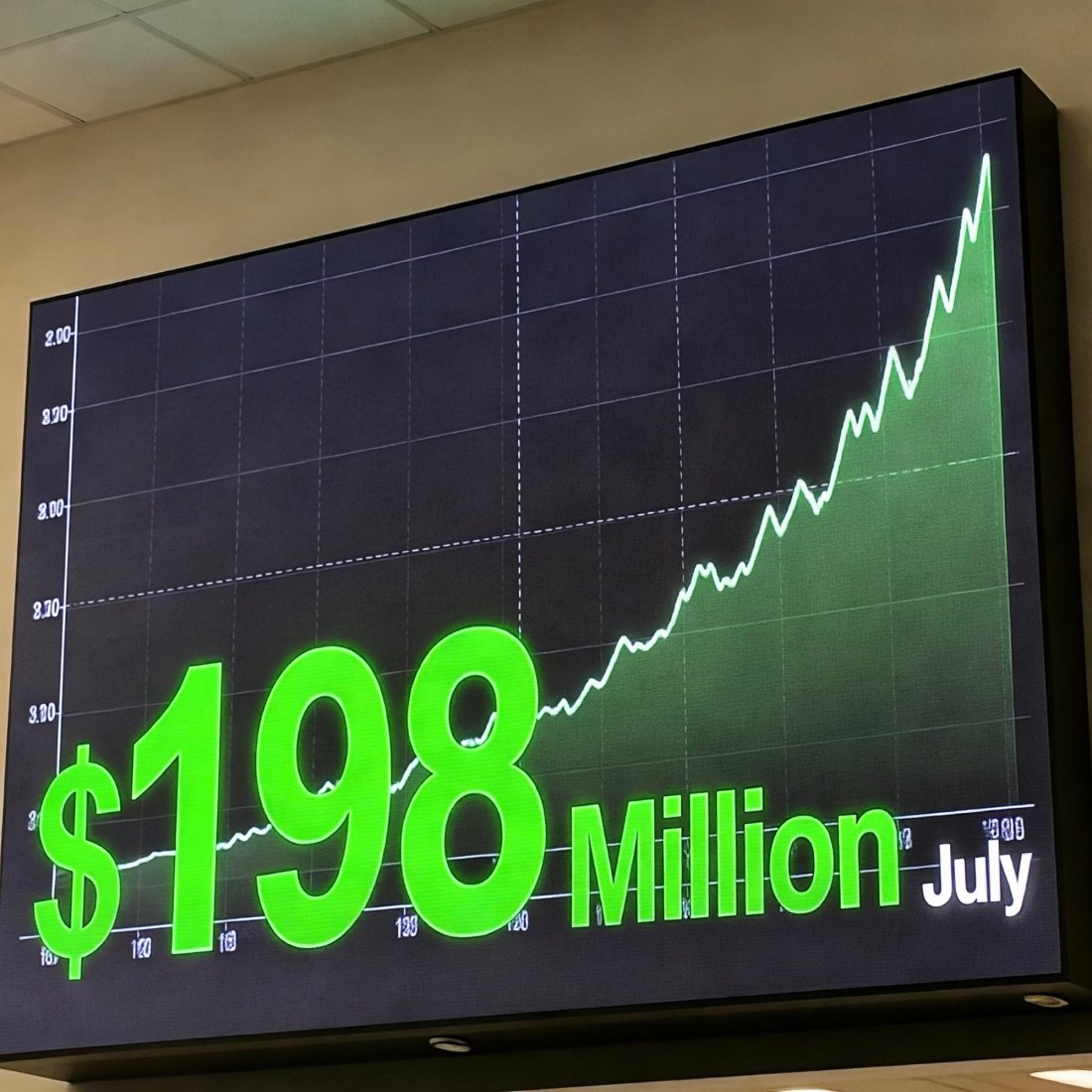
The $198 Million July: How Key Compromise Became Crypto’s Deadliest Attack Vector in 2026

July 2026 ended with $198.8 million gone from the crypto ecosystem in a single month — 35 separate incidents, 35 sets of victims, and one pattern connecting almost every major loss: the attackers never needed to break a smart contract. They broke the people, the keys, and the infrastructure underneath.

The headline grabber was the Coldcard firmware flaw, which drained 1,196 Bitcoin wallets for $70.2 million in 41 minutes on July 30. But strip that out and you still have $128 million lost to bridge exploits, oracle manipulation, and compromised signing keys over the same 31 days. July 2026 did not mark a spike in crypto theft so much as a reckoning with a structural problem the industry has spent years failing to address: it secured the code but left everything else exposed.

The Numbers That Should Alarm Everyone

Blockaid’s post-incident analysis of July’s losses broke the damage into three buckets: wallets and key infrastructure accounted for $106.7 million (54% of total losses), DeFi protocol exploits for $49.7 million (25%), and bridge exploits for $42.4 million (21%). That distribution is striking for what it reveals about where the real danger now lives in crypto.

In 2021 and 2022, the dominant attack vector was smart contract bugs — flash loan attacks, re-entrancy exploits, logic flaws baked into protocol code. The industry responded with billions of dollars in audit spend, formal verification, and bug bounty programs. Those efforts largely worked. Smart contract exploitation as a percentage of total crypto theft has fallen sharply. But attackers adapted, and the new target is everything that a smart contract depends on to function: validator keys, private key infrastructure, oracle feeds, and the off-chain systems bridging one chain to another.

“Most 2026 losses come from compromised keys and operational security failures, not smart contract bugs,” Blockaid’s CEO noted in the July security roundup. That single sentence represents a fundamental shift in how the industry needs to think about defense.

The AFX Trade Hack: When the Code Did Everything Right

On July 22 at 21:30 UTC, an attacker drained $24.15 million in USDC from AFX Trade, an Arbitrum-based perpetuals exchange, through its cross-chain bridge. What makes the incident instructive is that the smart contract performed flawlessly throughout. It validated the signatures it received, checked the required thresholds, and processed the transaction exactly as designed. The fraud happened before a single line of on-chain code ever executed.

The AFX bridge operated on a 7-validator multisignature scheme, with 10,000 voting units distributed unevenly across validators and a two-thirds approval threshold (6,667 units) required to authorize transfers. The attacker obtained private keys from five of the seven validators, giving them control of 7,142 voting units — enough to unilaterally approve any transaction they chose.

A 200-second dispute window existed in the protocol design to catch fraudulent withdrawals. It elapsed without intervention. The stolen USDC was converted to 12,467.5 ETH and moved to a single attacker-controlled address. AFX subsequently offered the attacker a white-hat settlement — keep 30%, return 70% — a resolution structure that has become grimly routine in the industry.

Halborn, the security firm that analyzed the incident, summarized the lesson bluntly: “The smart contract worked as designed, verifying the transaction’s signatures (which were legitimate) while the vulnerability existed in off-chain key management.” In other words, the protocol’s security was only as strong as the weakest workstation holding a validator key.

The Verus Bridge: A Vulnerability on Repeat

One day after the AFX hack, on July 23, the Verus-Ethereum bridge was drained for $7.54 million in ETH, USDC, and wrapped Bitcoin. This attack carried an especially damaging detail: it exploited the same vulnerability class as a hack that had targeted the same bridge in May 2026.

The flaw lived in the VerusProof.checkExportAndTransfers function, which failed to verify that assets being transferred were actually backed on the Verus side of the bridge. An attacker who understood the entry path — and apparently the July attacker did, since Blockaid confirmed “the attack used the same contract, the same entry path, and the same vulnerability class” — could fabricate cross-chain transfer claims and drain real assets on the Ethereum side.

After the May incident, the Verus team had offered a 75% recovery deal to that attacker. The July attacker apparently studied the May post-mortem, identified that the underlying vulnerability remained unpatched, and returned for a second helping. This pattern — exploit, negotiate, patch incompletely, get exploited again — is one of the most avoidable failure modes in DeFi, yet it recurs with striking regularity.

Across all of July, bridges suffered four separate exploits totaling $42.4 million. The Wanchain Cardano-BNB bridge lost $10 million to a signature and replay validation flaw on top of the AFX and Verus incidents. Research firm 1inch noted that 2026’s bridge hacks continue to mirror the structural failures of the 2022 Nomad and Wormhole exploits — suggesting that despite years of warnings, the industry has not solved the foundational problem of securely proving what happened on one chain to another.

Why Bridges Remain Crypto’s Hardest Security Problem

Cross-chain bridges exist to solve a genuine problem: blockchains are isolated by design. Bitcoin cannot natively communicate with Ethereum, and Ethereum cannot natively interact with Solana. Bridges act as translators, locking assets on one chain and minting equivalent representations on another. But that translation process requires someone — or something — to vouch that the original lock actually happened.

That “vouching” mechanism is where attackers repeatedly find their opening. Bridges must answer the question: did something really happen on another chain? The answers they rely on — validator committees, oracle feeds, zero-knowledge proofs, optimistic fraud-proof windows — all have attack surfaces. Validator keys can be compromised, as in the AFX case. Oracle feeds can be manipulated. ZK proof systems can contain subtle math errors. Fraud-proof windows can elapse before anyone notices a malicious transaction.

The broader 2026 picture makes the problem vivid. According to research compiled across multiple security firms, cross-chain bridges have suffered at least eight major exploits this year alone, with total losses exceeding $328.6 million. KelpDAO’s April loss of $292 million — the single largest DeFi exploit of 2026, in which attackers fabricated a fraudulent LayerZero cross-chain message to drain rsETH reserves across more than 15 blockchains — sits at the top of that list. But the July incidents show the problem is not narrowing; it is widening as bridge volume and liquidity grow.

The Operational Security Gap Nobody Wants to Talk About

The AFX hack crystallizes a truth the industry finds uncomfortable: you can have perfectly audited smart contracts, rigorous code review, and responsible disclosure programs, and still lose everything if the humans managing your infrastructure make operational security mistakes.

Across July’s incidents, the pattern of compromised private keys was consistent. The Coldcard firmware attack compromised wallet signing keys. The AFX attack compromised validator signing keys. The WEMIX incident, which cost $6.25 million, involved an owner-key compromise on the WEMIX3.0 chain. The Step Finance hack earlier in the year was traced to a phished executive wallet. In total, $106.7 million of July’s losses — more than half — flowed from key management failures rather than from any bug in deployed code.

Key management at scale is hard. Validators, bridge operators, and protocol multisig holders face a continuous challenge: keep signing keys accessible enough to operate efficiently while keeping them secure enough to resist targeted attacks. Hardware security modules (HSMs), multi-party computation (MPC) signing, air-gapped key ceremonies, and strict access control policies exist precisely to address this challenge. But their implementation is uneven across the industry, and the frequency of key compromise incidents in 2026 suggests adoption remains far from universal.

What This Means for You

If you hold crypto on a centralized exchange, bridge between chains regularly, or use DeFi protocols that rely on cross-chain liquidity, July’s incidents carry direct implications for how you should think about risk.

On bridges: Limit the time your assets spend in bridged form. Bridge what you need, when you need it, and bridge back promptly. Every hour an asset sits in a bridge smart contract is an hour of exposure to validator key compromise, message fabrication exploits, or replay attacks. Check whether the bridge you use has been audited recently and whether it uses a battle-tested cross-chain messaging layer rather than a proprietary validator committee.

On DeFi deposits: Understand what cross-chain dependencies your chosen protocol carries. Aave’s 20% token drop during the KelpDAO incident in April was a vivid reminder that even a blue-chip protocol can be exposed to contagion from a bridge exploit it did not build and cannot control. Check whether protocols you use have paused markets or frozen collateral in response to bridge incidents — these mechanisms exist and matter.

On personal key security: The industry’s shift toward key-compromise attacks means your private key is now the primary target. Hardware wallets remain the right baseline for significant holdings, but the Coldcard firmware incident demonstrates they are not immune to supply chain and software vulnerabilities. Keep firmware updated through official channels only, verify checksums, and consider whether your seed phrase backup is stored in a location and form that could survive a targeted attack against your person or household.

On protocol diversification: Concentration in a single bridge, protocol, or chain amplifies loss potential. July showed that a single attacker with five validator keys could drain $24 million in minutes. Spread meaningful positions across unconnected ecosystems so that a single bridge compromise does not represent a single point of failure for your portfolio.

The Code Is Not the Problem Anymore

Crypto began with the premise that trustless, auditable code could replace the need to trust institutions. That premise has proven largely correct for smart contracts themselves — the Ethereum Virtual Machine does not embezzle funds, and well-audited DeFi code can run for years without incident. But the infrastructure crypto has built around its smart contracts — the bridges, the validator networks, the key management practices — has not been held to the same standard.

July 2026’s $198.8 million loss total is not primarily a story about flawed code. It is a story about validator keys stored on connected workstations, bridge vulnerabilities identified in May that remained unpatched in July, and dispute windows that elapsed because nobody was watching. The industry has become proficient at writing secure smart contracts. It now needs to become equally proficient at everything that makes those contracts trustworthy in practice — and time is running short.


Sources:

Bitcoin at Half Its All-Time High: What August’s Market Signals Mean for Crypto in 2026

Eleven months ago, Bitcoin was trading at $126,198. Today it sits at $62,865 — exactly half its all-time high, reached in a single October week that now feels like a different market entirely. Ethereum has fallen even further: from a peak of $4,953 in August 2025 to under $1,900, a 59% drawdown that has wiped out more than half the asset’s value in less than a year. XRP, at $1.06, is clinging to a support level it has tested repeatedly since June.

This is the uncomfortable reality of crypto markets in August 2026: a sector caught between genuine macro tailwinds and a geopolitical storm that is making every risk asset look fragile. What happens in the next few weeks could determine whether this is the base of a recovery or the beginning of another leg down. Here is where things stand.

The Numbers: A Market at a Crossroads

Bitcoin opened Thursday at $63,410 before pulling back, with all daily, weekly, monthly, and yearly price trends now negative. The pattern is consistent: “the opening price of Bitcoin has moved lower each day this week,” according to Yahoo Finance’s market desk. The brief rally to the $65,000 range following the weak US jobs report last week has faded, and BTC is now trapped within a descending channel that has contained price action since early June.

The technical picture is not encouraging. Bitcoin’s RSI sits at 44, signalling weakening bullish momentum without yet reaching oversold territory. Key support is at $61,400, with a more significant floor at $59,070. If those levels fail, the channel’s lower boundary at $55,400 becomes the next target. On the upside, the resistance trendline sits at $64,567, with $67,172 as the first meaningful recovery target. Bulls need to reclaim that descending trendline to shift the narrative.

Ethereum is in a slightly better position technically, with an RSI near neutral 51 and a price structure that analysts describe as sitting at a “critical decision zone.” The $2,000 psychological level remains the first meaningful resistance — a level ETH has failed to sustain above since July. Immediate support sits at $1,807, with a broader demand zone at $1,500 beneath that. The asset has stronger technical footing than Bitcoin right now, but that’s a relative statement in a weak market.

XRP at $1.06 tells perhaps the most cautious story of the three. It has made multiple failed breakout attempts from its descending channel since June, with RSI slipping to 41. The $1.05 immediate support level is being tested as this article goes to press. A breakdown there removes the current floor entirely.

The Macro Forces Pulling in Opposite Directions

What makes August 2026 particularly difficult to read is the unusual tension between two sets of macro signals that are pulling crypto in opposite directions simultaneously.

The positive case rests on Federal Reserve expectations. July’s inflation data came in cooler than forecast, and the Fed has signalled it is not planning a September rate increase. That combination — easing inflation, steady rates — is typically positive for risk assets including crypto. Rate-sensitive institutional money starts looking for yield elsewhere when the rate outlook softens. Spot Bitcoin ETF inflows have reflected this: BlackRock’s IBIT posted three consecutive days of strong inflows last week, contributing to $754 million in weekly net inflows across the ETF complex.

The negative case is geopolitical. Ongoing instability in the Middle East, and specifically tensions involving Iran and the continued closure of the Strait of Hormuz, has introduced an energy price risk premium that is weighing on all risk assets. When geopolitical uncertainty spikes, institutional money historically retreats to genuine safe havens — US Treasuries, gold — rather than digital assets, regardless of Bitcoin’s “digital gold” narrative. The correlation between Bitcoin and equity risk sentiment has remained stubbornly high through this period, limiting the asset’s ability to decouple from broader market fear.

The net effect is a market that can’t make up its mind. The macro tailwind is real but not strong enough to overcome the geopolitical headwind. Until one of those forces breaks decisively — either the Fed moves more aggressively dovish, or Middle East tensions ease — expect continued range-bound choppiness.

The Altcoin Picture: Divergence Beneath the Surface

While the majors struggle, there is meaningful divergence in the altcoin market worth tracking. Cardano (ADA) has surged 10.49% over the past seven days, the standout performer among large-cap assets. Solana (SOL) is up 3.86% weekly, continuing its relative outperformance versus Ethereum that has been a consistent theme since Q4 2025. Hyperliquid is up 3.66%, driven by its position as the dominant decentralised derivatives platform.

This divergence matters. In bear markets and consolidation phases, capital doesn’t leave crypto uniformly — it rotates. The assets gaining in a down market are typically those with genuine utility growth, new catalysts, or ecosystem momentum that is independent of Bitcoin’s price direction. Solana’s consistent outperformance of ETH over the past year is the clearest example: its higher throughput, lower fees, and developer activity growth have attracted capital that might otherwise have sat in Ethereum.

Stablecoin data tells its own story. Tether’s market cap stands at $183.09 billion, with USDC at $72.15 billion. High stablecoin market caps in a down market are historically associated with dry powder — capital that has exited volatile positions but hasn’t yet left the ecosystem. That pool of waiting capital is one reason analysts expect any genuine breakout signal to be followed by sharp moves: the buying power is sitting on the sidelines.

Regulation in the Background: Brazil Makes a Move

While the US CLARITY Act awaits its September 15 procedural vote, regulation is advancing in other markets. Brazil’s central bank has implemented a 24-hour cryptocurrency hold mandate, requiring exchanges to maintain reserves before processing withdrawals. The measure is designed to protect retail investors from exchange insolvency — a direct response to the lessons of the FTX collapse — but it also signals increasing governmental intent to treat crypto infrastructure as systemically significant rather than peripheral.

Brazil’s move is part of a broader global pattern: jurisdictions that once watched from the sidelines are now writing rules focused on exchange solvency, reserve requirements, and consumer protection. This is generally positive for long-term institutional adoption, even as it adds compliance costs in the short term.

What to Watch This Week

Bitcoin’s $61,400 support. If this level breaks on meaningful volume, the next stop is $59,070 — and below that, the descending channel floor at $55,400 becomes the target. A clean hold with a bounce would be the first technical signal that the base is forming.

Ethereum above $2,000. ETH reclaiming and holding $2,000 would be a significant psychological shift. A clean break with volume would likely drag Bitcoin’s sentiment higher simultaneously.

Geopolitical headlines. Any material de-escalation in Middle East tensions — particularly around the Strait of Hormuz — would immediately remove the most significant headwind crypto faces right now. Conversely, further escalation could push BTC through its support levels regardless of the Fed tailwind.

The Bottom Line for Holders

A 47% decline from all-time high is painful, but it is not unusual for Bitcoin in a post-peak consolidation cycle. The 2021–2022 cycle saw an 80% drawdown from peak. The current decline, while severe in absolute dollar terms, is structurally similar to previous mid-cycle corrections. What’s different this time is the presence of institutional capital via ETFs, which has cushioned some of the selling but also removed the purely retail-driven volatility that used to characterise these periods.

The macro setup for the second half of 2026 remains broadly constructive: rate cuts still expected, ETF inflows continuing, institutional balance sheets still growing crypto exposure, and regulatory clarity slowly improving. But “constructive macro” and “imminent recovery” are not the same thing. The market needs a catalyst to break out of its descending channel, and that catalyst hasn’t arrived yet.

Watch the support levels. Watch the stablecoin dry powder. And watch what the geopolitical situation does in the next two weeks — because right now, that is the variable the charts can’t price.


Sources: Yahoo Finance · Intellectia AI · Coinpedia · KuCoin

7 Must-Have AI Skills to Thrive and Get Rich in 2027

Two years ago, this blog published a list of seven AI skills to master in 2025. At the time, prompt engineering topped the list, no-code automation was the hot entry point, and AI agents were a novelty that sounded impressive at dinner parties. A lot has changed.

If you followed that advice and acted on it, you’re probably ahead of most people. But the skills that will make you money in 2027 are not the same ones that worked in 2025. Some have been replaced entirely. Some have evolved beyond recognition. And a few new categories have emerged that didn’t exist two years ago in any meaningful form. This is the updated list — built on what’s actually paying, what employers are actually hiring for, and where the gap between early movers and everyone else is widest right now.

What’s Changed Since 2025

The single most important shift is this: AI tools are no longer the differentiator. How you wire them together is.

In 2025, being able to use ChatGPT well was a genuine advantage. By 2026, that baseline had collapsed — AI literacy is now table stakes across virtually every professional function. The premium has moved up the stack to people who can build systems, manage agents, customise models, and govern AI responsibly at scale. The GoHumanize study of 55 AI skills found that workers with AI competencies earn 56% more than peers without them — but that gap is concentrated in specific technical skills, not general AI familiarity.

Here’s what the 2027 landscape actually looks like.

1. Context Engineering (The Skill That Replaced Prompt Engineering)

Prompt engineering — crafting clever instructions to get better outputs from AI — is now a junior skill. The companies still optimising prompts while their AI systems ship expensive bugs are losing ground fast. What replaced it is called context engineering: the practice of building the knowledge systems and living documents that agents are forced to reference, rather than just tweaking the instructions themselves.

The difference is measurable. Teams that shifted from prompt optimisation to context engineering reported 64% fewer production incidents, 81% fewer database failures, and 47% lower token waste. In one documented case, code requiring human review dropped from 35% to under 9% after context systems were properly built. Engineers who specialise in context architecture are now commanding $15,000–$22,000 per month — and companies are paying it, because the cost of getting it wrong is far higher.

If you’re still focused on writing better prompts, you’re building on a foundation that’s already shifting. The skill worth investing in is building the context infrastructure that makes every prompt — and every agent — perform reliably.

2. Agentic AI Orchestration

The 2025 article covered AI agents as a promising novelty. They are no longer a novelty. As covered recently on this blog, AI agents executed 15 million on-chain transactions on Solana in a single month in 2026. On Polymarket, they account for over 30% of total trading volume. Enterprise adoption of agentic AI jumped from under 5% to an expected 40% in 2026 alone.

The people building and managing these systems are among the most sought-after in the market right now. There are currently 42,000 active job postings for agentic AI skills, with an average annual pay of $197,400. The tools have matured — Lindy.ai and AutoGPT have been joined by more enterprise-grade platforms — but the fundamentals are the same: understanding how to design multi-agent pipelines, handle agent failures gracefully, and build systems that operate autonomously without creating liability is the core skill.

This is also where the crypto and AI worlds are converging fastest. If you have both agentic AI skills and blockchain literacy, you’re operating in a category with very few competitors and very strong demand.

3. LLM Fine-Tuning and Custom Model Development

In 2025, most people were using off-the-shelf AI models and getting decent results. The companies that are winning in 2027 have moved beyond that. They’re fine-tuning foundation models on proprietary data — creating versions of LLMs that understand their specific domain, speak their brand voice, and don’t hallucinate about their products.

This is now the highest-paying discrete AI skill in the market. LLM fine-tuning roles carry an average annual salary of $208,000, with around 7,200 active openings — a ratio that makes it one of the most undersupplied skills relative to demand. Mid-level roles in custom LLM development range from $150,000 to $220,000. Domain specialisation commands a premium on top of that: a fine-tuner who understands healthcare compliance or financial regulation can charge significantly more than a generalist.

You don’t need a PhD. Platforms like Hugging Face, Fast.ai, and Kaggle have made the technical entry point more accessible than it was two years ago. What you do need is a domain to specialise in and the patience to work through the training and evaluation process properly.

4. RAG Systems and Vector Databases

Retrieval-Augmented Generation — connecting AI models to live, searchable knowledge bases rather than relying solely on what they learned during training — has gone from an interesting research technique to the backbone of almost every serious enterprise AI deployment. The vector database market is projected to reach $671 million annually, and practically every production AI application that needs accurate, up-to-date information is built on some form of RAG architecture.

The skill here is less about the AI model itself and more about the data infrastructure around it: how you chunk and embed documents, which vector database you choose (Pinecone, Weaviate, Chroma, pgvector), how you tune retrieval to balance relevance and speed, and how you handle the failure modes when retrieval goes wrong. NLP specialists with RAG expertise earn a median of $188,600. More importantly, this is a skill you can build incrementally — the tools are well-documented and the learning curve is real but manageable.

5. AI Video and Synthetic Media Production

This one was on the 2025 list in embryonic form. It has since exploded. The combination of text-to-video (Sora, Runway Gen-3, Kling), voice cloning (ElevenLabs has matured dramatically), and AI-driven editing has created an entirely new production economy. A single creator with AI video skills can now produce content that would have required a full production team two years ago.

The commercial applications go well beyond YouTube. Corporate training, product demos, localised marketing content in multiple languages and voices, real estate walkthroughs, legal explainer videos — businesses that previously couldn’t afford video content now can, if someone can produce it for them. Freelancers who specialise in AI video production for business clients are reporting rates of $75–$200 per hour, with demand consistently outstripping supply.

The skill gap is not in knowing the tools — it’s in understanding storytelling, pacing, and what makes video actually work for a specific audience. The people earning the most in this space combine AI tool proficiency with traditional content instincts.

6. MLOps and AI Infrastructure

Someone has to keep all these systems running. MLOps — the practice of deploying, monitoring, and maintaining machine learning models in production — is among the highest-compensated AI disciplines, with total compensation ranging from $160,000 to $350,000+. It’s also one of the least glamorous, which is exactly why the supply of qualified practitioners remains thin.

As organisations move from AI experiments to AI systems that run 24/7 and touch real business operations, the need for people who understand model drift, latency optimisation, cost management, and production reliability has grown sharply. Cloud AI engineering — building and scaling AI workloads on AWS, Azure, and GCP — sits inside this category too, with salaries of $140,000–$200,000+ base. Notably, 88% of tech leaders now say cloud skills are required for any serious AI adoption, making this combination particularly durable.

7. AI Ethics, Risk and Governance

This was not on the 2025 list. It needs to be on yours now.

As AI systems take on more consequential decisions — hiring, lending, medical triage, autonomous trading — the organisations deploying them face mounting regulatory, legal, and reputational exposure. The EU AI Act is in enforcement phase. US federal agencies are writing AI governance rules. Boards are asking questions that most AI teams can’t currently answer. Over 100,000 AI ethics and governance professionals are requested annually, and 59% of employers say they’re willing to pay above the advertised salary range to get the right person.

Salaries range from $120,000 to $180,000, but the trajectory is upward and the competition is limited. This is also one of the most accessible entry points for people coming from non-technical backgrounds — lawyers, compliance professionals, policy analysts, and HR leaders with AI literacy are well-positioned for these roles. If you’ve been watching AI from the sidelines because you’re not an engineer, this is where you get in.

The Honest Take on 2027

The advice from 2025 still holds at the level of principle: the gap between people who use AI and people who don’t is growing fast, and the time to close that gap is now. What’s changed is where the gap actually pays off.

Basic AI literacy — using ChatGPT, generating images, automating simple tasks — is no longer a differentiator. It’s expected. The skills that pay in 2027 are further up the stack: building systems, not just using tools; customising models, not just prompting them; governing risk, not just shipping features.

You don’t need all seven. Pick two that fit your background, invest six months in going deep rather than shallow, and build something real with them. The market rewards demonstrated work over credentials more than it ever has. The tools to learn are largely free. The opportunity cost of waiting is not.


Sources: Forbes · NuCamp · AI in Plain English · AI for Anything · Second Talent

15 Million Transactions and Counting: How AI Agents Became Blockchain’s Most Active Users

For years, crypto’s biggest promise was cutting out the middleman. Remove banks. Remove brokers. Remove centralised intermediaries. Let humans transact directly with each other, peer to peer, at the speed of software. That vision is finally materialising — except the humans doing the transacting have been quietly replaced by machines.

In March 2026, AI agents executed 15 million on-chain transactions on Solana alone. On prediction market platform Polymarket, autonomous agents now account for more than 30% of total trading volume. The AI agent sector has grown to a market cap of $15.3 billion in just over twelve months. And according to Capgemini, enterprise adoption of agentic AI is expected to hit 40% by the end of 2026 — up from less than 5% at the start of last year.

Blockchain’s biggest user isn’t a retail trader in Singapore or a hedge fund in Connecticut. It’s software. And that shift is rewriting the rules of crypto infrastructure, investment, and security faster than most people realise.

What AI Agents Are Actually Doing On-Chain

An AI agent, in this context, is an autonomous software program that can perceive its environment, make decisions, and take actions — including financial ones — without requiring human approval for every step. Give an agent access to a crypto wallet and a set of instructions, and it can swap tokens, manage yield strategies, execute arbitrage, pay for API calls, and negotiate contracts with other agents — all without a human in the loop per transaction.

This is not science fiction. Right now, three categories of activity dominate AI agent on-chain behaviour.

DeFi execution. Agents are autonomously managing liquidity positions, executing token swaps across decentralised exchanges, harvesting yield across protocols, and rebalancing portfolios in response to market conditions. The speed and precision advantages over human traders are significant — agents don’t sleep, don’t panic, and don’t miss an arbitrage window because they stepped away from the desk.

Micropayments for AI services. When an AI agent needs to call an external API — a data feed, a compute resource, a storage service — it increasingly pays in crypto rather than via traditional payment rails. Coinbase’s x402 protocol processed 500,000 payments in a single peak week in 2026. Stripe launched Machine Payments in February, and MoonPay followed with its own agent payment infrastructure weeks later. Jeff Weinstein of Stripe put it plainly: “Current financial systems are designed for humans and are incompatible with AI agent payment needs.” Stablecoins on fast chains are filling that gap in real time.

Prediction markets and information trading. Agents have become the most active participants on platforms like Polymarket, processing information faster than human traders and placing positions on everything from election outcomes to economic data releases. The 30%+ agent volume figure understates the actual influence, since agent-placed positions often set prices that human traders then respond to.

The Infrastructure Being Built Around Them

A parallel ecosystem of infrastructure projects has grown up to serve AI agents as first-class financial participants — and it’s attracting serious capital.

Virtuals Protocol (market cap: over $5 billion) leads the agent platform space, allowing developers to deploy tokenised AI personalities that can act autonomously in DeFi. ai16z, built around the open-source Eliza agent framework, sits at $1.63 billion and has become the infrastructure of choice for developers building custom agents. Together, these two platforms control 56.8% of the entire AI agent sector — a concentration that raises both opportunity and fragility questions.

At the compute layer, Bittensor (TAO) — valued at roughly $3.3 billion — operates over 100 specialised AI subnets using its Yuma Consensus mechanism to incentivise genuine intelligence rather than idle hardware. Render Network has positioned itself as what analysts are calling “the Nvidia of the blockchain,” providing GPU rendering capacity that AI applications can access without going through centralised cloud providers. Akash Network and io.net aggregate underutilised GPU hardware into virtual supercomputer clusters. The cost advantage is substantial: decentralised AI inference infrastructure currently runs 60–80% cheaper than equivalent AWS capacity.

For agent identity and verification, crypto wallets have emerged as an unexpected solution to a hard problem: how do you give an AI agent a verifiable, persistent identity without the KYC infrastructure designed for humans? A blockchain wallet address is pseudonymous, programmable, and doesn’t require a passport scan. Projects like Autonolas (OLAS) are building the off-chain service layer that lets agents operate autonomously while their on-chain actions remain auditable.

The Numbers That Should Get Your Attention

The economic projections attached to agentic AI are staggering by any measure, but the crypto-specific numbers are particularly striking because they’re already materialising — not forecast for five years from now.

McKinsey projects agentic commerce will reach $3–5 trillion globally by 2030. PwC estimates AI agents will contribute $2.6–4.4 trillion annually to global GDP by the same date. The agent payment market — currently embryonic — is projected to grow from $7 billion to $93 billion by 2032 (Capgemini). Every dollar of that agent payment flow needs rails. The current best candidate for those rails is crypto: specifically, stablecoins on high-throughput chains like Solana, and layer-2 networks on Ethereum.

There is also a category of tokens called DeFAI — a portmanteau of DeFi and AI — that had grown to 177 tokens with a combined market cap of $692 million by May 2026. This is a nascent category, with all the speculative volatility that implies, but it tracks the genuine infrastructure build-out happening underneath it.

What This Means for Human Investors

The honest answer is that it cuts both ways.

On the opportunity side: if AI agents are becoming crypto’s primary transaction generators, then the infrastructure they depend on — fast chains, stablecoin liquidity, decentralised compute, agent payment protocols — becomes foundational in a way that goes beyond the typical crypto hype cycle. Projects providing verifiable compute (the DePIN sector) and autonomous execution infrastructure are generating real usage, not just speculative interest. Illia Polosukhin, co-founder of NEAR Protocol, framed the architectural thesis this way: “AI is going to be on the front-end, and blockchain is going to be the back-end.”

On the risk side: the same agent speed and automation that creates efficiency also amplifies volatility. When agents are executing the majority of volume on a platform and they all receive the same information signal simultaneously, markets can move faster than any human can respond. The Coldcard exploit earlier this month — where automated tools swept $116 million in 41 minutes — is a preview of what agent-scale execution looks like when it’s adversarial rather than constructive.

There are also concentration risks to watch. Two platforms controlling 56.8% of a $15 billion sector is fragile. Cloud provider dependencies — most agent infrastructure still relies on AWS and Google Cloud for underlying compute — create centralisation that the decentralised compute layer is trying but not yet succeeding in displacing. And regulatory frameworks for autonomous financial agents are essentially nonexistent; they will be written eventually, and the drafting process will be disruptive.

What to Watch in the Next Six Months

Several developments will signal how fast this shift accelerates or whether it hits a ceiling.

Enterprise agent adoption numbers. The jump from under 5% to 40% enterprise AI agent adoption — if it materialises by year-end — will drive a step-change in demand for agent payment rails and on-chain execution infrastructure. Watch Q3 earnings calls from major cloud providers for signals on agentic workload growth.

Regulatory response to agent trading. The SEC and CFTC have not yet addressed autonomous AI market participants in their crypto frameworks. When they do, the rules around agent-executed trades — who is liable, how wash trading is defined when agents are counterparties, what “market manipulation” means when software is setting prices — will reshape the sector.

The decentralised compute race. Render, Akash, and io.net are all trying to displace centralised cloud for AI inference. If any of them achieves meaningful enterprise adoption — not just crypto-native customers — the market cap expansion could be substantial. Conversely, if AWS launches credible decentralised compute offerings, the competitive moat narrows quickly.

Agent security incidents. Prompt injection attacks, tool hijacking, and wallet-draining exploits targeting AI agents are not theoretical — they are happening at small scale now. A major, public agent compromise event would set back adoption and attract regulatory scrutiny simultaneously.

Conclusion: The Middleman Is a Machine Now

Crypto was built to remove human intermediaries from finance. In 2026, the most accurate description of what’s actually happening is that human intermediaries are being replaced — by non-human ones. AI agents are now the most active transactors on the fastest blockchain networks. They’re building their own payment infrastructure, their own identity systems, and their own market-making operations.

For investors and builders, the question is no longer whether AI and blockchain will converge — it’s already happened. The question is which layer of that convergence you want exposure to: the agent platforms, the compute networks, the payment protocols, or the chains that all of it runs on. The choices you make in the next twelve months will look very different depending on which answer proves correct.

One thing seems clear: the era of blockchain as a tool built for humans, operated by humans, and secured for humans is quietly ending. Its replacement is being written in Python and deployed at machine speed.


Sources: Geek Metaverse · KuCoin Research · Crypto Integrated · Coinpedia · BeInCrypto

Cold Storage Betrayed: The Five-Year Coldcard Firmware Bug That Silently Drained $116 Million in Bitcoin

On July 30, 2026, a sophisticated attacker emptied 1,196 Bitcoin wallets in roughly 41 minutes. The victims had done everything security experts tell you to do: they used an air-gapped hardware wallet from one of the most respected brands in the industry, they never typed their seed phrase into an internet-connected device, and many had held their coins untouched for years. None of it mattered. A silent misconfiguration buried in a firmware update from March 2021 had already made every seed those devices generated essentially guessable — and someone finally came to collect.

The Coldcard hardware wallet exploit is the most significant self-custody failure in Bitcoin history. What started as a single wave of 1,082 BTC (~$70.2 million) drained across 1,196 addresses has since been confirmed by blockchain intelligence firm TRM Labs to span four separate attack waves, totaling approximately 1,816 BTC — roughly $116 million — across more than 5,200 addresses. It ranks as the third-largest crypto hack of 2026, and unlike exchange hacks or DeFi bridge exploits, this one came for the people who thought they had opted out of custodial risk entirely.

Five Years in the Dark: How the Flaw Got In

The root cause is deceptively mundane: a single configuration variable set to the wrong value. During a library migration in March 2021, Coinkite engineers integrated a random number generation library called libngu. That library was designed to use the STM32 microcontroller’s hardware RNG (random number generator) — a true source of cryptographic entropy generated from physical electrical noise. But a build configuration flag, MICROPY_HW_ENABLE_RNG, was set to zero instead of one. The libngu library checked whether the macro existed, not whether it was actually enabled, and silently fell back to a software-based pseudorandom number generator (PRNG) called Yasmarang.

Yasmarang is not designed for cryptographic use. Instead of drawing on hardware randomness, it was initialized from predictable, low-entropy sources: the chip’s unique ID (essentially a serial number) and a handful of internal timer register values tied to startup timing. Once initialized, it collected no additional entropy. Coinkite’s own post-incident assessment confirmed the damage: Mk3 seeds generated under the flaw contained approximately 40 bits of entropy rather than the 128 bits required for a properly secure 12-word BIP-39 seed phrase. Later models with secure elements — the Mk4, Mk5, and Q — fared somewhat better at around 72 bits, but still well below the security threshold.

For five years, the flaw sat undetected in production firmware. Every Coldcard Mk3 running versions 4.0.0 through 4.1.9, and every Mk4, Mk5, and Q running firmware before 5.6.0 (or 1.5.0Q for the Q model), generated seeds with this weakened randomness. The wallets looked completely normal. The Bitcoin was fully functional and spendable. And the private keys that protected it were, in principle, reconstructible by anyone who could constrain the small space of possible entropy inputs.

July 30, 2026: Forty-One Minutes That Changed Everything

When the attack came, it was fast, methodical, and automated. At approximately 07:00 UTC on July 30, the first sweep began. Attackers had pre-computed a list of private keys derived from the reduced entropy space — using specialized computing hardware to systematically reconstruct candidate seeds and match them against publicly visible blockchain addresses. By the time the operation concluded, 1,196 addresses had been completely drained in a window of roughly 41 minutes.

The attack signature was immediately anomalous. Galaxy Research, which mapped the sweep in the hours after the incident, noted that the transaction pattern — elevated fees, zero change outputs, and complete wallet drains — left no ambiguity. “A sweep that looks the same as if a coin owner chose to move coins,” the firm observed, but with one telling fingerprint: every transaction carried the same 30 satoshis-per-byte fee rate with no change address, a combination Galaxy found in no other Bitcoin transactions in the preceding 30 days.

Over the following days, TRM Labs identified three additional attack waves totaling 4,004 more addresses and 733 more BTC, bringing the full scope to 1,816 BTC across 5,200+ addresses and roughly $116 million at prevailing prices. Some of the stolen funds were moved to Wasabi Wallet and Tornado Cash-style mixers, though TRM noted the laundering activity appeared exploratory rather than sophisticated — one OP_RETURN field in the blockchain data even contained a spam message advertising money-laundering services at a 7% fee.

Who Got Hit: The Cruelest Detail

The most devastating aspect of this exploit is the profile of its victims. These were not people who cut corners on security. They were, by every measure, among the most security-conscious Bitcoin holders in the world. They had purchased a premium hardware wallet — Coldcards retail for $150 to $250 — specifically because they understood the risks of keeping coins on exchanges or in software wallets. They stored backups in safes. They kept their seed phrases offline and private.

One victim’s account, documented in security forums and widely circulated following the incident, captured the collective disbelief: “I never shared my seed phrase with anybody. My devices never touched the internet. Everything was kept in multiple safes.” And yet the Bitcoin was gone, drained to an attacker address within a single block confirmation.

Galaxy Research’s analysis found that the majority of affected wallets had been dormant for extended periods — some for multiple years. These were holders, not traders. The coins had simply been sitting in cold storage, doing exactly what hardware wallets are designed to protect. The flaw that exposed them was never visible in any behavior, any log, or any warning the device could have surfaced. The entropy was wrong from the moment the seed was first generated.

Tracking the Attackers: What the Blockchain Reveals

TRM Labs was explicit in its attribution assessment: the attack is not consistent with North Korea’s Lazarus Group or TraderTraitor, which typically conduct large-scale crypto heists with aggressive, layered laundering operations. The transaction construction differed meaningfully across the four waves, suggesting multiple independent actors may have been working from the same underlying exploit — possibly a privately circulated tool or research that identified the entropy weakness before the public disclosure.

Most stolen funds remain pooled in a small number of attacker-controlled addresses with minimal onward movement. Galaxy Research identified approximately 600 suspected attacker addresses and reported them to federal investigators and blockchain compliance firms. However, Galaxy cautioned that it had not computationally confirmed every identified address as being generated from weak Coldcard entropy — the investigation is ongoing.

The presence of Wasabi deposits and one Tornado Cash interaction, combined with the OP_RETURN spam, suggests at least some portion of the attackers are unsophisticated or opportunistic, likely capitalizing on exploit code developed elsewhere rather than conducting original cryptographic research.

Coinkite’s Response: A Patch That Cannot Undo the Past

Coinkite shipped emergency firmware patches within 24 hours of the first public disclosure — Mk4/Mk5 to version 5.6.0, Q to 1.5.0Q, and Mk3 to 4.2.0, among other edge-build updates — and the company deserves credit for the speed of that response. But Coinkite was also unambiguous about a critical limitation that no patch can address: installing the update does not repair seeds that were generated on vulnerable firmware.

“Installing the update is not enough,” Coinkite’s advisory stated plainly. A seed generated with 40 bits of entropy does not retroactively become more random when the firmware is updated. Any wallet whose seed was created between March 2021 and the patch window remains permanently exposed, regardless of which firmware version currently runs on the device. The company’s official guidance is equally unambiguous: generate a new seed on patched firmware, verify the wallet fingerprint, and migrate all funds to the new addresses.

Notably, several product lines were entirely unaffected. TAPSIGNER, OPENDIME, and SATSCARD use different codebases and different entropy sources. Users of those products have no exposure from this vulnerability.

What You Need to Do Right Now

If you own a Coldcard hardware wallet, the following steps are not optional. They are urgent:

  1. Determine whether your seed is at risk. If your seed was generated on a Mk3 running firmware 4.0.0-4.1.9, a Mk4 or Mk5 running anything before 5.6.0, or a Q running anything before 1.5.0Q, treat your seed as compromised.
  2. Install the patched firmware. Download the appropriate update from Coinkite’s official site and verify the firmware signature before installation.
  3. Generate a completely new seed on the patched device. Do not restore your old seed to the updated firmware — restoring carries the weakness forward.
  4. Verify your new wallet by confirming the fingerprint and testing with a small transaction before moving the full balance.
  5. Move your coins. Transfer all funds from old addresses to addresses controlled by the new seed.

Three circumstances provide protection against the exploit even without migration: seeds originally generated using 50 or more independent dice rolls, strong BIP-39 passphrases (which create a separate wallet derivation path unreconstructable from seed words alone), and multisig configurations where the vulnerable Coldcard is only one signer among several non-Coldcard devices. If you are uncertain which of these applies to you, assume none do and migrate.

The Bigger Picture: Cold Storage Was Never Simple

The Coldcard exploit will be studied for years as a case study in how security-critical software fails in practice. The vulnerability was not a clever cryptographic attack against Bitcoin itself. It was a configuration error — the kind of bug that lives silently in codebases for years, catches no automated tests because both code paths produce valid-looking output, and surfaces only when someone is sufficiently motivated to probe the entropy space.

For the broader Bitcoin community, the lesson cuts deep. Self-custody has always been framed as the gold standard: not your keys, not your coins. That framing is correct, but it assumes the key generation process itself is sound. When the randomness underlying your private key is weak, the security model collapses at its foundation — not because you made an operational error, but because the device you trusted to handle the hardest part of the problem silently failed.

Hardware wallet manufacturers now face heightened scrutiny of their entropy pipelines, firmware build configurations, and third-party library integrations. Coinkite has committed to a full audit of its codebase. Other hardware wallet vendors — Ledger, Trezor, Foundation Devices, and others — have each issued statements confirming their entropy implementations are not affected by this specific flaw, though independent audits of those claims are already being demanded by security researchers.

The $116 million is gone. The more important number is the unknown figure representing how many more weakly seeded wallets still sit in safes around the world, coins intact, waiting to be swept. If you own a Coldcard and have not migrated yet, that number includes yours.


Sources: