The Ultimate Guide to Crypto Airdrops in 2026: How to Earn Free Tokens with Testnets and Airdrop Hunting

The cryptocurrency landscape is constantly evolving, and with the anticipated bull run of 2026, a new wave of opportunities is emerging for savvy crypto enthusiasts. Among the most exciting of these are crypto airdrops and testnet rewards, which offer a way to earn free tokens by participating in the growth of new blockchain projects. This guide will provide a comprehensive overview of airdrop hunting, testnet participation, and the strategies you need to maximize your earnings in 2026.

What are Crypto Airdrops and Testnets?

A crypto airdrop is a marketing strategy employed by new blockchain projects to distribute their native tokens to a wide audience. The goal is to bootstrap a community of users and generate awareness for the project. These tokens are often distributed for free to users who meet certain criteria, such as holding a specific cryptocurrency or interacting with the project’s platform.

Testnets, on the other hand, are experimental versions of a blockchain network where developers can test new features and applications without risking real assets. To incentivize participation and gather valuable feedback, projects often reward testnet users with airdrops of their native tokens once the main network (mainnet) launches. This creates a symbiotic relationship where users get to experiment with new technology risk-free and are rewarded for their contributions, while projects get to battle-test their systems before a full-scale launch.

Crypto Airdrop Guide

Why 2026 is the Year of the Airdrop Hunter

The crypto market is cyclical, and all signs point to 2025-2026 being a significant growth period. This extended cycle, driven by institutional investment and structural market changes, is fostering a fertile ground for new projects to launch. As competition for users and attention intensifies, more projects will turn to airdrops as a powerful tool for community building. For the diligent airdrop hunter, this translates into a target-rich environment with unprecedented opportunities to accumulate a diverse portfolio of new and promising tokens.

A Step-by-Step Guide to Participating in Testnets

Engaging with testnets is one of the most reliable ways to qualify for airdrops. Here’s a step-by-step guide to get you started:

Step 1: Find and Join a Testnet

  • Research: Start by exploring new and upcoming blockchain projects. Follow crypto news sites, influencers, and airdrop-specific platforms like Bankless Airdrop Hunter and DappRadar.
  • Join the Community: Most projects announce their testnets on their official social media channels, such as Discord or Telegram. Joining these communities is often a prerequisite for participation.
  • Wallet Setup: You will need a Web3 wallet like MetaMask. It is highly recommended to use a separate, dedicated wallet for airdrop hunting to protect your primary assets.

Step 2: Active Participation

  • Get Testnet Tokens: Once you’ve joined a testnet, you’ll need testnet tokens (which have no real-world value) to interact with the platform. These are usually available for free through a “faucet” provided by the project.
  • Test Everything: The goal is to use the platform as extensively as possible. This includes swapping tokens, providing liquidity, minting NFTs, and testing every available feature.
  • Provide Feedback: Actively report any bugs or user interface issues you encounter. This is a valuable contribution that projects often reward.

Step 3: Build Your On-Chain Reputation

  • Be Consistent: Daily participation is key. Projects often track user activity and reward the most consistent and engaged participants.
  • Engage Socially: Participate in community discussions, ask thoughtful questions, and help other users. This demonstrates your commitment to the project’s success.
  • Incentivized Quests: Many projects offer incentivized testnet quests that guide you through specific tasks. Completing these is a great way to ensure you meet the airdrop criteria.

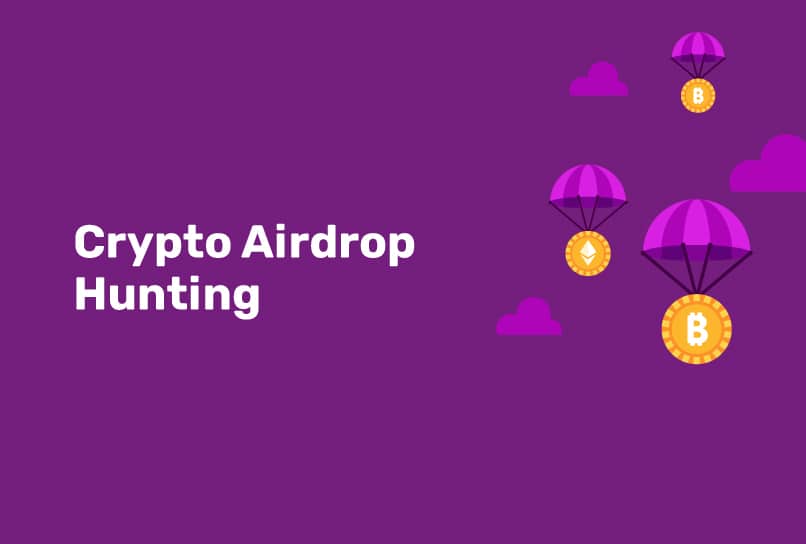
Airdrop Parachute Coins

Airdrop Hunting Strategies for 2026

Beyond testnets, there are several other strategies to maximize your airdrop rewards:

| Strategy | Description |
| :— | :— |
| Interact with Protocols Without Tokens | Use established platforms that have not yet launched a native token. These are often prime candidates for future retroactive airdrops. |
| Stake on Emerging Blockchains | Staking tokens on new Layer 1 or Layer 2 blockchains can often make you eligible for airdrops from projects building on that ecosystem. |
| Specialize in a Niche | Focus on a specific category of projects, such as DePIN (Decentralized Physical Infrastructure), Layer 2s, or tap-to-earn applications. This allows you to develop expertise and identify promising opportunities early. |
| Use Multiple Wallets (Carefully) | While some hunters use multiple wallets to increase their allocation, be aware that projects are actively developing methods to detect and disqualify such “Sybil” attacks. |

Hot Airdrop Categories for 2026

  • Layer 1s (e.g., Monad): New base-layer blockchains that aim to improve upon existing technologies.
  • Layer 2s (e.g., Linea): Scalability solutions built on top of existing blockchains like Ethereum.
  • DePIN (e.g., Grass, Dawn): Projects that use token incentives to build real-world physical infrastructure networks.
  • Tap-to-Earn (e.g., Sidekick, Midas): Mobile applications that reward users for simple, gamified interactions.

Airdrop Hunting

A Word of Caution: Beware of Scams

As with any lucrative opportunity in the crypto space, airdrops are a magnet for scammers. Be vigilant and follow these safety tips:

  • Never Share Your Private Keys: No legitimate airdrop will ever ask for your private keys or seed phrase.
  • Verify Official Links: Always double-check that you are interacting with the project’s official website and social media channels.
  • Be Wary of Unsolicited DMs: Scammers often impersonate project team members and send direct messages with malicious links.
  • Don’t Pay for an Airdrop: Legitimate airdrops are free. If a project asks you to send funds to receive an airdrop, it is a scam.

Conclusion: The Future is Free (If You Work for It)

Crypto airdrops and testnet rewards offer a unique and exciting way to earn free tokens and become an early adopter of the next wave of blockchain innovation. While the potential rewards are significant, they require diligence, consistency, and a healthy dose of skepticism. By following the strategies outlined in this guide, you can position yourself to capitalize on the airdrop opportunities of 2026 and build a diverse and promising crypto portfolio from the ground up.

Disclaimer: This article is for informational purposes only and does not constitute financial advice. Always conduct your own research before participating in any airdrop or testnet program.

How to Invest $1000 in Crypto for 2026: A Guide to the Best Crypto Stocks

As the world of cryptocurrency continues to mature, investors are increasingly looking for ways to gain exposure to this burgeoning asset class without directly purchasing volatile digital coins. Crypto-related stocks offer a compelling alternative, providing a way to invest in the underlying technology and infrastructure of the digital asset economy. With 2026 shaping up to be a pivotal year for the crypto market, now is an excellent time to consider which stocks are best positioned for growth. This guide will explore how to strategically invest $1000 in the most promising crypto stocks for the coming year.

The 2026 Crypto Landscape: A Perfect Storm for Growth?

Several key factors are converging to create a potentially explosive environment for the crypto market in 2026. Analysts are predicting a significant bull run for Bitcoin, with some forecasts projecting a price of over $140,000. This optimism is fueled by increasing institutional investment, particularly through spot crypto exchange-traded funds (ETFs), and a more favorable political climate in the United States. Furthermore, major financial institutions like Morgan Stanley are entering the crypto space, with plans to launch crypto trading on their E*TRADE platform in 2026. This confluence of events suggests that companies with exposure to the crypto ecosystem are poised for substantial growth.

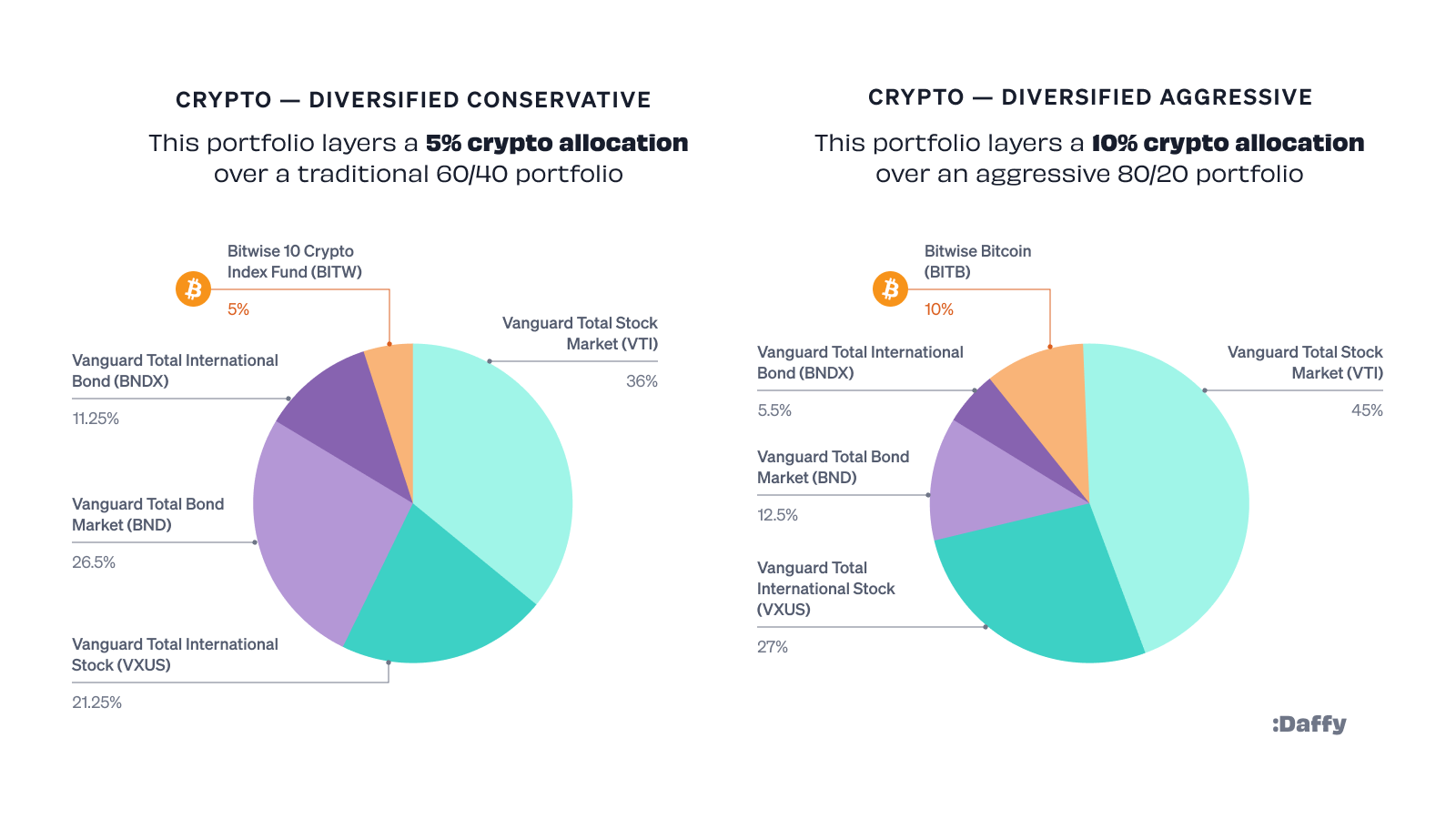
Crypto Portfolio Diversification

How to Invest $1000: A Diversified Approach to Crypto Stocks

With a $1000 investment, a diversified approach is crucial to mitigate risk while maximizing potential returns. A well-balanced portfolio could include a mix of cryptocurrency mining stocks and more established companies with significant blockchain and crypto-adjacent operations. This strategy allows you to capitalize on the high-growth potential of miners while also benefiting from the stability of larger, more diversified companies.

| Stock Category | Investment Allocation | Rationale |
| :— | :— | :— |
| Cryptocurrency Mining Stocks | 40% ($400) | Direct exposure to the profitability of crypto mining, which is highly correlated with cryptocurrency prices. |
| Blockchain & Crypto-Adjacent Stocks | 60% ($600) | Exposure to the broader blockchain ecosystem, including exchanges, payment processors, and technology providers, offering a more stable and diversified investment. |

Top Crypto Mining Stocks to Watch

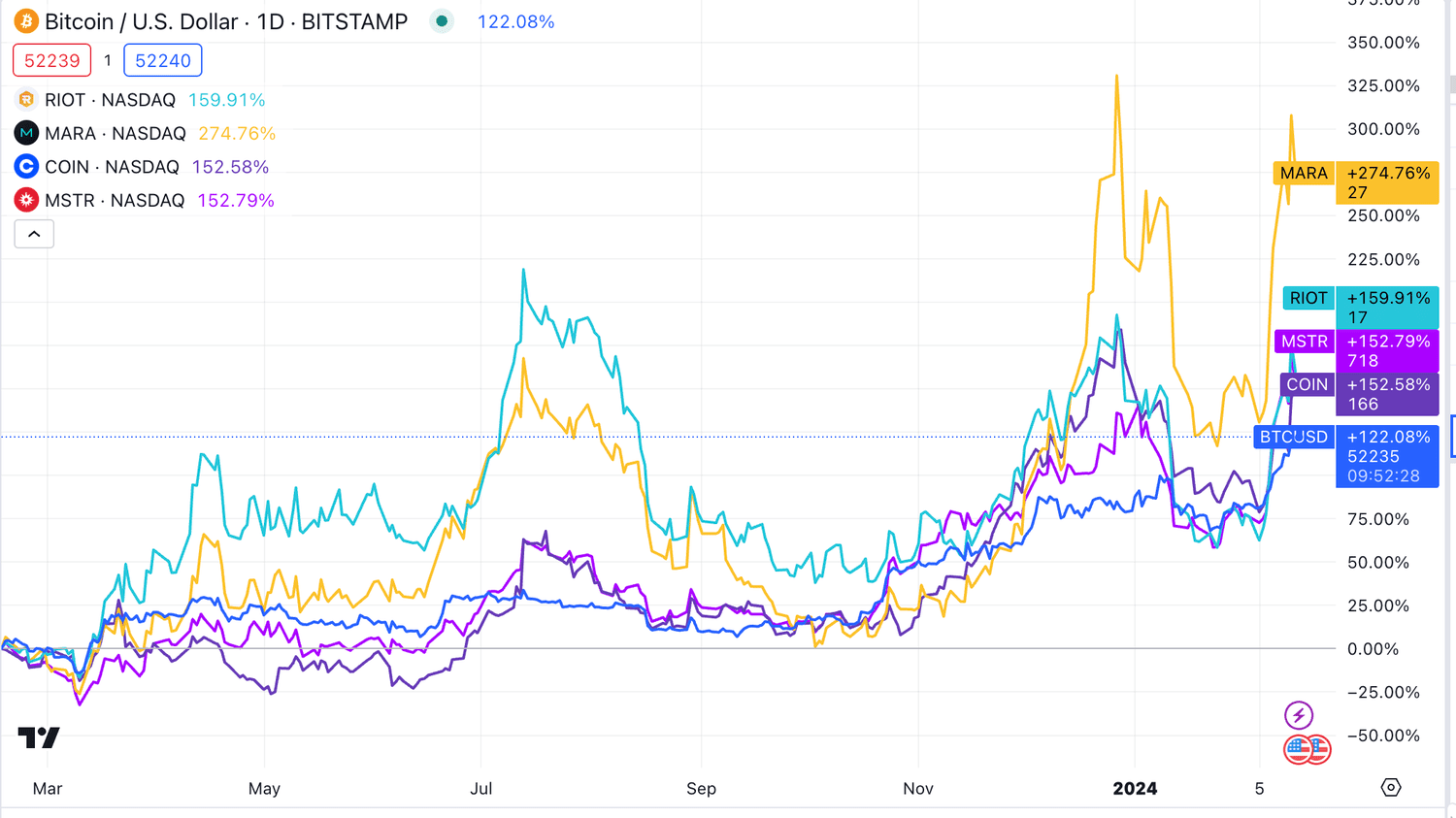
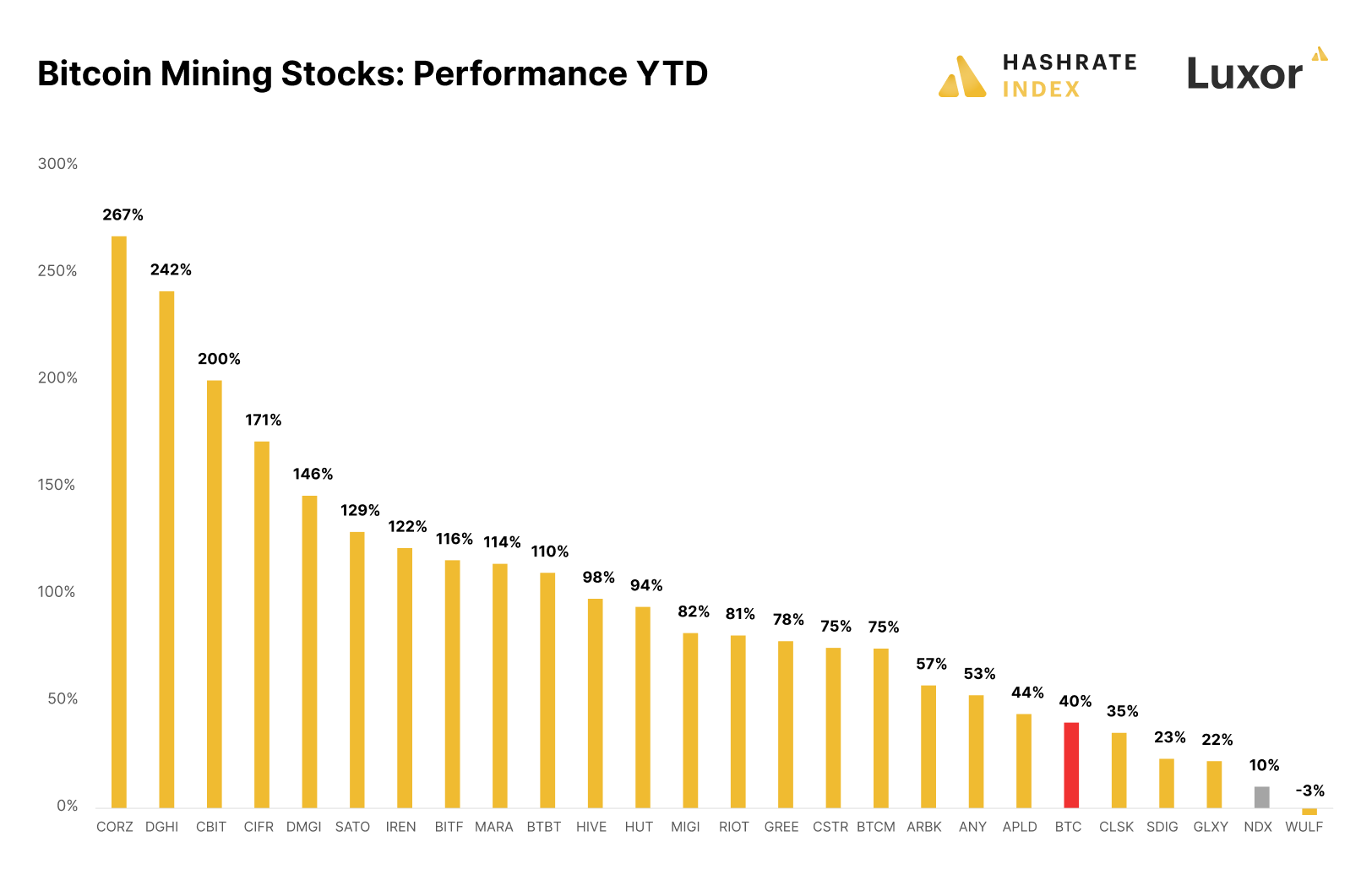
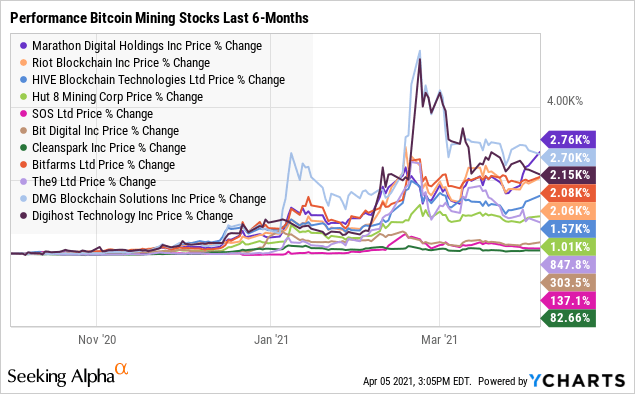
Cryptocurrency mining stocks are at the forefront of the digital asset revolution, and their performance is closely tied to the price of cryptocurrencies like Bitcoin. As crypto prices rise, so do the profit margins for miners, making these stocks a high-risk, high-reward investment.

Bitcoin Mining Stocks

Here are some of the top crypto mining stocks to consider for your 2026 portfolio:

  • Marathon Digital Holdings (MARA): As one of the largest Bitcoin miners in the U.S., MARA has been aggressively expanding its operations and boasts a significant Bitcoin treasury. Its focus on efficiency and scale makes it a compelling investment.
  • Riot Platforms (RIOT): RIOT is another major player in the Bitcoin mining space, with a strong balance sheet and a commitment to expanding its hash rate. The company’s strategic focus on low-cost energy makes it well-positioned for long-term growth.
  • CleanSpark (CLSK): CLSK stands out for its commitment to sustainable energy, with a significant portion of its operations powered by low-carbon sources. This ESG-friendly approach, combined with its rapid growth, makes it an attractive option for socially conscious investors.

Mining Stocks Performance

Top Blockchain and Crypto-Adjacent Stocks

For investors seeking a more diversified and less volatile entry into the crypto space, blockchain and crypto-adjacent stocks offer an excellent alternative. These companies are involved in various aspects of the crypto ecosystem, from exchanges and payment processing to the underlying technology that powers it all.

Crypto Stocks Comparison

Here are some of the top blockchain and crypto-adjacent stocks to consider:

  • Coinbase (COIN): As the leading U.S. cryptocurrency exchange, Coinbase is a direct beneficiary of the growing adoption of crypto. Its user-friendly platform and institutional-grade services make it a cornerstone of the crypto economy.
  • Nvidia (NVDA): While primarily known for its graphics processing units (GPUs) used in gaming and AI, Nvidia’s technology is also essential for cryptocurrency mining. As the demand for high-performance computing continues to grow, so will the demand for Nvidia’s products.
  • Block (SQ): Formerly known as Square, Block has embraced cryptocurrency with its Cash App, which allows users to buy and sell Bitcoin. The company is also actively developing other Bitcoin-related products and services, making it a key player in the future of finance.

Conclusion: Riding the Crypto Wave in 2026

The year 2026 is poised to be a landmark year for the cryptocurrency market. By strategically investing in a diversified portfolio of crypto-related stocks, you can position yourself to capitalize on the immense growth potential of this transformative technology. Whether you choose to invest in high-growth mining stocks or more established blockchain and crypto-adjacent companies, a well-researched and diversified approach will be key to navigating the exciting and ever-evolving world of crypto investing.

Disclaimer: This article is for informational purposes only and does not constitute financial advice. Investing in cryptocurrency and crypto-related stocks involves significant risk, and you should always conduct your own research and consult with a qualified financial advisor before making any investment decisions.

Dreamcash: The Revolutionary Mobile-First Crypto Trading Platform That’s Changing Everything (Get 10,000 Free Points!)

Dreamcash Mobile Trading Platform

Published September 26, 2025 | Author: everythingcryptoitclouds.com

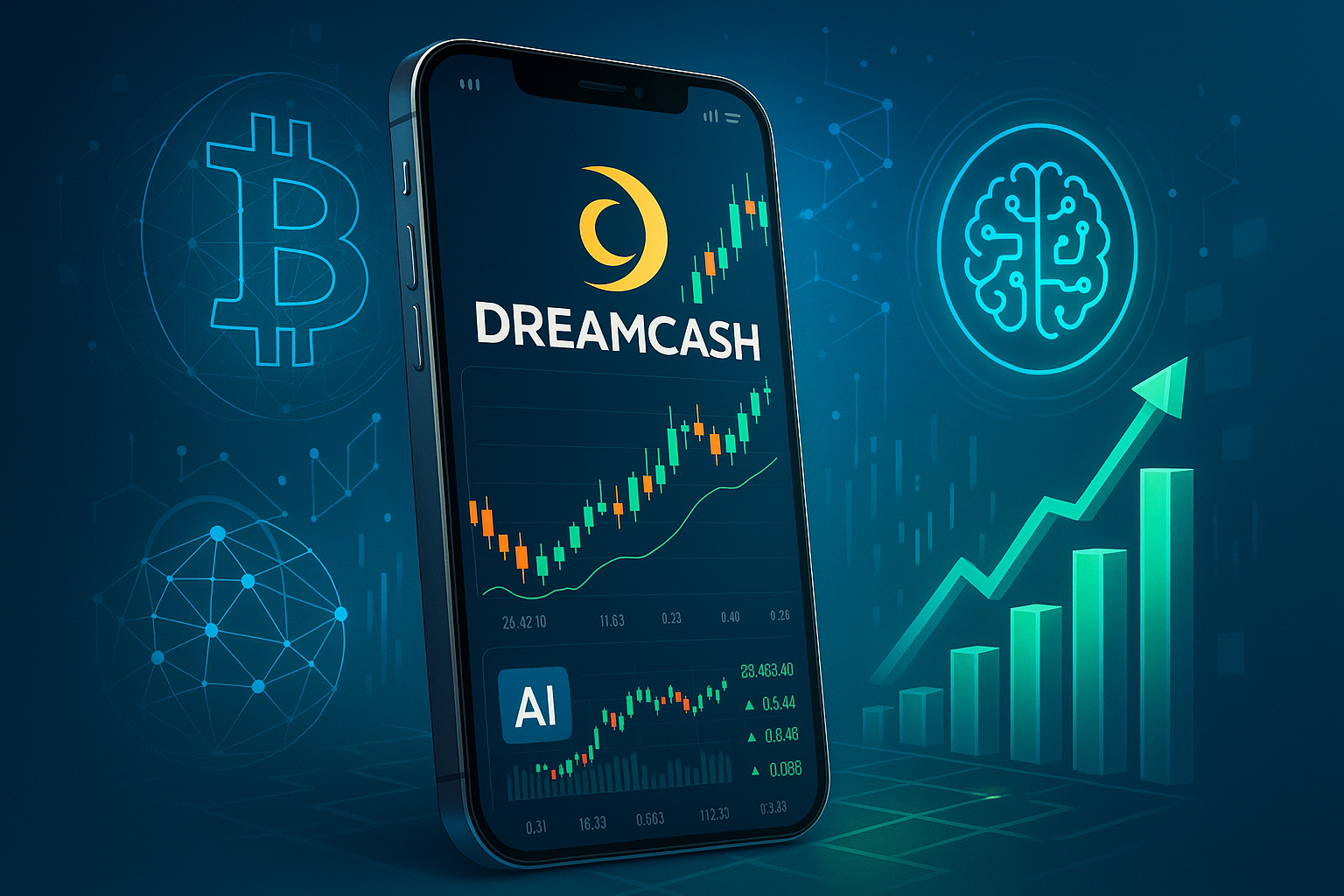
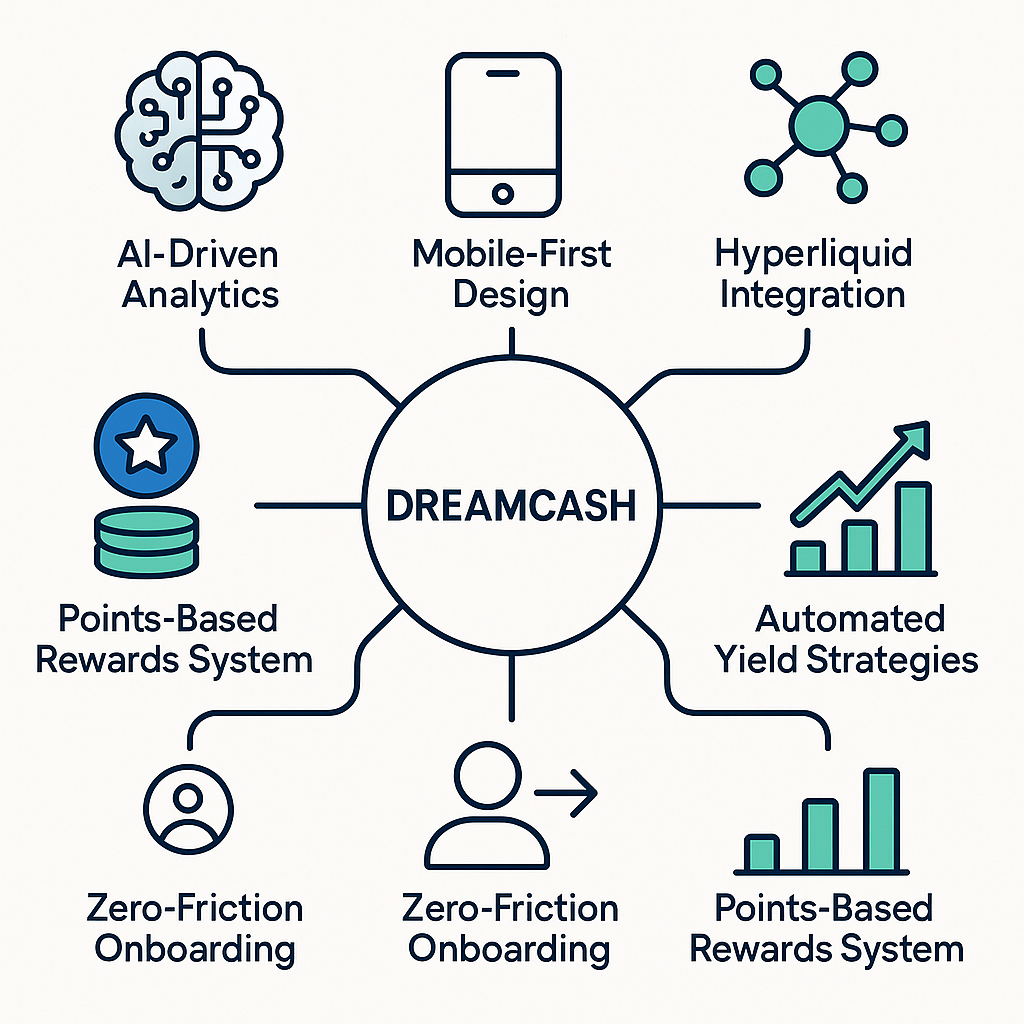
The cryptocurrency trading landscape is experiencing a seismic shift, and at the epicenter of this transformation stands Dreamcash—a revolutionary mobile-first crypto wealth platform that’s redefining how we think about digital asset trading. With its tagline “Trading so good it feels like a dream,” Dreamcash isn’t just another trading app; it’s a comprehensive ecosystem that combines artificial intelligence, automated yield strategies, and zero-friction onboarding to democratize crypto wealth building for everyone.

In an industry where complexity has long been the barrier to entry, Dreamcash emerges as the solution that bridges the gap between sophisticated institutional-grade tools and the intuitive user experience that modern smartphone users demand. The platform launched its exclusive invite-only waitlist in August 2025, and the response has been nothing short of extraordinary—with over 40,000 signups and more than $500 million in pre-launch trading volume already recorded [1].

What makes Dreamcash particularly compelling is its strategic partnership with Hyperliquid, a proven infrastructure that processes over $10 billion in daily trading volume [2]. This partnership ensures that users have access to institutional-grade liquidity and execution from day one, while the platform’s AI-driven analytics provide insights that were previously available only to professional traders and hedge funds.

The timing of Dreamcash’s launch couldn’t be more perfect. As the cryptocurrency market continues to mature and institutional adoption accelerates, there’s a growing demand for platforms that can provide professional-grade tools without the complexity that has traditionally characterized crypto trading. Dreamcash addresses this need head-on with its mobile-first approach, recognizing that the future of finance is increasingly mobile and that users expect the same level of sophistication and ease of use from their trading platforms as they do from their favorite social media apps.

The Vision Behind Dreamcash: Democratizing Crypto Wealth Building

The fundamental vision driving Dreamcash is elegantly simple yet profoundly ambitious: to democratize crypto wealth building through intelligent tools, automated strategies, and zero-friction onboarding. This vision represents a departure from the traditional approach to cryptocurrency trading, which has often been characterized by steep learning curves, complex interfaces, and barriers that exclude all but the most technically sophisticated users.

Hubert Johnson, Head of Marketing at Dreamcash, articulates this vision with remarkable clarity: “We’re building the future of how people interact with crypto markets. Imagine having AI-driven insights, automated yield strategies, and professional-grade tools accessible through an interface as simple as your favorite social app” [3]. This statement encapsulates the core philosophy that drives every aspect of Dreamcash’s development—the belief that sophisticated financial tools should be accessible to everyone, not just institutional investors and crypto veterans.

The democratization of crypto wealth building represents more than just making trading more accessible; it’s about fundamentally changing the relationship between individuals and financial markets. Traditional wealth building has long been the domain of those with significant capital, extensive financial knowledge, or access to professional advisors. Dreamcash challenges this paradigm by providing tools that level the playing field, allowing anyone with a smartphone to access the same sophisticated strategies and insights that were previously available only to institutional investors.

This democratization is achieved through several key innovations that distinguish Dreamcash from traditional trading platforms. The platform’s AI-driven analytics provide users with market insights and opportunity identification that would typically require extensive research and analysis. The automated yield strategies eliminate the need for users to actively manage their positions, allowing them to benefit from sophisticated trading strategies without requiring deep technical knowledge. The zero-friction onboarding process removes the traditional barriers that have prevented many potential users from entering the crypto market.

The mobile-first design philosophy reflects a deep understanding of how modern users interact with technology. Rather than treating mobile as an afterthought or a simplified version of a desktop platform, Dreamcash has been designed from the ground up for mobile users. This approach recognizes that smartphones have become the primary computing device for most people and that the future of finance will be increasingly mobile-centric.

Revolutionary Features That Set Dreamcash Apart

Dreamcash Key Features and Benefits

Dreamcash’s revolutionary approach to crypto trading is built on several key features that collectively create an experience unlike anything currently available in the market. These features represent years of development and a deep understanding of both the technical requirements of sophisticated trading and the user experience expectations of modern mobile applications.

The AI-driven analytics system represents perhaps the most significant innovation in Dreamcash’s feature set. This system leverages advanced machine learning algorithms to analyze market data, identify trading opportunities, and provide users with actionable insights. The AI system is powered by a partnership with RysoAI, which brings institutional-grade artificial intelligence capabilities to retail users [4]. This partnership ensures that Dreamcash users have access to the same level of market analysis and opportunity identification that professional traders and hedge funds rely on.

The AI system operates continuously, monitoring market conditions across multiple cryptocurrencies and identifying patterns that might indicate profitable trading opportunities. Unlike traditional technical analysis tools that require users to interpret charts and indicators, Dreamcash’s AI system provides clear, actionable recommendations that users can act on with confidence. The system also learns from user behavior and market outcomes, continuously improving its recommendations and adapting to changing market conditions.

Automated yield strategies represent another groundbreaking feature that sets Dreamcash apart from traditional trading platforms. These strategies are designed to generate consistent returns regardless of market direction, using sophisticated techniques such as delta-neutral positioning and arbitrage opportunities. The automated nature of these strategies means that users can benefit from professional-grade trading techniques without needing to understand the underlying mechanics or actively manage their positions.

The delta-neutral strategies are particularly innovative, as they allow users to generate yield even in volatile or declining markets. These strategies work by taking offsetting positions that profit from market inefficiencies rather than directional price movements. This approach provides a level of stability and predictability that is rare in cryptocurrency trading, making it particularly attractive to users who want exposure to crypto markets without the extreme volatility typically associated with digital assets.

The zero-friction onboarding process eliminates many of the traditional barriers that have prevented mainstream adoption of cryptocurrency trading. Traditional crypto exchanges often require extensive know-your-customer (KYC) procedures, complex account setup processes, and significant technical knowledge just to begin trading. Dreamcash streamlines this process, allowing users to begin building their crypto portfolios immediately upon downloading the app.

This streamlined onboarding is achieved through innovative approaches to identity verification and risk management that maintain security while eliminating unnecessary friction. The platform uses advanced fraud detection and risk assessment algorithms to identify and prevent malicious activity while allowing legitimate users to access the platform quickly and easily. This approach represents a significant advancement in balancing security with user experience in the cryptocurrency space.

The Hyperliquid integration provides Dreamcash users with access to institutional-grade liquidity and execution capabilities. Hyperliquid is a proven infrastructure platform that processes over $10 billion in daily trading volume, providing deep liquidity across multiple cryptocurrency pairs [5]. This integration ensures that Dreamcash users can execute trades quickly and at competitive prices, even for large positions that might experience slippage on smaller exchanges.

The integration with Hyperliquid also provides access to advanced order types and trading features that are typically available only on professional trading platforms. These features include advanced stop-loss orders, trailing stops, and sophisticated position management tools that help users optimize their trading strategies and manage risk effectively.

The Points-Based Rewards System: Gamifying Crypto Engagement

One of the most innovative aspects of Dreamcash’s approach to user engagement is its comprehensive points-based rewards system, which gamifies the crypto trading experience while providing tangible benefits to early adopters. This system represents a sophisticated approach to user acquisition and retention that goes far beyond traditional referral programs or promotional offers.

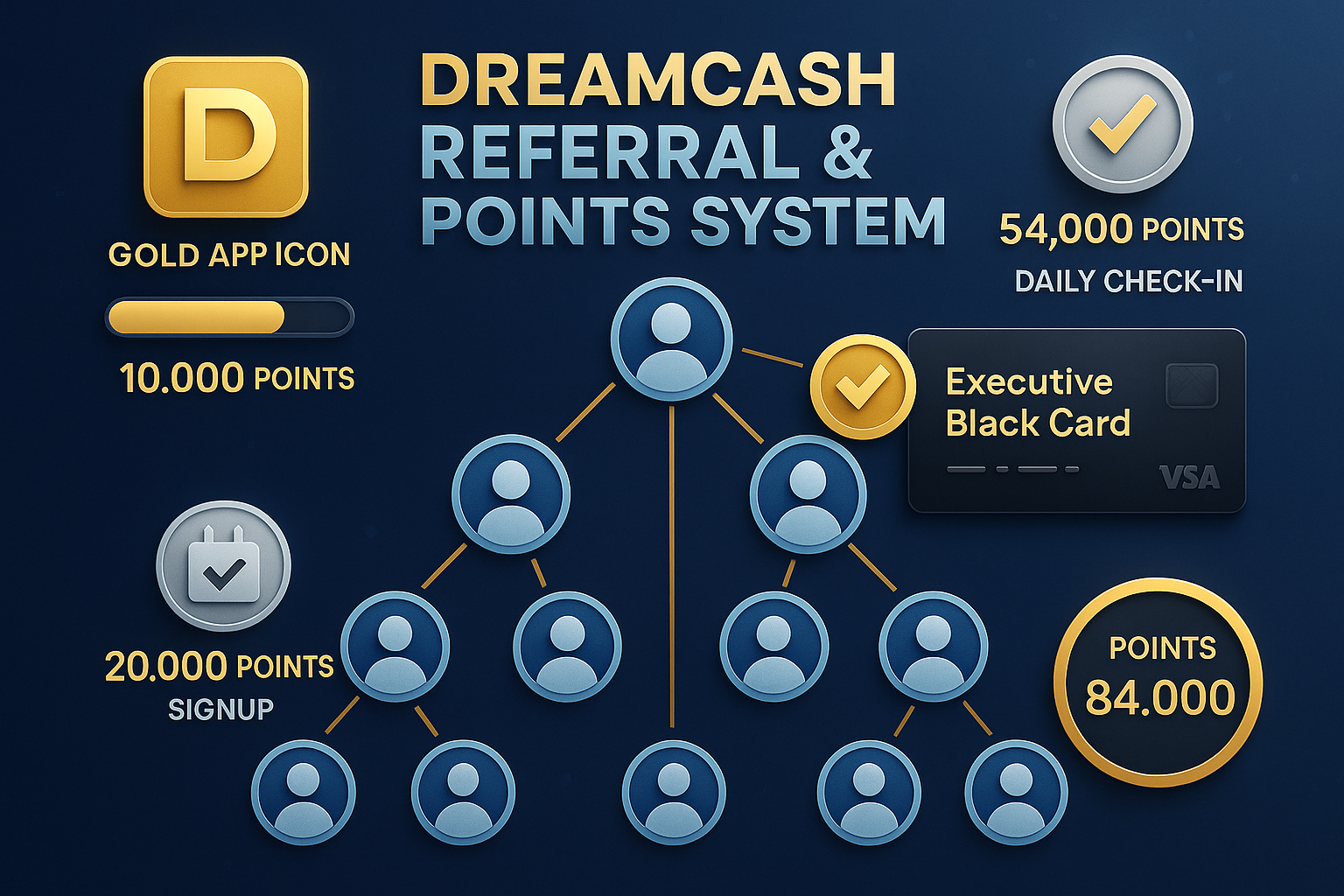
The points system operates on multiple levels, providing rewards for various types of engagement with the platform. Users earn one point per second simply for being on the waitlist, creating a passive income stream that rewards early adoption and continued engagement [6]. This passive earning mechanism ensures that users are continuously accumulating value even when they’re not actively using the platform, creating a strong incentive for long-term engagement.

Daily check-ins provide an additional 20,000 points, encouraging users to regularly interact with the app and stay engaged with the platform. This daily engagement mechanism helps build habits and ensures that users remain connected to the Dreamcash ecosystem even during the pre-launch phase. The substantial point reward for daily check-ins reflects the platform’s understanding of the value of consistent user engagement and the importance of building strong user habits early in the relationship.

The referral system provides the most substantial point rewards, with users earning 54,000 points for each successful referral [7]. This generous referral reward reflects the platform’s focus on organic growth and word-of-mouth marketing, recognizing that satisfied users are the best advocates for the platform. The referral system also creates a network effect, where each new user potentially brings additional users to the platform, accelerating growth and building a strong community of engaged users.

🎯 EXCLUSIVE OFFER: Use referral code TY74CU to get 10,000 FREE points when you sign up! Join Dreamcash with 10,000 bonus points

The exclusive rewards available through the points system add an element of prestige and exclusivity that appeals to early adopters. The Gold App Icon, available to users who achieve five or more referrals, provides a visible status symbol that distinguishes early supporters of the platform [8]. This exclusive reward will never be available again after the platform launches, creating a sense of urgency and exclusivity that motivates users to actively participate in the referral program.

The Executive Black Card, available to users who achieve ten or more referrals, represents the pinnacle of the pre-launch rewards system. This exclusive status symbol provides not only prestige but also potential access to additional platform benefits and features. Like the Gold App Icon, the Executive Black Card will never be available again after launch, making it a truly exclusive reward for the most engaged early adopters.

The points system is designed with future utility in mind, with strong indications that points will convert to platform benefits or potentially tokens after the official launch. While no official token airdrop has been confirmed, the structure and emphasis of the points system strongly suggest that early participants will receive lasting recognition and benefits for their early support of the platform [9].

Technical Infrastructure: The Hyperliquid Advantage

The technical foundation of Dreamcash is built on a strategic partnership with Hyperliquid, one of the most robust and proven infrastructure platforms in the cryptocurrency space. This partnership provides Dreamcash with access to institutional-grade capabilities that would be extremely difficult and expensive to develop independently, while allowing the platform to focus on user experience and innovation rather than infrastructure development.

Hyperliquid processes over $10 billion in daily trading volume, making it one of the largest and most liquid cryptocurrency trading infrastructures in the world [10]. This massive scale provides several critical advantages for Dreamcash users, including deep liquidity across multiple trading pairs, competitive pricing, and the ability to execute large trades without significant market impact. The scale of Hyperliquid’s operations also provides stability and reliability that is essential for a platform targeting mainstream adoption.

The liquidity provided by Hyperliquid is particularly important for the types of automated strategies that Dreamcash offers. Delta-neutral strategies and arbitrage opportunities often require the ability to execute trades quickly and at specific prices, making deep liquidity essential for their success. The Hyperliquid partnership ensures that Dreamcash’s automated strategies can operate effectively even during periods of high market volatility or unusual trading conditions.

The technical architecture of the Hyperliquid platform also provides advanced risk management and security features that are essential for institutional-grade trading. These features include sophisticated position monitoring, automated risk controls, and advanced security measures that protect user funds and trading positions. The proven track record of Hyperliquid in handling large volumes and maintaining security provides confidence that Dreamcash users’ assets and trading activities are protected by best-in-class infrastructure.

The integration between Dreamcash and Hyperliquid is designed to be seamless from the user perspective, with all the complexity of the underlying infrastructure hidden behind Dreamcash’s intuitive mobile interface. Users benefit from the sophisticated capabilities of Hyperliquid without needing to understand or interact with the technical complexities of the underlying system. This approach allows Dreamcash to provide institutional-grade capabilities with consumer-grade simplicity.

The Hyperliquid partnership also provides Dreamcash with access to advanced trading features and order types that are typically available only on professional trading platforms. These features include sophisticated stop-loss orders, trailing stops, and advanced position management tools that help users optimize their trading strategies and manage risk effectively. The availability of these advanced features through Dreamcash’s simple mobile interface represents a significant advancement in making professional trading tools accessible to retail users.

Market Position and Competitive Landscape

Dreamcash enters a cryptocurrency trading market that is both highly competitive and rapidly evolving, with established players ranging from traditional exchanges like Coinbase and Binance to newer mobile-first platforms like Robinhood and newer entrants. However, Dreamcash’s unique combination of features and approach creates a distinct market position that differentiates it from existing competitors.

The mobile-first approach represents a significant competitive advantage in a market where most established platforms were originally designed for desktop use and later adapted for mobile. While many existing platforms offer mobile apps, these are often simplified versions of their desktop platforms or mobile adaptations that don’t fully leverage the unique capabilities and user experience expectations of mobile devices. Dreamcash’s ground-up mobile design allows it to provide a user experience that is optimized for how people actually use their smartphones.

The AI-driven analytics and automated strategies represent another significant competitive differentiator. While some platforms offer basic technical analysis tools or simple automated features, Dreamcash’s partnership with RysoAI provides access to institutional-grade artificial intelligence capabilities that are not available on other retail platforms [11]. This AI integration provides users with insights and opportunities that would typically require extensive research and analysis, creating a significant value proposition for users who want to benefit from sophisticated trading strategies without developing the expertise to implement them independently.

The zero-friction onboarding process addresses one of the most significant barriers to entry in the cryptocurrency market. Traditional exchanges often require extensive documentation, verification processes, and waiting periods before users can begin trading. Dreamcash’s streamlined approach allows users to begin building their crypto portfolios immediately, removing a major source of friction that prevents many potential users from entering the market.

The points-based rewards system and gamification elements also represent a unique approach to user engagement that is not commonly found in traditional cryptocurrency trading platforms. While some platforms offer referral bonuses or promotional rewards, Dreamcash’s comprehensive points system creates ongoing engagement and provides lasting value to early adopters. This approach helps build a strong community of engaged users who have a vested interest in the platform’s success.

The integration with Hyperliquid provides access to liquidity and execution capabilities that rival or exceed those available on major exchanges, while the mobile-first design and user experience innovations provide a level of accessibility and ease of use that is not available on traditional institutional platforms. This combination allows Dreamcash to compete effectively with both retail-focused platforms and institutional-grade trading systems.

The Future of Mobile Crypto Trading

Dreamcash Referral and Points System

Dreamcash represents more than just another trading platform; it embodies a vision of the future of cryptocurrency trading that is mobile-first, AI-powered, and accessible to everyone. The platform’s approach reflects several key trends that are reshaping the financial services industry and points toward a future where sophisticated financial tools are available to anyone with a smartphone.

The mobile-first approach reflects the reality that smartphones have become the primary computing device for most people around the world. This trend is particularly pronounced among younger demographics, who are increasingly comfortable conducting all aspects of their financial lives through mobile devices. Dreamcash’s recognition of this trend and its commitment to providing a truly mobile-native experience positions it well to capture this growing market segment.

The integration of artificial intelligence into trading and investment decisions represents another major trend that is reshaping the financial services industry. As AI technology continues to advance and become more accessible, platforms that can effectively leverage AI to provide value to users will have a significant competitive advantage. Dreamcash’s partnership with RysoAI and its focus on AI-driven analytics positions it at the forefront of this trend.

The democratization of sophisticated financial tools is another key trend that Dreamcash embodies. Traditional wealth management and sophisticated trading strategies have long been available only to high-net-worth individuals and institutional investors. Technology is increasingly making these tools accessible to a broader audience, and platforms that can effectively democratize access to sophisticated financial strategies will capture significant market share.

The gamification of financial services is an emerging trend that Dreamcash has embraced through its points-based rewards system. As younger generations become a larger portion of the investing population, platforms that can make financial services engaging and rewarding will have an advantage in attracting and retaining users. Dreamcash’s comprehensive gamification approach goes beyond simple rewards to create an engaging experience that encourages long-term participation.

The focus on user experience and simplicity represents a broader trend in financial services toward platforms that prioritize ease of use and accessibility. As financial services become increasingly digital, platforms that can provide sophisticated capabilities through simple, intuitive interfaces will have a significant advantage. Dreamcash’s commitment to making professional-grade tools accessible through a simple mobile interface positions it well to benefit from this trend.

Getting Started: Your Path to 10,000 Free Points

For readers interested in joining the Dreamcash revolution, the process is straightforward and rewarding. The platform’s invite-only waitlist provides early access to the platform and the opportunity to begin accumulating points immediately. The points system provides multiple ways to earn rewards, with the potential for these points to convert to lasting benefits or tokens after the platform’s official launch.

Step 1: Download and Register
The first step is to download the Dreamcash app from the App Store or Google Play and complete the registration process. During registration, be sure to enter the referral code TY74CU to receive an immediate bonus of 10,000 points Join here with bonus points. This bonus provides a significant head start in the points accumulation process and demonstrates the platform’s commitment to rewarding early adopters.

Step 2: Begin Earning Points
Once registered, users automatically begin earning one point per second simply for being on the waitlist. This passive earning mechanism ensures that points accumulate continuously, even when users are not actively engaging with the app. The passive earning rate may seem small, but it adds up significantly over time, particularly for early adopters who join during the pre-launch phase.

Step 3: Daily Engagement
Daily check-ins provide an additional 20,000 points, making regular engagement with the app highly rewarding. The daily check-in process is simple and quick, requiring just a few seconds of interaction with the app. However, the point reward is substantial, making daily engagement one of the most efficient ways to accumulate points quickly.

Step 4: Social Media Engagement
Following Dreamcash on social media platforms provides additional point bonuses and helps users stay informed about platform developments and updates. The social media engagement rewards recognize the value of building a strong community around the platform and encourage users to become advocates for Dreamcash within their social networks.

Step 5: Referral Activity
The referral program provides the most substantial point rewards, with 54,000 points awarded for each successful referral. Users receive a unique referral code that they can share with friends, family, and social networks. The generous referral rewards make sharing the platform with others highly beneficial, while also helping to build the Dreamcash community through organic growth.

Step 6: Exclusive Rewards
Users who achieve five or more referrals unlock the Gold App Icon, while those who achieve ten or more referrals receive the Executive Black Card. These exclusive rewards will never be available again after the platform launches, making them truly unique status symbols for early adopters. The exclusive nature of these rewards creates additional motivation for active participation in the referral program.

Investment Implications and Market Opportunity

The emergence of Dreamcash represents a significant development in the cryptocurrency trading space with important implications for investors, traders, and the broader digital asset ecosystem. The platform’s innovative approach to mobile trading, AI integration, and user experience represents a new paradigm that could influence the development of the entire cryptocurrency trading industry.

From an investment perspective, Dreamcash’s approach addresses several key pain points that have limited mainstream adoption of cryptocurrency trading. The complexity of traditional trading platforms, the lack of sophisticated tools for retail users, and the barriers to entry created by cumbersome onboarding processes have all contributed to limiting the growth of the cryptocurrency trading market. Dreamcash’s solutions to these problems position it to capture significant market share as cryptocurrency adoption continues to grow.

The total addressable market for cryptocurrency trading continues to expand rapidly, driven by increasing institutional adoption, growing retail interest, and the development of new financial products and services built on blockchain technology. Platforms that can effectively serve this growing market while providing superior user experience and innovative features are likely to capture disproportionate value as the market continues to mature.

The AI integration and automated strategies offered by Dreamcash also represent a significant advancement in making sophisticated trading techniques accessible to retail users. As artificial intelligence technology continues to advance and become more accessible, platforms that can effectively leverage AI to provide value to users will have a significant competitive advantage. The partnership with RysoAI positions Dreamcash at the forefront of this trend.

The mobile-first approach reflects broader trends in how people interact with financial services and technology. As smartphone adoption continues to grow globally and younger generations become a larger portion of the investing population, platforms that are designed specifically for mobile use will have significant advantages over those that treat mobile as an afterthought.

The points-based rewards system and potential for future token distribution also create interesting dynamics for early adopters. While no official token airdrop has been confirmed, the structure of the points system and the emphasis on early adoption suggest that participants in the pre-launch program may receive significant benefits when the platform officially launches. This creates an asymmetric risk-reward opportunity for early participants.

Conclusion: The Dawn of a New Era in Crypto Trading

Dreamcash represents more than just another cryptocurrency trading platform; it embodies a vision of the future where sophisticated financial tools are accessible to everyone, where artificial intelligence enhances human decision-making, and where mobile technology enables seamless interaction with global financial markets. The platform’s innovative approach to user experience, technical infrastructure, and community building positions it as a potential leader in the next generation of cryptocurrency trading platforms.

The combination of AI-driven analytics, automated yield strategies, zero-friction onboarding, and mobile-first design creates a unique value proposition that addresses many of the barriers that have limited mainstream adoption of cryptocurrency trading. The strategic partnership with Hyperliquid provides the technical foundation necessary to deliver institutional-grade capabilities through a consumer-friendly interface.

The points-based rewards system and focus on community building demonstrate a sophisticated understanding of user engagement and the importance of creating lasting relationships with users. The exclusive rewards available to early adopters create strong incentives for participation while building a community of engaged advocates for the platform.

For individuals interested in participating in the future of cryptocurrency trading, Dreamcash offers an opportunity to join a revolutionary platform during its early stages. The generous rewards for early adoption, combined with the potential for lasting benefits from the points system, create compelling reasons to participate in the pre-launch program.

The cryptocurrency trading industry is at an inflection point, with increasing institutional adoption, growing retail interest, and rapid technological advancement creating opportunities for platforms that can effectively serve this evolving market. Dreamcash’s innovative approach and strong technical foundation position it well to capitalize on these trends and potentially become a leader in the next generation of cryptocurrency trading platforms.

As we look toward the future of finance, platforms like Dreamcash that prioritize accessibility, innovation, and user experience will play an increasingly important role in democratizing access to sophisticated financial tools and opportunities. The revolution in cryptocurrency trading has begun, and Dreamcash is positioned at the forefront of this transformation.

Ready to join the revolution? Use referral code TY74CU to get 10,000 FREE points and be part of the future of crypto trading: https://dreamcash.xyz/share?code=TY74CU


References

[1] ETF.com – “Dreamcash Begins Rollout of Trading Platform with Hyperliquid Integration via Waitlist Access” (August 5, 2025) – https://www.etf.com/sections/news/dreamcash-begins-rollout-trading-platform-hyperliquid-integration-waitlist-access

[2] Yahoo Finance – “Dreamcash Begins Rollout of Trading Platform with Hyperliquid Integration” (August 5, 2025) – https://finance.yahoo.com/news/dreamcash-begins-rollout-trading-platform-221040657.html

[3] ETF.com – “Dreamcash Begins Rollout of Trading Platform with Hyperliquid Integration via Waitlist Access” (August 5, 2025)

[4] Bitrue Blog – “Dreamcash Airdrop: A Complete Guide for Early Participants” (September 17, 2025) – https://www.bitrue.com/blog/how-to-participate-dreamcash-airdrop

[5] ETF.com – “Dreamcash Begins Rollout of Trading Platform with Hyperliquid Integration via Waitlist Access” (August 5, 2025)

[6] Bitrue Blog – “Dreamcash Airdrop: A Complete Guide for Early Participants” (September 17, 2025)

[7] Bitrue Blog – “Dreamcash Airdrop: A Complete Guide for Early Participants” (September 17, 2025)

[8] Bitrue Blog – “Dreamcash Airdrop: A Complete Guide for Early Participants” (September 17, 2025)

[9] Airdrops.io – “Potential Dreamcash Airdrop » How to be eligible?” – https://airdrops.io/dreamcash/

[10] ETF.com – “Dreamcash Begins Rollout of Trading Platform with Hyperliquid Integration via Waitlist Access” (August 5, 2025)

[11] Bitrue Blog – “Dreamcash Airdrop: A Complete Guide for Early Participants” (September 17, 2025)

Morgan Stanley to Launch Crypto Trading for E*Trade Customers: The Wall Street Revolution That’s Reshaping Digital Finance

Morgan Stanley E*Trade Crypto Trading Launch

Published September 26, 2025 | Author: everythingcryptoitclouds.com

In a groundbreaking move that signals the complete transformation of Wall Street’s relationship with cryptocurrency, Morgan Stanley has announced its plans to launch direct crypto trading for E*Trade customers in the first half of 2026. This isn’t just another financial institution dipping its toes into digital assets—this represents a seismic shift that could fundamentally reshape how institutional wealth management approaches cryptocurrency investment and custody.

The announcement, made on September 23, 2025, comes at a time when the cryptocurrency market has reached an unprecedented $3.9 trillion valuation, with Bitcoin commanding $2.25 trillion and Ethereum holding $506 billion of that total market capitalization [1]. What makes this development particularly significant is not just the scale of Morgan Stanley’s commitment, but the sophisticated infrastructure partnership they’ve forged with Zerohash, a crypto infrastructure provider that recently achieved unicorn status with a $104 million funding round [2].

The Strategic Partnership That’s Changing Everything

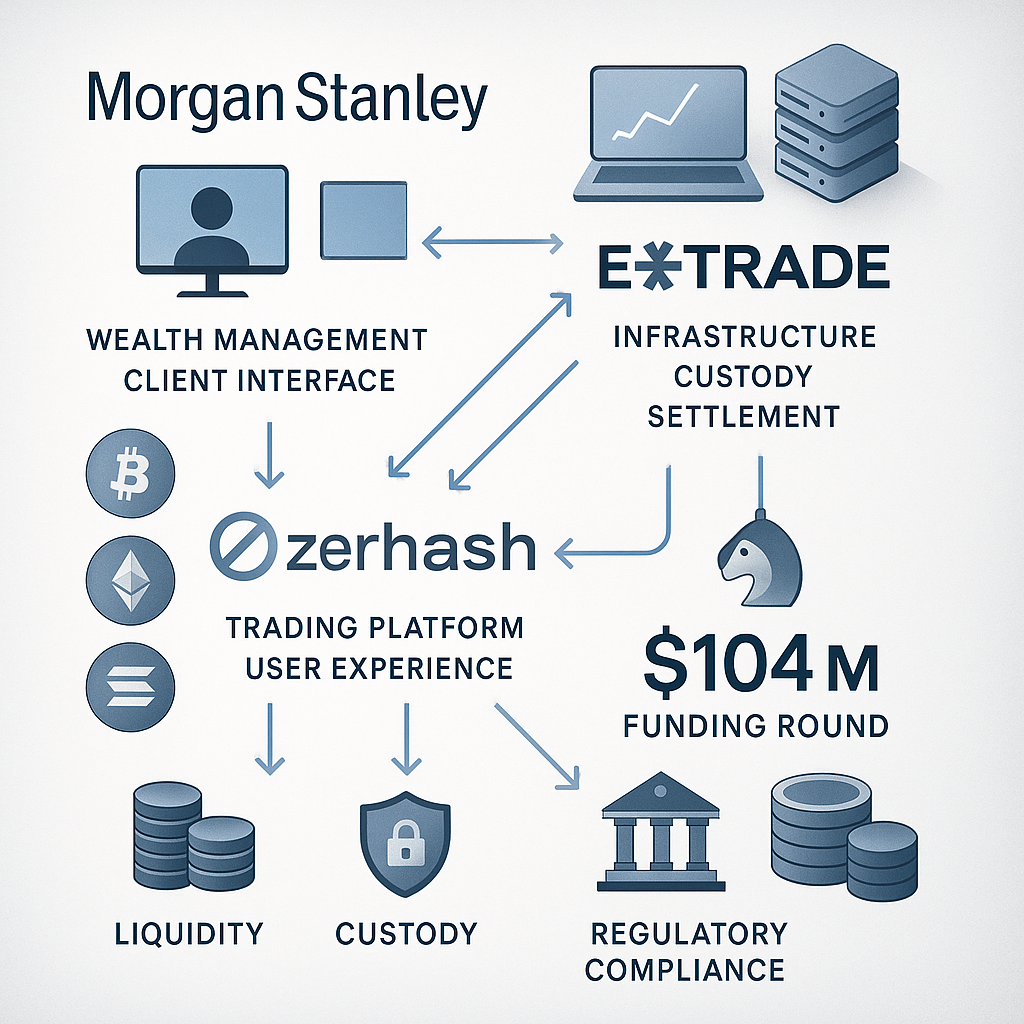
Morgan Stanley’s approach to crypto trading represents a masterclass in strategic partnership development. Rather than attempting to build cryptocurrency infrastructure from scratch—a process that could take years and cost hundreds of millions—the financial giant has partnered with Zerohash, one of the industry’s leading embedded crypto solutions providers [3].

This partnership is far more than a simple vendor relationship. Morgan Stanley has taken an investment stake in Zerohash, demonstrating a level of commitment that goes beyond typical service provider arrangements [4]. The timing couldn’t be more strategic, as Zerohash recently completed a $104 million Series D-2 funding round led by Interactive Brokers, with Morgan Stanley, SoFi, and Apollo Global Management participating as strategic investors [5].

The partnership structure reveals Morgan Stanley’s sophisticated understanding of the crypto ecosystem. Zerohash will handle the complex technical infrastructure including liquidity provision, custody services, and settlement operations, while Morgan Stanley focuses on what it does best: client relationship management and wealth advisory services. This division of labor allows both companies to leverage their core competencies while delivering a seamless experience to E*Trade customers.

Jed Finn, head of wealth management at Morgan Stanley, emphasized the strategic nature of this approach in an internal memo obtained by CNBC: “We are well underway in preparing to offer crypto trading through a partner model to E-Trade clients in the first half of 2026” [6]. The use of the phrase “partner model” is particularly significant, as it indicates Morgan Stanley’s recognition that cryptocurrency requires specialized expertise that’s best obtained through strategic alliances rather than internal development.

MembersCap: The Early Adopter Validating Institutional Demand

One of the most compelling aspects of Morgan Stanley’s crypto trading initiative is the early validation it has received from sophisticated institutional clients. MembersCap, a Bermuda-regulated investment manager specializing in tokenized reinsurance investments, has already begun using the service, providing crucial real-world testing and validation of the platform’s capabilities [7].

MembersCap’s involvement is particularly noteworthy given the company’s innovative approach to traditional finance. Founded in 2024, MembersCap has pioneered the tokenization of institutional-grade reinsurance investments, creating the first tokenized reinsurance fund designed for sophisticated digital asset investors [8]. In July 2025, the company launched this groundbreaking fund in partnership with Archax, a digital asset exchange, broker, and custodian [9].

The significance of MembersCap’s early adoption extends beyond simple beta testing. In September 2025, MembersCap became the first company to use the new London Stock Exchange blockchain-based platform for private funds, demonstrating their position at the forefront of financial innovation [10]. Their decision to utilize Morgan Stanley’s crypto trading infrastructure validates the platform’s capability to serve sophisticated institutional clients with complex requirements.

This early institutional adoption addresses one of the key challenges facing traditional financial institutions entering the crypto space: proving that their infrastructure can handle the demands of professional investment managers. MembersCap’s successful use of the platform provides Morgan Stanley with a powerful case study demonstrating institutional-grade reliability and functionality.

The Cryptocurrency Landscape: A $3.9 Trillion Opportunity

To understand the magnitude of Morgan Stanley’s strategic move, it’s essential to examine the current state of the cryptocurrency market. What began as a niche asset class dismissed by many traditional financial institutions has evolved into a $3.9 trillion market that can no longer be ignored by serious wealth managers [11].

The market composition reveals the maturation of the cryptocurrency ecosystem. Bitcoin, with its $2.25 trillion market capitalization, has established itself as the digital equivalent of gold—a store of value that institutional investors increasingly view as a necessary portfolio component [12]. Ethereum, commanding $506 billion in market cap, represents the infrastructure layer of decentralized finance, hosting thousands of applications and smart contracts that are reshaping financial services [13].

The inclusion of Solana as one of the three cryptocurrencies available at launch demonstrates Morgan Stanley’s sophisticated understanding of the crypto ecosystem. Solana’s recent achievement of 107,664 transactions per second in a single block has positioned it as a leading platform for high-frequency trading and institutional applications [14]. This technical capability makes Solana particularly attractive to institutional clients who require high-performance blockchain infrastructure for their operations.

The growth trajectory of the cryptocurrency market has been nothing short of extraordinary. From a total market capitalization of less than $1 billion in 2013 to nearly $4 trillion today, cryptocurrencies have demonstrated a compound annual growth rate that far exceeds traditional asset classes [15]. This growth has been driven not just by retail speculation, but increasingly by institutional adoption, regulatory clarity, and the development of sophisticated financial products.

Regulatory Environment: The Trump Administration’s Crypto-Friendly Stance

The timing of Morgan Stanley’s crypto trading launch is inextricably linked to the dramatic shift in regulatory sentiment following the Trump administration’s return to power. The administration’s supportive stance toward cryptocurrency regulation has created an environment where traditional financial institutions feel confident making substantial investments in crypto infrastructure [16].

This regulatory shift represents a complete reversal from the uncertainty that characterized much of the previous regulatory environment. Where banks once faced unclear guidance and potential enforcement actions for crypto-related activities, they now operate in a framework that actively encourages innovation and institutional participation in digital asset markets [17].

The impact of this regulatory clarity cannot be overstated. It has enabled Morgan Stanley to move forward with confidence, knowing that their crypto trading initiative aligns with government policy rather than potentially conflicting with it. This regulatory support has also contributed to the broader institutional adoption wave that includes not just Morgan Stanley, but competitors like Charles Schwab and Robinhood expanding their crypto offerings [18].

The regulatory environment has also facilitated the type of strategic partnerships that make Morgan Stanley’s approach possible. Zerohash’s ability to provide comprehensive crypto infrastructure services depends on clear regulatory frameworks that define custody requirements, compliance obligations, and operational standards. The current regulatory clarity has enabled these partnerships to flourish, creating the foundation for institutional-grade crypto services.

Technical Infrastructure: The Zerohash Advantage

Crypto Infrastructure Partnership

The technical architecture underlying Morgan Stanley’s crypto trading initiative represents a sophisticated approach to financial technology integration. Zerohash’s role as the infrastructure provider encompasses multiple critical functions that would be extremely challenging for a traditional bank to develop independently.

Zerohash’s liquidity provision capabilities are particularly crucial for institutional clients. The company has developed relationships with multiple cryptocurrency exchanges and market makers, enabling them to provide competitive pricing and deep liquidity across all supported cryptocurrencies [19]. This liquidity infrastructure ensures that E*Trade clients can execute large trades without significant market impact, a critical requirement for institutional investors.

The custody services provided by Zerohash represent another critical component of the technical infrastructure. Cryptocurrency custody requires specialized security measures, including multi-signature wallets, hardware security modules, and sophisticated key management systems [20]. Zerohash has invested heavily in developing institutional-grade custody solutions that meet the security and compliance requirements of traditional financial institutions.

Settlement operations in the cryptocurrency space involve complex interactions between traditional banking systems and blockchain networks. Zerohash’s settlement infrastructure handles the conversion between fiat currencies and cryptocurrencies, manages blockchain transaction fees, and ensures compliance with anti-money laundering and know-your-customer requirements [21]. This technical complexity would represent a significant development challenge for Morgan Stanley to tackle independently.

The integration between Zerohash’s infrastructure and Morgan Stanley’s existing ETrade platform requires sophisticated API development and real-time data synchronization. The seamless user experience that ETrade customers will enjoy depends on complex backend systems that handle account management, trade execution, and portfolio reporting across both traditional and digital assets [22].

Competitive Landscape: Positioning Against Robinhood and Schwab

Morgan Stanley’s entry into direct crypto trading places the firm in direct competition with established players who have already captured significant market share in retail crypto trading. Understanding this competitive landscape is crucial for assessing the potential impact of Morgan Stanley’s initiative.

Robinhood has established itself as a leader in retail crypto trading, offering a wide range of cryptocurrency options through an intuitive mobile-first interface [23]. The platform’s success has been built on simplicity, low fees, and accessibility for retail investors. However, Robinhood’s focus on retail customers leaves an opportunity for Morgan Stanley to differentiate through institutional-grade services and comprehensive wealth management integration.

Charles Schwab has taken a more conservative approach, providing clients with access to Bitcoin and Ethereum exchange-traded funds rather than direct cryptocurrency ownership [24]. This approach reduces complexity and regulatory risk but also limits the potential returns and flexibility that direct ownership provides. Morgan Stanley’s direct ownership model represents a more aggressive approach that could attract clients seeking greater control over their cryptocurrency investments.

The competitive advantage that Morgan Stanley brings to this market extends beyond just cryptocurrency trading. The firm’s comprehensive wealth management platform allows for sophisticated portfolio construction that integrates traditional and digital assets. This holistic approach appeals to high-net-worth clients who want their cryptocurrency investments managed alongside their traditional portfolios by experienced wealth advisors.

Morgan Stanley’s brand reputation and regulatory compliance capabilities also provide significant competitive advantages. Wealthy clients often prioritize security and regulatory compliance over features like low fees or extensive cryptocurrency selection. Morgan Stanley’s established reputation in wealth management and their partnership with Zerohash’s institutional-grade infrastructure addresses these priorities effectively.

The Tokenization Revolution: Beyond Simple Crypto Trading

Wall Street Crypto Adoption

Perhaps the most forward-looking aspect of Morgan Stanley’s crypto initiative is their focus on tokenization of traditional financial assets. Jed Finn’s internal memo revealed that the firm views cryptocurrency trading as merely “the tip of the iceberg” in a broader transformation of wealth management through distributed ledger technology [25].

Tokenization represents the process of creating digital representations of traditional assets on blockchain networks. This technology enables fractional ownership, 24/7 trading, programmable compliance, and automated settlement for assets that have traditionally been illiquid or difficult to trade [26]. The potential applications span real estate, private equity, bonds, commodities, and virtually any asset class that can be legally represented digitally.

The efficiency gains from tokenization are substantial. Traditional asset transfers often require days or weeks to settle, involve multiple intermediaries, and incur significant transaction costs. Tokenized assets can settle in minutes, reduce intermediary fees, and enable new forms of financial innovation through smart contract automation [27].

Morgan Stanley’s focus on tokenization positions the firm at the forefront of a transformation that could reshape the entire wealth management industry. “Tokenized substitutes for cash begin paying interest as soon as it hits the wallet,” Finn noted in his memo, highlighting the immediate efficiency gains that tokenization can provide [28]. This capability could revolutionize cash management for wealthy clients, eliminating the opportunity cost of holding non-interest-bearing cash balances.

The development of Morgan Stanley’s proprietary wallet solution is a critical component of their tokenization strategy. This wallet will serve as the custody solution for clients’ digital assets, but more importantly, it will provide the foundation for holding and managing tokenized versions of traditional assets [29]. The wallet’s development represents a significant technical undertaking that will position Morgan Stanley to offer innovative financial products that competitors cannot match.

Market Implications and Industry Transformation

The announcement of Morgan Stanley’s crypto trading initiative has implications that extend far beyond the firm itself. As one of the most conservative and prestigious names on Wall Street, Morgan Stanley’s embrace of cryptocurrency sends a powerful signal to the entire financial services industry about the legitimacy and permanence of digital assets.

The wealth management industry has been watching Morgan Stanley’s approach to cryptocurrency with particular interest. Wealth management accounts for nearly half of Morgan Stanley’s total revenue, making the firm more dependent on this business line than most of its competitors [30]. This dependence means that Morgan Stanley’s strategic decisions in wealth management often influence industry-wide trends.

The success of Morgan Stanley’s crypto initiative could accelerate adoption across the wealth management industry. Competitors who have been hesitant to offer direct cryptocurrency trading may feel compelled to develop similar capabilities to avoid losing clients to Morgan Stanley. This competitive dynamic could lead to rapid industry-wide adoption of crypto trading capabilities.

The institutional validation that Morgan Stanley’s entry provides could also impact cryptocurrency valuations and market dynamics. When a firm with Morgan Stanley’s reputation and client base begins offering direct crypto trading, it signals to the market that cryptocurrencies have achieved a level of institutional acceptance that supports higher valuations [31].

The integration of cryptocurrency trading with traditional wealth management services also has the potential to change how clients think about portfolio construction. Rather than viewing cryptocurrencies as speculative investments separate from their traditional portfolios, clients may begin to see digital assets as legitimate portfolio components that deserve strategic allocation alongside stocks, bonds, and other traditional assets.

Risk Management and Regulatory Compliance

Morgan Stanley’s approach to crypto trading demonstrates sophisticated risk management that addresses the unique challenges of digital asset custody and trading. The partnership with Zerohash allows Morgan Stanley to leverage specialized expertise in cryptocurrency risk management while maintaining oversight and control over client relationships.

The custody risks associated with cryptocurrency are fundamentally different from traditional asset custody. Cryptocurrency custody requires secure key management, protection against cyber attacks, and sophisticated backup and recovery procedures [32]. The irreversible nature of blockchain transactions means that security breaches or operational errors can result in permanent loss of assets, making robust security measures essential.

Regulatory compliance in the cryptocurrency space involves navigating a complex web of federal and state regulations that continue to evolve. Anti-money laundering requirements, know-your-customer obligations, and reporting requirements for cryptocurrency transactions require specialized compliance systems and procedures [33]. Zerohash’s expertise in crypto compliance allows Morgan Stanley to meet these requirements without developing internal capabilities from scratch.

The reputational risks associated with cryptocurrency trading are also significant for a firm like Morgan Stanley. Any security breaches, compliance failures, or operational issues could damage the firm’s reputation and client relationships. The partnership structure with Zerohash helps mitigate these risks by leveraging proven infrastructure and expertise while maintaining appropriate oversight and control.

Market risk management for cryptocurrency trading requires sophisticated systems for monitoring volatility, managing position limits, and providing appropriate client education about the risks of digital asset investment. Morgan Stanley’s wealth management platform will need to integrate cryptocurrency risk metrics with traditional portfolio risk management to provide clients with comprehensive risk reporting.

Financial Projections and Revenue Potential

The revenue potential from Morgan Stanley’s crypto trading initiative is substantial, reflecting both the size of the cryptocurrency market and the firm’s extensive client base. With wealth management representing nearly half of Morgan Stanley’s revenue, successful crypto adoption could have a meaningful impact on the firm’s financial performance [34].

Trading revenue from cryptocurrency transactions could be significant given the higher volatility and trading frequency typical in crypto markets compared to traditional assets. Cryptocurrency trading volumes often exceed those of traditional assets, and the bid-ask spreads in crypto markets can be wider than those in traditional markets, potentially generating higher trading revenue per transaction [35].

Custody and wallet services represent another revenue opportunity that could prove particularly lucrative. Unlike traditional asset custody, cryptocurrency custody involves ongoing technical services and security measures that justify higher fees. The development of Morgan Stanley’s proprietary wallet solution positions the firm to capture this revenue stream while providing enhanced services to clients [36].

The tokenization services that Morgan Stanley plans to offer could represent an entirely new revenue category. As the firm helps clients tokenize traditional assets, they could earn fees for structuring, custody, and ongoing management of these tokenized investments. The efficiency gains from tokenization could also enable Morgan Stanley to offer new financial products with attractive fee structures [37].

Asset management fees on cryptocurrency holdings could also contribute significantly to revenue. As clients allocate larger portions of their portfolios to cryptocurrencies, the assets under management subject to Morgan Stanley’s fee structure will increase. Given the higher volatility of cryptocurrencies, the dollar value of assets under management could grow more rapidly than with traditional assets [38].

Technology Integration and User Experience

The success of Morgan Stanley’s crypto trading initiative will depend heavily on the seamless integration of cryptocurrency capabilities with the existing E*Trade platform. This integration represents a significant technical challenge that requires careful coordination between Morgan Stanley’s technology teams and Zerohash’s infrastructure.

The user experience for ETrade customers must feel familiar and intuitive while providing access to sophisticated cryptocurrency trading capabilities. This means integrating crypto trading into the existing ETrade interface without overwhelming users with complexity or creating confusion about the differences between traditional and digital asset trading [39].

Real-time portfolio reporting that combines traditional and digital assets represents another significant technical challenge. Cryptocurrency prices can be highly volatile and trade 24/7, requiring continuous price updates and portfolio valuation. The integration of this real-time data with traditional portfolio reporting systems requires sophisticated data management and processing capabilities [40].

Order management systems for cryptocurrency trading must handle the unique characteristics of digital asset markets, including different trading hours, settlement procedures, and market structures. The integration of these systems with Morgan Stanley’s existing order management infrastructure requires careful design to ensure reliability and performance [41].

Mobile accessibility will be crucial for the success of the crypto trading platform. Cryptocurrency markets operate continuously, and clients expect to be able to monitor and trade their digital assets from mobile devices at any time. The mobile integration must provide full functionality while maintaining the security standards required for financial transactions [42].

Future Expansion and Strategic Vision

Morgan Stanley’s crypto trading initiative represents just the beginning of a broader strategic vision for digital asset integration across the firm’s wealth management platform. The “tip of the iceberg” comment from Jed Finn suggests that the firm has ambitious plans for expanding their digital asset capabilities beyond simple trading [43].

The development of additional cryptocurrency offerings seems likely as the platform matures and client demand grows. While the initial launch will support Bitcoin, Ethereum, and Solana, the infrastructure being developed could easily accommodate additional cryptocurrencies as they gain institutional acceptance and regulatory clarity [44].

International expansion of crypto trading capabilities could represent a significant growth opportunity. As regulatory frameworks for cryptocurrency trading develop in other jurisdictions, Morgan Stanley could leverage their Zerohash partnership to offer crypto trading to clients in international markets where the firm has a presence [45].

The integration of decentralized finance (DeFi) protocols could represent the next frontier for Morgan Stanley’s crypto capabilities. DeFi protocols offer sophisticated financial services including lending, borrowing, and yield generation that could be attractive to institutional clients. However, the regulatory and technical challenges of DeFi integration would require careful consideration and development [46].

Institutional crypto services beyond retail trading could also represent a significant expansion opportunity. Morgan Stanley could leverage their crypto infrastructure to offer services to corporate clients, including treasury management, payment processing, and blockchain-based financial products [47].

Conclusion: A Watershed Moment for Institutional Crypto Adoption

Morgan Stanley’s announcement of crypto trading for E*Trade customers represents far more than just another financial institution adding cryptocurrency services. This initiative signals a fundamental shift in how Wall Street views digital assets—from speculative investments to legitimate portfolio components that deserve institutional-grade infrastructure and professional management.

The sophisticated partnership with Zerohash demonstrates that successful crypto adoption requires specialized expertise and infrastructure that traditional financial institutions are wise to obtain through strategic alliances rather than internal development. The early validation from sophisticated clients like MembersCap provides confidence that the platform can meet the demanding requirements of institutional investors.

The timing of this initiative, coinciding with favorable regulatory developments and a $3.9 trillion cryptocurrency market, positions Morgan Stanley to capture significant market share in the rapidly growing institutional crypto market. The firm’s focus on tokenization and distributed ledger technology beyond simple crypto trading suggests a vision for transforming wealth management that extends far beyond current market offerings.

As the first half of 2026 approaches and Morgan Stanley’s crypto trading platform launches, the financial services industry will be watching closely to see how clients respond and whether competitors follow suit. The success of this initiative could accelerate institutional crypto adoption across Wall Street, fundamentally changing how wealth managers approach digital asset investment and custody.

The revolution in institutional cryptocurrency services has begun, and Morgan Stanley’s comprehensive approach to crypto trading, custody, and tokenization positions the firm at the forefront of this transformation. For investors, wealth managers, and the broader financial services industry, this represents a watershed moment that could reshape the landscape of digital asset investment for years to come.


References

[1] Reuters – “Morgan Stanley to offer crypto trading on ETrade platform through Zerohash tie-up” (September 23, 2025)
[2] CNBC – “Startup Zerohash raises $104M from Morgan Stanley, SoFi, Apollo” (September 23, 2025)
[3] CoinDesk – “Interactive Brokers (IBKR) Leads $104M Zerohash Round” (September 23, 2025)
[4] CNBC – “Morgan Stanley plans to offer crypto trading through E-Trade next year” (September 23, 2025)
[5] Globe Newswire – “Interactive Brokers leads zerohash capital raise” (September 23, 2025)
[6] CNBC – “Morgan Stanley plans to offer crypto trading through E-Trade next year” (September 23, 2025)
[7] Artemis – “MembersCap unlocks reinsurance capital as first to use new London Stock Exchange platform” (September 15, 2025)
[8] PR Newswire – “Members Capital Management Completes Initial Deployment of Tokenised Reinsurance Fund” (July 4, 2025)
[9] MembersCap Press Release (July 8, 2025)
[10] CoinDesk – “London Stock Exchange Unveils Blockchain-Based Platform for Private Funds” (September 15, 2025)
[11] Reuters – “Morgan Stanley to offer crypto trading on E
Trade platform through Zerohash tie-up” (September 23, 2025)
[12] CoinMarketCap Data (September 2025)
[13] CoinMarketCap Data (September 2025)
[14] Solana Network Performance Data (August 2025)
[15] Historical Cryptocurrency Market Data
[16] CNBC – “Morgan Stanley plans to offer crypto trading through E-Trade next year” (September 23, 2025)
[17] Industry Analysis – Regulatory Environment Changes (2025)
[18] Reuters – “Morgan Stanley to offer crypto trading on E*Trade platform through Zerohash tie-up” (September 23, 2025)
[19] Zerohash Technical Documentation
[20] Cryptocurrency Custody Best Practices (Industry Standards)
[21] Zerohash Settlement Infrastructure Overview
[22] Financial Technology Integration Analysis
[23] Robinhood Crypto Trading Platform Analysis
[24] Charles Schwab Cryptocurrency Offerings Review
[25] CNBC – “Morgan Stanley plans to offer crypto trading through E-Trade next year” (September 23, 2025)
[26] Tokenization Technology Overview (Industry Analysis)
[27] Distributed Ledger Technology Benefits Analysis
[28] CNBC – “Morgan Stanley plans to offer crypto trading through E-Trade next year” (September 23, 2025)
[29] Morgan Stanley Wallet Development Plans
[30] Morgan Stanley Financial Reports (2024)
[31] Institutional Crypto Adoption Impact Analysis
[32] Cryptocurrency Security Best Practices
[33] Crypto Regulatory Compliance Requirements
[34] Morgan Stanley Revenue Analysis
[35] Cryptocurrency Trading Volume Analysis
[36] Digital Asset Custody Revenue Models
[37] Tokenization Service Revenue Potential
[38] Asset Management Fee Projections
[39] User Experience Design Principles
[40] Real-time Portfolio Management Systems
[41] Cryptocurrency Order Management Requirements
[42] Mobile Trading Platform Standards
[43] CNBC – “Morgan Stanley plans to offer crypto trading through E-Trade next year” (September 23, 2025)
[44] Cryptocurrency Market Expansion Analysis
[45] International Crypto Regulation Overview
[46] Decentralized Finance Integration Challenges
[47] Institutional Crypto Services Market Analysis

AmericanFortress and Litecoin Introduce Privacy-First Wallet: The Revolutionary Partnership That’s Redefining Cryptocurrency Security

Published by everythingcryptoitclouds.com | September 11, 2025

AmericanFortress and Litecoin Partnership

In a groundbreaking development that promises to reshape the cryptocurrency privacy landscape, the Litecoin Foundation and AmericanFortress have announced their partnership to launch the world’s most private Litecoin wallet. This collaboration, unveiled on September 8, 2025, represents a paradigm shift in how we approach cryptocurrency security, privacy, and user experience, addressing the critical $1.2 billion annual loss to crypto phishing scams while maintaining full regulatory compliance [1].

The partnership between these two industry leaders comes at a pivotal moment when cryptocurrency adoption is accelerating, but security vulnerabilities continue to plague the ecosystem. With phishing attacks reaching unprecedented levels and traditional wallet addresses creating confusion and risk for users, the AmericanFortress Litecoin Wallet introduces revolutionary “Send-to-Name” technology that fundamentally eliminates the most common attack vectors while preserving the privacy and decentralization principles that define cryptocurrency [2].

This isn’t merely another wallet launch—it’s the introduction of a comprehensive privacy infrastructure that positions Litecoin at the forefront of the privacy-focused cryptocurrency movement. By integrating MimbleWimble Extension Blocks (MWEB), FortressNames™ technology, and advanced cryptographic protocols, this wallet delivers what David Schwartz, Project Director at the Litecoin Foundation, describes as “a milestone for privacy infrastructure, not just for Litecoin, but for the entire crypto ecosystem” [3].

The significance of this partnership extends beyond technical innovation to address fundamental challenges facing cryptocurrency adoption. Traditional wallet addresses—those long, complex strings of characters that users must copy and paste—have become the primary vector for phishing attacks and user error. The AmericanFortress solution replaces these vulnerable address strings with human-readable names and auto-generated stealth addresses, creating a user experience that rivals traditional banking apps while delivering unprecedented privacy protection.

The Privacy Crisis in Cryptocurrency: Understanding the $1.2 Billion Problem

The cryptocurrency industry faces a privacy and security crisis that threatens to undermine mainstream adoption. According to recent data, $1.2 billion was lost to crypto phishing scams in the United States alone during 2024, with the vast majority of these attacks exploiting the complexity and vulnerability of traditional wallet address systems [4]. This staggering figure represents not just financial losses, but a fundamental failure of current cryptocurrency infrastructure to protect users from increasingly sophisticated attack vectors.

The root of this problem lies in the inherent design of cryptocurrency addresses. Traditional wallet addresses are long, alphanumeric strings that are virtually impossible for humans to memorize or verify accurately. When users copy and paste these addresses, they create multiple opportunities for attackers to intercept and modify the destination, redirecting funds to malicious wallets. This vulnerability has been exploited through various methods, including clipboard malware, fake websites, and social engineering attacks that trick users into sending funds to incorrect addresses.

The psychological impact of these losses extends far beyond the immediate financial damage. Each successful phishing attack erodes public confidence in cryptocurrency systems and creates barriers to adoption among mainstream users who view the technology as inherently risky and complex. This perception problem has significant implications for the long-term growth and legitimacy of the cryptocurrency ecosystem, particularly as institutional investors and regulatory bodies evaluate the maturity and security of digital asset infrastructure.

Traditional privacy solutions in the cryptocurrency space have often required users to make difficult trade-offs between security, usability, and regulatory compliance. Privacy coins like Monero and Zcash offer strong anonymity features but face increasing regulatory scrutiny and exchange delistings. Layer-2 privacy solutions often require technical expertise to implement correctly and may not provide comprehensive protection across all transaction types. The result has been a fragmented privacy landscape where users must choose between convenience and security, often leaving them vulnerable to attacks or regulatory complications.

The AmericanFortress and Litecoin partnership addresses these challenges through a fundamentally different approach that prioritizes privacy by design rather than privacy as an add-on feature. By integrating privacy protections at the protocol level and combining them with intuitive user experience improvements, this solution eliminates the traditional trade-offs that have hindered privacy adoption in the cryptocurrency space.

Revolutionary Send-to-Name Technology: Eliminating Phishing at the Source

Privacy Wallet Features

The cornerstone of the AmericanFortress Litecoin Wallet is its revolutionary Send-to-Name technology, which represents a fundamental reimagining of how cryptocurrency transactions are initiated and secured. This system replaces the vulnerable copy-paste address model with human-readable names and automatically generated stealth addresses that are unique to each sender-receiver pair, creating a transaction environment that is both more secure and more intuitive than traditional cryptocurrency wallets [5].

The technical implementation of Send-to-Name technology involves sophisticated cryptographic protocols that generate unique stealth addresses for every transaction between specific users. When a user wants to send Litecoin to another person, they simply enter that person’s FortressName™—a human-readable identifier like “@johnsmith”—rather than a complex wallet address. The system then automatically generates a one-time stealth address that is known only to the sender and receiver, eliminating the possibility of address interception or modification by malicious actors.

This approach fundamentally disrupts the attack vectors that phishing scams rely upon. Traditional phishing attacks work by intercepting or modifying wallet addresses during the copy-paste process, redirecting funds to attacker-controlled wallets. With Send-to-Name technology, there are no addresses to intercept or modify—each transaction uses a unique, automatically generated address that cannot be predicted or replicated by attackers. This creates what Mehow Pospieszalski, CEO of AmericanFortress, describes as “bulletproof privacy without compromising on speed, usability, or interoperability” [6].

The user experience improvements delivered by Send-to-Name technology extend beyond security to address fundamental usability challenges that have hindered cryptocurrency adoption. Users no longer need to carefully verify long address strings, worry about typos that could result in lost funds, or maintain complex address books for frequent recipients. Instead, they can send cryptocurrency as easily as sending an email or text message, using memorable names that are both human-readable and cryptographically secure.

The system also incorporates advanced features designed for the emerging AI-driven economy. AI agents can use FortressNames™ to conduct autonomous transactions without requiring human intervention to verify addresses or manage complex cryptographic keys. This capability positions the AmericanFortress Litecoin Wallet as infrastructure for the programmable economy, where AI systems will need to conduct secure, private transactions on behalf of users and organizations.

From a technical perspective, the Send-to-Name system leverages the AF Token to secure the integrity of the decentralized Names database and power the dynamic address computation that makes stealth addresses possible. This creates a self-sustaining ecosystem where the security and functionality of the privacy features are maintained through cryptoeconomic incentives rather than centralized control, preserving the decentralized principles that are fundamental to cryptocurrency systems.

MWEB Integration: Layer-2 Privacy That Preserves Litecoin’s Core Values

The integration of MimbleWimble Extension Blocks (MWEB) into the AmericanFortress Litecoin Wallet represents a sophisticated approach to privacy that maintains compatibility with Litecoin’s existing infrastructure while adding powerful confidentiality features. MWEB technology, which has been under development for several years, provides a Layer-2 privacy solution that allows users to conduct confidential transactions without compromising the transparency and auditability that regulators and institutions require from blockchain systems [7].

MimbleWimble, the privacy protocol that underlies MWEB, was originally proposed as a way to improve both privacy and scalability in blockchain systems. The protocol uses a combination of cryptographic techniques, including Confidential Transactions and CoinJoin-style transaction aggregation, to obscure transaction amounts and participant identities while maintaining the mathematical properties that allow network participants to verify the integrity of the blockchain without revealing sensitive information.

The implementation of MWEB as an extension block system allows Litecoin to maintain backward compatibility with existing wallets and infrastructure while providing opt-in privacy features for users who require them. This approach addresses one of the key challenges facing privacy-focused cryptocurrencies: the need to balance privacy with regulatory compliance and network effects. Users can choose to conduct transactions through the MWEB system when privacy is required, or use standard Litecoin transactions when transparency is preferred or required by regulatory frameworks.

The technical architecture of MWEB integration in the AmericanFortress wallet is designed to make privacy the default setting while preserving user choice and regulatory compliance options. When users initiate transactions through the wallet, the system automatically routes them through MWEB unless specifically configured otherwise, ensuring that privacy protection is applied consistently without requiring technical expertise from users. This default-privacy approach represents a significant departure from traditional privacy solutions that require users to actively opt-in to privacy features.

The privacy protections provided by MWEB extend beyond simple transaction obfuscation to include comprehensive metadata protection. Traditional blockchain analysis techniques rely on transaction graph analysis, timing correlation, and amount correlation to deanonymize users and track fund flows. MWEB’s transaction aggregation and confidential transaction features disrupt these analysis techniques by breaking the transaction graph and hiding transaction amounts, making it significantly more difficult for observers to track user activity or build comprehensive profiles of user behavior.

The scalability benefits of MWEB integration also contribute to the overall value proposition of the AmericanFortress Litecoin Wallet. By aggregating multiple transactions into single MWEB blocks, the system reduces the on-chain footprint of privacy transactions while improving throughput and reducing fees. This creates a positive feedback loop where increased privacy adoption leads to improved network efficiency, making privacy features more attractive to cost-conscious users and supporting broader adoption of privacy-preserving transaction methods.

C-Filtering and IP Protection: Comprehensive Privacy Beyond Transaction Data

Crypto Privacy Security

While transaction privacy is crucial, comprehensive cryptocurrency privacy requires protection against network-level surveillance and IP address correlation attacks. The AmericanFortress Litecoin Wallet addresses these concerns through advanced C-filtering technology that prevents IP-to-wallet deanonymization when wallets connect to public servers, creating a comprehensive privacy solution that protects users at multiple layers of the network stack [8].

C-filtering, or client-side filtering, represents a sophisticated approach to privacy that allows wallets to retrieve blockchain data without revealing which specific transactions or addresses they are interested in. Traditional cryptocurrency wallets must query blockchain nodes for information about specific addresses, creating a correlation between IP addresses and wallet addresses that can be exploited by network observers to deanonymize users. C-filtering eliminates this correlation by allowing wallets to download filtered blockchain data without revealing their specific interests to network nodes.

The implementation of C-filtering in the AmericanFortress wallet involves the use of Bloom filters and other probabilistic data structures that allow the wallet to specify its data requirements in a way that provides plausible deniability about which specific transactions or addresses it is monitoring. This approach ensures that even if network traffic is intercepted or analyzed, observers cannot determine which addresses belong to specific users based on their network activity patterns.

The privacy benefits of C-filtering extend beyond simple IP address protection to include comprehensive metadata privacy that prevents various forms of network analysis. Traffic analysis attacks, which attempt to correlate network activity patterns with transaction timing and amounts, are disrupted by the probabilistic nature of C-filtering requests. Timing correlation attacks, which attempt to link wallet synchronization events with transaction broadcasts, are prevented by the batch processing approach used in C-filtering implementations.

The technical implementation of C-filtering in the AmericanFortress wallet is designed to be transparent to users while providing comprehensive protection against network-level surveillance. The wallet automatically generates appropriate filter parameters based on user activity patterns and privacy requirements, ensuring that privacy protection is applied consistently without requiring manual configuration or technical expertise from users. This automated approach eliminates the privacy risks associated with misconfigured privacy settings while ensuring that protection is applied comprehensively across all wallet operations.

The integration of C-filtering with other privacy features in the AmericanFortress wallet creates a comprehensive privacy solution that addresses multiple attack vectors simultaneously. While MWEB provides transaction-level privacy and Send-to-Name technology eliminates address-based attacks, C-filtering ensures that network-level metadata does not compromise the privacy protections provided by these other systems. This layered approach to privacy represents a significant advancement over single-point privacy solutions that may leave users vulnerable to attacks at other layers of the system.

Zero-Knowledge Proofs and Regulatory Compliance: Privacy Without Compromise

One of the most significant challenges facing privacy-focused cryptocurrency solutions is the need to balance user privacy with regulatory compliance requirements. The AmericanFortress Litecoin Wallet addresses this challenge through the innovative use of zero-knowledge proofs that allow users to demonstrate compliance with regulatory requirements without revealing sensitive transaction details or compromising their privacy [9].

Zero-knowledge proofs are cryptographic protocols that allow one party to prove to another party that they know a specific piece of information without revealing the information itself. In the context of cryptocurrency privacy, zero-knowledge proofs can be used to demonstrate that transactions comply with regulatory requirements—such as anti-money laundering (AML) rules or tax reporting obligations—without revealing transaction amounts, participant identities, or other sensitive details that could compromise user privacy.

The implementation of zero-knowledge proofs in the AmericanFortress wallet is designed to provide selective disclosure capabilities that allow users to prove specific compliance requirements to authorized parties while maintaining comprehensive privacy protection against unauthorized surveillance. This approach enables users to satisfy regulatory obligations without sacrificing the privacy protections that are essential for financial autonomy and security in the digital age.

The technical architecture of the zero-knowledge proof system incorporates advanced cryptographic techniques, including zk-SNARKs (Zero-Knowledge Succinct Non-Interactive Arguments of Knowledge) and other privacy-preserving proof systems that have been extensively tested and validated in production cryptocurrency systems. These proof systems allow users to generate cryptographic evidence that their transactions comply with specific regulatory requirements without revealing the underlying transaction data that would be necessary for traditional compliance verification methods.

The regulatory compliance features of the AmericanFortress wallet are designed to be forward-compatible with evolving regulatory frameworks while preserving user privacy and autonomy. The system incorporates flexible proof generation capabilities that can be adapted to meet different regulatory requirements across various jurisdictions, ensuring that users can maintain compliance with local laws while benefiting from comprehensive privacy protection.

The integration of zero-knowledge proofs with other privacy features in the AmericanFortress wallet creates a comprehensive solution that addresses the traditional trade-off between privacy and compliance. Users can conduct private transactions using MWEB and Send-to-Name technology while maintaining the ability to demonstrate compliance with regulatory requirements through selective disclosure of specific transaction attributes. This approach represents a significant advancement in privacy-preserving compliance technology that could serve as a model for other cryptocurrency systems seeking to balance privacy with regulatory requirements.

AI Agent Integration and the Programmable Economy

The AmericanFortress Litecoin Wallet is designed not just for human users, but for the emerging AI-driven economy where autonomous agents will need to conduct secure, private transactions on behalf of users and organizations. This forward-looking approach positions the wallet as critical infrastructure for the programmable economy, where AI systems will manage increasingly complex financial operations that require both privacy and security [10].

The AI agent integration capabilities of the AmericanFortress wallet leverage the Send-to-Name technology to enable autonomous systems to conduct transactions without requiring human intervention for address verification or security validation. AI agents can use FortressNames™ to identify transaction recipients and automatically generate secure stealth addresses, eliminating the risk of address-based attacks while enabling fully automated transaction processing.

The technical implementation of AI agent support involves sophisticated API interfaces and cryptographic protocols that allow AI systems to securely manage private keys and conduct transactions while maintaining comprehensive audit trails and security controls. The wallet provides programmatic interfaces that enable AI agents to access privacy features, generate compliance proofs, and manage complex multi-party transactions without compromising security or privacy protections.

The privacy features of the AmericanFortress wallet are particularly important for AI agent applications, where transaction privacy can protect sensitive business logic, competitive information, and user data from unauthorized surveillance. AI agents conducting transactions on behalf of users or organizations need comprehensive privacy protection to prevent competitors, malicious actors, or unauthorized parties from analyzing transaction patterns to extract sensitive information about business operations, user behavior, or strategic decisions.

The regulatory compliance capabilities of the wallet are also crucial for AI agent applications, where autonomous systems must be able to demonstrate compliance with various regulatory requirements without human intervention. The zero-knowledge proof system enables AI agents to generate compliance evidence automatically while maintaining privacy protection, ensuring that autonomous systems can operate within regulatory frameworks without compromising user privacy or business confidentiality.

The integration of AI agent capabilities with the comprehensive privacy features of the AmericanFortress wallet represents a significant advancement in cryptocurrency infrastructure that anticipates the needs of the emerging digital economy. As AI systems become increasingly sophisticated and autonomous, the need for secure, private, and compliant transaction infrastructure will become critical for enabling the full potential of AI-driven economic systems.

Market Impact and Industry Implications

The launch of the AmericanFortress Litecoin Wallet represents a significant milestone in the evolution of cryptocurrency privacy and security, with implications that extend far beyond the Litecoin ecosystem to influence the broader cryptocurrency industry and regulatory landscape. This partnership demonstrates that privacy and regulatory compliance are not mutually exclusive, potentially reshaping how regulators, institutions, and users approach privacy-focused cryptocurrency solutions [11].

The market impact of this wallet launch is likely to be multifaceted, affecting Litecoin’s competitive positioning, the broader privacy coin market, and the development of privacy-focused cryptocurrency infrastructure. Litecoin, which has historically been positioned as “digital silver” to Bitcoin’s “digital gold,” gains a significant competitive advantage through this privacy upgrade that differentiates it from other proof-of-work cryptocurrencies while maintaining its core values of decentralization and security.

The demonstration that comprehensive privacy features can be implemented while maintaining regulatory compliance addresses one of the key concerns that have limited institutional adoption of privacy-focused cryptocurrencies. Traditional privacy coins have faced increasing regulatory scrutiny and exchange delistings due to concerns about their potential use for illicit activities. The AmericanFortress approach, which combines strong privacy protection with selective disclosure capabilities, provides a model for privacy implementation that could satisfy both user privacy needs and regulatory compliance requirements.

The technical innovations introduced by the AmericanFortress Litecoin Wallet, particularly the Send-to-Name technology and comprehensive privacy architecture, are likely to influence the development of other cryptocurrency projects and privacy solutions. The success of this approach could accelerate the adoption of similar technologies across the cryptocurrency ecosystem, leading to improved privacy and security standards industry-wide.

The partnership also has significant implications for the enterprise cryptocurrency market, where privacy and compliance requirements have limited the adoption of cryptocurrency solutions for business applications. The combination of privacy protection, regulatory compliance, and AI agent integration capabilities positions the AmericanFortress wallet as infrastructure for enterprise cryptocurrency adoption, potentially opening new markets and use cases for cryptocurrency technology.

The broader implications for cryptocurrency regulation are also significant, as this wallet demonstrates that privacy-preserving cryptocurrency systems can be designed to support regulatory compliance and law enforcement needs. This could influence regulatory approaches to privacy-focused cryptocurrencies and potentially lead to more nuanced regulatory frameworks that recognize the legitimate privacy needs of cryptocurrency users while addressing concerns about illicit use.

Technical Architecture and Security Considerations

The technical architecture of the AmericanFortress Litecoin Wallet represents a sophisticated integration of multiple privacy and security technologies that work together to provide comprehensive protection while maintaining usability and regulatory compliance. Understanding the technical implementation details is crucial for evaluating the security properties and potential limitations of this privacy solution [12].

The wallet’s architecture is built around a layered security model that provides multiple independent privacy protections, ensuring that the compromise of any single privacy mechanism does not result in complete privacy loss. The Send-to-Name technology operates at the address generation layer, MWEB provides transaction-level privacy, C-filtering protects network-level metadata, and zero-knowledge proofs enable selective compliance disclosure. This layered approach creates redundant privacy protections that significantly increase the difficulty of successful privacy attacks.

The cryptographic foundations of the wallet rely on well-established and extensively audited cryptographic primitives, including elliptic curve cryptography for key generation and digital signatures, advanced hash functions for address generation and proof systems, and proven zero-knowledge proof constructions that have been validated in production cryptocurrency systems. This conservative approach to cryptographic implementation reduces the risk of implementation vulnerabilities while ensuring compatibility with existing Litecoin infrastructure.

The key management system incorporates advanced security features designed to protect user funds and privacy even in the event of device compromise or physical attacks. The wallet uses hierarchical deterministic (HD) key generation to create unique keys for each transaction while maintaining the ability to recover all keys from a single seed phrase. The integration with hardware security modules and secure enclaves provides additional protection for high-value accounts and enterprise users.

The network security architecture includes comprehensive protection against various forms of network-based attacks, including man-in-the-middle attacks, traffic analysis, and network surveillance. The C-filtering implementation uses multiple network nodes and probabilistic data structures to prevent any single node from gaining complete visibility into user transaction patterns. The wallet also incorporates Tor integration and other network privacy tools to provide additional protection against network-level surveillance.

The software security architecture follows industry best practices for secure software development, including comprehensive code auditing, formal verification of critical cryptographic components, and regular security updates to address emerging threats. The wallet’s modular architecture allows for rapid deployment of security updates and feature enhancements while maintaining backward compatibility with existing user accounts and transaction history.

Future Roadmap and Development Plans

The AmericanFortress Litecoin Wallet represents the first phase of a comprehensive roadmap that extends well beyond the initial beta release to encompass advanced features, broader ecosystem integration, and enterprise-grade solutions. Understanding the planned development trajectory provides insight into the long-term vision for privacy-focused cryptocurrency infrastructure and the potential impact on the broader cryptocurrency ecosystem [13].

The immediate roadmap focuses on the successful deployment of the beta version in September 2025, with comprehensive testing and user feedback integration to ensure that the privacy and security features function correctly across various use cases and operating environments. The beta release will include all core privacy features—Send-to-Name technology, MWEB integration, C-filtering, and zero-knowledge proof capabilities—while providing a foundation for additional feature development and ecosystem integration.

The production release planned for Q1 2026 will incorporate lessons learned from the beta testing period and add enterprise-grade features designed for institutional users and high-volume applications. These features include advanced key management capabilities, multi-signature support, institutional custody integration, and enhanced compliance reporting tools that enable organizations to use privacy-focused cryptocurrency solutions while meeting their regulatory and audit requirements.

The AI agent integration capabilities planned for Q1 2026 represent a significant expansion of the wallet’s functionality to support the emerging programmable economy. These features will include comprehensive API interfaces for AI systems, automated compliance verification, smart contract integration, and advanced transaction orchestration capabilities that enable AI agents to conduct complex multi-party transactions while maintaining privacy and security protections.

The longer-term roadmap includes expansion beyond Litecoin to support multiple cryptocurrencies and blockchain networks, creating a comprehensive privacy infrastructure that can serve the entire cryptocurrency ecosystem. This multi-chain approach will leverage the Send-to-Name technology and privacy architecture developed for Litecoin to provide consistent privacy and security features across different blockchain platforms.

The development team is also working on advanced privacy features that will further enhance the wallet’s capabilities, including improved metadata protection, enhanced network privacy, and integration with emerging privacy technologies such as confidential smart contracts and privacy-preserving decentralized finance protocols. These features will ensure that the AmericanFortress wallet remains at the forefront of privacy technology as the cryptocurrency ecosystem continues to evolve.

Conclusion: A New Era of Cryptocurrency Privacy and Security

The partnership between AmericanFortress and the Litecoin Foundation represents a watershed moment in the evolution of cryptocurrency privacy and security, demonstrating that comprehensive privacy protection can be achieved while maintaining regulatory compliance, user-friendly design, and robust security. This collaboration addresses fundamental challenges that have hindered cryptocurrency adoption while positioning Litecoin at the forefront of the privacy-focused cryptocurrency movement.

The revolutionary Send-to-Name technology eliminates the $1.2 billion phishing problem that has plagued the cryptocurrency industry, while the integration of MWEB, C-filtering, and zero-knowledge proofs creates a comprehensive privacy solution that protects users at multiple layers of the system. The forward-looking AI agent integration capabilities position this wallet as critical infrastructure for the emerging programmable economy, where autonomous systems will require secure, private, and compliant transaction capabilities.

The success of this partnership could have far-reaching implications for the cryptocurrency industry, regulatory landscape, and broader adoption of privacy-preserving financial technologies. By demonstrating that privacy and compliance are not mutually exclusive, the AmericanFortress Litecoin Wallet provides a model for privacy implementation that could influence the development of other cryptocurrency projects and potentially reshape regulatory approaches to privacy-focused digital assets.

As the cryptocurrency ecosystem continues to mature and evolve, the need for comprehensive privacy and security solutions will only increase. The AmericanFortress Litecoin Wallet represents a significant step forward in addressing these needs while maintaining the decentralization, security, and user empowerment principles that define the cryptocurrency movement. This partnership marks the beginning of a new era where privacy is not a luxury or afterthought, but a fundamental feature of cryptocurrency infrastructure that enables users to transact with confidence, security, and autonomy in the digital economy.

References

[1] Crypto.news. “Exclusive: Litecoin Foundation and AmericanFortress to launch privacy-focused wallet.” September 8, 2025. https://crypto.news/exclusive-litecoin-foundation-and-americanfortress-to-launch-privacy-focused-wallet/

[2] AmericanFortress. “American Fortress SDK: Secure Web3 Wallet Integration for Phishing Protection.” 2025. https://americanfortress.io/

[3] AInvest. “Litecoin Gets Stealth Upgrade: Privacy Meets Regulation in New Wallet.” September 9, 2025. https://www.ainvest.com/news/litecoin-stealth-upgrade-privacy-meets-regulation-wallet-2509/

[4] AmericanFortress. “Phishing Statistics and Security Solutions.” 2025. https://americanfortress.io/

[5] Crypto.news. “Exclusive: Litecoin Foundation and AmericanFortress to launch privacy-focused wallet.” September 8, 2025.

[6] AInvest. “Litecoin Gets Stealth Upgrade: Privacy Meets Regulation in New Wallet.” September 9, 2025.

[7] Litecoin Foundation. “MWEB Integration and Privacy Features.” 2025.

[8] AmericanFortress. “C-Filtering and Network Privacy Protection.” 2025.

[9] AInvest. “Litecoin Gets Stealth Upgrade: Privacy Meets Regulation in New Wallet.” September 9, 2025.

[10] AmericanFortress. “AI Agent Integration and Programmable Economy.” 2025.

[11] Crypto.news. “Exclusive: Litecoin Foundation and AmericanFortress to launch privacy-focused wallet.” September 8, 2025.

[12] AmericanFortress. “Technical Architecture and Security Documentation.” 2025.

[13] AmericanFortress. “Development Roadmap and Future Plans.” 2025.

MetaMask Ditches Seed Phrases: The Revolutionary Social Login Feature That’s Changing Crypto Forever

Published by everythingcryptoitclouds.com | August 27, 2025

The cryptocurrency world witnessed a seismic shift on August 26, 2025, when MetaMask, the world’s leading self-custodial cryptocurrency wallet, announced the launch of its groundbreaking Social Login feature. This revolutionary development represents the most significant advancement in cryptocurrency wallet user experience since the inception of browser-based wallets, fundamentally transforming how millions of users interact with decentralized finance and blockchain applications [1].

For years, the cryptocurrency industry has grappled with a fundamental paradox: the very security features that make self-custodial wallets superior to centralized alternatives also create barriers that prevent mainstream adoption. The requirement to manage complex 12-word seed phrases has long been recognized as one of the most significant obstacles preventing ordinary users from embracing cryptocurrency and decentralized finance. MetaMask’s Social Login feature represents a breakthrough solution that maintains the security and self-custodial nature of cryptocurrency wallets while dramatically simplifying the user experience through familiar authentication methods.

The timing of this announcement could not be more significant, coming at a moment when cryptocurrency adoption is accelerating across institutional and retail markets, with the total crypto market cap reaching $4.084 trillion and regulatory clarity improving in major jurisdictions worldwide. The introduction of Social Login positions MetaMask to capture a larger share of the growing cryptocurrency user base while addressing the primary friction point that has historically limited mainstream adoption of self-custodial wallets.

This comprehensive analysis examines the technical implementation, security implications, and market impact of MetaMask’s Social Login feature, providing cryptocurrency enthusiasts, developers, and investors with the insights necessary to understand how this innovation will reshape the landscape of digital asset management. From the cryptographic architecture that maintains security while enabling social authentication to the competitive implications for the broader wallet ecosystem, this development represents a watershed moment that will influence the direction of cryptocurrency user experience for years to come.

The significance of MetaMask’s Social Login extends far beyond mere convenience, representing a fundamental reimagining of how users can maintain sovereignty over their digital assets while enjoying the familiar authentication experiences they expect from modern web applications. By successfully bridging the gap between Web2 usability and Web3 security, MetaMask has created a template that other wallet providers will inevitably follow, accelerating the evolution of the entire cryptocurrency ecosystem toward greater accessibility and mainstream adoption.

Understanding the full implications of this development requires examining not only the technical implementation and immediate user benefits but also the broader strategic context in which this innovation emerges. As cryptocurrency continues its transition from a niche technology for early adopters to a mainstream financial infrastructure, innovations like Social Login represent critical stepping stones that enable broader participation while preserving the fundamental principles of decentralization and user sovereignty that make cryptocurrency valuable.

The Technical Revolution: How MetaMask’s Social Login Actually Works

The technical architecture underlying MetaMask’s Social Login feature represents a masterful balance between user convenience and cryptographic security, implementing a sophisticated system that maintains the self-custodial nature of cryptocurrency wallets while eliminating the user experience friction associated with traditional seed phrase management. Understanding the technical implementation reveals why this innovation represents such a significant breakthrough in cryptocurrency wallet design and user experience optimization.

The Social Login process begins with a deceptively simple two-step user experience that masks the complex cryptographic operations occurring behind the scenes. Users first authenticate using their existing Google or Apple ID credentials, leveraging the robust authentication infrastructure that these platforms have developed over decades of serving billions of users worldwide. This initial authentication step provides the first component of the multi-factor security system that protects user assets while offering the familiar experience that users expect from modern web applications [1].

The second step requires users to create a unique, secure password that serves as the critical second factor in the authentication system. This password is not stored by MetaMask or any centralized service, instead serving as a local encryption key that combines with the social authentication credentials to unlock access to the user’s Secret Recovery Phrase. The importance of this password cannot be overstated, as MetaMask explicitly warns that losing this password results in permanent loss of wallet access, maintaining the self-custodial principle that users bear ultimate responsibility for their digital asset security [2].

The most sophisticated aspect of the Social Login implementation occurs in the background, where MetaMask automatically generates a standard 12-word Secret Recovery Phrase using established cryptographic methods. This SRP generation process follows the same security standards as traditional MetaMask wallets, ensuring that Social Login users benefit from identical security guarantees while enjoying improved user experience. The generated SRP is then encrypted using a combination of the user’s social authentication credentials and their unique password, creating a multi-factor security system that requires both components for successful decryption.

The cryptographic architecture ensures that no single entity, including MetaMask itself, possesses all the components necessary to reconstruct a user’s Secret Recovery Phrase. The social authentication credentials are controlled by Google or Apple, the unique password is known only to the user, and the encrypted SRP is stored in a distributed manner that prevents any single point of failure or unauthorized access. This design preserves the fundamental principle of self-custody while dramatically improving the user experience for wallet creation and recovery operations.

The local processing requirement represents another critical security feature of the Social Login implementation. The decryption of the Secret Recovery Phrase occurs entirely on the user’s local device, ensuring that sensitive cryptographic material never traverses network connections or resides on remote servers. This approach maintains the security model that has made MetaMask the trusted choice for millions of cryptocurrency users while enabling the convenience features that will attract new users to the ecosystem.

The technical implementation also maintains full compatibility with existing MetaMask functionality, including hierarchical deterministic wallet features that enable users to derive multiple cryptocurrency addresses from a single seed. Users who adopt Social Login retain access to all the advanced features that have made MetaMask the preferred wallet for interacting with decentralized applications, ensuring that improved user experience does not come at the cost of reduced functionality or capability.

The recovery process demonstrates the elegance of the technical implementation, requiring users to authenticate with the same social credentials and provide the same unique password used during wallet creation. This recovery mechanism works across devices and platforms, enabling users to restore their wallets on new devices without the complexity of managing physical or digital copies of seed phrases. The recovery process maintains the same security guarantees as traditional seed phrase recovery while offering significantly improved user experience and reduced risk of user error.

Security Architecture: Maintaining Self-Custody in the Social Login Era

The security architecture of MetaMask’s Social Login feature represents a paradigm shift in how cryptocurrency wallets can balance user convenience with the rigorous security requirements necessary for protecting digital assets. The implementation demonstrates that it is possible to significantly improve user experience without compromising the fundamental security principles that make self-custodial wallets superior to centralized alternatives, creating a new standard for cryptocurrency wallet design that other providers will inevitably adopt.

The multi-factor authentication system at the heart of Social Login creates multiple layers of security that must be compromised simultaneously for an attacker to gain unauthorized access to user funds. The first factor consists of the social authentication credentials managed by Google or Apple, leveraging the sophisticated security infrastructure that these technology giants have developed to protect billions of user accounts. These platforms employ advanced security measures including multi-factor authentication, anomaly detection, and robust access controls that provide enterprise-grade protection for the first component of the Social Login security system [1].

The second factor, the unique password created by the user, serves as a critical cryptographic component that cannot be recovered or reset by MetaMask or any other entity. This design choice maintains the self-custodial principle by ensuring that users retain ultimate control over their digital assets, even when using the convenient Social Login feature. The password serves as both an authentication factor and an encryption key, creating a security model where compromise of either the social credentials or the password alone is insufficient to access user funds.

The distributed storage architecture ensures that no single entity possesses all the components necessary to reconstruct a user’s Secret Recovery Phrase, creating a security model that is resistant to both external attacks and internal threats. The social authentication credentials are managed by Google or Apple, the unique password is known only to the user, and the encrypted SRP is stored using MetaMask’s infrastructure. This separation of critical components ensures that even a complete compromise of any single system would be insufficient to access user funds without the cooperation of multiple independent entities.

The local decryption requirement represents another critical security feature that ensures sensitive cryptographic operations occur only on devices controlled by the user. When a user attempts to access their wallet using Social Login, the decryption of the Secret Recovery Phrase occurs entirely on their local device, ensuring that the plaintext SRP never exists on remote servers or traverses network connections. This approach maintains the security model that has made MetaMask trusted by millions of users while enabling the convenience features that will attract new users to cryptocurrency.

The cryptographic implementation follows established industry standards for key derivation and encryption, ensuring that the Social Login feature benefits from decades of research and development in cryptographic security. MetaMask has published detailed technical documentation that allows security researchers and developers to verify the implementation and identify any potential vulnerabilities, maintaining the transparency and community oversight that are essential for cryptocurrency security [2].

The security model also addresses the unique risks associated with social authentication, including the potential for account compromise or service disruption at the social platform level. The dual-factor requirement ensures that compromise of social credentials alone is insufficient to access user funds, while the local storage of encrypted SRP data ensures that users can potentially recover their wallets even in scenarios where social platforms become unavailable or compromised.

The implementation includes robust protections against common attack vectors including phishing, social engineering, and credential stuffing attacks. The requirement for both social authentication and a unique password creates multiple opportunities for users to detect and prevent unauthorized access attempts, while the local decryption requirement ensures that successful attacks must compromise both the user’s social account and their local device to be effective.

The security architecture also maintains compatibility with existing MetaMask security features, including hardware wallet integration and advanced transaction signing capabilities. Users who adopt Social Login retain access to all the security features that have made MetaMask the preferred choice for high-value cryptocurrency transactions, ensuring that improved user experience does not compromise security for users with sophisticated security requirements.

User Experience Revolution: From Complexity to Simplicity

The user experience transformation enabled by MetaMask’s Social Login feature represents the most significant advancement in cryptocurrency wallet usability since the introduction of browser-based wallets, addressing the primary barrier that has prevented mainstream adoption of self-custodial cryptocurrency storage. The traditional requirement to manage 12-word seed phrases has long been recognized as a fundamental obstacle to cryptocurrency adoption, creating a user experience that is intimidating for newcomers and cumbersome even for experienced users.

The Social Login onboarding process reduces wallet creation from a complex, multi-step procedure involving seed phrase generation, secure storage, and verification to a simple two-step process that leverages authentication methods familiar to billions of internet users. The first step, authentication with Google or Apple credentials, provides immediate familiarity and confidence for users who may be intimidated by traditional cryptocurrency wallet setup procedures. This authentication method leverages existing user accounts and security measures, eliminating the need for users to create and manage additional credentials specifically for cryptocurrency access [1].

The second step, creation of a unique password, provides users with a familiar security paradigm while maintaining the cryptographic security necessary for protecting digital assets. Unlike traditional seed phrases, which consist of seemingly random words that must be recorded and stored in specific order, the password creation process allows users to employ familiar password management strategies and tools. This approach significantly reduces the cognitive burden associated with cryptocurrency wallet security while maintaining equivalent cryptographic protection.

The elimination of visible seed phrase management represents a fundamental shift in how users interact with self-custodial wallets, removing one of the most intimidating aspects of cryptocurrency adoption. Traditional wallet setup requires users to understand the importance of seed phrases, implement secure storage procedures, and maintain long-term access to physical or digital records. Social Login abstracts these complexities while maintaining the underlying security guarantees, enabling users to benefit from self-custodial security without requiring deep understanding of cryptographic principles.

The recovery process demonstrates the user experience advantages of Social Login, enabling wallet restoration through familiar authentication methods rather than complex seed phrase entry procedures. Users who lose access to their devices or need to restore their wallets on new devices can complete the recovery process using the same social credentials and password used during initial setup. This approach eliminates common user errors associated with seed phrase entry, including word order mistakes, spelling errors, and confusion between similar words that can result in permanent loss of access to cryptocurrency funds.

The cross-platform compatibility of Social Login enables seamless wallet access across multiple devices and platforms, providing users with the flexibility they expect from modern digital services. Users can access their MetaMask wallets from different computers, mobile devices, and browsers without the complexity of transferring seed phrases or managing multiple wallet instances. This capability significantly improves the practical usability of MetaMask wallets for users who interact with cryptocurrency across multiple devices and platforms.

The Social Login feature maintains full compatibility with existing MetaMask functionality, ensuring that users who adopt the new authentication method retain access to all the advanced features that have made MetaMask the preferred wallet for interacting with decentralized applications. Users can continue to use MetaMask for DeFi protocols, NFT marketplaces, and other blockchain applications without any reduction in functionality or capability, ensuring that improved user experience does not come at the cost of reduced utility.

The implementation also provides flexibility for users who prefer traditional seed phrase management, enabling a hybrid approach where users can choose the authentication method that best suits their security preferences and technical expertise. This flexibility ensures that MetaMask can serve both newcomers who benefit from simplified authentication and experienced users who prefer traditional cryptographic security models, maximizing the wallet’s appeal across different user segments.

The user experience improvements extend beyond initial setup and recovery to include ongoing wallet management and security maintenance. Social Login users benefit from the robust security infrastructure provided by Google and Apple, including automatic security updates, anomaly detection, and advanced threat protection that would be difficult for individual users to implement independently. This approach provides enterprise-grade security protection while maintaining the simplicity that makes cryptocurrency accessible to mainstream users.

Market Impact and Competitive Implications

The introduction of MetaMask’s Social Login feature represents a watershed moment in the cryptocurrency wallet market, establishing a new standard for user experience that will force competitors to innovate or risk losing market share to more user-friendly alternatives. The timing of this launch, coinciding with accelerating cryptocurrency adoption and improving regulatory clarity, positions MetaMask to capture a disproportionate share of new users entering the cryptocurrency ecosystem while strengthening its position among existing users who value both security and convenience.

The competitive landscape for cryptocurrency wallets has been largely defined by the trade-off between security and usability, with self-custodial wallets offering superior security at the cost of complex user experiences, while custodial solutions provide convenience at the expense of user sovereignty. MetaMask’s Social Login feature represents the first successful attempt to eliminate this trade-off, providing both the security advantages of self-custody and the user experience benefits of familiar authentication methods. This breakthrough creates a significant competitive advantage that will be difficult for other wallet providers to match without substantial technical innovation and development investment [2].

The market timing for Social Login could not be more favorable, as cryptocurrency adoption accelerates across both institutional and retail segments. The total cryptocurrency market capitalization has reached $4.084 trillion, with increasing institutional adoption and improving regulatory frameworks creating conditions that favor mainstream cryptocurrency adoption. The primary barrier to this adoption has been the complexity of self-custodial wallet management, particularly the requirement to manage seed phrases. Social Login directly addresses this barrier, positioning MetaMask to benefit from the growing demand for cryptocurrency access among mainstream users.

The institutional implications of Social Login extend beyond individual user adoption to include potential enterprise and institutional use cases where familiar authentication methods are essential for compliance and security policies. Many organizations have been reluctant to adopt self-custodial cryptocurrency solutions due to the complexity of key management and the risks associated with seed phrase storage. Social Login provides a pathway for institutional adoption that maintains self-custody benefits while offering authentication methods that align with existing enterprise security frameworks and policies.

The network effects associated with MetaMask’s dominant market position create additional competitive advantages that will be amplified by the Social Login feature. MetaMask’s extensive integration with decentralized applications, DeFi protocols, and blockchain services creates switching costs for users and developers that will be difficult for competitors to overcome. The improved user experience provided by Social Login will likely accelerate MetaMask’s user acquisition while strengthening retention among existing users, further reinforcing these network effects.

The response from competing wallet providers will likely include attempts to implement similar social authentication features, creating a new standard for cryptocurrency wallet user experience. However, the technical complexity of implementing secure social authentication while maintaining self-custody principles creates significant barriers to entry that will favor established wallet providers with substantial development resources and security expertise. This dynamic is likely to accelerate consolidation in the wallet market as smaller providers struggle to match the user experience standards established by Social Login.

The broader ecosystem implications include potential changes in how decentralized applications and blockchain services approach user onboarding and authentication. The simplified wallet creation process enabled by Social Login may encourage more aggressive user acquisition strategies among DeFi protocols and blockchain applications, as the reduced friction in wallet setup eliminates a significant barrier to new user adoption. This could accelerate growth across the entire decentralized finance ecosystem as more users gain access to self-custodial cryptocurrency storage.

The regulatory implications of Social Login are generally positive, as the feature maintains the self-custodial nature of MetaMask wallets while providing authentication methods that are familiar to regulators and compliance professionals. The integration with established identity providers like Google and Apple may actually improve the regulatory profile of MetaMask wallets by providing additional identity verification and security measures that align with existing financial services regulations and compliance frameworks.

The long-term market impact of Social Login will likely extend beyond the cryptocurrency wallet market to influence the broader development of Web3 applications and services. The successful implementation of user-friendly authentication methods that maintain decentralization principles provides a template for other Web3 services seeking to balance usability with the sovereignty and security advantages that make blockchain technology valuable. This could accelerate the development of mainstream Web3 applications that provide familiar user experiences while preserving the fundamental benefits of decentralization.

Industry Context and Future Implications

The launch of MetaMask’s Social Login feature occurs within a broader context of cryptocurrency industry maturation and mainstream adoption that amplifies its significance and potential impact. The cryptocurrency ecosystem has evolved from an experimental technology for early adopters to a sophisticated financial infrastructure that is increasingly integrated with traditional finance and mainstream technology platforms. Social Login represents a critical bridge between the complex technical requirements of cryptocurrency security and the user experience expectations of mainstream technology users.

The timing of this innovation coincides with several favorable industry trends that position Social Login for maximum impact and adoption. Regulatory clarity has improved significantly in major jurisdictions, with clearer frameworks for cryptocurrency operations and increasing acceptance of digital assets by traditional financial institutions. This regulatory progress has created conditions that favor mainstream cryptocurrency adoption, while the remaining barrier of complex user experiences has limited the pace of this adoption. Social Login directly addresses this remaining barrier, potentially accelerating the transition of cryptocurrency from a niche technology to a mainstream financial tool.

The institutional adoption of cryptocurrency has accelerated dramatically, with major corporations, investment funds, and financial institutions integrating digital assets into their operations and investment strategies. However, institutional adoption has been primarily focused on custodial solutions that sacrifice the sovereignty and security advantages of self-custody for the convenience and compliance features required by institutional users. Social Login creates opportunities for institutional adoption of self-custodial solutions by providing authentication methods that align with enterprise security policies while maintaining the benefits of user sovereignty and cryptographic security.

The development of central bank digital currencies and government-issued digital assets creates additional context for the importance of Social Login and similar innovations. As governments and central banks develop digital currency solutions, the cryptocurrency industry must demonstrate that decentralized alternatives can provide superior user experiences while maintaining the sovereignty and privacy advantages that make cryptocurrency valuable. Social Login represents a significant step toward achieving this goal, demonstrating that self-custodial solutions can match or exceed the user experience provided by centralized alternatives.

The broader Web3 ecosystem has struggled with user experience challenges that extend beyond cryptocurrency wallets to include decentralized applications, DeFi protocols, and blockchain-based services. The successful implementation of Social Login provides a template for other Web3 services seeking to improve user experience while maintaining decentralization principles. This could accelerate the development of user-friendly Web3 applications that provide mainstream appeal while preserving the fundamental advantages of blockchain technology.

The competitive response to Social Login will likely drive innovation across the cryptocurrency wallet market, as competing providers seek to match or exceed the user experience standards established by MetaMask. This competitive dynamic could accelerate the development of additional user experience innovations, creating a virtuous cycle of improvement that benefits the entire cryptocurrency ecosystem. The technical complexity of implementing secure social authentication while maintaining self-custody principles creates barriers to entry that may favor established providers while encouraging consolidation among smaller wallet providers.

The long-term implications of Social Login extend to the fundamental architecture of cryptocurrency and blockchain systems, as improved user experience enables broader adoption that could drive demand for scalability improvements, interoperability solutions, and other infrastructure enhancements. The simplified onboarding process enabled by Social Login may encourage more aggressive user acquisition strategies among blockchain applications and services, creating demand for infrastructure improvements that can support larger user bases and higher transaction volumes.

The educational implications of Social Login are significant, as the simplified user experience may enable cryptocurrency education and adoption among user segments that were previously excluded by technical complexity. The familiar authentication methods and reduced cognitive burden associated with Social Login could accelerate cryptocurrency literacy and adoption among mainstream users, creating a larger and more diverse cryptocurrency user base that drives further innovation and development.

The privacy implications of Social Login require careful consideration, as the integration with major technology platforms creates potential surveillance and data collection concerns that must be balanced against the user experience and security benefits. The technical implementation maintains user privacy by ensuring that sensitive cryptographic operations occur locally and that no single entity possesses complete access to user funds. However, the integration with Google and Apple authentication systems creates metadata and usage patterns that could potentially be analyzed or monitored by these platforms or government agencies.

Conclusion: The Dawn of Mainstream Cryptocurrency Adoption

MetaMask’s Social Login feature represents far more than a simple user experience improvement; it embodies a fundamental transformation in how cryptocurrency wallets can balance the competing demands of security, usability, and sovereignty that have defined the industry since its inception. The successful implementation of social authentication while maintaining self-custodial principles demonstrates that the long-standing trade-off between convenience and security in cryptocurrency wallets is not inevitable, opening new possibilities for mainstream adoption and institutional integration.

The technical achievement represented by Social Login cannot be understated, as it required solving complex cryptographic and security challenges while maintaining the transparency and verifiability that are essential for cryptocurrency security. The multi-factor authentication system, distributed storage architecture, and local decryption requirements create a security model that is both more user-friendly and potentially more secure than traditional seed phrase management, particularly for users who struggle with the complexity of secure seed phrase storage and management.

The market implications of Social Login extend far beyond MetaMask’s competitive position to encompass the entire cryptocurrency ecosystem, as improved wallet user experience removes one of the primary barriers to mainstream cryptocurrency adoption. The simplified onboarding process and familiar authentication methods enabled by Social Login could accelerate user acquisition across decentralized applications, DeFi protocols, and blockchain services, creating network effects that benefit the entire ecosystem while driving demand for additional infrastructure improvements and innovations.

The timing of this launch positions MetaMask to capture a disproportionate share of the growing cryptocurrency market as regulatory clarity improves and institutional adoption accelerates. The combination of familiar authentication methods, maintained security guarantees, and comprehensive functionality creates a compelling value proposition for both newcomers seeking accessible cryptocurrency access and experienced users who value both convenience and security. This positioning advantage will likely be difficult for competitors to match without substantial technical innovation and development investment.

The broader implications for Web3 development and blockchain adoption suggest that Social Login represents a template for how decentralized technologies can achieve mainstream appeal while preserving the fundamental advantages that make blockchain technology valuable. The successful balance of usability and sovereignty demonstrated by Social Login could inspire similar innovations across the Web3 ecosystem, accelerating the development of user-friendly decentralized applications and services that can compete effectively with centralized alternatives.

Looking toward the future, Social Login represents a critical stepping stone in the evolution of cryptocurrency from a niche technology for early adopters to a mainstream financial infrastructure that serves billions of users worldwide. The elimination of seed phrase complexity while maintaining self-custodial security creates opportunities for cryptocurrency adoption among user segments that were previously excluded by technical barriers, potentially accelerating the transition to a more decentralized and user-sovereign financial system.

The success of Social Login will likely inspire additional innovations in cryptocurrency user experience, creating a competitive dynamic that drives continuous improvement across the wallet market and broader cryptocurrency ecosystem. As other providers seek to match or exceed the user experience standards established by MetaMask, users will benefit from accelerating innovation and improvement in cryptocurrency accessibility and usability.

The ultimate significance of MetaMask’s Social Login feature lies not in its immediate impact on wallet market share or user adoption metrics, but in its demonstration that the fundamental challenges of cryptocurrency user experience are solvable through thoughtful technical innovation and careful attention to user needs. By successfully bridging the gap between Web2 familiarity and Web3 security, MetaMask has created a new paradigm for cryptocurrency wallet design that will influence the industry for years to come, bringing us closer to a future where cryptocurrency access is as simple and secure as any other digital service while preserving the sovereignty and security advantages that make decentralized finance valuable.


References

[1] MetaMask. “Introducing MetaMask social login.” August 26, 2025. https://metamask.io/news/introducing-metamask-social-login

[2] AInvest. “MetaMask Simplifies Crypto Access With Social Login Security.” August 27, 2025. https://www.ainvest.com/news/metamask-simplifies-crypto-access-social-login-security-2508/

[3] Coinpaper. “No More Seed Phrases? MetaMask’s New Social Login Feature Explained.” August 27, 2025. https://coinpaper.com/10740/no-more-seed-phrases-meta-mask-s-new-social-login-feature-explained

From Crisis to Confidence: How Shiba Inu’s LEASH v2 Launch Transforms Token Governance and Restores Community Trust

Published by everythingcryptoitclouds.com | August 25, 2025

In the fast-paced world of cryptocurrency, few events test a project’s resilience and commitment to its community like a major technical crisis. On August 11, 2025, the Shiba Inu ecosystem faced exactly such a moment when the LEASH token experienced an unexpected 10% supply increase, shattering years of promises about fixed tokenomics and triggering widespread community concern [1]. What followed, however, has become a masterclass in crisis management, technical innovation, and community empowerment that could reshape how cryptocurrency projects handle governance and trust issues.

The launch of LEASH v2 represents far more than a simple technical fix—it embodies a fundamental transformation in how one of the world’s most recognizable meme coin ecosystems approaches decentralization, transparency, and community governance. This comprehensive overhaul addresses not only the immediate technical problems that caused the supply controversy but also establishes new standards for token design, migration processes, and decentralized decision-making that could influence the broader cryptocurrency industry.

The story of LEASH v2 begins with a crisis that could have destroyed community trust permanently. Instead, it has become a testament to the power of transparent communication, technical excellence, and genuine commitment to decentralized governance. The Shiba Inu development team, led by Kaal Dhairya, has transformed what could have been a catastrophic failure into an opportunity to build stronger, more resilient infrastructure that puts community control at its very foundation.

LEASH Token Logo

The implications of this transformation extend far beyond the Shiba Inu ecosystem itself. As cryptocurrency markets mature and institutional adoption accelerates, the standards for token governance, transparency, and community empowerment continue to evolve. LEASH v2 represents a significant step forward in these areas, demonstrating how projects can maintain their decentralized ethos while implementing the technical rigor and governance structures necessary for long-term sustainability and growth.

Understanding the LEASH v2 launch requires examining not just the technical solutions implemented, but also the broader context of cryptocurrency governance evolution, the specific challenges faced by rebase tokens, and the innovative approaches developed to ensure fair migration processes. This comprehensive analysis explores every aspect of this transformation, from the initial crisis through the technical architecture of the solution to the long-term implications for cryptocurrency governance and community empowerment.

The Genesis of Crisis: Understanding the LEASH v1 Supply Controversy

The LEASH token controversy that erupted on August 11, 2025, represents one of the most significant governance crises in the history of major cryptocurrency projects. To understand the magnitude of this event and the comprehensive response it generated, we must first examine the original design philosophy of LEASH v1, the technical mechanisms that led to the crisis, and the immediate community response that demanded fundamental changes to the token’s architecture and governance structure.

LEASH was originally launched in 2022 as part of the Shiba Inu ecosystem’s expansion beyond the original SHIB token, designed to serve as a governance token that would help decentralize decision-making within the ecosystem [2]. The token was marketed with specific promises about its supply mechanics, most notably that it would have a fixed supply with rebasing disabled, creating scarcity that would theoretically drive value appreciation over time. These promises became central to the token’s value proposition and attracted investors who specifically sought exposure to a scarce asset within the popular Shiba Inu ecosystem.

The rebase mechanism that was originally built into LEASH v1 was intended to be a temporary feature that would be disabled once certain conditions were met. Rebasing, for those unfamiliar with the concept, is a mechanism where the total supply of tokens automatically adjusts based on predetermined conditions, typically related to price or demand metrics. While rebasing can serve legitimate purposes in certain tokenomic designs, it introduces complexity and unpredictability that many investors find concerning, particularly when the mechanisms are not fully transparent or when control over rebasing remains centralized.

For years leading up to the August 2025 incident, the Shiba Inu team had consistently communicated that LEASH rebasing had been disabled and that the token supply was fixed. This messaging became a cornerstone of the token’s marketing and value proposition, with community members and investors making financial decisions based on the assumption that supply inflation was no longer possible. The ecosystem’s documentation, social media communications, and official statements all reinforced this narrative, creating strong expectations about the token’s scarcity characteristics.

The events of August 11, 2025, shattered these expectations in dramatic fashion. Without warning or prior communication, the LEASH token supply increased by approximately 10%, adding roughly 10,765 tokens to the total supply [3]. This increase occurred through the rebase mechanism that the community believed had been permanently disabled, creating immediate confusion and concern about the technical integrity of the token and the transparency of the development team’s communications.

The immediate market reaction was swift and severe. LEASH token holders, many of whom had invested specifically because of the promised supply scarcity, began selling their positions en masse. The unexpected supply increase not only diluted existing holdings but also raised fundamental questions about the centralized control mechanisms that still existed within the token’s architecture. Social media channels exploded with criticism, demands for explanations, and calls for immediate action to address what many community members viewed as a breach of trust.

The technical implications of the supply increase extended beyond simple dilution effects. The rebase mechanism created significant complications for liquidity providers on decentralized exchanges, particularly those using Uniswap V3 and ShibaSwap V2. These platforms’ liquidity accounting systems were not designed to handle rebasing tokens effectively, leading to situations where rebased tokens could become trapped in liquidity pools without properly accruing to liquidity provider shares. This technical complexity added another layer of concern for sophisticated users who understood the potential for permanent value loss in these scenarios.

Perhaps most damaging to community trust was the perception that the supply increase represented a form of centralized manipulation. The fact that rebasing could still occur despite years of messaging to the contrary suggested that centralized control mechanisms remained active within the token’s architecture. This revelation contradicted the decentralized governance narrative that had become central to the Shiba Inu ecosystem’s identity and raised questions about what other centralized controls might still exist within the system.

The community response was unprecedented in its intensity and organization. Long-time LEASH holders organized coordinated efforts to demand transparency, accountability, and immediate action to address the crisis. Social media campaigns, community calls, and organized selling pressure created a perfect storm of negative sentiment that threatened to permanently damage the Shiba Inu ecosystem’s reputation. The crisis extended beyond LEASH itself, as confidence in the broader ecosystem’s governance and technical competence came under scrutiny.

Kaal Dhairya, the lead developer for the Shiba Inu ecosystem, found himself at the center of this storm. The community demanded not just explanations but concrete actions to prevent future incidents and restore trust in the ecosystem’s governance mechanisms. The pressure was immense, as the crisis threatened to undermine years of ecosystem development and community building that had made Shiba Inu one of the most recognizable names in cryptocurrency.

The technical investigation that followed revealed the complexity of the underlying issues. The rebase mechanism had indeed been triggered, but the exact conditions and controls that allowed this to happen required careful analysis to understand and address. The investigation also revealed the broader architectural challenges inherent in rebase token designs, particularly when combined with modern DeFi infrastructure that assumes more predictable token supply mechanics.

This crisis moment became a defining test for the Shiba Inu ecosystem. The response could either restore community trust through transparent action and technical excellence, or it could permanently damage the project’s reputation and community cohesion. The decision to develop LEASH v2 as a comprehensive solution rather than attempting quick fixes or superficial changes demonstrated a commitment to addressing the root causes of the crisis rather than merely managing its symptoms.

Technical Architecture Revolution: Building LEASH v2 for Transparency and Security

The development of LEASH v2 represents a fundamental reimagining of token architecture, prioritizing transparency, security, and community control over the complex mechanisms that characterized its predecessor. The technical design philosophy underlying LEASH v2 reflects lessons learned not only from the supply controversy but also from broader trends in cryptocurrency development toward simpler, more auditable, and more predictable token designs that can support institutional adoption while maintaining decentralized governance principles.

The core architectural decision that defines LEASH v2 is the complete elimination of any minting capabilities within the system. Unlike LEASH v1, which retained rebase mechanisms that could alter supply under certain conditions, LEASH v2 implements a “no mint” design where the total token supply is pre-minted at deployment and held in a multisignature wallet [4]. This approach removes any possibility of unauthorized supply increases while maintaining the flexibility needed for the migration process and future governance decisions about token burning.

The technical implementation leverages battle-tested OpenZeppelin libraries, specifically implementing ERC-20 standard functionality with ERC20Permit and ERC20Burnable extensions. This choice represents a deliberate move toward simplicity and proven security rather than custom implementations that might introduce novel attack vectors or unexpected behaviors. The ERC20Permit extension enables gasless transactions through meta-transactions, improving user experience, while ERC20Burnable provides the capability for explicit token burning, including the planned post-migration burn of any unclaimed supply.

The migration mechanism itself represents an innovative approach to token transitions that prioritizes fairness and verifiability. Rather than using complex snapshot systems that might exclude certain users or create technical complications, LEASH v2 implements a ratio-based conversion system using the public formula R = S₀ / S₁, where S₀ represents the intended original supply and S₁ represents the current total supply of LEASH v1 [5]. This mathematical approach ensures that all holders are treated equitably based on their actual holdings at the time of migration, regardless of when they acquired their tokens or how the rebase events affected their balances.

The migrator contract architecture deserves particular attention for its security-focused design. The contract cannot mint new LEASH v2 tokens under any circumstances, instead relying on pre-approved allowances from the multisignature wallet that holds the pre-minted supply. When users migrate their LEASH v1 tokens, the migrator contract verifies their holdings, applies the public ratio calculation, and transfers the appropriate amount of LEASH v2 from the multisig wallet to the user’s address. This design ensures that every LEASH v2 token distributed through migration can be traced to the original pre-minted supply, providing complete transparency and auditability.

Shiba Inu Ecosystem

The three-phase migration plan addresses the technical complexities introduced by different types of token holdings and platform integrations. Phase 1 handles standard holders, stakers, and liquidity providers on Uniswap V2 and ShibaSwap V1, where the ratio-based conversion can be applied directly without additional complications. The decision to remove veLEASH withdrawal penalties during the incident window demonstrates the team’s commitment to ensuring that users are not penalized for circumstances beyond their control.

Phase 2 addresses the more complex scenario of Uniswap V3 and ShibaSwap V2 liquidity providers, where rebase events do not properly accrue to liquidity provider shares. This technical limitation of concentrated liquidity platforms creates situations where rebased tokens can become trapped in pools, requiring targeted snapshot approaches to ensure fair value recovery. The migration system provides multiple options for these users, including direct migration through approved contracts or proof-of-withdrawal systems that verify actual token recovery before minting equivalent LEASH v2 amounts.

Phase 3 extends the migration to bridged holdings on Shibarium and other layer-2 solutions, requiring coordination with bridge operators to ensure seamless transitions across different blockchain environments. This cross-chain complexity demonstrates the comprehensive nature of the LEASH v2 solution, addressing not just the immediate supply controversy but also the broader technical challenges of maintaining token consistency across multiple blockchain environments.

The security audit strategy for LEASH v2 reflects industry best practices while addressing the specific concerns raised by the supply controversy. Despite using proven OpenZeppelin libraries, the team has commissioned a comprehensive audit of the entire system, including the token contract, migrator contract, and any specialized adapters used for liquidity provider and bridge migrations. This audit approach recognizes that even when using proven components, the integration and interaction patterns can introduce novel risks that require independent verification.

The audit scope extends beyond traditional smart contract security to include the mathematical correctness of the ratio calculations, the proper implementation of allowance patterns, and the security of the post-migration burn procedures. This comprehensive approach ensures that all aspects of the LEASH v2 system have been independently verified, providing additional assurance to community members who may remain skeptical following the LEASH v1 controversy.

One of the most innovative aspects of the LEASH v2 architecture is its preparation for future privacy features through integration with emerging confidential token standards. While LEASH v2 launches as a standard ERC-20 token to maximize compatibility and minimize complexity, the architecture is designed to support future wrapping into confidential tokens using Fully Homomorphic Encryption (FHE) standards being developed in collaboration with OpenZeppelin [6]. This forward-looking approach ensures that LEASH v2 can evolve with advancing privacy technology without requiring additional disruptive migrations.

The governance integration within the LEASH v2 architecture represents perhaps the most significant departure from traditional token designs. Rather than embedding governance mechanisms directly within the token contract, LEASH v2 implements a separation of concerns where the token itself remains simple and predictable while governance functions are handled through the Shiba Inu DAO. This architectural decision ensures that governance evolution can occur without affecting the core token functionality, reducing the risk of governance-related vulnerabilities or unexpected behaviors.

The multisignature wallet design that holds the pre-minted LEASH v2 supply incorporates multiple layers of security and transparency. The wallet requires multiple signatures for any transaction, preventing single points of failure or unauthorized access. All transactions from this wallet are publicly visible on the blockchain, providing complete transparency about token distribution during the migration process. The planned post-migration burn of any unclaimed tokens will also be executed through this multisig, ensuring that the final supply reduction is verifiable and irreversible.

The Migration Masterplan: Ensuring Fairness Through Mathematical Precision

The LEASH v2 migration process represents one of the most sophisticated and equitable token transition mechanisms ever implemented in the cryptocurrency space. The mathematical framework underlying this migration addresses not only the immediate need to transition users from the problematic LEASH v1 to the improved LEASH v2, but also establishes new standards for how token migrations can be conducted fairly and transparently, even in the aftermath of controversial supply events.

The holder-equivalence principle that governs the migration process is elegantly simple in concept yet sophisticated in implementation. The core mathematical relationship R = S₀ / S₁ creates a universal conversion ratio that treats all token holders equitably regardless of when they acquired their tokens or how rebase events may have affected their balances over time [7]. This approach recognizes that the fundamental injustice of the supply controversy was not the rebase event itself, but rather the lack of transparency and community control over such events.

The mathematical precision of this approach becomes apparent when examining specific scenarios that holders might face during migration. Consider a holder who originally purchased 100 LEASH tokens before any rebase events occurred. If rebasing increased their balance to 150 tokens, and the conversion ratio R equals 2/3 (representing a scenario where the current supply is 1.5 times the intended supply), their migration would yield 150 × 2/3 = 100 LEASH v2 tokens, effectively restoring their original position. This mathematical relationship ensures that holders who maintained their positions through the controversy are “made whole” regardless of the artificial supply inflation they experienced.

The migration framework also addresses more complex scenarios involving partial sales or strategic trading around rebase events. A holder who originally had 100 tokens, saw their balance increase to 150 through rebasing, but then sold 50 tokens, would migrate their remaining 100 tokens to receive 100 × 2/3 = 66.67 LEASH v2 tokens. This outcome reflects the economic reality that they chose to realize some value during the rebase period, and the migration preserves the proportional relationship between their current holdings and the intended token economics.

Perhaps most importantly, the migration mechanism addresses the scenario of post-rebase buyers who acquired LEASH v1 tokens after the supply controversy began. These buyers, who may have purchased tokens at prices that already reflected the inflated supply, receive the same ratio-based conversion as all other holders. This approach ensures that the migration process does not create arbitrary winners and losers based on timing, instead applying consistent mathematical principles that preserve the relative economic positions of all participants.

The technical implementation of the migration process incorporates multiple safeguards to ensure accuracy and prevent manipulation. Each migration transaction is recorded on the blockchain with complete transparency, allowing community members to verify that the ratio calculations are being applied correctly. The migrator contract includes extensive validation logic to prevent double-migrations, ensure proper token burning of LEASH v1, and verify that LEASH v2 distributions match the mathematical specifications exactly.

The three-phase structure of the migration process reflects the technical complexities of modern DeFi infrastructure while maintaining the mathematical consistency of the holder-equivalence principle. Phase 1 addresses the straightforward cases of direct token holders, stakers, and traditional liquidity providers where the ratio can be applied directly without additional complications. The removal of veLEASH withdrawal penalties during the migration window demonstrates how the process prioritizes fairness over rigid adherence to original staking terms that may have become inappropriate given the circumstances.

Phase 2’s handling of Uniswap V3 and ShibaSwap V2 liquidity providers represents one of the most technically sophisticated aspects of the migration process. These concentrated liquidity platforms create unique challenges because rebase events do not properly flow through to liquidity provider positions, potentially trapping rebased tokens in pools where they cannot be recovered by the original providers. The migration process addresses this through targeted snapshots that capture the true economic position of liquidity providers before rebase complications occurred.

The snapshot approach for concentrated liquidity positions requires careful coordination between the migration system and the underlying DEX protocols. Liquidity providers can choose between direct migration through approved contracts that handle the complexity automatically, or proof-of-withdrawal systems where providers first withdraw their liquidity, demonstrate the actual tokens recovered, and then receive proportional LEASH v2 amounts based on their proven holdings. This flexibility ensures that all liquidity providers can participate in the migration regardless of their technical sophistication or preferred interaction methods.

Phase 3’s extension to bridged holdings on Shibarium and other layer-2 solutions demonstrates the comprehensive scope of the migration process. Cross-chain token holdings present unique challenges because the migration must coordinate between different blockchain environments while maintaining the mathematical consistency of the holder-equivalence principle. The solution involves collaboration with bridge operators to ensure that LEASH v1 tokens on secondary chains are properly accounted for and that equivalent LEASH v2 tokens are distributed on the appropriate networks.

Token Migration Process

The verification mechanisms built into the migration process provide multiple layers of assurance that the mathematical principles are being followed correctly. Community members can independently verify migration transactions by checking the blockchain records against the published ratio and migration rules. The development team has committed to maintaining a public dashboard that tracks migration progress, shows the current ratio calculations, and provides real-time transparency about the process.

Exchange coordination represents one of the most challenging aspects of the migration process, requiring negotiation with multiple platforms that have different technical capabilities and business priorities. The migration framework accommodates this reality by providing exchanges with clear technical specifications, test vectors for validation, and flexible implementation options that can work within existing exchange infrastructure. The public ratio system ensures that exchanges can implement the migration independently while maintaining consistency with the broader migration process.

The self-custody portal developed for users whose exchanges choose not to participate in the migration represents a crucial safety net that ensures no holder is excluded from the process due to platform decisions beyond their control. This portal implements the same mathematical principles and security measures as the main migration system while providing a user-friendly interface for direct interaction with the migration contracts.

The post-migration burn mechanism for unclaimed tokens represents the final component of the migration masterplan, ensuring that the total LEASH v2 supply reflects only the tokens actually claimed by legitimate holders. The Shiba Inu DAO will ultimately decide whether to implement a migration cutoff date or maintain the process indefinitely, but any unclaimed tokens remaining in the multisig wallet can be provably burned to reduce the total supply. This mechanism ensures that the final tokenomics of LEASH v2 accurately reflect the actual participation in the migration process rather than theoretical maximum distributions.

Governance Revolution: Empowering the Shiba Inu DAO

The transformation of governance structures within the Shiba Inu ecosystem through the LEASH v2 launch represents one of the most significant shifts toward genuine decentralized autonomous organization (DAO) control in the history of major cryptocurrency projects. This governance revolution addresses not only the immediate concerns raised by the supply controversy but also establishes a framework for community-driven decision-making that could serve as a model for other projects seeking to balance innovation with democratic accountability.

The Shiba Inu DAO’s expanded role in the LEASH v2 ecosystem represents a fundamental departure from the centralized decision-making structures that characterized the original token design. Under the new governance framework, the DAO holds exclusive authority over critical parameters including migration cutoff dates, post-migration token burning decisions, and any future modifications to the token’s economic or technical parameters [8]. This transfer of power from centralized development teams to community governance structures ensures that no single entity can make unilateral decisions that affect token holders’ economic interests.

The governance architecture implemented for LEASH v2 incorporates sophisticated mechanisms for proposal creation, community discussion, and voting execution that go far beyond simple token-weighted voting systems. The DAO structure includes multiple governance tracks for different types of decisions, with technical proposals requiring different approval thresholds and discussion periods than economic policy changes. This nuanced approach recognizes that different types of governance decisions require different levels of community consensus and technical expertise.

The proposal creation process within the Shiba Inu DAO has been designed to encourage thoughtful participation while preventing spam or manipulation attempts. Community members must meet minimum token holding requirements and stake tokens when submitting proposals, creating economic incentives for good-faith participation. The proposal format requires detailed technical specifications, economic impact analyses, and implementation timelines, ensuring that community members have sufficient information to make informed voting decisions.

The discussion and deliberation phase of the governance process incorporates both on-chain and off-chain elements to maximize participation while maintaining security. Community forums, social media discussions, and live community calls provide venues for detailed debate and analysis, while on-chain discussion mechanisms ensure that key arguments and counterarguments are permanently recorded and associated with specific proposals. This hybrid approach accommodates different communication preferences while creating comprehensive records of the decision-making process.

The voting mechanisms implemented within the DAO structure include multiple safeguards against manipulation and ensure that decisions reflect genuine community consensus rather than the preferences of large token holders or coordinated manipulation attempts. The system includes quadratic voting elements for certain types of decisions, time-weighted voting that considers how long voters have held their tokens, and delegation mechanisms that allow smaller holders to participate meaningfully in governance without requiring constant attention to every proposal.

The execution phase of DAO governance incorporates technical mechanisms that ensure approved proposals are implemented exactly as specified without requiring trust in centralized execution authorities. Smart contract-based execution systems automatically implement approved changes to token parameters, migration processes, or burning mechanisms based on the specific technical specifications included in successful proposals. This automated execution reduces the risk of implementation errors or unauthorized modifications to approved governance decisions.

The transparency mechanisms built into the DAO governance structure provide unprecedented visibility into decision-making processes and their outcomes. All proposals, discussions, votes, and execution transactions are recorded on the blockchain with complete transparency, allowing community members and external observers to verify that the governance system is operating as intended. Regular governance reports summarize key decisions, participation metrics, and implementation outcomes, creating accountability mechanisms that encourage responsible participation.

The education and onboarding systems developed to support DAO participation recognize that effective governance requires informed participants who understand both the technical and economic implications of their decisions. The Shiba Inu ecosystem has invested significantly in educational resources, including detailed documentation, video tutorials, and community mentorship programs that help new participants understand how to engage effectively with the governance process.

The economic incentives embedded within the governance structure align individual participation with collective benefit, encouraging long-term thinking and responsible decision-making. Participants who contribute valuable proposals, engage thoughtfully in discussions, or provide technical expertise receive recognition and rewards that encourage continued participation. Conversely, participants who attempt to manipulate the system or propose harmful changes face economic penalties that discourage bad-faith behavior.

The integration between LEASH v2 governance and the broader Shiba Inu ecosystem creates synergies that benefit all participants while maintaining appropriate separation between different governance domains. LEASH v2 holders participate in decisions specifically related to their token while also having input into broader ecosystem decisions that might affect their interests. This multi-layered governance structure ensures that different stakeholder groups have appropriate influence over decisions that affect them while preventing any single group from dominating the entire ecosystem.

The dispute resolution mechanisms built into the DAO structure provide fair and efficient processes for addressing conflicts or disagreements that arise during governance processes. These mechanisms include mediation processes for resolving technical disputes, appeal procedures for challenging governance decisions, and emergency response protocols for addressing urgent security or economic threats. The dispute resolution framework balances the need for finality in governance decisions with the recognition that complex systems sometimes require course corrections.

The evolution pathway built into the governance structure ensures that the DAO itself can adapt and improve over time based on experience and changing circumstances. The governance framework includes mechanisms for proposing and implementing changes to the governance process itself, allowing the community to refine and optimize their decision-making structures as they gain experience and as the broader ecosystem evolves.

The accountability mechanisms embedded within the governance structure ensure that DAO participants and leadership remain responsive to community needs and concerns. Regular performance reviews, community feedback sessions, and leadership rotation mechanisms prevent the concentration of power and ensure that governance structures continue to serve their intended purpose of empowering community decision-making rather than creating new forms of centralized control.

Exchange Coordination and Market Integration Challenges

The successful implementation of LEASH v2 depends critically on coordination with cryptocurrency exchanges, a process that has revealed both the complexities of modern crypto infrastructure and the challenges of implementing major token transitions across diverse technical and business environments. The exchange coordination effort represents one of the most comprehensive token migration support initiatives ever undertaken, involving negotiations with dozens of platforms while accommodating vastly different technical capabilities, business priorities, and regulatory requirements.

The diversity of exchange responses to the LEASH v2 migration reflects the heterogeneous nature of the cryptocurrency exchange ecosystem, where platforms range from highly sophisticated institutional-grade operations to smaller regional exchanges with limited technical resources. The Shiba Inu team’s approach to this challenge has been to provide maximum flexibility and support while maintaining the mathematical integrity and security principles that define the migration process [9].

The technical specifications provided to exchanges represent a masterclass in clear communication and implementation guidance. Rather than requiring exchanges to understand the complex history of the supply controversy or the detailed technical architecture of LEASH v2, the specifications focus on the practical requirements for supporting the migration: the public ratio R, the contract addresses for both tokens, comprehensive test vectors for validation, and clear procedures for handling user balances during the transition period.

The four-tier response framework that has emerged from exchange negotiations illustrates the practical realities of implementing major token changes across diverse platforms. Tier 1 represents full support, where exchanges implement the token swap and list the new LEASH v2 token, providing seamless user experience and continued trading support. Tier 2 involves exchanges that support the migration process but choose not to list LEASH v2 for trading, requiring users to withdraw their migrated tokens to external wallets. Tier 3 includes exchanges that cannot support the migration technically but maintain LEASH v1 listings, while Tier 4 represents exchanges that both cannot support migration and choose to delist the original token entirely.

The standout positive responses from Crypto.com and Gate.io demonstrate how proactive exchange engagement can create win-win outcomes for all stakeholders. These platforms have invested significant technical and business development resources in understanding the migration requirements, implementing robust testing procedures, and coordinating closely with the Shiba Inu team to ensure smooth user experiences. Their diligent approach to integration planning has resulted in comprehensive support that maintains user confidence while supporting the broader ecosystem transition.

The challenges faced by exchanges in implementing LEASH v2 support reveal important insights about the current state of cryptocurrency infrastructure and the technical debt that has accumulated across the industry. Many exchanges built their systems around assumptions of static token supplies and simple ERC-20 mechanics, making it difficult to accommodate the ratio-based conversion and migration tracking required for LEASH v2. The rebase complications from LEASH v1 have created additional accounting challenges that some platforms find difficult to resolve within their existing technical frameworks.

The business considerations that influence exchange decisions extend beyond pure technical capabilities to include regulatory compliance, customer support requirements, and strategic priorities. Some exchanges have expressed concern about the regulatory implications of supporting token migrations, particularly in jurisdictions where such activities might be interpreted as facilitating securities transactions or requiring additional compliance procedures. Others have cited customer support concerns, worrying about the complexity of explaining migration processes to users who may not understand the technical details.

The self-custody portal developed as a fallback option for users whose exchanges cannot or will not support the migration represents a crucial component of the overall strategy. This portal implements the same security measures and mathematical principles as the exchange-integrated solutions while providing user-friendly interfaces that accommodate users with varying levels of technical sophistication. The portal includes comprehensive educational resources, step-by-step migration guides, and customer support channels specifically designed to help users navigate the process independently.

The timing coordination required for exchange implementations presents additional complexity, as different platforms have different development cycles, testing requirements, and deployment schedules. The Shiba Inu team has worked to accommodate these varying timelines while maintaining consistency in the migration process and ensuring that users are not disadvantaged by their choice of exchange platform. This coordination effort includes providing advance notice of migration timelines, flexible implementation schedules, and ongoing technical support throughout the integration process.

The verification and attestation procedures developed for exchange implementations provide additional assurance that the migration process is being implemented correctly across all participating platforms. Exchanges that implement the migration are asked to provide signed attestations confirming that they are applying the correct ratio calculations and following the specified procedures. These attestations create accountability mechanisms while providing users with confidence that their chosen exchange is implementing the migration correctly.

The public venue dashboard maintained by the Shiba Inu team provides real-time transparency about which exchanges are supporting the migration and how the process is progressing across different platforms. This dashboard includes information about exchange support levels, migration volumes, and any issues or delays that arise during implementation. The transparency provided by this dashboard helps users make informed decisions about where to hold their tokens during the migration period.

The lessons learned from the exchange coordination process have broader implications for the cryptocurrency industry’s approach to token migrations and major protocol changes. The experience has highlighted the importance of early engagement with exchange partners, clear technical documentation, flexible implementation options, and robust fallback mechanisms for users whose preferred platforms cannot provide support.

The long-term relationships built through this coordination process may prove as valuable as the immediate migration support, as they establish communication channels and technical frameworks that can support future ecosystem developments. The exchanges that have invested in understanding and supporting LEASH v2 are likely to be better positioned to support future Shiba Inu ecosystem innovations, creating ongoing benefits for their users and the broader community.

Security Architecture and Audit Framework

The security architecture underlying LEASH v2 represents a comprehensive response to the trust issues raised by the supply controversy, implementing multiple layers of protection that address not only the immediate technical vulnerabilities but also the broader concerns about transparency, auditability, and community oversight that emerged from the crisis. This security-first approach establishes new standards for token design and governance that prioritize verifiable safety over complex functionality.

The foundational security principle of LEASH v2 is the complete elimination of any mechanisms that could result in unauthorized token creation or supply manipulation. Unlike LEASH v1, which retained rebase capabilities that could alter supply under certain conditions, LEASH v2 implements a mathematically provable “no mint” architecture where the total token supply is fixed at deployment and cannot be increased under any circumstances [10]. This architectural decision removes entire categories of potential vulnerabilities while providing absolute certainty about token economics.

The choice to build LEASH v2 using OpenZeppelin libraries represents a deliberate prioritization of proven security over novel functionality. OpenZeppelin’s ERC-20 implementation has been audited extensively, deployed in thousands of projects, and battle-tested across multiple market cycles and attack scenarios. By leveraging these proven components rather than developing custom implementations, LEASH v2 inherits the security benefits of this extensive testing and review while minimizing the risk of introducing novel vulnerabilities through untested code.

The migrator contract security architecture deserves particular attention for its innovative approach to eliminating trust requirements while maintaining functional flexibility. The contract cannot mint new LEASH v2 tokens under any circumstances, instead relying on pre-approved allowances from the multisignature wallet that holds the pre-minted supply. This design ensures that every LEASH v2 token distributed through migration can be traced directly to the original pre-minted supply, providing complete auditability and eliminating any possibility of unauthorized token creation during the migration process.

The multisignature wallet design that secures the pre-minted LEASH v2 supply incorporates industry best practices for high-value cryptocurrency storage while adding additional transparency measures specific to the migration use case. The wallet requires multiple signatures from different key holders for any transaction, preventing single points of failure or unauthorized access. All transactions from this wallet are publicly visible on the blockchain, providing complete transparency about token distribution during the migration process and enabling community verification of proper migration execution.

The comprehensive audit strategy for LEASH v2 extends beyond traditional smart contract security reviews to encompass the entire ecosystem of contracts, processes, and governance mechanisms that support the token. The audit scope includes not only the core token contract and migrator but also specialized adapters for liquidity provider migrations, bridge integrations, and governance interfaces. This holistic approach ensures that all components of the LEASH v2 system have been independently verified for security and correctness.

The mathematical verification component of the audit process addresses the specific concerns raised by the supply controversy by providing formal proofs that the migration calculations are implemented correctly and cannot be manipulated. Independent auditors have verified that the ratio-based conversion formula R = S₀ / S₁ is implemented accurately in the smart contracts and that the migration process preserves the mathematical relationships intended by the design. This mathematical verification provides additional assurance that the migration process will treat all holders fairly and consistently.

The operational security measures implemented around the LEASH v2 deployment and migration process include comprehensive key management procedures, secure deployment protocols, and ongoing monitoring systems that can detect and respond to potential security threats. The deployment process itself follows industry best practices for high-stakes smart contract deployments, including multiple independent verifications of contract code, staged deployment procedures, and comprehensive testing on multiple testnets before mainnet deployment.

The transparency mechanisms built into the security architecture provide unprecedented visibility into all aspects of the LEASH v2 system’s operation. All smart contract code is published and verified on blockchain explorers, enabling independent security researchers to review and analyze the implementation. The migration process generates detailed on-chain records that can be independently verified by community members, while the governance processes include comprehensive logging and reporting mechanisms that ensure all decisions and their implementations are fully transparent.

The incident response procedures developed for LEASH v2 reflect lessons learned from the original supply controversy and establish clear protocols for addressing potential security issues or unexpected behaviors. These procedures include emergency response mechanisms that can be activated by the DAO in case of critical security threats, communication protocols for informing the community about potential issues, and technical procedures for implementing emergency fixes if necessary while maintaining the security and transparency principles that define the system.

The ongoing security monitoring systems implemented for LEASH v2 include automated monitoring of contract interactions, anomaly detection systems that can identify unusual patterns of activity, and regular security reviews that ensure the system continues to operate as intended over time. These monitoring systems provide early warning of potential issues while creating comprehensive records that can support forensic analysis if problems arise.

The bug bounty program established for LEASH v2 incentivizes ongoing security research by providing rewards for researchers who identify potential vulnerabilities or improvements to the system. This program extends beyond the initial audit period to provide ongoing security assurance as the system evolves and as new attack vectors or vulnerabilities are discovered in the broader cryptocurrency ecosystem.

The security education and awareness initiatives developed around LEASH v2 help community members understand the security measures implemented and how to interact safely with the system. These educational resources include detailed explanations of the security architecture, guides for verifying migration transactions, and best practices for secure token storage and management. This educational component ensures that the security benefits of the technical architecture are not undermined by user errors or misunderstandings.

Community Response and Market Implications

The community response to the LEASH v2 launch has been overwhelmingly positive, representing a remarkable transformation from the crisis atmosphere that followed the August supply controversy to renewed confidence and enthusiasm for the Shiba Inu ecosystem’s future. This dramatic shift in sentiment reflects not only the technical excellence of the LEASH v2 solution but also the broader community’s appreciation for the transparent, inclusive approach taken to address the crisis and implement comprehensive reforms.

The immediate community reaction to the LEASH v2 announcement demonstrated the pent-up demand for exactly the type of solution that had been developed. Social media channels that had been filled with criticism and concern following the supply controversy quickly shifted to expressions of support, appreciation, and renewed confidence in the ecosystem’s leadership and technical capabilities. The detailed technical documentation and transparent communication about the migration process addressed many of the specific concerns that community members had raised, creating a foundation for restored trust.

The community’s embrace of the DAO governance model represents perhaps the most significant aspect of the positive response, as it demonstrates genuine enthusiasm for taking on the responsibilities and complexities of decentralized decision-making. Rather than simply demanding that problems be fixed by centralized authorities, the community has shown willingness to engage with the technical details of governance proposals, participate in detailed discussions about implementation approaches, and take ownership of the ecosystem’s future direction.

The educational initiatives that emerged from the community in response to LEASH v2 demonstrate the depth of engagement and understanding that has developed around the technical and governance innovations. Community members have created detailed guides explaining the migration process, analysis of the mathematical principles underlying the holder-equivalence model, and educational content about DAO governance that helps new participants understand how to engage effectively with the decision-making process.

The market implications of the LEASH v2 launch extend far beyond the immediate Shiba Inu ecosystem to influence broader trends in cryptocurrency governance, token design, and community empowerment. The successful resolution of a major token controversy through transparent technical innovation and genuine decentralization provides a template that other projects can follow when facing similar challenges, potentially raising standards across the industry for how such situations should be handled.

The institutional interest generated by LEASH v2’s governance model and technical architecture represents a significant development for the broader meme coin sector, which has historically struggled to attract serious institutional attention due to concerns about governance, transparency, and long-term sustainability. The combination of proven technical architecture, genuine decentralized governance, and transparent community processes addresses many of the concerns that have prevented institutional participation in meme coin ecosystems.

The price stability and trading volume patterns observed following the LEASH v2 launch provide important insights into how markets respond to comprehensive governance and technical reforms. Rather than experiencing the volatile speculation that often accompanies major token changes, LEASH v2 has demonstrated relatively stable price action with healthy trading volumes, suggesting that the market views the changes as fundamentally positive for long-term value creation rather than short-term speculation opportunities.

The cross-ecosystem effects of the LEASH v2 launch have been particularly notable, with other projects in the Shiba Inu ecosystem experiencing positive sentiment spillovers as confidence in the overall governance and technical capabilities has been restored. This ecosystem-wide benefit demonstrates the interconnected nature of modern cryptocurrency projects and the importance of maintaining trust and technical excellence across all components of complex ecosystems.

The regulatory implications of the LEASH v2 governance model have attracted attention from policy makers and legal experts who are studying how decentralized autonomous organizations can effectively govern complex technical and economic systems. The transparent, community-driven approach to addressing the supply controversy and implementing comprehensive reforms provides a case study in how cryptocurrency projects can self-regulate and address problems without requiring external intervention.

The technological precedents established by LEASH v2 are likely to influence future token designs and migration processes across the cryptocurrency industry. The mathematical precision of the holder-equivalence model, the security architecture of the no-mint design, and the comprehensive approach to exchange coordination have created new standards that other projects may adopt when facing similar challenges or when designing new token systems from scratch.

The community building and engagement models demonstrated through the LEASH v2 process have implications beyond cryptocurrency for any organization seeking to implement genuine participatory governance. The combination of technical transparency, educational support, and inclusive decision-making processes provides a framework that could be adapted for other contexts where community empowerment and democratic participation are important goals.

The long-term sustainability implications of the LEASH v2 model address one of the most significant challenges facing cryptocurrency projects: how to maintain community engagement and technical innovation over extended periods without relying on centralized leadership or external funding. The self-sustaining governance model and community ownership structure created through LEASH v2 provide a foundation for long-term ecosystem development that does not depend on the continued involvement of any specific individuals or organizations.

Future Roadmap and Strategic Vision

The successful launch of LEASH v2 represents not an endpoint but rather the foundation for a comprehensive strategic vision that extends far beyond addressing the immediate supply controversy to encompass broader goals of ecosystem development, technological innovation, and community empowerment. This forward-looking roadmap reflects lessons learned from the crisis while positioning the Shiba Inu ecosystem for sustained growth and innovation in an increasingly competitive and sophisticated cryptocurrency landscape.

The immediate priorities following the LEASH v2 launch focus on ensuring complete and successful migration of all token holders while maintaining the security, transparency, and fairness principles that define the new system. The migration monitoring and support systems continue to operate at full capacity, providing assistance to users navigating the transition process and working with exchanges to maximize participation across all platforms. The success metrics for this phase include not only the percentage of tokens migrated but also user satisfaction, technical performance, and community confidence in the process.

The governance development roadmap includes ambitious plans for expanding the Shiba Inu DAO’s capabilities and responsibilities, building on the foundation established through LEASH v2 to create one of the most sophisticated and effective decentralized governance systems in the cryptocurrency space. Future governance enhancements include more nuanced voting mechanisms, specialized committees for technical and economic decisions, and integration with broader ecosystem governance that encompasses all tokens and protocols within the Shiba Inu universe.

The technological evolution pathway for LEASH v2 includes the planned integration of privacy features through Fully Homomorphic Encryption (FHE) wrapper tokens, representing a significant advancement in cryptocurrency privacy technology. This integration, developed in collaboration with OpenZeppelin and other leading blockchain technology companies, will enable LEASH v2 holders to conduct private transactions while maintaining the transparency and auditability that characterize the underlying token architecture [11].

The ecosystem integration strategy focuses on deepening the connections between LEASH v2 and other components of the Shiba Inu ecosystem, including ShibaSwap, Shibarium, and emerging DeFi protocols. These integrations will create new utility and value accrual mechanisms for LEASH v2 holders while strengthening the overall ecosystem through increased interconnection and shared governance structures.

The institutional adoption initiatives build on the governance and technical improvements demonstrated through LEASH v2 to attract serious institutional participation in the Shiba Inu ecosystem. These initiatives include developing institutional-grade custody solutions, creating compliance frameworks that meet regulatory requirements in major jurisdictions, and establishing partnerships with traditional financial institutions that can provide bridge services between traditional finance and the decentralized ecosystem.

The research and development priorities for the coming years include advancing the state of the art in decentralized governance, token economics, and community coordination mechanisms. The Shiba Inu ecosystem’s experience with crisis management, community empowerment, and technical innovation provides a unique foundation for contributing to broader research in these areas while developing practical solutions that can benefit the entire cryptocurrency industry.

The educational and outreach programs planned for the future aim to share the lessons learned from the LEASH v2 experience with other projects, academic researchers, and policy makers who are working to understand and improve cryptocurrency governance and community coordination. These programs include academic partnerships, conference presentations, and open-source contributions that make the innovations developed through LEASH v2 available to the broader community.

The sustainability and long-term viability planning addresses one of the most significant challenges facing cryptocurrency projects: how to maintain innovation and community engagement over extended periods without relying on speculative price appreciation or external funding. The governance model and community ownership structure established through LEASH v2 provide a foundation for self-sustaining development that can continue indefinitely as long as the community remains engaged and committed to the ecosystem’s success.

The risk management and contingency planning components of the strategic vision reflect the hard-learned lessons from the supply controversy and establish comprehensive frameworks for identifying, assessing, and responding to potential future challenges. These frameworks include technical risk assessment procedures, governance crisis management protocols, and community communication strategies that can maintain trust and coordination even during difficult periods.

The innovation pipeline includes ambitious projects that build on the technical and governance foundations established through LEASH v2 to explore new frontiers in decentralized finance, community coordination, and blockchain technology. These projects range from novel DeFi protocols that leverage the unique governance capabilities of the ecosystem to experimental approaches to cross-chain coordination and interoperability.

The global expansion strategy recognizes that the success of LEASH v2 and the broader Shiba Inu ecosystem depends on building strong communities and partnerships across diverse geographic and cultural contexts. This expansion includes localization efforts, regional partnership development, and cultural adaptation initiatives that ensure the ecosystem’s benefits are accessible to users worldwide while respecting local preferences and regulatory requirements.

Conclusion: A New Standard for Cryptocurrency Governance and Community Trust

The LEASH v2 launch represents far more than the resolution of a token supply controversy—it establishes new standards for how cryptocurrency projects can address crises, implement governance reforms, and build sustainable community-driven ecosystems that balance innovation with accountability. The comprehensive approach taken by the Shiba Inu team and community demonstrates that even major technical and trust crises can become opportunities for fundamental improvement when addressed with transparency, technical excellence, and genuine commitment to community empowerment.

The mathematical precision and technical sophistication of the LEASH v2 solution provide a template for how token migrations can be conducted fairly and transparently, even in complex scenarios involving multiple platforms, diverse user types, and contentious historical events. The holder-equivalence principle and ratio-based conversion mechanism ensure that all participants are treated equitably while maintaining the mathematical integrity necessary for community confidence and regulatory compliance.

The governance revolution implemented through LEASH v2 demonstrates that genuine decentralized autonomous organization control is not only possible but can be more effective than centralized decision-making in building community trust and ensuring long-term sustainability. The Shiba Inu DAO’s expanded role and sophisticated governance mechanisms provide a model that other projects can adapt and improve upon as the cryptocurrency industry continues to mature and evolve.

The security architecture and audit framework developed for LEASH v2 establish new standards for transparency, verifiability, and community oversight that address the fundamental trust issues that have plagued many cryptocurrency projects. The combination of proven technical components, comprehensive auditing, and ongoing transparency mechanisms creates a foundation for sustained confidence that extends far beyond the immediate token migration.

The community response to LEASH v2 demonstrates the power of inclusive, transparent approaches to crisis management and system reform. Rather than simply implementing top-down solutions, the Shiba Inu ecosystem has created a model for community engagement that empowers participants to take ownership of their ecosystem’s future while providing the technical and educational support necessary for effective participation.

The market implications of LEASH v2 extend throughout the cryptocurrency industry, providing evidence that projects can successfully navigate major crises while emerging stronger and more resilient. The positive reception from both community members and institutional observers suggests that the standards established through LEASH v2 may become expectations for how all major cryptocurrency projects should handle governance, transparency, and community relations.

Looking toward the future, LEASH v2 provides a foundation for continued innovation and development that is grounded in community ownership, technical excellence, and transparent governance. The roadmap for ecosystem development, technological advancement, and global expansion builds on the trust and capabilities established through the migration process while maintaining the principles that have made the transformation successful.

The lessons learned from the LEASH v2 experience have implications that extend far beyond the Shiba Inu ecosystem to influence how the entire cryptocurrency industry approaches governance, community relations, and crisis management. The successful transformation of a major trust crisis into an opportunity for fundamental improvement provides hope and practical guidance for other projects facing similar challenges.

As the cryptocurrency industry continues to mature and face increasing scrutiny from regulators, institutions, and the general public, the standards established through LEASH v2 for transparency, community empowerment, and technical excellence may become essential requirements for long-term success and sustainability. The Shiba Inu ecosystem’s commitment to these principles, demonstrated through the comprehensive LEASH v2 transformation, positions it as a leader in the evolution toward more responsible and community-driven cryptocurrency development.

The LEASH v2 story ultimately demonstrates that the cryptocurrency industry’s greatest strength lies not in its technology alone, but in its potential to create new forms of community coordination and democratic participation that can address complex challenges through collective action and shared commitment to common goals. This potential, realized through the LEASH v2 transformation, provides a foundation for continued innovation and development that serves not only the immediate community but the broader goal of creating more equitable and sustainable financial systems for the future.


References

[1] Shiba Inu Ecosystem. “LEASH v2 – Migration & Development Update (Holder‑Equivalence + Targeted Snapshots).” Shiba Inu Blog, August 22, 2025. https://blog.shib.io/leash-v2-migration-development-update-holder-equivalence-targeted-snapshots/

[2] AInvest. “Shiba Inu’s LEASH v2: A Governance-Driven Rebuild of Trust and Value.” AInvest News, August 25, 2025. https://www.ainvest.com/news/shiba-inu-leash-v2-governance-driven-rebuild-trust-2508/

[3] Watcher Guru. “Shiba Community Celebrates LEASH v2 Launch Supply Fix.” Watcher Guru News, August 25, 2025. https://watcher.guru/news/shiba-inu-community-cheers-leash-v2-launch-after-10-supply-surge

[4] The Shib Daily. “Shiba Inu Reveals LEASH v2 Token Design: Simple, Secure, Auditable.” The Shib Daily, August 22, 2025. https://news.shib.io/2025/08/22/shiba-inu-reveals-leash-v2-token-design-simple-secure-auditable/

[5] Coinpaper. “Shiba Inu Unveils LEASH v2 to Resolve Supply Concerns.” Coinpaper, August 24, 2025. https://coinpaper.com/10686/shiba-inu-launches-leash-v2-token-to-address-supply-controversy-and-restore-community-trust

[6] Bitrue. “Shiba Inu Launches LEASH v2: A New Era for Community Trust and Token Governance.” Bitrue Blog, August 25, 2025. https://www.bitrue.com/blog/Shiba-inu-launches-leash-v2

[7] CoinStats. “Shiba Inu Launches LEASH v2 Token to Address Supply Controversy and Restore Community Trust.” CoinStats News, August 24, 2025. https://coinstats.app/news/956bcc40a583ad1eb2e048130ca9f4d9aa0ade9d356db4e1ea71979d9fb0322c_Shiba-Inu-Launches-LEASH-v2-Token-to-Address-Supply-Controversy-and-Restore-Community-Trust/

[8] AInvest. “Shiba Inu Launches LEASH v2 to Fix Supply Controversy and Strengthen Governance.” AInvest News, August 24, 2025. https://www.ainvest.com/news/shiba-inu-launches-leash-v2-fix-supply-controversy-strengthen-governance-2508/

[9] The Shib Daily. “Shiba Inu Developer Unveils New LEASH v2 Migration Strategy.” The Shib Daily, August 22, 2025. https://news.shib.io/2025/08/22/shiba-inu-developer-unveils-new-leash-v2-migration-strategy/

[10] Coin Central. “Shiba Inu Developer Clears the Air on LEASH Supply Adjustment Concerns.” Coin Central, August 12, 2025. https://coincentral.com/shiba-inu-developer-clears-the-air-on-leash-supply-adjustment-concerns/

[11] Binance Square. “Shiba Inu Top Developer Breaks Silence on LEASH Supply Boom.” Binance Square, August 12, 2025. https://www.binance.com/en/square/post/28217061442898

The Great Awakening: Why a $1.6 Billion Bitcoin Whale Just Panic-Sold for Ethereum After Seven Years of Diamond Hands

Published by everythingcryptoitclouds.com | August 22, 2025

In one of the most dramatic moves witnessed in the cryptocurrency space this year, a Bitcoin whale that had remained dormant for seven years suddenly awakened on August 21, 2025, and immediately began rotating millions of dollars worth of Bitcoin into leveraged Ethereum positions. This wasn’t just any ordinary whale—this was an original gangster (OG) Bitcoin holder sitting on a staggering 14,837 BTC worth over $1.6 billion, who had diamond-handed their position through multiple market cycles without a single transaction.

The magnitude of this move sent shockwaves through the cryptocurrency community. In a matter of hours, this mysterious whale sold 670 Bitcoin worth approximately $76 million and used those funds to open massive leveraged long positions totaling 68,130 ETH valued at $295 million. But this was just the beginning. Over the following days, the whale continued their rotation strategy, ultimately selling over 3,142 BTC worth $356 million and accumulating a combined Ethereum position exceeding $577 million.

Bitcoin Whale Movement

What makes this story particularly compelling is not just the scale of the transaction, but the timing and methodology behind it. This whale had weathered the crypto winter of 2018, the COVID-19 crash of 2020, the bull run of 2021, and the bear market of 2022-2023, never once moving their Bitcoin. Yet, just one week after Bitcoin reached a new all-time high of $124,128, they chose to break their seven-year silence and make one of the most aggressive rotations from Bitcoin to Ethereum ever recorded.

The question that has captivated the cryptocurrency community is simple yet profound: what drove this whale to abandon their Bitcoin maximalist position and bet big on Ethereum? The answer reveals deeper currents in the cryptocurrency market that could signal a fundamental shift in how institutional and sophisticated investors view the relative value proposition of Bitcoin versus Ethereum.

The Anatomy of a Whale: Understanding the Player Behind the Move

To understand the significance of this rotation, we must first examine the profile of the whale in question. This is not a newcomer to the cryptocurrency space or a speculative trader looking for quick gains. The on-chain data reveals a sophisticated investor who originally accumulated 100,784 BTC worth $642 million approximately seven years ago, primarily through purchases on major exchanges including Binance and HTX.

The whale’s acquisition timeline places their initial purchases around 2017-2018, during a period when Bitcoin was trading between $6,000 and $20,000. This timing suggests they were either early institutional adopters or high-net-worth individuals who recognized Bitcoin’s potential during its first major mainstream adoption cycle. The fact that they held through the subsequent bear market, when Bitcoin fell to as low as $3,200 in late 2018, demonstrates the kind of conviction and risk tolerance that characterizes true long-term believers.

What makes this whale particularly interesting is their complete dormancy over the seven-year period. Unlike many large Bitcoin holders who periodically move funds for security reasons, rebalancing, or partial profit-taking, this whale’s addresses showed zero activity. This pattern is characteristic of what the cryptocurrency community calls “diamond hands”—investors who refuse to sell regardless of market conditions, viewing their holdings as a long-term store of value rather than a trading instrument.

The whale’s holdings of 14,837 BTC at the time of the rotation represented approximately 0.07% of Bitcoin’s total supply, placing them among the top 100 Bitcoin addresses globally. At current prices, this position would rank them alongside some of the largest institutional Bitcoin holders, including publicly traded companies and investment funds. The decision to break such a significant accumulation pattern after seven years of unwavering commitment suggests that something fundamental had changed in their investment thesis.

The methodology of the rotation also reveals sophisticated trading knowledge. Rather than dumping their entire Bitcoin position at once, which could have caused significant market impact, the whale executed their strategy in measured tranches. They utilized Hyperliquid, a decentralized exchange known for its advanced derivatives trading capabilities, suggesting familiarity with cutting-edge DeFi protocols and sophisticated trading strategies.

The Transaction Breakdown: A Masterclass in Strategic Rotation

The whale’s rotation strategy unfolded over several days and demonstrated a level of sophistication that goes far beyond simple panic selling. The initial transaction on August 21 saw the whale sell 670.1 BTC for approximately $76 million, but this was just the opening move in a carefully orchestrated strategy that would ultimately involve hundreds of millions of dollars.

The proceeds from the Bitcoin sale were immediately deployed into Ethereum positions, but not through simple spot purchases. Instead, the whale opened leveraged long positions totaling 68,130 ETH with a notional value of $295 million. The leverage structure was particularly revealing: the majority of the position was opened with 10x leverage, while a smaller portion of 2,449 ETH was opened with 3x leverage. This suggests a high-conviction bet on Ethereum’s near-term price appreciation, with the whale willing to accept significant liquidation risk in exchange for amplified returns.

Bitcoin vs Ethereum

The timing of the initial rotation was strategically significant. The whale executed their first major transaction just as Bitcoin was experiencing a correction from its recent all-time high, selling at approximately $113,000 per Bitcoin. This timing suggests either exceptional market timing ability or access to information that suggested Bitcoin’s momentum was waning relative to Ethereum’s prospects.

Over the subsequent days, the whale continued their rotation strategy with additional transactions. According to blockchain analytics firm Lookonchain, the whale ultimately sold 3,142 BTC worth $356.47 million over a two-day period. The Ethereum accumulation was equally impressive, with the whale acquiring 55,039 ETH worth $237 million through spot trading and an additional 62,914 ETH worth $267 million through additional spot purchases.

The final position structure reveals the whale’s ultimate strategy: a combination of spot Ethereum holdings and leveraged long positions totaling 135,265 ETH with a notional value of approximately $577 million. This represents a complete transformation from a conservative, long-term Bitcoin holding strategy to an aggressive, leveraged bet on Ethereum’s outperformance.

The execution of these trades also demonstrates sophisticated understanding of market microstructure. By spreading the transactions across multiple days and utilizing both spot and derivatives markets, the whale minimized market impact while maximizing their ability to accumulate large positions. The use of Hyperliquid, a relatively new but technologically advanced decentralized exchange, suggests the whale was not only sophisticated in their market analysis but also technically proficient in navigating the latest DeFi infrastructure.

Market Context: The Perfect Storm for Rotation

Understanding the whale’s decision requires examining the broader market context in which this rotation occurred. The timing was not coincidental—it came at a moment when multiple factors were aligning to create what many analysts viewed as a potential inflection point between Bitcoin and Ethereum’s relative performance.

Bitcoin had just reached a new all-time high of $124,128 on August 14, 2025, representing a significant milestone that many long-term holders had been waiting for. However, the celebration was short-lived, as Bitcoin quickly entered a correction phase, falling to around $112,460 by the time the whale executed their first major transaction. This correction occurred against a backdrop of uncertainty surrounding Federal Reserve policy, with traders nervously awaiting Chairman Jerome Powell’s remarks at the Jackson Hole Symposium.

Ethereum, meanwhile, was displaying relative strength during the same period. While Bitcoin was correcting from its all-time high, Ethereum was approaching its own 2021 record of $4,878, showing resilience that caught the attention of institutional investors. The ETH/BTC ratio had been steadily improving, suggesting that capital was already beginning to rotate from Bitcoin to Ethereum even before the whale’s dramatic move.

The institutional landscape was also shifting in Ethereum’s favor. August 2025 had seen massive inflows into spot Ethereum ETFs, with institutional investors increasingly viewing Ethereum as a complementary or alternative allocation to Bitcoin. Companies like BitMine Immersion Technologies had been aggressively accumulating Ethereum, adding 52,475 ETH to bring their total holdings to 1.52 million tokens worth $6.6 billion. Other publicly traded companies, including SharpLink Gaming, BitDigital, The Ether Machine, and GameSquare, were also adding Ethereum to their corporate treasuries.

The derivatives market was providing additional signals of shifting sentiment. Ethereum futures on the Chicago Mercantile Exchange (CME) had reached record open interest of over $8.3 billion, marking the highest level ever recorded for ETH derivatives on the exchange. This institutional interest in Ethereum derivatives suggested that sophisticated investors were increasingly viewing Ethereum as a mature asset class worthy of significant allocation.

The broader cryptocurrency market was also showing signs of what many analysts termed “altcoin season”—a period when alternative cryptocurrencies outperform Bitcoin. Historical patterns suggest that such rotations often begin with large holders and institutional investors before trickling down to retail participants. The whale’s move could be seen as either a catalyst for or a confirmation of this broader trend.

The Psychology of Panic: Why Diamond Hands Finally Let Go

The characterization of the whale’s move as a “panic sell” might seem counterintuitive given the sophisticated execution and strategic timing. However, the decision to break a seven-year holding pattern and immediately rotate into leveraged positions suggests a fundamental shift in conviction that goes beyond normal portfolio rebalancing.

Several psychological factors likely contributed to the whale’s decision. First, the concept of opportunity cost had likely been weighing heavily on their mind. While Bitcoin had performed exceptionally well over the seven-year holding period, Ethereum had actually outperformed Bitcoin during several key periods, particularly during the DeFi summer of 2020 and the NFT boom of 2021. The whale may have been watching Ethereum’s ecosystem development with growing interest, finally reaching a tipping point where the potential for future outperformance outweighed their Bitcoin maximalist convictions.

Crypto Whale Categories

The timing of the rotation, coming just after Bitcoin’s new all-time high, suggests that the whale may have been waiting for a psychological milestone before making their move. Reaching new highs often serves as a validation of long-term investment theses, providing the confidence needed to make major portfolio changes. The whale may have viewed Bitcoin’s new all-time high as the perfect exit opportunity, allowing them to realize the success of their seven-year bet while positioning for what they perceived as the next phase of cryptocurrency market evolution.

The choice to use leverage in the Ethereum positions reveals another psychological dimension: urgency. The whale wasn’t content to simply rotate from Bitcoin to Ethereum on a one-to-one basis. Instead, they chose to amplify their exposure through 10x leverage, suggesting they believed time was of the essence in capturing Ethereum’s potential outperformance. This urgency could stem from several factors, including upcoming Ethereum network upgrades, anticipated regulatory developments, or simply a belief that the market was on the verge of recognizing Ethereum’s superior fundamentals.

The whale’s complete dormancy over seven years also suggests a personality type that makes decisions infrequently but with high conviction. When such investors finally move, it often represents a fundamental shift in their worldview rather than tactical trading. The whale’s decision to not only sell Bitcoin but to immediately rotate into leveraged Ethereum positions suggests they had been contemplating this move for some time, waiting for the right moment to execute a complete strategic pivot.

Ethereum’s Compelling Value Proposition: What the Whale Saw

To understand why the whale chose Ethereum as their rotation target, we must examine the fundamental value proposition that Ethereum offers compared to Bitcoin. While Bitcoin has established itself as digital gold and a store of value, Ethereum has evolved into something far more complex and potentially valuable: a global computing platform that enables an entire ecosystem of decentralized applications, financial services, and digital assets.

The whale’s decision likely reflected a growing recognition that Ethereum’s utility extends far beyond simple value storage. The Ethereum network hosts the majority of decentralized finance (DeFi) protocols, which have grown to manage hundreds of billions of dollars in total value locked (TVL). This ecosystem includes lending protocols, decentralized exchanges, yield farming opportunities, and synthetic asset platforms that generate real economic activity and fees for the network.

Ethereum’s transition to proof-of-stake through “The Merge” in 2022 had also fundamentally altered its economic model. Unlike Bitcoin, which requires continuous energy expenditure for mining, Ethereum now operates on a more energy-efficient consensus mechanism that allows ETH holders to earn staking rewards. This creates a yield-bearing component to Ethereum ownership that Bitcoin lacks, potentially making it more attractive to institutional investors seeking income-generating assets.

The network’s upcoming upgrades and scaling solutions also present significant growth potential. Layer 2 solutions like Arbitrum, Optimism, and Polygon have been gaining traction, allowing Ethereum to process more transactions at lower costs while maintaining security. These developments address one of Ethereum’s primary limitations—scalability—while preserving its decentralized nature and security guarantees.

From an institutional adoption perspective, Ethereum offers several advantages over Bitcoin. The programmable nature of Ethereum allows for more sophisticated financial products and services, making it attractive to traditional financial institutions looking to build blockchain-based solutions. The success of Ethereum-based stablecoins, which represent the majority of stablecoin market capitalization, demonstrates the network’s utility for real-world financial applications.

The whale may have also been influenced by Ethereum’s superior developer activity and ecosystem growth. Ethereum consistently ranks at the top of developer activity metrics, with thousands of developers building applications on the platform. This developer mindshare often translates into innovation and network effects that can drive long-term value appreciation.

Institutional Validation: The Ethereum Treasury Trend

The whale’s rotation into Ethereum coincided with a broader trend of institutional Ethereum adoption that has been gaining momentum throughout 2025. This institutional validation likely played a significant role in the whale’s decision-making process, as it reduces the perceived risk of being an early adopter while confirming the investment thesis through the actions of other sophisticated investors.

BitMine Immersion Technologies has emerged as the most prominent example of corporate Ethereum adoption, building a treasury strategy focused specifically on Ethereum rather than Bitcoin. The company’s recent addition of 52,475 ETH brought their total holdings to 1.52 million tokens worth $6.6 billion, making them one of the largest corporate holders of Ethereum globally. This strategy represents a significant departure from the Bitcoin-focused treasury strategies popularized by companies like MicroStrategy, suggesting that institutional investors are increasingly viewing Ethereum as a legitimate treasury asset.

The success of spot Ethereum ETFs has provided another avenue for institutional adoption. August 2025 saw massive inflows into these products, with institutional investors increasingly viewing Ethereum as a complementary or alternative allocation to Bitcoin. The ETF structure allows traditional investors to gain Ethereum exposure through familiar investment vehicles, creating a steady stream of demand that wasn’t present in previous market cycles.

Other publicly traded companies have also begun adding Ethereum to their balance sheets. SharpLink Gaming made headlines with their acquisition of over $667 million in ETH, while companies like BitDigital, The Ether Machine, and GameSquare have also announced Ethereum treasury strategies. This trend suggests that corporate adoption of Ethereum is moving beyond early adopters to become a more mainstream corporate finance strategy.

The institutional derivatives market has also shown strong growth, with Ethereum futures on the Chicago Mercantile Exchange reaching record open interest levels. This institutional interest in Ethereum derivatives suggests that sophisticated investors are increasingly viewing Ethereum as a mature asset class worthy of significant allocation and risk management strategies.

The Leverage Gambit: High Risk, High Reward Strategy

One of the most striking aspects of the whale’s rotation was the decision to use significant leverage in their Ethereum positions. Rather than simply swapping Bitcoin for Ethereum on a one-to-one basis, the whale chose to amplify their exposure through 10x leverage on the majority of their position, with a smaller portion using 3x leverage. This decision reveals both the whale’s high conviction in Ethereum’s near-term prospects and their willingness to accept substantial liquidation risk.

The use of 10x leverage means that a 10% decline in Ethereum’s price would completely wipe out the leveraged portion of the whale’s position. Given Ethereum’s historical volatility, this represents a significant risk that only the most confident investors would be willing to accept. The whale’s decision to use such high leverage suggests they believed Ethereum was poised for significant near-term appreciation that would more than compensate for the additional risk.

The immediate aftermath of the whale’s position opening provided a stark reminder of these risks. Ethereum’s price dropped to $4,080 shortly after the positions were established, putting three of the whale’s positions within $300 of their liquidation prices of $3,699, $3,700, and $3,732. This near-miss with liquidation demonstrated both the risks inherent in leveraged trading and the whale’s willingness to accept such risks in pursuit of amplified returns.

The choice of Hyperliquid as the trading platform for these leveraged positions also reveals sophisticated understanding of the DeFi ecosystem. Hyperliquid is a relatively new but technologically advanced decentralized exchange that offers sophisticated derivatives trading capabilities. The platform’s use of an on-chain order book and advanced risk management features makes it attractive to institutional traders seeking to execute large, complex trades without the counterparty risk associated with centralized exchanges.

The leverage strategy also reflects a broader trend in institutional cryptocurrency trading toward more sophisticated risk management and return enhancement strategies. Rather than simply buying and holding cryptocurrencies, institutional investors are increasingly using derivatives, leverage, and complex trading strategies to optimize their risk-adjusted returns. The whale’s approach represents an evolution from the simple “HODL” strategy that characterized early Bitcoin adoption to a more nuanced approach that seeks to maximize returns while managing downside risk.

Market Impact and Immediate Consequences

The whale’s massive rotation had immediate and significant impacts on both Bitcoin and Ethereum markets, demonstrating the outsized influence that large holders can have on cryptocurrency price discovery and market sentiment. The $76 million Bitcoin sale, while representing only a small fraction of daily Bitcoin trading volume, occurred during a period of market uncertainty and likely contributed to additional selling pressure.

Bitcoin’s price action around the time of the whale’s initial transaction showed increased volatility, with the cryptocurrency struggling to maintain support above the $113,000 level. While it’s impossible to attribute Bitcoin’s weakness solely to the whale’s selling, the timing and scale of the transaction likely contributed to negative sentiment among other market participants. The psychological impact of seeing a seven-year holder finally capitulate may have been more significant than the actual selling pressure.

Ethereum, conversely, showed relative strength during the same period, with the whale’s massive accumulation providing significant buying pressure. The combination of spot purchases and leveraged long positions created substantial demand for Ethereum, helping to support the price even as broader cryptocurrency markets experienced volatility. Ethereum’s ability to maintain its price level despite the broader market uncertainty likely reinforced the whale’s conviction in their rotation strategy.

The derivatives markets also showed immediate reactions to the whale’s activity. Ethereum funding rates increased as the whale’s leveraged long positions contributed to overall long interest in the market. This increase in funding rates made it more expensive for other traders to maintain leveraged long positions, potentially discouraging additional speculative buying while rewarding those willing to take the other side of the trade.

The whale’s near-liquidation experience also provided a real-time demonstration of the risks associated with high-leverage trading in volatile markets. The fact that Ethereum’s price dropped to within $300 of the whale’s liquidation levels shortly after position establishment served as a reminder that even sophisticated investors with strong convictions can face significant losses when using leverage in volatile markets.

Broader Implications: A Signal of Market Evolution

The whale’s dramatic rotation from Bitcoin to Ethereum represents more than just an individual investment decision—it signals a potential evolution in how sophisticated investors view the cryptocurrency market and the relative value propositions of different digital assets. This move could mark the beginning of a broader rotation from Bitcoin to Ethereum among institutional and high-net-worth investors.

The timing of the rotation, coming just after Bitcoin reached new all-time highs, suggests that some long-term holders may view current levels as an opportune time to diversify into other cryptocurrency assets. This pattern of profit-taking from Bitcoin and rotation into alternative cryptocurrencies has historically marked the beginning of “altcoin seasons,” periods when alternative cryptocurrencies outperform Bitcoin.

The whale’s choice of Ethereum as their rotation target also validates the growing institutional narrative around Ethereum as a complementary or alternative investment to Bitcoin. While Bitcoin has established itself as digital gold and a store of value, Ethereum’s utility as a platform for decentralized applications and financial services offers a different value proposition that may be more attractive to investors seeking exposure to the broader cryptocurrency ecosystem.

The use of leverage in the rotation strategy also reflects the increasing sophistication of cryptocurrency markets and the availability of advanced trading tools and strategies. The whale’s ability to execute complex leveraged trades on decentralized exchanges demonstrates the maturation of DeFi infrastructure and its growing appeal to institutional investors.

From a market structure perspective, the whale’s move highlights the continued importance of large holders in cryptocurrency price discovery. Despite the growth of institutional adoption and retail participation, individual whales still possess the ability to significantly impact market dynamics through their trading decisions. This concentration of holdings remains a unique characteristic of cryptocurrency markets compared to traditional financial markets.

Risk Assessment: The Perils of Leveraged Conviction

While the whale’s rotation strategy demonstrates sophisticated market analysis and strong conviction, it also exposes them to significant risks that could result in substantial losses. The use of 10x leverage means that relatively small adverse price movements could result in complete loss of the leveraged portion of their position, representing hundreds of millions of dollars in potential losses.

The immediate aftermath of the position opening provided a stark reminder of these risks. Ethereum’s decline to $4,080 brought the whale’s positions dangerously close to liquidation, with three positions coming within $300 of their liquidation prices. This near-miss demonstrates that even sophisticated investors with strong fundamental convictions can face significant losses when market volatility exceeds expectations.

The correlation between Bitcoin and Ethereum during periods of market stress also presents additional risks to the whale’s strategy. While Ethereum has shown relative strength during normal market conditions, both assets tend to move in the same direction during periods of significant market stress or macroeconomic uncertainty. This correlation could limit the diversification benefits of the rotation and expose the whale to similar risks they faced with their Bitcoin holdings.

Regulatory risks also present potential challenges to the whale’s strategy. Changes in cryptocurrency regulation, particularly those affecting Ethereum’s status as a security or the operation of DeFi protocols, could significantly impact Ethereum’s price and the whale’s ability to maintain their leveraged positions. The whale’s use of decentralized exchanges and DeFi protocols also exposes them to smart contract risks and potential protocol failures.

The liquidity risks associated with such large positions also deserve consideration. While the whale was able to accumulate their Ethereum positions during a period of normal market conditions, unwinding such large leveraged positions during periods of market stress could prove challenging and potentially result in significant slippage and market impact.

The Ripple Effect: Inspiring Institutional Rotation

The whale’s dramatic rotation has already begun to inspire similar moves among other institutional and high-net-worth investors, creating a potential ripple effect that could accelerate the trend of Bitcoin-to-Ethereum rotation. The visibility of the whale’s move, combined with its sophisticated execution and strong conviction, has provided a template for other large holders considering similar strategies.

Several other whales have been observed making similar moves in the days following the initial rotation. Blockchain analytics firms have identified additional large Bitcoin holders moving funds to exchanges and accumulating Ethereum positions, suggesting that the original whale’s move may have catalyzed broader rotation activity. This copycat behavior is common in cryptocurrency markets, where the actions of sophisticated investors are closely watched and often emulated by others.

The institutional response has also been notable, with several cryptocurrency investment funds and family offices reportedly increasing their Ethereum allocations relative to Bitcoin. The whale’s move has provided additional validation for investment committees and risk management teams that may have been considering similar allocation changes but needed additional confirmation of the strategy’s viability.

The media attention surrounding the whale’s move has also contributed to broader awareness of Ethereum’s investment merits among institutional investors who may have previously focused primarily on Bitcoin. The narrative of a sophisticated, long-term Bitcoin holder choosing to rotate into Ethereum has resonated with institutional investors seeking to understand the evolving cryptocurrency landscape.

Future Implications: What This Means for Crypto Markets

The whale’s rotation from Bitcoin to Ethereum could mark the beginning of a significant shift in cryptocurrency market dynamics, with implications that extend far beyond the immediate price impacts on both assets. This move represents a potential inflection point in how institutional and sophisticated investors view the relative merits of different cryptocurrency investments.

If the whale’s strategy proves successful and Ethereum outperforms Bitcoin over the coming months, it could accelerate the trend of institutional rotation from Bitcoin to Ethereum. This could lead to a sustained period of Ethereum outperformance, similar to previous “altcoin seasons” but driven by institutional rather than retail demand. Such a rotation could fundamentally alter the market capitalization rankings and relative valuations of major cryptocurrencies.

The success of leveraged Ethereum strategies could also encourage the development of more sophisticated cryptocurrency investment products and strategies. Traditional financial institutions may begin offering leveraged Ethereum exposure through structured products, ETFs, or other investment vehicles, making such strategies accessible to a broader range of institutional investors.

The whale’s use of decentralized exchanges and DeFi protocols for their rotation also highlights the growing institutional adoption of decentralized finance. As more institutional investors become comfortable with DeFi protocols, it could drive significant additional capital into the Ethereum ecosystem and further validate Ethereum’s utility as a platform for financial innovation.

From a technological perspective, the whale’s move could accelerate development and adoption of Ethereum scaling solutions and infrastructure improvements. The attention and capital flowing into the Ethereum ecosystem could fund additional research and development, potentially solving some of the network’s current limitations and further enhancing its value proposition.

Conclusion: The Dawn of a New Era

The awakening of a $1.6 billion Bitcoin whale after seven years of dormancy and their immediate rotation into leveraged Ethereum positions represents one of the most significant individual investment moves in cryptocurrency history. This dramatic shift from diamond-handed Bitcoin maximalism to aggressive Ethereum speculation signals a potential evolution in how sophisticated investors view the cryptocurrency landscape.

The whale’s decision was not made in isolation but reflects broader trends in institutional cryptocurrency adoption, Ethereum ecosystem development, and the maturation of DeFi infrastructure. The timing of the move, coming just after Bitcoin reached new all-time highs and as Ethereum approaches its own records, suggests a sophisticated understanding of market cycles and relative value opportunities.

While the whale’s use of significant leverage introduces substantial risks, their willingness to accept such risks demonstrates extraordinary conviction in Ethereum’s near-term prospects. The near-liquidation experience shortly after position establishment serves as a reminder of the volatility and risks inherent in cryptocurrency markets, even for the most sophisticated investors.

The broader implications of this move extend far beyond the immediate market impacts. The whale’s rotation could catalyze similar moves among other institutional investors, potentially marking the beginning of a sustained period of capital rotation from Bitcoin to Ethereum. This shift could fundamentally alter the cryptocurrency market landscape and accelerate the adoption of more sophisticated investment strategies and products.

As the cryptocurrency market continues to mature and evolve, the actions of sophisticated investors like this whale provide valuable insights into the changing dynamics and emerging opportunities within the space. Whether this rotation proves to be a prescient move or a costly mistake will likely be determined over the coming months, but its impact on market sentiment and institutional behavior has already begun to reshape the cryptocurrency investment landscape.

The great awakening of this Bitcoin whale may well mark the dawn of a new era in cryptocurrency investing, where utility and ecosystem development begin to matter as much as, or more than, simple store-of-value narratives. For investors and market participants, the whale’s bold move serves as both inspiration and warning—a reminder of the potential rewards and risks that define the ever-evolving world of cryptocurrency investment.


References

[1] Cointelegraph. “Bitcoin whale who held for 7 years sells $76M to go long on Ether.” Cointelegraph, August 21, 2025. https://cointelegraph.com/news/bitcoin-whale-dumps-btc-for-295m-eth-long-position

[2] U.Today. “Bitcoin Whale Suddenly Pivots to Ethereum After Exiting 7 Years of Dormancy.” U.Today, August 22, 2025. https://u.today/bitcoin-whale-suddenly-pivots-to-ethereum-after-exiting-7-years-of-dormancy

[3] ZyCrypto. “Bitcoin OG Dumps $76 Million BTC After 7 Years Of HODLing To Go Long On Ether.” ZyCrypto, August 21, 2025. https://zycrypto.com/bitcoin-og-dumps-76-million-btc-after-7-years-of-hodling-to-go-long-on-ether/