Author: everythingcryptoitclouds.com
Published: August 2025
Featured Image:
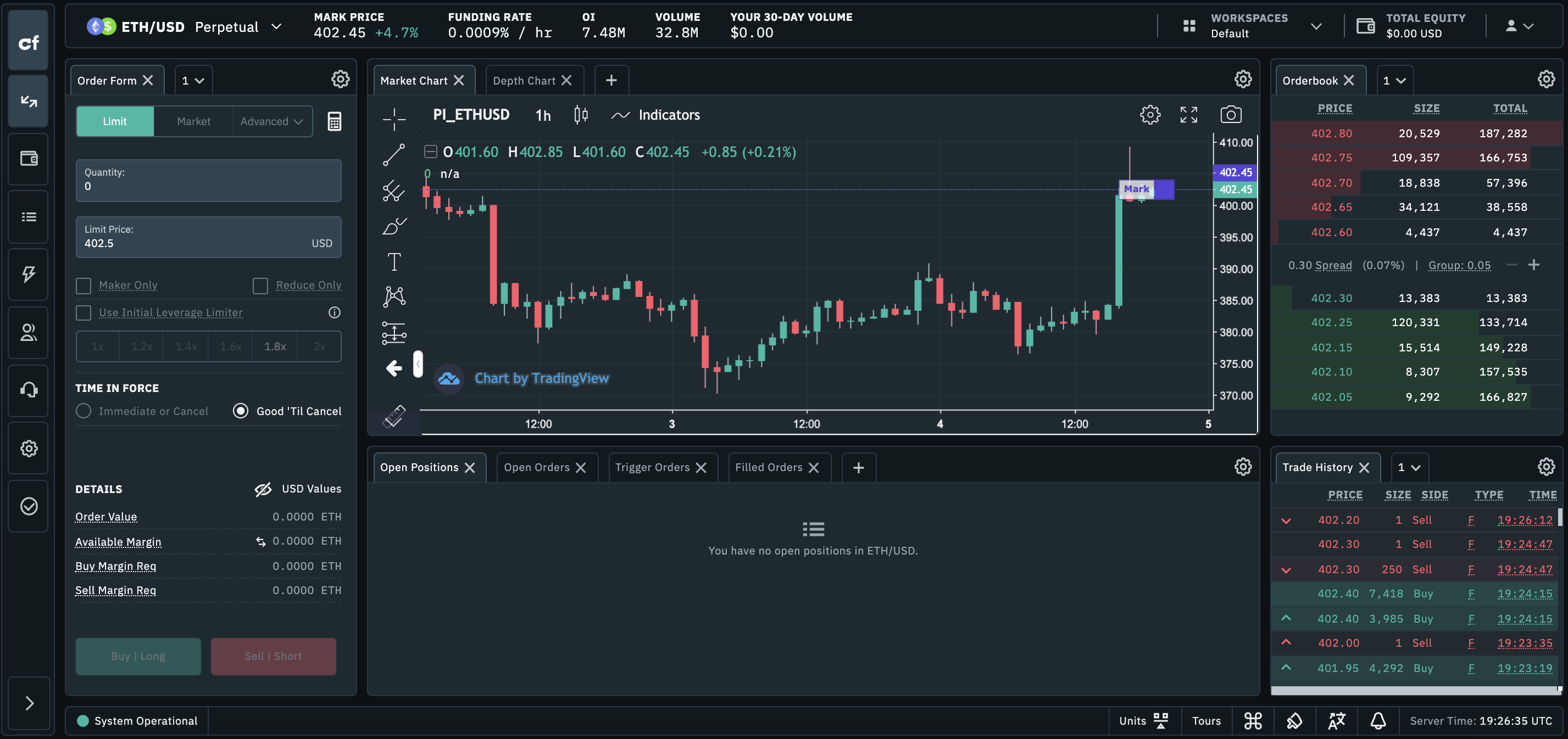
Professional crypto trading platform showing advanced charting and order management tools
The cryptocurrency market never sleeps, and neither do the opportunities for skilled day traders who understand how to navigate its unique characteristics. Unlike traditional stock markets with their 9-to-5 trading hours, crypto markets operate 24/7, creating continuous opportunities for those who know how to capitalize on price movements, volatility, and market inefficiencies.
Day trading cryptocurrency has evolved significantly since the early days of Bitcoin. What once required deep technical knowledge and access to specialized platforms is now accessible to retail traders through sophisticated yet user-friendly trading interfaces. However, accessibility doesn’t guarantee profitability – successful crypto day trading requires a systematic approach, disciplined risk management, and strategies specifically adapted to the unique characteristics of digital asset markets.
The year 2025 has brought new dynamics to crypto day trading. The maturation of the market has reduced some of the extreme volatility that characterized earlier years, but it has also introduced new opportunities through improved infrastructure, better liquidity, and the emergence of sophisticated trading tools. Institutional participation has added depth to markets while creating new patterns that skilled traders can exploit.
This comprehensive guide will explore proven day trading strategies that work in today’s crypto market environment. We’ll examine the fundamental differences between crypto and traditional asset trading, dive deep into specific strategies with real-world examples, and provide the tools and knowledge you need to develop your own profitable trading approach.
Why Crypto Day Trading is Different from Traditional Markets
Cryptocurrency markets operate under fundamentally different conditions than traditional financial markets, creating unique opportunities and challenges that day traders must understand to succeed. These differences aren’t just technical details – they form the foundation of why certain strategies work in crypto while others fail spectacularly.
The 24/7 nature of cryptocurrency markets represents the most obvious difference from traditional trading. While stock markets close for weekends and holidays, crypto markets continue operating, creating opportunities for traders who can monitor markets during off-hours for traditional assets. This continuous operation also means that significant price movements can occur at any time, requiring different approaches to risk management and position monitoring.
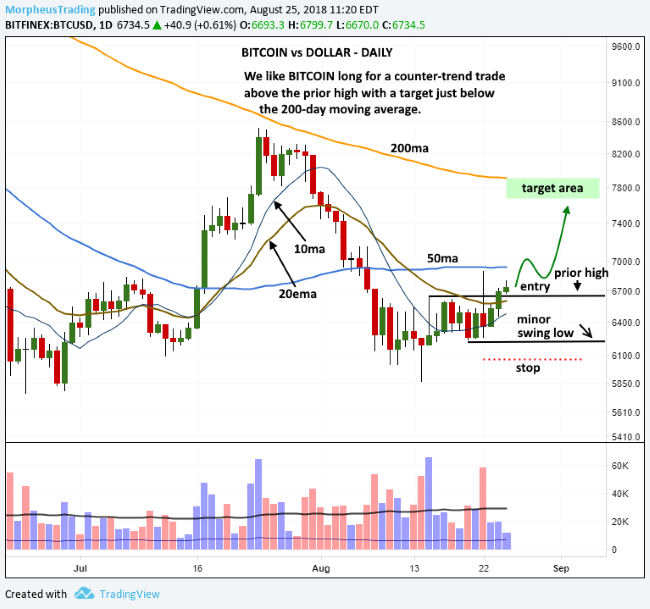
Bitcoin technical analysis showing key support and resistance levels with trading indicators
Volatility in cryptocurrency markets typically exceeds that of traditional assets by significant margins. Daily price swings of 5-10% are common for major cryptocurrencies, while smaller altcoins can experience movements of 20-50% or more in a single day. This volatility creates opportunities for substantial profits but also increases the risk of significant losses if not properly managed.
Liquidity characteristics vary dramatically across different cryptocurrencies and exchanges. While Bitcoin and Ethereum enjoy deep liquidity on major exchanges, smaller altcoins may have thin order books that can be easily manipulated or cause significant slippage on larger trades. Understanding liquidity patterns and their impact on trading strategies is crucial for success.
Market microstructure in crypto differs significantly from traditional markets. The fragmented nature of cryptocurrency exchanges means that the same asset can trade at different prices across platforms, creating arbitrage opportunities that don’t exist in traditional markets. Additionally, the lack of market makers in many crypto markets can lead to more erratic price movements and gaps.
Regulatory uncertainty continues to influence crypto markets in ways that don’t affect traditional assets. News about potential regulations, government crackdowns, or institutional adoption can cause immediate and dramatic price movements that dwarf the impact of similar news in traditional markets. Successful crypto traders must stay informed about regulatory developments across multiple jurisdictions.
The influence of social media and retail sentiment is amplified in crypto markets compared to traditional assets. A single tweet from an influential figure can move markets by billions of dollars, while Reddit communities and Telegram groups can coordinate buying or selling pressure that significantly impacts prices. Understanding and monitoring these sentiment drivers is essential for crypto day trading success.
Technical analysis patterns often behave differently in crypto markets due to the different participant base and market structure. Traditional chart patterns may not hold the same reliability, while new patterns specific to crypto markets have emerged. The prevalence of algorithmic trading and the influence of DeFi protocols also create unique technical dynamics.
Correlation patterns between cryptocurrencies and traditional assets change frequently, creating opportunities for traders who can identify and exploit these relationships. During some periods, crypto markets move independently of traditional assets, while during others, they may show high correlation with risk assets like technology stocks.
The role of stablecoins in crypto trading creates unique dynamics not present in traditional markets. The ability to quickly move between volatile cryptocurrencies and stable value tokens without exiting the crypto ecosystem enables different trading strategies and risk management approaches than are possible in traditional markets.
Essential Tools and Platforms for Crypto Day Trading
Success in crypto day trading depends heavily on having access to the right tools and platforms. The rapid pace of crypto markets and the need for precise execution make tool selection a critical component of any trading strategy. The landscape of crypto trading tools has evolved dramatically, offering sophisticated capabilities that rival or exceed those available in traditional markets.
Trading platforms form the foundation of your day trading operation. Binance has emerged as one of the most comprehensive platforms, offering deep liquidity, extensive cryptocurrency selection, and advanced trading features including futures, options, and margin trading. The platform’s API access enables algorithmic trading strategies, while its mobile app allows for monitoring and execution on the go.
Coinbase Pro (now Coinbase Advanced Trade) provides a more regulated and institutional-grade trading environment, particularly appealing to traders in jurisdictions with strict regulatory requirements. While the cryptocurrency selection is more limited than Binance, the platform offers excellent liquidity for major trading pairs and robust security features.

Professional crypto trading setup with multiple monitors showing different platforms and analysis tools
FTX, despite its 2022 collapse, demonstrated the potential for sophisticated crypto trading platforms. Its successor platforms and competitors like Bybit, OKX, and Kraken have incorporated many of FTX’s innovations, offering advanced order types, comprehensive derivatives markets, and institutional-grade trading infrastructure.
Decentralized exchanges (DEXs) like Uniswap, SushiSwap, and dYdX have introduced new trading opportunities and challenges. While DEXs offer access to tokens not available on centralized exchanges and eliminate counterparty risk, they also introduce different considerations around slippage, MEV (Maximal Extractable Value), and gas costs that day traders must understand.
Charting and technical analysis software is crucial for identifying trading opportunities and managing positions. TradingView has become the gold standard for crypto charting, offering comprehensive technical analysis tools, social features for sharing ideas, and integration with multiple exchanges for direct trading. The platform’s extensive indicator library and custom scripting capabilities enable sophisticated analysis strategies.
Portfolio tracking and P&L analysis tools help traders understand their performance and identify areas for improvement. Platforms like CoinTracker, Koinly, and Delta provide comprehensive portfolio tracking across multiple exchanges and wallets, while specialized tools like 3Commas offer advanced analytics specifically designed for crypto traders.
News and sentiment analysis tools are particularly important in crypto markets where information moves quickly and can have immediate price impacts. CryptoPanic aggregates news from multiple sources with sentiment analysis, while platforms like LunarCrush provide social sentiment metrics that can help identify emerging trends or potential market movements.
Automated trading bots have become increasingly sophisticated and accessible to retail traders. Platforms like 3Commas, Cryptohopper, and TradeSanta offer user-friendly interfaces for creating and managing trading bots, while more advanced users can develop custom strategies using platforms like Gekko or by directly accessing exchange APIs.
Risk management tools are essential for protecting capital in volatile crypto markets. Stop-loss orders, position sizing calculators, and portfolio heat maps help traders manage risk across multiple positions and timeframes. Some platforms offer advanced risk management features like trailing stops, OCO (One-Cancels-Other) orders, and portfolio-level risk limits.
Mobile trading capabilities have become crucial as crypto markets never sleep. Most major exchanges offer mobile apps with full trading functionality, while specialized mobile apps like Blockfolio (now FTX App) provide portfolio tracking and basic trading capabilities optimized for mobile use.
API access and algorithmic trading infrastructure enable more sophisticated strategies for advanced traders. Most major exchanges provide REST and WebSocket APIs that allow for high-frequency trading, arbitrage strategies, and custom trading algorithms. Understanding API rate limits, latency considerations, and proper error handling is crucial for algorithmic trading success.
When selecting tools and platforms, consider factors like security, regulatory compliance, fee structures, available trading pairs, and integration capabilities. The crypto trading landscape changes rapidly, so flexibility and the ability to adapt to new platforms and tools is important for long-term success.
Five Proven Day Trading Strategies with Examples
Successful crypto day trading requires a systematic approach with clearly defined strategies that can be executed consistently. The following five strategies have proven effective in various market conditions and can be adapted to different risk tolerances and trading styles.
Strategy 1: Breakout Trading
Breakout trading involves identifying key support and resistance levels and entering positions when price breaks through these levels with strong volume. This strategy works particularly well in crypto markets due to their tendency for explosive moves once key levels are breached.
The setup begins with identifying consolidation patterns where price has been trading within a defined range for several hours or days. Look for horizontal support and resistance levels that have been tested multiple times, creating clear boundaries for the consolidation. Volume should typically be declining during the consolidation phase, indicating reduced interest at current price levels.
Entry signals occur when price breaks above resistance (for long positions) or below support (for short positions) with significantly increased volume. The volume confirmation is crucial as it indicates genuine buying or selling pressure rather than a false breakout. A common rule is to require volume to be at least 150% of the average volume over the previous 20 periods.
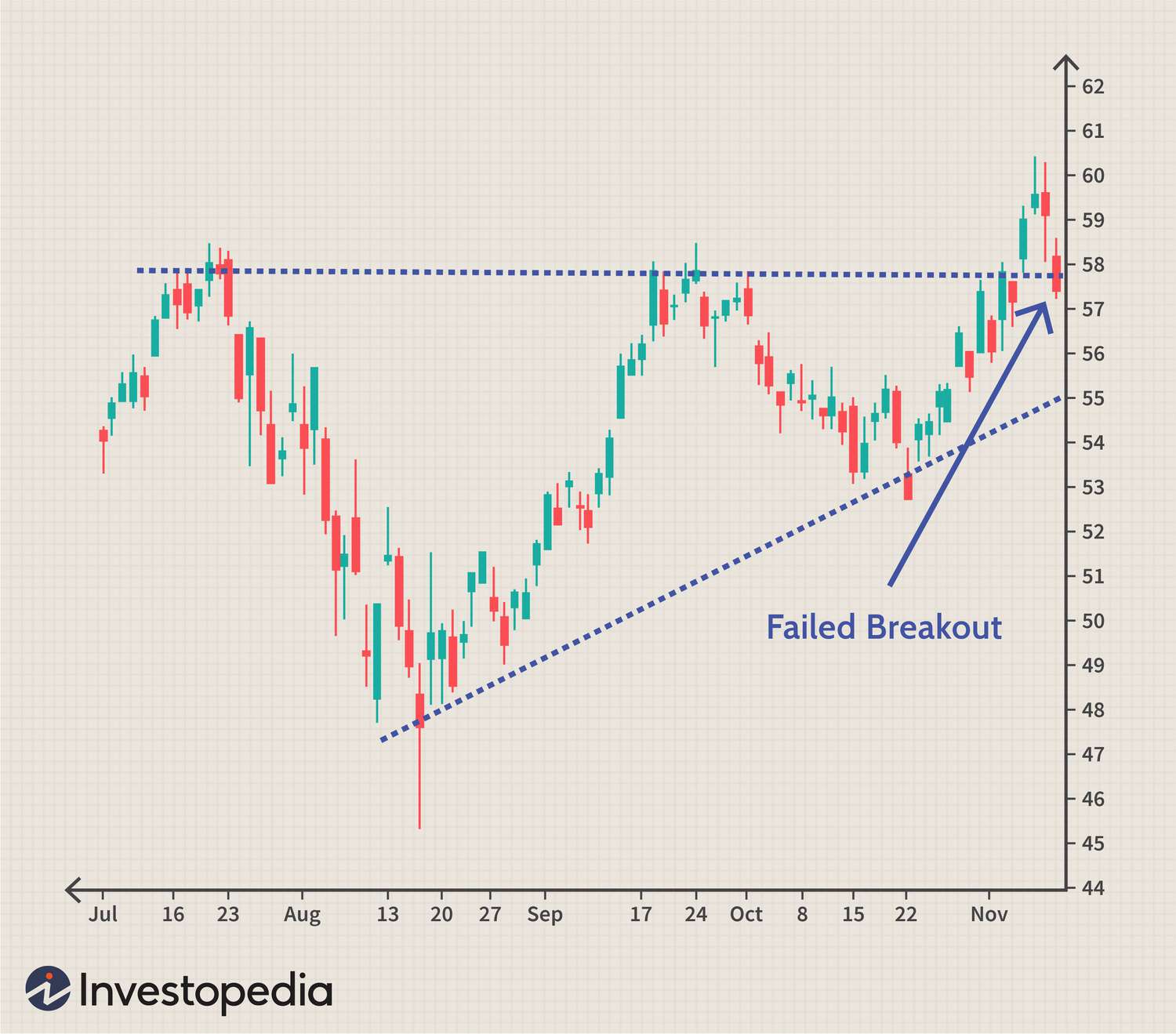
Chart example showing successful breakout trade with entry, stop-loss, and profit target levels marked
Risk management for breakout trades involves placing stop-losses just inside the broken level. For a bullish breakout above resistance, place the stop-loss slightly below the resistance level that was just broken. This protects against false breakouts while giving the trade room to develop. Position sizing should account for the distance to the stop-loss, typically risking no more than 1-2% of trading capital per trade.
Profit targets can be set using measured moves (projecting the height of the consolidation pattern) or by identifying the next significant resistance level. Many successful breakout traders use a 2:1 or 3:1 reward-to-risk ratio, ensuring that winning trades more than compensate for inevitable losses.
A real example occurred with Ethereum in March 2025 when it consolidated between $1,800 and $1,900 for five days. When ETH broke above $1,900 with 200% of average volume, it provided a clear long entry signal. With a stop-loss at $1,885 and a target at $2,000 (based on the $100 consolidation range), the trade offered a 6.7:1 reward-to-risk ratio and reached the target within two days.
Strategy 2: Mean Reversion Trading
Mean reversion trading capitalizes on the tendency of prices to return to their average after extreme moves. This strategy works well in crypto markets during periods of high volatility when prices often overshoot in both directions before correcting.
The foundation of mean reversion trading is identifying when an asset has moved too far from its average price and is likely to reverse. This can be measured using various indicators such as Bollinger Bands, RSI (Relative Strength Index), or custom moving average systems. The key is identifying extreme readings that historically have led to reversals.
Bollinger Bands provide an excellent framework for mean reversion trading. When price touches or exceeds the upper Bollinger Band, it suggests the asset may be overbought and due for a pullback. Conversely, when price touches the lower band, it may indicate oversold conditions and a potential bounce.
Entry signals for mean reversion trades often combine multiple indicators. A typical setup might require price to touch the upper Bollinger Band while RSI exceeds 70 and volume is above average. This confluence of signals increases the probability of a successful reversal trade.
The timing of entries is crucial for mean reversion strategies. Rather than entering immediately when extreme levels are reached, many successful traders wait for initial signs of reversal such as a reversal candlestick pattern or momentum divergence. This approach helps avoid catching a falling knife in strongly trending markets.
Stop-losses for mean reversion trades are typically placed beyond the extreme level that triggered the trade. For a short position entered when price hits the upper Bollinger Band, the stop-loss might be placed 1-2% above the entry point. This protects against the possibility that the extreme move continues rather than reversing.
A successful example occurred with Bitcoin in June 2025 when it spiked to $72,000, hitting the upper Bollinger Band with an RSI reading of 78. A short position entered at $71,500 with a stop at $73,000 and target at $68,000 (the middle Bollinger Band) provided a 2.3:1 reward-to-risk ratio and was profitable within 18 hours as Bitcoin retreated to $67,800.
Strategy 3: Momentum Trading
Momentum trading involves identifying and riding strong directional moves in cryptocurrency prices. This strategy capitalizes on the tendency of crypto assets to continue moving in the same direction once strong momentum is established, often driven by news events, technical breakouts, or market sentiment shifts.
Identifying momentum begins with recognizing the early stages of strong directional moves. This often involves monitoring for catalysts such as major news announcements, technical breakouts from consolidation patterns, or sudden increases in trading volume. The key is entering positions early in the momentum phase rather than chasing moves that are already extended.
Technical indicators that help identify momentum include the MACD (Moving Average Convergence Divergence), which signals when short-term momentum is accelerating relative to longer-term trends. A MACD crossover above the signal line, combined with both lines above zero, often indicates strong bullish momentum. Similarly, the Rate of Change (ROC) indicator can help identify when price momentum is accelerating.
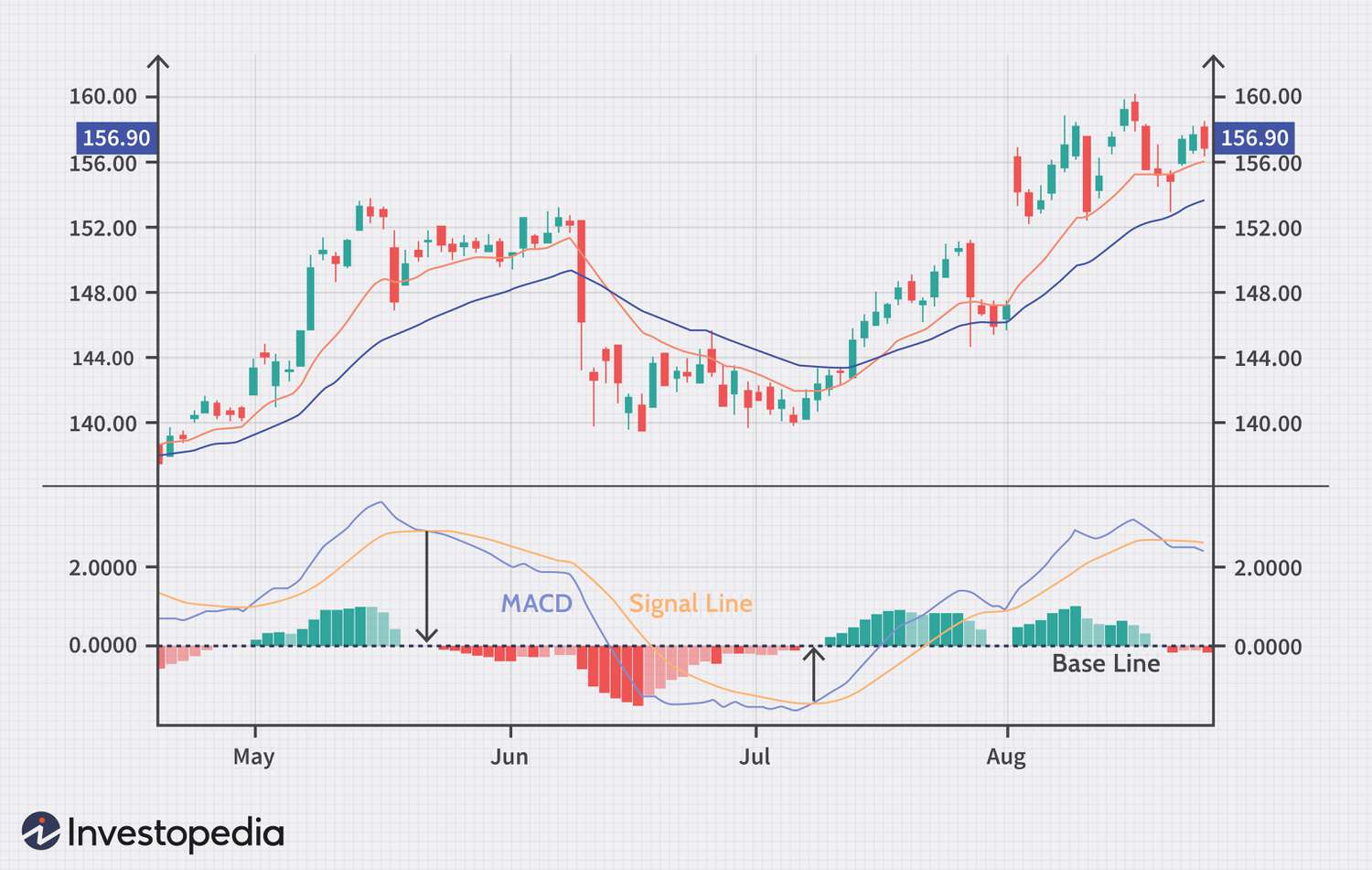
MACD momentum trading example showing signals and price acceleration patterns
Volume analysis is crucial for momentum trading as genuine momentum moves are typically accompanied by significantly increased trading volume. Look for volume spikes that are at least 200-300% of the average daily volume, indicating strong institutional or retail interest driving the move.
Entry timing for momentum trades often involves waiting for brief pullbacks within the overall trend rather than chasing the initial move. This approach, known as “buying the dip” in an uptrend, allows for better entry prices and more favorable risk-reward ratios. The pullback should be shallow (typically 20-40% of the initial move) and accompanied by decreasing volume.
Risk management in momentum trading requires trailing stop-losses that can capture profits while allowing the trend to continue. A common approach is to use a percentage-based trailing stop (such as 5-8% for crypto) or a technical trailing stop based on moving averages or support levels.
Position sizing for momentum trades can be more aggressive than other strategies due to the higher probability of success when genuine momentum is identified. However, this must be balanced against the potential for sudden reversals that can occur in crypto markets.
A notable example occurred with Solana in April 2025 when positive news about a major DeFi protocol launch caused SOL to break above $150 with massive volume. Entering a long position at $152 during the first pullback to $148, with a trailing stop initially set at $140, allowed traders to ride the momentum to $185 over the following week.
Strategy 4: Scalping
Scalping involves making numerous small profits from minor price movements throughout the trading day. This high-frequency approach requires excellent execution, tight spreads, and the ability to make quick decisions. Scalping works particularly well in crypto markets due to their high volatility and frequent small price movements.
The foundation of successful scalping is identifying liquid trading pairs with tight bid-ask spreads and consistent volume. Major pairs like BTC/USDT, ETH/USDT, and BNB/USDT on large exchanges typically provide the best conditions for scalping due to their deep order books and minimal slippage.
Scalping strategies often focus on very short timeframes, typically 1-minute to 5-minute charts. The goal is to identify small imbalances in supply and demand that create brief price movements of 0.1-0.5%. While these movements seem small, they can be profitable when executed with proper position sizing and frequency.
Technical analysis for scalping relies heavily on order book analysis, level 2 data, and very short-term indicators. Watching the order book for large buy or sell walls can provide insights into potential support and resistance levels. When these walls are removed or absorbed, it often creates scalping opportunities.
Entry signals for scalping might include sudden volume spikes, order book imbalances, or simple technical patterns like flag formations on very short timeframes. The key is identifying setups that offer quick profits with minimal risk exposure time.
Risk management in scalping requires very tight stop-losses, typically 0.1-0.3% from the entry price. The short holding periods mean that positions should be closed quickly if they move against you, preventing small losses from becoming larger ones. Many scalpers use a 1:1 or 2:1 reward-to-risk ratio due to the high frequency of trades.
Execution speed is crucial for scalping success. This often requires using advanced order types like iceberg orders or TWAP (Time-Weighted Average Price) orders to minimize market impact. Some scalpers use co-located servers or specialized trading software to reduce latency.
A typical scalping trade might involve buying Bitcoin at $50,000.00 when strong buying pressure appears in the order book, targeting a sale at $50,025.00 (0.05% profit) with a stop-loss at $49,987.50 (0.025% loss). With proper execution, such trades can be completed within minutes and repeated multiple times throughout the day.
Strategy 5: News-Based Trading
News-based trading involves capitalizing on price movements caused by fundamental developments, announcements, or market events. Crypto markets are particularly sensitive to news, making this strategy potentially very profitable for traders who can quickly interpret and act on new information.
The key to successful news trading is having access to information quickly and understanding how different types of news typically affect cryptocurrency prices. This requires monitoring multiple news sources, social media channels, and official announcements from projects, exchanges, and regulatory bodies.
Types of news that commonly move crypto markets include regulatory announcements, institutional adoption news, technical developments, partnership announcements, and macroeconomic events. Each type of news tends to affect different cryptocurrencies in predictable ways, allowing experienced traders to position accordingly.
Image Placement: [News trading example showing price reaction to major announcement with entry and exit points]
Preparation for news trading involves identifying upcoming events that could move markets and positioning accordingly. This might include earnings announcements from crypto-related companies, regulatory hearings, or scheduled technical upgrades to blockchain networks. Having positions ready before news breaks can provide significant advantages.
Execution speed is crucial for news trading as crypto markets often react within seconds of news breaking. This requires having trading platforms ready, understanding how to quickly enter and exit positions, and sometimes pre-positioning based on expected news outcomes.
Risk management for news trading must account for the potential for unexpected news outcomes or market reactions. Stop-losses should be wider than normal to account for increased volatility, and position sizes should be smaller to compensate for the higher risk.
A successful news trading example occurred in February 2025 when rumors emerged about a major technology company adding Bitcoin to its treasury. Traders who bought Bitcoin at $48,000 when the rumors first surfaced were able to sell at $52,000 when the news was officially confirmed six hours later, capturing a 8.3% gain in less than a day.
Technical Analysis Essentials for Crypto Markets
Technical analysis forms the backbone of most successful day trading strategies, but crypto markets require adaptations of traditional technical analysis principles. The unique characteristics of cryptocurrency markets – including 24/7 trading, high volatility, and different participant behavior – mean that some traditional patterns work differently while new patterns have emerged.
Support and resistance levels remain fundamental to crypto technical analysis but often behave more dynamically than in traditional markets. Psychological price levels (like round numbers) tend to be particularly significant in crypto, with levels like $50,000 for Bitcoin or $3,000 for Ethereum often acting as strong support or resistance. These levels are reinforced by the prevalence of retail traders who tend to place orders at round numbers.
Moving averages provide crucial trend identification and dynamic support/resistance levels in crypto markets. The 20-period and 50-period exponential moving averages (EMAs) are particularly popular among crypto traders, with the 20 EMA often acting as dynamic support in uptrends and resistance in downtrends. The relationship between price and these moving averages can provide clear signals about trend strength and potential reversal points.
Image Placement: [Technical analysis chart showing key indicators, support/resistance levels, and moving averages on a crypto chart]
Volume analysis takes on special importance in crypto markets due to the fragmented nature of trading across multiple exchanges. True volume analysis requires aggregating data from multiple exchanges, and many traders use volume-weighted average price (VWAP) as a key reference point for intraday trading decisions. Unusual volume spikes often precede significant price movements and can provide early warning signals.
Relative Strength Index (RSI) remains one of the most reliable momentum indicators for crypto trading, though the traditional overbought (70) and oversold (30) levels may need adjustment for different cryptocurrencies. Bitcoin often shows reliable reversal signals at RSI levels of 75+ and 25-, while more volatile altcoins might require extreme readings of 80+ and 20- to generate reliable signals.
MACD (Moving Average Convergence Divergence) provides excellent trend and momentum signals in crypto markets, particularly on higher timeframes. The MACD histogram can provide early signals of momentum changes, while MACD line crossovers above and below the signal line offer clear entry and exit signals. Divergences between MACD and price often precede significant reversals.
Bollinger Bands adapt well to crypto volatility and provide dynamic support and resistance levels that adjust to changing market conditions. The bands’ expansion and contraction can signal periods of high and low volatility, while price interactions with the bands provide trading signals. In crypto markets, price often “walks the bands” during strong trends, staying near the upper band in uptrends and lower band in downtrends.
Chart patterns in crypto markets often develop more quickly than in traditional markets due to the 24/7 trading and higher volatility. Classic patterns like triangles, flags, and head-and-shoulders formations remain valid but may complete in hours rather than days or weeks. The key is adjusting timeframe expectations while maintaining the same pattern recognition principles.
Fibonacci retracements and extensions work particularly well in crypto markets, possibly due to the high participation of retail traders who commonly use these tools. The 38.2%, 50%, and 61.8% retracement levels often provide strong support in pullbacks, while extension levels can provide profit targets for breakout trades.
Candlestick patterns remain relevant in crypto trading but require adaptation to the higher volatility environment. Doji candles, hammer patterns, and engulfing patterns can provide reversal signals, but confirmation from subsequent price action is even more important than in traditional markets due to the potential for false signals.
Multiple timeframe analysis is crucial for crypto day trading success. While primary trading decisions might be made on 5-minute or 15-minute charts, checking higher timeframes (1-hour, 4-hour, daily) for trend direction and key levels provides essential context. The overall trend on higher timeframes should inform the bias for shorter-term trades.
Indicator divergences often provide the most reliable signals in crypto markets. When price makes new highs but momentum indicators like RSI or MACD fail to confirm with new highs, it often signals potential reversals. These divergences can provide early warning signals that allow traders to position for trend changes before they become obvious to the broader market.
Best Cryptocurrencies for Day Trading
Selecting the right cryptocurrencies for day trading is crucial for success, as different digital assets offer varying levels of volatility, liquidity, and predictability. The best day trading cryptocurrencies combine sufficient volatility to generate profit opportunities with enough liquidity to ensure smooth execution and minimal slippage.
Bitcoin remains the gold standard for crypto day trading due to its deep liquidity, predictable behavior patterns, and strong correlation with overall market sentiment. BTC’s large market capitalization means it’s less susceptible to manipulation, while its status as the market leader makes it responsive to both technical and fundamental analysis. The abundance of Bitcoin trading pairs across all major exchanges provides numerous opportunities for arbitrage and cross-pair trading strategies.
Bitcoin’s volatility has moderated compared to its early years but still provides ample opportunities for day traders. Daily price swings of 3-7% are common, providing sufficient movement for profitable trades while being manageable from a risk perspective. The cryptocurrency’s tendency to respect technical levels and chart patterns makes it particularly suitable for technical analysis-based strategies.
Image Placement: [Volatility comparison chart showing daily price ranges for top cryptocurrencies suitable for day trading]
Ethereum offers excellent day trading opportunities due to its role as the foundation of the DeFi ecosystem and its sensitivity to both technical factors and fundamental developments. ETH often exhibits stronger momentum moves than Bitcoin, particularly during periods of DeFi innovation or network upgrades. The cryptocurrency’s correlation with Bitcoin provides opportunities for pair trading strategies.
The upcoming Ethereum developments, including continued scaling solutions and ecosystem growth, create regular catalysts that can drive significant price movements. ETH’s behavior often leads altcoin movements, making it an excellent barometer for broader market sentiment and a key asset for momentum-based strategies.
Binance Coin (BNB) has emerged as a premier day trading asset due to its utility within the Binance ecosystem and its regular token burn events that create predictable volatility patterns. BNB’s price often moves independently of Bitcoin and Ethereum, providing diversification benefits for day trading portfolios. The token’s utility for trading fee discounts creates consistent demand that supports price stability during market downturns.
Solana (SOL) offers high volatility and strong momentum characteristics that appeal to aggressive day traders. The network’s focus on high-speed transactions and growing DeFi ecosystem creates regular news catalysts that drive price movements. SOL’s tendency for explosive moves in both directions makes it suitable for breakout and momentum strategies, though risk management becomes even more critical.
Cardano (ADA) provides more predictable price movements and strong technical pattern recognition, making it suitable for traders who prefer systematic approaches. ADA’s development roadmap creates regular fundamental catalysts, while its strong community following ensures consistent trading volume. The cryptocurrency’s tendency to respect Fibonacci levels and moving averages makes it particularly suitable for technical analysis strategies.
Polygon (MATIC) has gained popularity among day traders due to its role in Ethereum scaling and its sensitivity to DeFi developments. MATIC often exhibits strong correlation with Ethereum during DeFi bull runs while maintaining independent movement during other periods. The token’s utility in the growing Polygon ecosystem provides fundamental support for price movements.
Chainlink (LINK) offers unique day trading opportunities due to its role as a leading oracle provider and its tendency for sudden, news-driven price movements. LINK’s integration announcements with major projects often create immediate price reactions, making it suitable for news-based trading strategies. The token’s technical patterns often provide clear entry and exit signals.
Avalanche (AVAX) provides high volatility and strong momentum characteristics, particularly during periods of ecosystem growth. AVAX’s competition with Ethereum for DeFi market share creates regular catalysts for price movements. The token’s tendency for sustained trends makes it suitable for momentum and trend-following strategies.
When selecting cryptocurrencies for day trading, consider factors beyond just volatility and liquidity. Market capitalization affects susceptibility to manipulation, with larger cap coins generally providing more predictable behavior. Trading volume consistency ensures that you can enter and exit positions without significant slippage, particularly important for larger position sizes.
Exchange availability is another crucial factor, as having access to multiple exchanges provides arbitrage opportunities and ensures you can always find liquidity. Correlation patterns with Bitcoin and other major cryptocurrencies can help in developing pair trading strategies and understanding broader market dynamics.
News sensitivity varies significantly between cryptocurrencies, with some being highly reactive to fundamental developments while others primarily follow technical patterns. Understanding each asset’s typical behavior patterns helps in selecting appropriate trading strategies and managing expectations for different market conditions.
Risk Management and Position Sizing
Effective risk management separates successful crypto day traders from those who quickly lose their capital. The high volatility and 24/7 nature of cryptocurrency markets amplify both opportunities and risks, making disciplined risk management absolutely essential for long-term success.
The foundation of crypto day trading risk management is the 1% rule – never risk more than 1% of your total trading capital on any single trade. This conservative approach ensures that even a string of losing trades won’t significantly damage your account. For a $10,000 trading account, this means risking no more than $100 per trade, which determines your position size based on your stop-loss distance.
Position sizing calculations must account for the specific volatility of each cryptocurrency and the distance to your stop-loss level. If you’re trading Bitcoin with a stop-loss 2% away from your entry, you can take a larger position than if you’re trading a more volatile altcoin with a 5% stop-loss distance. The formula is simple: Risk Amount ÷ Stop-Loss Distance = Position Size.
Image Placement: [Risk management calculator showing position sizing examples for different cryptocurrencies and stop-loss distances]
Stop-loss placement in crypto markets requires understanding the typical volatility patterns of each asset. Bitcoin might require stop-losses 2-3% away from entry to avoid being stopped out by normal market noise, while smaller altcoins might need 5-8% stops. The key is balancing protection against losses with giving trades room to develop.
Trailing stops become particularly important in crypto day trading due to the potential for explosive moves. A trailing stop allows you to capture profits while letting winning trades run. Many successful crypto traders use percentage-based trailing stops (such as 3-5%) or technical trailing stops based on moving averages or support levels.
The risk-reward ratio for each trade should be calculated before entry, with most successful day traders requiring at least a 2:1 reward-to-risk ratio. This means that if you’re risking $100 on a trade, your profit target should be at least $200. This ensures that even with a 50% win rate, you’ll be profitable over time.
Diversification in crypto day trading involves spreading risk across different cryptocurrencies, strategies, and timeframes. Avoid concentrating all your trades in highly correlated assets, as they tend to move together during market stress. Trading different strategies simultaneously can also help smooth out returns and reduce overall portfolio volatility.
Maximum daily loss limits help prevent emotional trading and protect capital during difficult periods. Many successful traders set a maximum daily loss of 3-5% of their account and stop trading for the day if this limit is reached. This prevents the common mistake of trying to “revenge trade” to recover losses, which often leads to even larger losses.
Leverage management is crucial in crypto trading, where many platforms offer 10x, 50x, or even 100x leverage. While leverage can amplify profits, it also amplifies losses and increases the risk of liquidation. Conservative traders might use 2-3x leverage maximum, while more aggressive traders might use higher leverage but with correspondingly smaller position sizes.
Emotional control and psychological risk management are often overlooked but equally important. Fear of missing out (FOMO) can lead to chasing trades and taking excessive risks, while fear can prevent you from taking valid setups. Developing a systematic approach and sticking to predetermined rules helps manage these psychological challenges.
Market condition awareness helps adjust risk management parameters based on overall market volatility and trends. During high volatility periods, you might reduce position sizes or widen stop-losses. During low volatility periods, you might be able to take larger positions or use tighter stops.
Regular performance review and risk assessment help identify areas for improvement in your risk management approach. Track metrics like win rate, average win/loss ratio, maximum drawdown, and risk-adjusted returns. This data helps you understand whether your risk management is appropriate for your trading style and market conditions.
Emergency procedures should be established for various scenarios, including exchange outages, internet connectivity issues, or extreme market events. Having backup plans and knowing how to quickly exit all positions can prevent small problems from becoming major losses.
Common Mistakes and How to Avoid Them
Crypto day trading is littered with common mistakes that can quickly erode trading capital and destroy promising careers. Understanding these pitfalls and implementing strategies to avoid them is crucial for long-term success in the volatile world of cryptocurrency trading.
Overtrading represents one of the most destructive mistakes in crypto day trading. The 24/7 nature of crypto markets and the constant stream of opportunities can lead traders to take too many trades, often with insufficient analysis or poor setups. Quality should always trump quantity – it’s better to take two high-probability trades per day than ten mediocre ones.
The solution to overtrading involves developing strict criteria for trade setups and having the discipline to wait for these criteria to be met. Create a checklist of requirements that must be satisfied before entering any trade, and stick to it regardless of how many “opportunities” you see. Many successful traders limit themselves to a maximum number of trades per day to enforce this discipline.
Image Placement: [Trading journal screenshot showing the difference between overtrading and selective trading results]
Chasing pumps and FOMO (Fear of Missing Out) trading destroys more crypto trading accounts than any other single factor. When a cryptocurrency suddenly spikes 20-30%, inexperienced traders often buy at the top, hoping the move will continue. These trades typically result in immediate losses as the asset retraces from its spike high.
Avoiding FOMO requires understanding that there will always be another opportunity and that missing one trade is far better than taking a bad one. Develop the mindset that if you missed the initial move, the opportunity has passed. Focus on finding the next setup rather than chasing the current one.
Inadequate risk management, particularly position sizing errors, can turn winning strategies into losing ones. Many traders risk too much per trade, either through ignorance of proper position sizing or through overconfidence in their analysis. Even the best trading strategy will fail if position sizes are too large relative to account size.
Implementing proper position sizing requires calculating your risk for every trade before entry and ensuring it never exceeds your predetermined maximum (typically 1-2% of account size). Use position sizing calculators and make this calculation automatic rather than estimating or guessing.
Ignoring market structure and trying to trade against strong trends is another common mistake. Crypto markets can trend strongly for extended periods, and trying to pick tops and bottoms often results in repeated losses. The old adage “the trend is your friend” applies strongly to crypto markets.
Successful trend trading requires identifying the overall market direction and trading in alignment with it. Use multiple timeframe analysis to understand the broader trend context, and avoid counter-trend trades unless you have very specific, high-probability setups.
Emotional trading, particularly revenge trading after losses, can quickly spiral out of control in volatile crypto markets. After a losing trade, the natural impulse is to immediately enter another trade to “get even.” This emotional state typically leads to poor decision-making and larger losses.
Preventing emotional trading requires having predetermined rules for what to do after losses. Many successful traders take a mandatory break after two consecutive losses or after reaching their daily loss limit. This cooling-off period allows emotions to settle and rational thinking to return.
Neglecting fundamental analysis in favor of pure technical analysis can lead to being caught on the wrong side of major news events. While technical analysis is crucial for timing entries and exits, understanding the fundamental factors that drive cryptocurrency prices helps avoid major pitfalls.
Balancing technical and fundamental analysis involves staying informed about major developments in the cryptocurrencies you trade while using technical analysis for precise timing. Set up news alerts for your primary trading assets and understand how different types of news typically affect prices.
Poor record-keeping and failure to analyze trading performance prevents improvement and can lead to repeating the same mistakes. Many traders focus only on their wins and ignore their losses, missing valuable learning opportunities.
Maintaining a detailed trading journal that records not just the financial results but also the reasoning behind each trade, market conditions, and emotional state helps identify patterns and areas for improvement. Review this journal regularly to understand what’s working and what isn’t.
Inadequate preparation and lack of a trading plan leads to reactive rather than proactive trading. Without a clear plan, traders often make impulsive decisions based on momentary market movements rather than systematic analysis.
Developing a comprehensive trading plan involves defining your trading goals, preferred strategies, risk management rules, and criteria for entering and exiting trades. This plan should be written down and reviewed regularly, serving as your guide during the heat of trading.
Conclusion and Building Your Trading Plan
Successful crypto day trading in 2025 requires a combination of technical skill, disciplined risk management, and psychological control that goes far beyond simply buying low and selling high. The strategies outlined in this guide – breakout trading, mean reversion, momentum trading, scalping, and news-based trading – provide a foundation for developing your own profitable approach to crypto day trading.
The key to long-term success lies not in finding the “perfect” strategy but in developing a systematic approach that you can execute consistently over time. This means understanding your own risk tolerance, time availability, and psychological makeup, then selecting and adapting strategies that align with these factors.
Building your personal trading plan should start with clearly defined goals and realistic expectations. Day trading is not a get-rich-quick scheme, and even successful traders experience losing periods. Set specific, measurable goals for both returns and risk management, and understand that consistency is more important than spectacular individual trades.
Your trading plan should specify exactly which cryptocurrencies you’ll trade, what timeframes you’ll use, and what technical and fundamental criteria must be met before entering trades. Include specific rules for position sizing, stop-loss placement, and profit-taking. The more specific your plan, the easier it will be to execute consistently.
Image Placement: [Trading plan template showing key components and decision-making flowchart]
Risk management rules should be non-negotiable components of your trading plan. Specify your maximum risk per trade, daily loss limits, and position sizing methodology. Include procedures for what to do after losses and how to handle winning streaks. These rules will protect your capital during inevitable difficult periods.
Continuous education and adaptation are essential in the rapidly evolving crypto market. Stay informed about new developments in blockchain technology, regulatory changes, and market structure evolution. The strategies that work today may need modification as markets mature and new participants enter.
Practice and backtesting should precede live trading with significant capital. Use demo accounts or small position sizes to test your strategies and refine your approach. Paper trading can help you understand strategy mechanics, though it can’t replicate the psychological pressures of real money trading.
Performance tracking and regular review of your trading results will help you identify what’s working and what needs improvement. Track not just profits and losses but also metrics like win rate, average trade duration, and maximum drawdown. This data will guide your strategy refinement over time.
The crypto day trading landscape will continue to evolve, with new opportunities and challenges emerging regularly. Institutional participation is increasing, regulatory frameworks are developing, and new technologies like layer 2 solutions are changing market dynamics. Successful traders will be those who can adapt to these changes while maintaining disciplined execution of proven principles.
Remember that day trading is a business, and like any business, it requires capital, skills, and time to develop profitably. Start with capital you can afford to lose, focus on developing your skills before worrying about profits, and be prepared for a learning curve that may take months or years to master.
The strategies and principles outlined in this guide provide a roadmap for crypto day trading success, but your individual journey will depend on your dedication to learning, discipline in execution, and ability to adapt to changing market conditions. With proper preparation, realistic expectations, and consistent application of proven principles, crypto day trading can become a profitable endeavor in 2025 and beyond.
Disclaimer: Day trading cryptocurrencies involves substantial risk and is not suitable for all investors. The high volatility of cryptocurrency markets can result in significant losses, including the potential loss of your entire trading capital. This article is for educational purposes only and should not be considered financial advice. Always conduct your own research and consider consulting with qualified financial advisors before making trading decisions. Past performance does not guarantee future results.
About the Author: everythingcryptoitclouds.com is a leading resource for cryptocurrency education and investment strategies, providing in-depth analysis and practical guidance for digital asset investors of all experience levels.

 Crypto, IT & Cloud