Author: everythingcryptoitclouds.com
Introduction: The Year AI Went from Hype to Hard Reality
The year 2025 will be remembered as the moment Artificial Intelligence transitioned from a futuristic concept to an undeniable, transformative force reshaping global commerce, finance, and labor. While 2024 was characterized by the initial shockwave of Generative AI, 2025 was the year of industrialization, where companies stopped experimenting and started integrating AI at scale. This shift was marked by unprecedented financial milestones, a dramatic re-prioritization of corporate capital, and the emergence of new AI paradigms that promise to redefine the digital landscape in 2026 [1].
1. The Trillion-Dollar Hardware War: Nvidia’s Unstoppable Ascendence
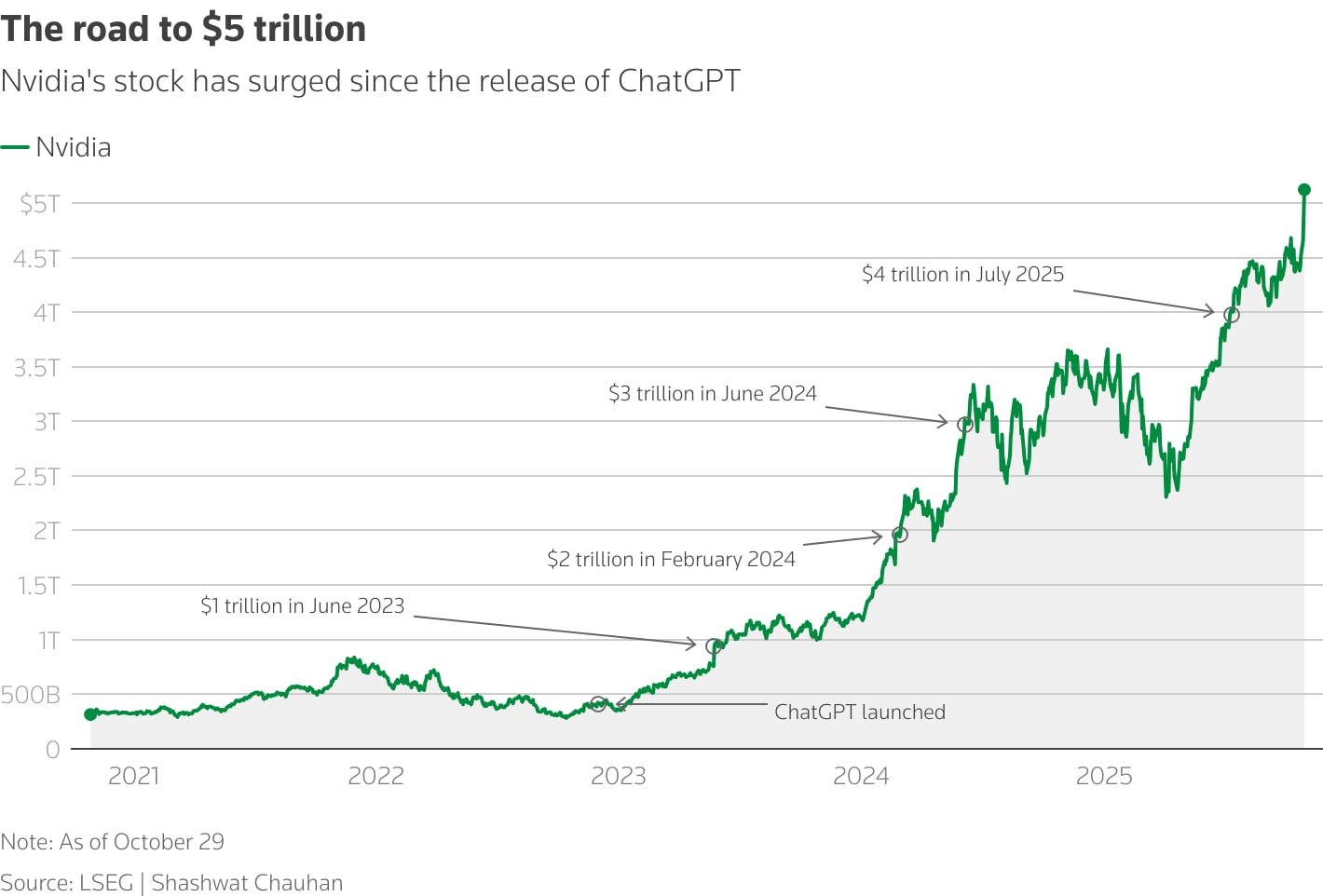
The most visible story of 2025 was the continued, explosive growth of the AI infrastructure market, dominated by Nvidia. The chipmaker cemented its status as the central enabler of the AI era, becoming the first company in history to exceed a $5 trillion market capitalization in October [2]. This staggering valuation was fueled by relentless demand for its high-performance GPUs, which are the backbone of large language model training and inference.
Nvidia’s influence extended beyond chip sales. The company made massive strategic investments, including a reported $100 billion into OpenAI, and unveiled new product lines like the Blackwell Ultra GPU and RTX Pro servers [3]. These servers, aimed at enterprise data centers, represent a multi-billion-dollar opportunity for infrastructure refresh, signaling that the AI hardware boom is far from over.
Meanwhile, legacy chipmaker Intel, while struggling with internal restructuring and executive changes, made a surprising move by entering a joint development deal with Nvidia. This partnership aims to integrate Intel’s custom CPU with Nvidia’s powerful platforms, illustrating that even competitors must collaborate to meet the immense computational demands of modern AI [4].
2. The Great Reallocation: Layoffs and the AI Investment Boom
The rapid shift to AI-first strategies had a profound and often painful impact on the workforce. 2025 saw a wave of mass layoffs across the technology sector, with giants like Amazon, Google, Microsoft, and Oracle making significant cuts [5].
While some companies attributed the downsizing to standard business evaluations, the underlying narrative was clear: a massive reallocation of capital towards AI investment. Companies were shedding non-AI-focused divisions to free up resources for the immense spending required to build and deploy AI infrastructure. The year was defined by a tension between the promise of AI-driven efficiency and the immediate human cost of corporate restructuring. The question for 2026 remains whether AI tools will begin to automate away entire job functions, moving beyond the automation of simple, manual tasks.
3. The Acquisition Frenzy: Tech Giants Buy Their Way to Dominance
To accelerate their AI capabilities, major technology vendors engaged in a multi-billion-dollar acquisition spree, buying up specialized AI startups and established players alike. This was a clear strategy to acquire talent, technology, and market share instantly.
Key acquisitions and planned deals have been done in 2025.
These deals not only consolidated power among the tech elite but also signaled the maturity of the AI market, where specialized capabilities like AI security, data governance, and AIOps became high-value targets [6].

4. The Rise of the Agent: AI Moves to Autonomous Action
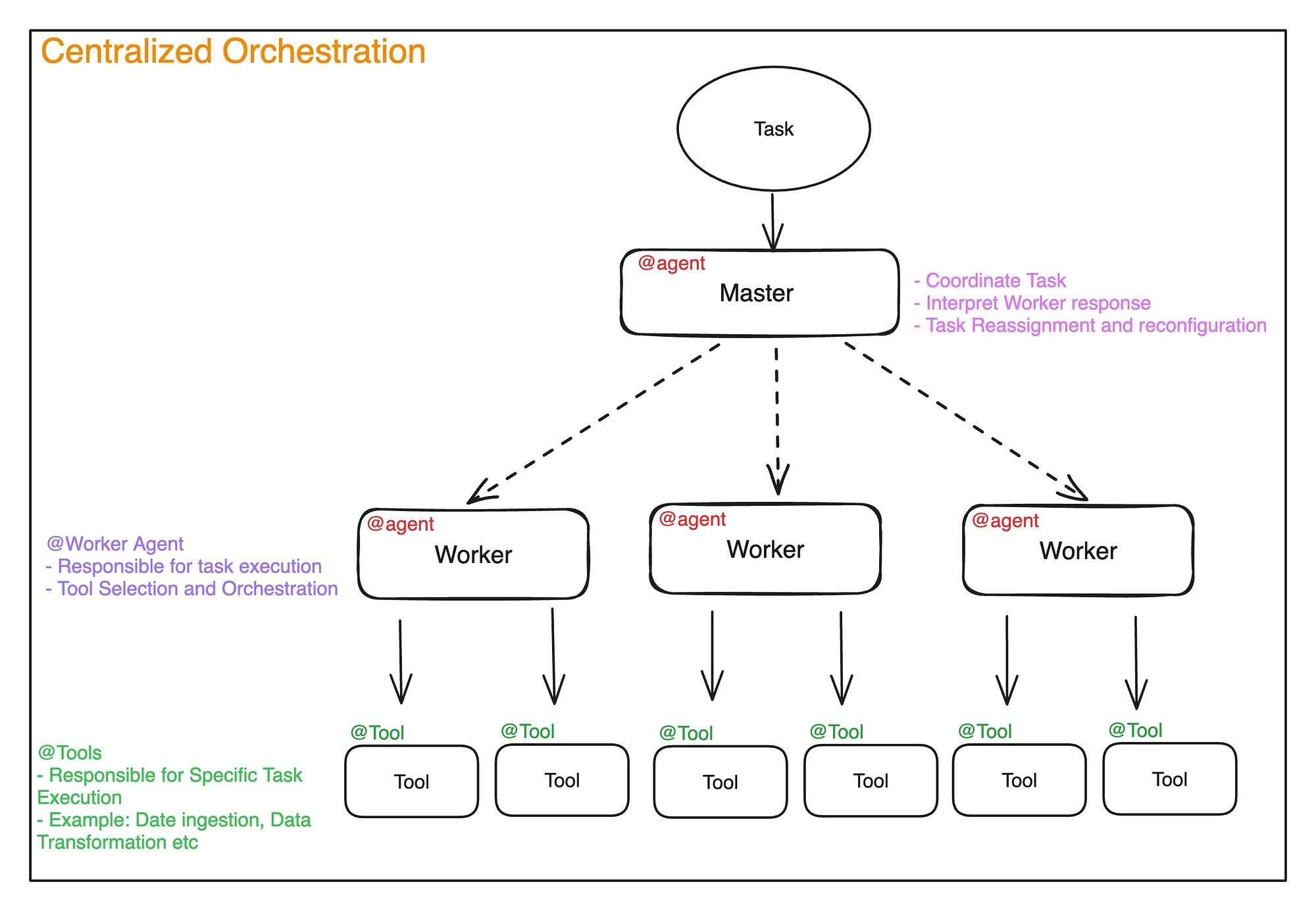
Perhaps the most significant technological leap of 2025 was the maturation of AI Agents and orchestration platforms. Moving beyond simple conversational chatbots, AI agents are designed to perform complex, multi-step tasks autonomously, such as managing customer service workflows, optimizing supply chains, or executing financial trades.
This shift was particularly evident in the Managed Service Provider (MSP) space, where new platforms like the Pax8 AI Agent Store and Rewst’s expanded automation tools emerged [7]. The industry narrative shifted from “AI as a tool” to “AI as a system of action,” with agents taking on more responsibility and transforming the service desk into a highly automated operation. Orchestration platforms, which manage the interaction between multiple specialized AI models, became essential infrastructure for enterprises [8].
5. Generative AI Breakthroughs: Smaller, Faster, Smarter
While the commercial applications dominated the headlines, the underlying technology continued its rapid evolution. 2025 saw significant breakthroughs in model efficiency. New generative AI models were released that were smaller, faster, and cheaper to run than their predecessors, yet matched the performance of the massive models released in 2022 [9].
This trend of “shrinking AI” democratized access to powerful models, allowing smaller companies and even individual developers to deploy sophisticated AI without needing a multi-billion-dollar data center. The private investment in Generative AI remained robust, attracting over $33.9 billion globally, an 18.7% increase from the previous year, confirming that innovation is accelerating, not slowing down [10].
Conclusion: Looking Ahead to 2026
The year 2025 was a pivotal chapter in the AI story, defined by massive financial commitments and the shift from theoretical potential to practical, industrial-scale deployment. The hardware wars intensified, corporate capital was ruthlessly reallocated, and the rise of autonomous AI agents set the stage for a new era of automation. As we enter 2026, the focus will move from building the AI infrastructure to optimizing and securing the AI-driven enterprise, ensuring that the transformative power of this technology delivers tangible, sustained value.
References
[1] World Economic Forum. The top artificial intelligence stories from 2025. [URL: https://www.weforum.org/stories/2025/12/the-top-ai-stories-from-2025/%5D
[2] Financial Post. Nvidia becomes first US$5 trillion company. [URL: https://financialpost.com/investing/nvidia-becomes-first-us5-trillion-company%5D
[3] CRN. The 10 Biggest AI News Stories Of 2025. [URL: https://www.crn.com/news/ai/2025/the-10-biggest-ai-news-stories-of-2025%5D
[4] CRN. Nvidia’s Ascendence, Intel’s Struggles. [URL: https://www.crn.com/news/ai/2025/the-10-biggest-ai-news-stories-of-2025?page=4%5D
[5] CNN. How AI shook the world in 2025 and what comes next. [URL: https://www.cnn.com/2025/12/30/tech/how-ai-changed-world-predictions-2026-vis%5D
[6] CRN. Big-Money Vendor AI Acquisitions. [URL: https://www.crn.com/news/ai/2025/the-10-biggest-ai-news-stories-of-2025?page=5%5D
[7] CRN. Solution Providers Buy Innovative AI Practices. [URL: https://www.crn.com/news/ai/2025/the-10-biggest-ai-news-stories-of-2025?page=7%5D
[8] Mastercard. Agents of change: The rise of AI in 2025 and what’s coming next. [URL: https://www.mastercard.com/us/en/news-and-trends/stories/2025/AI-2025-year-in-review.html%5D
[9] Stanford HAI. Most-Read: The Stanford HAI Stories that Defined AI in 2025. [URL: https://hai.stanford.edu/news/most-read-the-stanford-hai-stories-that-defined-ai-in-2025%5D
[10] Stanford HAI. The 2025 AI Index Report. [URL: https://hai.stanford.edu/ai-index/2025-ai-index-report%5D

 Crypto, IT & Cloud