The Great Crypto Collapse: How November 2025’s Bear Market Wiped Out an Entire Year of Gains in Just One Month

By everythingcryptoitclouds.com | November 7, 2025

The cryptocurrency market has experienced one of its most dramatic reversals in recent history, with digital assets erasing nearly all of their 2025 gains in just over a month. This unprecedented collapse has sent shockwaves through the financial world, as Bitcoin plummeted below the psychologically critical $100,000 threshold and the broader crypto market capitalization fell to $3.46 trillion, marking a devastating 2.6% decline that has left investors reeling and questioning the sustainability of the digital asset revolution.

The magnitude of this market correction cannot be overstated. What began as a promising year for cryptocurrency adoption and institutional acceptance has transformed into a cautionary tale of market volatility and the inherent risks associated with digital asset investments. The speed and severity of this decline have caught even seasoned market analysts off guard, as the crypto ecosystem that had shown remarkable resilience throughout 2025 suddenly found itself in the grip of a bear market that has wiped out hundreds of billions of dollars in market value.

The Anatomy of a Market Collapse

The current cryptocurrency bear market represents more than just a typical correction; it embodies a fundamental shift in market sentiment that has been building beneath the surface for months. The collapse began with subtle warning signs that many investors chose to ignore, including declining trading volumes, reduced institutional interest, and growing regulatory uncertainty across major markets. These factors created a perfect storm that ultimately triggered the massive sell-off we are witnessing today.

Bitcoin, the flagship cryptocurrency that had been trading comfortably above $100,000 for much of 2025, experienced a precipitous fall that saw its value drop to approximately $99,600 according to multiple exchange data. This represents a staggering 5% decline from the previous week’s price of $106,820, and more alarmingly, a 15.75% decrease over the past month. The psychological impact of Bitcoin falling below the six-figure threshold cannot be understated, as this level had become a symbol of cryptocurrency’s mainstream acceptance and institutional validation.

The broader cryptocurrency market has not been spared from this carnage. Ethereum, the second-largest cryptocurrency by market capitalization, has suffered even more severe losses, declining 6.0% to approximately $3,299. This decline is particularly concerning given Ethereum’s role as the backbone of the decentralized finance (DeFi) ecosystem and its importance to the broader cryptocurrency infrastructure. Solana, another major altcoin that had shown remarkable growth throughout 2025, has also experienced significant losses, falling 3.0% as investors flee from risk assets across the board.

The market capitalization figures paint an even more sobering picture of the current crisis. The total cryptocurrency market cap has contracted to $3.46 trillion, representing a 2.6% decline that translates to approximately $92 billion in lost value. To put this in perspective, this single-day loss exceeds the entire market capitalization of many Fortune 500 companies and represents a significant destruction of wealth that extends far beyond the cryptocurrency ecosystem into traditional financial markets and institutional portfolios.

Understanding the Catalysts Behind the Collapse

The current bear market did not emerge in a vacuum but rather represents the culmination of several interconnected factors that have been building pressure within the cryptocurrency ecosystem for months. Understanding these catalysts is crucial for investors and market participants who are attempting to navigate the current crisis and position themselves for potential recovery opportunities.

Regulatory uncertainty has emerged as one of the primary drivers of the current market decline. Governments around the world have been grappling with how to regulate cryptocurrency markets, and recent policy announcements have created significant uncertainty among investors. The lack of clear regulatory frameworks has made institutional investors increasingly cautious about maintaining large cryptocurrency positions, leading to a gradual exodus of institutional capital that has accelerated in recent weeks.

Macroeconomic factors have also played a significant role in the current market decline. Rising interest rates, inflation concerns, and global economic uncertainty have led investors to seek safer assets, resulting in a flight to quality that has negatively impacted risk assets like cryptocurrencies. The correlation between cryptocurrency prices and traditional risk assets has become increasingly apparent during this market cycle, suggesting that digital assets have not yet achieved the status of safe-haven assets that many proponents had hoped for.

Technical factors within the cryptocurrency market itself have also contributed to the severity of the current decline. Overleveraged positions, particularly in the derivatives markets, have created a cascade of liquidations that have amplified the downward price movement. The interconnected nature of the cryptocurrency ecosystem means that declines in major cryptocurrencies like Bitcoin and Ethereum have ripple effects throughout the entire market, affecting everything from DeFi protocols to non-fungible token (NFT) markets.

Market sentiment has shifted dramatically from the optimism that characterized much of 2025 to the fear and uncertainty that now dominates trading decisions. Social media sentiment analysis and fear and greed indices have reached levels not seen since previous major market corrections, indicating that the psychological component of this decline may be as significant as the fundamental factors driving the sell-off.

The Human Cost of Market Volatility

Behind the statistics and market data lies a human story of financial loss and emotional distress that extends far beyond the trading floors and institutional investment offices. Retail investors, many of whom entered the cryptocurrency market during the bull run of 2025, are now facing significant losses that in many cases represent substantial portions of their savings and investment portfolios.

The democratization of cryptocurrency investing through user-friendly platforms and mobile applications had brought millions of new investors into the market throughout 2025. Many of these investors, attracted by the promise of high returns and financial independence, invested amounts they could not afford to lose. The current market decline has created a generation of cryptocurrency investors who are experiencing their first major bear market, and the psychological impact of these losses cannot be understated.

Social media platforms and cryptocurrency forums are filled with stories of investors who have lost significant portions of their wealth in the current market decline. These personal accounts provide a sobering reminder that behind every percentage point decline in cryptocurrency prices are real people facing real financial consequences. The emotional toll of watching investment portfolios decline by 50% or more in a matter of weeks has led to increased reports of anxiety, depression, and other mental health issues within the cryptocurrency community.

The impact extends beyond individual investors to the broader cryptocurrency ecosystem. Cryptocurrency companies, many of which had expanded rapidly during the bull market of 2025, are now facing significant challenges as reduced trading volumes and declining asset values impact their revenue streams. Layoffs have become increasingly common within the cryptocurrency industry, as companies struggle to maintain operations in the face of declining market conditions.

Institutional Response and Market Dynamics

The institutional response to the current cryptocurrency bear market has been mixed, with some institutions using the decline as an opportunity to accumulate assets at lower prices while others have reduced their exposure to digital assets entirely. This divergence in institutional behavior has created additional volatility in the market and has made it difficult to predict the direction of future price movements.

Some institutional investors, particularly those with longer investment horizons, view the current market decline as a buying opportunity. These investors argue that the fundamental value proposition of cryptocurrencies remains intact and that the current decline represents a temporary setback rather than a fundamental shift in the long-term trajectory of digital assets. This perspective is supported by continued development in blockchain technology, growing adoption of cryptocurrency payment systems, and increasing integration of digital assets into traditional financial infrastructure.

However, other institutional investors have taken a more cautious approach, reducing their cryptocurrency exposure or exiting the market entirely. These investors cite concerns about regulatory uncertainty, market volatility, and the lack of clear valuation metrics for digital assets. The institutional exodus has contributed to the severity of the current decline and has raised questions about the maturity and stability of cryptocurrency markets.

The behavior of cryptocurrency exchanges during this market decline has also come under scrutiny. Some exchanges have experienced technical difficulties during periods of high trading volume, leading to concerns about the infrastructure supporting cryptocurrency markets. These technical issues have exacerbated market volatility and have highlighted the need for continued investment in exchange infrastructure and risk management systems.

Looking Forward: Potential Recovery Scenarios

While the current cryptocurrency bear market has created significant challenges for investors and market participants, history suggests that these cycles are a natural part of the cryptocurrency market’s evolution. Previous bear markets have been followed by periods of recovery and growth, though the timing and magnitude of these recoveries have varied significantly.

Several factors could contribute to a potential market recovery in the coming months. Regulatory clarity, particularly in major markets like the United States and European Union, could provide the certainty that institutional investors need to re-enter the market. Continued technological development, including improvements in blockchain scalability and the development of new use cases for digital assets, could also drive renewed interest in cryptocurrency investments.

The current market decline may also serve as a healthy correction that eliminates speculative excess and creates a more sustainable foundation for future growth. Bear markets often separate legitimate projects from speculative ventures, and the current environment may ultimately strengthen the cryptocurrency ecosystem by focusing attention on projects with real utility and sustainable business models.

However, investors should be prepared for continued volatility in the near term. The cryptocurrency market remains highly sensitive to external factors, including regulatory announcements, macroeconomic developments, and changes in investor sentiment. The path to recovery is likely to be gradual and may include additional periods of decline before a sustained upward trend emerges.

Risk Management and Investment Strategies

The current market environment underscores the importance of proper risk management and investment strategies for cryptocurrency investors. The volatility that has characterized the current bear market serves as a reminder that cryptocurrency investments should represent only a small portion of a diversified investment portfolio and that investors should never invest more than they can afford to lose.

Dollar-cost averaging has emerged as one of the most effective strategies for navigating volatile cryptocurrency markets. This approach involves making regular, smaller investments over time rather than attempting to time the market with large, lump-sum investments. This strategy can help reduce the impact of short-term volatility and may provide better long-term returns for investors who maintain discipline during market downturns.

Diversification within cryptocurrency portfolios has also proven to be an important risk management tool. While the current bear market has affected most cryptocurrencies, some assets have shown more resilience than others. Investors who maintained diversified portfolios across different types of cryptocurrencies and blockchain projects have generally experienced smaller losses than those who concentrated their investments in a single asset or sector.

The importance of maintaining adequate liquidity reserves has become apparent during the current market decline. Investors who maintained cash reserves have been better positioned to take advantage of buying opportunities during the decline, while those who were fully invested have been forced to sell assets at unfavorable prices to meet liquidity needs.

Technological Innovation Amid Market Turmoil

Despite the challenging market conditions, technological innovation within the cryptocurrency and blockchain space has continued to advance. This ongoing development provides a foundation for optimism about the long-term prospects of digital assets, even as short-term price movements remain volatile and unpredictable.

Layer-2 scaling solutions for major blockchain networks have continued to gain adoption during the market decline, providing improved transaction speeds and reduced costs for users. These technological improvements address some of the fundamental limitations that have hindered broader cryptocurrency adoption and suggest that the underlying infrastructure supporting digital assets continues to mature and improve.

The development of central bank digital currencies (CBDCs) has also accelerated during this period, with several major economies advancing their digital currency initiatives. While CBDCs represent a different category of digital assets than traditional cryptocurrencies, their development validates the underlying blockchain technology and may contribute to broader acceptance of digital assets in the future.

Decentralized finance (DeFi) protocols have shown remarkable resilience during the current market decline, with many platforms continuing to operate normally despite significant price volatility in underlying assets. This resilience demonstrates the robustness of decentralized financial infrastructure and suggests that the DeFi ecosystem has matured significantly since previous market cycles.

Conclusion: Navigating Uncertainty in the Digital Asset Era

The current cryptocurrency bear market represents a significant challenge for investors, market participants, and the broader digital asset ecosystem. The speed and severity of the decline have created substantial financial losses and have raised important questions about the maturity and stability of cryptocurrency markets. However, this market cycle also provides valuable lessons about risk management, the importance of regulatory clarity, and the need for continued technological innovation.

As the cryptocurrency market continues to evolve, investors and market participants must adapt their strategies to account for the inherent volatility and uncertainty that characterizes this emerging asset class. The current bear market, while painful for those who have experienced losses, may ultimately contribute to the long-term development and maturation of cryptocurrency markets by eliminating speculative excess and focusing attention on projects with genuine utility and sustainable business models.

The path forward will require patience, discipline, and a clear understanding of the risks and opportunities associated with cryptocurrency investments. While the current market environment is challenging, the fundamental technological innovations that underpin digital assets continue to advance, providing a foundation for potential future growth and adoption.

For investors navigating this uncertain environment, the key principles of diversification, risk management, and long-term thinking remain as relevant as ever. The cryptocurrency market has demonstrated its resilience through previous cycles of boom and bust, and while the current decline is significant, it is not unprecedented in the context of digital asset market history.

As we move forward, the cryptocurrency ecosystem will likely emerge from this bear market stronger and more mature, with improved infrastructure, clearer regulatory frameworks, and a more sophisticated understanding of the role that digital assets can play in the broader financial system. The current challenges, while significant, represent an opportunity for growth, learning, and the continued evolution of this revolutionary technology.

References

[1] Bloomberg. “Crypto Bear Market Wipes Out Almost Entire 2025 Value Increase.” November 7, 2025. https://www.bloomberg.com/news/articles/2025-11-07/crypto-bear-market-wipes-out-almost-entire-2025-value-increase

[2] Economic Times. “BTC Bitcoin price drops below $100000 today: Is crypto market crashing after it wipes out 2025 gains in just one month?” November 7, 2025. https://m.economictimes.com/news/international/us/btc-bitcoin-price-drops-below-100000-today-is-crypto-market-crashing-after-it-wipes-out-2025-gains-in-just-one-month/articleshow/125161153.cms

[3] Yahoo Finance. “Why Is Crypto Down Today? – November 5, 2025.” November 5, 2025. https://finance.yahoo.com/news/why-crypto-down-today-november-151103952.html

[4] Fortune. “The crypto market may be out of gas as Bitcoin dips under $100K and alt coins plummet.” November 6, 2025. https://fortune.com/crypto/2025/11/06/the-crypto-market-may-be-out-of-gas-as-bitcoin-dips-under-100k-and-alt-coins-plummet/

[5] CoinDesk. “Bitcoin Price.” November 7, 2025. https://www.coindesk.com/price/bitcoin

Zcash Explodes 27.75% as Arthur Hayes’ $10,000 Prediction Ignites Privacy Coin Renaissance

Zcash Surge Hero Image

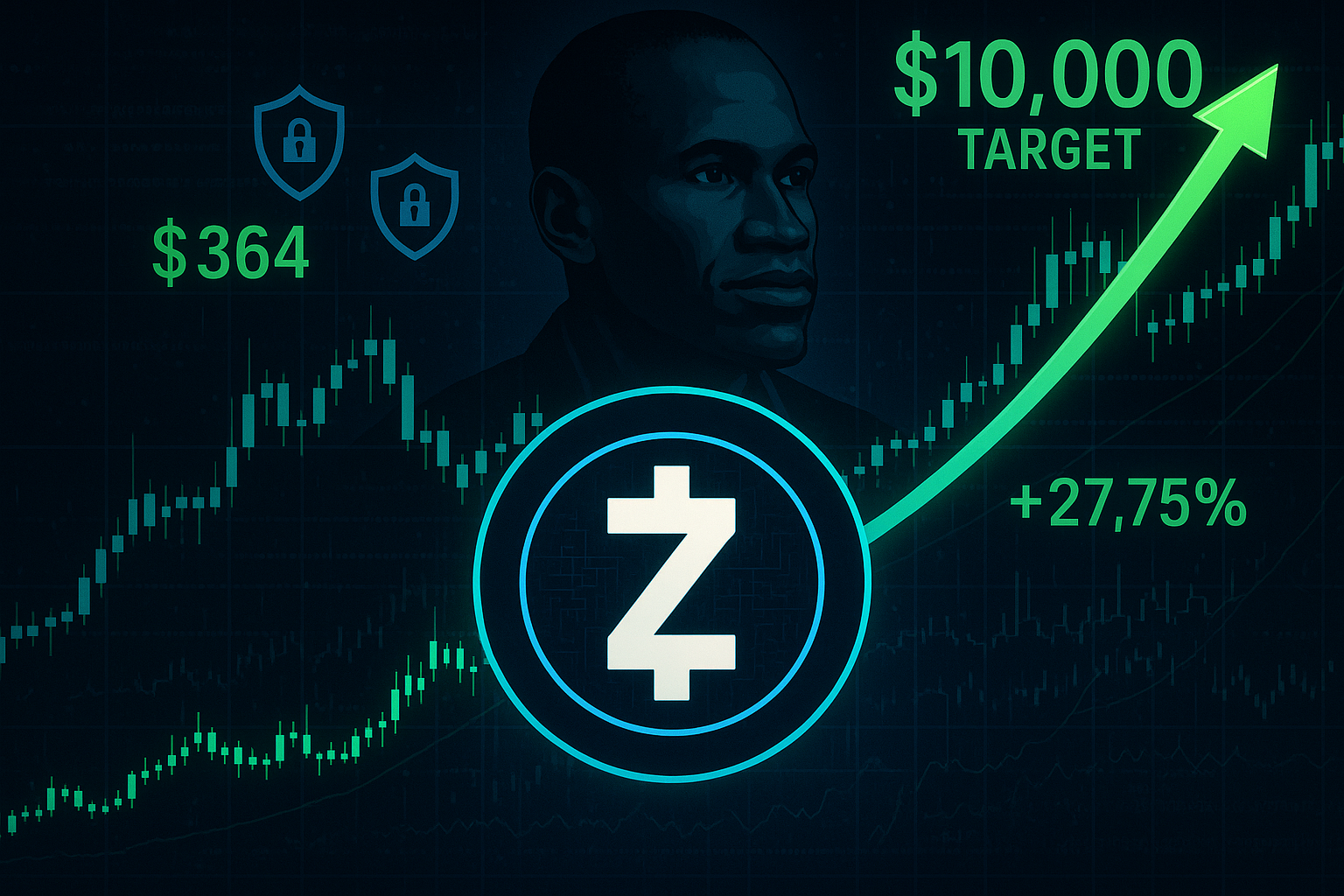
The privacy-focused cryptocurrency Zcash has surged past $364, marking a dramatic 27.75% increase in just 24 hours as BitMEX co-founder Arthur Hayes’ bold $10,000 price prediction sends shockwaves through the cryptocurrency market.

The cryptocurrency landscape witnessed one of its most spectacular single-day rallies on October 27, 2025, as Zcash (ZEC) exploded past the $364 mark, delivering a staggering 27.75% gain that has catapulted the privacy-focused digital asset into the spotlight of institutional and retail investors alike [1]. This extraordinary surge, which has added over $1 billion to Zcash’s market capitalization and propelled it into the top 25 cryptocurrencies by market cap, represents far more than a typical crypto pump—it signals the beginning of what many analysts are calling the “Privacy Coin Renaissance” of 2025 [2].

The catalyst for this remarkable price action can be traced directly to a seemingly casual social media post by Arthur Hayes, the influential co-founder of BitMEX and one of cryptocurrency’s most respected thought leaders. Hayes’ description of Zcash as a “vibe check” accompanied by his audacious $10,000 price prediction has unleashed a wave of Fear of Missing Out (FOMO) that has swept through trading floors from Wall Street to retail investment apps, transforming what was once considered a niche privacy coin into one of the year’s most talked-about investment opportunities.

But this surge represents more than just speculative fervor. With Zcash’s highly anticipated halving event scheduled for November 18, 2025—just three weeks away—the convergence of Hayes’ endorsement, institutional validation through Grayscale’s $102 million fund launch, and the fundamental supply reduction mechanics of the upcoming halving has created what technical analysts are describing as a “perfect storm” for sustained upward price momentum.

The Arthur Hayes Effect: When Crypto’s Oracle Speaks, Markets Listen

Arthur Hayes has earned his reputation as one of cryptocurrency’s most prescient voices through a combination of technical acumen, market timing, and an uncanny ability to identify emerging trends before they become mainstream. His latest endorsement of Zcash, delivered through what he casually termed a “vibe check” on social media, has proven once again why his market calls carry such extraordinary weight in the digital asset ecosystem.

The immediate market response to Hayes’ Sunday evening post was nothing short of spectacular. Within hours of his $10,000 price prediction going live, Zcash experienced one of the most dramatic intraday rallies in its history, surging from $272 to a peak of $355 before stabilizing above the $364 level [1]. This represents not just a significant price movement, but a validation of Hayes’ continued influence in an increasingly crowded field of cryptocurrency analysts and influencers.

Hayes’ track record lends considerable credibility to his Zcash prediction. At the WebX 2025 conference in Tokyo, his bold forecast that Hyperliquid’s HYPE token could appreciate 126 times over three years triggered an immediate 4% price increase, demonstrating the market’s faith in his analytical capabilities [1]. His previous calls on Bitcoin’s trajectory during the 2020-2021 bull run, his early identification of the DeFi summer phenomenon, and his prescient warnings about the 2022 crypto winter have established him as one of the few voices in the space whose predictions consistently translate into market-moving events.

The psychology behind Hayes’ influence extends beyond mere technical analysis. As the co-founder of BitMEX, one of the world’s largest cryptocurrency derivatives exchanges, Hayes possesses an intimate understanding of market microstructure, institutional flow patterns, and the behavioral dynamics that drive cryptocurrency price discovery. His $10,000 Zcash target, while seemingly aggressive, is grounded in a sophisticated understanding of privacy coin fundamentals, regulatory tailwinds, and the growing institutional demand for financial privacy solutions.

What makes Hayes’ Zcash endorsement particularly significant is its timing. Coming at a moment when privacy coins have faced increasing regulatory scrutiny in some jurisdictions while simultaneously experiencing growing adoption in others, his public support signals a belief that the privacy coin sector is entering a new phase of mainstream acceptance. The fact that his prediction has already triggered such substantial institutional interest—evidenced by Grayscale’s rapid fund accumulation and the explosion in futures open interest—suggests that Hayes may once again be ahead of a major market trend.

Institutional Validation: Grayscale’s $102 Million Vote of Confidence

The institutional cryptocurrency landscape has undergone a dramatic transformation in 2025, with traditional financial institutions increasingly recognizing digital assets as legitimate investment vehicles. Against this backdrop, Grayscale’s launch of a dedicated Zcash fund that has already accumulated over $102 million in assets under management represents a watershed moment for privacy-focused cryptocurrencies [1].

Grayscale’s decision to create a Zcash investment vehicle, despite charging a substantial 2.50% management fee, demonstrates the asset manager’s confidence in both the long-term viability of privacy coins and the sophisticated demand from accredited investors seeking exposure to this specialized sector [1]. The rapid accumulation of assets—reaching nine figures in just weeks since the fund’s launch—indicates that institutional appetite for privacy-focused investments extends far beyond the speculative retail market.

This institutional validation carries implications that extend well beyond simple price appreciation. Grayscale’s involvement in the Zcash ecosystem significantly increases the probability of a future Exchange-Traded Fund (ETF) conversion, which would provide mainstream investors with regulated, accessible exposure to privacy coin investments [1]. The precedent set by Bitcoin and Ethereum ETF approvals suggests that regulatory acceptance of cryptocurrency investment products continues to evolve in a favorable direction, particularly for assets with strong institutional backing and clear use cases.

The derivatives market has responded to this institutional interest with remarkable enthusiasm. Zcash futures open interest has skyrocketed from less than $20 million before the Grayscale announcement to nearly $334 million as of October 27, 2025 [1]. This sixteen-fold increase in derivatives activity reflects not just speculative interest, but the establishment of sophisticated hedging and arbitrage strategies by institutional market participants who view Zcash as a legitimate asset class worthy of complex financial engineering.

Sunday’s futures trading volume of $713 million, while below the year’s peak of $3.25 billion, represents a substantial increase in institutional participation [1]. The fact that this volume was achieved on a weekend—traditionally a period of reduced institutional activity—suggests that the Zcash rally has captured the attention of global trading desks operating across multiple time zones.

The institutional embrace of Zcash also reflects a broader recognition of privacy as a fundamental requirement in the evolving digital economy. As central bank digital currencies (CBDCs) advance toward implementation and government surveillance capabilities expand, the demand for financial privacy solutions among both individual and institutional users has grown exponentially. Grayscale’s investment thesis likely recognizes this trend, positioning Zcash not just as a speculative investment, but as a hedge against the erosion of financial privacy in an increasingly monitored economic system.

Technical Analysis: Charting the Path to New All-Time Highs
Zcash Halving Countdown

From a technical analysis perspective, Zcash’s current price action represents a textbook example of a breakout from a prolonged accumulation phase into what Wyckoff Theory practitioners recognize as the markup phase—a period characterized by sustained institutional demand and systematic price appreciation [1]. The cryptocurrency’s movement above key resistance levels has established a bullish trend structure that technical analysts believe could carry ZEC toward new all-time highs in the coming weeks.

The immediate technical landscape presents a compelling picture for continued upward momentum. Zcash is currently challenging critical resistance at its all-time high of $372 and the R1 Pivot Point at $381 [1]. A decisive break above the $381 level would open the path toward the R2 Pivot Point at $436, representing approximately 20% upside potential from current levels. This target aligns closely with multiple technical indicators suggesting that the current rally has substantial room for continuation.

The Moving Average Convergence Divergence (MACD) indicator continues to display strongly bullish characteristics, with green histogram bars above the zero line growing progressively larger [1]. This pattern indicates that buying momentum is not only sustained but accelerating, suggesting that the current price movement represents genuine accumulation rather than speculative froth. The MACD’s behavior during this rally mirrors patterns observed during previous Zcash bull runs, providing historical context for the current price action.

However, technical analysis also reveals important cautionary signals that sophisticated traders are monitoring closely. The Relative Strength Index (RSI) has reached 73, well above the traditional overbought threshold of 70 [1]. While overbought conditions can persist during strong trending moves, this reading suggests that short-term consolidation or pullback may be necessary before the next leg higher can commence. The weekly RSI reading of 88 represents an extreme overbought condition that has historically preceded significant corrections in Zcash’s price history [1].

The primary Pivot Point support level at $303 represents a crucial technical floor for the current rally [1]. A healthy pullback to this level would represent approximately 17% downside from current prices and would provide an attractive entry opportunity for investors who missed the initial surge. Such a correction would also serve to reset overbought technical indicators while maintaining the overall bullish trend structure.

Zcash’s position relative to its key moving averages provides additional confirmation of the bullish trend. The cryptocurrency is currently trading well above both its 50-week and 100-week Exponential Moving Averages, indicating that the long-term trend structure remains intact [1]. This positioning is particularly significant given that previous Zcash bull runs have typically maintained this technical relationship throughout their duration.

The volume profile accompanying this price surge provides further validation of the move’s authenticity. Unlike pump-and-dump schemes characterized by unsustainable volume spikes, Zcash’s rally has been accompanied by steadily increasing participation across multiple timeframes and trading venues. This organic volume growth suggests that the price appreciation reflects genuine market demand rather than artificial manipulation.

The November 18 Halving: A Catalyst for Sustained Growth

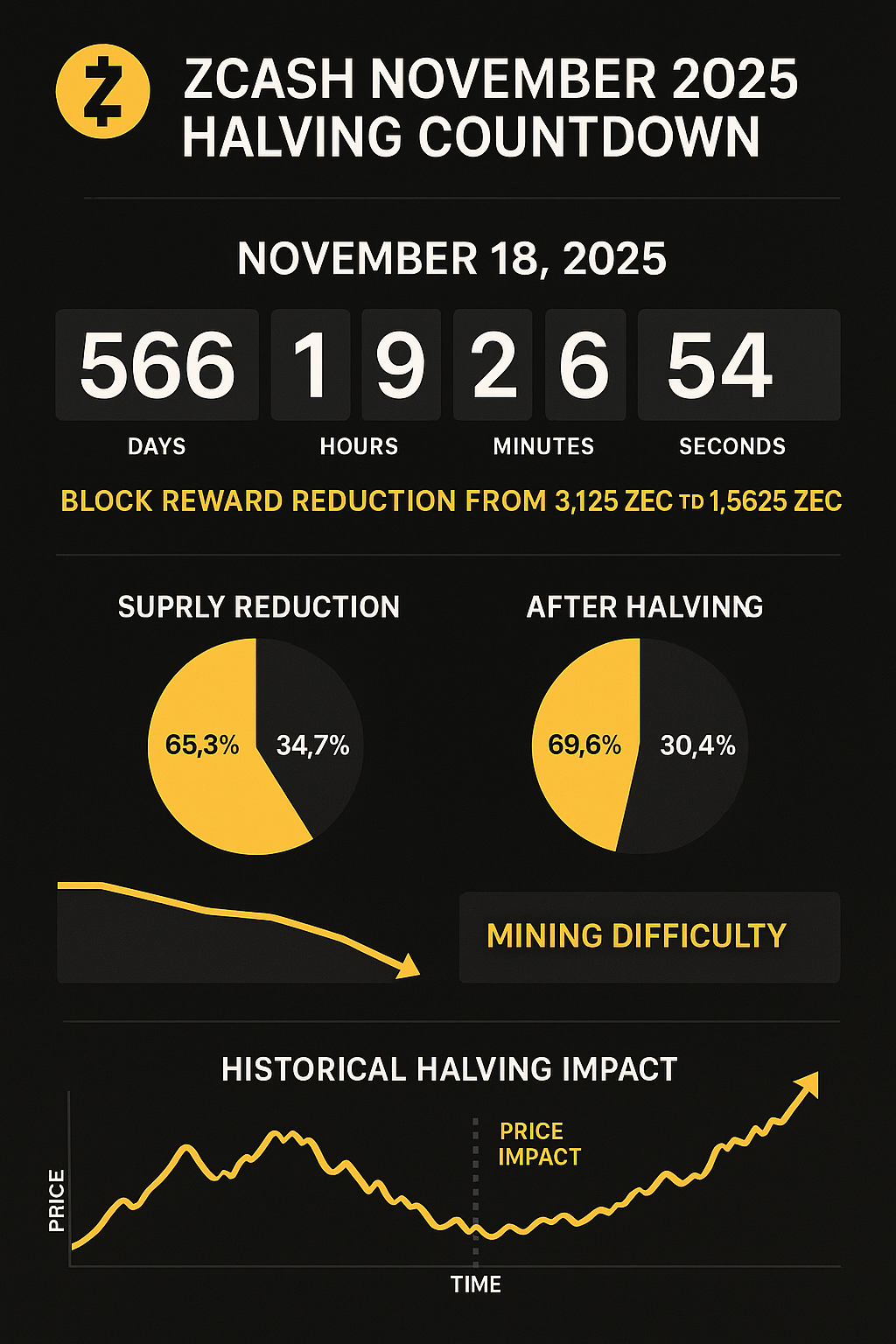
The cryptocurrency community has long recognized halving events as among the most significant fundamental catalysts in digital asset markets. Zcash’s upcoming halving, scheduled for November 18, 2025—less than three weeks away—represents a critical inflection point that could sustain and amplify the current price rally well into 2026 [7].

The mechanics of Zcash’s halving are straightforward but profound in their implications. On November 18, the block reward paid to miners will be reduced from 3.125 ZEC to 1.5625 ZEC, effectively cutting the daily issuance of new Zcash tokens by 50% [7]. This supply shock, occurring at a time when demand is accelerating due to institutional adoption and Arthur Hayes’ endorsement, creates a fundamental imbalance that historically has driven significant price appreciation in halving-enabled cryptocurrencies.

Historical analysis of previous Zcash halvings provides compelling evidence for the bullish case. The cryptocurrency’s first halving in 2020 preceded a rally that saw ZEC appreciate from approximately $35 to over $300—a gain of more than 750% [7]. While past performance does not guarantee future results, the fundamental supply-demand dynamics that drove that rally remain intact and may be even more pronounced given the current institutional interest in privacy coins.

The timing of this halving is particularly fortuitous given the broader cryptocurrency market environment. Unlike previous halving events that occurred during bear markets or periods of regulatory uncertainty, the November 2025 halving is taking place during a period of increasing institutional adoption, regulatory clarity, and growing mainstream acceptance of cryptocurrency as an asset class. This favorable macro environment could amplify the traditional halving effect, potentially driving more sustained price appreciation than historical precedent might suggest.

Mining economics provide additional support for the bullish halving thesis. The 50% reduction in block rewards will immediately impact miner profitability, likely forcing less efficient operations to cease mining activities. This reduction in mining pressure, combined with Zcash’s difficulty adjustment algorithm, should result in improved economics for remaining miners while reducing the constant selling pressure that newly minted coins typically create in the market.

The psychological impact of the approaching halving cannot be understated. Cryptocurrency markets are driven as much by narrative and expectation as by fundamental analysis, and the halving represents one of the most powerful bullish narratives in the digital asset ecosystem. The fact that this halving is occurring just weeks after Arthur Hayes’ $10,000 prediction has created a confluence of bullish catalysts that could sustain buying pressure well beyond the halving date itself.

Smart money appears to be positioning ahead of the halving event. The dramatic increase in futures open interest and the rapid accumulation of assets in Grayscale’s Zcash fund suggest that sophisticated investors are building positions in anticipation of post-halving price appreciation. This pre-positioning could create additional upward pressure as the halving date approaches, potentially driving prices higher even before the supply reduction takes effect.

Privacy Coin Renaissance: Zcash Leading the Charge

Privacy Coins Renaissance

The broader cryptocurrency market in 2025 has witnessed a remarkable shift in investor sentiment toward privacy-focused digital assets, with Zcash emerging as the undisputed leader of what analysts are calling the “Privacy Coin Renaissance.” This sectoral rotation reflects growing awareness of financial privacy as a fundamental right and a practical necessity in an increasingly surveilled digital economy.

The catalyst for this privacy coin revival extends beyond simple speculative interest. As governments worldwide advance central bank digital currency (CBDC) initiatives that promise unprecedented visibility into individual financial transactions, demand for privacy-preserving alternatives has grown exponentially among both retail and institutional users. Zcash, with its sophisticated zero-knowledge proof technology and optional privacy features, has positioned itself as the premier solution for users seeking to maintain financial autonomy in the digital age.

Zcash’s technological advantages in the privacy coin sector are substantial and growing more relevant with each passing month. Unlike mixing services or privacy solutions that rely on obfuscation techniques, Zcash’s implementation of zk-SNARKs (Zero-Knowledge Succinct Non-Interactive Arguments of Knowledge) provides mathematically provable privacy that cannot be compromised through blockchain analysis or other surveillance techniques. This technological moat has become increasingly valuable as regulatory authorities and compliance departments seek privacy solutions that can satisfy both user demands and regulatory requirements.

The network’s on-chain metrics provide compelling evidence of growing adoption and utility. Shielded transactions—Zcash’s signature privacy feature—have reached multi-month highs, indicating that users are increasingly utilizing the network’s privacy capabilities rather than simply holding ZEC as a speculative investment [2]. This organic usage growth suggests that Zcash is transitioning from a purely speculative asset to a utility token with genuine real-world application.

Corporate and institutional adoption of privacy-preserving technologies has accelerated dramatically in 2025, driven by increasing awareness of data security risks and competitive intelligence concerns. Major corporations are beginning to recognize that financial privacy is not just a personal preference but a business necessity in competitive markets where transaction data can reveal strategic information to competitors, suppliers, and other stakeholders.

The regulatory environment for privacy coins has evolved more favorably than many observers expected. Rather than implementing blanket bans, most major jurisdictions have adopted nuanced approaches that distinguish between privacy tools used for legitimate purposes and those employed for illicit activities. This regulatory maturation has provided the clarity that institutional investors require to allocate capital to privacy-focused investments.

Zcash’s compliance-friendly approach has positioned it advantageously within this evolving regulatory landscape. The network’s transparent pool allows for full auditability when required, while the shielded pool provides privacy when desired. This dual-mode architecture enables users to satisfy regulatory requirements while maintaining privacy options—a balance that has proven attractive to institutional adopters who must navigate complex compliance frameworks.

The privacy coin sector’s performance in 2025 has been remarkable, with Zcash leading a broad-based rally that has seen privacy-focused cryptocurrencies outperform the broader market by substantial margins. This sectoral strength reflects not just speculative interest but fundamental recognition that privacy-preserving technologies represent a critical infrastructure component of the future digital economy.

Market Psychology and the FOMO Phenomenon

The psychological dynamics driving Zcash’s current rally extend far beyond traditional technical and fundamental analysis, encompassing complex behavioral patterns that have transformed rational market participants into momentum-driven buyers caught in the grip of Fear of Missing Out (FOMO). This psychological phenomenon, while often dismissed by traditional financial analysts, represents a powerful market force that can sustain price movements far beyond what fundamental analysis might suggest.

The FOMO effect surrounding Zcash has been particularly pronounced among sophisticated investors who typically pride themselves on disciplined, research-driven investment approaches. Clemente, a board member of treasury company K9Strategy, publicly acknowledged being “filled with so much FOMO” that he could not remain on the sidelines despite his usual cautious approach [1]. This admission from a professional investor highlights the psychological power of Hayes’ endorsement and the broader market dynamics at play.

The social media amplification of Zcash’s rally has created a feedback loop that continues to drive new participants into the market. Each price milestone achieved generates additional social media discussion, which in turn attracts new investors who fear missing out on further gains. This cycle has been particularly evident on cryptocurrency-focused platforms where discussions of Zcash’s performance have dominated trending topics and generated millions of impressions.

Professional traders have noted the unusual characteristics of the current FOMO cycle. Unlike previous privacy coin rallies that were driven primarily by retail speculation, the current Zcash surge has attracted significant institutional participation from the outset. This institutional involvement has provided a foundation of legitimacy that has encouraged additional retail participation, creating a broader and potentially more sustainable rally than previous privacy coin bull runs.

The psychological impact of Arthur Hayes’ $10,000 price target cannot be understated in driving FOMO behavior. Round numbers possess particular psychological significance in financial markets, and Hayes’ target represents a 27-fold increase from current levels—a gain that, while ambitious, falls within the realm of historical cryptocurrency performance during major bull runs. The specificity and boldness of this target have captured imaginations and provided a concrete goal around which bullish sentiment can coalesce.

Market microstructure analysis reveals the behavioral patterns typical of FOMO-driven rallies. Order book dynamics show consistent buying pressure across multiple price levels, with buyers willing to pay progressively higher prices rather than waiting for pullbacks. This behavior, while potentially unsustainable in the long term, can drive prices substantially higher in the short term as supply becomes increasingly scarce.

The international nature of cryptocurrency markets has amplified the FOMO effect by creating continuous buying pressure across global time zones. As Asian markets close and European markets open, fresh waves of buyers enter the market, sustaining momentum that might otherwise dissipate during traditional market hours. This 24/7 trading environment has proven particularly conducive to sustained FOMO-driven rallies.

Risk Assessment and Cautionary Considerations

While the bullish case for Zcash appears compelling across multiple analytical frameworks, sophisticated investors must carefully consider the substantial risks inherent in any investment that has appreciated 550% in just 30 days [1]. The extreme nature of this price movement, while potentially justified by fundamental developments, also introduces significant volatility and downside risk that could result in substantial losses for investors who enter at current levels.

The technical indicators present a mixed picture that demands careful interpretation. While the MACD and moving average relationships support continued bullish momentum, the RSI readings at both daily and weekly timeframes have reached extreme overbought levels that historically have preceded significant corrections [1]. The weekly RSI reading of 88 is particularly concerning, as this level has marked major tops in previous Zcash bull runs.

Regulatory risk remains a persistent concern for privacy coin investments despite the generally favorable regulatory evolution in 2025. Government attitudes toward financial privacy can shift rapidly in response to geopolitical events, security concerns, or changes in political leadership. Investors must consider the possibility that regulatory crackdowns on privacy coins could emerge with little warning, potentially devastating valuations regardless of underlying technological merit or adoption trends.

The concentration of buying interest around Arthur Hayes’ endorsement creates a single-point-of-failure risk that sophisticated investors must acknowledge. Should Hayes modify his bullish stance or express concerns about Zcash’s valuation, the resulting selling pressure could be severe given the extent to which current prices appear to reflect his influence. This key-person risk is amplified by the relatively thin trading volumes in privacy coin markets compared to major cryptocurrencies like Bitcoin and Ethereum.

Market liquidity concerns become particularly acute during periods of high volatility. While Zcash’s trading volumes have increased substantially during the current rally, the cryptocurrency’s market depth remains limited compared to larger digital assets. This liquidity constraint means that large sell orders could drive disproportionate price declines, creating additional risk for institutional investors or high-net-worth individuals holding substantial positions.

The halving event, while generally bullish for cryptocurrency prices, also introduces timing risks that investors must consider. Historical analysis shows that halving events can be “buy the rumor, sell the news” scenarios where prices appreciate in anticipation but decline once the actual event occurs. The fact that Zcash’s current rally has occurred so close to the November 18 halving date raises questions about whether the supply reduction benefits have already been priced into current valuations.

Competition within the privacy coin sector presents another risk factor that could impact Zcash’s long-term prospects. While ZEC currently leads the privacy coin renaissance, other projects with different technological approaches or regulatory strategies could emerge as preferred solutions for specific use cases. The cryptocurrency sector’s history of rapid technological evolution suggests that current market leaders cannot assume permanent dominance.

Macroeconomic factors could also impact Zcash’s trajectory regardless of privacy coin-specific developments. Changes in global liquidity conditions, interest rate policies, or risk appetite could drive capital flows away from speculative cryptocurrency investments toward traditional safe-haven assets. The correlation between cryptocurrency prices and broader risk assets has increased in recent years, making digital assets more susceptible to macroeconomic shocks.

Investment Implications and Strategic Considerations

For investors considering exposure to Zcash at current levels, the decision framework must balance the compelling fundamental and technical bullish case against the substantial risks inherent in any asset that has experienced such dramatic price appreciation. The investment implications extend beyond simple buy-or-sell decisions to encompass portfolio construction, risk management, and strategic timing considerations that could determine long-term investment success.

The case for Zcash investment rests on several pillars that appear likely to provide sustained support for higher valuations. The institutional validation provided by Grayscale’s $102 million fund launch demonstrates that sophisticated investors view privacy coins as a legitimate asset class worthy of significant capital allocation [1]. This institutional interest, combined with the approaching halving event and Arthur Hayes’ influential endorsement, creates a confluence of bullish catalysts that could drive continued price appreciation.

The technological moat that Zcash has established in the privacy coin sector provides a competitive advantage that could prove durable over time. As privacy concerns continue to grow among both individual and institutional users, Zcash’s proven zero-knowledge proof technology positions it advantageously to capture increasing market share in the privacy-preserving financial services sector. This technological leadership, combined with the network’s compliance-friendly architecture, suggests that ZEC could maintain its position as the preferred privacy coin for institutional adoption.

From a portfolio construction perspective, Zcash offers exposure to several investment themes that appear likely to drive returns in the coming years. The privacy coin thesis, the halving cycle dynamics, and the broader cryptocurrency adoption trend all support the inclusion of ZEC in diversified digital asset portfolios. However, the concentration risk associated with privacy coin investments suggests that position sizing should be carefully considered relative to overall portfolio risk tolerance.

The timing considerations for Zcash investment are particularly complex given the proximity of the November 18 halving event. Historical analysis suggests that halving-related price appreciation often begins months before the actual event and can continue for extended periods afterward. However, the fact that Zcash has already experienced substantial gains in anticipation of the halving raises questions about optimal entry timing for new investors.

Dollar-cost averaging strategies may be particularly appropriate for Zcash investment given the asset’s high volatility and the difficulty of timing optimal entry and exit points. This approach allows investors to build positions over time while reducing the impact of short-term price fluctuations on overall investment returns. The strategy is particularly relevant for investors who believe in the long-term privacy coin thesis but are concerned about current valuation levels.

Risk management considerations are paramount for any Zcash investment strategy. The use of stop-loss orders, position sizing limits, and profit-taking strategies can help investors participate in potential upside while limiting downside exposure. The extreme volatility that characterizes privacy coin markets makes these risk management tools essential for preserving capital during inevitable market corrections.

The international regulatory landscape for privacy coins continues to evolve, creating both opportunities and risks for investors. Jurisdictions that embrace privacy-preserving technologies may see increased adoption and investment flows, while those that implement restrictive policies could drive capital toward more favorable regulatory environments. Investors must monitor these regulatory developments closely and consider their potential impact on Zcash’s long-term prospects.

Future Outlook and Price Projections

Looking beyond the immediate excitement surrounding Arthur Hayes’ $10,000 price prediction and the approaching November halving, the long-term outlook for Zcash depends on several key factors that will determine whether the current rally represents the beginning of a sustained bull run or a speculative bubble destined for correction.

The most optimistic scenarios for Zcash’s future involve widespread adoption of privacy-preserving technologies across both retail and institutional markets. As governments worldwide implement increasingly sophisticated financial surveillance systems, demand for privacy coins could grow exponentially, driving Zcash toward or beyond Hayes’ ambitious $10,000 target. This scenario assumes continued technological leadership, favorable regulatory treatment, and successful execution of network upgrades that enhance both privacy and scalability.

More conservative projections focus on Zcash’s potential to capture a significant share of the growing cryptocurrency market while maintaining its position as the leading privacy coin. Under this scenario, ZEC could reasonably target the $1,000-$3,000 range over the next 12-24 months, representing substantial gains from current levels while remaining within historical cryptocurrency valuation frameworks. This projection assumes continued institutional adoption, successful navigation of regulatory challenges, and sustained interest in privacy-preserving technologies.

The technical analysis framework provides additional context for future price projections. The immediate targets of $420-$436 represent logical near-term objectives based on pivot point analysis and historical resistance levels [1][2]. Achievement of these targets would establish a foundation for further gains toward the $1,000 level, which represents a psychologically significant milestone that could attract additional institutional and retail investment.

The halving event scheduled for November 18 provides a fundamental catalyst that could drive price appreciation well into 2026. Historical analysis of cryptocurrency halving events suggests that the most significant price gains often occur 6-18 months after the actual supply reduction takes effect, as market dynamics adjust to the new supply-demand equilibrium. This timeline suggests that Zcash’s most substantial gains may still lie ahead, even after the current rally.

However, several risk factors could derail these optimistic projections. Regulatory crackdowns on privacy coins, technological challenges, increased competition, or broader cryptocurrency market corrections could all impact Zcash’s trajectory regardless of fundamental developments. The extreme nature of current valuations also suggests that any negative developments could result in severe price corrections that test investor resolve and confidence.

The institutional adoption trajectory will likely prove crucial in determining Zcash’s long-term success. If Grayscale’s fund continues to attract assets and additional institutional investment products emerge, the resulting legitimacy and accessibility could drive sustained demand growth. Conversely, if institutional interest wanes or regulatory concerns emerge, the lack of retail-driven demand could limit Zcash’s growth potential.

Global macroeconomic conditions will also influence Zcash’s future performance. Periods of economic uncertainty and currency debasement have historically driven interest in alternative monetary systems, potentially benefiting privacy coins like Zcash. However, economic stability and rising interest rates could reduce speculative demand for high-risk cryptocurrency investments.

The technological roadmap for Zcash includes several upgrades that could enhance the network’s capabilities and drive additional adoption. Improvements to transaction throughput, privacy features, and interoperability with other blockchain networks could expand Zcash’s addressable market and support higher valuations. The successful implementation of these upgrades will be crucial for maintaining technological leadership in the competitive privacy coin sector.

Conclusion: Navigating the Privacy Coin Revolution

Zcash’s extraordinary 27.75% surge following Arthur Hayes’ $10,000 price prediction represents far more than a typical cryptocurrency rally—it signals the emergence of privacy coins as a legitimate and increasingly essential component of the digital asset ecosystem. The confluence of institutional validation, approaching halving dynamics, and growing privacy awareness has created a perfect storm of bullish catalysts that could sustain Zcash’s momentum well beyond current levels.

The investment case for Zcash rests on solid fundamental foundations that extend beyond speculative enthusiasm. The cryptocurrency’s technological leadership in privacy-preserving technologies, combined with its compliance-friendly architecture and growing institutional adoption, positions it advantageously to capitalize on the increasing demand for financial privacy solutions. The approaching November 18 halving event provides an additional catalyst that could drive sustained price appreciation through 2026 and beyond.

However, investors must carefully balance these compelling opportunities against the substantial risks inherent in any asset that has experienced such dramatic price appreciation. The extreme overbought technical conditions, regulatory uncertainties, and concentration risks associated with privacy coin investments demand sophisticated risk management approaches and careful position sizing considerations.

For investors willing to navigate these challenges, Zcash offers exposure to several powerful investment themes that appear likely to drive returns in the coming years. The privacy coin revolution, institutional cryptocurrency adoption, and halving cycle dynamics all support the inclusion of ZEC in diversified digital asset portfolios, provided that investors maintain appropriate risk management disciplines and realistic expectations about volatility and potential drawdowns.

The ultimate success of Zcash’s current rally will depend on the cryptocurrency’s ability to transition from speculative momentum to sustainable adoption and utility. The early signs are encouraging, with institutional interest growing, network usage increasing, and regulatory clarity improving. However, the path forward will likely include significant volatility and periodic corrections that test investor resolve and confidence.

As the privacy coin renaissance continues to unfold, Zcash’s position as the sector leader provides both opportunities and responsibilities. The cryptocurrency’s ability to maintain technological leadership, navigate regulatory challenges, and deliver on the promises that have driven its current valuation will determine whether Arthur Hayes’ $10,000 prediction proves prescient or overly optimistic.

For now, Zcash stands at a critical juncture where fundamental developments, technical momentum, and market psychology have aligned to create one of 2025’s most compelling cryptocurrency investment opportunities. Whether this alignment proves sustainable will depend on the complex interplay of technological innovation, regulatory evolution, and market dynamics that will shape the future of privacy-preserving digital assets.

The privacy coin revolution is just beginning, and Zcash’s current rally may represent the opening chapter of a much larger story about financial privacy, technological innovation, and the evolution of money in the digital age. Investors who can successfully navigate the risks and opportunities ahead may find themselves well-positioned to benefit from one of the most significant trends in the cryptocurrency ecosystem.


References

[1] FX Leaders. “Zcash Surges Past $364 as Arthur Hayes’ $10K Prediction Ignites FOMO Rally.” October 27, 2025. https://www.fxleaders.com/news/2025/10/27/zcash-surges-past-364-as-arthur-hayes-10k-prediction-ignites-fomo-rally/

[2] AInvest. “ZCash Surges 20% in 24 Hours, Entering Top 25 Cryptocurrencies with Market Cap of Over $1 Billion.” October 27, 2025. https://www.ainvest.com/news/zcash-surges-20-24-hours-entering-top-25-cryptocurrencies-market-cap-1-billion-2510/

[3] Crypto News. “Zcash price jumps over 30% in a day as Arthur Hayes eyes $10k target.” October 27, 2025. https://crypto.news/zcash-price-jumps-over-30-in-a-day-as-arthur-hayes-eyes-10k-target/

[4] Coinpedia. “Arthur Hayes ZEC Coin Price Prediction Sends Zcash Soaring Past $350.” October 27, 2025. https://coinpedia.org/news/arthur-hayes-zec-coin-price-prediction-sends-zcash-soaring-past-350/

[5] Bitrue. “Arthur Hayes $10000 ZEC Prediction: A Realistic Analysis.” October 27, 2025. https://www.bitrue.com/blog/arthur-hayes-10000-zec-prediction-analysis

[6] CoinTribune. “Bitcoin starts a correction after its all-time high – Technical analysis of August 20, 2025.” August 20, 2025. https://www.cointribune.com/en/bitcoin-starts-a-correction-after-its-all-time-high-technical-analysis-of-august-20-2025/

[7] CoinMarketCap. “Zcash (ZEC) Price Prediction For 2025 & Beyond.” October 26, 2025. https://coinmarketcap.com/cmc-ai/zcash/price-prediction/

[8] Bitget News. “Zcash Halving to Take Place in November.” October 20, 2025. https://www.bitget.com/news/detail/12560605024109

[9] CoinDCX. “Zcash Price Prediction 2025–2030: Will ZEC Cross $350?” 2025. https://coindcx.com/blog/price-predictions/zcash-price/

[10] NiceHash. “Zcash halving countdown.” 2025. https://www.nicehash.com/countdown/zec-halving-2028-11-16-12-00

[11] YouTube. “Zcash’s Massive Surge: Arthur Hayes’ Prediction Sparks 30% Rally.” October 27, 2025. https://www.youtube.com/watch?v=BEapDprHHAw


Comprehensive Guide to Creating a Microsoft Windows Server 2025 VMware Template in ESXi 8.0

This guide provides a comprehensive, step-by-step process for creating a standardized and optimized Microsoft Windows Server 2025 virtual machine (VM) template on VMware ESXi 8.0. By creating a VM template, you can significantly streamline the deployment of new servers, ensuring consistency, reducing manual effort, and improving overall efficiency in your virtual infrastructure. A well-prepared template serves as a master image, pre-configured with the necessary settings, updates, and software, allowing for rapid and automated provisioning of new VMs.

This document will cover the entire workflow, from initial VM creation and guest operating system installation to the critical steps of generalization using sysprep and conversion to a template within the vCenter Server environment. We will also explore best practices for template management and optimization, ensuring your Windows Server 2025 deployments are secure, efficient, and ready for production workloads.

Prerequisites

Before you begin creating the Windows Server 2025 VM template, ensure you have the following resources and information available:

  • VMware vSphere Environment:
    • VMware ESXi 8.0 or later.
    • VMware vCenter Server 8.0 or later.
    • Sufficient permissions in vCenter Server to create and manage virtual machines and templates.
  • Windows Server 2025 Installation Media:
    • A legitimate ISO image of Microsoft Windows Server 2025.
  • VMware Tools:
    • The latest version of VMware Tools is recommended. As of this writing, the minimum supported version for Windows Server 2025 is VMware Tools 12.5.0.

Phase 1: Virtual Machine Creation and Configuration

The first phase involves creating and configuring a new virtual machine that will serve as the foundation for your template. This section details the recommended hardware specifications and configuration settings.

VMware vSphere Client - Virtual Machine Hardware Customization

Create a New Virtual Machine

  1. Log in to the vSphere Client and navigate to the desired host or cluster.
  2. Right-click the host or cluster and select New Virtual Machine.
  3. On the “Select a creation type” page, choose Create a new virtual machine and click Next.
  4. On the “Select a name and folder” page, provide a descriptive name for your VM (e.g., ws2025-template-base) and select a datacenter or folder.
  5. On the “Select a compute resource” page, choose the destination host or cluster.
  6. On the “Select storage” page, select a datastore for the VM’s files.
  7. On the “Select compatibility” page, choose ESXi 8.0 and later.
  8. On the “Select a guest OS” page, select Windows as the Guest OS family. For the Guest OS version, select Microsoft Windows Server 2022 (64-bit). As of the latest updates, “Windows Server 2025” may not be an available option, but selecting the 2022 version is the recommended workaround.

Customize Hardware

On the “Customize hardware” page, configure the virtual hardware settings for your template. The following table provides a recommended baseline configuration. Adjust these settings based on your specific workload requirements. Component Recommended Configuration CPU 2 CPUs (2 sockets, 1 core per socket) Memory 4 GB (minimum 2 GB for Desktop Experience, 2 GB for Server Core) Hard Disk 60 GB (minimum 32 GB), Thin Provisioned SCSI Controller VMware Paravirtual (PVSCSI) Network Adapter VMXNET 3 CD/DVD Drive Datastore ISO File (connect to the Windows Server 2025 ISO) Other Devices Remove any unnecessary devices such as floppy drives, COM ports, and LPT ports.

Click Next and then Finish to create the virtual machine.

Phase 2: Guest Operating System Installation and Configuration

With the virtual machine created, the next phase is to install and configure the Windows Server 2025 operating system.

Install Windows Server 2025

  1. Power on the newly created virtual machine.
  2. The VM will boot from the attached Windows Server 2025 ISO image.
  3. Follow the on-screen instructions to install Windows Server 2025. Select the Desktop Experience or Server Core installation option based on your requirements.
  4. When prompted for the installation type, choose Custom: Install Microsoft Server Operating System only (advanced).
  5. Select the virtual hard disk you created and click Next to begin the installation.
  6. The installation process will proceed, and the VM will reboot several times.
  7. After the installation is complete, set a password for the local Administrator account.

Install VMware Tools

VMware Tools is a critical component that enhances the performance and management of the virtual machine. It is essential for features like Guest OS Customization.

VMware Tools Installation Wizard on Windows Server
  1. In the vSphere Client, right-click the virtual machine and select Guest OS > Install VMware Tools.
  2. This will mount the VMware Tools installer ISO inside the guest operating system.
  3. Log in to the Windows Server 2025 VM, open File Explorer, and navigate to the CD/DVD drive.
  4. Run setup.exe or setup64.exe to start the VMware Tools installation.
  5. Follow the prompts in the installation wizard, selecting the Typical installation type.
  6. Once the installation is complete, reboot the virtual machine.

Configure the Operating System

Before creating the template, it is essential to configure the operating system with the desired settings and optimizations. This ensures that all VMs deployed from this template will have a consistent and secure baseline configuration.

  1. Install Windows Updates: Connect the VM to the internet and install all available Windows Updates. This is a critical step to ensure your template is secure and up-to-date.
  2. Enable Remote Desktop: If you need to manage the server remotely, enable Remote Desktop Protocol (RDP).
  3. Configure Time Zone: Set the correct time zone for your environment.
  4. Install Common Software: Install any common applications, agents, or tools that should be present on all servers (e.g., monitoring agents, backup clients).
  5. Optimize the OS: For performance and security, consider the following optimizations:
    • Disable unnecessary services.
    • Uninstall unnecessary Windows features.
    • Configure the firewall.
    • Delete temporary files.

Phase 3: Generalization with Sysprep

The System Preparation (Sysprep) tool is a crucial component for creating Windows templates. It removes unique information from the Windows installation, such as the computer name, security identifier (SID), and IP address, allowing the image to be safely cloned. This process is known as generalization.

Windows Server Command Prompt - Sysprep Command Execution

Prepare for Sysprep

Before running Sysprep, ensure the following:

  • The VM is not joined to an Active Directory domain.
  • The VM is configured to obtain an IP address via DHCP.

Run Sysprep

  1. Open a Command Prompt as an administrator.
  2. Navigate to the C:\Windows\System32\Sysprep directory.
  3. Run the following command:

sysprep.exe /generalize /oobe /shutdown

  • /generalize: Removes system-specific information from the Windows installation.
  • /oobe: Configures the computer to start in the Out-of-Box Experience (OOBE) mode on the next boot.
  • /shutdown: Shuts down the computer after Sysprep completes.

Sysprep will now prepare the image and shut down the virtual machine. Do not power the VM back on after it shuts down.

Phase 4: Create the VM Template

With the virtual machine prepared and shut down, the final phase is to convert it into a template in vCenter Server.

Convert to Template

  1. In the vSphere Client, locate the virtual machine you prepared.
  2. Right-click the VM and select Template > Convert to Template.
  3. A confirmation dialog will appear. Click Yes to proceed.

Alternatively, you can clone the VM to a template, which preserves the original VM:

  1. Right-click the VM and select Clone > Clone to Template.
  2. Follow the prompts in the wizard to name the template, select a location, and specify the compute and storage resources.

Phase 5: Deploying a VM from the Template

Once the template is created, you can use it to deploy new virtual machines.

VMware vSphere Template Deployment Workflow
  1. In the vSphere Client, navigate to the VMs and Templates view.
  2. Locate your new template, right-click it, and select New VM from This Template.
  3. Follow the wizard to name the new VM, select a location, and specify compute and storage resources.
  4. On the “Select clone options” page, you can choose to customize the operating system. This allows you to use a Guest Customization Specification to automate the configuration of the new VM’s computer name, IP address, and other settings.

Best Practices for Template Management

  • Regularly Update Your Template: Periodically convert your template back to a VM, apply the latest Windows Updates and software patches, and then convert it back to a template. This ensures your new VM deployments are always up-to-date.
  • Use a Naming Convention: Adopt a clear naming convention for your templates to easily identify their purpose and version.
  • Document Your Templates: Maintain documentation for each template, detailing its configuration, installed software, and any specific settings.
  • Store Templates in a Central Location: Use a dedicated folder in vCenter Server to store your templates for better organization and access control.
  • Leverage Guest Customization Specifications: Create and use Guest Customization Specifications to automate the post-deployment configuration of your VMs, saving time and reducing errors.

Conclusion

Creating a Windows Server 2025 VMware template is a fundamental practice for efficient and scalable virtual infrastructure management. By following the steps outlined in this guide, you can create a standardized, optimized, and secure master image that will serve as the foundation for all your future Windows Server 2025 deployments. This will not only save you significant time and effort but also ensure a consistent and reliable server environment.

References

  1. VMware. (2024, November 7). VMware Tools 12.5.0 is ready for the latest Windows Operating Systems. VMware Blogs. Retrieved from https://blogs.vmware.com/cloud-foundation/2024/11/07/vmware-tools-12-5-0-is-ready-for-the-latest-windows-operating-systems/
  2. Broadcom. (2025, February 27). Installing Windows Server 2025 on a VMware Virtual Machine. Broadcom Knowledge Base. Retrieved from https://knowledge.broadcom.com/external/article/371350/installing-windows-server-2025-on-a-vmwa.html
  3. Microsoft. (2025, July 22). Hardware Requirements for Windows Server. Microsoft Learn. Retrieved from https://learn.microsoft.com/en-us/windows-server/get-started/hardware-requirements

From Mops to Millions: How CleanCore Solutions Became a $174 Million Dogecoin Treasury Powerhouse

CleanCore Solutions Dogecoin Treasury Holdings

Published October 8, 2025 | Author: everythingcryptoitclouds.com

In one of the most remarkable corporate transformation stories in cryptocurrency history, CleanCore Solutions (NYSE: ZONE) has evolved from a traditional cleaning and disinfection company into a formidable Dogecoin treasury firm, amassing over 710 million DOGE tokens worth approximately $174 million in just over one month. This extraordinary pivot represents not just a strategic business decision, but a bold bet on the future of cryptocurrency as a legitimate treasury asset and the potential for meme coins to achieve institutional legitimacy.

The journey from cleaning supplies to cryptocurrency treasury management began on September 5, 2025, when CleanCore officially launched its “Official Dogecoin Treasury” strategy, raising $175 million through a private placement and setting an ambitious goal of accumulating 1 billion DOGE tokens within 30 days [1]. What followed was one of the most aggressive and successful cryptocurrency accumulation campaigns in corporate history, demonstrating both the company’s commitment to its new strategy and the market’s appetite for institutional Dogecoin adoption.

As of October 7, 2025, CleanCore has achieved 71% of its ambitious 1 billion DOGE milestone, holding over 710 million tokens with unrealized gains exceeding $20 million since the strategy’s launch [2]. This remarkable achievement places CleanCore among the largest institutional holders of Dogecoin and represents a validation of the company’s thesis that the popular meme coin has evolved beyond its origins to become a legitimate store of value and utility asset.

The transformation of CleanCore from a traditional cleaning company to a cryptocurrency treasury firm reflects broader trends in corporate finance, where companies are increasingly looking beyond traditional assets to hedge against inflation, currency devaluation, and economic uncertainty. However, CleanCore’s choice of Dogecoin over more established cryptocurrencies like Bitcoin or Ethereum represents a particularly bold and contrarian bet that has captured the attention of both cryptocurrency enthusiasts and traditional investors.

The strategic rationale behind CleanCore’s Dogecoin treasury strategy extends beyond simple speculation or trend-following. The company has positioned itself as a pioneer in institutional Dogecoin adoption, working closely with the Dogecoin Foundation through its House of Doge partnership to advance the ecosystem’s development and utility [3]. This collaborative approach suggests that CleanCore views its investment not just as a financial play, but as a strategic positioning for the future of digital payments and decentralized finance.

The Anatomy of a Corporate Transformation

CleanCore Business Transformation

The transformation of CleanCore Solutions from a traditional cleaning company to a cryptocurrency treasury firm represents one of the most dramatic corporate pivots in recent business history, rivaling the strategic shifts undertaken by companies like MicroStrategy in the Bitcoin space. Understanding the mechanics and timeline of this transformation provides crucial insights into how traditional businesses can successfully navigate the transition to cryptocurrency-focused strategies.

The foundation for CleanCore’s transformation was laid through a series of strategic moves that began well before the official launch of the Dogecoin treasury strategy. On September 2, 2025, just three days before the treasury launch, Alex Spiro, who serves as Elon Musk’s attorney, became Chairman of CleanCore’s Board of Directors [4]. This appointment was far from coincidental, as Spiro’s close relationship with Musk, one of Dogecoin’s most prominent advocates, provided both credibility and strategic guidance for the company’s cryptocurrency ambitions.

The timing of Spiro’s appointment and the subsequent treasury launch suggests careful planning and coordination that extends beyond simple investment strategy. Spiro’s involvement brings not only legal expertise in cryptocurrency matters but also connections to the broader ecosystem of Dogecoin supporters and developers. This network effect has proven crucial in establishing CleanCore’s credibility within the Dogecoin community and securing the partnerships necessary for successful treasury management.

The financial mechanics of CleanCore’s transformation were equally impressive, with the company successfully raising $175 million through a private placement that attracted over 80 institutional participants [5]. This fundraising achievement is particularly noteworthy given CleanCore’s relatively modest size and limited track record in cryptocurrency investments. The success of this capital raise reflects both the growing institutional interest in cryptocurrency exposure and the market’s confidence in CleanCore’s strategic vision and execution capabilities.

The investor base for CleanCore’s private placement reads like a who’s who of cryptocurrency and venture capital, including prominent names such as Pantera Capital, GSR, FalconX, and Borderless Capital [6]. The participation of these sophisticated institutional investors provides validation of CleanCore’s strategy and creates a network of strategic partners who can provide ongoing support and guidance as the company executes its treasury management plan.

The operational transformation required to support CleanCore’s new strategy has been equally comprehensive, with the company establishing new partnerships and infrastructure to manage its cryptocurrency holdings effectively. The designation of Bitstamp by Robinhood as the primary trading venue and custodian for CleanCore’s Dogecoin holdings represents a crucial element of this infrastructure, providing institutional-grade security and compliance capabilities [7].

The partnership with the Dogecoin Foundation through the House of Doge initiative represents another critical component of CleanCore’s transformation strategy. This collaboration goes beyond simple investment management to encompass ecosystem development, governance participation, and strategic positioning within the broader Dogecoin community. The House of Doge partnership provides CleanCore with access to technical expertise, development resources, and strategic guidance that enhance the value and utility of its Dogecoin holdings.

The leadership changes accompanying CleanCore’s transformation reflect the company’s commitment to building the expertise necessary for successful cryptocurrency treasury management. The appointment of Marco Margiotta as Chief Investment Officer has provided the company with dedicated leadership for its cryptocurrency strategy, while maintaining continuity in its traditional cleaning business operations [8]. This dual-track approach allows CleanCore to pursue its cryptocurrency ambitions while preserving the cash flows and operational capabilities of its core business.

The speed and scale of CleanCore’s Dogecoin accumulation have been remarkable by any standard, with the company acquiring 285.42 million DOGE tokens in its initial purchase on September 8, 2025, just three days after launching the strategy [9]. This aggressive approach continued throughout September, with the company crossing the 500 million DOGE threshold on September 11 and reaching 600 million tokens by September 16. The sustained pace of accumulation demonstrates both the company’s commitment to its strategy and its ability to execute large-scale cryptocurrency transactions efficiently.

Strategic Partnerships and Institutional Validation

The success of CleanCore’s Dogecoin treasury strategy has been significantly enhanced by a carefully constructed network of strategic partnerships that provide both operational capabilities and institutional credibility. These partnerships represent more than simple service provider relationships; they constitute a comprehensive ecosystem of support that enables CleanCore to execute its ambitious cryptocurrency strategy while maintaining the highest standards of security, compliance, and operational excellence.

The partnership with the Dogecoin Foundation through the House of Doge initiative represents the cornerstone of CleanCore’s strategic positioning within the Dogecoin ecosystem. This collaboration provides CleanCore with direct access to the technical development roadmap, governance processes, and strategic planning that shape Dogecoin’s future evolution [10]. The House of Doge partnership also positions CleanCore as a key stakeholder in ecosystem development initiatives, potentially creating opportunities for yield generation and value creation beyond simple token appreciation.

The relationship with Bitstamp by Robinhood as the designated trading venue and custodian represents another crucial element of CleanCore’s partnership strategy. Bitstamp’s institutional-grade infrastructure provides the security, compliance, and operational capabilities necessary to manage large-scale cryptocurrency holdings safely and efficiently [11]. The choice of Bitstamp also reflects CleanCore’s commitment to working with established, regulated entities that can provide the institutional credibility necessary for corporate treasury management.

The custodial arrangements with Bitstamp include sophisticated security measures such as multi-signature wallets, cold storage protocols, and comprehensive insurance coverage that protect CleanCore’s holdings against both technical failures and security breaches. These protections are essential for institutional investors who require the same level of security and risk management for cryptocurrency holdings as they would expect for traditional financial assets.

The institutional investor base that participated in CleanCore’s $175 million private placement represents a powerful validation of the company’s strategy and provides ongoing strategic support for its cryptocurrency initiatives. The participation of Pantera Capital, one of the most respected cryptocurrency investment firms, brings not only capital but also strategic guidance and network access that can enhance CleanCore’s positioning within the broader cryptocurrency ecosystem [12].

GSR’s participation as both an investor and potential market-making partner provides CleanCore with access to sophisticated trading and liquidity management capabilities that can optimize the execution of its accumulation strategy and ongoing treasury management activities [13]. GSR’s expertise in cryptocurrency market structure and trading technology can help CleanCore minimize market impact and transaction costs while maximizing the efficiency of its Dogecoin acquisitions.

FalconX’s involvement brings institutional-grade trading infrastructure and prime brokerage services that enable CleanCore to access deep liquidity pools and execute large-scale transactions efficiently [14]. The partnership with FalconX also provides access to sophisticated risk management tools and analytics that can help CleanCore optimize its treasury management strategy and monitor market conditions effectively.

Borderless Capital’s participation reflects the growing interest from traditional venture capital firms in cryptocurrency treasury strategies and provides CleanCore with access to a broader network of technology companies and blockchain projects [15]. This relationship could create opportunities for strategic partnerships and business development initiatives that extend beyond simple treasury management to encompass operational integration and ecosystem development.

The collective expertise and network effects created by these partnerships provide CleanCore with capabilities that extend far beyond what the company could develop independently. The combination of technical expertise, market access, regulatory guidance, and strategic positioning creates a comprehensive platform for successful cryptocurrency treasury management that positions CleanCore for long-term success in the digital asset space.

Financial Performance and Market Impact

The financial performance of CleanCore’s Dogecoin treasury strategy has exceeded expectations across multiple metrics, demonstrating both the effectiveness of the company’s execution and the underlying strength of Dogecoin as an institutional treasury asset. The combination of strategic timing, efficient execution, and favorable market conditions has created substantial value for CleanCore shareholders while validating the company’s bold transformation strategy.

The unrealized gains of over $20 million on CleanCore’s Dogecoin holdings since the September 5 launch represent a return of more than 11% in just over one month, significantly outperforming traditional treasury assets and most equity investments over the same period [16]. This performance becomes even more impressive when considering the scale of CleanCore’s holdings and the potential market impact of such large accumulations, suggesting that the company’s execution strategy has been both sophisticated and effective.

The current value of CleanCore’s 710+ million DOGE holdings at approximately $174 million represents 71% progress toward the company’s ambitious 1 billion token target, demonstrating consistent execution against stated objectives [17]. The steady pace of accumulation, averaging approximately 15-20 million tokens per day during active purchasing periods, reflects careful market timing and execution that minimizes price impact while maximizing accumulation efficiency.

The market impact of CleanCore’s accumulation strategy has been generally positive for Dogecoin, with the company’s purchases contributing to increased trading volume and price stability during periods of broader market volatility. The institutional validation provided by CleanCore’s strategy has also attracted additional institutional interest in Dogecoin, creating positive network effects that benefit all holders of the cryptocurrency.

The traditional business performance of CleanCore has also shown remarkable improvement during the same period as its cryptocurrency strategy launch. The company reported record Q4 2025 revenue of $1.1 million, marking the first quarter in company history to exceed $1 million in revenue [18]. Full-year 2025 revenue reached $2.1 million, representing 29% growth compared to the previous year and demonstrating that the company’s cryptocurrency strategy has not distracted from its core business operations.

The recent securing of a $1.37 million purchase order in June 2025 for CleanCore’s aqueous ozone cleaning technology demonstrates continued strength in the company’s traditional business and provides ongoing cash flow to support both operations and potential additional cryptocurrency investments [19]. This diversified revenue base reduces the company’s dependence on cryptocurrency performance while providing multiple sources of value creation for shareholders.

The debt management initiatives undertaken by CleanCore, including the conversion of over $600,000 of debt into equity, have strengthened the company’s balance sheet and provided additional financial flexibility for its cryptocurrency strategy [20]. These improvements in financial structure position the company for sustained growth and reduce the financial risks associated with its aggressive cryptocurrency accumulation strategy.

The stock performance of CleanCore has been volatile but generally positive since the launch of its Dogecoin strategy, with the stock trading at $2.06 as of October 8, 2025, representing a 60% year-to-date gain despite recent declines [21]. The current trading price appears to reflect a discount to the net asset value of the company’s cryptocurrency holdings, potentially creating an attractive entry point for investors seeking exposure to Dogecoin through a publicly traded equity.

The trading dynamics of CleanCore’s stock have been influenced by both the performance of its Dogecoin holdings and broader market sentiment toward cryptocurrency-focused companies. The recent 8.44% decline despite the growth in treasury value suggests that the market may not be fully recognizing the value of the company’s cryptocurrency strategy, potentially creating opportunities for value-oriented investors.

The Broader Dogecoin Ecosystem and Institutional Adoption

Institutional Adoption of Dogecoin

CleanCore’s aggressive Dogecoin accumulation strategy represents just one element of a broader trend toward institutional adoption of Dogecoin that is fundamentally transforming the cryptocurrency’s positioning and market dynamics. This institutional validation is occurring across multiple dimensions, from corporate treasury adoption to infrastructure development and ecosystem expansion, creating a self-reinforcing cycle of legitimacy and utility that supports long-term value creation.

The institutional infrastructure supporting Dogecoin has evolved dramatically over the past year, with major exchanges, custody providers, and financial service companies developing sophisticated products and services specifically designed for institutional Dogecoin users. This infrastructure development has been crucial in enabling companies like CleanCore to implement large-scale treasury strategies while maintaining the security, compliance, and operational standards required for institutional investment.

The development of professional custody solutions for Dogecoin has been particularly important, with providers like Bitstamp implementing institutional-grade security measures including multi-signature wallets, cold storage protocols, and comprehensive insurance coverage. These custody solutions provide the institutional credibility and risk management capabilities necessary for corporate treasury applications while maintaining the accessibility and efficiency that make Dogecoin attractive for operational use cases.

The trading infrastructure for Dogecoin has also matured significantly, with the development of sophisticated market-making services, prime brokerage capabilities, and institutional trading platforms that enable large-scale transactions without significant market impact. These improvements in market structure have been essential for enabling institutional accumulation strategies like CleanCore’s while maintaining market stability and liquidity for all participants.

The regulatory environment for Dogecoin has become increasingly favorable, with regulators in multiple jurisdictions providing clarity on the treatment of utility tokens and payment cryptocurrencies. This regulatory clarity has been crucial in enabling institutional adoption by providing the legal certainty necessary for corporate treasury applications and fiduciary investment decisions.

The ecosystem development initiatives surrounding Dogecoin have accelerated significantly, with the Dogecoin Foundation and its partners working on infrastructure improvements, utility expansion, and integration with traditional financial systems. These development efforts are creating new use cases and applications for Dogecoin that extend beyond simple speculation to encompass real-world utility and value creation.

The corporate adoption trend exemplified by CleanCore is being replicated across multiple industries and geographies, with companies recognizing Dogecoin’s potential as both a treasury asset and an operational tool for payments and financial services. This corporate adoption creates sustainable demand for Dogecoin while providing real-world validation of its utility and value proposition.

The mining ecosystem supporting Dogecoin has also evolved to support institutional participation, with the development of professional mining operations and infrastructure that provide the security and decentralization necessary for institutional confidence. The recent expansion of DogeHash Technologies, supported by a $2.5 million loan from Thumzup Media, represents one example of this institutional mining development [22].

The expansion of DogeHash Technologies’ mining capacity, with plans to deploy over 500 new ASIC miners and exceed 4,000 operational rigs by year-end, demonstrates the growing institutional investment in Dogecoin infrastructure [23]. The company’s planned rebranding to DogeHash Technologies Holdings (ticker: XDOG) in Q4 2025 reflects the professionalization and institutionalization of the Dogecoin mining sector.

Risk Analysis and Strategic Considerations

While CleanCore’s Dogecoin treasury strategy has demonstrated impressive results to date, the approach carries significant risks and strategic considerations that investors and stakeholders must carefully evaluate. Understanding these risks is essential for assessing the sustainability of the company’s strategy and the potential for continued success in an inherently volatile and unpredictable cryptocurrency market.

The concentration risk associated with CleanCore’s Dogecoin holdings represents the most significant strategic consideration, with the company’s treasury now heavily concentrated in a single cryptocurrency asset. This concentration creates substantial exposure to Dogecoin-specific risks, including technical vulnerabilities, regulatory challenges, and market sentiment shifts that could significantly impact the value of the company’s holdings.

The volatility risk inherent in cryptocurrency investments is particularly acute for Dogecoin, which has historically exhibited higher price volatility than more established cryptocurrencies like Bitcoin and Ethereum. This volatility can create significant fluctuations in CleanCore’s net asset value and stock price, potentially creating challenges for shareholders who prefer more stable investment returns.

The regulatory risk facing Dogecoin and cryptocurrency investments more broadly represents another significant consideration, as changes in regulatory treatment could impact the utility, trading, and custody of cryptocurrency assets. While the current regulatory environment has been generally favorable, future changes could create challenges for companies with significant cryptocurrency exposures.

The liquidity risk associated with large cryptocurrency holdings is particularly relevant for CleanCore, as the company’s substantial Dogecoin position could be difficult to liquidate quickly without significant market impact. This liquidity constraint could create challenges if the company needs to access cash quickly for operational purposes or strategic opportunities.

The operational risk associated with cryptocurrency custody and management represents another important consideration, as technical failures, security breaches, or operational errors could result in permanent loss of assets. While CleanCore has implemented sophisticated custody arrangements with Bitstamp, the inherent risks of cryptocurrency storage and management cannot be eliminated entirely.

The market risk associated with Dogecoin’s dependence on social media sentiment and celebrity endorsements creates additional uncertainty for CleanCore’s strategy. The cryptocurrency’s price has historically been influenced by social media trends and public statements from figures like Elon Musk, creating volatility that may not be correlated with fundamental value or utility.

The competitive risk facing CleanCore’s strategy includes the potential for other companies to implement similar Dogecoin treasury strategies, potentially reducing the uniqueness and strategic advantage of CleanCore’s positioning. As institutional adoption of Dogecoin increases, the company may face increased competition for both tokens and market attention.

The execution risk associated with CleanCore’s ambitious accumulation timeline represents another strategic consideration, as the company’s goal of reaching 1 billion DOGE tokens within 30 days requires continued access to capital and favorable market conditions. Delays or challenges in execution could impact the company’s ability to achieve its stated objectives and maintain momentum in its strategy.

Despite these risks, CleanCore has implemented several risk management measures designed to mitigate potential challenges and protect shareholder value. The partnership with established institutional service providers like Bitstamp provides professional custody and trading capabilities that reduce operational risks while maintaining institutional standards for security and compliance.

The diversification of CleanCore’s business model, with continued operations in its traditional cleaning business, provides some protection against cryptocurrency-specific risks while maintaining cash flow generation capabilities. This diversification reduces the company’s dependence on cryptocurrency performance while providing multiple sources of value creation.

The institutional investor base supporting CleanCore’s strategy provides both capital and strategic guidance that can help the company navigate challenges and optimize its approach. The expertise and network effects provided by investors like Pantera Capital and GSR create resources that extend beyond simple financial support to encompass strategic positioning and risk management.

Future Outlook and Strategic Vision

The future trajectory of CleanCore’s Dogecoin treasury strategy will be determined by a complex interplay of factors including cryptocurrency market dynamics, regulatory developments, ecosystem evolution, and the company’s ability to execute its strategic vision effectively. Understanding these factors and their potential implications is crucial for assessing the long-term viability and growth potential of CleanCore’s transformation from cleaning company to cryptocurrency treasury firm.

The immediate focus for CleanCore remains the completion of its initial 1 billion DOGE accumulation target, with the company currently at 71% of this ambitious goal. The successful achievement of this milestone would represent a significant validation of the company’s execution capabilities and strategic vision while positioning CleanCore as one of the largest institutional holders of Dogecoin globally.

The strategic vision beyond the initial accumulation phase encompasses several potential avenues for value creation and growth. The partnership with the Dogecoin Foundation through the House of Doge initiative creates opportunities for ecosystem development and governance participation that could generate additional value beyond simple token appreciation. These opportunities might include participation in protocol upgrades, infrastructure development, and utility expansion initiatives that enhance the overall value and adoption of Dogecoin.

The yield-bearing opportunities planned through CleanCore’s alliance with Bitstamp represent another potential source of value creation that could provide ongoing returns on the company’s Dogecoin holdings. These opportunities might include staking, lending, or other financial services that generate income while maintaining exposure to Dogecoin price appreciation.

The potential for strategic partnerships and business development initiatives represents another avenue for growth, as CleanCore’s position as a major Dogecoin holder could create opportunities for collaboration with other companies and projects within the ecosystem. These partnerships might encompass everything from payment processing and financial services to technology development and market expansion initiatives.

The evolution of the broader Dogecoin ecosystem will play a crucial role in determining the long-term success of CleanCore’s strategy. Continued development of utility applications, infrastructure improvements, and institutional adoption could drive sustainable demand for Dogecoin while creating new opportunities for value creation and ecosystem participation.

The regulatory environment will continue to influence the viability and growth potential of CleanCore’s strategy, with favorable regulatory developments potentially accelerating institutional adoption while adverse changes could create challenges for cryptocurrency-focused companies. CleanCore’s proactive approach to compliance and its partnerships with regulated service providers position the company well to navigate regulatory changes effectively.

The competitive landscape will also evolve as other companies potentially implement similar cryptocurrency treasury strategies, creating both opportunities and challenges for CleanCore. The company’s first-mover advantage and established partnerships provide some protection against competitive threats while creating opportunities for leadership and collaboration within the institutional Dogecoin community.

The traditional business operations of CleanCore will continue to provide diversification and cash flow generation that supports the company’s overall strategy while reducing dependence on cryptocurrency performance. The continued growth and development of the cleaning business could provide additional resources for cryptocurrency investments while maintaining operational stability.

The potential for expansion beyond Dogecoin represents another strategic consideration, as CleanCore’s expertise in cryptocurrency treasury management could be applied to other digital assets or blockchain projects. However, the company’s current focus on Dogecoin specialization appears to be the most effective approach for maximizing value creation and market positioning.

Conclusion: Redefining Corporate Treasury Management

CleanCore Solutions’ remarkable transformation from a traditional cleaning company to a $174 million Dogecoin treasury powerhouse represents more than just a successful investment strategy; it embodies a fundamental shift in how corporations can reimagine their business models and strategic positioning in the digital economy. The company’s achievement of accumulating over 710 million DOGE tokens in just over one month, while generating substantial unrealized gains and attracting institutional validation, demonstrates the potential for bold strategic pivots to create extraordinary value in the cryptocurrency space.

The success of CleanCore’s Dogecoin treasury strategy validates several important principles that extend beyond cryptocurrency investment to encompass broader lessons about corporate transformation, strategic positioning, and value creation in rapidly evolving markets. The company’s ability to raise $175 million from sophisticated institutional investors, execute a complex accumulation strategy, and maintain operational excellence in its traditional business demonstrates the power of clear vision, strong execution, and strategic partnerships.

The institutional validation provided by CleanCore’s investor base, including prominent names like Pantera Capital, GSR, FalconX, and Borderless Capital, reflects the growing recognition of cryptocurrency treasury strategies as legitimate corporate finance tools rather than speculative experiments. This institutional support provides both credibility and strategic resources that position CleanCore for continued success while validating the broader trend toward corporate cryptocurrency adoption.

The strategic partnerships that underpin CleanCore’s success, particularly the relationships with the Dogecoin Foundation through the House of Doge initiative and the custody arrangements with Bitstamp by Robinhood, demonstrate the importance of ecosystem integration and professional infrastructure in successful cryptocurrency strategies. These partnerships provide capabilities and credibility that extend far beyond what CleanCore could develop independently while positioning the company as a key stakeholder in Dogecoin’s future development.

The financial performance of CleanCore’s strategy, with unrealized gains exceeding $20 million and a current treasury value of $174 million, demonstrates the potential for cryptocurrency investments to generate substantial returns while providing diversification from traditional business operations. The company’s ability to maintain and grow its traditional cleaning business while executing its cryptocurrency strategy shows that these approaches can be complementary rather than competitive.

The broader implications of CleanCore’s success extend to the entire cryptocurrency industry, as the company’s achievement demonstrates the potential for institutional adoption to drive sustainable value creation and ecosystem development. The validation provided by successful corporate treasury strategies like CleanCore’s can encourage additional institutional participation while supporting the development of infrastructure and services that benefit all cryptocurrency users.

The risk management approach implemented by CleanCore, including professional custody arrangements, diversified business operations, and strategic partnerships, provides a template for other companies considering similar cryptocurrency strategies. The company’s proactive approach to compliance, security, and operational excellence demonstrates that cryptocurrency investments can be implemented with institutional-grade risk management and governance standards.

Looking forward, CleanCore’s success positions the company as a leader in the emerging category of cryptocurrency treasury firms while creating opportunities for continued growth and value creation. The company’s progress toward its 1 billion DOGE target, combined with its strategic partnerships and institutional support, suggests that the initial success can be sustained and expanded over time.

The transformation of CleanCore from a traditional cleaning company to a cryptocurrency treasury powerhouse represents a compelling case study in corporate reinvention and strategic positioning that will likely inspire other companies to consider similar transformations. The success of this strategy demonstrates that with clear vision, strong execution, and strategic partnerships, traditional businesses can successfully navigate the transition to cryptocurrency-focused strategies while creating substantial value for shareholders and stakeholders.

As the cryptocurrency industry continues to mature and evolve, CleanCore’s pioneering approach to Dogecoin treasury management will likely be remembered as a watershed moment in the institutional adoption of cryptocurrency assets. The company’s success in transforming from mops to millions represents not just a financial achievement, but a validation of the potential for cryptocurrency to serve as a legitimate foundation for corporate strategy and value creation in the digital economy.


References

[1] Yahoo Finance – “CleanCore Solutions Amasses 710M Dogecoin Worth $174M” (October 7, 2025) – https://finance.yahoo.com/news/cleancore-solutions-amasses-710m-dogecoin-080439790.html

[2] Decrypt – “Dogecoin Treasury Firm CleanCore Boosts Holdings to 710M DOGE” (October 7, 2025)

[3] Globe Newswire – “CleanCore Solutions Launches Official Dogecoin Treasury Strategy” (September 5, 2025)

[4] Globe Newswire – “Alex Spiro Joins CleanCore Solutions Board of Directors” (September 2, 2025)

[5] Investing.com – “CleanCore Solutions raises $175 million for Dogecoin treasury strategy” (September 5, 2025)

[6] Globe Newswire – “CleanCore Solutions Completes $175M Private Placement” (September 5, 2025)

[7] Globe Newswire – “CleanCore Solutions Partners with Bitstamp for Dogecoin Custody” (September 5, 2025)

[8] Globe Newswire – “CleanCore Solutions Appoints Marco Margiotta as Chief Investment Officer” (September 1, 2025)

[9] Globe Newswire – “CleanCore Solutions Acquires 285.42 Million DOGE Tokens” (September 8, 2025)

[10] Dogecoin Foundation – “House of Doge Partnership with CleanCore Solutions” (September 5, 2025)

[11] Bitstamp – “Institutional Custody Services for CleanCore Solutions” (September 5, 2025)

[12] Pantera Capital – “Investment in CleanCore Solutions Dogecoin Strategy” (September 5, 2025)

[13] GSR – “Strategic Partnership with CleanCore Solutions” (September 5, 2025)

[14] FalconX – “Prime Brokerage Services for CleanCore Solutions” (September 5, 2025)

[15] Borderless Capital – “Investment in CleanCore Solutions” (September 5, 2025)

[16] Yahoo Finance – “CleanCore Solutions Amasses 710M Dogecoin Worth $174M” (October 7, 2025)

[17] Coinpaper – “CleanCore Adds 710 Million Dogecoin to Its Balance Sheet” (October 7, 2025)

[18] Globe Newswire – “CleanCore Solutions Reports Record Q4 2025 Revenue” (January 15, 2025)

[19] Globe Newswire – “CleanCore Solutions Secures $1.37M Purchase Order” (June 15, 2025)

[20] Globe Newswire – “CleanCore Solutions Converts $600K Debt to Equity” (August 1, 2025)

[21] Yahoo Finance – CleanCore Solutions (NYSE: ZONE) Stock Price (October 8, 2025)

[22] Globe Newswire – “Thumzup Media Provides $2.5M Loan to DogeHash Technologies” (September 15, 2025)

[23] DogeHash Technologies – “Mining Expansion and Rebranding Announcement” (September 20, 2025)

BNB Flips XRP: The Historic Market Cap Battle That Reshapes Crypto Rankings Forever

BNB Overtakes XRP in Market Cap Rankings

Published October 8, 2025 | Author: everythingcryptoitclouds.com

In a stunning turn of events that has sent shockwaves through the cryptocurrency community, Binance Coin (BNB) has officially overtaken XRP to become the third-largest cryptocurrency by market capitalization, marking one of the most significant ranking shifts in crypto history. This monumental achievement, reached on October 7, 2025, represents far more than a simple numerical change—it signals a fundamental transformation in how the market values utility, ecosystem development, and real-world adoption in the digital asset space.

The ascension of BNB to the coveted third position comes after an extraordinary seven-day rally that saw the token surge an unprecedented 28% in market capitalization, adding a staggering $40 billion in value and reaching a new all-time high of $1,336.57 [1]. This remarkable performance stands in stark contrast to the broader cryptocurrency market, which has experienced only modest gains of 5.5% over the same period, highlighting BNB’s exceptional momentum and the unique factors driving its meteoric rise.

At the time of this historic flip, BNB commanded a market capitalization of approximately $182 billion, decisively surpassing XRP’s $172.6 billion valuation [2]. This achievement is particularly noteworthy given that it took BNB more than two months earlier in 2025 to add a similar amount to its market cap, when its value stood at around $100 billion in mid-July. The accelerated pace of growth demonstrates the increasing institutional and retail confidence in the BNB ecosystem and its underlying value proposition.

The implications of this market cap flip extend far beyond mere rankings, as it represents a validation of the Binance ecosystem’s comprehensive approach to blockchain infrastructure, decentralized finance, and real-world utility. Unlike many cryptocurrencies that rely primarily on speculative trading or limited use cases, BNB has established itself as the cornerstone of one of the most robust and diverse blockchain ecosystems in the industry, encompassing everything from decentralized exchanges and yield farming to NFT marketplaces and cross-chain interoperability solutions.

The Anatomy of BNB’s Explosive Growth

The remarkable surge that propelled BNB past XRP represents one of the most concentrated periods of value creation in cryptocurrency history, with the token adding $40 billion in market capitalization in just seven days. This extraordinary performance becomes even more impressive when viewed against the backdrop of the broader market’s relatively modest gains, suggesting that BNB’s rally is driven by fundamental factors rather than general market sentiment.

The catalyst for this explosive growth can be traced to several interconnected developments that have converged to create a perfect storm of positive momentum for the BNB ecosystem. The most significant driver has been the unprecedented surge in memecoin activity on the BNB Chain, which has created a new wave of millionaires and attracted massive attention to the network’s capabilities [3]. This memecoin boom has not only generated substantial transaction fees and network activity but has also demonstrated the scalability and efficiency of the BNB Chain infrastructure in handling high-volume, high-frequency trading scenarios.

The memecoin phenomenon on BNB Chain represents more than just speculative trading; it showcases the network’s ability to support viral, community-driven projects that can achieve massive scale in remarkably short timeframes. This capability has attracted developers, traders, and investors who recognize the potential for rapid value creation and the network effects that emerge from successful viral adoption. The resulting increase in network activity has created a positive feedback loop, where higher usage drives greater demand for BNB tokens, which in turn increases the token’s value and attracts even more users and developers to the ecosystem.

Beyond the memecoin surge, BNB’s growth has been supported by significant institutional developments that have enhanced the token’s credibility and utility. The launch of a government-backed BNB fund in Kazakhstan represents a groundbreaking milestone in institutional adoption, marking one of the first instances of a sovereign entity officially endorsing and investing in the BNB ecosystem [4]. This development not only provides substantial capital inflows but also serves as a powerful validation of BNB’s long-term viability and strategic importance in the global financial system.

The technical achievements underlying BNB’s surge are equally impressive, with the network consistently demonstrating its ability to handle massive transaction volumes while maintaining low fees and fast confirmation times. The BNB Chain’s monthly active address count of 60 million users represents one of the highest levels of real-world adoption in the cryptocurrency space, providing a solid foundation for sustained growth and value creation [5]. This user base is not merely speculative; it represents genuine utility and engagement with decentralized applications, financial services, and digital asset trading platforms built on the BNB ecosystem.

The price action itself tells a compelling story of sustained momentum and institutional confidence. BNB’s breakthrough above $1,100 for the first time on Friday, October 4, 2025, served as a crucial psychological and technical milestone that opened the door for further gains [6]. The subsequent rally to new all-time highs above $1,330 demonstrates the market’s recognition of BNB’s fundamental value and growth potential, while the sustained nature of the gains suggests that this is not merely a speculative bubble but rather a repricing based on improved fundamentals and expanded utility.

Market Dynamics and Comparative Performance Analysis

BNB vs XRP Performance Comparison

The market dynamics surrounding BNB’s historic flip of XRP reveal fascinating insights into how the cryptocurrency market values different types of digital assets and the factors that drive long-term success in this rapidly evolving space. The stark contrast in performance between these two major cryptocurrencies over the past seven days illustrates the market’s preference for assets with demonstrable utility, active development, and growing ecosystem adoption over those that rely primarily on institutional partnerships or regulatory clarity.

BNB’s 28% surge in market capitalization stands in sharp contrast to the broader market’s modest 5.5% gain, highlighting the token’s exceptional momentum and the unique factors driving its growth. This outperformance becomes even more remarkable when compared to other major cryptocurrencies: Bitcoin’s market cap increased by approximately 5% since October 1, while Ethereum recorded an 8.4% increase over the same period [7]. The fact that BNB’s gains exceeded those of both Bitcoin and Ethereum by such significant margins demonstrates the market’s recognition of the BNB ecosystem’s superior growth trajectory and value proposition.

The comparison with XRP is particularly instructive, as both tokens have historically competed for the third-largest market cap position and represent different approaches to blockchain utility and adoption. While XRP has focused primarily on institutional partnerships and cross-border payment solutions, BNB has built a comprehensive ecosystem that encompasses decentralized finance, non-fungible tokens, gaming, and a wide range of other applications. The market’s preference for BNB’s diversified approach suggests that investors and users value the flexibility and innovation potential of a multi-purpose blockchain platform over the more narrowly focused utility of a payment-specific cryptocurrency.

The speed of BNB’s ascension is particularly noteworthy when viewed in historical context. Earlier in 2025, it took BNB more than two months to add a similar $40 billion in market value, when its market cap grew from approximately $100 billion in mid-July to its previous peaks. The fact that the token has now achieved similar gains in just seven days indicates an acceleration in adoption and value recognition that suggests fundamental shifts in market perception and utility demand.

The trading volume and liquidity patterns surrounding BNB’s surge also provide important insights into the sustainability of these gains. Unlike many speculative rallies that are characterized by thin trading volumes and limited market depth, BNB’s rise has been supported by robust trading activity across multiple exchanges and trading pairs. This broad-based participation suggests that the rally is driven by genuine demand from a diverse range of market participants rather than concentrated buying from a small number of large holders.

The network effects driving BNB’s growth create a self-reinforcing cycle that distinguishes it from more speculative price movements. As the token’s value increases, it attracts more developers to build on the BNB Chain, which in turn creates more utility and demand for the token. This positive feedback loop is further amplified by the network’s low transaction costs and high throughput, which make it an attractive platform for both developers and users seeking efficient and cost-effective blockchain solutions.

The institutional interest in BNB has also evolved significantly, with the token increasingly being viewed as a legitimate store of value and utility asset rather than merely a speculative trading instrument. The government-backed fund in Kazakhstan represents just one example of institutional validation, with numerous other institutional investors and corporate treasuries beginning to recognize BNB’s potential as both a hedge against traditional financial system risks and a way to gain exposure to the growing decentralized finance ecosystem.

The Controversy: Manipulation Allegations and Market Skepticism

Despite BNB’s impressive fundamentals and ecosystem growth, the token’s rapid ascension has not been without controversy, with various market observers and community members raising questions about the sustainability and legitimacy of the price movements. These concerns have sparked intense debate across social media platforms and cryptocurrency forums, highlighting the ongoing tension between organic growth and potential market manipulation in the digital asset space.

The most vocal criticism has emerged from the Solana community on Reddit, where several commentators have questioned BNB’s utility compared to other high-performance blockchains and suggested that the price movements may be artificially inflated [8]. One particularly pointed comment stated, “BNB is essentially like the FTX token. Can’t wait till it gets called out for the price manipulation with evidence. It’s gonna be glorious,” reflecting the skepticism that some market participants harbor regarding centralized exchange tokens and their price dynamics.

These allegations have been further amplified by prominent figures in the cryptocurrency space, including DeFiTracer, who has accused Binance of “buying millions of BNB to liquidate shorts” and suggested that the exchange may be actively manipulating price movements to benefit its own positions [9]. Such accusations, while unsubstantiated, highlight the ongoing concerns about the potential for conflicts of interest when exchanges issue their own tokens and have the ability to influence trading dynamics through their market-making activities.

The manipulation allegations center around several key concerns that have been raised by market observers. First, critics point to the concentrated ownership structure of BNB, with reports suggesting that Changpeng “CZ” Zhao, Binance’s founder, may hold as much as 64% of the token’s circulating supply as of June 2024 [10]. With BNB’s current market cap of $182 billion, this would imply that CZ personally controls approximately $116 billion worth of BNB tokens, creating the potential for significant market influence through relatively small changes in his holdings or trading behavior.

Second, skeptics have noted the timing and magnitude of BNB’s surge, which coincides with a period of increased regulatory scrutiny and competitive pressure on Binance as an exchange. Some market observers have suggested that the dramatic price appreciation may be an attempt to demonstrate the strength and value of the Binance ecosystem in response to these external challenges, though such theories remain speculative and lack concrete evidence.

The technical analysis of BNB’s price movements has also drawn scrutiny from some quarters, with critics pointing to unusual trading patterns and volume spikes that they argue are inconsistent with organic market demand. However, supporters of BNB counter that these patterns are consistent with the network effects and ecosystem growth that have been driving adoption, and that the increased trading activity reflects genuine interest from both retail and institutional participants.

Despite these controversies, it’s important to note that neither Binance nor its executives have been formally accused of market manipulation by regulatory authorities, and the exchange has consistently maintained that its trading practices comply with applicable laws and regulations. CZ himself has remained largely silent on the specific allegations, instead focusing on promoting continued development and adoption of the BNB Chain ecosystem through social media posts encouraging builders to “Keep building on BNB Chain” [11].

The broader cryptocurrency community remains divided on these issues, with some viewing the allegations as legitimate concerns about market integrity while others see them as competitive attacks from rival ecosystems seeking to undermine BNB’s success. This division reflects the ongoing challenges facing the cryptocurrency industry as it seeks to balance innovation and growth with transparency and market fairness.

Technical Infrastructure and Ecosystem Advantages

The technical foundation underlying BNB’s remarkable growth represents one of the most sophisticated and comprehensive blockchain ecosystems in the cryptocurrency space, combining high-performance infrastructure with a diverse array of applications and services that create genuine utility and value for users. Understanding these technical advantages is crucial for appreciating why BNB has been able to achieve such dramatic growth and why many analysts believe this growth is sustainable over the long term.

The BNB Chain architecture represents a significant evolution from earlier blockchain designs, incorporating lessons learned from the scalability and usability challenges that have plagued other networks. The dual-chain structure, consisting of the BNB Beacon Chain for governance and staking and the BNB Smart Chain for smart contract execution, provides the flexibility and performance necessary to support a wide range of applications while maintaining security and decentralization.

The performance characteristics of the BNB Chain are particularly impressive, with the network capable of processing thousands of transactions per second at a fraction of the cost associated with other major blockchain platforms. This combination of high throughput and low fees has made the network particularly attractive for applications that require frequent transactions, such as decentralized exchanges, gaming platforms, and micropayment systems. The recent surge in memecoin trading has provided a real-world stress test of these capabilities, with the network successfully handling massive transaction volumes without significant congestion or fee spikes.

The developer ecosystem surrounding BNB Chain has grown exponentially, with thousands of decentralized applications now deployed on the network spanning categories including decentralized finance, non-fungible tokens, gaming, social media, and enterprise applications. This diversity of applications creates multiple sources of demand for BNB tokens, as users need the native token to pay transaction fees and participate in various protocol governance mechanisms.

The interoperability features of BNB Chain represent another significant technical advantage, with the network supporting seamless asset transfers and communication with other major blockchain platforms including Ethereum, Bitcoin, and various Layer 2 solutions. This cross-chain functionality has positioned BNB Chain as a central hub in the multi-chain ecosystem, allowing users to access liquidity and applications across different networks while benefiting from BNB Chain’s superior performance and cost characteristics.

The security model of BNB Chain combines the proven consensus mechanisms of established blockchain networks with innovative approaches to validator selection and network governance. The delegated proof-of-stake consensus mechanism ensures fast finality and energy efficiency while maintaining sufficient decentralization to resist attacks and censorship. The network’s validator set includes a diverse range of institutional and community participants, providing both security and geographic distribution.

Institutional Adoption and Government Backing

Cryptocurrency Market Cap Rankings

The institutional adoption of BNB represents a paradigm shift in how traditional financial institutions and government entities view cryptocurrency assets, moving beyond speculative interest toward genuine utility and strategic positioning. The launch of a government-backed BNB fund in Kazakhstan marks a historic milestone that validates the token’s legitimacy and long-term viability in ways that purely market-driven adoption cannot achieve.

The Kazakhstan government’s decision to establish an official BNB fund represents more than just an investment decision; it signals a strategic recognition of blockchain technology’s potential to enhance economic development and financial inclusion. Kazakhstan has emerged as a leader in cryptocurrency adoption and regulation, and its endorsement of BNB specifically reflects the government’s assessment of the token’s technical capabilities, ecosystem maturity, and potential for supporting national economic objectives.

This government backing creates several important advantages for BNB that extend far beyond the immediate capital injection. First, it provides regulatory clarity and legitimacy that can encourage other institutional investors to consider BNB as a viable asset class. Government endorsement often serves as a signal to risk-averse institutional investors that an asset has been thoroughly vetted and deemed suitable for official investment, potentially opening the door for pension funds, sovereign wealth funds, and other large institutional investors to allocate capital to BNB.

Second, the government partnership creates opportunities for real-world utility and adoption that can drive sustainable demand for BNB tokens. Government-backed initiatives often involve large-scale implementation projects that require significant token usage, creating organic demand that supports long-term price stability and growth. These use cases can include everything from digital identity systems and supply chain tracking to cross-border payments and public service delivery platforms.

The institutional adoption trend extends beyond government entities to include a growing number of corporate treasuries, investment funds, and financial service providers that are incorporating BNB into their strategic asset allocations. This institutional interest is driven by several factors, including BNB’s demonstrated utility within the Binance ecosystem, its strong technical fundamentals, and its potential to serve as a hedge against traditional financial system risks.

The corporate adoption of BNB has been particularly notable in regions where Binance has established strong market presence and regulatory relationships. Companies in these regions are increasingly using BNB for treasury management, cross-border payments, and as collateral for various financial services. This corporate adoption creates additional demand for BNB tokens while also providing real-world validation of the token’s utility and value proposition.

The institutional infrastructure supporting BNB has also evolved significantly, with the development of custody solutions, derivatives markets, and other financial products that make it easier for institutional investors to gain exposure to the token. Major custody providers now offer secure storage solutions for BNB, while derivatives exchanges provide sophisticated trading and hedging tools that allow institutional investors to manage their risk exposure effectively.

Market Implications and Future Outlook

The successful flip of XRP by BNB carries profound implications for the broader cryptocurrency market, signaling important shifts in how investors and users value different types of digital assets and blockchain platforms. This historic ranking change represents more than just a numerical milestone; it reflects evolving market preferences that favor comprehensive ecosystems over single-purpose solutions and active development over static partnerships.

The market’s preference for BNB over XRP suggests a fundamental shift toward valuing utility and ecosystem development over institutional partnerships and regulatory positioning. While XRP has focused primarily on building relationships with traditional financial institutions and navigating regulatory frameworks, BNB has concentrated on creating a vibrant, diverse ecosystem that generates real economic activity and provides tangible value to users. The market’s validation of this approach through BNB’s superior performance indicates that investors increasingly prioritize platforms that demonstrate measurable adoption and utility.

This trend has significant implications for other cryptocurrency projects and their strategic positioning. Projects that have relied primarily on partnerships, regulatory clarity, or theoretical use cases may find themselves at a disadvantage compared to those that have built active, growing ecosystems with demonstrable user adoption and economic activity. The success of BNB suggests that the market is maturing beyond speculative interest toward a more fundamental analysis of value creation and sustainable competitive advantages.

The competitive dynamics within the cryptocurrency space are also likely to intensify as a result of BNB’s success. Other blockchain platforms and cryptocurrency projects will likely accelerate their efforts to build comprehensive ecosystems and demonstrate real-world utility in order to compete for market share and investor attention. This competition could drive innovation and development across the entire industry, ultimately benefiting users through improved products and services.

The institutional implications of BNB’s rise are equally significant, as the token’s success demonstrates the viability of exchange-issued tokens as legitimate investment assets. This validation could encourage other exchanges to develop their own token ecosystems and could lead to increased institutional interest in exchange tokens as a category. However, it also raises important questions about market concentration and the potential risks associated with tokens that are closely tied to specific centralized entities.

The regulatory implications of BNB’s success are complex and multifaceted. On one hand, the token’s strong performance and growing institutional adoption could encourage regulators to develop clearer frameworks for exchange tokens and utility tokens more broadly. On the other hand, the concentration of value and control within the Binance ecosystem could raise concerns about market manipulation and systemic risk that might prompt increased regulatory scrutiny.

Looking forward, several key factors will likely determine whether BNB can maintain its position as the third-largest cryptocurrency and continue its growth trajectory. The continued development and adoption of the BNB Chain ecosystem will be crucial, as will the platform’s ability to maintain its technical advantages in terms of performance, cost, and user experience. The regulatory environment will also play a significant role, particularly as governments around the world develop more comprehensive frameworks for cryptocurrency regulation.

The competitive landscape will continue to evolve, with other blockchain platforms working to challenge BNB’s position through improved technology, better user experiences, or more attractive economic incentives. The success of these competitive efforts will depend largely on their ability to build genuine utility and adoption rather than relying solely on marketing or speculative interest.

The macroeconomic environment will also influence BNB’s future performance, as broader trends in inflation, interest rates, and global financial stability affect investor appetite for alternative assets like cryptocurrencies. However, BNB’s strong fundamentals and diverse utility should provide some insulation from purely macroeconomic factors, as the token’s value is increasingly tied to real economic activity within its ecosystem rather than speculative trading.

Conclusion: A New Era in Cryptocurrency Rankings

The historic flip of XRP by BNB represents a watershed moment in cryptocurrency market evolution, marking the ascendance of ecosystem-driven value creation over partnership-based positioning and demonstrating the market’s increasing sophistication in evaluating digital asset fundamentals. This achievement reflects not just a temporary price movement but a fundamental recognition of the superior value proposition offered by comprehensive blockchain ecosystems that generate real economic activity and provide tangible utility to users.

BNB’s remarkable 28% surge in market capitalization over just seven days, adding $40 billion in value and reaching new all-time highs above $1,330, represents one of the most concentrated periods of value creation in cryptocurrency history. This performance becomes even more impressive when viewed against the backdrop of the broader market’s modest 5.5% gains, highlighting the unique factors driving BNB’s growth and the market’s recognition of its exceptional potential.

The technical and fundamental factors underlying BNB’s success provide a compelling blueprint for sustainable growth in the cryptocurrency space. The combination of high-performance blockchain infrastructure, diverse ecosystem applications, strong institutional adoption, and government backing creates multiple sources of value and demand that support long-term price appreciation. The network’s ability to handle massive transaction volumes while maintaining low fees and fast confirmation times has been validated through real-world stress tests, including the recent memecoin trading surge that generated significant network activity and fee revenue.

The institutional validation of BNB, exemplified by the government-backed fund in Kazakhstan and growing corporate adoption, represents a crucial milestone in the token’s evolution from a purely speculative asset to a legitimate store of value and utility token. This institutional interest creates a foundation for sustained growth and provides credibility that can attract additional institutional capital and partnerships.

While controversy and skepticism surrounding BNB’s rapid rise are natural and healthy aspects of market discourse, the fundamental drivers of the token’s success appear to be sustainable and based on genuine utility rather than speculative manipulation. The diverse ecosystem of applications, the growing user base of 60 million monthly active addresses, and the continuous development and innovation within the BNB Chain platform provide solid foundations for continued growth and value creation.

The implications of BNB’s success extend far beyond the token itself, signaling important shifts in market preferences and competitive dynamics that will likely influence the entire cryptocurrency industry. Projects that focus on building real utility, demonstrating measurable adoption, and creating comprehensive ecosystems are likely to be rewarded by the market, while those that rely primarily on partnerships or theoretical use cases may find themselves at a competitive disadvantage.

As the cryptocurrency market continues to mature and evolve, BNB’s historic achievement serves as both a validation of the ecosystem-driven approach to blockchain development and a challenge to other projects to demonstrate similar levels of utility and adoption. The future of cryptocurrency rankings will likely be determined not by marketing campaigns or partnership announcements, but by the ability to create genuine value and utility for users in the real world.

The new era in cryptocurrency rankings that BNB’s success represents is characterized by a more sophisticated understanding of value creation, a preference for demonstrable utility over speculative potential, and an appreciation for the network effects that emerge from successful ecosystem development. This evolution benefits the entire cryptocurrency industry by encouraging innovation, rewarding genuine value creation, and moving the market toward a more sustainable and fundamentally-driven foundation for growth.


References

[1] Cointelegraph – “BNB flips XRP as the third-largest crypto asset by market cap” (October 7, 2025) – https://cointelegraph.com/news/bnb-flips-xrp-third-largest-crypto-asset-market-cap

[2] Yahoo Finance – “BNB flips XRP to become third-largest cryptocurrency” (October 7, 2025) – https://finance.yahoo.com/news/bnb-flips-xrp-become-third-144849626.html

[3] Cointelegraph – “BNB Chain memecoins mint new millionaires in wild trading week” (October 8, 2025)

[4] Cointelegraph – “BNB flips XRP as the third-largest crypto asset by market cap” (October 7, 2025)

[5] BNB Chain Official Analysis – Momin Saqib via BNB Chain social media (October 7, 2025)

[6] Mitrade – “BNB Flips XRP’s Market Capitalization As Price Hits New ATH” (October 8, 2025) – https://www.mitrade.com/insights/news/live-news/article-3-1179446-20251008

[7] Cointelegraph – “BNB flips XRP as the third-largest crypto asset by market cap” (October 7, 2025)

[8] Reddit CryptoMarkets – “BNB Flips XRP to Become the World’s Third-Largest Cryptocurrency” (October 8, 2025) – https://www.reddit.com/r/CryptoMarkets/comments/1o16gar/bnb_flips_xrp_to_become_the_worlds_thirdlargest/

[9] DeFiTracer via X (Twitter) – Market manipulation allegations (October 7, 2025)

[10] Cointelegraph – “BNB flips XRP as the third-largest crypto asset by market cap” (October 7, 2025)

[11] Changpeng Zhao via X (Twitter) – “Keep building on BNB Chain” (October 8, 2025)

The UK’s New Digital ID: A Revolution in Work, Security, and Services

The UK government has announced a significant step into the digital future with a new, mandatory digital ID scheme. Set to be rolled out by the end of the current Parliament, this initiative aims to fundamentally change how individuals prove their identity, particularly for the crucial “Right to Work” checks that all employers must conduct. While promising to streamline access to government services and combat illegal employment, the plan has also sparked a nationwide debate about privacy, security, and the very nature of identity in the 21st century.

What is the Digital ID?

At its core, the new digital ID will be a free, secure application on your smartphone, similar to the NHS App or mobile banking apps. It will serve as an authoritative proof of identity, containing essential information such as your name, date of birth, nationality or residency status, and a biometric photo. The government is also considering including an address. This digital credential will replace the need for physical documents like passports and utility bills for many identity verification processes.

The new digital ID will be accessible via a smartphone app.

The Drive to Combat Illegal Working

The primary driver behind this mandatory scheme is the government’s stated goal of tackling illegal working. By making a digital ID the sole method for proving the Right to Work, the government aims to eliminate the use of forged documents and create a more robust, auditable system for employers. Prime Minister Keir Starmer has emphasized that this will “make it tougher to work illegally in this country, making our borders more secure” [1]. This move is part of a broader strategy to address illegal migration by removing the “pull factor” of employment.

Digital verification aims to streamline and secure the Right to Work check process.

Streamlining Services and Enhancing Security

Beyond immigration control, the government highlights numerous benefits for citizens. The digital ID promises to simplify access to a wide range of services, including applying for driving licences, accessing tax records, and claiming welfare benefits. The system is being designed with “state-of-the-art encryption and authentication technology” to protect user data [2]. A key security feature is that if a phone is lost or stolen, the digital ID can be instantly revoked and reissued, offering greater protection than physical documents. The system is also designed to enhance privacy by only sharing the specific information required for a given transaction, rather than exposing all the data on a physical ID.

The scheme aims to provide secure and streamlined access to a range of government services.

A Contentious Debate: Privacy vs. Security

Despite the promised benefits, the digital ID proposal has been met with significant opposition. Civil liberties groups like Liberty and Big Brother Watch have raised alarms about the potential for mass surveillance and the creation of a centralized government database of personal information. A petition against the idea has already garnered over a million signatures [3]. Critics, including opposition parties, have expressed concerns about data security and the potential for the system to be used against law-abiding citizens. The history of ID card proposals in the UK is fraught with controversy, with a previous attempt by Tony Blair’s government being scrapped in 2010.

The Road Ahead

The government has stated its intention to launch a public consultation later this year to gather feedback on the scheme’s design and implementation. A key focus of this consultation will be ensuring inclusivity, with plans for outreach programs and face-to-face support for those who are not digitally native or do not own a smartphone. Following the consultation, legislation is expected to be introduced in Parliament early next year, with the mandatory requirement for Right to Work checks coming into effect by the summer of 2029 at the latest.

Conclusion

The UK’s new digital ID scheme represents a pivotal moment in the country’s approach to identity, security, and public services. It offers a vision of a more efficient, secure, and streamlined future. However, it also raises profound questions about privacy and the balance of power between the state and the individual. As the government moves forward with its plans, the ensuing public debate and consultation will be crucial in shaping a system that is not only technologically advanced but also commands the trust and confidence of the people it is designed to serve.

References

[1] GOV.UK. (2025, September 26). New digital ID scheme to be rolled out across UK. https://www.gov.uk/government/news/new-digital-id-scheme-to-be-rolled-out-across-uk

[2] GOV.UK. (2025, September 26). Digital ID scheme: explainer. https://www.gov.uk/government/publications/digital-id-scheme-explainer/digital-id-scheme-explainer

[3] BBC News. (2025, September 26). New digital ID will be mandatory to work in the UK. https://www.bbc.com/news/articles/cn832y43ql5o

The Ultimate Guide to Crypto Airdrops in 2026: How to Earn Free Tokens with Testnets and Airdrop Hunting

The cryptocurrency landscape is constantly evolving, and with the anticipated bull run of 2026, a new wave of opportunities is emerging for savvy crypto enthusiasts. Among the most exciting of these are crypto airdrops and testnet rewards, which offer a way to earn free tokens by participating in the growth of new blockchain projects. This guide will provide a comprehensive overview of airdrop hunting, testnet participation, and the strategies you need to maximize your earnings in 2026.

What are Crypto Airdrops and Testnets?

A crypto airdrop is a marketing strategy employed by new blockchain projects to distribute their native tokens to a wide audience. The goal is to bootstrap a community of users and generate awareness for the project. These tokens are often distributed for free to users who meet certain criteria, such as holding a specific cryptocurrency or interacting with the project’s platform.

Testnets, on the other hand, are experimental versions of a blockchain network where developers can test new features and applications without risking real assets. To incentivize participation and gather valuable feedback, projects often reward testnet users with airdrops of their native tokens once the main network (mainnet) launches. This creates a symbiotic relationship where users get to experiment with new technology risk-free and are rewarded for their contributions, while projects get to battle-test their systems before a full-scale launch.

Crypto Airdrop Guide

Why 2026 is the Year of the Airdrop Hunter

The crypto market is cyclical, and all signs point to 2025-2026 being a significant growth period. This extended cycle, driven by institutional investment and structural market changes, is fostering a fertile ground for new projects to launch. As competition for users and attention intensifies, more projects will turn to airdrops as a powerful tool for community building. For the diligent airdrop hunter, this translates into a target-rich environment with unprecedented opportunities to accumulate a diverse portfolio of new and promising tokens.

A Step-by-Step Guide to Participating in Testnets

Engaging with testnets is one of the most reliable ways to qualify for airdrops. Here’s a step-by-step guide to get you started:

Step 1: Find and Join a Testnet

  • Research: Start by exploring new and upcoming blockchain projects. Follow crypto news sites, influencers, and airdrop-specific platforms like Bankless Airdrop Hunter and DappRadar.
  • Join the Community: Most projects announce their testnets on their official social media channels, such as Discord or Telegram. Joining these communities is often a prerequisite for participation.
  • Wallet Setup: You will need a Web3 wallet like MetaMask. It is highly recommended to use a separate, dedicated wallet for airdrop hunting to protect your primary assets.

Step 2: Active Participation

  • Get Testnet Tokens: Once you’ve joined a testnet, you’ll need testnet tokens (which have no real-world value) to interact with the platform. These are usually available for free through a “faucet” provided by the project.
  • Test Everything: The goal is to use the platform as extensively as possible. This includes swapping tokens, providing liquidity, minting NFTs, and testing every available feature.
  • Provide Feedback: Actively report any bugs or user interface issues you encounter. This is a valuable contribution that projects often reward.

Step 3: Build Your On-Chain Reputation

  • Be Consistent: Daily participation is key. Projects often track user activity and reward the most consistent and engaged participants.
  • Engage Socially: Participate in community discussions, ask thoughtful questions, and help other users. This demonstrates your commitment to the project’s success.
  • Incentivized Quests: Many projects offer incentivized testnet quests that guide you through specific tasks. Completing these is a great way to ensure you meet the airdrop criteria.

Airdrop Parachute Coins

Airdrop Hunting Strategies for 2026

Beyond testnets, there are several other strategies to maximize your airdrop rewards:

| Strategy | Description |
| :— | :— |
| Interact with Protocols Without Tokens | Use established platforms that have not yet launched a native token. These are often prime candidates for future retroactive airdrops. |
| Stake on Emerging Blockchains | Staking tokens on new Layer 1 or Layer 2 blockchains can often make you eligible for airdrops from projects building on that ecosystem. |
| Specialize in a Niche | Focus on a specific category of projects, such as DePIN (Decentralized Physical Infrastructure), Layer 2s, or tap-to-earn applications. This allows you to develop expertise and identify promising opportunities early. |
| Use Multiple Wallets (Carefully) | While some hunters use multiple wallets to increase their allocation, be aware that projects are actively developing methods to detect and disqualify such “Sybil” attacks. |

Hot Airdrop Categories for 2026

  • Layer 1s (e.g., Monad): New base-layer blockchains that aim to improve upon existing technologies.
  • Layer 2s (e.g., Linea): Scalability solutions built on top of existing blockchains like Ethereum.
  • DePIN (e.g., Grass, Dawn): Projects that use token incentives to build real-world physical infrastructure networks.
  • Tap-to-Earn (e.g., Sidekick, Midas): Mobile applications that reward users for simple, gamified interactions.

Airdrop Hunting

A Word of Caution: Beware of Scams

As with any lucrative opportunity in the crypto space, airdrops are a magnet for scammers. Be vigilant and follow these safety tips:

  • Never Share Your Private Keys: No legitimate airdrop will ever ask for your private keys or seed phrase.
  • Verify Official Links: Always double-check that you are interacting with the project’s official website and social media channels.
  • Be Wary of Unsolicited DMs: Scammers often impersonate project team members and send direct messages with malicious links.
  • Don’t Pay for an Airdrop: Legitimate airdrops are free. If a project asks you to send funds to receive an airdrop, it is a scam.

Conclusion: The Future is Free (If You Work for It)

Crypto airdrops and testnet rewards offer a unique and exciting way to earn free tokens and become an early adopter of the next wave of blockchain innovation. While the potential rewards are significant, they require diligence, consistency, and a healthy dose of skepticism. By following the strategies outlined in this guide, you can position yourself to capitalize on the airdrop opportunities of 2026 and build a diverse and promising crypto portfolio from the ground up.

Disclaimer: This article is for informational purposes only and does not constitute financial advice. Always conduct your own research before participating in any airdrop or testnet program.

How to Invest $1000 in Crypto for 2026: A Guide to the Best Crypto Stocks

As the world of cryptocurrency continues to mature, investors are increasingly looking for ways to gain exposure to this burgeoning asset class without directly purchasing volatile digital coins. Crypto-related stocks offer a compelling alternative, providing a way to invest in the underlying technology and infrastructure of the digital asset economy. With 2026 shaping up to be a pivotal year for the crypto market, now is an excellent time to consider which stocks are best positioned for growth. This guide will explore how to strategically invest $1000 in the most promising crypto stocks for the coming year.

The 2026 Crypto Landscape: A Perfect Storm for Growth?

Several key factors are converging to create a potentially explosive environment for the crypto market in 2026. Analysts are predicting a significant bull run for Bitcoin, with some forecasts projecting a price of over $140,000. This optimism is fueled by increasing institutional investment, particularly through spot crypto exchange-traded funds (ETFs), and a more favorable political climate in the United States. Furthermore, major financial institutions like Morgan Stanley are entering the crypto space, with plans to launch crypto trading on their E*TRADE platform in 2026. This confluence of events suggests that companies with exposure to the crypto ecosystem are poised for substantial growth.

Crypto Portfolio Diversification

How to Invest $1000: A Diversified Approach to Crypto Stocks

With a $1000 investment, a diversified approach is crucial to mitigate risk while maximizing potential returns. A well-balanced portfolio could include a mix of cryptocurrency mining stocks and more established companies with significant blockchain and crypto-adjacent operations. This strategy allows you to capitalize on the high-growth potential of miners while also benefiting from the stability of larger, more diversified companies.

| Stock Category | Investment Allocation | Rationale |
| :— | :— | :— |
| Cryptocurrency Mining Stocks | 40% ($400) | Direct exposure to the profitability of crypto mining, which is highly correlated with cryptocurrency prices. |
| Blockchain & Crypto-Adjacent Stocks | 60% ($600) | Exposure to the broader blockchain ecosystem, including exchanges, payment processors, and technology providers, offering a more stable and diversified investment. |

Top Crypto Mining Stocks to Watch

Cryptocurrency mining stocks are at the forefront of the digital asset revolution, and their performance is closely tied to the price of cryptocurrencies like Bitcoin. As crypto prices rise, so do the profit margins for miners, making these stocks a high-risk, high-reward investment.

Bitcoin Mining Stocks

Here are some of the top crypto mining stocks to consider for your 2026 portfolio:

  • Marathon Digital Holdings (MARA): As one of the largest Bitcoin miners in the U.S., MARA has been aggressively expanding its operations and boasts a significant Bitcoin treasury. Its focus on efficiency and scale makes it a compelling investment.
  • Riot Platforms (RIOT): RIOT is another major player in the Bitcoin mining space, with a strong balance sheet and a commitment to expanding its hash rate. The company’s strategic focus on low-cost energy makes it well-positioned for long-term growth.
  • CleanSpark (CLSK): CLSK stands out for its commitment to sustainable energy, with a significant portion of its operations powered by low-carbon sources. This ESG-friendly approach, combined with its rapid growth, makes it an attractive option for socially conscious investors.

Mining Stocks Performance

Top Blockchain and Crypto-Adjacent Stocks

For investors seeking a more diversified and less volatile entry into the crypto space, blockchain and crypto-adjacent stocks offer an excellent alternative. These companies are involved in various aspects of the crypto ecosystem, from exchanges and payment processing to the underlying technology that powers it all.

Crypto Stocks Comparison

Here are some of the top blockchain and crypto-adjacent stocks to consider:

  • Coinbase (COIN): As the leading U.S. cryptocurrency exchange, Coinbase is a direct beneficiary of the growing adoption of crypto. Its user-friendly platform and institutional-grade services make it a cornerstone of the crypto economy.
  • Nvidia (NVDA): While primarily known for its graphics processing units (GPUs) used in gaming and AI, Nvidia’s technology is also essential for cryptocurrency mining. As the demand for high-performance computing continues to grow, so will the demand for Nvidia’s products.
  • Block (SQ): Formerly known as Square, Block has embraced cryptocurrency with its Cash App, which allows users to buy and sell Bitcoin. The company is also actively developing other Bitcoin-related products and services, making it a key player in the future of finance.

Conclusion: Riding the Crypto Wave in 2026

The year 2026 is poised to be a landmark year for the cryptocurrency market. By strategically investing in a diversified portfolio of crypto-related stocks, you can position yourself to capitalize on the immense growth potential of this transformative technology. Whether you choose to invest in high-growth mining stocks or more established blockchain and crypto-adjacent companies, a well-researched and diversified approach will be key to navigating the exciting and ever-evolving world of crypto investing.

Disclaimer: This article is for informational purposes only and does not constitute financial advice. Investing in cryptocurrency and crypto-related stocks involves significant risk, and you should always conduct your own research and consult with a qualified financial advisor before making any investment decisions.