The KelpDAO Exploit: Aave Faces $200M Bad Debt in DeFi’s Latest Crisis

Author: everythingcryptoitclouds.com

Introduction: A Black Saturday for DeFi

April 18, 2026, will be remembered as a dark day in decentralized finance (DeFi). A sophisticated exploit targeting KelpDAO, a liquid restaking protocol, led to the draining of approximately $292 million in rsETH (restaked Ether) from its LayerZero-powered cross-chain bridge. The fallout was swift and severe, cascading through the DeFi ecosystem and leaving Aave, one of the largest lending protocols, grappling with an estimated $177 million to $200 million in bad debt in its wETH pool. This incident, now the largest DeFi hack of 2026, has sent shockwaves through the community, prompting urgent calls for users to withdraw funds and raising critical questions about the security and interconnectedness of DeFi protocols.

This blog post will dissect the KelpDAO exploit, its immediate and long-term implications for Aave and the broader DeFi landscape, and the lessons that must be learned from this latest crisis.

DeFi Hack Concept

Anatomy of an Exploit: How $292 Million Vanished

The attack, which occurred at 17:35 UTC on Saturday, April 18, 2026, exploited a critical vulnerability in KelpDAO’s LayerZero-powered bridge. LayerZero is a cross-chain messaging layer designed to facilitate communication and asset transfers between different blockchains. The attacker cleverly tricked LayerZero’s validation logic, making it believe a legitimate instruction had arrived from another network. This deceptive maneuver caused Kelp’s bridge to release 116,500 rsETH—representing roughly 18% of rsETH’s total circulating supply—directly to an address controlled by the attacker.

The speed of the attack was alarming. While Kelp’s emergency pauser multisig eventually froze the protocol’s core contracts 46 minutes after the initial drain, two subsequent attempts by the attacker to drain an additional 40,000 rsETH (worth approximately $100 million) were also initiated, though ultimately reverted. The incident highlights the razor-thin margins and rapid response times required to mitigate damage in the fast-paced world of DeFi.

The Ripple Effect: Aave’s Bad Debt Crisis

The true gravity of the KelpDAO exploit became apparent as its effects rippled through the interconnected DeFi ecosystem. The attacker, using the stolen rsETH, deposited it as collateral into Aave, a leading decentralized lending protocol, to borrow a significant amount of ETH. This action created a massive amount of bad debt within Aave’s wETH pool.

Bad debt arises when the collateral backing a loan loses significant value or becomes unrecoverable, leaving the borrowed assets without sufficient backing. In this case, the rsETH used as collateral was effectively compromised, leading to an estimated $177 million to $200 million in unbacked loans. The crisis immediately pushed Ethereum utilization on Aave to 100%, meaning legitimate wETH suppliers were unable to withdraw their funds, trapping their assets in the affected pool.

In response, Aave quickly froze rsETH markets on both its V3 and V4 platforms. Other protocols with exposure, such as SparkLend and Fluid, followed suit, freezing their own rsETH markets. Lido Finance, a major liquid staking provider, paused further deposits into its earnETH product, which carries rsETH exposure, though it clarified that its core stETH and wstETH products remained unaffected. The market reacted sharply, with the AAVE token experiencing a roughly 10% price crash as investors priced in the potential losses and uncertainty.

Aave Logo

Community Response and the Path Forward

The immediate aftermath saw a flurry of activity and concern across the DeFi community. Analysts and community members urged Aave wETH suppliers to withdraw their funds, a difficult task given the 100% utilization. Discussions quickly turned to Aave’s “Umbrella” safety module, a mechanism designed to cover bad debt in extreme circumstances. The activation and parameters of this module are now a critical point of debate and decision for the Aave DAO.

The incident also underscored the inherent risks of liquid restaking tokens and cross-chain bridges. With rsETH deployed across more than 20 networks, including major Layer 2 solutions like Base, Arbitrum, and Linea, the exploit raised serious questions about the backing of rsETH on all these deployments. The contagion risk is significant, as panic redemptions on Layer 2s could further pressure the unaffected Ethereum supply.

Lessons from the Latest DeFi Crisis

The KelpDAO exploit serves as a stark reminder of the vulnerabilities inherent in the rapidly evolving DeFi landscape:

  • Interconnectedness Amplifies Risk: The incident demonstrates how a single exploit in one protocol can trigger a cascading crisis across multiple interconnected platforms, highlighting the need for robust risk management across the entire ecosystem.
  • The Challenge of Cross-Chain Security: Cross-chain bridges, while essential for interoperability, remain a significant attack vector. Ensuring the integrity of messaging layers like LayerZero is paramount.
  • Importance of Decentralized Governance and Rapid Response: While KelpDAO’s emergency pauser was activated, the speed of the exploit still allowed for massive losses. The balance between decentralization and the ability for swift, decisive action in a crisis remains a critical challenge.
  • Due Diligence for Users: The incident reinforces the importance for users to understand the risks associated with various DeFi protocols, especially those involving liquid staking and cross-chain assets. The advice to “withdraw now” underscores the need for constant vigilance.

Liquidation Chart

Conclusion: A Call for Enhanced Security and Resilience

The KelpDAO exploit and the resulting bad debt in Aave’s wETH pool are a painful but necessary lesson for the DeFi industry. As the largest hack of 2026, it underscores the urgent need for enhanced security audits, more resilient cross-chain infrastructure, and improved risk management frameworks across all protocols. The community’s ability to navigate this crisis, settle the bad debt, and implement stronger safeguards will be crucial for restoring confidence and ensuring the long-term sustainability of decentralized finance.

The path forward requires collaboration, innovation, and a renewed commitment to security. Only by learning from these costly incidents can DeFi truly mature and fulfill its promise of a more open and equitable financial system.


References

  1. CoinDesk. Kelp DAO exploited for $292 million with wrapped ether stranded across 20 chains. (April 19, 2026): [coindesk.com/tech/2026/04/19/2026-s-biggest-crypto-exploit-kelp-dao-hit-for-usd292-million-with-wrapped-ether-stranded-across-20-chains]
  2. Yahoo Finance. Aave WETH Suppliers Urged to Withdraw After KelpDAO Exploit Creates $200M Bad Debt. (April 19, 2026): [finance.yahoo.com/markets/crypto/articles/aave-weth-suppliers-urged-withdraw-194751997.html]
  3. Cryptopolitan. Kelp DAO exploited for $292 million with wrapped ether stranded across 20 chains. (April 19, 2026): [cryptopolitan.com/hyperunit-whales-gain-turn-to-250m-loss/]
  4. Crypto Briefing. KelpDAO exploit causes AAVE ETH pool to utilization. (April 19, 2026): [cryptobriefing.com/kelpdao-exploit-causes-aave-eth-pool-to-utilization/]
  5. Forbes. AAVE wETH Exploit: $200M Bad Debt Hits Depositors. (April 18, 2026): [forbes.com/sites/digital-assets/2026/04/18/withdraw-now-inside-aaves-sudden-200m-bad-debt-crisis/]
  6. MEXC. AAVE Price Crashes 10% as Aave’s KelpDAO Faces $280M Exploit. (April 19, 2026): [mexc.com/news/1037203]
  7. Intellectia.ai. The Biggest DeFi Hack of 2026: $293 Million Lost in 46 Minutes. (April 19, 2026): [intellectia.ai/news/crypto/the-biggest-defi-hack-of-2026-293-million-lost-in-46-minutes]
  8. CryptoNews.net. Kelp DAO Bridge Drained for $292M in 2026’s Biggest DeFi Hack. (April 19, 2026): [cryptonews.net/news/defi/32729015/]
  9. Binance Square. Kelp DAO Faces Attack Amid Aave’s Bad Debt Concerns. (April 19, 2026): [binance.com/en/square/post/314034493954657]


AI Reality Check: What Last Week’s Stock Crash Means for Broadcom, AMD, Oracle, and Meta

Author: everythingcryptoitclouds.com

Introduction: The Jolt to the AI Trade

Last week, the seemingly unstoppable AI stock rally hit a major speed bump. A sharp selloff, triggered by disappointing news from key players, sent shockwaves through the market, raising the specter of an “AI bubble.” While the overall AI narrative remains robust, the correction served as a crucial reality check, reminding investors that even the most promising growth stories are subject to market scrutiny.

The focus of this correction centered on two major infrastructure providers: Broadcom (AVGO) and Oracle (ORCL). Their struggles quickly dragged down other AI-exposed giants, including Advanced Micro Devices (AMD) and Meta Platforms (META). This article breaks down the reasons behind the crash, analyzes the short-term outlook for the next four weeks, and provides a forecast for early 2026.

AI Crash Visualization

Anatomy of the Selloff: Broadcom and Oracle’s One-Two Punch

The market correction was primarily ignited by a one-two punch from two companies whose fortunes are deeply tied to the AI infrastructure buildout.

Broadcom’s Margin Scare: Despite reporting better-than-expected quarterly results and strong guidance, Broadcom’s stock plummeted by 11%. The core concern was a warning from management that gross margins would be lower in the short term. This is due to the higher up-front costs associated with producing complex custom AI chip systems and server racks. Furthermore, the CEO tempered expectations for a major deal with OpenAI in 2026, suggesting the immediate revenue boost might not be as explosive as investors had hoped.

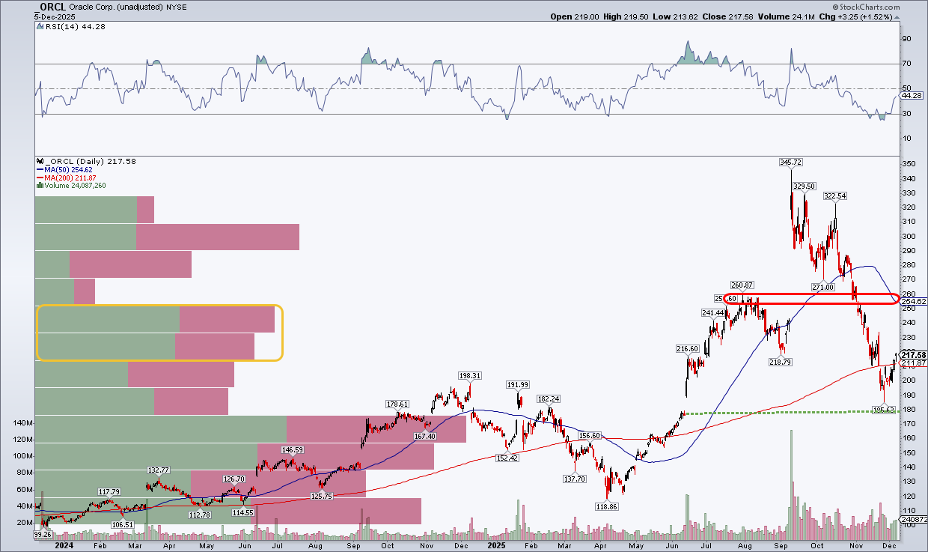
Oracle’s Financing Disappointment: Oracle’s stock had already plunged 10% before dropping another 4.5% in the wake of its mixed earnings report (beating on earnings per share but missing on revenue). Investors were particularly disappointed by the lack of detail on how the company plans to finance its massive, debt-fueled AI data center expansion. This raised questions about the sustainability and profitability of the aggressive infrastructure spending required to compete in the AI cloud space.

The combination of Broadcom’s margin concerns and Oracle’s financing uncertainty created a wave of “AI angst,” leading to a broader selloff in the sector.

Oracle Broadcom Chart

Short-Term Outlook: The Next Four Weeks

The next four weeks, often characterized by holiday trading and year-end portfolio adjustments, will be crucial for these stocks.

| Company | Crash Reason | Short-Term Outlook (Next 4 Weeks) |
| :— | :— | :— |
| Broadcom (AVGO) | Margin contraction on custom AI chips. | Analysts are largely recommending to “buy the dip,” viewing the selloff as an overreaction to short-term margin pressure. The underlying demand for their custom chips from hyperscalers remains robust. |
| Oracle (ORCL) | Missed revenue and financing uncertainty. | Volatility is likely as the market digests the debt concerns. A clear communication from management regarding their CapEx financing strategy could stabilize the stock, but until then, it remains under pressure. |
| Advanced Micro Devices (AMD) | General AI trade selloff. | Expected to stabilize quickly. The drop was largely collateral damage from the Broadcom/Oracle news. Strong demand for its EPYC CPUs and Instinct GPUs in the data center market provides a solid floor. |
| Meta Platforms (META) | General AI trade selloff. | Strongly positioned for a rebound. News of trimming the metaverse budget to prioritize AI spending is a positive signal for investors. The stock is likely to benefit from the “flight to quality” within the AI sector. |

Early 2026 Forecast: The Infrastructure Boom Continues

Despite the recent correction, the long-term forecast for the AI infrastructure sector remains overwhelmingly bullish, especially as we head into early 2026. The fundamental driver is the massive, non-negotiable capital expenditure (CapEx) being committed by the world’s largest tech companies.

Meta’s AI Commitment: Meta Platforms is a prime example of this long-term commitment. The company is aggressively shifting resources away from its metaverse division to focus on building out its AI capabilities. Analysts project Meta’s 2026 CapEx to reach an astonishing $109 billion, more than triple its 2023 spending. This colossal investment is primarily directed at AI infrastructure, including the purchase of chips and the construction of data centers.

The Demand for Silicon: This spending spree directly benefits chipmakers like Broadcom and AMD. Broadcom’s custom chip business, despite the short-term margin hit, is poised for massive growth as it supplies hyperscalers like Meta and Google. Similarly, AMD is forecast to see a 20%+ increase in revenue in 2026, driven by the insatiable demand for its high-performance EPYC and Instinct GPUs in the data center. The AI arms race is far from over, and these companies are the essential suppliers.

Oracle’s Long Game: While Oracle faces short-term financing questions, its long-term strategy hinges on becoming a major player in the AI cloud. The massive data center buildout, while costly, is a necessary step to capture future AI-driven revenue. If the company can effectively communicate its financing plan and execute on its AI pipeline, the stock could see a significant recovery in 2026.

AI Data Center

Conclusion: A Correction, Not a Collapse

The recent AI stock selloff was a healthy, albeit painful, market correction. It was driven by specific, company-level concerns about margins and financing, not a collapse in the underlying demand for artificial intelligence.

For investors, the message is clear: the AI revolution is still in its early stages, and the long-term trend of massive infrastructure spending is intact. The next four weeks may see continued volatility as the market finds its footing, but the outlook for early 2026 remains bright. The companies that are the essential building blocks of the AI future—Broadcom, AMD, Oracle, and Meta—are poised to be the biggest beneficiaries of this sustained, multi-year boom.

AI in E-commerce: 8 Profit-Boosting Strategies Every Online Retailer Needs

The e-commerce landscape is being revolutionized by artificial intelligence, with online retailers leveraging AI technologies to increase sales, reduce costs, and improve customer experiences. Successful implementation of AI strategies can result in 20-40% increases in revenue while significantly reducing operational overhead.

This comprehensive guide reveals eight proven AI strategies that e-commerce businesses are using to boost profits and gain competitive advantages in the rapidly evolving online retail market.

## Strategy 1: AI-Powered Personalization Engines

Personalization engines powered by AI can increase conversion rates by 15-25% while improving customer satisfaction and loyalty. These systems analyze customer behavior, purchase history, and preferences to deliver personalized product recommendations, content, and shopping experiences.

Implementation involves integrating AI recommendation algorithms with your e-commerce platform, collecting and analyzing customer data, and creating dynamic content that adapts to individual preferences. Popular platforms include Amazon Personalize, Dynamic Yield, and Yotpo.

Revenue impact typically includes increased average order values, higher conversion rates, improved customer retention, and reduced cart abandonment rates. Many retailers see ROI within 3-6 months of implementation.

## Strategy 2: Dynamic Pricing Optimization

AI-powered dynamic pricing systems can increase profits by 5-15% through automated price optimization based on market conditions, competitor pricing, inventory levels, and demand patterns.

Implementation involves integrating pricing algorithms with inventory management systems, competitor monitoring tools, and market analysis platforms. The system automatically adjusts prices to maximize revenue while maintaining competitiveness.

Success factors include setting appropriate pricing rules and constraints, monitoring competitor responses, and maintaining customer trust through transparent pricing policies.

## Strategy 3: Intelligent Inventory Management

AI inventory management systems can reduce carrying costs by 20-30% while minimizing stockouts through predictive analytics and automated reordering based on demand forecasting.

Implementation involves integrating AI forecasting algorithms with existing inventory systems, analyzing historical sales data and market trends, and automating purchase orders and stock level optimization.

Benefits include reduced inventory costs, improved cash flow, minimized stockouts and overstock situations, and optimized warehouse operations.

## Strategy 4: AI-Enhanced Customer Service

AI-powered customer service systems can reduce support costs by 30-50% while improving response times and customer satisfaction through chatbots, automated ticket routing, and intelligent knowledge bases.

Implementation involves deploying AI chatbots for common inquiries, implementing automated ticket classification and routing, and creating intelligent knowledge bases that provide instant answers to customer questions.

Results typically include faster response times, reduced support costs, improved customer satisfaction, and 24/7 availability for customer support.

## Strategy 5: Predictive Analytics for Marketing

AI-powered predictive analytics can improve marketing ROI by 20-40% through better customer segmentation, campaign optimization, and lifetime value prediction.

Implementation involves analyzing customer data to predict behavior, segmenting customers based on AI insights, optimizing marketing campaigns using predictive models, and personalizing marketing messages and timing.

Benefits include improved campaign performance, better customer targeting, increased marketing efficiency, and higher customer lifetime value.

## Strategy 6: Automated Content Generation

AI content generation can reduce content creation costs by 60-80% while maintaining quality and consistency across product descriptions, marketing materials, and customer communications.

Implementation involves using AI tools for product description generation, creating automated email marketing content, generating social media posts and advertisements, and developing personalized content for different customer segments.

Results include faster content creation, consistent brand messaging, improved SEO performance, and reduced content creation costs.

## Strategy 7: Fraud Detection and Prevention

AI-powered fraud detection systems can reduce fraud losses by 50-70% while minimizing false positives that impact legitimate customers.

Implementation involves deploying machine learning algorithms for transaction analysis, implementing real-time fraud scoring, and creating automated response systems for suspicious activities.

Benefits include reduced fraud losses, improved customer trust, faster transaction processing, and reduced manual review requirements.

## Strategy 8: Supply Chain Optimization

AI supply chain optimization can reduce logistics costs by 15-25% while improving delivery times and reliability through predictive analytics and automated decision-making.

Implementation involves optimizing shipping routes and methods, predicting and preventing supply chain disruptions, automating vendor selection and management, and improving demand forecasting accuracy.

Results include reduced shipping costs, improved delivery times, better supplier relationships, and increased operational efficiency.

## Implementation Strategy

Successful AI implementation in e-commerce requires strategic planning, proper technology integration, and ongoing optimization. Start with high-impact, low-complexity implementations before moving to more sophisticated systems.

Focus on data quality and integration, as AI systems require clean, comprehensive data to function effectively. Invest in proper analytics infrastructure and ensure compliance with privacy regulations.

Monitor performance metrics closely and optimize systems based on results. AI implementation is an iterative process that improves over time with proper management and optimization.

## Conclusion

AI represents a transformative opportunity for e-commerce businesses willing to invest in proper implementation and optimization. The eight strategies outlined in this guide provide proven pathways to increased profitability and competitive advantage.

Success requires strategic thinking, proper execution, and ongoing optimization. Those who master AI implementation while focusing on customer value can build substantial competitive advantages in the evolving e-commerce landscape.

Start implementing AI strategies today by choosing the approach that best aligns with your business needs and capabilities, then expand systematically as you build expertise and see results.