AI Reality Check: What Last Week’s Stock Crash Means for Broadcom, AMD, Oracle, and Meta

Author: everythingcryptoitclouds.com

Introduction: The Jolt to the AI Trade

Last week, the seemingly unstoppable AI stock rally hit a major speed bump. A sharp selloff, triggered by disappointing news from key players, sent shockwaves through the market, raising the specter of an “AI bubble.” While the overall AI narrative remains robust, the correction served as a crucial reality check, reminding investors that even the most promising growth stories are subject to market scrutiny.

The focus of this correction centered on two major infrastructure providers: Broadcom (AVGO) and Oracle (ORCL). Their struggles quickly dragged down other AI-exposed giants, including Advanced Micro Devices (AMD) and Meta Platforms (META). This article breaks down the reasons behind the crash, analyzes the short-term outlook for the next four weeks, and provides a forecast for early 2026.

AI Crash Visualization

Anatomy of the Selloff: Broadcom and Oracle’s One-Two Punch

The market correction was primarily ignited by a one-two punch from two companies whose fortunes are deeply tied to the AI infrastructure buildout.

Broadcom’s Margin Scare: Despite reporting better-than-expected quarterly results and strong guidance, Broadcom’s stock plummeted by 11%. The core concern was a warning from management that gross margins would be lower in the short term. This is due to the higher up-front costs associated with producing complex custom AI chip systems and server racks. Furthermore, the CEO tempered expectations for a major deal with OpenAI in 2026, suggesting the immediate revenue boost might not be as explosive as investors had hoped.

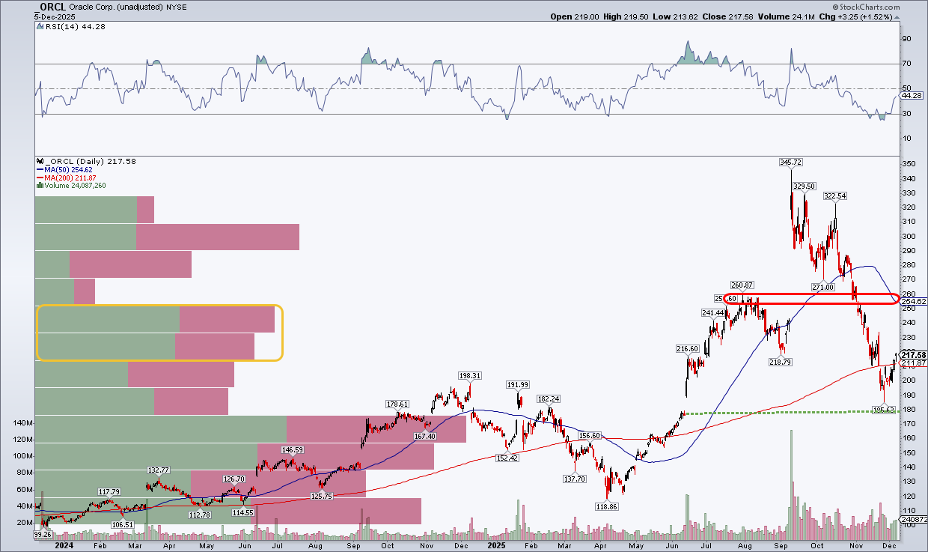
Oracle’s Financing Disappointment: Oracle’s stock had already plunged 10% before dropping another 4.5% in the wake of its mixed earnings report (beating on earnings per share but missing on revenue). Investors were particularly disappointed by the lack of detail on how the company plans to finance its massive, debt-fueled AI data center expansion. This raised questions about the sustainability and profitability of the aggressive infrastructure spending required to compete in the AI cloud space.

The combination of Broadcom’s margin concerns and Oracle’s financing uncertainty created a wave of “AI angst,” leading to a broader selloff in the sector.

Oracle Broadcom Chart

Short-Term Outlook: The Next Four Weeks

The next four weeks, often characterized by holiday trading and year-end portfolio adjustments, will be crucial for these stocks.

| Company | Crash Reason | Short-Term Outlook (Next 4 Weeks) |
| :— | :— | :— |
| Broadcom (AVGO) | Margin contraction on custom AI chips. | Analysts are largely recommending to “buy the dip,” viewing the selloff as an overreaction to short-term margin pressure. The underlying demand for their custom chips from hyperscalers remains robust. |
| Oracle (ORCL) | Missed revenue and financing uncertainty. | Volatility is likely as the market digests the debt concerns. A clear communication from management regarding their CapEx financing strategy could stabilize the stock, but until then, it remains under pressure. |
| Advanced Micro Devices (AMD) | General AI trade selloff. | Expected to stabilize quickly. The drop was largely collateral damage from the Broadcom/Oracle news. Strong demand for its EPYC CPUs and Instinct GPUs in the data center market provides a solid floor. |
| Meta Platforms (META) | General AI trade selloff. | Strongly positioned for a rebound. News of trimming the metaverse budget to prioritize AI spending is a positive signal for investors. The stock is likely to benefit from the “flight to quality” within the AI sector. |

Early 2026 Forecast: The Infrastructure Boom Continues

Despite the recent correction, the long-term forecast for the AI infrastructure sector remains overwhelmingly bullish, especially as we head into early 2026. The fundamental driver is the massive, non-negotiable capital expenditure (CapEx) being committed by the world’s largest tech companies.

Meta’s AI Commitment: Meta Platforms is a prime example of this long-term commitment. The company is aggressively shifting resources away from its metaverse division to focus on building out its AI capabilities. Analysts project Meta’s 2026 CapEx to reach an astonishing $109 billion, more than triple its 2023 spending. This colossal investment is primarily directed at AI infrastructure, including the purchase of chips and the construction of data centers.

The Demand for Silicon: This spending spree directly benefits chipmakers like Broadcom and AMD. Broadcom’s custom chip business, despite the short-term margin hit, is poised for massive growth as it supplies hyperscalers like Meta and Google. Similarly, AMD is forecast to see a 20%+ increase in revenue in 2026, driven by the insatiable demand for its high-performance EPYC and Instinct GPUs in the data center. The AI arms race is far from over, and these companies are the essential suppliers.

Oracle’s Long Game: While Oracle faces short-term financing questions, its long-term strategy hinges on becoming a major player in the AI cloud. The massive data center buildout, while costly, is a necessary step to capture future AI-driven revenue. If the company can effectively communicate its financing plan and execute on its AI pipeline, the stock could see a significant recovery in 2026.

AI Data Center

Conclusion: A Correction, Not a Collapse

The recent AI stock selloff was a healthy, albeit painful, market correction. It was driven by specific, company-level concerns about margins and financing, not a collapse in the underlying demand for artificial intelligence.

For investors, the message is clear: the AI revolution is still in its early stages, and the long-term trend of massive infrastructure spending is intact. The next four weeks may see continued volatility as the market finds its footing, but the outlook for early 2026 remains bright. The companies that are the essential building blocks of the AI future—Broadcom, AMD, Oracle, and Meta—are poised to be the biggest beneficiaries of this sustained, multi-year boom.

Crypto in 2026: From Speculation to Financial Revolution

Author: everythingcryptoitclouds.com

Introduction

The year is 2026, and the cryptocurrency landscape has transformed in ways that few could have predicted. What was once a niche, speculative asset class has now firmly planted its roots in the global financial system. The conversation has shifted from “if” to “how” cryptocurrencies will be integrated into our daily lives. This is not just another bull run; it’s a fundamental rewiring of our financial infrastructure. In this post, we’ll explore the key trends shaping the crypto world in 2026, from the maturation of the market to the tokenization of real-world assets and the evolution of decentralized finance (DeFi).

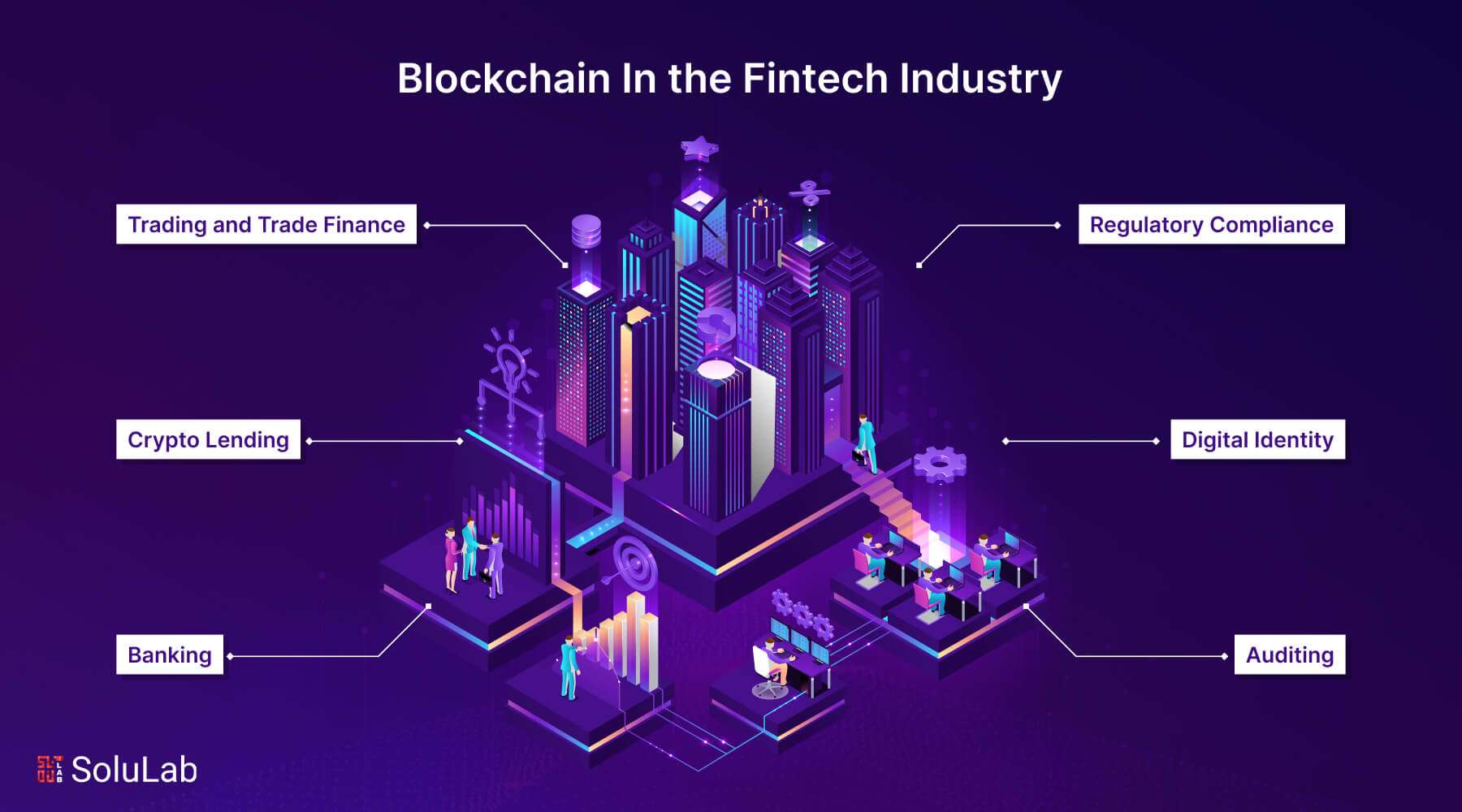
Blockchain Fintech

The Great Convergence: Crypto Meets Mainstream Finance

The most significant development in the crypto space is its convergence with traditional finance (TradFi). Major institutional players like BlackRock and JPMorgan, once skeptics, are now actively involved in the market. This has brought a new level of legitimacy and stability to the industry. The launch of spot Bitcoin ETFs has opened the floodgates for institutional capital, and we are now seeing a hybrid financial system emerge where digital assets are seen as “better tools” for a wide range of financial activities.

Tokenization: The Next Frontier

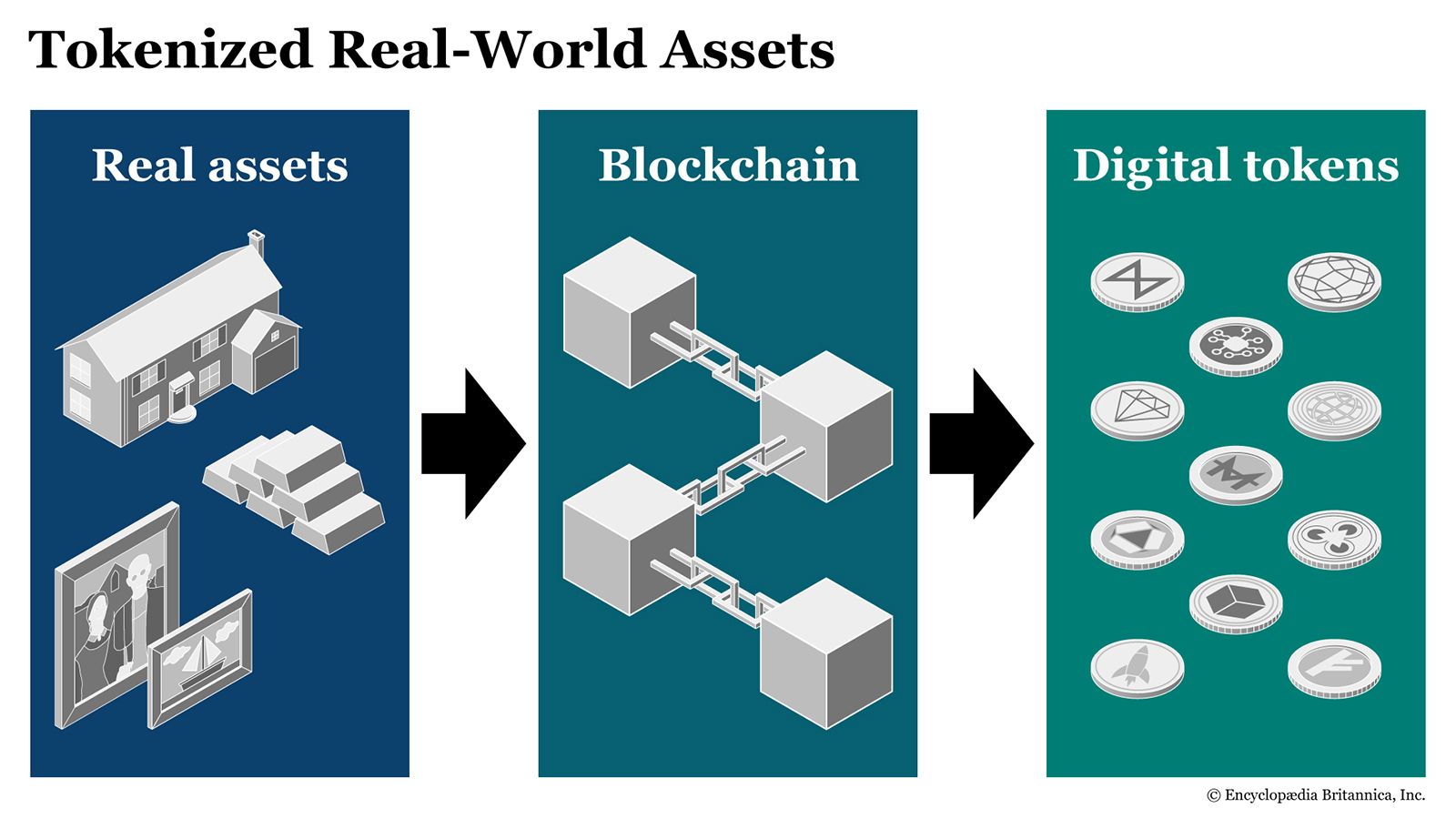
Tokenization, the process of converting real-world assets into digital tokens on a blockchain, is no longer a futuristic concept. It’s happening now, and it’s set to unlock trillions of dollars in value. From real estate to private credit, assets that were once illiquid are now being fractionalized and traded on-chain. This is democratizing access to investment opportunities and creating a more efficient and transparent financial system.

Asset Tokenization

DeFi 2.0: A More Mature and Regulated Ecosystem

Decentralized Finance (DeFi) has come a long way from its “wild west” days. In 2026, DeFi is a more mature and regulated ecosystem, with a focus on compliance and institutional-grade products. Stablecoins have become the new cash layer, facilitating seamless payments and cross-border transactions. The integration of AI is also making DeFi platforms more secure and efficient, with AI-driven risk management and automated yield optimization.

DeFi Concept

The Road Ahead: Scalability, AI, and Regulation

The crypto industry is still evolving, and there are several key developments that will shape its future. Layer 2 scaling solutions are making blockchains faster and cheaper to use, paving the way for mass adoption. Artificial intelligence is being integrated into every aspect of the crypto ecosystem, from security to trading. And finally, regulatory clarity is providing the certainty that businesses and investors need to confidently participate in the market.

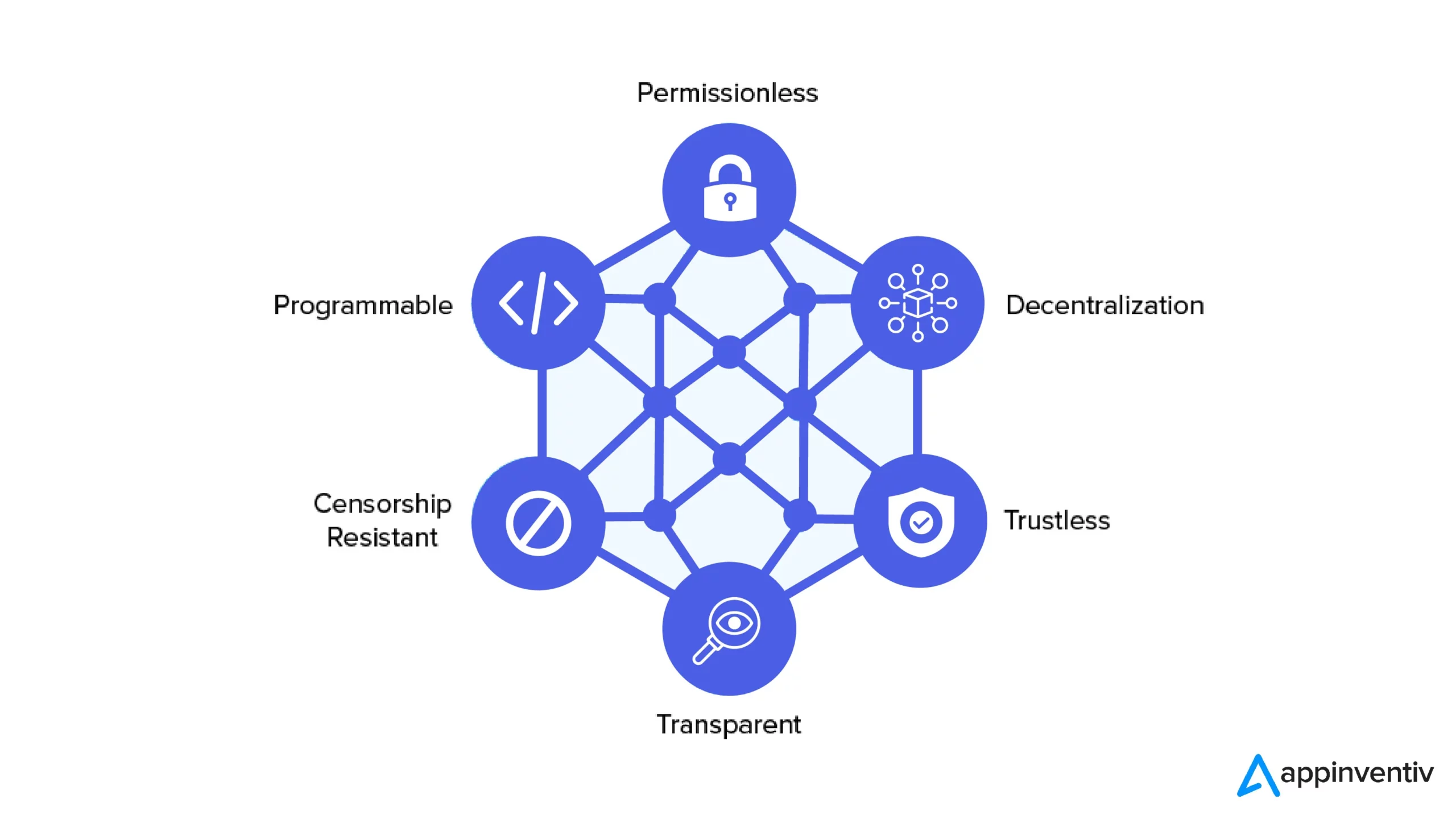
Blockchain Network

What About the Price?

No discussion of crypto would be complete without mentioning the price. While the market remains volatile, the long-term outlook is bullish. Some analysts are predicting that Bitcoin could reach as high as $200,000 by the end of 2026, with other major cryptocurrencies like Ethereum also poised for significant growth. However, it’s important to remember that these are just predictions, and you should always do your own research before investing.

Conclusion

The crypto revolution is well underway. In 2026, we are witnessing the birth of a new financial system that is more open, transparent, and efficient than ever before. The journey has just begun, and the most exciting innovations are still to come. The future of finance is being built on the blockchain, and it’s a future that we can all be a part of.

BNB Flips XRP: The Historic Market Cap Battle That Reshapes Crypto Rankings Forever

BNB Overtakes XRP in Market Cap Rankings

Published October 8, 2025 | Author: everythingcryptoitclouds.com

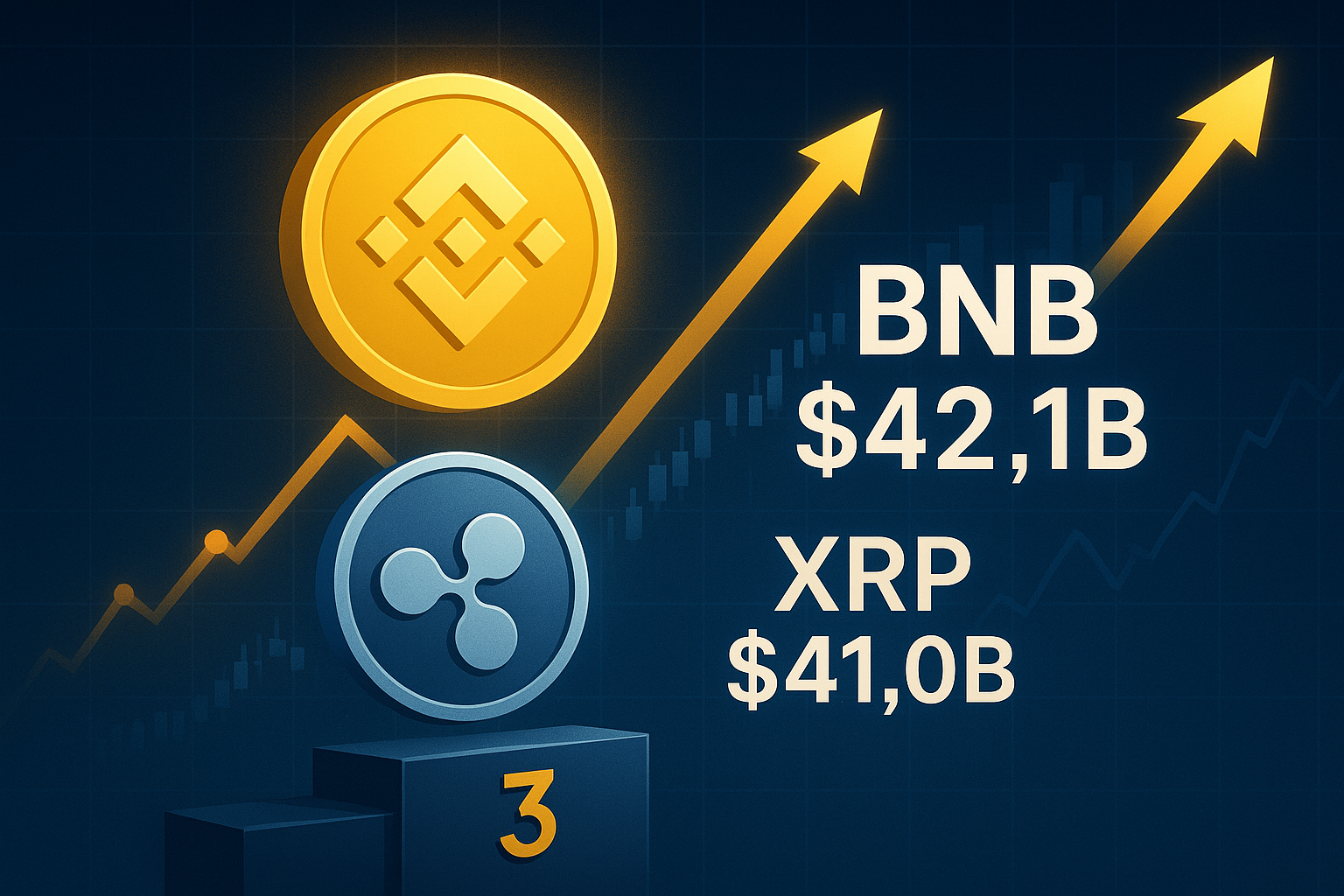
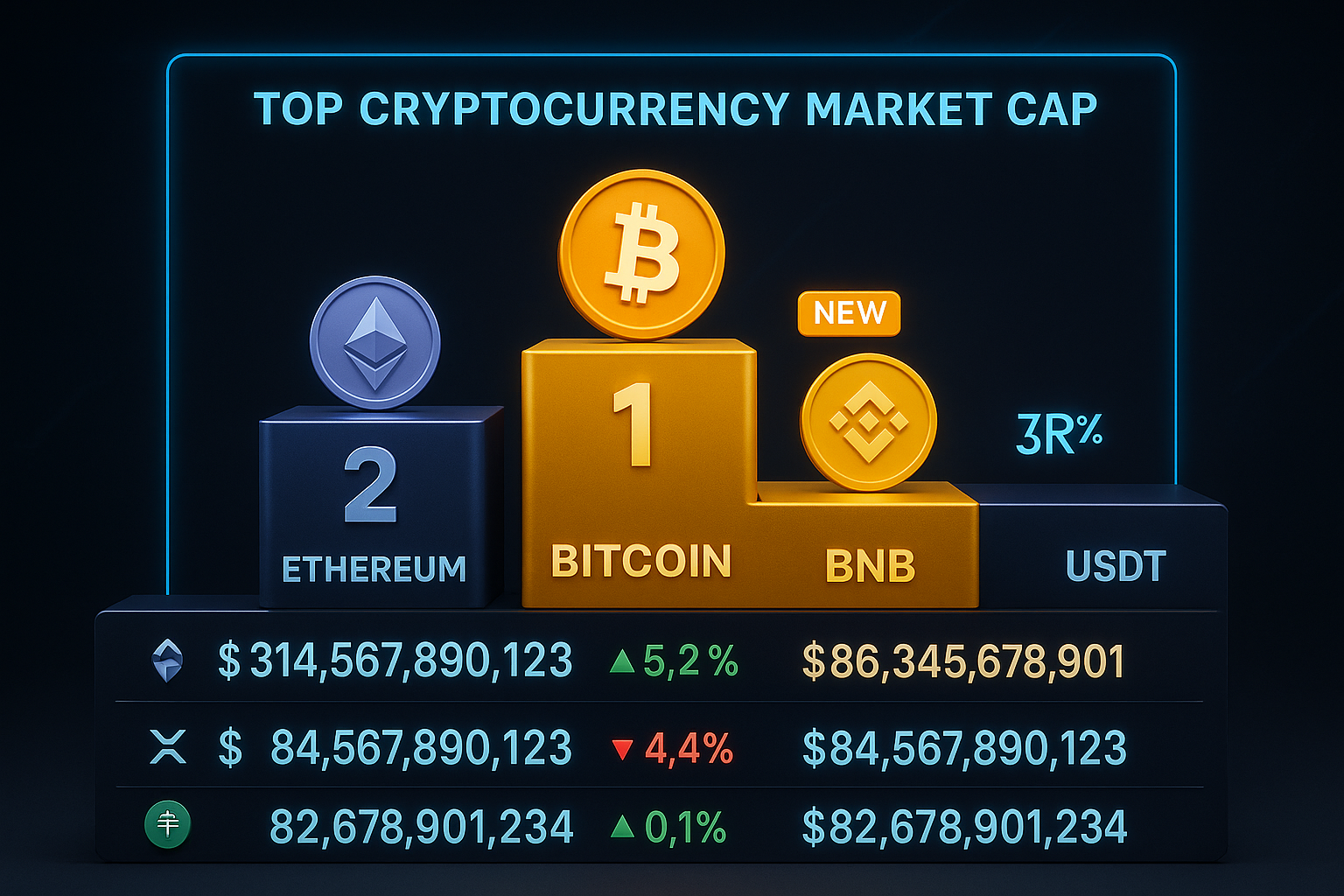
In a stunning turn of events that has sent shockwaves through the cryptocurrency community, Binance Coin (BNB) has officially overtaken XRP to become the third-largest cryptocurrency by market capitalization, marking one of the most significant ranking shifts in crypto history. This monumental achievement, reached on October 7, 2025, represents far more than a simple numerical change—it signals a fundamental transformation in how the market values utility, ecosystem development, and real-world adoption in the digital asset space.

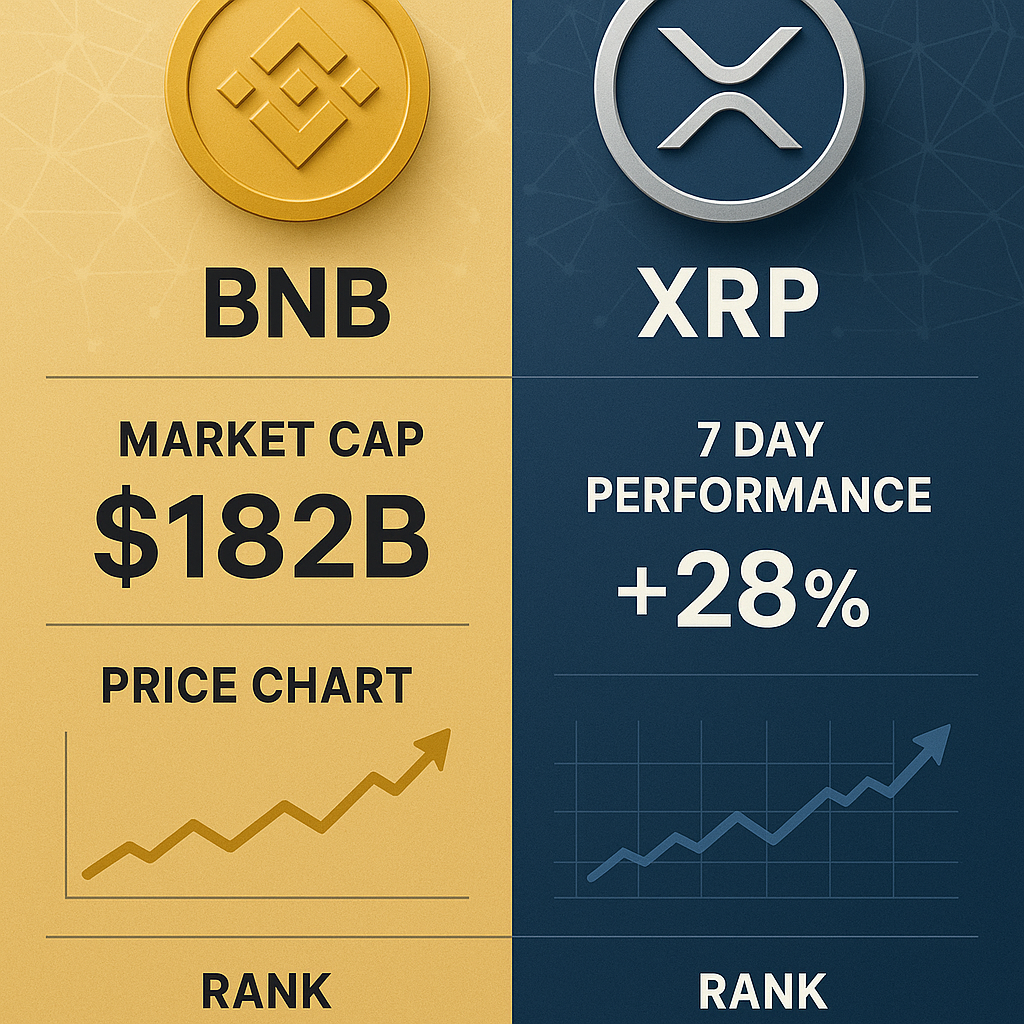
The ascension of BNB to the coveted third position comes after an extraordinary seven-day rally that saw the token surge an unprecedented 28% in market capitalization, adding a staggering $40 billion in value and reaching a new all-time high of $1,336.57 [1]. This remarkable performance stands in stark contrast to the broader cryptocurrency market, which has experienced only modest gains of 5.5% over the same period, highlighting BNB’s exceptional momentum and the unique factors driving its meteoric rise.

At the time of this historic flip, BNB commanded a market capitalization of approximately $182 billion, decisively surpassing XRP’s $172.6 billion valuation [2]. This achievement is particularly noteworthy given that it took BNB more than two months earlier in 2025 to add a similar amount to its market cap, when its value stood at around $100 billion in mid-July. The accelerated pace of growth demonstrates the increasing institutional and retail confidence in the BNB ecosystem and its underlying value proposition.

The implications of this market cap flip extend far beyond mere rankings, as it represents a validation of the Binance ecosystem’s comprehensive approach to blockchain infrastructure, decentralized finance, and real-world utility. Unlike many cryptocurrencies that rely primarily on speculative trading or limited use cases, BNB has established itself as the cornerstone of one of the most robust and diverse blockchain ecosystems in the industry, encompassing everything from decentralized exchanges and yield farming to NFT marketplaces and cross-chain interoperability solutions.

The Anatomy of BNB’s Explosive Growth

The remarkable surge that propelled BNB past XRP represents one of the most concentrated periods of value creation in cryptocurrency history, with the token adding $40 billion in market capitalization in just seven days. This extraordinary performance becomes even more impressive when viewed against the backdrop of the broader market’s relatively modest gains, suggesting that BNB’s rally is driven by fundamental factors rather than general market sentiment.

The catalyst for this explosive growth can be traced to several interconnected developments that have converged to create a perfect storm of positive momentum for the BNB ecosystem. The most significant driver has been the unprecedented surge in memecoin activity on the BNB Chain, which has created a new wave of millionaires and attracted massive attention to the network’s capabilities [3]. This memecoin boom has not only generated substantial transaction fees and network activity but has also demonstrated the scalability and efficiency of the BNB Chain infrastructure in handling high-volume, high-frequency trading scenarios.

The memecoin phenomenon on BNB Chain represents more than just speculative trading; it showcases the network’s ability to support viral, community-driven projects that can achieve massive scale in remarkably short timeframes. This capability has attracted developers, traders, and investors who recognize the potential for rapid value creation and the network effects that emerge from successful viral adoption. The resulting increase in network activity has created a positive feedback loop, where higher usage drives greater demand for BNB tokens, which in turn increases the token’s value and attracts even more users and developers to the ecosystem.

Beyond the memecoin surge, BNB’s growth has been supported by significant institutional developments that have enhanced the token’s credibility and utility. The launch of a government-backed BNB fund in Kazakhstan represents a groundbreaking milestone in institutional adoption, marking one of the first instances of a sovereign entity officially endorsing and investing in the BNB ecosystem [4]. This development not only provides substantial capital inflows but also serves as a powerful validation of BNB’s long-term viability and strategic importance in the global financial system.

The technical achievements underlying BNB’s surge are equally impressive, with the network consistently demonstrating its ability to handle massive transaction volumes while maintaining low fees and fast confirmation times. The BNB Chain’s monthly active address count of 60 million users represents one of the highest levels of real-world adoption in the cryptocurrency space, providing a solid foundation for sustained growth and value creation [5]. This user base is not merely speculative; it represents genuine utility and engagement with decentralized applications, financial services, and digital asset trading platforms built on the BNB ecosystem.

The price action itself tells a compelling story of sustained momentum and institutional confidence. BNB’s breakthrough above $1,100 for the first time on Friday, October 4, 2025, served as a crucial psychological and technical milestone that opened the door for further gains [6]. The subsequent rally to new all-time highs above $1,330 demonstrates the market’s recognition of BNB’s fundamental value and growth potential, while the sustained nature of the gains suggests that this is not merely a speculative bubble but rather a repricing based on improved fundamentals and expanded utility.

Market Dynamics and Comparative Performance Analysis

BNB vs XRP Performance Comparison

The market dynamics surrounding BNB’s historic flip of XRP reveal fascinating insights into how the cryptocurrency market values different types of digital assets and the factors that drive long-term success in this rapidly evolving space. The stark contrast in performance between these two major cryptocurrencies over the past seven days illustrates the market’s preference for assets with demonstrable utility, active development, and growing ecosystem adoption over those that rely primarily on institutional partnerships or regulatory clarity.

BNB’s 28% surge in market capitalization stands in sharp contrast to the broader market’s modest 5.5% gain, highlighting the token’s exceptional momentum and the unique factors driving its growth. This outperformance becomes even more remarkable when compared to other major cryptocurrencies: Bitcoin’s market cap increased by approximately 5% since October 1, while Ethereum recorded an 8.4% increase over the same period [7]. The fact that BNB’s gains exceeded those of both Bitcoin and Ethereum by such significant margins demonstrates the market’s recognition of the BNB ecosystem’s superior growth trajectory and value proposition.

The comparison with XRP is particularly instructive, as both tokens have historically competed for the third-largest market cap position and represent different approaches to blockchain utility and adoption. While XRP has focused primarily on institutional partnerships and cross-border payment solutions, BNB has built a comprehensive ecosystem that encompasses decentralized finance, non-fungible tokens, gaming, and a wide range of other applications. The market’s preference for BNB’s diversified approach suggests that investors and users value the flexibility and innovation potential of a multi-purpose blockchain platform over the more narrowly focused utility of a payment-specific cryptocurrency.

The speed of BNB’s ascension is particularly noteworthy when viewed in historical context. Earlier in 2025, it took BNB more than two months to add a similar $40 billion in market value, when its market cap grew from approximately $100 billion in mid-July to its previous peaks. The fact that the token has now achieved similar gains in just seven days indicates an acceleration in adoption and value recognition that suggests fundamental shifts in market perception and utility demand.

The trading volume and liquidity patterns surrounding BNB’s surge also provide important insights into the sustainability of these gains. Unlike many speculative rallies that are characterized by thin trading volumes and limited market depth, BNB’s rise has been supported by robust trading activity across multiple exchanges and trading pairs. This broad-based participation suggests that the rally is driven by genuine demand from a diverse range of market participants rather than concentrated buying from a small number of large holders.

The network effects driving BNB’s growth create a self-reinforcing cycle that distinguishes it from more speculative price movements. As the token’s value increases, it attracts more developers to build on the BNB Chain, which in turn creates more utility and demand for the token. This positive feedback loop is further amplified by the network’s low transaction costs and high throughput, which make it an attractive platform for both developers and users seeking efficient and cost-effective blockchain solutions.

The institutional interest in BNB has also evolved significantly, with the token increasingly being viewed as a legitimate store of value and utility asset rather than merely a speculative trading instrument. The government-backed fund in Kazakhstan represents just one example of institutional validation, with numerous other institutional investors and corporate treasuries beginning to recognize BNB’s potential as both a hedge against traditional financial system risks and a way to gain exposure to the growing decentralized finance ecosystem.

The Controversy: Manipulation Allegations and Market Skepticism

Despite BNB’s impressive fundamentals and ecosystem growth, the token’s rapid ascension has not been without controversy, with various market observers and community members raising questions about the sustainability and legitimacy of the price movements. These concerns have sparked intense debate across social media platforms and cryptocurrency forums, highlighting the ongoing tension between organic growth and potential market manipulation in the digital asset space.

The most vocal criticism has emerged from the Solana community on Reddit, where several commentators have questioned BNB’s utility compared to other high-performance blockchains and suggested that the price movements may be artificially inflated [8]. One particularly pointed comment stated, “BNB is essentially like the FTX token. Can’t wait till it gets called out for the price manipulation with evidence. It’s gonna be glorious,” reflecting the skepticism that some market participants harbor regarding centralized exchange tokens and their price dynamics.

These allegations have been further amplified by prominent figures in the cryptocurrency space, including DeFiTracer, who has accused Binance of “buying millions of BNB to liquidate shorts” and suggested that the exchange may be actively manipulating price movements to benefit its own positions [9]. Such accusations, while unsubstantiated, highlight the ongoing concerns about the potential for conflicts of interest when exchanges issue their own tokens and have the ability to influence trading dynamics through their market-making activities.

The manipulation allegations center around several key concerns that have been raised by market observers. First, critics point to the concentrated ownership structure of BNB, with reports suggesting that Changpeng “CZ” Zhao, Binance’s founder, may hold as much as 64% of the token’s circulating supply as of June 2024 [10]. With BNB’s current market cap of $182 billion, this would imply that CZ personally controls approximately $116 billion worth of BNB tokens, creating the potential for significant market influence through relatively small changes in his holdings or trading behavior.

Second, skeptics have noted the timing and magnitude of BNB’s surge, which coincides with a period of increased regulatory scrutiny and competitive pressure on Binance as an exchange. Some market observers have suggested that the dramatic price appreciation may be an attempt to demonstrate the strength and value of the Binance ecosystem in response to these external challenges, though such theories remain speculative and lack concrete evidence.

The technical analysis of BNB’s price movements has also drawn scrutiny from some quarters, with critics pointing to unusual trading patterns and volume spikes that they argue are inconsistent with organic market demand. However, supporters of BNB counter that these patterns are consistent with the network effects and ecosystem growth that have been driving adoption, and that the increased trading activity reflects genuine interest from both retail and institutional participants.

Despite these controversies, it’s important to note that neither Binance nor its executives have been formally accused of market manipulation by regulatory authorities, and the exchange has consistently maintained that its trading practices comply with applicable laws and regulations. CZ himself has remained largely silent on the specific allegations, instead focusing on promoting continued development and adoption of the BNB Chain ecosystem through social media posts encouraging builders to “Keep building on BNB Chain” [11].

The broader cryptocurrency community remains divided on these issues, with some viewing the allegations as legitimate concerns about market integrity while others see them as competitive attacks from rival ecosystems seeking to undermine BNB’s success. This division reflects the ongoing challenges facing the cryptocurrency industry as it seeks to balance innovation and growth with transparency and market fairness.

Technical Infrastructure and Ecosystem Advantages

The technical foundation underlying BNB’s remarkable growth represents one of the most sophisticated and comprehensive blockchain ecosystems in the cryptocurrency space, combining high-performance infrastructure with a diverse array of applications and services that create genuine utility and value for users. Understanding these technical advantages is crucial for appreciating why BNB has been able to achieve such dramatic growth and why many analysts believe this growth is sustainable over the long term.

The BNB Chain architecture represents a significant evolution from earlier blockchain designs, incorporating lessons learned from the scalability and usability challenges that have plagued other networks. The dual-chain structure, consisting of the BNB Beacon Chain for governance and staking and the BNB Smart Chain for smart contract execution, provides the flexibility and performance necessary to support a wide range of applications while maintaining security and decentralization.

The performance characteristics of the BNB Chain are particularly impressive, with the network capable of processing thousands of transactions per second at a fraction of the cost associated with other major blockchain platforms. This combination of high throughput and low fees has made the network particularly attractive for applications that require frequent transactions, such as decentralized exchanges, gaming platforms, and micropayment systems. The recent surge in memecoin trading has provided a real-world stress test of these capabilities, with the network successfully handling massive transaction volumes without significant congestion or fee spikes.

The developer ecosystem surrounding BNB Chain has grown exponentially, with thousands of decentralized applications now deployed on the network spanning categories including decentralized finance, non-fungible tokens, gaming, social media, and enterprise applications. This diversity of applications creates multiple sources of demand for BNB tokens, as users need the native token to pay transaction fees and participate in various protocol governance mechanisms.

The interoperability features of BNB Chain represent another significant technical advantage, with the network supporting seamless asset transfers and communication with other major blockchain platforms including Ethereum, Bitcoin, and various Layer 2 solutions. This cross-chain functionality has positioned BNB Chain as a central hub in the multi-chain ecosystem, allowing users to access liquidity and applications across different networks while benefiting from BNB Chain’s superior performance and cost characteristics.

The security model of BNB Chain combines the proven consensus mechanisms of established blockchain networks with innovative approaches to validator selection and network governance. The delegated proof-of-stake consensus mechanism ensures fast finality and energy efficiency while maintaining sufficient decentralization to resist attacks and censorship. The network’s validator set includes a diverse range of institutional and community participants, providing both security and geographic distribution.

Institutional Adoption and Government Backing

Cryptocurrency Market Cap Rankings

The institutional adoption of BNB represents a paradigm shift in how traditional financial institutions and government entities view cryptocurrency assets, moving beyond speculative interest toward genuine utility and strategic positioning. The launch of a government-backed BNB fund in Kazakhstan marks a historic milestone that validates the token’s legitimacy and long-term viability in ways that purely market-driven adoption cannot achieve.

The Kazakhstan government’s decision to establish an official BNB fund represents more than just an investment decision; it signals a strategic recognition of blockchain technology’s potential to enhance economic development and financial inclusion. Kazakhstan has emerged as a leader in cryptocurrency adoption and regulation, and its endorsement of BNB specifically reflects the government’s assessment of the token’s technical capabilities, ecosystem maturity, and potential for supporting national economic objectives.

This government backing creates several important advantages for BNB that extend far beyond the immediate capital injection. First, it provides regulatory clarity and legitimacy that can encourage other institutional investors to consider BNB as a viable asset class. Government endorsement often serves as a signal to risk-averse institutional investors that an asset has been thoroughly vetted and deemed suitable for official investment, potentially opening the door for pension funds, sovereign wealth funds, and other large institutional investors to allocate capital to BNB.

Second, the government partnership creates opportunities for real-world utility and adoption that can drive sustainable demand for BNB tokens. Government-backed initiatives often involve large-scale implementation projects that require significant token usage, creating organic demand that supports long-term price stability and growth. These use cases can include everything from digital identity systems and supply chain tracking to cross-border payments and public service delivery platforms.

The institutional adoption trend extends beyond government entities to include a growing number of corporate treasuries, investment funds, and financial service providers that are incorporating BNB into their strategic asset allocations. This institutional interest is driven by several factors, including BNB’s demonstrated utility within the Binance ecosystem, its strong technical fundamentals, and its potential to serve as a hedge against traditional financial system risks.

The corporate adoption of BNB has been particularly notable in regions where Binance has established strong market presence and regulatory relationships. Companies in these regions are increasingly using BNB for treasury management, cross-border payments, and as collateral for various financial services. This corporate adoption creates additional demand for BNB tokens while also providing real-world validation of the token’s utility and value proposition.

The institutional infrastructure supporting BNB has also evolved significantly, with the development of custody solutions, derivatives markets, and other financial products that make it easier for institutional investors to gain exposure to the token. Major custody providers now offer secure storage solutions for BNB, while derivatives exchanges provide sophisticated trading and hedging tools that allow institutional investors to manage their risk exposure effectively.

Market Implications and Future Outlook

The successful flip of XRP by BNB carries profound implications for the broader cryptocurrency market, signaling important shifts in how investors and users value different types of digital assets and blockchain platforms. This historic ranking change represents more than just a numerical milestone; it reflects evolving market preferences that favor comprehensive ecosystems over single-purpose solutions and active development over static partnerships.

The market’s preference for BNB over XRP suggests a fundamental shift toward valuing utility and ecosystem development over institutional partnerships and regulatory positioning. While XRP has focused primarily on building relationships with traditional financial institutions and navigating regulatory frameworks, BNB has concentrated on creating a vibrant, diverse ecosystem that generates real economic activity and provides tangible value to users. The market’s validation of this approach through BNB’s superior performance indicates that investors increasingly prioritize platforms that demonstrate measurable adoption and utility.

This trend has significant implications for other cryptocurrency projects and their strategic positioning. Projects that have relied primarily on partnerships, regulatory clarity, or theoretical use cases may find themselves at a disadvantage compared to those that have built active, growing ecosystems with demonstrable user adoption and economic activity. The success of BNB suggests that the market is maturing beyond speculative interest toward a more fundamental analysis of value creation and sustainable competitive advantages.

The competitive dynamics within the cryptocurrency space are also likely to intensify as a result of BNB’s success. Other blockchain platforms and cryptocurrency projects will likely accelerate their efforts to build comprehensive ecosystems and demonstrate real-world utility in order to compete for market share and investor attention. This competition could drive innovation and development across the entire industry, ultimately benefiting users through improved products and services.

The institutional implications of BNB’s rise are equally significant, as the token’s success demonstrates the viability of exchange-issued tokens as legitimate investment assets. This validation could encourage other exchanges to develop their own token ecosystems and could lead to increased institutional interest in exchange tokens as a category. However, it also raises important questions about market concentration and the potential risks associated with tokens that are closely tied to specific centralized entities.

The regulatory implications of BNB’s success are complex and multifaceted. On one hand, the token’s strong performance and growing institutional adoption could encourage regulators to develop clearer frameworks for exchange tokens and utility tokens more broadly. On the other hand, the concentration of value and control within the Binance ecosystem could raise concerns about market manipulation and systemic risk that might prompt increased regulatory scrutiny.

Looking forward, several key factors will likely determine whether BNB can maintain its position as the third-largest cryptocurrency and continue its growth trajectory. The continued development and adoption of the BNB Chain ecosystem will be crucial, as will the platform’s ability to maintain its technical advantages in terms of performance, cost, and user experience. The regulatory environment will also play a significant role, particularly as governments around the world develop more comprehensive frameworks for cryptocurrency regulation.

The competitive landscape will continue to evolve, with other blockchain platforms working to challenge BNB’s position through improved technology, better user experiences, or more attractive economic incentives. The success of these competitive efforts will depend largely on their ability to build genuine utility and adoption rather than relying solely on marketing or speculative interest.

The macroeconomic environment will also influence BNB’s future performance, as broader trends in inflation, interest rates, and global financial stability affect investor appetite for alternative assets like cryptocurrencies. However, BNB’s strong fundamentals and diverse utility should provide some insulation from purely macroeconomic factors, as the token’s value is increasingly tied to real economic activity within its ecosystem rather than speculative trading.

Conclusion: A New Era in Cryptocurrency Rankings

The historic flip of XRP by BNB represents a watershed moment in cryptocurrency market evolution, marking the ascendance of ecosystem-driven value creation over partnership-based positioning and demonstrating the market’s increasing sophistication in evaluating digital asset fundamentals. This achievement reflects not just a temporary price movement but a fundamental recognition of the superior value proposition offered by comprehensive blockchain ecosystems that generate real economic activity and provide tangible utility to users.

BNB’s remarkable 28% surge in market capitalization over just seven days, adding $40 billion in value and reaching new all-time highs above $1,330, represents one of the most concentrated periods of value creation in cryptocurrency history. This performance becomes even more impressive when viewed against the backdrop of the broader market’s modest 5.5% gains, highlighting the unique factors driving BNB’s growth and the market’s recognition of its exceptional potential.

The technical and fundamental factors underlying BNB’s success provide a compelling blueprint for sustainable growth in the cryptocurrency space. The combination of high-performance blockchain infrastructure, diverse ecosystem applications, strong institutional adoption, and government backing creates multiple sources of value and demand that support long-term price appreciation. The network’s ability to handle massive transaction volumes while maintaining low fees and fast confirmation times has been validated through real-world stress tests, including the recent memecoin trading surge that generated significant network activity and fee revenue.

The institutional validation of BNB, exemplified by the government-backed fund in Kazakhstan and growing corporate adoption, represents a crucial milestone in the token’s evolution from a purely speculative asset to a legitimate store of value and utility token. This institutional interest creates a foundation for sustained growth and provides credibility that can attract additional institutional capital and partnerships.

While controversy and skepticism surrounding BNB’s rapid rise are natural and healthy aspects of market discourse, the fundamental drivers of the token’s success appear to be sustainable and based on genuine utility rather than speculative manipulation. The diverse ecosystem of applications, the growing user base of 60 million monthly active addresses, and the continuous development and innovation within the BNB Chain platform provide solid foundations for continued growth and value creation.

The implications of BNB’s success extend far beyond the token itself, signaling important shifts in market preferences and competitive dynamics that will likely influence the entire cryptocurrency industry. Projects that focus on building real utility, demonstrating measurable adoption, and creating comprehensive ecosystems are likely to be rewarded by the market, while those that rely primarily on partnerships or theoretical use cases may find themselves at a competitive disadvantage.

As the cryptocurrency market continues to mature and evolve, BNB’s historic achievement serves as both a validation of the ecosystem-driven approach to blockchain development and a challenge to other projects to demonstrate similar levels of utility and adoption. The future of cryptocurrency rankings will likely be determined not by marketing campaigns or partnership announcements, but by the ability to create genuine value and utility for users in the real world.

The new era in cryptocurrency rankings that BNB’s success represents is characterized by a more sophisticated understanding of value creation, a preference for demonstrable utility over speculative potential, and an appreciation for the network effects that emerge from successful ecosystem development. This evolution benefits the entire cryptocurrency industry by encouraging innovation, rewarding genuine value creation, and moving the market toward a more sustainable and fundamentally-driven foundation for growth.


References

[1] Cointelegraph – “BNB flips XRP as the third-largest crypto asset by market cap” (October 7, 2025) – https://cointelegraph.com/news/bnb-flips-xrp-third-largest-crypto-asset-market-cap

[2] Yahoo Finance – “BNB flips XRP to become third-largest cryptocurrency” (October 7, 2025) – https://finance.yahoo.com/news/bnb-flips-xrp-become-third-144849626.html

[3] Cointelegraph – “BNB Chain memecoins mint new millionaires in wild trading week” (October 8, 2025)

[4] Cointelegraph – “BNB flips XRP as the third-largest crypto asset by market cap” (October 7, 2025)

[5] BNB Chain Official Analysis – Momin Saqib via BNB Chain social media (October 7, 2025)

[6] Mitrade – “BNB Flips XRP’s Market Capitalization As Price Hits New ATH” (October 8, 2025) – https://www.mitrade.com/insights/news/live-news/article-3-1179446-20251008

[7] Cointelegraph – “BNB flips XRP as the third-largest crypto asset by market cap” (October 7, 2025)

[8] Reddit CryptoMarkets – “BNB Flips XRP to Become the World’s Third-Largest Cryptocurrency” (October 8, 2025) – https://www.reddit.com/r/CryptoMarkets/comments/1o16gar/bnb_flips_xrp_to_become_the_worlds_thirdlargest/

[9] DeFiTracer via X (Twitter) – Market manipulation allegations (October 7, 2025)

[10] Cointelegraph – “BNB flips XRP as the third-largest crypto asset by market cap” (October 7, 2025)

[11] Changpeng Zhao via X (Twitter) – “Keep building on BNB Chain” (October 8, 2025)

How to Invest $1000 in Crypto for 2026: A Guide to the Best Crypto Stocks

As the world of cryptocurrency continues to mature, investors are increasingly looking for ways to gain exposure to this burgeoning asset class without directly purchasing volatile digital coins. Crypto-related stocks offer a compelling alternative, providing a way to invest in the underlying technology and infrastructure of the digital asset economy. With 2026 shaping up to be a pivotal year for the crypto market, now is an excellent time to consider which stocks are best positioned for growth. This guide will explore how to strategically invest $1000 in the most promising crypto stocks for the coming year.

The 2026 Crypto Landscape: A Perfect Storm for Growth?

Several key factors are converging to create a potentially explosive environment for the crypto market in 2026. Analysts are predicting a significant bull run for Bitcoin, with some forecasts projecting a price of over $140,000. This optimism is fueled by increasing institutional investment, particularly through spot crypto exchange-traded funds (ETFs), and a more favorable political climate in the United States. Furthermore, major financial institutions like Morgan Stanley are entering the crypto space, with plans to launch crypto trading on their E*TRADE platform in 2026. This confluence of events suggests that companies with exposure to the crypto ecosystem are poised for substantial growth.

Crypto Portfolio Diversification

How to Invest $1000: A Diversified Approach to Crypto Stocks

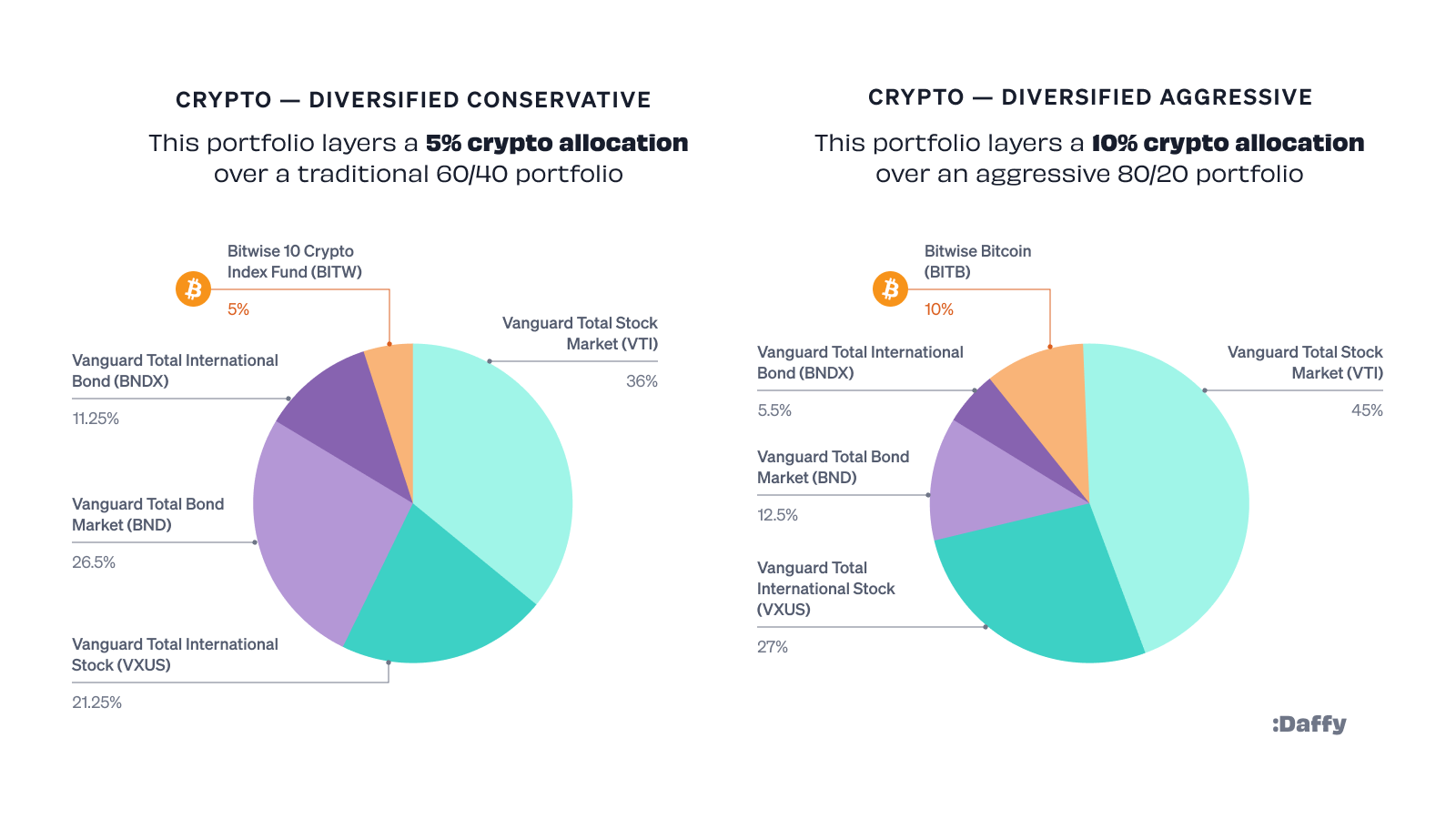
With a $1000 investment, a diversified approach is crucial to mitigate risk while maximizing potential returns. A well-balanced portfolio could include a mix of cryptocurrency mining stocks and more established companies with significant blockchain and crypto-adjacent operations. This strategy allows you to capitalize on the high-growth potential of miners while also benefiting from the stability of larger, more diversified companies.

| Stock Category | Investment Allocation | Rationale |
| :— | :— | :— |
| Cryptocurrency Mining Stocks | 40% ($400) | Direct exposure to the profitability of crypto mining, which is highly correlated with cryptocurrency prices. |
| Blockchain & Crypto-Adjacent Stocks | 60% ($600) | Exposure to the broader blockchain ecosystem, including exchanges, payment processors, and technology providers, offering a more stable and diversified investment. |

Top Crypto Mining Stocks to Watch

Cryptocurrency mining stocks are at the forefront of the digital asset revolution, and their performance is closely tied to the price of cryptocurrencies like Bitcoin. As crypto prices rise, so do the profit margins for miners, making these stocks a high-risk, high-reward investment.

Bitcoin Mining Stocks

Here are some of the top crypto mining stocks to consider for your 2026 portfolio:

  • Marathon Digital Holdings (MARA): As one of the largest Bitcoin miners in the U.S., MARA has been aggressively expanding its operations and boasts a significant Bitcoin treasury. Its focus on efficiency and scale makes it a compelling investment.
  • Riot Platforms (RIOT): RIOT is another major player in the Bitcoin mining space, with a strong balance sheet and a commitment to expanding its hash rate. The company’s strategic focus on low-cost energy makes it well-positioned for long-term growth.
  • CleanSpark (CLSK): CLSK stands out for its commitment to sustainable energy, with a significant portion of its operations powered by low-carbon sources. This ESG-friendly approach, combined with its rapid growth, makes it an attractive option for socially conscious investors.

Mining Stocks Performance

Top Blockchain and Crypto-Adjacent Stocks

For investors seeking a more diversified and less volatile entry into the crypto space, blockchain and crypto-adjacent stocks offer an excellent alternative. These companies are involved in various aspects of the crypto ecosystem, from exchanges and payment processing to the underlying technology that powers it all.

Crypto Stocks Comparison

Here are some of the top blockchain and crypto-adjacent stocks to consider:

  • Coinbase (COIN): As the leading U.S. cryptocurrency exchange, Coinbase is a direct beneficiary of the growing adoption of crypto. Its user-friendly platform and institutional-grade services make it a cornerstone of the crypto economy.
  • Nvidia (NVDA): While primarily known for its graphics processing units (GPUs) used in gaming and AI, Nvidia’s technology is also essential for cryptocurrency mining. As the demand for high-performance computing continues to grow, so will the demand for Nvidia’s products.
  • Block (SQ): Formerly known as Square, Block has embraced cryptocurrency with its Cash App, which allows users to buy and sell Bitcoin. The company is also actively developing other Bitcoin-related products and services, making it a key player in the future of finance.

Conclusion: Riding the Crypto Wave in 2026

The year 2026 is poised to be a landmark year for the cryptocurrency market. By strategically investing in a diversified portfolio of crypto-related stocks, you can position yourself to capitalize on the immense growth potential of this transformative technology. Whether you choose to invest in high-growth mining stocks or more established blockchain and crypto-adjacent companies, a well-researched and diversified approach will be key to navigating the exciting and ever-evolving world of crypto investing.

Disclaimer: This article is for informational purposes only and does not constitute financial advice. Investing in cryptocurrency and crypto-related stocks involves significant risk, and you should always conduct your own research and consult with a qualified financial advisor before making any investment decisions.

Google Cloud Launches Its Own Blockchain: The Game-Changing GCUL Platform That’s Redefining Enterprise Finance

Published by everythingcryptoitclouds.com | August 27, 2025

In a move that has sent shockwaves through the financial technology and blockchain industries, Google Cloud announced today the launch of its own Layer-1 blockchain platform, the Google Cloud Universal Ledger (GCUL), marking the tech giant’s most aggressive entry yet into the rapidly evolving world of enterprise blockchain infrastructure. This groundbreaking development represents far more than another corporate blockchain initiative; it signals a fundamental shift in how global financial institutions will approach cross-border payments, asset tokenization, and digital finance infrastructure in the coming decade [1].

The timing of Google Cloud’s blockchain launch could not be more strategic, coming at a moment when the global stablecoin market has reached unprecedented scale, with transaction volumes hitting $30 trillion in 2024—a figure that surpasses Visa’s entire annual payment volume. This massive market opportunity, combined with the growing institutional demand for programmable money and automated financial workflows, has created the perfect conditions for a technology giant with Google’s infrastructure capabilities and enterprise relationships to make a decisive move into blockchain-based financial services [2].

What makes GCUL particularly significant is not just Google’s entry into the blockchain space, but the company’s strategic positioning of the platform as “credibly neutral” infrastructure that can serve any financial institution, regardless of their existing partnerships or competitive relationships. This approach directly addresses one of the most significant barriers to enterprise blockchain adoption: the reluctance of financial institutions to build on platforms controlled by their direct competitors. By offering a neutral foundation that doesn’t favor any particular ecosystem or stablecoin issuer, Google Cloud has created a compelling value proposition that could accelerate institutional blockchain adoption across the entire financial services industry.

The technical architecture of GCUL represents a sophisticated approach to enterprise blockchain design, featuring Python-based smart contracts that make the platform more accessible to traditional financial engineers and developers who may not be familiar with blockchain-specific programming languages like Solidity. This developer-friendly approach, combined with Google Cloud’s proven ability to scale infrastructure for billions of users, positions GCUL as a potentially transformative platform that could bridge the gap between traditional finance and blockchain-based financial services.

The competitive implications of Google’s blockchain launch extend far beyond the immediate impact on existing blockchain platforms, creating new dynamics in the rapidly evolving landscape of enterprise financial infrastructure. With major technology companies like Stripe and Circle also developing their own blockchain platforms, the race to define the next generation of financial settlement rails has intensified dramatically, with each platform offering distinct advantages and targeting different segments of the massive global payments market.

The partnership between Google Cloud and CME Group, one of the world’s largest derivatives exchanges, provides immediate validation of GCUL’s enterprise capabilities and demonstrates the platform’s potential to transform traditional capital markets infrastructure. The successful completion of initial integration and testing phases with CME Group signals that GCUL is not merely a conceptual project but a production-ready platform that can handle the demanding requirements of institutional financial markets, including 24/7 trading, complex asset tokenization, and sophisticated risk management workflows.

Understanding the full implications of Google Cloud’s blockchain launch requires examining not only the technical capabilities and competitive positioning of GCUL but also the broader market forces that are driving the transformation of global financial infrastructure. The convergence of regulatory clarity, institutional adoption, and technological maturity has created conditions that favor the development of enterprise-grade blockchain platforms that can provide the security, scalability, and compliance features required by traditional financial institutions while offering the programmability and efficiency advantages that make blockchain technology compelling for financial applications.

The Technical Revolution: GCUL’s Architecture and Innovation

The Google Cloud Universal Ledger represents a masterful synthesis of enterprise-grade infrastructure design and cutting-edge blockchain technology, creating a platform that addresses the specific needs of institutional financial markets while maintaining the programmability and transparency advantages that make blockchain technology valuable for financial applications. The technical architecture of GCUL demonstrates Google’s deep understanding of both the requirements of traditional financial institutions and the potential of blockchain technology to transform financial infrastructure.

The most immediately striking aspect of GCUL’s technical design is its use of Python-based smart contracts, a decision that represents a significant departure from the Solidity-based smart contract platforms that dominate the current blockchain landscape. This choice reflects Google’s recognition that widespread institutional adoption of blockchain technology requires platforms that are accessible to the existing developer talent pool within financial institutions, rather than requiring organizations to hire specialized blockchain developers or retrain their existing engineering teams. Python’s widespread adoption in financial engineering, data science, and quantitative analysis makes it the natural choice for a platform targeting institutional financial markets [1].

The implications of Python-based smart contracts extend far beyond developer convenience, enabling financial institutions to leverage their existing codebases, libraries, and analytical tools when building blockchain-based financial applications. This compatibility with existing financial technology stacks significantly reduces the barriers to adoption and enables institutions to implement blockchain solutions more rapidly and cost-effectively than would be possible with platforms requiring entirely new development approaches. The decision to support Python also positions GCUL to benefit from the extensive ecosystem of financial and analytical libraries that have been developed for Python, enabling sophisticated financial modeling and risk management capabilities to be integrated directly into blockchain-based workflows.

The architectural design of GCUL emphasizes scalability and performance characteristics that are essential for institutional financial applications, with Google leveraging its proven ability to operate infrastructure that serves billions of users worldwide. The platform is designed to support hundreds of financial institutions simultaneously while maintaining the performance and reliability standards required for mission-critical financial operations. This scalability advantage represents a significant competitive differentiator, as many existing blockchain platforms struggle to provide the throughput and reliability required for large-scale institutional adoption.

The API-first design philosophy underlying GCUL reflects Google’s understanding that enterprise adoption requires integration approaches that align with existing enterprise software development practices. Rather than requiring institutions to interact directly with blockchain infrastructure, GCUL provides a single, comprehensive API that abstracts the complexity of blockchain operations while providing access to all the platform’s capabilities. This approach enables financial institutions to integrate blockchain functionality into their existing systems using familiar development patterns and tools, significantly reducing the technical complexity and risk associated with blockchain adoption.

The billing model implemented by GCUL addresses one of the most significant concerns that financial institutions have expressed regarding blockchain adoption: the unpredictability of transaction costs associated with volatile gas fees. By implementing a fixed monthly billing structure, GCUL provides the cost predictability that is essential for institutional financial planning and budgeting processes. This approach eliminates the risk of unexpected cost spikes during periods of high network congestion and enables institutions to accurately forecast their blockchain infrastructure costs as part of their overall technology budgets.

The private and permissioned nature of GCUL’s current implementation reflects the regulatory realities facing institutional financial markets, where compliance requirements and risk management considerations necessitate controlled access and comprehensive oversight capabilities. However, Google has indicated that the platform is designed to evolve toward more open access models as regulatory frameworks develop and mature, providing a migration path that enables institutions to benefit from blockchain technology within current regulatory constraints while positioning them to take advantage of future regulatory developments.

Competitive Landscape: GCUL vs. Stripe Tempo and Circle Arc

The launch of Google Cloud Universal Ledger occurs within a rapidly evolving competitive landscape where major technology and financial services companies are racing to define the next generation of financial infrastructure. The emergence of Stripe’s Tempo platform and Circle’s Arc blockchain as direct competitors to GCUL creates a fascinating three-way competition that highlights different strategic approaches to enterprise blockchain adoption and reveals the various paths that the industry might take as it evolves toward blockchain-based financial infrastructure.

Stripe’s Tempo platform represents a natural extension of the company’s existing payments empire, leveraging Stripe’s established relationships with millions of merchants and its proven ability to process over a trillion dollars in annual payment volume. The Tempo platform is designed as a vertically integrated solution that extends Stripe’s existing merchant payment rails into a blockchain-based infrastructure, enabling merchants to benefit from blockchain capabilities while remaining within Stripe’s controlled ecosystem. This approach provides significant advantages in terms of merchant adoption and integration, as existing Stripe customers can access blockchain functionality without changing their existing payment processing relationships or technical integrations [1].

The strategic positioning of Tempo reflects Stripe’s focus on merchant-centric use cases and its goal of maintaining control over the entire payment processing value chain. By building a blockchain platform that is tightly integrated with its existing payment infrastructure, Stripe can offer merchants seamless access to blockchain capabilities while ensuring that transaction volume and revenue remain within the Stripe ecosystem. This approach is particularly compelling for merchants who are already heavily invested in Stripe’s payment processing infrastructure and want to explore blockchain capabilities without the complexity of integrating with external blockchain platforms.

Circle’s Arc platform takes a fundamentally different approach, positioning USDC stablecoin as the central component of a blockchain ecosystem designed to optimize cross-border payments and currency exchange. Arc is built around the premise that stablecoins represent the future of digital money and that blockchain platforms should be optimized specifically for stablecoin-based transactions and settlements. The platform promises lightning-fast settlement capabilities with built-in foreign exchange functionality, enabling seamless conversion between different currencies and payment methods within a single transaction [2].

The competitive advantage of Circle’s Arc lies in USDC’s established position as one of the world’s most widely adopted stablecoins, with extensive liquidity integrations and regulatory compliance across multiple jurisdictions. Circle can leverage USDC’s existing adoption and liquidity to provide immediate utility for Arc users, while the platform’s focus on stablecoin optimization enables performance and functionality advantages that are specifically tailored to digital currency use cases. The Arc platform is already in pilot testing with select partners, giving Circle a potential first-mover advantage in bringing enterprise blockchain capabilities to market.

Google Cloud’s GCUL platform differentiates itself through its commitment to credible neutrality, a strategic positioning that addresses one of the most significant barriers to enterprise blockchain adoption: the reluctance of financial institutions to build on platforms controlled by their direct competitors. As Rich Widmann, Google’s head of Web3 strategy, explained in his recent LinkedIn post, “Tether won’t use Circle’s blockchain – and Adyen probably won’t use Stripe’s blockchain. But any financial institution can build with GCUL” [1]. This neutral positioning enables GCUL to serve as shared infrastructure that can be adopted by competing financial institutions without concerns about strengthening rivals or creating strategic dependencies.

The neutrality advantage of GCUL extends beyond competitive considerations to include technical and operational benefits that result from serving a diverse ecosystem of financial institutions. By designing the platform to serve any stablecoin issuer, payment processor, or financial institution, Google can create network effects that benefit all participants while avoiding the limitations that result from optimizing for specific use cases or ecosystems. This approach enables GCUL to serve as a foundation for innovation across the entire financial services industry rather than being limited to specific market segments or use cases.

The timeline differences between the three platforms reveal different strategic priorities and development approaches. Circle’s Arc is already in pilot testing and appears closest to full commercial availability, reflecting the company’s focus on leveraging existing USDC adoption to accelerate platform development. Stripe’s Tempo is targeting a 2026 launch, aligning with the company’s methodical approach to product development and its focus on ensuring seamless integration with existing merchant infrastructure. Google’s GCUL is also targeting 2026 for full commercial availability, but the company has already completed initial integration testing with CME Group and plans to begin broader institutional testing later in 2025.

The distribution strategies employed by each platform reflect their different competitive advantages and target markets. Stripe can leverage its existing relationships with millions of merchants and its proven ability to drive adoption through its established sales and marketing channels. Circle can build on USDC’s global adoption and the extensive ecosystem of exchanges, wallets, and financial services that already support USDC transactions. Google brings the reach and credibility of Google Cloud’s enterprise relationships, along with the company’s proven ability to scale infrastructure for global adoption.

The feature differentiation between the platforms reveals their different strategic focuses and target use cases. Arc emphasizes speed and seamless foreign exchange capabilities, making it particularly attractive for cross-border payment use cases and international commerce. Tempo focuses on merchant integration and payment processing optimization, leveraging Stripe’s deep understanding of merchant needs and payment processing workflows. GCUL emphasizes programmability through Python-based smart contracts and institutional-grade tokenization capabilities, positioning it as a foundation for sophisticated financial engineering and capital markets applications.

Market Implications and Industry Transformation

The launch of Google Cloud Universal Ledger represents far more than the introduction of another blockchain platform; it signals a fundamental transformation in how the global financial services industry will approach digital infrastructure, cross-border payments, and programmable money in the coming decade. The entry of a technology giant with Google’s scale, infrastructure capabilities, and enterprise relationships into the blockchain space validates the technology’s potential to transform financial services while creating new competitive dynamics that will reshape the entire industry.

The most immediate market implication of GCUL’s launch is the validation it provides for enterprise blockchain adoption among traditional financial institutions. Google’s decision to invest significant resources in developing a blockchain platform specifically for financial services sends a powerful signal to conservative financial institutions that may have been hesitant to embrace blockchain technology. The credibility and technical expertise that Google brings to the blockchain space can help overcome the skepticism and risk aversion that have historically limited institutional blockchain adoption, potentially accelerating the transition toward blockchain-based financial infrastructure across the entire industry.

The threat that GCUL poses to traditional financial infrastructure providers, particularly SWIFT and other cross-border payment networks, cannot be understated. The current global financial infrastructure relies heavily on correspondent banking relationships and legacy messaging systems that were designed decades ago and struggle to provide the speed, transparency, and cost-effectiveness that modern financial markets demand. GCUL’s ability to provide near-instantaneous settlement with programmable compliance and automated workflows represents a fundamental improvement over existing infrastructure that could drive widespread adoption among financial institutions seeking competitive advantages [3].

The implications for stablecoin issuers and digital asset infrastructure providers are particularly significant, as GCUL’s neutral positioning creates opportunities for any stablecoin issuer to build on the platform without concerns about competitive disadvantages or strategic dependencies. This neutrality could accelerate the development of a more diverse and competitive stablecoin ecosystem, as issuers gain access to enterprise-grade infrastructure without being forced to choose between competing platform ecosystems. The result could be increased innovation in stablecoin design and functionality, as issuers compete to provide the most compelling offerings on a shared infrastructure platform.

The impact on traditional payment processors and money transfer services represents another significant market implication, as GCUL enables financial institutions to bypass traditional payment processing intermediaries for many types of transactions. The platform’s ability to provide direct settlement between financial institutions, combined with its programmable compliance and automated workflow capabilities, could reduce the role of traditional payment processors in many types of financial transactions. However, the platform also creates opportunities for payment processors to enhance their offerings by integrating blockchain capabilities and providing value-added services on top of the GCUL infrastructure.

The competitive response from existing blockchain platforms and financial infrastructure providers will likely accelerate innovation across the entire industry, as companies seek to match or exceed the capabilities provided by GCUL. This competitive dynamic could drive improvements in scalability, user experience, and enterprise features across the blockchain industry, ultimately benefiting financial institutions and end users through better technology options and more competitive pricing. The entry of major technology companies into the blockchain space also validates the technology’s long-term potential and could attract additional investment and development resources to the industry.

The regulatory implications of GCUL’s launch are complex and multifaceted, as the platform’s design reflects Google’s understanding of current regulatory requirements while positioning for future regulatory developments. The private and permissioned nature of GCUL’s current implementation aligns with existing financial services regulations and compliance requirements, while the platform’s programmable compliance capabilities could help financial institutions meet evolving regulatory requirements more efficiently and effectively. The involvement of a major technology company like Google in blockchain-based financial services could also influence regulatory development by demonstrating the technology’s potential benefits and addressing regulatory concerns about security and compliance.

The international implications of GCUL’s launch extend beyond the immediate impact on financial institutions to include potential effects on monetary policy, financial sovereignty, and international economic relationships. The platform’s ability to facilitate cross-border payments and settlements could reduce the role of traditional correspondent banking relationships and potentially challenge the dominance of existing international payment systems. However, the platform’s design also enables central banks and regulatory authorities to maintain oversight and control over financial flows, potentially providing a path for blockchain adoption that preserves existing monetary policy tools and regulatory frameworks.

The long-term market implications of GCUL’s success could include fundamental changes in how financial institutions approach technology infrastructure, vendor relationships, and competitive strategy. The platform’s neutral positioning and comprehensive capabilities could enable financial institutions to reduce their dependence on multiple specialized vendors and instead build their digital infrastructure on a single, comprehensive platform. This consolidation could reduce costs and complexity while enabling more sophisticated financial products and services that leverage the programmability and automation capabilities of blockchain technology.

CME Group Partnership: Validating Enterprise Blockchain Capabilities

The strategic partnership between Google Cloud and CME Group represents one of the most significant validations of enterprise blockchain technology to date, demonstrating that GCUL can meet the demanding requirements of one of the world’s largest and most sophisticated derivatives exchanges. The successful completion of initial integration and testing phases between Google Cloud and CME Group provides concrete evidence that blockchain technology has matured to the point where it can support mission-critical financial market infrastructure, including the complex workflows, risk management requirements, and regulatory compliance needs that characterize modern capital markets.

CME Group’s decision to partner with Google Cloud on blockchain infrastructure development reflects the exchange’s recognition that traditional financial market infrastructure is increasingly inadequate for the demands of modern global finance. The current infrastructure supporting derivatives markets relies heavily on legacy systems and manual processes that create inefficiencies, increase operational risk, and limit the ability to provide 24/7 trading and settlement capabilities that global markets increasingly demand. The partnership with Google Cloud represents CME Group’s strategic investment in next-generation infrastructure that can support continuous trading, automated settlement, and sophisticated risk management capabilities.

The technical requirements that CME Group brings to the partnership are among the most demanding in the financial services industry, encompassing high-frequency trading, complex derivatives pricing, sophisticated risk management, and comprehensive regulatory reporting. The fact that GCUL has successfully completed initial integration testing with CME Group’s systems demonstrates the platform’s ability to handle enterprise-scale financial operations while maintaining the performance, reliability, and security standards required for derivatives trading. This validation is particularly significant because derivatives markets involve some of the most complex and risk-sensitive financial transactions in the global economy.

The use cases being explored through the CME Group partnership extend beyond simple payment processing to include sophisticated applications such as tokenized collateral management, automated margin calculations, and programmable settlement workflows. These applications demonstrate the potential for blockchain technology to transform not just how payments are processed but how financial risk is managed, how collateral is optimized, and how complex financial instruments are settled and cleared. The successful implementation of these use cases could provide a template for blockchain adoption across other segments of the financial services industry.

The timeline for the CME Group partnership provides insight into the development and deployment schedule for GCUL’s enterprise capabilities. The completion of initial integration and testing phases demonstrates that the platform has already achieved a significant level of technical maturity, while the planned expansion of testing to additional market participants later in 2025 indicates that Google Cloud is taking a methodical approach to scaling the platform’s capabilities. The target of full commercial availability in 2026 aligns with the broader industry timeline for enterprise blockchain adoption and provides financial institutions with a clear roadmap for planning their own blockchain initiatives.

The regulatory implications of the CME Group partnership are particularly significant, as derivatives markets are among the most heavily regulated segments of the financial services industry. The fact that CME Group is willing to explore blockchain-based infrastructure for derivatives trading suggests that regulatory authorities are becoming more comfortable with blockchain technology for mission-critical financial applications. The partnership also provides an opportunity for regulators to observe blockchain technology in operation within a controlled, well-regulated environment, potentially accelerating regulatory approval for broader blockchain adoption across financial markets.

The competitive implications of the CME Group partnership extend beyond the immediate benefits to Google Cloud and CME Group to include broader effects on the derivatives trading industry and financial market infrastructure providers. Other exchanges and financial market infrastructure providers will likely feel pressure to explore similar blockchain initiatives to remain competitive, potentially accelerating blockchain adoption across the entire derivatives trading ecosystem. The partnership also demonstrates the potential for blockchain technology to enable new types of financial products and services that were not possible with traditional infrastructure.

The international implications of the partnership are significant, as CME Group operates global markets that serve participants from around the world. The successful implementation of blockchain-based infrastructure for derivatives trading could influence regulatory approaches and market development in other jurisdictions, potentially accelerating global adoption of blockchain technology for financial market infrastructure. The partnership also demonstrates the potential for blockchain technology to enable more efficient cross-border trading and settlement, which could have significant implications for international financial markets and monetary policy.

Technical Innovation and Developer Experience

The technical innovation embodied in Google Cloud Universal Ledger extends far beyond the platform’s core blockchain capabilities to encompass a comprehensive approach to developer experience, enterprise integration, and operational efficiency that reflects Google’s deep understanding of what financial institutions need to successfully adopt blockchain technology. The platform’s design philosophy prioritizes accessibility, reliability, and scalability while maintaining the security and compliance features that are essential for financial applications.

The Python-based smart contract capability represents perhaps the most significant technical innovation in GCUL’s design, addressing one of the primary barriers to enterprise blockchain adoption: the scarcity of developers with blockchain-specific programming skills. By enabling smart contracts to be written in Python, GCUL allows financial institutions to leverage their existing developer talent and analytical capabilities rather than requiring them to hire specialized blockchain developers or invest in extensive retraining programs. This approach significantly reduces the time, cost, and risk associated with blockchain implementation while enabling institutions to build on their existing technical expertise and code libraries.

The implications of Python-based smart contracts extend beyond developer convenience to include significant advantages in terms of code quality, testing, and maintenance. Python’s extensive ecosystem of testing frameworks, debugging tools, and code analysis utilities enables financial institutions to apply the same quality assurance and risk management practices to blockchain-based applications that they use for traditional financial software. This capability is particularly important for financial institutions, where software reliability and security are paramount concerns that can have significant regulatory and financial implications.

The API-first design philosophy underlying GCUL reflects Google’s recognition that enterprise adoption requires integration approaches that align with existing enterprise software development practices and infrastructure. Rather than requiring financial institutions to learn blockchain-specific integration patterns and tools, GCUL provides a comprehensive REST API that enables institutions to integrate blockchain functionality using familiar web service integration approaches. This design choice significantly reduces the technical complexity and learning curve associated with blockchain adoption while enabling institutions to leverage their existing integration expertise and tools.

The single API approach also provides significant operational advantages by eliminating the need for institutions to manage multiple blockchain connections, wallet integrations, and protocol-specific interfaces. Instead of requiring separate integrations for different blockchain capabilities, GCUL provides a unified interface that enables institutions to access all platform capabilities through a single, well-documented API. This approach reduces operational complexity, simplifies security management, and enables institutions to build more robust and maintainable blockchain integrations.

The scalability architecture of GCUL leverages Google Cloud’s proven ability to operate infrastructure that serves billions of users worldwide, providing financial institutions with confidence that the platform can handle their current and future transaction volumes without performance degradation or reliability issues. The platform is designed to support hundreds of financial institutions simultaneously while maintaining sub-second transaction processing times and 99.99% uptime guarantees that are essential for mission-critical financial operations. This scalability advantage represents a significant competitive differentiator, as many existing blockchain platforms struggle to provide the performance characteristics required for large-scale institutional adoption.

The monitoring and observability capabilities built into GCUL reflect Google’s understanding that financial institutions require comprehensive visibility into their blockchain operations for risk management, compliance, and operational purposes. The platform provides real-time monitoring of transaction processing, smart contract execution, and system performance, along with comprehensive logging and audit trail capabilities that enable institutions to meet regulatory reporting requirements and internal risk management standards. These capabilities are essential for financial institutions that must demonstrate compliance with regulatory requirements and maintain detailed records of all financial transactions.

The security architecture of GCUL incorporates multiple layers of protection that address the specific security concerns of financial institutions, including encryption of data in transit and at rest, comprehensive access controls, and integration with enterprise identity management systems. The platform also provides advanced threat detection and response capabilities that leverage Google’s expertise in cybersecurity and threat intelligence to protect against sophisticated attacks that target financial infrastructure. These security capabilities are essential for financial institutions that face constant threats from cybercriminals and nation-state actors seeking to compromise financial systems.

The compliance and regulatory features built into GCUL demonstrate Google’s understanding of the complex regulatory environment that governs financial services and the need for blockchain platforms to provide built-in compliance capabilities rather than requiring institutions to build compliance features on top of basic blockchain functionality. The platform includes native support for know-your-customer (KYC) verification, anti-money laundering (AML) monitoring, and regulatory reporting, along with configurable compliance rules that can be adapted to different jurisdictional requirements and regulatory frameworks.

Future Roadmap and Industry Evolution

The development roadmap for Google Cloud Universal Ledger reflects a carefully planned approach to enterprise blockchain adoption that balances the need for rapid innovation with the stability and reliability requirements of financial institutions. The phased rollout strategy, beginning with private testnet operations and progressing through institutional pilot programs to full commercial availability, demonstrates Google’s understanding that financial institutions require extensive testing and validation before adopting new infrastructure for mission-critical operations.

The immediate focus on expanding institutional pilot programs during the second half of 2025 represents a critical phase in GCUL’s development, as these programs will provide real-world validation of the platform’s capabilities while enabling Google to refine the platform based on feedback from actual financial institution users. The selection of pilot participants will likely include a diverse range of financial institutions, from large multinational banks to specialized payment processors, enabling Google to validate the platform’s capabilities across different use cases and operational requirements.

The planned release of detailed technical documentation and specifications during the coming months represents another critical milestone in GCUL’s development, as financial institutions require comprehensive technical information to evaluate blockchain platforms and plan their implementation strategies. The documentation will likely include detailed API specifications, security architecture descriptions, compliance framework documentation, and integration guides that enable financial institutions to understand exactly how GCUL can be integrated into their existing infrastructure and operations.

The target of full commercial availability in 2026 aligns with broader industry expectations for enterprise blockchain adoption and provides financial institutions with a clear timeline for planning their blockchain initiatives. This timeline also allows sufficient time for regulatory frameworks to continue evolving and for financial institutions to complete the extensive planning, testing, and approval processes that are typically required for adopting new financial infrastructure. The 2026 timeline positions GCUL to benefit from the continued maturation of blockchain technology and regulatory frameworks while ensuring that the platform is thoroughly tested and validated before full commercial deployment.

The evolution of GCUL from its current private and permissioned model toward more open access models represents a significant long-term opportunity that could transform how financial institutions interact with blockchain technology. As regulatory frameworks continue to develop and mature, the platform’s ability to evolve toward more open models could enable new types of financial innovation and cross-institutional collaboration that are not possible with current infrastructure. This evolution could also enable smaller financial institutions and fintech companies to access enterprise-grade blockchain infrastructure that would otherwise be beyond their technical or financial capabilities.

The potential for GCUL to serve as a foundation for broader Web3 and decentralized finance innovation represents another significant long-term opportunity that could extend the platform’s impact beyond traditional financial services. As the platform matures and regulatory frameworks continue to develop, GCUL could potentially serve as a bridge between traditional finance and decentralized finance, enabling traditional financial institutions to participate in DeFi protocols and enabling DeFi applications to access traditional financial infrastructure and liquidity.

The competitive dynamics that will emerge as GCUL, Stripe’s Tempo, and Circle’s Arc all come to market will likely drive continued innovation and improvement across all three platforms, ultimately benefiting financial institutions through better technology options and more competitive pricing. The competition between these platforms will also likely accelerate the development of industry standards and best practices for enterprise blockchain adoption, making it easier for financial institutions to evaluate and adopt blockchain technology.

The international expansion opportunities for GCUL represent a significant long-term growth driver that could enable the platform to serve financial institutions around the world while adapting to different regulatory frameworks and market requirements. Google’s global infrastructure and regulatory expertise position the company well to navigate the complex international regulatory environment and provide localized versions of GCUL that meet the specific requirements of different jurisdictions and markets.

The potential for GCUL to enable new types of financial products and services that leverage the programmability and automation capabilities of blockchain technology represents perhaps the most significant long-term opportunity for the platform. As financial institutions become more comfortable with blockchain technology and regulatory frameworks continue to evolve, GCUL could enable innovations such as programmable money, automated compliance, real-time risk management, and sophisticated financial instruments that are not possible with traditional infrastructure.

Conclusion: The Dawn of Enterprise Blockchain Adoption

The launch of Google Cloud Universal Ledger represents a watershed moment in the evolution of enterprise blockchain technology, marking the transition from experimental pilot programs to production-ready infrastructure that can support the demanding requirements of global financial institutions. The combination of Google’s technical expertise, infrastructure capabilities, and enterprise relationships creates a compelling platform that addresses the primary barriers to blockchain adoption while providing the scalability, reliability, and compliance features that financial institutions require for mission-critical operations.

The strategic positioning of GCUL as credibly neutral infrastructure represents a breakthrough approach to enterprise blockchain adoption that could accelerate institutional adoption across the entire financial services industry. By providing a platform that can serve any financial institution without creating competitive disadvantages or strategic dependencies, Google has created a foundation for industry-wide blockchain adoption that could transform how financial institutions approach digital infrastructure, cross-border payments, and programmable money.

The technical innovations embodied in GCUL, particularly the Python-based smart contract capability and API-first design philosophy, demonstrate that blockchain technology has matured to the point where it can provide enterprise-grade capabilities while maintaining the accessibility and developer experience that financial institutions require. These innovations address fundamental barriers to blockchain adoption and provide a template for how blockchain platforms can be designed to serve enterprise users effectively.

The validation provided by the CME Group partnership demonstrates that GCUL can meet the demanding requirements of sophisticated financial market infrastructure while providing the performance, reliability, and compliance capabilities required for derivatives trading and capital markets operations. This validation is particularly significant because it demonstrates blockchain technology’s readiness for the most demanding financial applications and provides a model for how other financial institutions can approach blockchain adoption.

The competitive dynamics created by the emergence of GCUL, Stripe’s Tempo, and Circle’s Arc represent a new phase in the evolution of financial infrastructure, where major technology companies are competing to define the next generation of payment processing, settlement, and financial services infrastructure. This competition will likely drive continued innovation and improvement across all platforms while accelerating the overall pace of blockchain adoption in financial services.

The market implications of GCUL’s launch extend far beyond the immediate impact on Google Cloud’s business to include fundamental changes in how the global financial system operates, how cross-border payments are processed, and how financial institutions approach technology infrastructure and vendor relationships. The platform’s potential to challenge traditional financial infrastructure providers like SWIFT while enabling new types of financial innovation could reshape the entire financial services industry over the coming decade.

The future roadmap for GCUL, including the planned expansion of institutional pilot programs and the target of full commercial availability in 2026, provides financial institutions with a clear timeline for planning their blockchain initiatives while ensuring that the platform is thoroughly tested and validated before full commercial deployment. This methodical approach to platform development reflects Google’s understanding of the conservative nature of financial institutions and the importance of reliability and stability for financial infrastructure.

Looking toward the future, GCUL represents more than just another blockchain platform; it embodies the potential for blockchain technology to transform financial services while preserving the stability, security, and regulatory compliance that are essential for global financial markets. The success of GCUL could accelerate the transition toward a more efficient, transparent, and programmable financial system that serves the needs of financial institutions and their customers more effectively than current infrastructure.

The ultimate significance of Google Cloud Universal Ledger lies not in its immediate technical capabilities or competitive positioning, but in its demonstration that enterprise blockchain adoption is not only possible but inevitable. By providing a platform that addresses the real needs of financial institutions while leveraging the proven capabilities of blockchain technology, Google has created a foundation for the next generation of financial infrastructure that could transform how money moves around the world and how financial services are delivered to billions of people globally.


References

[1] CoinDesk. “Google Advances Its Layer-1 Blockchain; Here’s What We Know So Far.” August 27, 2025. https://www.coindesk.com/business/2025/08/27/google-advances-its-layer-1-blockchain-here-s-what-we-know-so-far

[2] AInvest. “Google’s Neutral Blockchain Aims to Redefine Global Finance.” August 27, 2025. https://www.ainvest.com/news/google-neutral-blockchain-aims-redefine-global-finance-2508/

[3] CryptoSlate. “Google Cloud builds neutral layer-1 blockchain in biggest threat to Swift yet.” August 27, 2025. https://cryptoslate.com/google-cloud-builds-neutral-layer-1-blockchain-in-biggest-threat-to-swift-yet/

Breaking: Gemini XRP Card Launch Speculation Becomes Reality as XRP Price Extends Market Gains

Published by everythingcryptoitclouds.com | August 25, 2025

In a groundbreaking development that has sent shockwaves through the cryptocurrency community, Gemini has officially launched the first XRP-branded Mastercard in the United States, transforming months of speculation into a tangible reality that could reshape the landscape of cryptocurrency payments forever. This historic launch, occurring on August 25, 2025, represents far more than just another crypto card entering the market—it signifies a fundamental shift in how digital assets integrate with traditional financial infrastructure and marks a pivotal moment in XRP’s evolution from a cross-border payment solution to a mainstream consumer payment option.

The announcement has catalyzed a remarkable surge in XRP’s market performance, with the digital asset climbing over 8% to reach $3.04, significantly outperforming Bitcoin and demonstrating the market’s enthusiasm for practical cryptocurrency applications that bridge the gap between digital innovation and everyday utility [1]. This price action reflects not just speculative excitement but genuine recognition of the transformative potential that lies within this unprecedented partnership between three industry giants: Gemini, Ripple, and WebBank.

The journey to this moment has been years in the making, with the cryptocurrency industry long anticipating the arrival of payment solutions that could seamlessly integrate digital assets into the fabric of daily commerce. The Gemini XRP Card represents the culmination of technological advancement, regulatory clarity, and strategic partnership that has created the perfect storm for mainstream cryptocurrency adoption. With $75 million in backing from the three partner companies and a compelling 4% XRP cashback offering, this launch establishes new benchmarks for what cryptocurrency payment cards can achieve in terms of both user value and market impact.

Understanding the significance of this development requires examining not only the immediate features and benefits of the card itself but also the broader context of cryptocurrency evolution, the strategic implications for all stakeholders involved, and the potential ripple effects that could influence the entire digital asset ecosystem. The timing of this launch, following Ripple’s decisive legal victory over the SEC and amid growing institutional interest in XRP, creates a confluence of factors that could accelerate adoption and utility in ways previously thought impossible.

The Gemini XRP Card launch also represents a validation of the long-held belief that cryptocurrency’s true value lies not in speculative trading but in practical utility that enhances people’s daily lives. By enabling XRP holders to seamlessly convert their digital assets into fiat currency at the point of sale while earning substantial rewards, this card transforms XRP from an investment vehicle into a functional currency that can compete directly with traditional payment methods on convenience, cost, and user experience.

The Genesis of a Revolutionary Partnership

The partnership that has brought the Gemini XRP Card to life represents one of the most strategically significant collaborations in cryptocurrency history, bringing together three distinct but complementary organizations whose combined expertise and resources have created a payment solution that addresses virtually every challenge that has historically prevented cryptocurrency from achieving mainstream adoption. The synergy between Gemini’s exchange infrastructure and custody capabilities, Ripple’s blockchain technology and regulatory expertise, and WebBank’s traditional banking compliance and card issuance authority has created a comprehensive ecosystem that bridges the gap between innovative financial technology and established regulatory frameworks.

Gemini’s role in this partnership extends far beyond simply providing a platform for XRP trading and storage. As one of the most regulated and compliance-focused cryptocurrency exchanges in the United States, Gemini brings a level of institutional credibility and operational sophistication that has been essential for navigating the complex regulatory landscape surrounding cryptocurrency payment products. The exchange’s existing infrastructure for secure custody, user verification, and transaction monitoring provides the foundation upon which the XRP Card’s security and compliance features are built, ensuring that users can trust their digital assets to a platform that has consistently demonstrated its commitment to the highest standards of financial service provision.

The involvement of Ripple in this partnership represents a strategic evolution for the company that has long positioned XRP as the optimal solution for cross-border payments and institutional financial services. By expanding into consumer-facing payment applications, Ripple is demonstrating the versatility and scalability of the XRP Ledger while creating new avenues for adoption that could significantly increase transaction volume and utility. Ripple’s contribution to the partnership extends beyond technology to include substantial financial backing and regulatory expertise gained through years of navigating complex legal challenges and building relationships with financial institutions worldwide.

WebBank’s participation as the card issuer represents perhaps the most crucial element of the partnership, as it provides the traditional banking infrastructure and regulatory compliance necessary for the card to operate within the established financial system. As an FDIC-insured institution with extensive experience in card issuance and payment processing, WebBank brings the credibility and operational capability required to ensure that the XRP Card meets all regulatory requirements while providing users with the consumer protections and fraud prevention measures they expect from traditional payment products.

The $75 million funding commitment from these three partners demonstrates the serious long-term commitment that underlies this initiative, providing the resources necessary not only for the initial launch but also for the ongoing development, marketing, and expansion that will be required to achieve meaningful market penetration [2]. This level of investment reflects confidence in both the immediate market opportunity and the long-term potential for cryptocurrency payment solutions to capture significant market share from traditional payment methods.

The strategic timing of this partnership announcement and launch reflects careful coordination with broader market conditions and regulatory developments that have created an optimal environment for cryptocurrency payment innovation. The resolution of Ripple’s legal challenges with the SEC has removed a significant cloud of uncertainty that had previously limited institutional and consumer confidence in XRP-based products, while growing acceptance of cryptocurrency by traditional financial institutions has created a more receptive environment for innovative payment solutions.

The collaborative approach taken by these three organizations also represents a new model for cryptocurrency industry development, demonstrating how established players can work together to create solutions that leverage their respective strengths while addressing the comprehensive requirements of modern financial services. Rather than attempting to build all necessary capabilities in-house, this partnership model allows each organization to focus on their core competencies while benefiting from the expertise and resources of their partners.

Revolutionary Card Features and Technical Architecture

The Gemini XRP Card represents a quantum leap forward in cryptocurrency payment technology, incorporating innovative features and technical architecture that address virtually every limitation that has historically prevented digital assets from achieving widespread adoption as everyday payment methods. The card’s sophisticated design seamlessly integrates cutting-edge blockchain technology with established payment infrastructure to create a user experience that rivals or exceeds traditional payment methods while providing unique benefits that are only possible through cryptocurrency integration.

At the heart of the card’s appeal is its industry-leading 4% cashback rate paid in XRP, a reward structure that significantly exceeds most traditional credit cards and positions the XRP Card as one of the most generous cryptocurrency payment products available in the market [3]. This cashback rate is not merely a promotional offering but represents a sustainable value proposition enabled by the efficiency of the XRP Ledger and the strategic partnership structure that allows the three partner companies to share the costs of rewards while building long-term user engagement and loyalty.

The technical architecture underlying the card’s operation represents a masterpiece of financial technology integration, enabling real-time conversion of XRP balances to fiat currency at the point of sale with transaction fees as low as $0.0004 per transaction. This conversion process occurs seamlessly in the background, allowing users to spend their XRP holdings at any of the millions of merchants worldwide that accept Mastercard without requiring the merchant to have any knowledge of or capability for handling cryptocurrency transactions. The conversion rate is determined at the moment of transaction, ensuring that users receive fair market value for their XRP while eliminating the complexity and delay that has characterized previous attempts at cryptocurrency payment integration.

The card’s integration with Gemini’s mobile application provides users with comprehensive control and visibility over their XRP spending and rewards, including real-time transaction notifications, detailed spending analytics, and automated balance management features that can maintain optimal XRP holdings for daily spending needs. Users can easily top up their card balance by transferring XRP from their Gemini account or by purchasing XRP directly through the application, creating a seamless ecosystem that eliminates the friction traditionally associated with cryptocurrency-based payments.

Security features built into the card and supporting infrastructure leverage both traditional banking security measures and advanced cryptocurrency security protocols to provide multiple layers of protection for user funds and transaction data. The card incorporates Mastercard’s established fraud detection and prevention systems while adding cryptocurrency-specific security measures such as multi-signature wallet protection for stored XRP balances and advanced encryption for all transaction data. Users maintain full control over their XRP holdings through Gemini’s custody system, with the card accessing only the specific amounts needed for individual transactions.

The card’s fee structure has been designed to be highly competitive with traditional payment methods while providing transparency that is often lacking in conventional financial products. Conversion fees are capped at 1% for XRP-to-fiat transactions, significantly lower than typical foreign exchange fees charged by traditional banks and credit card companies for international transactions. The absence of annual fees, foreign transaction fees, and most other charges commonly associated with premium credit cards makes the XRP Card an attractive option for users seeking to maximize the value of their spending while minimizing costs.

Advanced features planned for future releases include enhanced spending analytics that can help users optimize their XRP holdings and spending patterns, integration with decentralized finance protocols that could enable users to earn yield on their card balances, and expanded cryptocurrency support that could allow the card to handle multiple digital assets beyond XRP. These planned enhancements demonstrate the long-term vision for the card as a comprehensive cryptocurrency financial services platform rather than simply a payment tool.

The card’s design also incorporates environmental considerations that align with growing consumer awareness of sustainability issues in financial services. The XRP Ledger’s energy-efficient consensus mechanism ensures that transactions processed through the card have a minimal environmental footprint compared to traditional payment processing systems, while the digital-first approach to account management and customer service reduces paper waste and physical infrastructure requirements.

Market Performance and Price Dynamics

The announcement and launch of the Gemini XRP Card has catalyzed a remarkable transformation in XRP’s market performance, demonstrating the powerful impact that practical utility and mainstream adoption can have on cryptocurrency valuations. The digital asset’s surge of over 8% to reach $3.04 represents not merely speculative excitement but a fundamental revaluation based on increased utility and the potential for significantly expanded transaction volume through everyday consumer spending [4].

The price action surrounding the card launch provides fascinating insights into how cryptocurrency markets respond to developments that enhance real-world utility rather than purely speculative or technical factors. Unlike the volatile price movements often associated with cryptocurrency announcements, XRP’s response to the card launch has been characterized by sustained upward momentum supported by increased trading volume and broad-based buying interest across multiple market segments. This pattern suggests that investors and traders recognize the card launch as a fundamental catalyst that could drive long-term value creation rather than a short-term promotional event.

Technical analysis of XRP’s recent price movement reveals several encouraging indicators that suggest the current rally may have substantial staying power. The digital asset has successfully broken through key resistance levels around $3.00 that had previously acted as significant barriers to upward movement, while trading volume has increased substantially, indicating genuine market interest rather than artificial price manipulation. The Average Directional Index has fallen below the 25 threshold, suggesting that the previous bearish trend may be losing momentum, while the Relative Strength Index approaching oversold levels indicates potential for continued upward movement.

The broader market context for XRP’s price performance includes several additional factors that could support continued appreciation beyond the immediate impact of the card launch. The resolution of Ripple’s legal challenges with the SEC has removed a significant overhang that had suppressed institutional interest in XRP for several years, while growing institutional adoption of cryptocurrency and the pending approval of XRP exchange-traded funds could provide additional catalysts for price appreciation in the coming months.

Comparative analysis with other cryptocurrency payment card launches provides additional perspective on the potential long-term impact of the Gemini XRP Card on XRP’s market performance. Historical examples such as the Coinbase Card and Crypto.com Card launches have generally resulted in sustained increases in transaction volume and user adoption for the underlying cryptocurrencies, though the magnitude and duration of price impacts have varied based on market conditions and the specific features of each product. The XRP Card’s superior cashback rate and lower transaction costs suggest it may achieve greater market penetration than previous cryptocurrency payment products.

The international dimension of XRP’s price performance has also been notable, with the digital asset showing strength across multiple geographic markets and trading pairs. This global interest reflects the international nature of the XRP Ledger and the potential for the card to expand beyond the initial U.S. market to serve users worldwide. The planned pilot programs in Thailand and other international markets could provide additional catalysts for price appreciation as adoption expands geographically.

Market analysts have begun revising their price targets for XRP based on the potential impact of increased utility and transaction volume from the card launch. Conservative estimates suggest that widespread adoption of the card could increase daily XRP transaction volume by 10-20%, while more optimistic projections envision scenarios where the card becomes a significant driver of XRP demand through both direct usage and the need for merchants and payment processors to hold XRP balances for settlement purposes.

The correlation between XRP’s price performance and broader cryptocurrency market trends has also evolved in interesting ways since the card announcement. While XRP has historically moved in close correlation with Bitcoin and other major cryptocurrencies, the card launch has created a degree of independence that allows XRP to outperform during periods when the broader market is experiencing weakness. This decoupling effect suggests that XRP is beginning to be valued based on its own fundamental drivers rather than purely as a speculative cryptocurrency asset.

Strategic Implications for the Cryptocurrency Industry

The launch of the Gemini XRP Card represents a watershed moment for the cryptocurrency industry that extends far beyond the immediate impact on XRP or the three partner companies involved. This development signals a fundamental shift in how the industry approaches mainstream adoption, moving away from purely speculative or investment-focused applications toward practical utility that can compete directly with traditional financial services on the basis of superior user experience, lower costs, and enhanced functionality.

The successful navigation of regulatory requirements that has enabled this card launch provides a roadmap that other cryptocurrency projects can follow to bring their own payment solutions to market within the established financial system. The partnership model demonstrated by Gemini, Ripple, and WebBank shows how cryptocurrency companies can leverage relationships with traditional financial institutions to achieve regulatory compliance while maintaining the innovative features that make cryptocurrency-based solutions superior to conventional alternatives.

The competitive implications of the XRP Card launch are already becoming apparent across the cryptocurrency exchange and payment sectors, with several major platforms reportedly accelerating their own cryptocurrency card development programs in response to the market opportunity demonstrated by Gemini’s success. This competitive dynamic is likely to drive rapid innovation and improvement in cryptocurrency payment products, ultimately benefiting consumers through better features, lower costs, and expanded options for integrating digital assets into their daily financial lives.

The institutional validation provided by WebBank’s participation in the XRP Card partnership represents a significant milestone in the ongoing process of cryptocurrency integration with traditional banking. As an FDIC-insured institution, WebBank’s willingness to issue cryptocurrency-based payment products signals growing acceptance within the traditional banking sector and could encourage other financial institutions to explore similar partnerships and product offerings.

The success of the XRP Card could also influence regulatory approaches to cryptocurrency payment products, demonstrating that digital assets can be integrated into existing financial infrastructure in ways that maintain consumer protection and regulatory compliance while providing innovative features and benefits. This precedent could lead to more favorable regulatory treatment for future cryptocurrency payment innovations and reduce the barriers to entry for other companies seeking to launch similar products.

The international implications of the XRP Card launch are particularly significant given the global nature of both the XRP Ledger and the Mastercard payment network. The card’s potential expansion to international markets could accelerate cryptocurrency adoption worldwide while demonstrating the viability of cross-border cryptocurrency payment solutions that leverage existing payment infrastructure rather than requiring entirely new systems and processes.

The impact on cryptocurrency education and awareness could be equally important, as the XRP Card provides a tangible example of how digital assets can enhance rather than replace traditional financial services. By enabling users to earn and spend cryptocurrency through familiar payment card interfaces, the card could introduce millions of consumers to cryptocurrency for the first time while demonstrating practical benefits that go beyond speculative investment opportunities.

The data and insights generated through XRP Card usage could also provide valuable information about consumer cryptocurrency adoption patterns, spending behaviors, and preferences that could inform future product development across the industry. This real-world usage data represents a significant advancement over the theoretical models and limited pilot programs that have previously guided cryptocurrency payment product development.

Regulatory Landscape and Compliance Framework

The regulatory framework underlying the Gemini XRP Card represents one of the most sophisticated and comprehensive compliance structures ever implemented for a cryptocurrency payment product, addressing virtually every regulatory concern that has historically limited the development and deployment of digital asset-based financial services. The multi-layered approach to compliance, involving coordination between federal banking regulations, state money transmission laws, and payment network requirements, provides a template that could facilitate the broader adoption of cryptocurrency payment solutions across the financial services industry.

WebBank’s role as the card issuer brings the full weight of traditional banking regulation to bear on the XRP Card, ensuring that users receive the same consumer protections and regulatory oversight that they would expect from any traditional payment product. As an FDIC-insured institution, WebBank is subject to comprehensive regulatory supervision that includes regular examinations, capital requirements, and consumer protection obligations that provide multiple layers of security for card users and their funds.

The resolution of Ripple’s legal challenges with the SEC has created a uniquely favorable regulatory environment for XRP-based products, providing clarity about the digital asset’s regulatory status that has enabled the development of consumer-facing applications that would have been impossible during the period of legal uncertainty. The joint dismissal of the XRP lawsuit by the Second Circuit Court represents a definitive resolution that removes regulatory risk and enables financial institutions to offer XRP-based products with confidence [5].

The compliance framework for the XRP Card incorporates comprehensive know-your-customer (KYC) and anti-money laundering (AML) procedures that meet or exceed the requirements applicable to traditional payment products. Users must complete full identity verification processes that include document verification, address confirmation, and ongoing transaction monitoring that can detect and prevent suspicious activity. These procedures ensure that the card cannot be used for illicit purposes while maintaining the privacy and convenience that users expect from modern payment products.

The integration with Mastercard’s payment network brings additional layers of regulatory compliance and consumer protection, including fraud detection and prevention systems, chargeback protection, and dispute resolution procedures that provide users with recourse in cases of merchant disputes or unauthorized transactions. This integration ensures that XRP Card users receive the same protections and services that are available to users of traditional Mastercard products.

State-level compliance requirements have been addressed through careful coordination with money transmission licensing requirements in all states where the card will be available. This comprehensive approach to state-level compliance ensures that the card can be offered nationwide without regulatory restrictions while maintaining full compliance with the patchwork of state regulations that govern money transmission and payment services.

The international regulatory implications of the XRP Card are particularly complex given the global nature of both cryptocurrency and the Mastercard payment network. The planned expansion to international markets will require navigation of diverse regulatory frameworks and compliance requirements that vary significantly across jurisdictions. The success of the initial U.S. launch provides a foundation for international expansion while demonstrating the viability of cryptocurrency payment products within established regulatory frameworks.

Privacy and data protection compliance represents another critical component of the regulatory framework, with the card incorporating comprehensive data protection measures that comply with applicable privacy laws while providing users with control over their personal and financial information. The integration of cryptocurrency-specific privacy considerations with traditional financial privacy requirements creates a comprehensive approach to data protection that addresses the unique challenges of cryptocurrency-based financial services.

The ongoing regulatory monitoring and compliance obligations associated with the XRP Card include regular reporting to regulatory authorities, participation in regulatory examinations, and maintenance of comprehensive records that demonstrate ongoing compliance with all applicable requirements. These obligations ensure that the card continues to meet regulatory standards as the regulatory environment evolves and as the product expands to serve additional users and markets.

Competitive Analysis and Market Positioning

The entry of the Gemini XRP Card into the cryptocurrency payment card market represents a significant disruption to an increasingly competitive landscape that has seen rapid innovation and expansion over the past several years. The card’s unique combination of features, including its industry-leading 4% XRP cashback rate, low transaction fees, and comprehensive regulatory compliance, positions it as a formidable competitor to existing products while establishing new benchmarks for what cryptocurrency payment cards can achieve in terms of user value and market impact.

Comparative analysis with existing cryptocurrency payment products reveals several key differentiators that could enable the XRP Card to capture significant market share from established competitors. The Coinbase Card, which has been one of the most successful cryptocurrency payment products to date, offers cashback rates of up to 4% in various cryptocurrencies but lacks the specific focus on XRP that could appeal to the large and engaged XRP community. The Crypto.com Card provides competitive rewards but requires users to stake significant amounts of the platform’s native token to access the highest reward tiers, creating barriers to entry that the XRP Card avoids.

The BlockFi Credit Card, which offers Bitcoin rewards, represents another significant competitor but operates as a traditional credit product rather than a debit card linked directly to cryptocurrency holdings. This fundamental difference in product structure creates different risk profiles and user experiences that may appeal to different market segments. The XRP Card’s debit structure eliminates credit risk while providing immediate access to cryptocurrency holdings for spending purposes.

Traditional payment products also represent significant competition, particularly premium credit cards that offer high cashback rates and extensive benefits packages. However, the XRP Card’s unique value proposition of earning cryptocurrency rewards while spending fiat currency creates opportunities for value creation that are not available through traditional payment products. The potential for XRP appreciation over time could make the card’s rewards significantly more valuable than traditional cashback offerings, while the low transaction costs associated with XRP could enable the card to offer sustainable reward rates that exceed what is possible with traditional payment processing.

The market positioning strategy for the XRP Card appears to focus on several key differentiators that could enable it to capture market share from both cryptocurrency and traditional payment products. The emphasis on XRP-specific rewards appeals directly to the large and engaged XRP community while the card’s integration with Gemini’s exchange platform provides seamless access to cryptocurrency trading and investment services that complement the payment functionality.

The international expansion potential of the XRP Card represents another significant competitive advantage, as the global nature of both XRP and the Mastercard network could enable rapid expansion to international markets where other cryptocurrency payment products may face regulatory or operational barriers. The planned pilot programs in Thailand and other international markets could provide valuable experience and market validation that supports broader international expansion.

The partnership structure underlying the XRP Card also provides competitive advantages that may be difficult for other products to replicate. The combination of Gemini’s exchange infrastructure, Ripple’s blockchain technology and regulatory expertise, and WebBank’s traditional banking capabilities creates a comprehensive ecosystem that addresses virtually every aspect of cryptocurrency payment processing. Competing products that rely on single companies or less comprehensive partnerships may struggle to match the breadth and depth of capabilities that this partnership structure provides.

The timing of the XRP Card launch also provides competitive advantages, as the resolution of Ripple’s regulatory challenges and the growing institutional acceptance of cryptocurrency create a favorable environment for XRP-based products that may not be available to other cryptocurrency payment solutions. The regulatory clarity surrounding XRP could enable the card to expand more rapidly and with greater confidence than products based on cryptocurrencies that continue to face regulatory uncertainty.

The long-term competitive positioning of the XRP Card will likely depend on its ability to maintain its feature advantages while scaling to serve a large user base and expanding to international markets. The substantial funding provided by the three partner companies provides resources for ongoing development and marketing that could enable the card to maintain its competitive position even as other companies launch competing products with similar features.

Technology Infrastructure and Security Architecture

The technological foundation underlying the Gemini XRP Card represents a sophisticated integration of cutting-edge blockchain technology with established payment processing infrastructure, creating a seamless user experience that leverages the best aspects of both cryptocurrency innovation and traditional financial services reliability. The architecture has been designed to handle the complex requirements of real-time cryptocurrency conversion while maintaining the speed, security, and reliability that users expect from modern payment products.

At the core of the system is the XRP Ledger, which provides the blockchain infrastructure necessary for secure and efficient cryptocurrency transactions. The XRP Ledger’s unique consensus mechanism enables transaction settlement in 3-5 seconds with minimal energy consumption, making it ideally suited for payment applications that require fast confirmation times and low environmental impact. The ledger’s built-in decentralized exchange functionality also enables efficient price discovery and conversion between XRP and fiat currencies, ensuring that users receive fair market rates for their cryptocurrency spending.

The integration between the XRP Ledger and Gemini’s exchange infrastructure provides the liquidity and conversion capabilities necessary to support real-time XRP-to-fiat conversion at the point of sale. Gemini’s established trading engine and liquidity pools ensure that even large transactions can be processed efficiently without significant price impact, while the exchange’s custody infrastructure provides secure storage for user XRP balances with institutional-grade security measures including multi-signature wallets and cold storage systems.

The connection to the Mastercard payment network represents one of the most technically challenging aspects of the system, requiring seamless integration between cryptocurrency-based account management and traditional payment processing systems. The solution involves real-time communication between Gemini’s systems and Mastercard’s payment processing infrastructure, enabling instant authorization and settlement of transactions while maintaining the security and fraud prevention capabilities that users expect from traditional payment products.

Security architecture for the XRP Card incorporates multiple layers of protection that address both cryptocurrency-specific risks and traditional payment security concerns. User XRP balances are protected through Gemini’s established custody infrastructure, which includes multi-signature wallet technology, hardware security modules, and comprehensive insurance coverage for digital assets. Transaction security is enhanced through real-time fraud detection systems that monitor spending patterns and can automatically block suspicious transactions while alerting users to potential security issues.

The mobile application that supports the XRP Card incorporates advanced security features including biometric authentication, device-specific encryption keys, and secure communication protocols that protect user data and transaction information. The application also provides users with comprehensive control over their card settings, including spending limits, merchant category restrictions, and real-time transaction notifications that enable immediate detection of unauthorized usage.

Data protection and privacy measures built into the system ensure that user information is protected according to the highest industry standards while enabling the functionality necessary for payment processing and regulatory compliance. The system incorporates advanced encryption for all data transmission and storage, with access controls that limit data access to authorized personnel and systems. User privacy is further protected through the use of tokenization and other techniques that minimize the exposure of sensitive information during transaction processing.

The scalability architecture of the system has been designed to handle significant growth in user adoption and transaction volume without compromising performance or security. The use of cloud-based infrastructure and microservices architecture enables horizontal scaling that can accommodate increased demand while maintaining system reliability and response times. Load balancing and redundancy measures ensure that the system remains available even during peak usage periods or in the event of individual component failures.

Disaster recovery and business continuity planning for the XRP Card infrastructure includes comprehensive backup systems, geographically distributed data centers, and detailed procedures for maintaining service availability in the event of various types of system failures or external disruptions. These measures ensure that users can continue to access their funds and use their cards even during adverse conditions while maintaining the security and integrity of the system.

Future Roadmap and Expansion Plans

The strategic roadmap for the Gemini XRP Card extends far beyond the initial U.S. launch to encompass a comprehensive vision for global expansion, feature enhancement, and ecosystem integration that could transform the card from a single product into a comprehensive cryptocurrency financial services platform. The long-term vision reflects the ambitious goals of the three partner companies to establish XRP as a mainstream payment solution while building sustainable competitive advantages that can withstand the inevitable competitive response from other industry players.

The immediate priorities following the successful U.S. launch focus on user acquisition, operational optimization, and the collection of real-world usage data that can inform future product development and expansion decisions. The initial months of operation will be critical for demonstrating the viability of the product concept while identifying areas for improvement and optimization that can enhance user experience and operational efficiency. User feedback and usage patterns will provide valuable insights that can guide feature development and help prioritize expansion opportunities.

International expansion represents one of the most significant opportunities for the XRP Card, with the global nature of both XRP and the Mastercard network providing a foundation for rapid geographic expansion once the initial U.S. market has been successfully established. The planned pilot programs in Thailand represent the first step in this international expansion, targeting the significant tourist market while testing the card’s functionality in international markets with different regulatory and operational requirements.

The Thailand pilot program has been strategically chosen to leverage XRP’s strengths in cross-border payments while testing the card’s appeal to international travelers who could benefit from the low transaction costs and favorable exchange rates that XRP enables. The success of this pilot could provide a template for expansion to other tourist-focused markets while demonstrating the card’s value proposition for international spending and travel-related expenses.

Feature enhancement roadmap includes several significant developments that could substantially expand the card’s functionality and appeal to different user segments. Advanced spending analytics and budgeting tools could help users optimize their XRP holdings and spending patterns while providing insights that enhance financial planning and management. Integration with decentralized finance protocols could enable users to earn yield on their card balances while maintaining liquidity for spending purposes.

The potential for multi-cryptocurrency support represents another significant expansion opportunity that could broaden the card’s appeal beyond the XRP community to serve users who hold diverse cryptocurrency portfolios. The technical infrastructure underlying the card has been designed with this expansion in mind, enabling the addition of other cryptocurrencies without requiring fundamental changes to the core system architecture.

Corporate and business card offerings represent another significant market opportunity that could substantially increase transaction volume and user adoption. Business users often have higher spending volumes and different feature requirements than individual consumers, creating opportunities for premium product offerings that could generate higher revenues while serving the needs of cryptocurrency-forward businesses and organizations.

The integration with broader cryptocurrency ecosystem services could create additional value for users while strengthening the competitive position of the card. Potential integrations include cryptocurrency lending and borrowing services, automated investment and dollar-cost averaging features, and connections to decentralized applications that could enable users to access a wide range of cryptocurrency-based financial services through their card account.

Educational and onboarding initiatives will play a crucial role in the card’s long-term success, as many potential users may be new to cryptocurrency or unfamiliar with the benefits and features that the card provides. Comprehensive educational resources, user-friendly onboarding processes, and ongoing customer support will be essential for converting interest into actual usage while building long-term user engagement and satisfaction.

The partnership expansion strategy could involve additional financial institutions, payment processors, and technology companies that could enhance the card’s capabilities while expanding its reach and market penetration. Strategic partnerships with merchants, travel companies, and other service providers could create additional value for users while generating new revenue streams for the partner companies.

Economic Impact and Market Transformation

The launch of the Gemini XRP Card represents a potential catalyst for significant economic transformation within both the cryptocurrency industry and the broader payments ecosystem, with implications that extend far beyond the immediate impact on XRP’s market performance or the business prospects of the three partner companies. The card’s success could accelerate the mainstream adoption of cryptocurrency while demonstrating new models for integrating digital assets with traditional financial infrastructure in ways that create value for all stakeholders.

The direct economic impact of the card on XRP’s ecosystem could be substantial, with increased transaction volume and utility potentially driving sustained demand for the digital asset that goes beyond speculative trading activity. Conservative estimates suggest that widespread adoption of the card could increase daily XRP transaction volume by 10-20%, while more optimistic scenarios envision the card becoming a significant driver of XRP demand through both direct usage and the need for payment processors and merchants to hold XRP balances for settlement purposes [6].

The broader implications for cryptocurrency adoption could be even more significant, as the card provides a practical demonstration of how digital assets can enhance rather than replace traditional financial services. By enabling users to earn and spend cryptocurrency through familiar payment card interfaces, the card could introduce millions of consumers to cryptocurrency for the first time while demonstrating tangible benefits that go beyond speculative investment opportunities.

The competitive response from other cryptocurrency companies and traditional financial institutions could accelerate innovation and development across the entire payments industry, as companies seek to match or exceed the features and benefits offered by the XRP Card. This competitive dynamic could drive rapid improvements in cryptocurrency payment products while encouraging traditional financial institutions to explore their own cryptocurrency integration strategies.

The impact on merchant adoption of cryptocurrency could also be significant, as the card’s integration with the Mastercard network enables merchants to accept cryptocurrency payments without requiring any changes to their existing payment processing infrastructure. This seamless integration could accelerate merchant acceptance of cryptocurrency while reducing the barriers to entry that have historically limited cryptocurrency adoption in retail environments.

The international economic implications of the card could be particularly important for cross-border payments and international commerce, as XRP’s efficiency and low transaction costs could provide significant advantages over traditional international payment methods. The card’s potential expansion to international markets could demonstrate the viability of cryptocurrency-based solutions for international travelers and cross-border commerce while reducing the costs and complexity associated with foreign exchange and international payment processing.

The data and insights generated through card usage could provide valuable information about consumer spending patterns, cryptocurrency adoption trends, and payment preferences that could inform policy decisions and regulatory approaches to cryptocurrency. This real-world usage data represents a significant advancement over the theoretical models and limited pilot programs that have previously guided cryptocurrency policy development.

The employment and business development opportunities created by the card’s success could extend throughout the cryptocurrency and financial technology industries, as increased adoption and utility create demand for additional services, infrastructure, and support capabilities. The success of the XRP Card could encourage investment in cryptocurrency payment infrastructure while creating new business opportunities for companies that can provide complementary services and capabilities.

The potential for the card to influence monetary policy and central bank digital currency development represents another significant economic implication, as the success of private cryptocurrency payment solutions could inform government approaches to digital currency while demonstrating the viability of blockchain-based payment systems for large-scale consumer applications.

Conclusion: A New Era of Cryptocurrency Utility

The launch of the Gemini XRP Card on August 25, 2025, represents far more than the introduction of another cryptocurrency payment product—it marks the beginning of a new era in which digital assets transition from speculative investments to practical financial tools that can compete directly with traditional payment methods on the basis of superior features, lower costs, and enhanced user experience. The successful collaboration between Gemini, Ripple, and WebBank demonstrates that cryptocurrency companies can work effectively with traditional financial institutions to create products that meet regulatory requirements while maintaining the innovative features that make cryptocurrency-based solutions superior to conventional alternatives.

The card’s impressive feature set, including its industry-leading 4% XRP cashback rate, low transaction fees, and comprehensive regulatory compliance, establishes new benchmarks for what cryptocurrency payment products can achieve while providing a template that other companies can follow to bring their own innovative solutions to market. The substantial $75 million funding commitment from the three partner companies demonstrates the serious long-term commitment that underlies this initiative while providing the resources necessary for ongoing development, marketing, and expansion.

The market response to the card launch, with XRP surging over 8% to reach $3.04 and significantly outperforming Bitcoin, reflects genuine recognition of the transformative potential that lies within this unprecedented integration of cryptocurrency technology with mainstream payment infrastructure. This price action suggests that investors and traders recognize the card launch as a fundamental catalyst that could drive long-term value creation rather than a short-term promotional event.

The regulatory framework underlying the card represents one of the most sophisticated and comprehensive compliance structures ever implemented for a cryptocurrency payment product, addressing virtually every regulatory concern that has historically limited the development and deployment of digital asset-based financial services. The successful navigation of these regulatory requirements provides a roadmap that other cryptocurrency projects can follow while demonstrating that digital assets can be integrated into existing financial infrastructure in ways that maintain consumer protection and regulatory compliance.

The competitive implications of the XRP Card launch are already becoming apparent across the cryptocurrency and traditional payment industries, with the card’s superior features and comprehensive approach likely to drive rapid innovation and improvement in payment products across both sectors. The success of this launch could accelerate the broader adoption of cryptocurrency payment solutions while encouraging traditional financial institutions to explore their own cryptocurrency integration strategies.

The international expansion potential of the XRP Card, beginning with pilot programs in Thailand and potentially extending to global markets, could demonstrate the viability of cryptocurrency-based payment solutions for international commerce while reducing the costs and complexity associated with cross-border payments and foreign exchange. The global nature of both XRP and the Mastercard network provides a foundation for rapid international expansion that could significantly increase the card’s impact and market penetration.

Looking toward the future, the Gemini XRP Card provides a foundation for continued innovation and development in cryptocurrency payment solutions while establishing XRP as a practical currency for everyday use rather than merely a speculative investment vehicle. The success of this launch could influence regulatory approaches to cryptocurrency while encouraging additional investment and development in cryptocurrency payment infrastructure.

The broader implications for the cryptocurrency industry extend far beyond payment applications to encompass new models for cryptocurrency utility, adoption, and integration with traditional financial services. The card’s success demonstrates that cryptocurrency’s true value lies not in replacing traditional financial systems but in enhancing them with superior technology, lower costs, and innovative features that create value for all stakeholders.

As the cryptocurrency industry continues to mature and evolve, the Gemini XRP Card launch will likely be remembered as a pivotal moment that demonstrated the practical potential of digital assets while establishing new standards for cryptocurrency payment products. The collaboration between Gemini, Ripple, and WebBank provides a model for future partnerships between cryptocurrency companies and traditional financial institutions, while the card’s features and capabilities establish benchmarks that will influence the development of cryptocurrency payment solutions for years to come.

The transformation of speculation into reality that the XRP Card represents provides hope and practical guidance for the entire cryptocurrency industry as it works to achieve mainstream adoption and demonstrate the practical benefits that digital assets can provide to consumers, businesses, and the broader economy. The success of this launch proves that with proper planning, regulatory compliance, and strategic partnerships, cryptocurrency can fulfill its promise of creating more efficient, accessible, and innovative financial services that benefit users worldwide.


References

[1] CoinGape. “Gemini XRP Card Launch Speculation Grows as XRP Price Extends Market Gains.” August 23, 2025. https://coingape.com/gemini-xrp-card-launch-speculation-grows-as-xrp-price-extends-market-gains/

[2] AInvest. “Gemini, Ripple, and WebBank Announce XRP Mastercard Launch with $75 Million Funding.” August 24, 2025. https://www.ainvest.com/news/gemini-ripple-webbank-announce-xrp-mastercard-launch-75-million-funding-2508/

[3] AInvest. “XRP News Today: Gemini Unveils XRP Mastercard with 4% Cashback on August 25.” August 23, 2025. https://www.ainvest.com/news/xrp-news-today-gemini-unveils-xrp-mastercard-4-cashback-august-25-2508/

[4] CoinMarketCap. “XRP Price Data and Market Analysis.” August 25, 2025. https://coinmarketcap.com/currencies/xrp/

[5] U.S. Court of Appeals for the Second Circuit. “Joint Dismissal of XRP Lawsuit.” 2025.

[6] JP Morgan Research. “XRP Transaction Cost Analysis and Market Impact Assessment.” August 2025.

Mastering Market Psychology: The Ultimate Guide to Cryptocurrency Fear and Greed Index in 2025

Published by everythingcryptoitclouds.com | August 25, 2025

In the volatile world of cryptocurrency trading, emotions often drive market movements more than fundamental analysis or technical indicators. Fear can trigger massive sell-offs that create exceptional buying opportunities, while greed can fuel unsustainable rallies that end in spectacular crashes. Understanding and quantifying these psychological forces has become crucial for successful crypto investing, which is where the Cryptocurrency Fear and Greed Index emerges as an indispensable tool for modern traders and investors.

The Fear and Greed Index, currently reading 47 and sitting in neutral territory as of August 25, 2025, represents one of the most sophisticated attempts to measure market sentiment in the cryptocurrency space. This powerful indicator has evolved from a simple concept borrowed from traditional finance into a comprehensive analytical framework that processes multiple data streams to provide real-time insights into the collective psychology of crypto market participants.

What makes this index particularly fascinating is its ability to capture the emotional extremes that characterize cryptocurrency markets. Unlike traditional financial markets, where institutional participation and regulatory oversight tend to dampen emotional swings, crypto markets remain highly susceptible to sentiment-driven movements. The Fear and Greed Index serves as a psychological barometer, helping traders navigate these emotional currents and make more rational investment decisions.
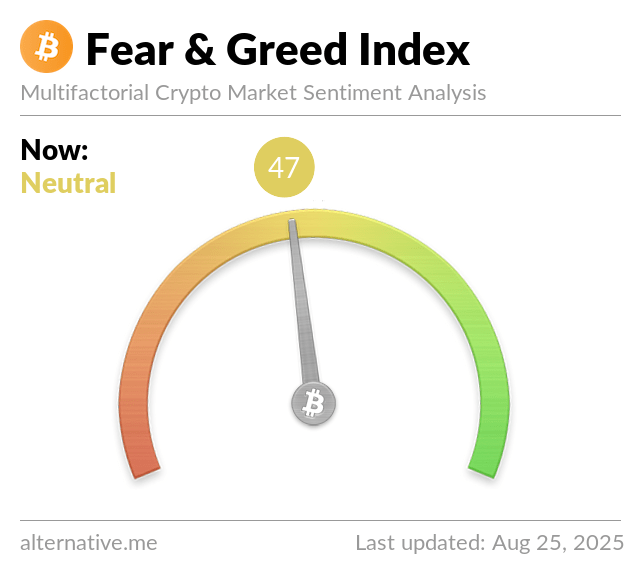
Fear and Greed Index Gauge

The current neutral reading of 47 comes after a significant shift from greed territory just days ago, when the index reached 60 following Bitcoin’s historic climb to $124,128. This dramatic swing from greed to neutrality in such a short timeframe perfectly illustrates the rapid emotional shifts that characterize cryptocurrency markets and demonstrates why understanding sentiment analysis has become essential for anyone serious about crypto investing.

The index operates on a scale from 0 to 100, where extreme fear (0-24) often signals oversold conditions and potential buying opportunities, while extreme greed (75-100) frequently indicates overbought markets ripe for correction. The neutral zone (25-74) represents periods of balanced sentiment, though these can quickly shift as market conditions evolve. Understanding these ranges and their implications forms the foundation of sentiment-based trading strategies that have proven remarkably effective in cryptocurrency markets.

The Science Behind Market Sentiment: Understanding the Fear and Greed Index

The Cryptocurrency Fear and Greed Index represents a sophisticated fusion of quantitative analysis and behavioral psychology, designed to capture the complex emotional dynamics that drive cryptocurrency markets. Unlike simple price-based indicators, this index synthesizes multiple data sources to create a comprehensive picture of market sentiment, providing insights that go far beyond what traditional technical analysis can offer.

The index draws its conceptual foundation from Warren Buffett’s famous investment philosophy: “Be fearful when others are greedy, and greedy when others are fearful.” This contrarian approach recognizes that markets often move in cycles driven by collective emotions, creating opportunities for those who can identify and act against prevailing sentiment. In cryptocurrency markets, where emotional extremes tend to be more pronounced than in traditional finance, this principle becomes even more powerful.

The mathematical framework underlying the index involves weighted aggregation of six distinct components, each capturing different aspects of market psychology. This multi-dimensional approach ensures that the index reflects genuine sentiment shifts rather than temporary fluctuations in any single metric. The weighting system has been carefully calibrated based on historical analysis of how different factors correlate with actual market turning points, creating a robust indicator that has demonstrated remarkable predictive value over multiple market cycles.

What sets the cryptocurrency version apart from its traditional finance counterpart is its focus on the unique characteristics of digital asset markets. The inclusion of social media sentiment analysis, for instance, reflects the outsized role that platforms like Twitter play in shaping crypto market narratives. Similarly, the emphasis on Bitcoin dominance acknowledges the unique dynamics of the crypto ecosystem, where Bitcoin often serves as a safe haven during periods of uncertainty.

The index updates every twelve hours, providing traders with timely insights into evolving market sentiment. This frequency strikes an optimal balance between responsiveness to genuine sentiment shifts and stability that prevents overreaction to temporary noise. The regular update schedule also allows traders to incorporate sentiment analysis into their daily decision-making processes, whether they’re managing long-term portfolios or executing short-term trading strategies.

The psychological foundation of the index rests on well-established principles of behavioral finance, particularly the concepts of loss aversion and herd mentality. During periods of extreme fear, loss aversion causes investors to overreact to negative news and sell assets at prices below their intrinsic value. Conversely, during periods of extreme greed, herd mentality drives investors to chase rising prices without adequate consideration of risk, creating unsustainable bubbles that eventually burst.

Deconstructing the Components: The Six Pillars of Sentiment Analysis

The Fear and Greed Index derives its analytical power from six carefully selected components, each weighted according to its historical correlation with market turning points and its reliability as a sentiment indicator. Understanding these components and their individual contributions provides crucial insights into what drives the overall index reading and how to interpret changes in market sentiment.

Volatility Analysis (25% Weight) forms the largest component of the index, reflecting the fundamental relationship between market uncertainty and price volatility. This component compares current Bitcoin volatility to its average levels over the previous 30 and 90 days, providing context for whether current market conditions represent normal fluctuations or unusual stress. Rising volatility typically indicates increased fear as investors become uncertain about future price direction, while declining volatility suggests growing confidence and a shift toward greed.

The volatility component captures more than just price movements; it reflects the underlying uncertainty that drives investor behavior. When markets experience high volatility, investors become more risk-averse, leading to selling pressure and further price declines. Conversely, periods of low volatility often coincide with growing investor confidence, creating conditions for sustained price appreciation. The 25% weighting reflects the strong historical correlation between volatility patterns and major market turning points.

Market Momentum and Volume (25% Weight) represents the second-largest component, analyzing buying and selling pressure through volume patterns. This component examines whether current trading volumes are unusually high or low compared to recent averages, providing insights into the intensity of market participation. High buying volumes during price increases typically indicate greed-driven behavior, as investors rush to participate in rising markets. Conversely, high selling volumes during price declines often reflect fear-driven capitulation.

The volume analysis goes beyond simple quantity measurements to examine the quality of market participation. Sustained high volumes during price advances suggest genuine buying interest rather than temporary speculation, while declining volumes during rallies may indicate weakening momentum. The component also considers the distribution of volume across different price levels, helping identify whether current market activity represents accumulation by long-term investors or distribution by those looking to exit positions.
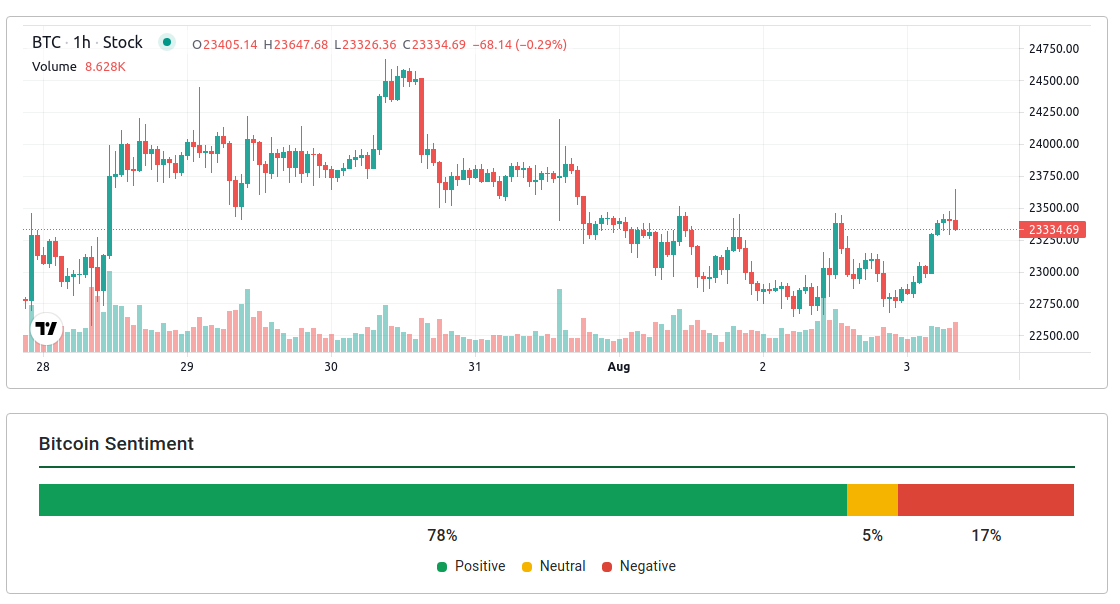
Crypto Market Sentiment Analysis

Social Media Sentiment (15% Weight) captures the unique role that social platforms play in cryptocurrency markets, where news and opinions spread rapidly and can significantly impact prices. This component monitors hashtag interactions, engagement rates, and sentiment patterns across major social media platforms, particularly Twitter, where much of the crypto community’s discourse occurs. High engagement rates with positive sentiment typically indicate growing greed, while negative sentiment with high engagement often signals increasing fear.

The social media component employs sophisticated natural language processing algorithms to analyze not just the volume of mentions but also the emotional tone and context of discussions. This analysis helps distinguish between genuine sentiment shifts and artificial manipulation attempts, providing more reliable insights into authentic market psychology. The 15% weighting reflects the significant but not overwhelming influence of social media on actual trading behavior.

Direct Surveys (15% Weight) provide the most straightforward measurement of investor sentiment by directly asking market participants about their expectations and attitudes. These weekly surveys typically gather 2,000 to 3,000 responses from active crypto traders and investors, asking questions about market direction, risk appetite, and investment intentions. The survey component offers unique insights because it captures conscious investor attitudes rather than inferring sentiment from market behavior.

The survey methodology employs careful sampling techniques to ensure representative responses across different investor categories, from retail traders to institutional participants. Questions are designed to elicit honest responses about genuine investment intentions rather than wishful thinking or social desirability bias. The 15% weighting acknowledges that while surveys provide valuable direct insights, they may not always translate immediately into actual market behavior.

Bitcoin Dominance (10% Weight) reflects the unique dynamics of cryptocurrency markets, where Bitcoin often serves as a safe haven during periods of uncertainty. Rising Bitcoin dominance typically indicates fear-driven behavior, as investors retreat from riskier altcoins to the relative safety of Bitcoin. Declining dominance often signals greed-driven risk-taking, as investors venture into altcoins seeking higher returns.

The Bitcoin dominance component captures important portfolio allocation decisions that reflect broader risk appetite in the crypto ecosystem. During fear periods, investors tend to consolidate holdings in Bitcoin, viewing it as the most established and liquid cryptocurrency. During greed periods, investors diversify into altcoins, hoping to capture outsized returns from smaller, more volatile assets. The 10% weighting reflects the importance of this dynamic while acknowledging that dominance patterns can be influenced by factors beyond pure sentiment.

Google Trends Analysis (10% Weight) examines search patterns to understand public interest and concern about cryptocurrency markets. This component analyzes search queries related to Bitcoin and cryptocurrency, looking for patterns that indicate fear or greed. Searches for terms like “Bitcoin crash” or “crypto bubble” typically indicate fear, while searches for “how to buy Bitcoin” or “best cryptocurrency” suggest growing greed and interest.

The Google Trends component provides insights into broader public sentiment beyond active market participants, capturing the interest of potential new investors who may not yet be active in crypto markets. This forward-looking aspect makes it particularly valuable for identifying emerging trends before they fully manifest in market behavior. The search analysis also helps distinguish between different types of interest, separating genuine investment curiosity from crisis-driven information seeking.

Current Market Analysis: Navigating the Neutral Zone

The current Fear and Greed Index reading of 47, firmly planted in neutral territory, represents a fascinating inflection point in cryptocurrency market psychology. This reading comes after a dramatic journey from extreme greed territory just days ago, when the index reached 60 following Bitcoin’s historic ascent to $124,128. The rapid transition from greed to neutrality provides valuable insights into the current market dynamics and offers important clues about potential future direction.

The shift from greed to neutral sentiment coincides with Bitcoin’s correction from its all-time high, dropping approximately 9% to current levels around $113,000. This price action, while significant in absolute terms, represents a relatively modest correction by cryptocurrency standards, yet it has been sufficient to cool the excessive optimism that characterized the market just days earlier. The speed of this sentiment shift illustrates the hair-trigger nature of crypto market psychology, where confidence can evaporate quickly when prices begin to decline.

Several factors have contributed to the current neutral reading, creating a complex web of influences that traders must navigate carefully. The anticipation surrounding Federal Reserve Chairman Jerome Powell’s remarks at the Jackson Hole Symposium has introduced macroeconomic uncertainty that extends beyond cryptocurrency markets. This broader economic context has tempered the pure crypto-focused optimism that drove the recent greed reading, as investors consider how monetary policy changes might affect risk asset valuations.

The neutral reading also reflects a market in transition, where neither fear nor greed dominates decision-making processes. This psychological state often precedes significant directional moves, as markets consolidate sentiment before breaking toward new extremes. Historical analysis suggests that extended periods in neutral territory are relatively rare in cryptocurrency markets, which tend to gravitate toward emotional extremes more quickly than traditional financial markets.

From a technical perspective, the neutral sentiment aligns with Bitcoin’s current price action, which has been characterized by consolidation around key support levels rather than panic selling or euphoric buying. This price behavior suggests that while the immediate greed-driven momentum has subsided, underlying demand remains sufficient to prevent a descent into fear territory. The market appears to be digesting recent gains while evaluating new information that could drive the next major move.

The composition of the current neutral reading provides additional insights into market dynamics. The volatility component has increased as Bitcoin’s price swings have become more pronounced, contributing to the decline from greed territory. However, volume patterns remain relatively healthy, suggesting that current price action represents normal profit-taking rather than panic selling. Social media sentiment has cooled from the euphoric levels seen during Bitcoin’s run to new highs, but remains generally positive rather than turning negative.

Bitcoin dominance patterns offer another perspective on current market psychology. The recent stability in Bitcoin’s market share relative to altcoins suggests that investors are neither fleeing to safety (which would increase dominance) nor aggressively risk-seeking (which would decrease dominance). This balanced approach to portfolio allocation aligns with the neutral sentiment reading and suggests that investors are taking a wait-and-see approach to current market conditions.

The survey component of the index reveals interesting nuances in investor attitudes. While overall sentiment has cooled from extreme optimism, most respondents continue to express cautious optimism about medium-term prospects. This suggests that the current neutral reading may reflect temporary uncertainty rather than a fundamental shift in long-term bullish sentiment. Investors appear to be pausing to reassess rather than abandoning their positive outlook entirely.

Google Trends data provides additional context for the current sentiment reading. Search patterns show continued interest in cryptocurrency topics, but with a shift from purely speculative queries toward more educational and analytical searches. This pattern suggests that while immediate FOMO (fear of missing out) has subsided, underlying interest in cryptocurrency remains strong, potentially providing a foundation for future sentiment improvements.

Trading Strategies: Harnessing Sentiment for Profit

The Fear and Greed Index offers multiple strategic approaches for cryptocurrency traders and investors, each tailored to different risk tolerances, time horizons, and market philosophies. Understanding how to effectively incorporate sentiment analysis into trading decisions can significantly enhance returns while helping manage risk during volatile market conditions.

The Contrarian Approach represents the most fundamental application of Fear and Greed Index analysis, based on the principle that extreme sentiment readings often coincide with market turning points. This strategy involves buying when the index shows extreme fear (0-25) and selling when it indicates extreme greed (75-100). The contrarian approach recognizes that markets tend to overshoot in both directions, creating opportunities for those willing to act against prevailing sentiment.

Implementing contrarian strategies requires significant psychological discipline, as it involves buying when negative news dominates headlines and selling when optimism reaches fever pitch. Historical analysis shows that some of the most profitable cryptocurrency investments have been made during periods of extreme fear, when quality assets trade at significant discounts to their intrinsic value. Similarly, taking profits during extreme greed periods has helped investors avoid major drawdowns during subsequent corrections.

The contrarian approach works particularly well in cryptocurrency markets because of their tendency toward emotional extremes. Unlike traditional financial markets, where institutional participation and regulatory oversight moderate sentiment swings, crypto markets can experience rapid shifts from euphoria to despair. These extreme movements create more pronounced opportunities for contrarian investors willing to act against crowd psychology.

Successful contrarian trading requires careful position sizing and risk management. Rather than investing all available capital when the index reaches extreme fear, sophisticated traders scale into positions gradually, recognizing that sentiment can remain extreme longer than expected. Similarly, profit-taking during extreme greed periods should be systematic rather than all-or-nothing, allowing investors to capture gains while maintaining exposure to potential continued upside.

Divergence Analysis offers a more nuanced approach to sentiment-based trading, focusing on discrepancies between index readings and actual price movements. This strategy looks for situations where sentiment and price action tell different stories, potentially indicating underlying strength or weakness not reflected in current market psychology. For example, if the Fear and Greed Index shows extreme fear while Bitcoin’s price remains relatively stable or even increases, this divergence might suggest underlying buying pressure that could drive future price appreciation.

Divergence analysis requires careful attention to the relationship between sentiment and price action over time. Positive divergences occur when sentiment improves faster than prices, potentially indicating that a rally is building momentum. Negative divergences happen when sentiment deteriorates while prices remain elevated, possibly signaling that a correction is approaching. These patterns can provide early warning signals for major market moves.

The effectiveness of divergence analysis depends on understanding the typical lag between sentiment shifts and price movements. In some cases, sentiment changes precede price movements by days or weeks, while in others, price action leads sentiment changes. Experienced traders learn to recognize these patterns and adjust their strategies accordingly, using divergence analysis as a timing tool rather than a directional indicator.

Trend Confirmation Strategies use the Fear and Greed Index to validate signals from other technical or fundamental analysis tools. Rather than relying solely on sentiment readings, this approach combines index data with traditional indicators like moving averages, support and resistance levels, or fundamental metrics. When multiple indicators align with sentiment readings, it increases confidence in trading decisions and can lead to more successful outcomes.

For example, a trader might wait for both a technical breakout above key resistance and a shift from fear to neutral sentiment before entering a long position. This multi-factor approach reduces the likelihood of false signals and helps ensure that trades are supported by both technical and psychological factors. Similarly, the combination of negative technical signals and extreme greed readings might provide strong confirmation for short positions or profit-taking decisions.

Trend confirmation strategies work particularly well for traders who prefer higher-probability setups over frequent trading opportunities. By requiring alignment between sentiment and other factors, these strategies typically generate fewer signals but with higher success rates. This approach suits traders who prioritize capital preservation and prefer to wait for optimal entry and exit points rather than attempting to capture every market move.
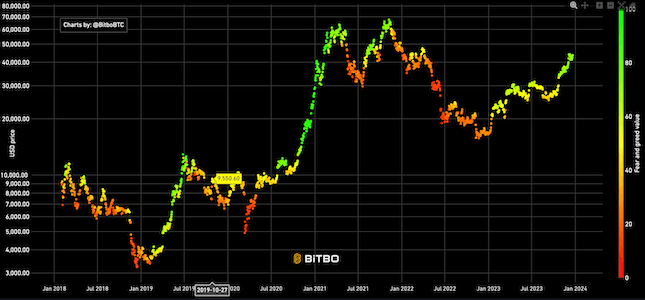
Fear and Greed Index Chart

Dynamic Position Sizing represents an advanced application of sentiment analysis, where portfolio allocation adjusts based on current index readings. This strategy recognizes that risk-adjusted returns can be optimized by increasing exposure during periods of extreme fear and reducing exposure during periods of extreme greed. Rather than maintaining static position sizes, dynamic allocation allows investors to capitalize on sentiment-driven market inefficiencies.

The dynamic sizing approach typically involves establishing baseline portfolio allocations that adjust based on sentiment extremes. For example, an investor might maintain a 5% cryptocurrency allocation during neutral sentiment periods, increase to 10% during extreme fear, and reduce to 2% during extreme greed. These adjustments allow investors to increase exposure when assets are likely undervalued and reduce exposure when they may be overvalued.

Implementing dynamic position sizing requires careful planning and disciplined execution. Investors must establish clear rules for allocation adjustments and stick to them regardless of current market narratives or emotional impulses. The strategy also requires sufficient liquidity to make allocation changes without significant transaction costs or market impact.

Short-Term Momentum Trading uses rapid sentiment changes to identify short-term trading opportunities. This approach focuses on the speed of sentiment shifts rather than absolute readings, recognizing that rapid changes in market psychology often precede significant price movements. Traders using this strategy monitor the index for sudden shifts and position themselves to capitalize on the resulting price action.

Momentum trading based on sentiment requires quick decision-making and efficient execution capabilities. Traders must be prepared to act rapidly when sentiment shifts occur, as the most profitable opportunities often have short windows. This approach works best for experienced traders with access to advanced trading platforms and the ability to monitor markets continuously.

The key to successful momentum trading lies in distinguishing between genuine sentiment shifts and temporary noise. Experienced traders learn to recognize patterns in sentiment changes that typically precede significant price movements, allowing them to position themselves advantageously before the broader market reacts to changing psychology.

Risk Management and Limitations: Understanding the Boundaries

While the Fear and Greed Index provides valuable insights into market psychology, successful implementation requires understanding its limitations and incorporating appropriate risk management techniques. Like any analytical tool, the index is not infallible and should be used as part of a comprehensive trading and investment framework rather than as a standalone decision-making mechanism.

The Non-Predictive Nature of the index represents its most important limitation. The Fear and Greed Index measures current sentiment rather than predicting future price movements. While extreme sentiment readings often coincide with market turning points, the timing and magnitude of these turns cannot be precisely predicted using sentiment analysis alone. Markets can remain in extreme sentiment territory longer than expected, potentially causing significant losses for traders who assume immediate reversals.

This limitation requires traders to maintain realistic expectations about what sentiment analysis can and cannot accomplish. The index excels at identifying when markets may be psychologically stretched in one direction or another, but it cannot specify exactly when or how corrections will occur. Successful traders use sentiment readings to inform their decision-making process while relying on other tools for precise timing and risk management.

The non-predictive nature also means that sentiment-based strategies require patience and discipline. Contrarian positions taken during extreme sentiment periods may not immediately prove profitable, requiring traders to maintain positions through potentially adverse short-term price movements. This psychological challenge can be particularly difficult during extreme fear periods, when negative news continues to dominate headlines even after positions are established.

Market Correlation Risks present another significant limitation, particularly during periods of extreme market stress. While the Fear and Greed Index can help identify sentiment extremes, it cannot eliminate the correlation risks that characterize cryptocurrency markets during crisis periods. When broader financial markets experience significant stress, cryptocurrency assets tend to move together regardless of individual fundamentals or sentiment readings.

The correlation issue becomes particularly problematic during “risk-off” periods, when investors flee from all risky assets simultaneously. During such periods, even assets with strong fundamentals and attractive sentiment readings may experience significant declines as part of broader market liquidation. Traders must recognize that sentiment analysis works best during normal market conditions and may provide less reliable signals during systemic stress periods.

Understanding correlation risks requires monitoring broader financial market conditions alongside cryptocurrency-specific sentiment indicators. When traditional markets show signs of stress, cryptocurrency traders should adjust their expectations and risk management accordingly, recognizing that sentiment-based strategies may be less effective during periods of high correlation.

Data Quality and Manipulation Concerns represent ongoing challenges for sentiment-based analysis. The components of the Fear and Greed Index rely on various data sources, each with potential quality issues or manipulation risks. Social media sentiment, for example, can be artificially influenced through coordinated campaigns or bot activity. Similarly, survey responses may not always represent genuine trading intentions or may be biased toward particular outcomes.

The index creators employ various techniques to address data quality concerns, including filtering mechanisms for social media analysis and careful survey methodology design. However, traders should remain aware that no sentiment indicator is completely immune to manipulation or data quality issues. Diversifying across multiple sentiment indicators and combining sentiment analysis with other analytical approaches can help mitigate these risks.

Regular validation of sentiment signals against actual market behavior helps identify periods when data quality issues may be affecting index reliability. Experienced traders develop intuition for recognizing when sentiment readings seem disconnected from underlying market reality, allowing them to adjust their strategies accordingly.

Institutional vs. Retail Sentiment Divergence creates additional complexity in interpreting Fear and Greed Index readings. The index primarily captures retail investor sentiment through its various components, but institutional investor behavior may differ significantly from retail sentiment. During periods when institutional and retail sentiment diverge, the index may provide misleading signals about overall market direction.

This divergence can be particularly pronounced during major market transitions, when institutional investors may be accumulating positions while retail sentiment remains negative, or vice versa. Understanding the composition of market participants and their likely behavior patterns helps traders interpret sentiment readings more accurately and avoid potential pitfalls.

Monitoring institutional activity through on-chain analysis, exchange flows, and other indicators can provide complementary insights to retail-focused sentiment measures. Combining these different perspectives creates a more complete picture of market psychology and helps identify situations where sentiment-based strategies may be more or less effective.

Timing and Execution Challenges represent practical limitations that can significantly impact the effectiveness of sentiment-based strategies. Even when sentiment analysis correctly identifies market turning points, poor timing or execution can result in losses. The index updates every twelve hours, which may not provide sufficient granularity for short-term trading strategies, while longer-term strategies may require patience that many traders find difficult to maintain.

Successful implementation of sentiment-based strategies requires careful attention to execution details, including entry and exit timing, position sizing, and transaction costs. Traders must also consider market liquidity conditions, as sentiment extremes sometimes coincide with reduced liquidity that can make position establishment or liquidation more difficult and expensive.

Advanced Applications: Beyond Basic Sentiment Analysis

As cryptocurrency markets mature and institutional participation increases, sophisticated traders are developing advanced applications of Fear and Greed Index analysis that go beyond simple contrarian strategies. These advanced techniques combine sentiment analysis with other analytical frameworks to create more nuanced and potentially profitable trading approaches.

Multi-Timeframe Sentiment Analysis involves examining sentiment patterns across different time horizons to identify more robust trading opportunities. While the standard Fear and Greed Index provides daily readings, advanced traders construct their own sentiment indicators using different lookback periods and update frequencies. This approach helps distinguish between temporary sentiment fluctuations and more meaningful psychological shifts that are likely to drive sustained price movements.

The multi-timeframe approach typically involves analyzing short-term sentiment (daily readings), medium-term sentiment (weekly averages), and long-term sentiment (monthly trends). When sentiment readings align across multiple timeframes, it provides stronger conviction for trading decisions. Conversely, divergences between timeframes can signal potential turning points or highlight the need for additional caution.

Implementing multi-timeframe analysis requires careful data management and analytical capabilities. Traders must maintain historical sentiment data and develop systems for calculating rolling averages and identifying trend changes across different time horizons. This complexity makes the approach more suitable for sophisticated traders with advanced analytical tools and experience.

Sector-Specific Sentiment Analysis recognizes that different cryptocurrency sectors may experience varying sentiment patterns. While the standard Fear and Greed Index focuses primarily on Bitcoin and broad market sentiment, advanced traders develop specialized indicators for specific sectors like DeFi, NFTs, or layer-one protocols. This granular approach can identify opportunities in sectors that may be experiencing different psychological dynamics than the broader market.

Sector-specific analysis requires deep understanding of the unique factors that drive sentiment in different cryptocurrency niches. DeFi sentiment, for example, may be more influenced by regulatory developments and protocol innovations, while NFT sentiment might be more driven by cultural trends and celebrity endorsements. Developing effective sector-specific indicators requires specialized knowledge and data sources beyond those used in broad market analysis.

The sector approach can be particularly valuable during periods when cryptocurrency markets are experiencing rotation between different themes or sectors. By identifying sectors with improving sentiment while others deteriorate, traders can position themselves to benefit from these rotational dynamics rather than simply following broad market trends.

Sentiment Momentum Indicators focus on the rate of change in sentiment rather than absolute readings. These indicators recognize that rapid sentiment shifts often precede significant price movements, even when absolute sentiment levels remain within normal ranges. By measuring sentiment acceleration and deceleration, these indicators can provide earlier signals than traditional sentiment analysis approaches.

Momentum-based sentiment analysis typically involves calculating derivatives of sentiment readings, such as daily changes, weekly changes, and acceleration measures. When sentiment momentum reaches extreme levels, it often indicates that psychological conditions are building for significant market moves. This approach can be particularly effective for identifying turning points before they become apparent in absolute sentiment readings.

The momentum approach requires sophisticated mathematical analysis and careful parameter selection. Traders must determine appropriate lookback periods for momentum calculations and establish thresholds for identifying significant momentum shifts. The complexity of this analysis makes it more suitable for quantitative traders with strong mathematical backgrounds.

Cross-Asset Sentiment Correlation involves analyzing relationships between cryptocurrency sentiment and sentiment indicators from other asset classes. This approach recognizes that cryptocurrency markets do not exist in isolation and that broader financial market psychology can significantly influence crypto sentiment patterns. By understanding these relationships, traders can anticipate sentiment shifts in cryptocurrency markets based on developments in traditional finance.

Cross-asset analysis typically involves monitoring sentiment indicators for stocks, bonds, commodities, and currencies alongside cryptocurrency sentiment measures. During periods of high correlation, developments in traditional markets may provide leading indicators for cryptocurrency sentiment changes. Conversely, periods of low correlation may indicate that cryptocurrency markets are driven by crypto-specific factors rather than broader financial market psychology.

Implementing cross-asset sentiment analysis requires access to sentiment data from multiple markets and the analytical capability to identify meaningful relationships. This approach is most suitable for institutional traders or sophisticated individual investors with access to comprehensive market data and analytical tools.

The Future of Sentiment Analysis in Cryptocurrency Markets

As cryptocurrency markets continue to evolve and mature, sentiment analysis tools like the Fear and Greed Index are likely to become increasingly sophisticated and influential in trading decisions. Understanding the trajectory of these developments can help traders prepare for future opportunities and challenges in sentiment-based investing.

Artificial Intelligence and Machine Learning Integration represents one of the most promising areas for advancement in sentiment analysis. Current sentiment indicators rely primarily on relatively simple aggregation methods, but future versions are likely to incorporate advanced AI techniques that can identify more subtle patterns in market psychology. Machine learning algorithms could potentially identify sentiment patterns that human analysts miss, leading to more accurate and timely sentiment indicators.

AI-powered sentiment analysis could also address some current limitations, such as social media manipulation and data quality issues. Advanced algorithms could potentially distinguish between genuine sentiment expressions and artificial manipulation attempts, leading to more reliable sentiment readings. Natural language processing improvements could also enable more nuanced analysis of social media content, capturing subtle emotional nuances that current systems miss.

The integration of AI and machine learning will likely require significant computational resources and expertise, potentially creating advantages for institutional investors and sophisticated trading firms. However, as these technologies become more accessible, individual traders may also benefit from improved sentiment analysis tools that provide more accurate and actionable insights.

Real-Time Sentiment Processing represents another area of likely advancement, as current sentiment indicators typically update every twelve hours or daily. Future systems may provide real-time sentiment readings that update continuously as new data becomes available. This increased frequency could enable more responsive trading strategies and better timing of entry and exit decisions.

Real-time processing would be particularly valuable for short-term trading strategies that seek to capitalize on rapid sentiment shifts. However, it would also require careful filtering to distinguish between meaningful sentiment changes and temporary noise. The challenge will be developing systems that provide timely updates while maintaining the reliability and stability that make sentiment analysis useful for decision-making.

Institutional Sentiment Integration will likely become increasingly important as institutional participation in cryptocurrency markets continues to grow. Current sentiment indicators focus primarily on retail investor psychology, but future versions may need to incorporate institutional sentiment measures to provide complete market psychology pictures. This could involve analyzing institutional trading patterns, regulatory filings, and other data sources that reflect institutional investor attitudes.

The integration of institutional sentiment could significantly improve the predictive power of sentiment analysis, as institutional investors often have longer time horizons and different information sources than retail investors. Understanding when institutional and retail sentiment diverge could provide valuable insights into potential market turning points and help traders position themselves advantageously.

Regulatory Impact Assessment will become an increasingly important component of sentiment analysis as cryptocurrency regulation continues to develop globally. Future sentiment indicators may need to incorporate regulatory sentiment measures that assess how policy developments are likely to affect market psychology. This could involve analyzing regulatory announcements, policy proposals, and enforcement actions to gauge their potential impact on investor sentiment.

Regulatory sentiment analysis could help traders anticipate market reactions to policy developments and position themselves accordingly. As cryptocurrency markets become more sensitive to regulatory developments, understanding the sentiment implications of policy changes will become increasingly valuable for successful trading and investment strategies.

The evolution of sentiment analysis in cryptocurrency markets will likely create new opportunities for sophisticated traders while potentially reducing the effectiveness of simple sentiment-based strategies. As these tools become more widely available and understood, their predictive power may diminish, requiring traders to develop more advanced and nuanced approaches to sentiment-based investing.

Conclusion: Mastering the Psychology of Crypto Markets

The Cryptocurrency Fear and Greed Index represents far more than a simple market indicator—it serves as a window into the collective psychology that drives one of the world’s most dynamic and volatile financial markets. As we have explored throughout this comprehensive analysis, understanding and effectively utilizing sentiment analysis can provide significant advantages for traders and investors willing to master its complexities and limitations.

The current neutral reading of 47 offers a perfect case study in the practical application of sentiment analysis. This reading, representing a significant shift from the greed territory of just days ago, illustrates how quickly market psychology can change and how these changes can create both opportunities and risks for market participants. The transition from extreme optimism following Bitcoin’s new all-time high to more measured sentiment as prices corrected demonstrates the dynamic nature of cryptocurrency market psychology.

The six-component framework underlying the Fear and Greed Index provides a sophisticated approach to quantifying market sentiment that goes far beyond simple price-based indicators. By incorporating volatility analysis, volume patterns, social media sentiment, direct surveys, Bitcoin dominance, and search trends, the index captures multiple dimensions of market psychology that collectively provide insights into the emotional state of market participants. Understanding how these components interact and contribute to overall sentiment readings enables more nuanced interpretation of market conditions.

The trading strategies we have examined—from basic contrarian approaches to advanced multi-timeframe analysis—demonstrate the versatility of sentiment-based investing. Whether employed as a primary decision-making tool or as confirmation for other analytical approaches, sentiment analysis can enhance trading performance when properly implemented with appropriate risk management techniques. The key lies in understanding that sentiment analysis works best as part of a comprehensive analytical framework rather than as a standalone solution.

The limitations and risks associated with sentiment analysis underscore the importance of maintaining realistic expectations and implementing proper risk management techniques. The non-predictive nature of sentiment indicators, correlation risks during market stress, and potential data quality issues all require careful consideration when developing sentiment-based strategies. Successful practitioners learn to work within these limitations while maximizing the benefits that sentiment analysis can provide.

Looking toward the future, the evolution of sentiment analysis through artificial intelligence, real-time processing, and institutional integration promises to create new opportunities while potentially changing the effectiveness of current approaches. Traders who stay abreast of these developments and adapt their strategies accordingly will be best positioned to benefit from the continued evolution of sentiment analysis tools.

The current market environment, with its neutral sentiment reading and ongoing uncertainty about future direction, provides an excellent opportunity to apply the principles and strategies discussed in this analysis. Whether the market moves toward fear or greed territory in the coming days and weeks, understanding the psychological forces at work will help traders and investors make more informed decisions and potentially capitalize on the emotional extremes that characterize cryptocurrency markets.

Ultimately, mastering the Fear and Greed Index and sentiment analysis more broadly requires combining theoretical understanding with practical experience. The concepts and strategies outlined in this guide provide a foundation, but successful implementation requires practice, patience, and continuous learning. As cryptocurrency markets continue to evolve, those who understand the psychological forces driving market behavior will maintain significant advantages over those who focus solely on technical or fundamental analysis.

The Fear and Greed Index serves as a powerful reminder that behind every price movement, every market trend, and every trading opportunity lies human psychology in all its complexity. By learning to read and interpret these psychological signals, traders and investors can better navigate the challenging but potentially rewarding world of cryptocurrency markets, turning the emotional volatility that characterizes these markets from a source of risk into a source of opportunity.


References

[1] CoinStats. “Crypto Fear & Greed Index.” CoinStats, August 25, 2025. https://coinstats.app/fear-and-greed/

[2] TokenMetrics. “Crypto Fear and Greed Index – What it is and How to Use it?” TokenMetrics Blog, August 22, 2025. https://www.tokenmetrics.com/blog/crypto-fear-and-greed-index

[3] Alternative.me. “Crypto Fear & Greed Index – Bitcoin Sentiment.” Alternative.me, August 25, 2025. https://alternative.me/crypto/fear-and-greed-index/

[4] ChainCatcher. “Data: The current cryptocurrency fear and greed index is 46.” ChainCatcher, August 25, 2025. https://www.chaincatcher.com/en/article/2200237


What’s Coming Next for BTC — Breakdown or Bounce? A Critical Analysis of Bitcoin’s $113K Crossroads

Published by everythingcryptoitclouds.com | August 21, 2025

Bitcoin stands at one of its most critical junctures in 2025, trading around $113,800 after a notable correction from its recent all-time high of $124,533. As the world’s leading cryptocurrency consolidates within a narrow range, traders and investors are asking the same pressing question: will Bitcoin break down from current levels or stage a powerful bounce toward new highs? The answer to this question could determine the trajectory of the entire cryptocurrency market for the remainder of 2025.

The current market structure presents a fascinating case study in technical analysis, institutional adoption, and market psychology. After reaching unprecedented heights earlier this month, Bitcoin has entered a consolidation phase that has left both bulls and bears positioning for what could be the next major directional move. With $150 billion in Bitcoin ETF assets providing institutional support and the 2024 halving continuing to constrain supply, the fundamental backdrop remains robust. However, technical indicators are painting a more nuanced picture that demands careful analysis.

Bitcoin Price Analysis

The stakes couldn’t be higher. A successful bounce from current levels could propel Bitcoin toward the $120,000-$125,000 zone and potentially establish new all-time highs before year-end. Conversely, a breakdown below key support levels could trigger a more significant correction that tests the resolve of both institutional and retail investors. Understanding the technical, fundamental, and sentiment factors at play is crucial for anyone seeking to navigate this critical period in Bitcoin’s evolution.

The Technical Landscape: Mapping Bitcoin’s Critical Levels

Bitcoin’s current price action is defined by a series of well-established technical levels that have emerged through months of trading activity and institutional accumulation. The $113,000 zone where Bitcoin currently trades represents more than just a price level—it’s a battleground where the forces of supply and demand are engaged in a high-stakes contest that will determine the cryptocurrency’s near-term direction.

The most critical support level lies at $112,000, a threshold that has repeatedly attracted buying interest during recent corrections. This level has transformed from resistance to support following Bitcoin’s breakthrough earlier in the year, demonstrating the classic technical principle of role reversal. The strength of this support has been tested multiple times, with each successful defense reinforcing its significance in the minds of market participants. A sustained break below $112,000 would represent a significant technical failure that could trigger algorithmic selling and force leveraged positions to liquidate.

Below the immediate $112,000 support, a series of deeper support levels provide potential landing zones for any corrective move. The $110,000-$111,900 zone represents the next major support cluster, aligning with previous resistance levels and key Fibonacci retracement levels from Bitcoin’s recent advance. This area has historical significance as a accumulation zone where institutional buyers have previously stepped in during market weakness.

Should Bitcoin break below the $110,000 threshold, the next major support levels emerge at $107,400 and $105,200. These levels correspond to significant technical markers including the 200-day exponential moving average and major Fibonacci retracement levels. The psychological $100,000 level looms as the ultimate support test, representing not just a round number but a critical threshold that has captured the imagination of both institutional and retail investors.

On the upside, Bitcoin faces a series of resistance levels that could cap any rally attempt. The immediate resistance zone spans $114,000 to $115,000, representing the area where Bitcoin has struggled to maintain momentum during recent bounce attempts. This zone aligns with the 50-day simple moving average, which has been acting as dynamic resistance during the current consolidation phase.

The $117,500 level has emerged as a critical intermediate target for any bullish breakout. While not a direct Fibonacci extension, this level has shown significant importance in recent price action and represents a logical target for traders positioning for a bounce scenario. A successful break above $117,500 would likely trigger momentum-based buying and could accelerate Bitcoin’s advance toward higher targets.

The major resistance zone spans $120,000 to $123,000, encompassing the 0.768 Fibonacci extension of Bitcoin’s current bull cycle and representing the gateway to new all-time highs. This area has acted as a magnet for price action, with multiple attempts to break through resulting in rejection and subsequent consolidation. The volume and conviction required to break through this zone would likely signal the beginning of a new leg higher in Bitcoin’s bull market.

Institutional Dynamics: The New Market Structure

The landscape of Bitcoin trading has been fundamentally transformed by institutional adoption, creating a market structure that differs significantly from previous cycles. With over $150 billion in Bitcoin ETF assets and companies like MicroStrategy holding more than 629,000 BTC, institutional participation has introduced new dynamics that influence both support and resistance levels [1].

The presence of institutional investors has created what many analysts describe as a “floor” under Bitcoin prices, with large-scale accumulation occurring during any significant weakness. This institutional support has been evident during recent corrections, where buying interest has emerged consistently around key technical levels. The ETF structure allows traditional investors to gain Bitcoin exposure through familiar investment vehicles, creating a steady stream of demand that wasn’t present in previous market cycles.

However, institutional participation is a double-edged sword. While it provides support during corrections, it also introduces new sources of volatility when institutional flows reverse. Recent data shows moderate ETF outflows, reflecting some profit-taking by institutional investors following Bitcoin’s advance to all-time highs. These flows are closely monitored by market participants as they can provide early signals of changing institutional sentiment.

The derivatives market provides additional insight into institutional positioning and sentiment. Open interest in Bitcoin futures has been declining, indicating reduced speculative positioning and potentially setting the stage for a more sustainable move in either direction. The funding rate remains elevated and positive, confirming a bullish bias among leveraged traders, but this premium may actually hinder demand for new long positions as the cost of carrying leveraged exposure increases.

Wall Street’s involvement in Bitcoin has also introduced new trading patterns and volatility characteristics. The concentration of trading volume during New York market hours has become more pronounced, with significant price movements often coinciding with the opening and closing of traditional financial markets. This synchronization with traditional finance creates both opportunities and risks, as Bitcoin becomes more susceptible to broader market sentiment and macroeconomic developments.

The institutional adoption story extends beyond direct Bitcoin holdings to encompass the broader cryptocurrency ecosystem. The success of Bitcoin ETFs has paved the way for additional cryptocurrency investment products, creating a positive feedback loop that could drive further institutional adoption. However, this integration also means that Bitcoin is increasingly subject to the same regulatory and compliance considerations that govern traditional financial markets.

Market Sentiment and Psychology: Reading Between the Lines

Understanding market sentiment is crucial for predicting Bitcoin’s next move, as psychological factors often drive short-term price action even when fundamental and technical factors suggest a different direction. The current sentiment landscape presents a complex picture that reflects both the maturation of the cryptocurrency market and the ongoing tension between fear and greed that characterizes all financial markets.

The Fear and Greed Index, a widely followed sentiment indicator, currently shows a reading of “Fear,” representing a significant shift from the euphoric conditions that prevailed during Bitcoin’s advance to all-time highs. This shift in sentiment often precedes major market moves, as extreme readings in either direction tend to mark turning points in market psychology. The current fear reading suggests that negative sentiment may be reaching levels where contrarian investors begin to see value.

Technical Analysis Charts

Social media sentiment and on-chain metrics provide additional insight into market psychology. The decline in social media mentions and engagement around Bitcoin suggests that retail interest has cooled following the recent correction. This reduction in retail participation often creates conditions for more sustainable price movements, as the absence of speculative excess allows fundamental factors to play a larger role in price discovery.

The behavior of long-term holders provides another window into market sentiment. On-chain analysis shows that long-term holders have been relatively stable during the recent correction, suggesting that the selling pressure has come primarily from shorter-term traders and speculators. This pattern is generally viewed as healthy for long-term price appreciation, as it represents a transfer of Bitcoin from weak hands to strong hands.

Institutional sentiment, while more difficult to measure directly, can be inferred from ETF flows and corporate treasury decisions. The recent moderate outflows from Bitcoin ETFs suggest some institutional profit-taking, but the scale of these outflows remains relatively modest compared to the overall institutional holdings. This pattern suggests that institutional investors are engaging in tactical rebalancing rather than wholesale abandonment of their Bitcoin positions.

The options market provides additional insight into sentiment and expectations. The put-call ratio and implied volatility levels suggest that investors are positioning for increased volatility in the near term, but the distribution of strikes indicates that most participants expect Bitcoin to remain within a relatively narrow range. This positioning could create conditions for a significant move in either direction if Bitcoin breaks out of its current consolidation range.

The Bullish Case: Factors Supporting a Bounce

The argument for a Bitcoin bounce from current levels rests on a combination of technical, fundamental, and structural factors that suggest the recent correction may represent a healthy consolidation rather than the beginning of a more significant decline. Understanding these bullish factors is essential for evaluating the probability of a successful bounce and the potential targets for any resulting rally.

From a technical perspective, Bitcoin’s ability to hold above the critical $112,000 support level demonstrates the underlying strength of the current bull market. This level has been tested multiple times during the recent consolidation, with each successful defense reinforcing its significance as a floor for Bitcoin prices. The fact that Bitcoin has not experienced a significant breakdown despite weeks of consolidation suggests that selling pressure is being absorbed by willing buyers at these levels.

The moving average structure remains supportive of higher prices, with the 50-day and 200-day moving averages both trending higher and providing dynamic support during any weakness. The 50-day simple moving average, currently around $113,500, has been acting as a key reference point for traders and could serve as a launching pad for any bounce attempt. A sustained close above this level would likely trigger momentum-based buying from technical traders and algorithmic systems.

Volume analysis provides additional support for the bullish case. Despite the recent correction, weekly trading volumes have increased by 34% to $48 billion, indicating renewed market engagement rather than capitulation. This increase in volume during a consolidation phase often precedes significant directional moves, as it suggests that market participants are actively positioning for the next leg of the trend.

The fundamental backdrop for Bitcoin remains exceptionally strong, with the 2024 halving continuing to constrain new supply while institutional demand shows no signs of abating. The reduction in daily Bitcoin issuance to just 900 BTC has created a supply-demand imbalance that should theoretically support higher prices over time. This supply constraint becomes more significant as institutional adoption continues to grow and more Bitcoin is removed from active trading through long-term holding strategies.

Macroeconomic factors also support the bullish case for Bitcoin. The ongoing concerns about inflation, currency debasement, and geopolitical instability continue to drive interest in alternative stores of value. Bitcoin’s performance relative to traditional assets during periods of economic uncertainty has established its credentials as a hedge against systemic risks, attracting both institutional and retail investors seeking portfolio diversification.

The regulatory environment, while still evolving, has become increasingly favorable for Bitcoin adoption. The approval and success of Bitcoin ETFs has provided regulatory clarity and legitimacy that was previously lacking. This regulatory progress has opened the door for additional institutional participation and has reduced the regulatory overhang that previously weighed on Bitcoin prices.

Technical indicators also support the bullish case, with the Relative Strength Index (RSI) currently in the mid-60s, indicating room for further upside without reaching overbought conditions. The Average Directional Index (ADX) reading of 18.81 suggests weak directional momentum, but this often precedes sharp moves in either direction as market participants position for a breakout.

The Bearish Case: Warning Signs of a Breakdown

While the bullish case for Bitcoin presents compelling arguments, a thorough analysis must also consider the factors that could lead to a breakdown from current levels. Understanding these bearish risks is crucial for developing a balanced perspective on Bitcoin’s near-term prospects and for implementing appropriate risk management strategies.

The most immediate concern for Bitcoin bulls is the failure to reclaim and hold above key resistance levels despite multiple attempts. The repeated rejections at the $115,000-$117,500 zone suggest that selling pressure remains significant at these levels, potentially indicating that institutional or large-scale holders are using rallies as opportunities to reduce their positions. This distribution pattern, if confirmed, could lead to a more significant correction as the supply overhang weighs on prices.

Technical momentum indicators are showing signs of deterioration that could precede a breakdown. While the RSI remains in neutral territory, the failure to generate positive divergence during recent bounce attempts suggests that buying interest may be waning. The declining open interest in Bitcoin futures markets indicates reduced speculative positioning, which could limit the fuel available for a sustained rally.

The broader cryptocurrency market context also presents bearish risks for Bitcoin. The recent underperformance of altcoins relative to Bitcoin suggests that risk appetite in the cryptocurrency space may be diminishing. Historically, periods of altcoin weakness have often preceded broader cryptocurrency market corrections, as they indicate a flight to quality that eventually encompasses even Bitcoin.

Macroeconomic headwinds pose additional risks to Bitcoin’s near-term prospects. The Federal Reserve’s monetary policy outlook remains uncertain, with markets pricing in potential changes to interest rate policy that could affect risk asset valuations. Bitcoin’s correlation with traditional risk assets has increased during periods of market stress, making it vulnerable to broader market selloffs driven by macroeconomic concerns.

Bitcoin Market Trends

The institutional flow data presents a mixed picture that could turn more negative if current trends continue. While ETF outflows have been moderate, any acceleration in institutional selling could create significant downward pressure on Bitcoin prices. The concentration of Bitcoin holdings among a relatively small number of institutional players means that changes in their positioning can have outsized impacts on market dynamics.

Sentiment indicators, while not at extreme levels, show a clear deterioration from the euphoric conditions that prevailed during Bitcoin’s advance to all-time highs. The shift in the Fear and Greed Index to “Fear” territory suggests that market psychology is becoming more negative, potentially setting the stage for further selling if technical support levels fail.

The derivatives market structure also presents bearish risks. The high funding rates in perpetual futures markets indicate that leveraged long positions are paying a significant premium to maintain their exposure. This situation creates conditions for potential liquidation cascades if Bitcoin breaks below key support levels, as leveraged positions are forced to close and add to selling pressure.

On-chain metrics provide additional warning signs that could precede a breakdown. While long-term holders have remained relatively stable, there are signs of increased activity among shorter-term holders that could indicate preparation for selling. The exchange inflow data shows periodic spikes that suggest some holders are moving Bitcoin to exchanges in preparation for potential sales.

Critical Scenarios: Mapping the Paths Forward

Understanding the specific scenarios that could unfold from Bitcoin’s current position is essential for traders and investors seeking to position themselves for the next major move. The technical setup presents two primary scenarios, each with distinct triggers, targets, and implications for the broader cryptocurrency market.

The bullish scenario hinges on Bitcoin’s ability to reclaim and hold above the $113,500 level, which aligns with the 50-day simple moving average and represents a critical technical threshold. A sustained close above this level would likely trigger momentum-based buying from both technical traders and algorithmic systems, potentially accelerating Bitcoin’s advance toward higher targets. The initial target in this scenario would be the $117,500 level, representing approximately a 3-4% gain from current levels.

A successful break above $117,500 would open the door to a test of the major resistance zone between $120,000 and $123,000. This area encompasses the 0.768 Fibonacci extension of Bitcoin’s current bull cycle and represents the gateway to new all-time highs. A break above this zone could trigger a momentum-driven advance toward the $127,000-$132,000 area, representing potential gains of 15-17% from current levels.

The bullish scenario would likely be accompanied by increasing trading volumes and improving sentiment indicators. The Fear and Greed Index would likely shift back toward “Greed” territory, while social media engagement and retail interest would probably increase. Institutional flows would need to turn positive to support a sustained rally, with ETF inflows providing the fuel for higher prices.

The bearish scenario begins with a break below the critical $112,000 support level, which would represent a significant technical failure and likely trigger algorithmic selling. The initial target in this scenario would be the $110,000-$111,900 support zone, representing a 2-3% decline from current levels. However, the real risk in the bearish scenario lies in the potential for a cascade of selling that could drive Bitcoin toward much lower levels.

A break below $110,000 would likely accelerate the decline toward the $107,400 and $105,200 support levels, representing potential losses of 6-8% from current levels. The ultimate downside target in the bearish scenario would be the psychological $100,000 level, which could be reached if selling pressure intensifies and leveraged positions are forced to liquidate.

The bearish scenario would likely be characterized by increasing volatility and deteriorating sentiment indicators. The Fear and Greed Index would probably shift toward “Extreme Fear” territory, while institutional flows would turn negative as ETFs experience sustained outflows. The broader cryptocurrency market would likely follow Bitcoin lower, with altcoins experiencing even more significant declines.

Both scenarios have specific risk management implications that traders and investors must consider. In the bullish scenario, stop-loss levels should be placed below the $112,000 support to limit downside risk, while position sizing should account for Bitcoin’s inherent volatility. In the bearish scenario, any long positions should be protected with tight stops, while short-term traders might consider waiting for a clearer directional signal before establishing new positions.

Expert Analysis and Market Commentary

The current Bitcoin market structure has attracted significant attention from technical analysts, institutional strategists, and cryptocurrency experts, each offering unique perspectives on the potential outcomes of the current consolidation phase. Understanding these expert viewpoints provides valuable context for evaluating the competing scenarios and their relative probabilities.

Christopher Lewis, a veteran forex and cryptocurrency analyst with over 20 years of experience in financial markets, maintains a constructive view on Bitcoin’s near-term prospects. In his recent analysis, Lewis emphasized the importance of the $112,000 support level, noting that “Bitcoin bounced quite nicely during the trading session on Wednesday, as we have seen the $112,000 level reassert itself at an important level” [2]. His analysis suggests that as long as Bitcoin can maintain this support, the path of least resistance remains higher, with the $120,000 level serving as a “magnet for price.”

Lewis’s perspective is particularly noteworthy given his emphasis on the role of institutional participation in Bitcoin’s current market structure. He notes that “Wall Street is heavily involved in bitcoin now, so it will pay close attention to the volume coming out of New York.” This observation highlights the importance of monitoring institutional flows and trading patterns during New York market hours, as these have become increasingly influential in determining Bitcoin’s direction.

The technical analysis team at BlockByte, a prominent cryptocurrency research firm, has characterized the current setup as a “strategic breakout play” with well-defined risk-reward parameters. Their analysis identifies the $113,000 zone as a “pivotal battleground for bulls and bears,” with the potential for either a bullish breakout toward $117,500 or a bearish breakdown toward $100,000. This binary outlook reflects the compressed nature of Bitcoin’s current trading range and the potential for significant moves in either direction.

BlockByte’s analysis emphasizes the importance of risk management in the current environment, recommending strategic entry points in the $112,000-$113,000 range with stop-loss levels below $110,000. Their approach reflects the high-probability nature of the current setup while acknowledging the significant risks associated with Bitcoin’s volatility.

The technical analysis team at CoinTribune provides a more nuanced perspective that acknowledges both the underlying strength of Bitcoin’s long-term trend and the short-term challenges facing the cryptocurrency. Their analysis notes that “Bitcoin is trading in a consolidation phase, where the strength of the underlying trend contrasts with short-term fragilities.” This observation captures the tension between Bitcoin’s strong fundamental backdrop and the technical challenges it faces in the near term.

CoinTribune’s analysis places particular emphasis on the role of macroeconomic factors in determining Bitcoin’s next move. They note that “reactions to key technical thresholds and the macroeconomic climate will be decisive, especially as markets remain shaken by the notion that the Fed might not cut rates in September.” This perspective highlights the increasing correlation between Bitcoin and traditional financial markets, particularly during periods of macroeconomic uncertainty.

Institutional analysts have also weighed in on Bitcoin’s current situation, with many emphasizing the importance of ETF flows and corporate treasury decisions. The moderate outflows from Bitcoin ETFs in recent weeks have been interpreted by some analysts as healthy profit-taking rather than a fundamental shift in institutional sentiment. However, the sustainability of institutional demand remains a key factor that could determine Bitcoin’s ability to break out of its current range.

Risk Management and Strategic Considerations

Navigating Bitcoin’s current market environment requires a sophisticated approach to risk management that accounts for the cryptocurrency’s inherent volatility, the binary nature of the current setup, and the potential for significant moves in either direction. Developing an appropriate risk management framework is essential for both preserving capital and positioning for potential opportunities.

The first principle of risk management in the current environment is position sizing. Given Bitcoin’s volatility and the potential for significant moves in either direction, investors should limit their exposure to levels that allow them to withstand adverse price movements without compromising their overall portfolio objectives. A common rule of thumb suggests limiting cryptocurrency exposure to no more than 5-10% of a total investment portfolio, though this percentage may vary based on individual risk tolerance and investment objectives.

Stop-loss placement represents another critical component of risk management in the current environment. For investors maintaining long positions, stop-loss levels should be placed below the $110,000 support zone to limit downside risk while allowing for normal market volatility. This placement provides a buffer against false breakdowns while protecting against more significant losses if Bitcoin’s support structure fails.

The timing of entries and exits becomes particularly important in the current environment, where Bitcoin is trading within a relatively narrow range with well-defined support and resistance levels. Investors seeking to establish new long positions might consider waiting for a successful test and hold of the $112,000 support level, while those looking to reduce exposure might use rallies toward the $115,000-$117,500 resistance zone as opportunities to take profits.

Diversification within the cryptocurrency space also requires careful consideration in the current environment. While Bitcoin’s dominance has increased during the recent consolidation phase, the performance of altcoins and the broader cryptocurrency market could provide important signals about the sustainability of any Bitcoin rally. Investors should monitor the relative performance of major altcoins and cryptocurrency market indices as leading indicators of broader market sentiment.

The role of leverage in the current environment deserves special attention, as the potential for significant moves in either direction creates both opportunities and risks for leveraged positions. The high funding rates in perpetual futures markets indicate that leveraged long positions are expensive to maintain, while the potential for liquidation cascades creates additional risks for highly leveraged traders.

Hedging strategies may be appropriate for investors with significant Bitcoin exposure who want to maintain their long-term positions while protecting against near-term volatility. Options strategies, including protective puts or collar strategies, can provide downside protection while allowing for participation in any upside moves. However, the cost of options protection should be weighed against the potential benefits, particularly in a high-volatility environment.

Conclusion: Preparing for Bitcoin’s Next Chapter

As Bitcoin consolidates around the critical $113,000 level, the cryptocurrency market finds itself at a pivotal moment that could determine the trajectory of digital assets for the remainder of 2025. The technical setup presents a classic high-probability scenario with well-defined risk-reward parameters, clear support and resistance levels, and the potential for significant moves in either direction.

The bullish case for Bitcoin remains compelling, supported by strong institutional adoption, supply constraints from the 2024 halving, and a technical structure that suggests the recent correction may represent a healthy consolidation rather than the beginning of a more significant decline. The ability of Bitcoin to hold above the $112,000 support level despite weeks of consolidation demonstrates the underlying strength of the current bull market and suggests that selling pressure is being absorbed by willing buyers.

However, the bearish risks cannot be ignored, particularly given the repeated failures to break above key resistance levels and the deteriorating momentum indicators. The shift in market sentiment from euphoria to fear, combined with moderate institutional outflows and elevated funding rates, creates conditions where a breakdown below support could trigger a more significant correction.

The path forward for Bitcoin will likely be determined by its ability to navigate the critical technical levels that define the current trading range. A successful bounce from current levels that reclaims the $115,000-$117,500 resistance zone could open the door to new all-time highs and a continuation of the current bull market. Conversely, a breakdown below the $112,000 support level could trigger a correction toward the $100,000 psychological threshold and potentially delay Bitcoin’s advance to higher levels.

For investors and traders, the current environment demands a disciplined approach that emphasizes risk management, appropriate position sizing, and clear entry and exit strategies. The binary nature of the current setup creates both opportunities and risks that require careful navigation and a thorough understanding of the factors that could influence Bitcoin’s next move.

As we look ahead, the interplay between technical factors, institutional flows, and macroeconomic developments will likely determine whether Bitcoin breaks down or bounces from current levels. The outcome of this critical juncture will not only affect Bitcoin’s price trajectory but could also influence the broader cryptocurrency market and the pace of digital asset adoption.

The question of whether Bitcoin will experience a breakdown or bounce from current levels remains unanswered, but the framework for understanding the potential outcomes is clear. By monitoring the key technical levels, institutional flows, and sentiment indicators discussed in this analysis, market participants can position themselves to navigate whatever scenario ultimately unfolds.

Bitcoin’s journey to this critical juncture reflects the maturation of the cryptocurrency market and the increasing influence of institutional participants. As the market continues to evolve, the lessons learned from navigating this pivotal moment will likely inform investment strategies and risk management approaches for years to come.


References

[1] AInvest. “Bitcoin’s Critical Support and Resistance: A Strategic Breakout Play at $113K.” AInvest, August 21, 2025. https://www.ainvest.com/news/bitcoin-critical-support-resistance-strategic-breakout-play-113k-2508/

[2] Daily Forex. “BTC/USD Forecast: Support Holds at $112K.” Daily Forex, August 21, 2025. https://www.dailyforex.com/forex-technical-analysis/2025/08/btcusd-forecast-21-august-2025/232942