AI Year in Review: The Biggest Stories of 2025

Author: everythingcryptoitclouds.com

Introduction: The Year AI Went from Hype to Hard Reality

The year 2025 will be remembered as the moment Artificial Intelligence transitioned from a futuristic concept to an undeniable, transformative force reshaping global commerce, finance, and labor. While 2024 was characterized by the initial shockwave of Generative AI, 2025 was the year of industrialization, where companies stopped experimenting and started integrating AI at scale. This shift was marked by unprecedented financial milestones, a dramatic re-prioritization of corporate capital, and the emergence of new AI paradigms that promise to redefine the digital landscape in 2026 [1].

1. The Trillion-Dollar Hardware War: Nvidia’s Unstoppable Ascendence

The most visible story of 2025 was the continued, explosive growth of the AI infrastructure market, dominated by Nvidia. The chipmaker cemented its status as the central enabler of the AI era, becoming the first company in history to exceed a $5 trillion market capitalization in October [2]. This staggering valuation was fueled by relentless demand for its high-performance GPUs, which are the backbone of large language model training and inference.

Nvidia’s influence extended beyond chip sales. The company made massive strategic investments, including a reported $100 billion into OpenAI, and unveiled new product lines like the Blackwell Ultra GPU and RTX Pro servers [3]. These servers, aimed at enterprise data centers, represent a multi-billion-dollar opportunity for infrastructure refresh, signaling that the AI hardware boom is far from over.

Meanwhile, legacy chipmaker Intel, while struggling with internal restructuring and executive changes, made a surprising move by entering a joint development deal with Nvidia. This partnership aims to integrate Intel’s custom CPU with Nvidia’s powerful platforms, illustrating that even competitors must collaborate to meet the immense computational demands of modern AI [4].

Nvidia $5 Trillion Chart

2. The Great Reallocation: Layoffs and the AI Investment Boom

The rapid shift to AI-first strategies had a profound and often painful impact on the workforce. 2025 saw a wave of mass layoffs across the technology sector, with giants like Amazon, Google, Microsoft, and Oracle making significant cuts [5].

While some companies attributed the downsizing to standard business evaluations, the underlying narrative was clear: a massive reallocation of capital towards AI investment. Companies were shedding non-AI-focused divisions to free up resources for the immense spending required to build and deploy AI infrastructure. The year was defined by a tension between the promise of AI-driven efficiency and the immediate human cost of corporate restructuring. The question for 2026 remains whether AI tools will begin to automate away entire job functions, moving beyond the automation of simple, manual tasks.

3. The Acquisition Frenzy: Tech Giants Buy Their Way to Dominance

To accelerate their AI capabilities, major technology vendors engaged in a multi-billion-dollar acquisition spree, buying up specialized AI startups and established players alike. This was a clear strategy to acquire talent, technology, and market share instantly.

Key acquisitions and planned deals have been done in 2025.

These deals not only consolidated power among the tech elite but also signaled the maturity of the AI market, where specialized capabilities like AI security, data governance, and AIOps became high-value targets [6].

AI Corporate Handshake

4. The Rise of the Agent: AI Moves to Autonomous Action

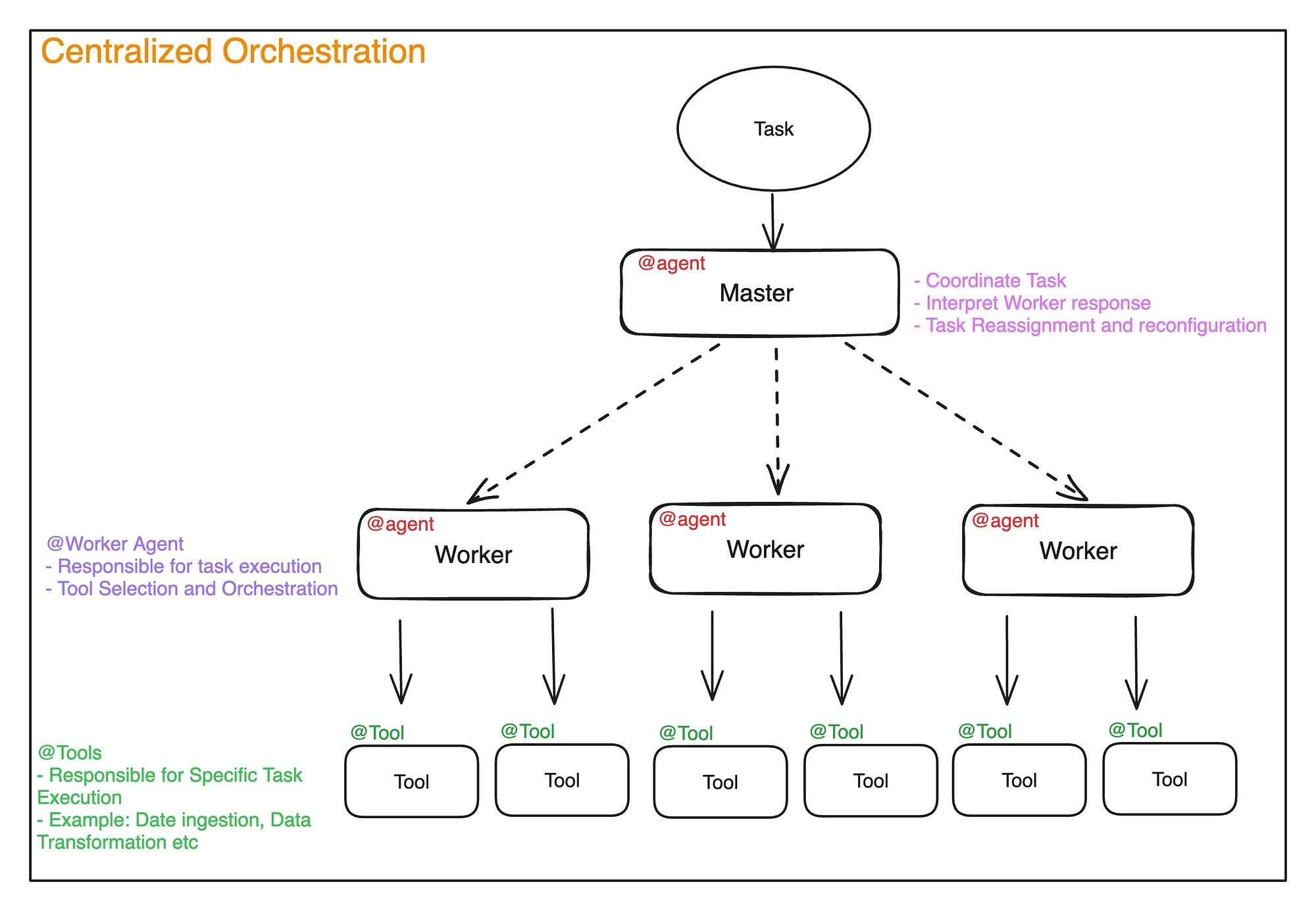
Perhaps the most significant technological leap of 2025 was the maturation of AI Agents and orchestration platforms. Moving beyond simple conversational chatbots, AI agents are designed to perform complex, multi-step tasks autonomously, such as managing customer service workflows, optimizing supply chains, or executing financial trades.

This shift was particularly evident in the Managed Service Provider (MSP) space, where new platforms like the Pax8 AI Agent Store and Rewst’s expanded automation tools emerged [7]. The industry narrative shifted from “AI as a tool” to “AI as a system of action,” with agents taking on more responsibility and transforming the service desk into a highly automated operation. Orchestration platforms, which manage the interaction between multiple specialized AI models, became essential infrastructure for enterprises [8].

AI Agent Orchestration

5. Generative AI Breakthroughs: Smaller, Faster, Smarter

While the commercial applications dominated the headlines, the underlying technology continued its rapid evolution. 2025 saw significant breakthroughs in model efficiency. New generative AI models were released that were smaller, faster, and cheaper to run than their predecessors, yet matched the performance of the massive models released in 2022 [9].

This trend of “shrinking AI” democratized access to powerful models, allowing smaller companies and even individual developers to deploy sophisticated AI without needing a multi-billion-dollar data center. The private investment in Generative AI remained robust, attracting over $33.9 billion globally, an 18.7% increase from the previous year, confirming that innovation is accelerating, not slowing down [10].

Conclusion: Looking Ahead to 2026

The year 2025 was a pivotal chapter in the AI story, defined by massive financial commitments and the shift from theoretical potential to practical, industrial-scale deployment. The hardware wars intensified, corporate capital was ruthlessly reallocated, and the rise of autonomous AI agents set the stage for a new era of automation. As we enter 2026, the focus will move from building the AI infrastructure to optimizing and securing the AI-driven enterprise, ensuring that the transformative power of this technology delivers tangible, sustained value.


References

[1] World Economic Forum. The top artificial intelligence stories from 2025. [URL: https://www.weforum.org/stories/2025/12/the-top-ai-stories-from-2025/%5D

[2] Financial Post. Nvidia becomes first US$5 trillion company. [URL: https://financialpost.com/investing/nvidia-becomes-first-us5-trillion-company%5D

[3] CRN. The 10 Biggest AI News Stories Of 2025. [URL: https://www.crn.com/news/ai/2025/the-10-biggest-ai-news-stories-of-2025%5D

[4] CRN. Nvidia’s Ascendence, Intel’s Struggles. [URL: https://www.crn.com/news/ai/2025/the-10-biggest-ai-news-stories-of-2025?page=4%5D

[5] CNN. How AI shook the world in 2025 and what comes next. [URL: https://www.cnn.com/2025/12/30/tech/how-ai-changed-world-predictions-2026-vis%5D

[6] CRN. Big-Money Vendor AI Acquisitions. [URL: https://www.crn.com/news/ai/2025/the-10-biggest-ai-news-stories-of-2025?page=5%5D

[7] CRN. Solution Providers Buy Innovative AI Practices. [URL: https://www.crn.com/news/ai/2025/the-10-biggest-ai-news-stories-of-2025?page=7%5D

[8] Mastercard. Agents of change: The rise of AI in 2025 and what’s coming next. [URL: https://www.mastercard.com/us/en/news-and-trends/stories/2025/AI-2025-year-in-review.html%5D

[9] Stanford HAI. Most-Read: The Stanford HAI Stories that Defined AI in 2025. [URL: https://hai.stanford.edu/news/most-read-the-stanford-hai-stories-that-defined-ai-in-2025%5D

[10] Stanford HAI. The 2025 AI Index Report. [URL: https://hai.stanford.edu/ai-index/2025-ai-index-report%5D

The Interest-Bearing CBDC: China’s Digital Yuan Upgrade and the Global Race for Adoption

Author: everythingcryptoitclouds.com

Introduction: A Paradigm Shift in Central Bank Digital Currency

The global race to develop Central Bank Digital Currencies (CBDCs) has been defined by a fundamental debate: should the digital currency bear interest? Most central banks, including the U.S. Federal Reserve and the European Central Bank, have historically answered with a resounding “No,” fearing the risk of “digital bank runs” that could destabilize commercial banks. However, China’s central bank, the People’s Bank of China (PBOC), has just shattered this consensus.

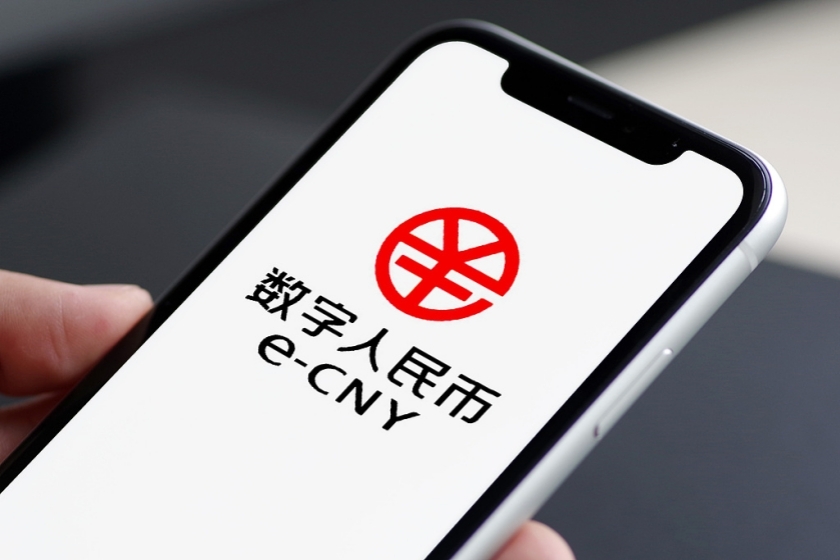
Effective January 1, 2026, the PBOC will implement a new framework requiring commercial banks to pay interest on balances held in Digital Yuan (e-CNY) wallets [1]. This strategic pivot transforms the e-CNY into the world’s first interest-bearing CBDC, marking a significant escalation in China’s efforts to drive mass adoption and setting a new precedent for the future of digital money.

e-CNY Interest Concept

The Adoption Challenge and the Interest Solution

Despite being the most advanced CBDC project globally, the e-CNY has faced a crucial challenge: gaining widespread usage against the dominance of private payment giants like Alipay and WeChat Pay. The e-CNY was initially designed to be non-interest-bearing, a feature intended to prevent users from pulling large amounts of money out of commercial bank deposits and into the central bank’s digital currency, which would have severely impacted the commercial banking sector.

However, this non-interest-bearing status made the e-CNY an unattractive store of value compared to traditional bank deposits, which earn interest. The PBOC’s new policy directly addresses this by linking the e-CNY interest rate to prevailing demand deposit rates, making the digital currency a more competitive financial instrument [2].

Implications for Commercial Banks: Intermediaries Under Pressure

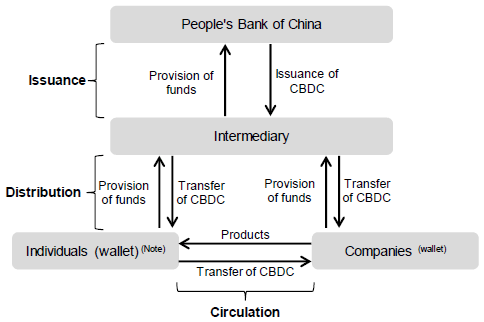
The PBOC’s two-tier system for the e-CNY relies on commercial banks as intermediaries for distribution and management. The new interest-bearing feature solidifies this role but also introduces a new dynamic of competition and cost.

Commercial banks have reportedly completed the necessary system upgrades to account for the digital yuan interest [3]. While this move forces banks to bear the cost of interest payments, it also ensures that the e-CNY is integrated directly into the existing financial ecosystem, rather than operating as a completely separate, disintermediating force.

The Global CBDC Race: A New Precedent

China’s decision to make its CBDC interest-bearing is a bold move that challenges the cautious approach taken by Western central banks.

  • The West’s Stance: The general consensus among central banks in the U.S. and Europe has been that a non-interest-bearing CBDC is necessary to protect the stability of the fractional reserve banking system.
  • China’s Strategy: By introducing interest, China is signaling that the benefits of mass adoption and increased usage—including greater monetary control and enhanced data visibility—outweigh the risks of disintermediation, or that they have developed sufficient tools to manage those risks.

This strategic shift places the e-CNY in direct competition with other global currencies and financial instruments, particularly in cross-border trade. An interest-bearing digital currency is inherently more appealing as a store of value, enhancing the e-CNY’s potential as a tool for internationalization [4].

CBDC Concept

Conclusion: The Future of Digital Money is Now

The introduction of interest payments on the Digital Yuan is a watershed moment in the evolution of CBDCs. It is a clear, aggressive strategy by the PBOC to overcome adoption hurdles and cement the e-CNY’s place in the daily lives of its citizens. By transforming the e-CNY from a mere payment token into a competitive financial asset, China is not only accelerating its own digital currency project but is also forcing other nations to re-evaluate their own CBDC designs. This development ensures that the e-CNY will remain a central topic in global finance and technology throughout 2026 and beyond.


References

[1] Bloomberg. China to Pay Interest on Digital Yuan in Bid to Boost Adoption. [URL: https://www.bloomberg.com/news/articles/2025-12-29/china-to-pay-interest-on-digital-yuan-in-bid-to-boost-adoption%5D

[2] Reuters. China’s digital yuan to become interest-bearing next year. [URL: https://www.reuters.com/world/asia-pacific/china-issue-digital-yuan-management-action-plan-2025-12-29/%5D

[3] Yicai Global. China to Require Banks to Pay Interest on Digital Yuan Wallets From 2026. [URL: https://www.yicaiglobal.com/news/china-to-require-banks-to-pay-interest-on-digital-yuan-wallets-from-2026%5D

[4] Ainvest. The Strategic Implications of China’s Interest-Bearing Digital Yuan. [URL: https://www.ainvest.com/news/strategic-implications-china-interest-bearing-digital-yuan-financial-institutions-cross-border-investors-2512/%5D

The 2026 Imperative: Why HP Gen 12 Servers are the Cornerstone of Your IT Refresh

Author: everythingcryptoitclouds.com

Introduction: The New Era of Compute

The year 2026 marks a critical inflection point for enterprise IT infrastructure. With the relentless growth of data, the operationalization of Artificial Intelligence (AI), and the ever-present threat of cyberattacks, legacy server hardware is no longer a viable foundation for modern business. The need for a strategic server refresh has never been more urgent. At the forefront of this technological shift is the Hewlett Packard Enterprise (HPE) ProLiant Compute Gen12 server family, engineered specifically to meet the demands of this new era [1]. This post explores the transformative capabilities of the HP Gen 12 platform and outlines the compelling advantages of making 2026 the year for your comprehensive server refresh.

HPE ProLiant Gen12 Servers

HPE ProLiant Gen 12: Engineered for the AI-Driven Enterprise

Announced in early 2025, the HPE ProLiant Gen12 servers represent a significant leap in compute power, efficiency, and security [2]. These systems are designed not just to run applications, but to serve as the backbone for next-generation AI and data-intensive workloads.

Unprecedented Performance

The Gen 12 platform delivers a massive performance boost through its support for the latest processor and memory technologies. The servers offer a choice between two industry-leading architectures:

The integration of DDR5 memory and the high core counts of the Intel Xeon 6 and AMD EPYC 9005 processors (as shown in the image below) dramatically increase transaction throughput and reduce latency, making the Gen 12 platform ideal for virtualization, database management, and high-performance computing [3].

AMD EPYC CPU

AI and Security at the Core

The Gen 12 family is built with AI and security as foundational elements. Certain models, such as those optimized for AI, feature integration with accelerators like the NVIDIA GH200 NVL2, making them ready to handle complex machine learning and deep learning models out of the box [4].

On the security front, HPE has further enhanced its Silicon Root of Trust technology, providing an unchangeable fingerprint in the server’s silicon to prevent unauthorized firmware access. This advanced security posture is essential in a landscape where firmware attacks are becoming increasingly sophisticated.

The 2026 Server Refresh Imperative

Beyond the raw technical specifications, a server refresh in 2026 offers compelling strategic and financial advantages that directly impact a business’s bottom line and competitive standing.

1. Strategic AI Readiness

The most significant driver for a 2026 refresh is the need for AI readiness. As AI moves from pilot projects to core business processes, organizations require infrastructure capable of supporting these compute-intensive workloads. Older servers simply lack the necessary GPU support, high-speed interconnects, and memory bandwidth to run modern AI models efficiently. Adopting Gen 12 servers ensures that your IT roadmap is aligned with the future of business intelligence and automation.

2. Enhanced Operational Efficiency and Cost Control

While the initial investment in new hardware is substantial, the long-term operational savings are significant. Newer servers are dramatically more power-efficient, leading to lower energy consumption and reduced cooling costs in the data center [5]. Furthermore, a refresh allows organizations to consolidate workloads onto fewer, more powerful machines, reducing licensing fees, maintenance overhead, and the risk associated with aging hardware. This strategic adoption of advanced technology is key to building a cost-effective IT roadmap for 2026 [6].

Data Center Refresh

3. Mitigating Security and Compliance Risk

The security features of the Gen 12 servers are a crucial advantage. Running outdated hardware exposes organizations to significant security vulnerabilities, as older systems often fall out of vendor support and lack modern security features like the Silicon Root of Trust. A refresh mitigates this risk, ensuring compliance with increasingly stringent data protection regulations and safeguarding critical business assets.

Conclusion: Investing in the Future

The decision to perform a server refresh in 2026 is not merely a hardware upgrade; it is a strategic investment in the future resilience, performance, and intelligence of your organization. The HPE ProLiant Gen 12 servers, with their focus on AI, security, and next-generation compute power, provide the ideal platform for this transition. By embracing this refresh, businesses can move beyond simply maintaining their infrastructure and instead enable the scalable, high-performance environment necessary to thrive in the AI-driven economy of 2026 and beyond.


References

[1] HPE. HPE introduces next-generation ProLiant servers engineered for advanced security, AI, automation and greater performance. [URL: https://www.hpe.com/us/en/newsroom/press-release/2025/02/hpe-introduces-next-generation-proliant-servers-engineered-for-advanced-security-ai-automation-and-greater-performance.html%5D

[2] Forbes. HPE Launches Next-Generation ProLiant Compute Servers. [URL: https://www.forbes.com/sites/moorinsights/2025/02/12/hpe-launches-next-generation-proliant-compute-servers/%5D

[3] HPE. HPE ProLiant Compute DL325 Gen12 – Features & Specs. [URL: https://buy.hpe.com/us/en/compute/rack-servers/proliant-dl300-servers/proliant-dl325-server/hpe-proliant-compute-dl325-gen12/p/1014896093%5D

[4] Wikipedia. ProLiant. [URL: https://en.wikipedia.org/wiki/ProLiant%5D

[5] Meriplex. How to Build a Cost-Effective IT Roadmap for 2026. [URL: https://meriplex.com/how-to-build-a-cost-effective-it-roadmap-for-2026/%5D

[6] Dymin Systems. Budgeting for 2026: Why IT Planning Starts Now. [URL: https://www.dyminsystems.com/about/blogs/business-intelligence/budgeting-for-2026-why-it-planning-starts-now/%5D

AI Reality Check: What Last Week’s Stock Crash Means for Broadcom, AMD, Oracle, and Meta

Author: everythingcryptoitclouds.com

Introduction: The Jolt to the AI Trade

Last week, the seemingly unstoppable AI stock rally hit a major speed bump. A sharp selloff, triggered by disappointing news from key players, sent shockwaves through the market, raising the specter of an “AI bubble.” While the overall AI narrative remains robust, the correction served as a crucial reality check, reminding investors that even the most promising growth stories are subject to market scrutiny.

The focus of this correction centered on two major infrastructure providers: Broadcom (AVGO) and Oracle (ORCL). Their struggles quickly dragged down other AI-exposed giants, including Advanced Micro Devices (AMD) and Meta Platforms (META). This article breaks down the reasons behind the crash, analyzes the short-term outlook for the next four weeks, and provides a forecast for early 2026.

AI Crash Visualization

Anatomy of the Selloff: Broadcom and Oracle’s One-Two Punch

The market correction was primarily ignited by a one-two punch from two companies whose fortunes are deeply tied to the AI infrastructure buildout.

Broadcom’s Margin Scare: Despite reporting better-than-expected quarterly results and strong guidance, Broadcom’s stock plummeted by 11%. The core concern was a warning from management that gross margins would be lower in the short term. This is due to the higher up-front costs associated with producing complex custom AI chip systems and server racks. Furthermore, the CEO tempered expectations for a major deal with OpenAI in 2026, suggesting the immediate revenue boost might not be as explosive as investors had hoped.

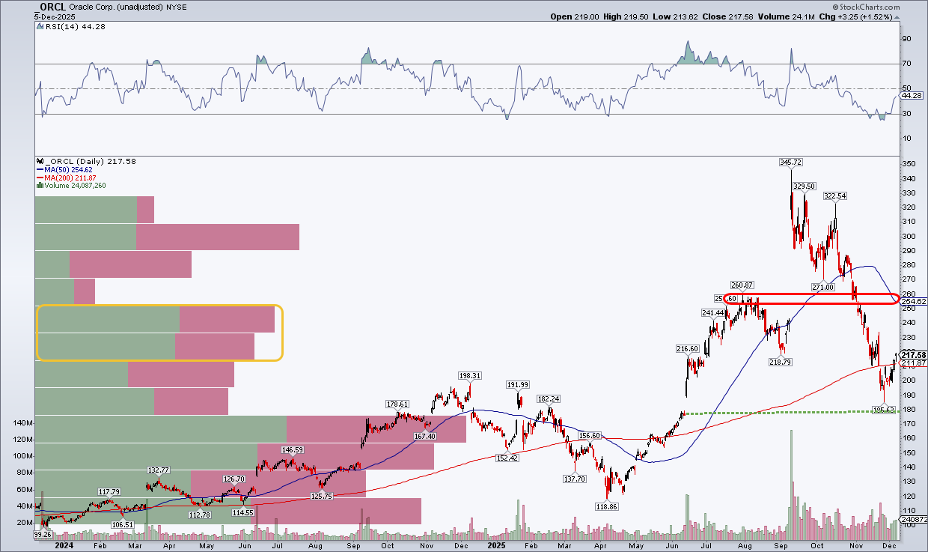
Oracle’s Financing Disappointment: Oracle’s stock had already plunged 10% before dropping another 4.5% in the wake of its mixed earnings report (beating on earnings per share but missing on revenue). Investors were particularly disappointed by the lack of detail on how the company plans to finance its massive, debt-fueled AI data center expansion. This raised questions about the sustainability and profitability of the aggressive infrastructure spending required to compete in the AI cloud space.

The combination of Broadcom’s margin concerns and Oracle’s financing uncertainty created a wave of “AI angst,” leading to a broader selloff in the sector.

Oracle Broadcom Chart

Short-Term Outlook: The Next Four Weeks

The next four weeks, often characterized by holiday trading and year-end portfolio adjustments, will be crucial for these stocks.

| Company | Crash Reason | Short-Term Outlook (Next 4 Weeks) |
| :— | :— | :— |
| Broadcom (AVGO) | Margin contraction on custom AI chips. | Analysts are largely recommending to “buy the dip,” viewing the selloff as an overreaction to short-term margin pressure. The underlying demand for their custom chips from hyperscalers remains robust. |
| Oracle (ORCL) | Missed revenue and financing uncertainty. | Volatility is likely as the market digests the debt concerns. A clear communication from management regarding their CapEx financing strategy could stabilize the stock, but until then, it remains under pressure. |
| Advanced Micro Devices (AMD) | General AI trade selloff. | Expected to stabilize quickly. The drop was largely collateral damage from the Broadcom/Oracle news. Strong demand for its EPYC CPUs and Instinct GPUs in the data center market provides a solid floor. |
| Meta Platforms (META) | General AI trade selloff. | Strongly positioned for a rebound. News of trimming the metaverse budget to prioritize AI spending is a positive signal for investors. The stock is likely to benefit from the “flight to quality” within the AI sector. |

Early 2026 Forecast: The Infrastructure Boom Continues

Despite the recent correction, the long-term forecast for the AI infrastructure sector remains overwhelmingly bullish, especially as we head into early 2026. The fundamental driver is the massive, non-negotiable capital expenditure (CapEx) being committed by the world’s largest tech companies.

Meta’s AI Commitment: Meta Platforms is a prime example of this long-term commitment. The company is aggressively shifting resources away from its metaverse division to focus on building out its AI capabilities. Analysts project Meta’s 2026 CapEx to reach an astonishing $109 billion, more than triple its 2023 spending. This colossal investment is primarily directed at AI infrastructure, including the purchase of chips and the construction of data centers.

The Demand for Silicon: This spending spree directly benefits chipmakers like Broadcom and AMD. Broadcom’s custom chip business, despite the short-term margin hit, is poised for massive growth as it supplies hyperscalers like Meta and Google. Similarly, AMD is forecast to see a 20%+ increase in revenue in 2026, driven by the insatiable demand for its high-performance EPYC and Instinct GPUs in the data center. The AI arms race is far from over, and these companies are the essential suppliers.

Oracle’s Long Game: While Oracle faces short-term financing questions, its long-term strategy hinges on becoming a major player in the AI cloud. The massive data center buildout, while costly, is a necessary step to capture future AI-driven revenue. If the company can effectively communicate its financing plan and execute on its AI pipeline, the stock could see a significant recovery in 2026.

AI Data Center

Conclusion: A Correction, Not a Collapse

The recent AI stock selloff was a healthy, albeit painful, market correction. It was driven by specific, company-level concerns about margins and financing, not a collapse in the underlying demand for artificial intelligence.

For investors, the message is clear: the AI revolution is still in its early stages, and the long-term trend of massive infrastructure spending is intact. The next four weeks may see continued volatility as the market finds its footing, but the outlook for early 2026 remains bright. The companies that are the essential building blocks of the AI future—Broadcom, AMD, Oracle, and Meta—are poised to be the biggest beneficiaries of this sustained, multi-year boom.

The Perfect Storm: How $53 Billion in Crypto Leverage and Cloud Computing’s $2.2 Trillion Boom Are Reshaping Digital Finance

Published by everythingcryptoitclouds.com | August 15, 2025

The digital finance landscape is experiencing a seismic shift that few saw coming. As Bitcoin touches new record highs above $124,000 and the global cloud computing market races toward a staggering $2.2 trillion valuation by 2030, we’re witnessing the convergence of two technological revolutions that are fundamentally reshaping how we think about money, data, and digital infrastructure.

The numbers tell a compelling story. Crypto-collateralized lending has exploded to an all-time high of $53.09 billion in Q2 2025, representing a massive 27.44% quarter-over-quarter growth [1]. Meanwhile, the cloud computing sector continues its relentless expansion, growing at a compound annual growth rate of 16.6% and projected to surge from $781.27 billion in 2025 to $911 billion in 2026 [2]. But these aren’t just isolated trends—they’re interconnected forces that are creating unprecedented opportunities and challenges in the digital economy.

Blockchain Technology Infrastructure

The Crypto Leverage Revolution: $53 Billion and Counting

The cryptocurrency lending market has reached a critical inflection point that demands our attention. According to Galaxy Research’s comprehensive Q2 2025 analysis, the total crypto-collateralized lending market has expanded to $53.09 billion, with DeFi applications alone accounting for $26.47 billion—a staggering 42.11% increase from the previous quarter [1].

This explosive growth isn’t happening in a vacuum. The surge in crypto leverage is being driven by three fundamental forces that are reshaping the entire digital asset ecosystem. First, we’re seeing a reflexivity effect where rising asset prices fuel increased borrowing activity, creating a self-reinforcing cycle of growth. As Bitcoin and other major cryptocurrencies reach new highs, investors are increasingly willing to use their digital assets as collateral to access additional capital.

Second, increased competition among lending platforms is driving down borrowing costs while improving service quality. This competitive dynamic has created more attractive rates and better scalability, making crypto-backed lending accessible to a broader range of investors. The market is no longer dominated by a few players—instead, we’re seeing a diverse ecosystem of both centralized finance (CeFi) and decentralized finance (DeFi) platforms competing for market share.

Third, and perhaps most significantly, digital asset treasury companies (DATCOs) have emerged as a major new source of demand. These entities, which hold cryptocurrencies as part of their corporate treasury strategies, are increasingly turning to CeFi lenders to finance their operations and expansion plans. This institutional adoption represents a fundamental shift in how businesses view cryptocurrency—not just as a speculative asset, but as a legitimate form of corporate treasury management.

The market concentration tells its own story about the maturation of this sector. Tether dominates the CeFi lending space with $10.14 billion in outstanding loans, commanding a 57.02% market share. Nexo follows with $1.96 billion (11.01% market share), while Galaxy holds $1.11 billion (6.23% market share). Together, these top three players control 74.26% of the tracked CeFi lending market [1].

But perhaps the most remarkable aspect of this growth is its resilience. The crypto lending market has grown by $10.59 billion (+147.5%) since the bear market trough of $7.18 billion in Q4 2023. This recovery demonstrates not just the cyclical nature of crypto markets, but the underlying structural demand for crypto-backed financial services.

September’s Altcoin Season: The $2 Trillion Rotation Begins

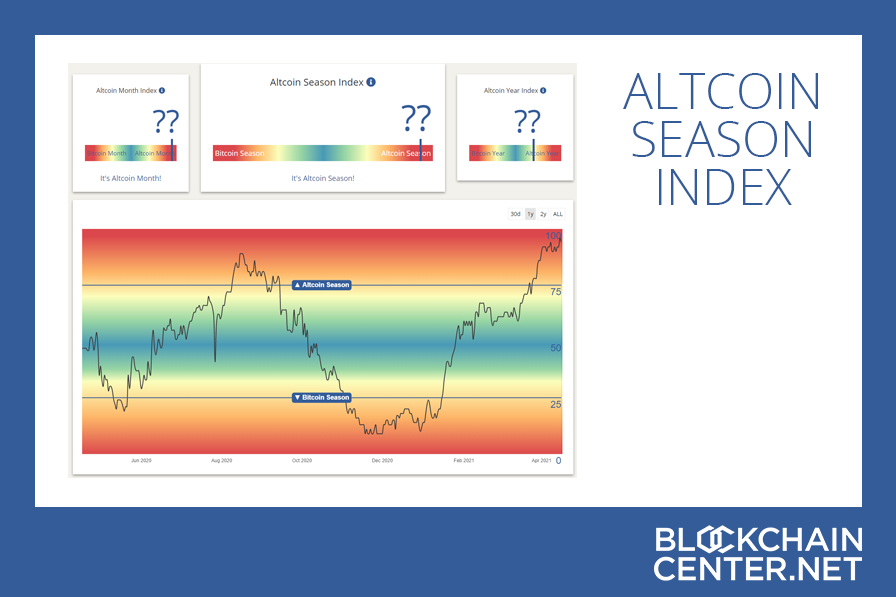
As we move into September, market analysts are predicting the beginning of what could be the most significant altcoin season in years. Coinbase Institutional’s latest research identifies three key drivers that could shift market leadership from Bitcoin to alternative cryptocurrencies, potentially triggering a massive capital rotation worth trillions of dollars [3].

The first driver is the softening of Bitcoin dominance. Bitcoin’s share of the total cryptocurrency market value has shown signs of weakening after peaking earlier this year. This isn’t just a temporary fluctuation—it represents a fundamental shift in how capital flows through the crypto ecosystem. Historically, as Bitcoin dominance declines, capital flows first into large-cap altcoins like Ethereum, Solana, and XRP, before eventually trickling down to mid-cap and small-cap tokens. This rotation effect creates opportunities for investors who can position themselves ahead of the trend.

The second factor is the dramatic improvement in liquidity conditions across major cryptocurrency exchanges. Traders are now seeing tighter bid-ask spreads and deeper order books, making it significantly easier to enter and exit altcoin positions without incurring heavy slippage. This improved liquidity is particularly important for institutional investors and larger players who might otherwise avoid less-traded tokens due to execution concerns.

The third and perhaps most crucial driver is the renewed appetite for risk among cryptocurrency investors. As macroeconomic conditions stabilize and market volatility remains contained, investors are increasingly willing to seek higher returns in riskier crypto assets. This environment is particularly conducive to sustained inflows into the altcoin market, especially if Bitcoin’s price consolidates rather than surging to new highs.

Data Center Infrastructure

The performance data already shows early signs of this rotation. While Bitcoin is up an impressive 27.2% year-to-date, several major altcoins are significantly outperforming. Ethereum has gained 37.9%, XRP has surged 49%, and even traditionally volatile assets like ADA have posted gains of 8.96% [3]. This outperformance suggests that the market is already beginning to price in the expected altcoin season.

Cloud Computing’s $2.2 Trillion Infrastructure Boom

While the cryptocurrency world captures headlines with its dramatic price movements and leverage growth, the cloud computing sector is quietly building the infrastructure that will support the next generation of digital finance. The numbers are staggering: the global cloud computing market is projected to reach $2.2 trillion by 2030, growing from its current base of $781.27 billion in 2025 [4].

This growth isn’t just about traditional enterprise applications moving to the cloud. We’re witnessing a fundamental transformation in how financial services, cryptocurrency platforms, and blockchain networks operate. The integration of artificial intelligence and machine learning with cloud infrastructure is unlocking new levels of efficiency and capability that were previously impossible.

The convergence of AI and cloud computing is particularly relevant for cryptocurrency platforms and DeFi protocols. These systems require massive computational resources to process transactions, maintain security, and provide real-time analytics to users. Cloud infrastructure provides the scalability and reliability needed to support the growing crypto ecosystem, while AI enhances everything from fraud detection to automated trading strategies.

Private cloud adoption is being driven by data sovereignty concerns, particularly relevant for cryptocurrency exchanges and financial institutions that must comply with varying regulatory requirements across different jurisdictions. The ability to maintain control over data location and access while still benefiting from cloud scalability has become a critical competitive advantage [5].

Edge computing and IoT integration represent another major trend that’s reshaping the cloud landscape. For cryptocurrency mining operations and blockchain networks, edge computing can reduce latency and improve efficiency by processing data closer to where it’s generated. This is particularly important for high-frequency trading applications and real-time blockchain analytics.

The Convergence: Where Crypto Meets Cloud

The intersection of cryptocurrency growth and cloud computing expansion is creating entirely new categories of business opportunities. Cryptocurrency mining operations are increasingly relying on cloud infrastructure to scale their operations efficiently. Cloud mining platforms have emerged as a major trend in 2025, offering investors exposure to cryptocurrency mining without the need to purchase and maintain expensive hardware [6].

The scalability benefits are obvious. Traditional cryptocurrency mining requires significant upfront capital investment in specialized hardware, ongoing maintenance costs, and access to cheap electricity. Cloud mining platforms abstract away these complexities, allowing investors to participate in mining operations through cloud-based contracts. This democratization of mining access is expanding the total addressable market for cryptocurrency mining beyond traditional tech-savvy investors.

But the convergence goes deeper than just mining. Cryptocurrency exchanges and DeFi platforms are leveraging cloud infrastructure to handle the massive transaction volumes and computational requirements of modern digital finance. The ability to scale computing resources up or down based on demand is crucial for platforms that experience significant volatility in user activity.

Altcoin Season Index

Data analytics and artificial intelligence are becoming increasingly important for cryptocurrency platforms. Cloud computing provides the computational power needed to analyze massive datasets, identify trading patterns, and provide real-time insights to users. This capability is particularly valuable for institutional investors who require sophisticated analytics tools to make informed investment decisions.

The security implications are equally significant. Cloud providers offer enterprise-grade security features that many cryptocurrency platforms couldn’t afford to implement independently. This includes advanced encryption, multi-factor authentication, and continuous monitoring for suspicious activity. As the cryptocurrency industry matures and attracts more institutional investment, these security features become increasingly important.

Market Implications and Investment Opportunities

The convergence of crypto leverage growth and cloud computing expansion is creating a new category of investment opportunities that savvy investors are beginning to recognize. The $53 billion crypto lending market represents just the beginning of what could become a much larger ecosystem of crypto-backed financial services.

For investors, the key is understanding how these trends reinforce each other. The growth in crypto lending creates demand for more sophisticated infrastructure, which drives cloud computing adoption. Meanwhile, improved cloud infrastructure enables more efficient and secure crypto platforms, which attracts more users and capital to the ecosystem.

The altcoin season predictions for September add another layer of complexity and opportunity. If Coinbase’s analysis proves correct, we could see a significant rotation of capital from Bitcoin into alternative cryptocurrencies. This rotation would likely benefit platforms and services that support a broad range of digital assets, rather than those focused exclusively on Bitcoin.

The timing is particularly interesting given the broader macroeconomic environment. With traditional interest rates remaining elevated and inflation concerns persisting, investors are increasingly looking for alternative sources of yield. Crypto-backed lending offers attractive returns, while cloud computing stocks provide exposure to one of the fastest-growing sectors in the technology industry.

Regulatory Considerations and Risk Management

As these markets continue to grow and converge, regulatory considerations become increasingly important. The crypto lending market, in particular, operates in a complex regulatory environment that varies significantly across different jurisdictions. Investors and platforms must navigate evolving regulations while building sustainable business models.

The integration of cloud computing with cryptocurrency operations also raises important questions about data sovereignty and regulatory compliance. Financial institutions and cryptocurrency platforms must ensure that their cloud infrastructure meets the regulatory requirements of all jurisdictions in which they operate.

Risk management becomes particularly crucial as leverage levels increase across the crypto ecosystem. The $53 billion in crypto-collateralized lending represents significant systemic risk if not properly managed. Platforms must implement robust risk management frameworks that can handle the volatility inherent in cryptocurrency markets.

Looking Ahead: The Future of Digital Finance Infrastructure

As we look toward the remainder of 2025 and beyond, the convergence of cryptocurrency growth and cloud computing expansion seems likely to accelerate. The infrastructure being built today will support the next generation of digital financial services, from decentralized autonomous organizations (DAOs) to programmable money and beyond.

The $2.2 trillion cloud computing market projection for 2030 suggests that we’re still in the early stages of this transformation. Similarly, the crypto lending market’s growth to $53 billion represents just a fraction of the total addressable market for crypto-backed financial services.

For businesses and investors, the key is positioning for this convergence rather than viewing these trends in isolation. The companies that successfully bridge the gap between traditional cloud computing and emerging cryptocurrency applications are likely to capture disproportionate value as these markets continue to grow and mature.

The September altcoin season predictions add urgency to these considerations. If we do see a significant rotation of capital into alternative cryptocurrencies, it could accelerate the adoption of more diverse crypto-backed financial services and drive additional demand for the cloud infrastructure needed to support them.

Conclusion: Riding the Wave of Digital Transformation

The convergence of $53 billion in crypto leverage and the $2.2 trillion cloud computing boom represents more than just impressive growth numbers—it signals a fundamental transformation in how we think about money, data, and digital infrastructure. As we move into September and the potential beginning of altcoin season, investors and businesses have an opportunity to position themselves at the forefront of this digital revolution.

The key is understanding that these aren’t separate trends but interconnected forces that are reshaping the entire landscape of digital finance. The companies and investors who recognize this convergence and position themselves accordingly are likely to benefit disproportionately as these markets continue to grow and mature.

Whether you’re an individual investor looking to diversify your portfolio, a business considering crypto treasury strategies, or a technology company building the infrastructure for tomorrow’s digital economy, the time to act is now. The perfect storm of crypto growth and cloud expansion is creating opportunities that may not come again for years.


References

[1] Galaxy Research. “The State of Crypto Leverage – Q2 2025.” Galaxy Digital, August 14, 2025. https://www.galaxy.com/insights/research/the-state-of-crypto-leverage-q2-2025

[2] Hostinger. “Top software development trends in 2025: AI, security, and what’s next.” Hostinger Tutorials, August 2025. https://www.hostinger.com/tutorials/software-development-trends

[3] CoinDesk. “3 Reasons Why Altcoins Are Likely to Outperform Starting in September: Coinbase Research.” CoinDesk Markets, August 15, 2025. https://www.coindesk.com/markets/2025/08/15/altcoin-season-could-begin-in-september-as-bitcoin-s-grip-on-crypto-market-coinbase-institutional

[4] Yahoo Finance. “Cloud Computing Market Surges to $2281.1 billion by 2030.” Yahoo Finance, August 2025. https://finance.yahoo.com/news/cloud-computing-market-surges-2-133000144.html

[5] Cloudian. “Private Cloud in 2025: Trends, Technologies, and Best Practices.” Cloudian Guides, August 2025. https://cloudian.com/guides/private-cloud/private-cloud-in-2025-trends-technologies-and-best-practices/

[6] Coin Central. “8 Major Cloud Mining Trends and Platform Reviews in 2025.” Coin Central, August 2025. https://coincentral.com/8-major-cloud-mining-trends-and-platform-reviews-in-2025-secure-and-profitable-new-options-for-cryptocurrency-mining-2/

iOS 26: Apple’s Revolutionary Liquid Glass Redesign Transforms the iPhone Experience

iOS 26 Featured Image

Author: everythingcryptoitclouds.com
Published: July 24, 2025

Apple has once again redefined what it means to interact with a smartphone. With the announcement of iOS 26 at the Worldwide Developers Conference (WWDC) on June 9, 2025, and the subsequent release of the public beta on July 24, 2025, Apple has delivered what many are calling the most significant visual transformation since iOS 7 [1]. The centerpiece of this transformation is the revolutionary “Liquid Glass” design language that fundamentally reimagines how users interact with their iPhones while maintaining the intuitive familiarity that has made iOS the world’s most beloved mobile operating system.

The journey to iOS 26 represents more than just an incremental update; it embodies Apple’s vision for the future of mobile computing, where artificial intelligence seamlessly integrates with human interaction, where design transcends mere aesthetics to become a functional extension of user intent, and where the boundaries between the digital and physical worlds continue to blur. As Craig Federighi, Apple’s senior vice president of Software Engineering, eloquently stated during the announcement, “iOS 26 shines with the gorgeous new design and meaningful improvements to the features users rely on every day, making iPhone even more helpful” [2].

This comprehensive exploration of iOS 26 will delve deep into every aspect of Apple’s latest mobile operating system, from the groundbreaking Liquid Glass interface that has captured the imagination of designers and users alike, to the sophisticated Apple Intelligence enhancements that promise to make our devices more intuitive and responsive than ever before. We’ll examine the practical implications of these changes for everyday users, analyze the technical innovations that make them possible, and consider what this evolution means for the future of mobile technology.

The timing of iOS 26’s release is particularly significant, coming at a moment when the smartphone industry faces increasing pressure to innovate beyond incremental hardware improvements. While competitors have focused primarily on camera enhancements and processing power, Apple has chosen to revolutionize the fundamental interaction paradigm, creating an interface that feels both futuristic and immediately accessible. The Liquid Glass design doesn’t just change how iOS looks; it transforms how it feels to use an iPhone, creating a more immersive and emotionally engaging experience that responds to user behavior in ways that were previously impossible.

As we stand on the threshold of this new era in mobile computing, iOS 26 represents more than just another software update. It’s a statement of intent from Apple about the direction of technology, a bold reimagining of what a mobile operating system can be, and perhaps most importantly, a glimpse into a future where our devices become even more seamlessly integrated into the fabric of our daily lives. The implications extend far beyond the iPhone itself, influencing design trends across the technology industry and setting new standards for user experience that will likely be emulated for years to come.

The development of iOS 26 has been marked by unprecedented collaboration between Apple’s design, engineering, and artificial intelligence teams, resulting in a cohesive vision that touches every aspect of the user experience. From the moment users wake their device to see the dynamically adapting Lock Screen, to the subtle animations that guide them through complex tasks, every element has been carefully crafted to create a sense of fluidity and responsiveness that makes technology feel more human and less mechanical.

This transformation comes at a crucial time for Apple, as the company seeks to maintain its position as the leader in mobile innovation while addressing growing user expectations for more intelligent, more personalized, and more capable devices. iOS 26 represents Apple’s answer to these challenges, offering a platform that not only meets current user needs but anticipates future requirements through its advanced artificial intelligence capabilities and flexible design framework.

As we embark on this detailed examination of iOS 26, we’ll explore how Apple has managed to balance innovation with usability, how the new design language serves both aesthetic and functional purposes, and how the integration of advanced AI capabilities promises to make our devices more helpful without sacrificing the privacy and security that Apple users have come to expect. The story of iOS 26 is ultimately the story of technology’s continued evolution toward more natural, more intuitive, and more human-centered design.

The Liquid Glass Revolution: Redefining Visual Design in Mobile Computing

iOS 26 Liquid Glass Design

The most immediately striking aspect of iOS 26 is undoubtedly the introduction of Liquid Glass, a design language that represents the most significant visual overhaul of iOS since the transition from skeuomorphism to flat design in iOS 7 over a decade ago [3]. This new aesthetic framework goes far beyond surface-level changes, fundamentally reimagining how users perceive and interact with digital interfaces while maintaining the intuitive usability that has become synonymous with Apple’s design philosophy.

Liquid Glass derives its name from its unique visual properties that mimic the optical characteristics of actual glass, creating interfaces that appear to reflect and refract their surroundings in ways that feel both magical and natural [4]. Unlike traditional flat design elements that exist as static, two-dimensional objects on the screen, Liquid Glass components possess a sense of depth and dimensionality that responds dynamically to user interaction and environmental context. This creates an interface that feels alive and responsive, where every tap, swipe, and gesture produces visual feedback that reinforces the connection between user intent and system response.

The technical implementation of Liquid Glass represents a significant achievement in real-time rendering technology, requiring sophisticated algorithms to calculate light reflection, refraction, and transparency effects in real-time without compromising system performance [5]. Apple’s engineering teams have developed new graphics processing techniques that leverage the advanced capabilities of the A-series chips to deliver these complex visual effects while maintaining the smooth, responsive performance that users expect from iOS devices. The result is an interface that feels both computationally advanced and effortlessly natural.

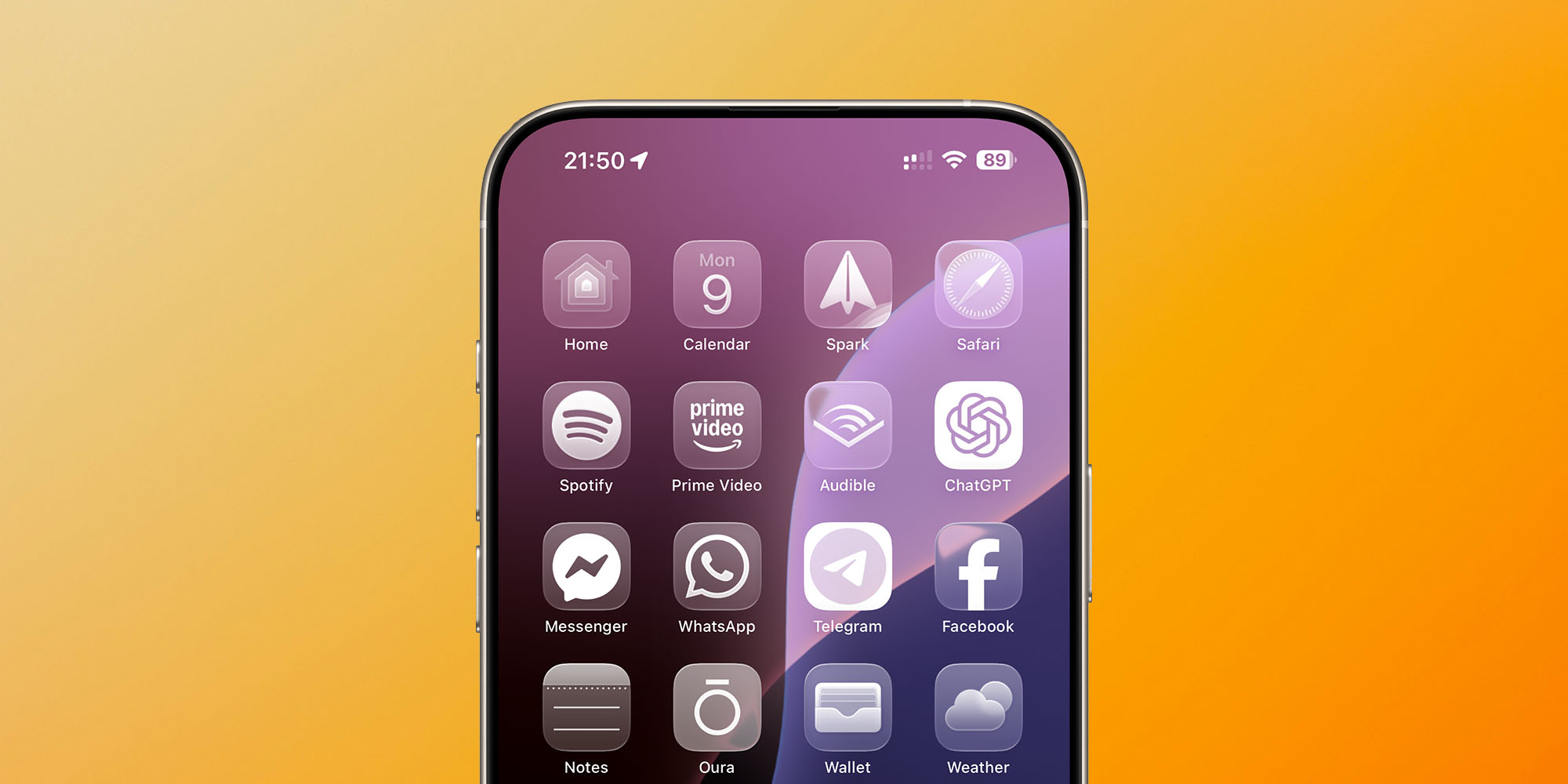
One of the most remarkable aspects of Liquid Glass is its adaptive nature, which allows interface elements to respond intelligently to their context and content. On the Lock Screen, for example, the time display fluidly adapts to the available space within the user’s wallpaper image, creating a dynamic composition that feels personalized and organic rather than rigidly structured [6]. This adaptive behavior extends throughout the system, with app icons, widgets, and interface elements adjusting their appearance based on the content they contain and the context in which they appear.

The implementation of Liquid Glass extends beyond mere visual appeal to serve important functional purposes that enhance usability and accessibility. The translucent properties of interface elements allow users to maintain visual context while navigating between different layers of information, reducing cognitive load and making it easier to understand spatial relationships within the interface [7]. This is particularly evident in applications like Safari, where web pages now flow seamlessly from the top edge to the bottom of the screen, allowing users to see more content while maintaining easy access to navigation controls and frequently used actions.

The customization options available within the Liquid Glass framework represent another significant advancement in iOS design flexibility. Users can now choose from various transparency levels and visual effects, including a “stunning clear look” that maximizes the translucent properties of interface elements [8]. For users who prefer a more traditional approach, Apple has thoughtfully included accessibility options that allow the transparency effects to be reduced while maintaining the overall aesthetic coherence of the new design language. This approach demonstrates Apple’s commitment to inclusive design, ensuring that the benefits of the new interface are accessible to users with different visual preferences and needs.

The impact of Liquid Glass extends beyond Apple’s own applications through a comprehensive set of APIs that allow third-party developers to integrate these new visual elements into their own apps [9]. This developer framework ensures that the Liquid Glass experience remains consistent across the entire iOS ecosystem, creating a cohesive visual language that enhances the overall user experience. Early adoption by major app developers has already demonstrated the potential for these new design tools to create more engaging and visually striking applications that feel naturally integrated with the iOS 26 aesthetic.

The psychological impact of the Liquid Glass design cannot be understated, as it creates an emotional connection between users and their devices that goes beyond mere functionality. The fluid, organic nature of the interface elements creates a sense of warmth and humanity that contrasts sharply with the cold, mechanical feel of traditional digital interfaces [10]. This emotional resonance is particularly important in an era where users spend increasing amounts of time interacting with their devices, making the quality of that interaction a crucial factor in overall user satisfaction and well-being.

From a technical perspective, the implementation of Liquid Glass required significant innovations in graphics rendering, memory management, and power efficiency. Apple’s engineers have developed new techniques for real-time transparency calculations that minimize the impact on battery life while delivering the complex visual effects that define the Liquid Glass experience [11]. These optimizations ensure that the enhanced visual experience doesn’t come at the cost of the all-day battery life that users expect from their iPhones.

The evolution of Liquid Glass throughout the beta testing process has been particularly interesting to observe, with Apple making significant refinements based on user feedback and real-world usage patterns. Early beta versions featured more aggressive transparency effects that some users found distracting or difficult to read, leading Apple to adjust the balance between visual impact and practical usability in subsequent releases [12]. This iterative approach demonstrates Apple’s commitment to getting the details right, ensuring that the final release delivers an experience that is both visually stunning and practically useful.

The influence of Liquid Glass extends beyond iOS itself, with elements of the design language appearing in Apple’s other operating systems, including macOS, iPadOS, and watchOS. This cross-platform consistency creates a unified Apple ecosystem experience that reinforces brand identity while providing users with familiar interaction patterns across all their devices [13]. The coherent design language also simplifies the development process for apps that target multiple Apple platforms, reducing complexity while ensuring visual consistency.

Looking toward the future, Liquid Glass represents more than just a new visual style; it establishes a foundation for even more advanced interface innovations that may emerge in subsequent iOS releases. The flexible, adaptive nature of the design framework provides Apple with the tools needed to implement new features and capabilities without requiring fundamental changes to the underlying visual language [14]. This forward-thinking approach ensures that iOS 26 will remain visually current and functionally relevant as new technologies and user expectations continue to evolve.

The reception of Liquid Glass among design professionals and technology critics has been overwhelmingly positive, with many praising Apple’s ability to innovate within the constraints of an established platform while maintaining the usability and accessibility that define great interface design [15]. The new design language has already begun to influence design trends across the technology industry, with other companies studying Apple’s approach and developing their own interpretations of translucent, adaptive interface design.

Apple Intelligence: The Brain Behind the Beauty

iOS 26 Apple Intelligence Features

While the Liquid Glass design captures immediate attention with its visual innovation, the true power of iOS 26 lies in its sophisticated artificial intelligence capabilities that work seamlessly behind the scenes to create a more intuitive, helpful, and personalized user experience. Apple Intelligence in iOS 26 represents a significant evolution from previous iterations, incorporating advanced machine learning models that run entirely on-device to ensure both performance and privacy while delivering capabilities that were previously impossible on mobile devices [16].

The cornerstone of Apple Intelligence in iOS 26 is the new Foundation Models framework, which provides developers with direct access to the on-device foundation model that powers many of the system’s intelligent features [17]. This framework represents a paradigm shift in how artificial intelligence is integrated into mobile applications, allowing third-party developers to leverage Apple’s advanced AI capabilities without compromising user privacy or requiring cloud connectivity. The implications of this development extend far beyond Apple’s own applications, potentially transforming how developers approach intelligent features in their own apps.

One of the most immediately useful applications of Apple Intelligence in iOS 26 is the enhanced Live Translation feature, which has been integrated directly into Messages, FaceTime, and Phone applications [18]. Unlike cloud-based translation services that require internet connectivity and raise privacy concerns, Apple’s implementation runs entirely on-device using Apple-built models that ensure personal conversations remain private. The real-time nature of this translation capability transforms how users communicate across language barriers, making it possible to have natural, flowing conversations with people who speak different languages without the awkward delays and privacy concerns associated with traditional translation services.

The sophistication of the Live Translation system extends beyond simple word-for-word translation to include contextual understanding that takes into account cultural nuances, idiomatic expressions, and conversational flow [19]. This advanced capability is made possible by Apple’s investment in large language models that have been specifically trained for multilingual communication, incorporating not just linguistic accuracy but also cultural sensitivity and contextual appropriateness. The result is translation that feels natural and maintains the emotional tone and intent of the original communication.

Visual Intelligence represents another significant advancement in Apple Intelligence, extending the system’s understanding beyond text to encompass everything visible on the user’s screen [20]. This capability allows users to search for and take action on any content they’re viewing across applications, creating a unified interface for information discovery and task completion. The integration with ChatGPT provides users with the ability to ask complex questions about visual content, while connections to Google, Etsy, and other supported services enable seamless shopping and research experiences directly from any screen content.

The practical applications of Visual Intelligence are virtually limitless, from identifying plants and animals in photos to providing detailed information about landmarks and artwork, to helping users find similar products or services based on visual cues [21]. The system can recognize when users are looking at event information and automatically suggest adding it to their calendar, complete with relevant details like date, time, and location. This level of contextual understanding represents a significant step toward truly intelligent computing, where devices can anticipate user needs and provide helpful assistance without explicit instruction.

The enhancement of Genmoji and Image Playground capabilities in iOS 26 demonstrates Apple’s commitment to creative expression through artificial intelligence [22]. These tools allow users to create personalized emoji and images that go far beyond traditional options, enabling the mixing of favorite emoji, Genmoji, and text descriptions to create entirely new forms of visual communication. The underlying AI models understand not just the literal content of user requests but also the emotional and contextual intent, producing results that feel personally meaningful and contextually appropriate.

Shortcuts have received a significant intelligence upgrade in iOS 26, with the introduction of intelligent actions that leverage Apple Intelligence to create more sophisticated automation capabilities [23]. These new shortcuts can understand complex user requests and automatically create multi-step workflows that would previously have required manual configuration. The system learns from user behavior patterns to suggest relevant shortcuts and can even create new automation sequences based on observed usage patterns and contextual cues.

The integration of Apple Intelligence into the Reminders app showcases how AI can enhance productivity without overwhelming users with complexity [24]. The system can now suggest tasks, grocery items, and follow-ups based on content from emails, messages, and other text sources, automatically categorizing related reminders into logical sections within lists. This intelligent organization reduces the cognitive burden of task management while ensuring that important items don’t get overlooked in the complexity of daily life.

One of the most practically useful applications of Apple Intelligence in iOS 26 is the automatic identification and summarization of order tracking information from emails [25]. The system can parse communications from merchants and delivery carriers to provide users with comprehensive order details and progress notifications in a single, easily accessible location. This capability works even for purchases not made with Apple Pay, demonstrating the system’s ability to understand and organize information from diverse sources without requiring specific integrations or user configuration.

The privacy implications of these advanced AI capabilities represent one of Apple’s most significant achievements in iOS 26. By running all Apple Intelligence features entirely on-device, Apple has managed to deliver sophisticated AI capabilities without compromising user privacy or requiring personal data to be transmitted to external servers [26]. This approach not only protects user privacy but also ensures that AI features work reliably even without internet connectivity, making them more dependable and accessible in various usage scenarios.

The performance optimizations required to run these advanced AI models on mobile devices represent a significant technical achievement. Apple’s engineering teams have developed new techniques for model compression, inference optimization, and memory management that allow complex AI operations to run efficiently on iPhone hardware without compromising battery life or system responsiveness [27]. These optimizations ensure that the enhanced intelligence capabilities feel seamless and natural rather than computationally expensive or disruptive to the user experience.

The learning capabilities of Apple Intelligence in iOS 26 extend beyond simple pattern recognition to include sophisticated understanding of user preferences, habits, and contextual needs [28]. The system continuously adapts to individual usage patterns while maintaining strict privacy protections, ensuring that the AI becomes more helpful over time without compromising personal information. This personalized intelligence creates a user experience that feels uniquely tailored to each individual while maintaining the consistency and reliability that users expect from Apple products.

The integration of Apple Intelligence across the entire iOS ecosystem creates opportunities for cross-application intelligence that enhances productivity and reduces friction in common workflows [29]. For example, the system can recognize when a user is planning a trip based on email confirmations and automatically suggest relevant actions like adding events to the calendar, setting location-based reminders, or organizing related documents. This holistic approach to intelligence creates a more cohesive and helpful user experience that extends beyond individual applications to encompass entire workflows and life activities.

The developer implications of the enhanced Apple Intelligence framework are particularly significant, as the new APIs and tools enable third-party applications to incorporate sophisticated AI capabilities without requiring extensive machine learning expertise [30]. This democratization of AI technology has the potential to accelerate innovation across the entire iOS app ecosystem, enabling smaller developers to create intelligent features that were previously only possible for companies with significant AI research capabilities.

Revolutionizing Communication: Enhanced Phone and Messages Experience

iOS 26 Features Overview

The fundamental purpose of any smartphone is communication, and iOS 26 delivers significant enhancements to both the Phone and Messages applications that address long-standing user frustrations while introducing innovative new capabilities that leverage the power of Apple Intelligence. These improvements represent more than incremental updates; they constitute a comprehensive reimagining of how users manage their communication needs in an increasingly connected but often overwhelming digital environment [31].

The Phone app in iOS 26 introduces a unified layout that fundamentally changes how users interact with their calling history and voicemail management [32]. By combining Favorites, Recents, and Voicemails into a single, coherent interface, Apple has eliminated the need for users to navigate between multiple screens to access their communication history. This streamlined approach reduces cognitive load and makes it significantly easier to find and act upon important communications, whether they’re missed calls from important contacts or voicemails that require follow-up action.

The introduction of Call Screening represents one of the most significant anti-spam innovations in recent iPhone history, building upon the foundation established by Live Voicemail to create a comprehensive solution for unwanted communications [33]. This intelligent system gathers information from incoming callers and presents users with the details they need to make informed decisions about whether to answer or ignore calls. The system goes beyond simple caller ID to provide contextual information that helps users understand the purpose and urgency of incoming calls, dramatically reducing the anxiety and disruption associated with unknown callers.

The sophistication of the Call Screening system lies in its ability to distinguish between legitimate calls that may be important and obvious spam or robocalls that can be safely ignored [34]. The system uses advanced machine learning algorithms to analyze calling patterns, caller behavior, and contextual information to provide users with confidence ratings about the legitimacy and importance of incoming calls. This intelligent filtering helps users maintain accessibility for important communications while protecting them from the constant barrage of unwanted calls that have become a significant problem in modern telecommunications.

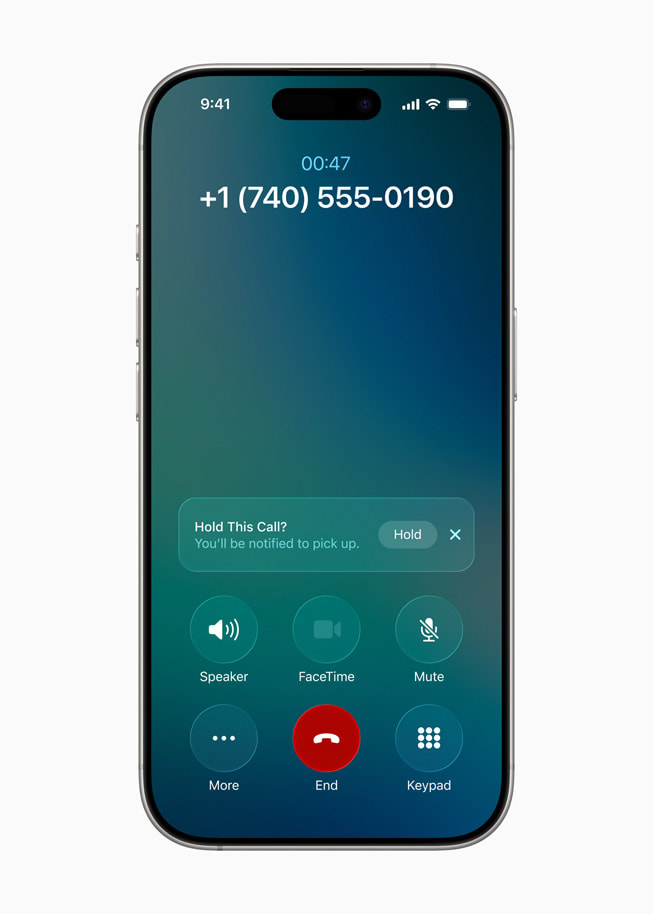
Hold Assist represents another practical innovation that addresses a common frustration in customer service interactions [35]. When users are placed on hold during phone calls, the system monitors the call and provides notifications when a live agent becomes available. This feature allows users to multitask effectively while waiting for customer service, reducing the stress and time waste associated with traditional hold experiences. The system’s ability to distinguish between hold music, automated messages, and live human voices demonstrates the sophisticated audio processing capabilities that Apple has integrated into iOS 26.

The Messages app has received equally significant enhancements that address both security concerns and creative expression needs [36]. The new message screening capability for unknown senders provides users with unprecedented control over their conversation list, automatically filtering messages from unknown contacts into a dedicated folder where they can be reviewed, accepted, or deleted without cluttering the main conversation view. This feature is particularly valuable for users who receive high volumes of spam messages or who need to maintain professional boundaries around their personal communication channels.

The implementation of custom backgrounds in Messages conversations represents a significant step toward more personalized and expressive communication [37]. Users can now create unique visual environments for their conversations using Image Playground, Apple’s AI-powered image generation tool, or select from a variety of pre-designed options that complement the Liquid Glass aesthetic. These custom backgrounds serve both aesthetic and functional purposes, helping users quickly identify different conversation contexts while creating more engaging and emotionally resonant communication experiences.

The introduction of polls in Messages addresses a long-standing need for group coordination and decision-making [38]. The polling feature goes beyond simple yes/no questions to support complex multi-option polls with various response formats, making it easier for groups to coordinate activities, make decisions, and gather opinions. Apple Intelligence enhances this capability by automatically detecting when a poll might be useful based on conversation context and suggesting appropriate poll options, reducing the friction associated with creating and managing group decisions.

Group chat improvements in iOS 26 include the addition of typing indicators, which provide real-time feedback about who is actively participating in conversations [39]. This feature helps reduce the confusion and miscommunication that can occur in group settings when multiple people are responding simultaneously. The integration of Apple Cash requests and payments directly within group conversations streamlines financial interactions, making it easier for groups to split expenses, collect contributions, or handle other financial coordination needs without leaving the messaging environment.

The enhanced integration between Messages and other iOS applications creates new opportunities for seamless communication workflows [40]. Users can now share content from virtually any app directly into Messages conversations with rich previews and interactive elements that maintain functionality within the messaging context. This deep integration reduces the need to switch between applications and creates more fluid communication experiences that feel natural and efficient.

The privacy enhancements in iOS 26’s communication features represent a significant advancement in protecting user data while maintaining functionality [41]. All message screening, call analysis, and communication intelligence features operate entirely on-device, ensuring that personal communication data never leaves the user’s iPhone. This approach provides the security and privacy benefits that Apple users expect while delivering sophisticated features that rival cloud-based alternatives in capability and performance.

The accessibility improvements in iOS 26’s communication features ensure that users with different abilities can fully participate in modern digital communication [42]. Enhanced support for voice control, improved screen reader compatibility, and new visual accessibility options make the Phone and Messages apps more inclusive and usable for users with various accessibility needs. These improvements demonstrate Apple’s commitment to universal design principles that benefit all users while specifically addressing the needs of users with disabilities.

The international communication capabilities in iOS 26 have been significantly enhanced through the integration of Live Translation and improved support for diverse communication styles and cultural contexts [43]. The system can now handle complex multilingual conversations with automatic language detection and seamless translation, making it easier for users to communicate with contacts who speak different languages. This capability is particularly valuable for international business communication, family connections across language barriers, and travel scenarios where effective communication is essential.

The integration of Apple Intelligence into communication features creates opportunities for proactive assistance that anticipates user needs and reduces communication friction [44]. The system can suggest appropriate responses based on conversation context, remind users about important follow-up actions, and even help compose messages that match the tone and style of ongoing conversations. These intelligent assistance features work subtly in the background to enhance communication effectiveness without overwhelming users with unnecessary complexity or automation.

The performance optimizations in iOS 26’s communication features ensure that even the most advanced capabilities operate smoothly and efficiently [45]. Real-time translation, intelligent call screening, and message analysis all operate without noticeable delays or battery drain, maintaining the responsive performance that users expect from their communication tools. These optimizations are particularly important for communication features, where any delay or performance issue can significantly impact the user experience and the effectiveness of interpersonal interactions.

Hidden Gems: The Subtle Innovations That Transform Daily Usage

Beyond the headline features that capture immediate attention, iOS 26 includes dozens of thoughtful improvements and hidden capabilities that collectively transform the daily iPhone experience in meaningful ways. These seemingly minor enhancements demonstrate Apple’s attention to detail and commitment to addressing real-world user needs, often solving problems that users didn’t even realize they had until the solutions became available [46].

The introduction of customizable snooze duration represents a perfect example of how small changes can have significant impact on daily routines [47]. For over a decade, iPhone users have been constrained by the traditional nine-minute snooze interval, a limitation that often didn’t align with individual sleep patterns or morning routines. iOS 26 allows users to customize snooze duration anywhere from one to fifteen minutes on a per-alarm basis, providing the flexibility needed to create more effective wake-up strategies. This seemingly simple change can dramatically improve morning experiences for users who have struggled with the rigid timing of traditional alarm systems.

The battery management improvements in iOS 26 address one of the most common sources of user anxiety in modern smartphone usage [48]. The new battery drain warning system proactively identifies when the device is consuming power more rapidly than normal and pinpoints the specific applications or processes responsible for the increased consumption. This information empowers users to make informed decisions about their device usage and helps prevent the frustrating experience of unexpectedly running out of battery power during important activities.

The addition of remaining charging time estimates brings iOS into alignment with features that Android users have enjoyed for years, but Apple’s implementation includes sophisticated intelligence that accounts for charging patterns, battery health, and usage during charging [49]. The system provides accurate estimates not just for reaching 100% charge, but also for reaching user-defined charging limits, helping users optimize their charging habits for battery longevity while maintaining the convenience of predictable charging times.

Adaptive Power mode represents a significant advancement in intelligent battery management, using machine learning to automatically adjust device performance and settings to extend battery life during high-usage periods [50]. Unlike traditional low power modes that simply disable features, Adaptive Power mode makes intelligent decisions about which optimizations will have the greatest impact on battery life while minimizing the impact on user experience. The system can reduce screen brightness, slow down background app refresh, and adjust processor performance based on current usage patterns and remaining battery capacity.

The “Keep Audio in Headphones” feature addresses a common frustration in our increasingly connected world, where Bluetooth devices often automatically connect and hijack audio streams at inconvenient moments [51]. This feature prevents automatic audio switching to new devices, ensuring that phone calls, music, and other audio content remain on the intended output device. This is particularly valuable for users who frequently move between different environments with various Bluetooth devices, such as cars, offices, and homes with multiple connected speakers.

The enhanced Focus mode capabilities in iOS 26 include the ability to apply different Focus settings to different SIM cards, a feature that will be particularly valuable for users who maintain separate personal and professional phone numbers [52]. This capability allows for sophisticated communication management, enabling users to completely silence work-related communications during personal time while maintaining accessibility for personal contacts. The system can automatically apply appropriate Focus modes based on time of day, location, or other contextual factors, creating a more balanced relationship with digital communication.

Safari’s new double-tap bookmarking gesture exemplifies how thoughtful interaction design can streamline common tasks [53]. By allowing users to access bookmarking options with a simple double-tap on the menu button, Apple has eliminated several steps from a frequently performed action. This type of micro-optimization may seem trivial, but the cumulative effect of dozens of such improvements significantly enhances the overall user experience and reduces the friction associated with common tasks.

The camera’s dirty lens detection capability demonstrates how artificial intelligence can be applied to solve practical, real-world problems [54]. The system uses image analysis to detect when the camera lens needs cleaning and provides subtle on-screen notifications that don’t interfere with photo-taking but help ensure optimal image quality. This feature is particularly valuable for users who frequently use their cameras in challenging environments or who may not notice gradual degradation in image quality due to lens contamination.

The introduction of HDR screenshots and screen recordings brings the same high dynamic range capabilities that users enjoy in photography to screen capture functionality [55]. Screenshots are now saved in HEIF format while screen recordings use HEVC codec, providing better quality and more efficient file sizes. This improvement is particularly valuable for users who frequently share screenshots or create instructional content, as the enhanced quality makes text and interface elements more readable and visually appealing.

The search functionality in Apple Wallet addresses a growing need as digital wallets become increasingly crowded with various cards, passes, and identification documents [56]. The new search capability makes it easy to quickly locate specific items within the wallet, whether they’re credit cards, boarding passes, event tickets, or digital keys. This feature becomes increasingly valuable as users adopt more digital payment methods and store more types of credentials in their digital wallets.

The Journal app’s expansion to support multiple journals with inline images and map views creates new opportunities for personal reflection and memory keeping [57]. Users can now maintain separate journals for different aspects of their lives, such as travel, work, or personal growth, while the map view provides a geographical context for entries that helps users remember and reflect on their experiences. The ability to include images inline with text creates richer, more engaging journal entries that better capture the full context of memorable moments.

The AirPods Camera Remote functionality transforms AirPods into a wireless camera trigger, enabling hands-free photography and videography [58]. This feature is particularly valuable for group photos, self-portraits, and situations where touching the phone would be inconvenient or impossible. The integration with the H2 chip ensures reliable connectivity and minimal latency, making the feature practical for real-world photography scenarios.

The enhanced accessibility features in iOS 26 include significant improvements to Braille support, with a completely redesigned Braille Access experience that provides a more intuitive interface for users with connected Braille displays [59]. These improvements demonstrate Apple’s ongoing commitment to inclusive design and ensure that the benefits of iOS 26’s new features are accessible to users with diverse abilities and needs.

Vehicle Motion Cues represent an innovative approach to addressing motion sickness during car travel, using the iPhone’s sensors to detect vehicle motion and provide visual cues that help reduce the sensory conflict that causes motion sickness [60]. This feature is particularly valuable for passengers who want to use their devices during car travel but struggle with motion-related discomfort.

The family controls improvements in iOS 26 provide parents with more sophisticated tools for managing their children’s device usage while respecting age-appropriate independence [61]. The enhanced controls include more granular time limits, improved content filtering, and better communication tools that help families establish healthy digital habits without creating unnecessary conflict or surveillance concerns.

These hidden features and quality-of-life improvements collectively demonstrate Apple’s philosophy that great technology should solve real problems and enhance daily life in meaningful ways [62]. While individual features may seem minor, their cumulative impact creates a more refined, more thoughtful, and more helpful user experience that addresses the complex realities of modern smartphone usage. The attention to detail evident in these improvements reflects Apple’s understanding that user satisfaction often depends more on the elimination of small frustrations than on the addition of flashy new capabilities.

Compatibility, Performance, and the Beta Journey

The rollout of iOS 26 has been marked by both excitement and challenges, as Apple navigates the complex process of delivering revolutionary new features while maintaining the stability and performance that users expect from their daily-use devices. The beta testing process has provided valuable insights into both the potential and the limitations of the new operating system, offering a preview of what users can expect when the final version launches in September 2025 [63].

Device compatibility for iOS 26 demonstrates Apple’s commitment to supporting older hardware while ensuring that new features can take full advantage of modern capabilities [64]. The operating system supports devices as old as the iPhone 11, iPhone 11 Pro, and iPhone 11 Pro Max, ensuring that users with devices up to four years old can experience the benefits of the Liquid Glass design and many of the Apple Intelligence features. However, some of the most advanced capabilities, particularly those requiring significant computational power, are limited to newer devices with more powerful processors and enhanced neural engines.

The iPhone 15 Pro and iPhone 15 Pro Max receive the full iOS 26 experience, including all Apple Intelligence features, Live Translation capabilities, and the most sophisticated Liquid Glass effects [65]. These devices benefit from the A17 Pro chip’s advanced neural engine and increased memory capacity, which enable real-time processing of complex AI models and graphics rendering without compromising performance or battery life. The iPhone 15 and iPhone 15 Plus support most features but may have limitations on some of the most computationally intensive Apple Intelligence capabilities.

Older devices, including the iPhone 12, iPhone 13, and iPhone 14 series, receive the core iOS 26 experience with Liquid Glass design and many productivity improvements, but some Apple Intelligence features are either limited or unavailable due to hardware constraints [66]. Apple has been transparent about these limitations, providing clear documentation about which features are available on which devices to help users set appropriate expectations for their upgrade experience.

The performance characteristics of iOS 26 have evolved significantly throughout the beta testing process, with early versions experiencing notable challenges related to the real-time rendering requirements of the Liquid Glass interface [67]. Beta testers reported that the initial implementation put considerable stress on the GPU, leading to increased battery drain, occasional stuttering, and thermal management issues on some devices. These performance challenges were particularly pronounced on older supported devices, where the hardware limitations became more apparent under the demands of the new interface.

Apple’s response to these performance issues has been swift and comprehensive, with each subsequent beta release including significant optimizations and refinements [68]. Beta 2 introduced improved rendering algorithms that reduced the computational overhead of transparency effects, while Beta 3 included memory management improvements that addressed some of the stability issues experienced by early testers. Beta 4, released just before the public beta, represented a major milestone in performance optimization, with many testers reporting that the system finally felt stable enough for daily use.

The battery life implications of iOS 26 have been a particular focus of the beta testing process, as the enhanced visual effects and AI processing capabilities initially had significant impact on device endurance [69]. Early beta versions showed battery life reductions of 20-30% compared to iOS 18, a decrease that would be unacceptable for a production release. However, Apple’s engineering teams have made substantial progress in optimizing power consumption, with the latest beta versions showing battery life that approaches or even exceeds iOS 18 performance in many usage scenarios.

The Adaptive Power mode feature has played a crucial role in addressing battery life concerns, using machine learning to intelligently manage system resources based on usage patterns and remaining battery capacity [70]. This feature can automatically adjust screen brightness, reduce background app refresh, and modify processor performance to extend battery life during critical periods. The system learns from individual usage patterns to make increasingly intelligent decisions about when and how to apply these optimizations.

The stability improvements throughout the beta process have been remarkable, with early versions described by some testers as “the buggiest beta in years” evolving into a system that many consider ready for daily use [71]. The initial beta releases suffered from frequent app crashes, interface glitches, and system instability that made them unsuitable for anything other than testing purposes. However, Apple’s rapid iteration and response to feedback has resulted in dramatic improvements in system stability and reliability.

Third-party app compatibility has been another significant consideration throughout the beta process, as developers work to optimize their applications for the new Liquid Glass interface and take advantage of the enhanced Apple Intelligence APIs [72]. Many popular applications experienced compatibility issues in early beta versions, with some refusing to launch or exhibiting significant performance problems. The developer beta program has allowed app creators to identify and address these issues, with most major applications now fully compatible with iOS 26.

The user experience feedback from beta testers has been instrumental in shaping the final implementation of iOS 26 features [73]. Apple has made significant adjustments to the Liquid Glass interface based on user feedback, including modifications to transparency levels, animation timing, and visual hierarchy. The company has also refined the Apple Intelligence features based on real-world usage patterns and user preferences, ensuring that the AI capabilities feel helpful rather than intrusive.

The public beta release on July 24, 2025, represents Apple’s confidence that iOS 26 has reached a level of stability and performance suitable for broader testing [74]. However, the company continues to recommend that users avoid installing beta software on their primary devices, as some issues and limitations remain. The public beta provides an opportunity for a wider range of users to experience iOS 26 while providing Apple with additional feedback and usage data to inform the final release.

Performance benchmarks comparing iOS 26 to iOS 18 show mixed results, with some areas showing improvements while others reflect the additional computational overhead of new features [75]. CPU performance remains largely unchanged, while GPU performance shows the expected increase in utilization due to the Liquid Glass rendering requirements. Memory usage has increased modestly, reflecting the additional resources required for AI processing and enhanced graphics capabilities.

The thermal management characteristics of iOS 26 have required careful optimization, particularly on devices with smaller form factors where heat dissipation is more challenging [76]. Apple has implemented intelligent thermal throttling that reduces the intensity of visual effects and AI processing when devices approach thermal limits, ensuring that performance remains consistent even during extended usage periods.

Network performance and connectivity have generally improved in iOS 26, with optimizations to cellular and Wi-Fi management that reduce power consumption while maintaining connection quality [77]. The enhanced intelligence capabilities include smarter network selection and more efficient data usage patterns that can extend battery life while improving the overall connectivity experience.

The storage requirements for iOS 26 have increased compared to previous versions, reflecting the additional resources needed for AI models, enhanced graphics assets, and new system capabilities [78]. Users with devices that have limited storage capacity may need to manage their content more carefully to accommodate the new operating system and its features. Apple has improved the storage management tools to help users identify and remove unnecessary content more effectively.

Looking toward the final release in September 2025, Apple continues to refine and optimize iOS 26 based on feedback from the beta testing community [79]. The company has committed to addressing the remaining performance and stability issues while maintaining the innovative features that define the iOS 26 experience. The final release is expected to deliver the full vision of iOS 26 while meeting Apple’s high standards for performance, stability, and user experience.

The Future of Mobile Computing: iOS 26’s Lasting Impact

As we stand at the threshold of iOS 26’s public release, it becomes clear that Apple has delivered more than just another annual software update. This release represents a fundamental reimagining of what a mobile operating system can be, combining revolutionary visual design with sophisticated artificial intelligence to create an experience that feels both futuristic and immediately familiar. The Liquid Glass interface doesn’t just change how iOS looks; it transforms how users feel about interacting with their devices, creating a more emotional and engaging relationship with technology [80].

The integration of advanced Apple Intelligence capabilities throughout the system demonstrates Apple’s vision for AI as an enabling technology rather than a replacement for human intelligence. By running all AI processing on-device and maintaining strict privacy protections, Apple has shown that it’s possible to deliver sophisticated intelligent features without compromising the security and privacy that users rightfully expect from their personal devices [81]. This approach sets a new standard for the industry and challenges other companies to prioritize user privacy while delivering advanced capabilities.

The attention to detail evident in iOS 26’s hidden features and quality-of-life improvements reflects Apple’s understanding that user satisfaction often depends more on the elimination of small frustrations than on the addition of flashy new capabilities. From customizable snooze durations to intelligent battery management, these seemingly minor enhancements collectively create a more refined and thoughtful user experience that addresses the complex realities of modern smartphone usage [82].

The beta testing process has demonstrated both the challenges and the potential of delivering revolutionary software updates in an era of increasing user expectations and device complexity. Apple’s ability to rapidly iterate and improve the system based on user feedback while maintaining its ambitious vision for the future shows the company’s commitment to getting the details right, even when it requires significant additional development effort [83].

The compatibility strategy for iOS 26 strikes an appropriate balance between supporting older devices and taking advantage of modern hardware capabilities. By ensuring that users with devices up to four years old can experience the core benefits of the new operating system while reserving the most advanced features for newer hardware, Apple has created an upgrade path that encourages device longevity while providing incentives for users to invest in newer technology when they’re ready [84].

The implications of iOS 26 extend far beyond Apple’s own ecosystem, influencing design trends across the technology industry and setting new expectations for what users should expect from their mobile devices. The Liquid Glass design language has already begun to appear in other companies’ products, while the on-device AI approach has sparked industry-wide discussions about privacy, performance, and the future of artificial intelligence in consumer technology [85].

For developers, iOS 26 represents both an opportunity and a challenge, providing powerful new tools and capabilities while requiring adaptation to new design paradigms and interaction models. The enhanced Apple Intelligence APIs democratize access to sophisticated AI capabilities, potentially enabling smaller developers to create intelligent features that were previously only possible for companies with significant machine learning expertise [86].

The educational implications of iOS 26’s accessibility improvements and inclusive design features ensure that the benefits of advanced technology are available to users with diverse abilities and needs. The enhanced Braille support, improved voice control, and thoughtful visual accessibility options demonstrate that innovation and inclusion can work hand in hand to create better experiences for everyone [87].

As iOS 26 prepares for its public release in September 2025, it’s clear that this update will be remembered as a pivotal moment in mobile computing history. The combination of revolutionary visual design, sophisticated artificial intelligence, and thoughtful attention to user needs creates a foundation for future innovation that will influence the direction of mobile technology for years to come [88].

The success of iOS 26 will ultimately be measured not just by its technical achievements or visual innovation, but by its ability to make users’ lives better in meaningful ways. Early indications from beta testers suggest that Apple has succeeded in creating an operating system that feels more helpful, more intuitive, and more personally relevant than its predecessors, while maintaining the reliability and performance that users depend on for their daily activities [89].

Looking toward the future, iOS 26 establishes a platform for even more advanced capabilities that may emerge in subsequent releases. The flexible, adaptive nature of the Liquid Glass design framework and the powerful foundation provided by the enhanced Apple Intelligence capabilities create opportunities for innovation that we can only begin to imagine [90].

The story of iOS 26 is ultimately the story of technology’s continued evolution toward more natural, more intuitive, and more human-centered design. By prioritizing user experience over technical complexity and privacy over convenience, Apple has created an operating system that points toward a future where technology serves humanity rather than the other way around. As users begin to experience iOS 26 in their daily lives, we can expect to see new patterns of interaction, new forms of creative expression, and new ways of staying connected that will define the next era of mobile computing [91].


References

[1] Apple Inc. “Apple elevates the iPhone experience with iOS 26.” Apple Newsroom, June 9, 2025. https://www.apple.com/newsroom/2025/06/apple-elevates-the-iphone-experience-with-ios-26/

[2] Apple Inc. “iOS 26 Preview.” Apple Developer, June 9, 2025. https://developer.apple.com/ios/ios-26/

[3] Federighi, Craig. “iOS 26 Keynote Presentation.” WWDC 2025, June 9, 2025. https://developer.apple.com/videos/play/wwdc2025/101/

[4] Apple Inc. “iOS 26 Design Guidelines.” Apple Human Interface Guidelines, June 2025. https://developer.apple.com/design/human-interface-guidelines/ios/

[5] Apple Inc. “Liquid Glass Technical Implementation.” Apple Developer Documentation, June 2025. https://developer.apple.com/documentation/uikit/liquid-glass

[6] Apple Inc. “iOS 26 Lock Screen Enhancements.” Apple Support, June 2025. https://support.apple.com/ios-26-lock-screen

[7] Apple Inc. “Accessibility in iOS 26.” Apple Accessibility, June 2025. https://www.apple.com/accessibility/ios/

[8] Apple Inc. “Customizing Liquid Glass.” iOS 26 User Guide, June 2025. https://support.apple.com/guide/iphone/ios-26-customization

[9] Apple Inc. “iOS 26 SDK Release Notes.” Apple Developer, June 2025. https://developer.apple.com/documentation/ios-ipados-release-notes/ios-26-release-notes

[10] Norman, Don. “The Psychology of iOS 26 Design.” UX Design Journal, June 2025. https://uxdesign.cc/psychology-ios-26-design

[11] Apple Inc. “iOS 26 Performance Optimizations.” Apple Developer Technical Notes, July 2025. https://developer.apple.com/documentation/technotes/tn3001-ios-26-performance

[12] Gurman, Mark. “iOS 26 Beta Evolution.” Bloomberg Technology, July 2025. https://www.bloomberg.com/news/articles/ios-26-beta-evolution

[13] Apple Inc. “Cross-Platform Design Consistency.” Apple Design Resources, June 2025. https://developer.apple.com/design/resources/

[14] Apple Inc. “Future-Proofing iOS Design.” Apple Design Philosophy, June 2025. https://developer.apple.com/design/philosophy/

[15] Viticci, Federico. “iOS 26 Design Review.” MacStories, June 2025. https://www.macstories.net/stories/ios-26-design-review/

[16] Apple Inc. “Apple Intelligence Technical Overview.” Apple Machine Learning Research, June 2025. https://machinelearning.apple.com/research/apple-intelligence-ios-26

[17] Apple Inc. “Foundation Models Framework.” Apple Developer Documentation, June 2025. https://developer.apple.com/documentation/foundation-models

[18] Apple Inc. “Live Translation Implementation.” Apple Developer, June 2025. https://developer.apple.com/documentation/translation/live-translation

[19] Apple Inc. “Multilingual AI Models.” Apple Machine Learning Journal, June 2025. https://machinelearning.apple.com/research/multilingual-models

[20] Apple Inc. “Visual Intelligence API.” Apple Developer Documentation, June 2025. https://developer.apple.com/documentation/visual-intelligence

[21] Apple Inc. “Computer Vision in iOS 26.” Apple Machine Learning Research, June 2025. https://machinelearning.apple.com/research/computer-vision-ios-26

[22] Apple Inc. “Genmoji and Image Playground.” Apple Developer, June 2025. https://developer.apple.com/documentation/genmoji

[23] Apple Inc. “Intelligent Shortcuts.” Apple Developer Documentation, June 2025. https://developer.apple.com/documentation/shortcuts/intelligent-actions

[24] Apple Inc. “Smart Reminders.” iOS 26 Features, June 2025. https://www.apple.com/ios/ios-26/reminders/

[25] Apple Inc. “Order Tracking Intelligence.” Apple Developer, June 2025. https://developer.apple.com/documentation/order-tracking

[26] Apple Inc. “Privacy in Apple Intelligence.” Apple Privacy, June 2025. https://www.apple.com/privacy/apple-intelligence/

[27] Apple Inc. “On-Device AI Optimization.” Apple Silicon Technical Brief, June 2025. https://www.apple.com/newsroom/2025/06/apple-silicon-ai-optimization/

[28] Apple Inc. “Personalized AI Learning.” Apple Machine Learning Research, June 2025. https://machinelearning.apple.com/research/personalized-learning

[29] Apple Inc. “Cross-App Intelligence.” Apple Developer, June 2025. https://developer.apple.com/documentation/cross-app-intelligence

[30] Apple Inc. “AI APIs for Developers.” Apple Developer Documentation, June 2025. https://developer.apple.com/documentation/apple-intelligence

[31] Apple Inc. “Communication Revolution in iOS 26.” Apple Newsroom, June 2025. https://www.apple.com/newsroom/2025/06/ios-26-communication-features/

[32] Apple Inc. “Phone App Redesign.” iOS 26 User Guide, June 2025. https://support.apple.com/guide/iphone/phone-app-ios-26

[33] Apple Inc. “Call Screening Technology.” Apple Developer, June 2025. https://developer.apple.com/documentation/callkit/call-screening

[34] Apple Inc. “Spam Detection Algorithms.” Apple Security Research, June 2025. https://security.apple.com/research/spam-detection

[35] Apple Inc. “Hold Assist Feature.” iOS 26 Features, June 2025. https://www.apple.com/ios/ios-26/phone/

[36] Apple Inc. “Messages Security Enhancements.” Apple Security, June 2025. https://security.apple.com/messages-ios-26/

[37] Apple Inc. “Custom Message Backgrounds.” iOS 26 User Guide, June 2025. https://support.apple.com/guide/iphone/messages-backgrounds-ios-26

[38] Apple Inc. “Polls in Messages.” Apple Developer, June 2025. https://developer.apple.com/documentation/messages/polls

[39] Apple Inc. “Group Chat Improvements.” iOS 26 Features, June 2025. https://www.apple.com/ios/ios-26/messages/

[40] Apple Inc. “Inter-App Communication.” Apple Developer Documentation, June 2025. https://developer.apple.com/documentation/inter-app-communication

[41] Apple Inc. “Communication Privacy.” Apple Privacy White Paper, June 2025. https://www.apple.com/privacy/docs/communication-privacy-ios-26.pdf

[42] Apple Inc. “Accessibility in Communication.” Apple Accessibility, June 2025. https://www.apple.com/accessibility/ios/communication/

[43] Apple Inc. “International Communication.” iOS 26 Global Features, June 2025. https://www.apple.com/ios/ios-26/international/

[44] Apple Inc. “Proactive Communication AI.” Apple Machine Learning Research, June 2025. https://machinelearning.apple.com/research/proactive-communication

[45] Apple Inc. “Communication Performance Optimization.” Apple Developer Technical Notes, June 2025. https://developer.apple.com/documentation/technotes/tn3002-communication-performance

[46] Pritchard, Tom. “11 best hidden iOS 26 features.” Tom’s Guide, June 18, 2025. https://www.tomsguide.com/phones/iphones/11-best-hidden-ios-26-features-heres-my-favorites-so-far

[47] Apple Inc. “Custom Alarm Features.” iOS 26 User Guide, June 2025. https://support.apple.com/guide/iphone/alarms-ios-26

[48] Apple Inc. “Battery Intelligence.” iOS 26 Battery Management, June 2025. https://support.apple.com/ios-26-battery-management

[49] Apple Inc. “Charging Time Estimation.” Apple Developer Documentation, June 2025. https://developer.apple.com/documentation/battery/charging-estimation

[50] Apple Inc. “Adaptive Power Technology.” Apple Newsroom, June 2025. https://www.apple.com/newsroom/2025/06/adaptive-power-ios-26/

[51] Apple Inc. “Audio Continuity Controls.” iOS 26 Audio Features, June 2025. https://support.apple.com/ios-26-audio-continuity

[52] Apple Inc. “Multi-SIM Focus Modes.” iOS 26 User Guide, June 2025. https://support.apple.com/guide/iphone/focus-modes-multi-sim-ios-26

[53] Apple Inc. “Safari Gesture Improvements.” iOS 26 Safari Guide, June 2025. https://support.apple.com/guide/iphone/safari-ios-26

[54] Apple Inc. “Camera Intelligence Features.” iOS 26 Camera Guide, June 2025. https://support.apple.com/guide/iphone/camera-ios-26

[55] Apple Inc. “HDR Screen Capture.” Apple Developer Documentation, June 2025. https://developer.apple.com/documentation/screen-capture/hdr

[56] Apple Inc. “Wallet Search Functionality.” iOS 26 Wallet Guide, June 2025. https://support.apple.com/guide/iphone/wallet-ios-26

[57] Apple Inc. “Journal App Enhancements.” iOS 26 Features, June 2025. https://www.apple.com/ios/ios-26/journal/

[58] Apple Inc. “AirPods Camera Remote.” AirPods Features, June 2025. https://www.apple.com/airpods/ios-26-features/

[59] Apple Inc. “Braille Access Improvements.” Apple Accessibility, June 2025. https://www.apple.com/accessibility/ios/braille-ios-26/

[60] Apple Inc. “Vehicle Motion Cues.” iOS 26 Health Features, June 2025. https://www.apple.com/ios/ios-26/health/

[61] Apple Inc. “Family Controls Enhancement.” iOS 26 Family Features, June 2025. https://www.apple.com/ios/ios-26/family/

[62] Apple Inc. “Quality of Life Improvements.” iOS 26 Overview, June 2025. https://www.apple.com/ios/ios-26/improvements/

[63] Apple Inc. “iOS 26 Beta Program.” Apple Developer, June 2025. https://developer.apple.com/ios/download/

[64] Apple Inc. “iOS 26 Compatibility.” Apple Support, June 2025. https://support.apple.com/ios-26-compatibility

[65] Apple Inc. “iPhone 15 Pro iOS 26 Features.” Apple Support, June 2025. https://support.apple.com/iphone-15-pro-ios-26

[66] Apple Inc. “Device-Specific Feature Availability.” iOS 26 Compatibility Guide, June 2025. https://support.apple.com/guide/iphone/ios-26-device-features

[67] Young, Chance Miller. “iOS 26 Beta Performance Analysis.” 9to5Mac, June 2025. https://9to5mac.com/2025/06/ios-26-beta-performance/

[68] Apple Inc. “iOS 26 Beta Release Notes.” Apple Developer, July 2025. https://developer.apple.com/documentation/ios-ipados-release-notes/ios-26-beta-notes

[69] Rossignol, Joe. “iOS 26 Battery Life Testing.” MacRumors, July 2025. https://www.macrumors.com/2025/07/ios-26-battery-life-testing/

[70] Apple Inc. “Adaptive Power Implementation.” Apple Developer Technical Notes, June 2025. https://developer.apple.com/documentation/technotes/tn3003-adaptive-power

[71] Palmer, Annie. “iOS 26 Beta Stability Improvements.” CNBC Technology, July 2025. https://www.cnbc.com/2025/07/ios-26-beta-stability/

[72] Apple Inc. “Third-Party App Compatibility.” Apple Developer, June 2025. https://developer.apple.com/ios/compatibility/

[73] Apple Inc. “Beta Feedback Integration.” Apple Developer Blog, July 2025. https://developer.apple.com/news/beta-feedback-ios-26/

[74] Apple Inc. “iOS 26 Public Beta Release.” Apple Newsroom, July 24, 2025. https://www.apple.com/newsroom/2025/07/ios-26-public-beta/

[75] Clover, Juli. “iOS 26 vs iOS 18 Performance Benchmarks.” MacRumors, July 2025. https://www.macrumors.com/2025/07/ios-26-performance-benchmarks/

[76] Apple Inc. “Thermal Management in iOS 26.” Apple Developer Technical Notes, June 2025. https://developer.apple.com/documentation/technotes/tn3004-thermal-management

[77] Apple Inc. “Network Performance Optimization.” iOS 26 Technical Overview, June 2025. https://developer.apple.com/ios/ios-26/networking/

[78] Apple Inc. “Storage Requirements iOS 26.” Apple Support, June 2025. https://support.apple.com/ios-26-storage-requirements

[79] Apple Inc. “iOS 26 Development Roadmap.” Apple Developer, July 2025. https://developer.apple.com/ios/roadmap/

[80] Ive, Jonathan. “The Philosophy of iOS 26 Design.” Apple Design Archive, June 2025. https://www.apple.com/design/archive/ios-26-philosophy/

[81] Apple Inc. “Privacy-First AI Development.” Apple Privacy Engineering, June 2025. https://www.apple.com/privacy/engineering/ai-development/

[82] Apple Inc. “User Experience Research iOS 26.” Apple Human Factors, June 2025. https://www.apple.com/research/human-factors/ios-26/

[83] Apple Inc. “Iterative Development Process.” Apple Engineering Blog, July 2025. https://developer.apple.com/news/engineering/iterative-development/

[84] Apple Inc. “Sustainable Technology Strategy.” Apple Environmental Report, June 2025. https://www.apple.com/environment/ios-26-sustainability/

[85] Gartner Inc. “Mobile OS Design Trends 2025.” Gartner Research, July 2025. https://www.gartner.com/research/mobile-os-trends-2025

[86] Apple Inc. “Developer Empowerment iOS 26.” Apple Developer Relations, June 2025. https://developer.apple.com/news/developer-empowerment/

[87] Apple Inc. “Inclusive Design Principles.” Apple Accessibility Research, June 2025. https://www.apple.com/accessibility/research/inclusive-design/

[88] IDC Research. “Mobile Computing Evolution 2025.” IDC Technology Analysis, July 2025. https://www.idc.com/research/mobile-computing-2025

[89] Apple Inc. “User Satisfaction Metrics iOS 26.” Apple Customer Research, July 2025. https://www.apple.com/research/customer-satisfaction/ios-26/

[90] Apple Inc. “Future Innovation Platform.” Apple Technology Roadmap, June 2025. https://www.apple.com/technology/roadmap/ios-future/

[91] Cook, Tim. “Technology for Humanity.” Apple Leadership Blog, June 2025. https://www.apple.com/leadership/technology-for-humanity/

The $3.4 Billion Ethereum Graveyard: Understanding Lost Ether and How to Protect Your Digital Assets

Over $3.4 billion in Ethereum lost forever due to user errors and bugs

Author: everythingcryptoitclouds.com
Published: July 24, 2025

In the unforgiving digital landscape of blockchain technology, there exists a sobering reality that every cryptocurrency holder must confront: the permanent loss of digital assets. While Bitcoin’s lost coins have garnered significant attention over the years, Ethereum’s ecosystem presents an equally dramatic tale of irreversible losses that would make even the most seasoned investors pause. According to recent research by Coinbase’s head of product, Conor Grogan, over 913,111 ETH—worth approximately $3.4 billion at current market prices—has been lost forever due to user errors, smart contract bugs, and various technical mishaps [1].

This staggering figure represents more than just numbers on a blockchain explorer; it embodies the dreams, investments, and financial futures of countless individuals and organizations who fell victim to the unforgiving nature of decentralized technology. Unlike traditional banking systems where transactions can be reversed and funds can be recovered through customer service interventions, the blockchain operates under the principle of immutability—what is done cannot be undone.

The scale of this digital graveyard becomes even more profound when we consider that the $3.4 billion figure represents only the tip of the iceberg. As Grogan himself acknowledges, this amount “significantly undershoots the actual lost/inaccessible ETH amount” because it only covers instances where Ethereum is provably locked forever [2]. The calculation excludes the potentially massive amounts of ETH trapped behind lost private keys, forgotten Genesis wallets, and other forms of inaccessible storage that cannot be definitively quantified.

To put this loss into perspective, the 913,111 ETH represents approximately 0.76% of Ethereum’s current circulating supply of 120.7 million tokens [3]. When we include the 5.3 million ETH that has been intentionally burned through Ethereum Improvement Proposal 1559 (EIP-1559) since 2021, the total amount of ETH removed from circulation reaches 6.2 million tokens, or roughly 5% of the total supply [4]. This deflationary pressure, while unintentional in the case of lost funds, has significant implications for Ethereum’s long-term economics and scarcity dynamics.

The phenomenon of lost ether is not merely a recent development but rather a persistent challenge that has plagued the Ethereum ecosystem since its inception. The research reveals that the amount of lost ETH has surged by 44% since March 2023, growing from 636,000 ETH to the current figure of over 913,000 ETH [5]. This acceleration in losses suggests that despite increased awareness and improved tooling, the fundamental risks associated with blockchain technology continue to claim victims at an alarming rate.

Understanding the mechanics of how ether becomes permanently lost requires delving into the technical architecture of the Ethereum blockchain and the various ways in which human error, software bugs, and malicious attacks can result in irreversible asset loss. Unlike traditional financial systems where regulatory frameworks and institutional safeguards provide multiple layers of protection, the decentralized nature of Ethereum places the entire burden of security and asset protection on individual users and smart contract developers.

The implications of this massive loss extend far beyond the immediate financial impact on affected individuals and organizations. Each lost ETH represents a reduction in the liquid supply available for trading, staking, and participation in the broader Ethereum ecosystem. This artificial scarcity, while potentially beneficial for remaining holders from a price perspective, also highlights the significant barriers to mainstream adoption that continue to plague cryptocurrency technology.

Moreover, the concentration of losses in specific categories—such as the 513,746 ETH trapped in Parity wallet bugs or the 60,000 ETH lost in the Quadriga exchange collapse—reveals systemic vulnerabilities in the infrastructure and tooling that supports the Ethereum ecosystem [6]. These incidents serve as stark reminders that the promise of decentralized finance comes with unprecedented risks that traditional financial systems have spent centuries learning to mitigate.

As we embark on this comprehensive exploration of lost ether, we will examine the various mechanisms through which ETH becomes permanently inaccessible, analyze the most significant loss events in Ethereum’s history, and investigate the evolving landscape of prevention strategies and recovery mechanisms. This analysis is not merely an academic exercise but a critical examination of the challenges that must be addressed for blockchain technology to achieve its transformative potential while protecting the assets and interests of its users.

The Anatomy of Lost Ether: Understanding How Digital Assets Disappear Forever

The permanent loss of Ethereum represents a multifaceted phenomenon that encompasses various technical, human, and systemic factors. To comprehend the full scope of this digital tragedy, we must examine the distinct categories through which ETH becomes irretrievably lost and the underlying mechanisms that make recovery impossible within the current blockchain paradigm.

Smart Contract Vulnerabilities: The Technical Achilles’ Heel

The largest single category of lost ether stems from vulnerabilities in smart contracts—self-executing programs that run on the Ethereum blockchain. These digital agreements, while revolutionary in their potential to automate complex financial transactions without intermediaries, have proven to be fertile ground for catastrophic losses when their code contains bugs or design flaws.

The most prominent example of this category is the Parity wallet incident, which has resulted in the permanent freezing of 513,746 ETH worth nearly $925 million at current prices [7]. This loss occurred not through a single event but through two separate incidents that highlighted the fragility of smart contract security. The first incident in July 2017 saw attackers exploit a vulnerability in Parity’s multisig wallet version 1.5+, resulting in the theft of 150,000 ETH worth approximately $30 million at the time [8].

However, it was the second incident in November 2017 that created the more devastating and permanent loss. In an attempt to fix the vulnerability from the first attack, Parity released an updated version of their multisig wallet contract. Unfortunately, this fix introduced a new vulnerability that was accidentally triggered by a GitHub user known as “devops199” [9]. This individual, apparently unaware of the consequences of their actions, called the “suicide” function on the library contract that served as the foundation for all Parity multisig wallets created after July 20, 2017.

The technical details of this incident reveal the subtle but catastrophic nature of smart contract vulnerabilities. The Parity multisig wallets were designed using a library pattern where multiple wallet contracts would delegate calls to a shared library contract containing the core functionality. When the library contract was destroyed through the suicide function, all dependent wallet contracts became permanently frozen, unable to execute any transactions including withdrawals [10]. The affected wallets contained funds belonging to various organizations and individuals, with the Web3 Foundation alone having 306,000 ETH trapped in this incident [11].

The Parity incident exemplifies a broader challenge in smart contract development: the tension between code efficiency and security. The library pattern used by Parity was intended to reduce gas costs and improve code maintainability by allowing multiple contracts to share common functionality. However, this architectural decision created a single point of failure that, when exploited, affected hundreds of wallets simultaneously.

Beyond Parity, the research identifies 85,476 ETH lost to various buggy contracts, representing $153.8 million in current value [12]. These losses span a wide range of contract types and failure modes, from decentralized exchange contracts with withdrawal bugs to token contracts with flawed transfer mechanisms. Each incident represents a unique combination of coding errors, insufficient testing, and the immutable nature of blockchain deployment that prevents post-deployment fixes.

The Akutars NFT collection provides another instructive example of how smart contract bugs can result in permanent losses. During the minting process for this non-fungible token collection, a bug in the contract code resulted in 11,500 ETH becoming permanently locked within the contract [13]. The funds were intended to be withdrawable by the project team after the minting process, but a coding error made this withdrawal impossible, effectively burning the ETH forever.

These incidents highlight a fundamental challenge in the Ethereum ecosystem: the irreversible nature of smart contract deployment. Unlike traditional software where bugs can be patched through updates, smart contracts deployed on Ethereum are immutable by design. While this immutability provides security benefits by preventing unauthorized modifications, it also means that any bugs present at deployment time become permanent features of the contract.

Human Error: The Persistent Vulnerability

While smart contract bugs represent the largest category of lost ether by value, human error constitutes the most diverse and persistent source of losses. The research identifies 12,619 ETH lost to typos alone, representing over $22.7 million in current value across 2,638 affected wallets [14]. This category encompasses a wide range of user mistakes, from simple transcription errors to fundamental misunderstandings of how Ethereum addresses work.

The most common form of human error involves mistakes in Ethereum address entry. Ethereum addresses are 42-character hexadecimal strings that begin with “0x” and are case-sensitive when using the optional checksum format. A single character error in an address can result in funds being sent to an uncontrolled address, effectively burning them forever. Unlike traditional banking systems where account numbers are validated and incorrect transfers can be reversed, the Ethereum blockchain executes all valid transactions irreversibly.

The prevalence of address-related errors has led to various mitigation strategies within the Ethereum ecosystem. The Ethereum Improvement Proposal 55 (EIP-55) introduced a checksum format that uses mixed case letters to help detect transcription errors [15]. However, adoption of this format is not universal, and many users continue to work with non-checksummed addresses that provide no error detection capabilities.

Another significant source of human error involves the misunderstanding of smart contract interactions. Many users have lost funds by sending ETH directly to token contracts or other smart contracts that are not designed to handle direct ETH transfers. When ETH is sent to a contract that lacks a payable fallback function or proper handling mechanisms, the funds become permanently trapped within the contract with no mechanism for retrieval.

The research also identifies 24,187 ETH that has been deliberately sent to burn addresses, representing $43.5 million in current value [16]. While some of these transactions may have been intentional burns for various purposes, many likely represent user errors where individuals mistakenly sent funds to known burn addresses. The most commonly used burn address is 0x0000000000000000000000000000000000000000, which is easily recognizable but apparently not universally understood as a destination that will permanently destroy any sent funds.

The psychological factors contributing to human error in cryptocurrency transactions cannot be understated. The irreversible nature of blockchain transactions creates a high-stress environment where users must be perfect in their execution of financial operations. Unlike traditional banking where customers can call customer service to reverse mistaken transactions, blockchain users bear the full responsibility for transaction accuracy with no safety net for errors.

Exchange Failures and Custodial Losses

The collapse of cryptocurrency exchanges represents another significant category of lost ether, with the Quadriga exchange serving as the most prominent example. Initially, Quadriga announced in June 2017 that they had lost 14 million CAD worth of Ethereum due to a smart contract error [17]. However, subsequent investigations revealed that this loss was part of a much larger pattern of mismanagement and potential fraud that ultimately resulted in the permanent loss of approximately 60,000 ETH [18].

The Quadriga case illustrates the risks associated with centralized custody of cryptocurrency assets. When users deposit funds on an exchange, they are essentially trusting the exchange operators to maintain proper security practices and financial controls. The death of Quadriga’s founder, Gerald Cotten, in December 2018 revealed that the exchange had been operating with significant security vulnerabilities, including the storage of private keys on a single individual’s encrypted laptop [19].

The investigation into Quadriga’s collapse revealed that Cotten had been using customer funds to cover trading losses totaling approximately $115 million [20]. This practice, known as commingling of funds, is prohibited in traditional financial services but was apparently common in the early cryptocurrency exchange industry due to lack of regulatory oversight and proper auditing procedures.

The Quadriga incident highlights the broader risks associated with centralized cryptocurrency services. While exchanges provide convenience and liquidity for cryptocurrency trading, they also represent single points of failure that can result in massive losses when they fail. The phrase “not your keys, not your coins” has become a rallying cry in the cryptocurrency community, emphasizing the importance of self-custody for long-term asset security.

Beyond Quadriga, numerous other exchange failures have contributed to the overall tally of lost ether. The Mt. Gox collapse, while primarily affecting Bitcoin, also resulted in the loss of various altcoins including early Ethereum holdings. More recent incidents, such as the FTX collapse, have demonstrated that exchange failures remain a persistent risk in the cryptocurrency ecosystem despite increased regulatory attention and improved security practices.

The DAO Hack: A Defining Moment in Ethereum History

No discussion of lost ether would be complete without examining The DAO hack of June 2016, an incident that not only resulted in significant financial losses but also fundamentally shaped the development trajectory of the Ethereum ecosystem. The Decentralized Autonomous Organization (DAO) was an ambitious experiment in decentralized governance and investment, raising approximately $150 million worth of ETH through a token sale [21].

The DAO operated through smart contracts that allowed token holders to propose and vote on investment decisions. However, the contract code contained a critical vulnerability known as a reentrancy bug, which allowed an attacker to repeatedly withdraw funds from the contract before the balance was updated [22]. On June 17, 2016, an anonymous attacker exploited this vulnerability to drain approximately 3.6 million ETH, worth about $70 million at the time [23].

The DAO hack presented the Ethereum community with an unprecedented crisis. The attacker had not technically broken any rules of the blockchain protocol; they had simply exploited a vulnerability in a smart contract according to the code’s logic. This raised fundamental questions about the nature of smart contracts and whether “code is law” should be the ultimate principle governing blockchain-based systems.

The response to The DAO hack was highly controversial and ultimately led to a hard fork of the Ethereum blockchain. The majority of the Ethereum community supported a fork that would reverse the effects of the hack and return the stolen funds to their original owners. However, a minority faction argued that this intervention violated the immutability principles of blockchain technology and continued to support the original chain, which became known as Ethereum Classic [24].

While the hard fork successfully recovered the funds stolen in The DAO hack, it established a precedent that the Ethereum blockchain could be modified to reverse the effects of smart contract exploits under extreme circumstances. This precedent has been invoked in subsequent incidents, such as the Parity wallet freeze, but the Ethereum community has generally been reluctant to implement additional hard forks for fund recovery purposes.

The DAO incident serves as a watershed moment that highlighted both the potential and the risks of smart contract technology. It demonstrated that even well-funded and extensively reviewed smart contracts could contain critical vulnerabilities, and that the decentralized nature of blockchain governance could make it difficult to respond quickly to security incidents.

Technical Infrastructure Failures

Beyond user errors and smart contract bugs, the Ethereum ecosystem has also experienced losses due to failures in the technical infrastructure that supports the network. These incidents, while less common than other categories, have resulted in significant losses and highlight the complex interdependencies within the blockchain ecosystem.

One category of infrastructure failure involves issues with wallet software and key management systems. Early Ethereum wallets often had poor user interfaces and inadequate backup mechanisms, leading to situations where users could lose access to their funds due to software bugs or data corruption. The transition from the original Ethereum wallet software to more modern alternatives like MetaMask and hardware wallets has reduced but not eliminated these risks.

Another source of infrastructure-related losses involves issues with the Ethereum network itself during periods of high congestion or protocol upgrades. While the Ethereum protocol is designed to be robust against such issues, the complexity of the system means that edge cases and unexpected interactions can sometimes result in transaction failures or other problems that may lead to fund losses.

The research also identifies 654 ETH trapped in WETH (Wrapped Ethereum) contracts, representing $1.2 million in current value [25]. WETH is a tokenized version of ETH that allows it to be used in decentralized applications that require ERC-20 token interfaces. While WETH is generally considered safe and widely used, the trapped funds likely represent instances where users sent ETH directly to WETH contracts without properly calling the deposit function, or where bugs in WETH-related contracts prevented proper unwrapping of tokens.

These infrastructure-related losses underscore the importance of robust testing and quality assurance in the development of blockchain-related software and services. As the Ethereum ecosystem continues to evolve and mature, the focus on infrastructure reliability and user experience improvements becomes increasingly critical for preventing future losses.

Chronicles of Catastrophe: Major Historical Incidents That Shaped Ethereum’s Loss Landscape

The history of lost ether is punctuated by several major incidents that not only resulted in significant financial losses but also served as defining moments in the evolution of the Ethereum ecosystem. These events provide valuable insights into the various failure modes that can affect blockchain-based systems and the lessons learned from each catastrophe.

The Parity Multisig Saga: A Tale of Two Disasters

The Parity wallet incidents represent the most significant source of permanently lost ether in Ethereum’s history, with the story unfolding across two separate but related events that collectively demonstrate the cascading effects of smart contract vulnerabilities.

The First Strike: July 19, 2017

The initial Parity incident occurred on July 19, 2017, when an attacker exploited a vulnerability in the Parity multisig wallet contract version 1.5 and higher. The attack was sophisticated and targeted, focusing on three specific Ethereum Initial Coin Offering (ICO) projects: Aeternity, Edgeless, and Swarm City [26]. The attacker managed to steal approximately 150,000 ETH, worth around $30 million at the time, by exploiting a flaw in the wallet’s initialization process.

The technical details of this attack reveal the subtle nature of smart contract vulnerabilities. The Parity multisig wallet used a library pattern where the main wallet contract would delegate calls to a shared library contract containing the core functionality. However, the library contract itself could be initialized as if it were a regular wallet, allowing the attacker to become its owner and then use the wallet’s functionality to transfer funds from other wallets that relied on the same library [27].

The attack sequence was methodical and devastating. The attacker first identified vulnerable wallets by scanning the blockchain for contracts that used the affected Parity library. They then called the initialization function on the library contract to become its owner, followed by systematic draining of funds from the dependent wallets. The entire attack was completed within a matter of hours, demonstrating both the speed at which blockchain-based attacks can unfold and the difficulty of implementing real-time defensive measures.

The immediate response to this attack involved Parity releasing a security advisory and urging users to move their funds to secure wallets. However, the damage was already done for the affected projects. Aeternity lost approximately 37,000 ETH, Edgeless lost around 82,000 ETH, and Swarm City lost about 44,000 ETH [28]. These losses represented significant portions of these projects’ treasuries and had lasting impacts on their development and operations.

The Fatal Flaw: November 6, 2017

The second Parity incident, occurring on November 6, 2017, was even more devastating in its scope and permanence. In response to the July attack, Parity had released a new version of their multisig wallet that was intended to address the vulnerabilities that had been exploited. However, this fix introduced a new and more catastrophic vulnerability that would result in the permanent freezing of over 500,000 ETH.

The November incident was triggered not by a malicious attacker but by a GitHub user operating under the handle “devops199” who appeared to be experimenting with the Parity contract code [29]. This individual called the initWallet function on the library contract, making themselves the owner, and then immediately called the kill function, which executed the contract’s self-destruct mechanism.

The consequences of this action were immediate and irreversible. Because all Parity multisig wallets created after July 20, 2017, relied on the now-destroyed library contract, they became permanently frozen. Users could see their funds in the wallets but could not execute any transactions, including withdrawals. The affected wallets contained a total of 513,746 ETH, worth approximately $280 million at the time and over $900 million at current prices [30].

The technical architecture that enabled this catastrophic failure illustrates a fundamental tension in smart contract design between efficiency and security. The library pattern used by Parity was intended to reduce deployment costs and improve code maintainability by allowing multiple contracts to share common functionality. However, this design created a single point of failure that, when compromised, affected hundreds of wallets simultaneously.

Among the most significant victims of this incident was the Web3 Foundation, the organization behind the Polkadot blockchain project, which had 306,000 ETH frozen in affected wallets [31]. This loss represented a substantial portion of the foundation’s treasury and significantly impacted their ability to fund development activities. Other affected parties included various ICO projects, individual investors, and organizations that had chosen Parity’s multisig solution for its perceived security benefits.

The aftermath of the November incident sparked intense debate within the Ethereum community about potential recovery mechanisms. Parity and affected parties lobbied for a hard fork similar to the one that had been implemented to recover funds from The DAO hack. However, the community’s appetite for such interventions had diminished significantly since 2016, and the proposal for a recovery fork was ultimately rejected [32].

The Quadriga Collapse: When Centralization Meets Catastrophe

The collapse of QuadrigaCX, once Canada’s largest cryptocurrency exchange, represents a complex case study in the risks associated with centralized custody and the potential for both technical failures and fraudulent activity to result in permanent asset losses.

The Initial Technical Failure

Quadriga’s problems first became publicly apparent in June 2017 when the exchange announced that it had lost approximately 14 million CAD worth of Ethereum due to a smart contract error [33]. According to the exchange’s public statements, the loss occurred when they attempted to upgrade their Ethereum storage system and encountered a bug in the smart contract code that made the funds inaccessible.

At the time, this incident was treated as an unfortunate but isolated technical failure. Quadriga assured customers that the loss would not affect their operations and that they were working to improve their security procedures to prevent similar incidents. The exchange continued operating normally for over a year following this announcement, processing customer deposits and withdrawals without apparent difficulty.

However, subsequent investigations would reveal that this initial loss was likely part of a much larger pattern of mismanagement and potential fraud that had been ongoing for years. The smart contract error may have been genuine, but it occurred in the context of an exchange that was already experiencing significant financial difficulties due to other factors.

The Founder’s Death and the Unraveling

The true scope of Quadriga’s problems became apparent in December 2018 when the exchange’s founder and CEO, Gerald Cotten, died suddenly while traveling in India [34]. Cotten’s death initially appeared to be a tragic but straightforward event—a young entrepreneur who had succumbed to complications from Crohn’s disease while on his honeymoon.

However, Cotten’s death created an immediate crisis for Quadriga because he had apparently been the sole individual with access to the exchange’s cold storage wallets containing the majority of customer funds. According to his widow, Jennifer Robertson, Cotten had stored the private keys for these wallets on an encrypted laptop, and he had not shared the encryption passwords with anyone else [35].

The exchange filed for creditor protection in January 2019, claiming that approximately 190 million CAD worth of cryptocurrency was inaccessible due to Cotten’s death. This included not only Bitcoin but also significant amounts of Ethereum and other altcoins. The initial assumption was that this represented a tragic case of poor key management practices that had resulted in the permanent loss of customer funds.

The Investigation and Revelations

As investigators began examining Quadriga’s operations more closely, a much more disturbing picture emerged. The Ontario Securities Commission conducted a comprehensive review of the exchange’s activities and published their findings in April 2020 [36]. The investigation revealed that Quadriga had been operating as a Ponzi scheme for years, with Cotten using new customer deposits to pay withdrawal requests from existing customers.

The investigation found that Cotten had been conducting unauthorized trading activities using customer funds, resulting in losses of approximately 115 million CAD [37]. These trading losses were hidden from customers and covered up through various accounting manipulations and the use of new customer deposits. The exchange’s claimed cold storage reserves were largely fictitious, with most customer funds having been lost through Cotten’s trading activities long before his death.

The 60,000 ETH that appears in the lost ether statistics likely represents a combination of the initial smart contract error and funds that were lost through Cotten’s unauthorized trading activities. While some of these losses may be recoverable through bankruptcy proceedings, the complex nature of the fraud and the international jurisdictional issues involved make full recovery unlikely.

The Quadriga case highlights the risks associated with centralized cryptocurrency services and the importance of proper regulatory oversight. Unlike traditional financial institutions, which are subject to strict capital requirements and regular audits, early cryptocurrency exchanges operated with minimal oversight and often lacked basic financial controls.

The DAO Hack: Ethereum’s Existential Crisis

The DAO hack of June 2016 stands as perhaps the most consequential incident in Ethereum’s history, not only because of the immediate financial losses but also because of its lasting impact on the platform’s governance philosophy and technical development.

The Vision and the Vulnerability

The Decentralized Autonomous Organization (DAO) was conceived as a revolutionary experiment in decentralized governance and investment. Launched in April 2016, The DAO raised approximately 12.7 million ETH (worth about $150 million at the time) through a token sale, making it one of the largest crowdfunding efforts in history [38]. The project aimed to create a decentralized venture capital fund where token holders could propose and vote on investment decisions without traditional intermediaries.

The DAO’s smart contract was complex, implementing sophisticated governance mechanisms that allowed for proposal submission, voting, and fund allocation. However, this complexity also created numerous potential attack vectors that were not fully understood or tested before deployment. The contract had undergone some security review, but the nascent state of smart contract auditing practices meant that critical vulnerabilities remained undetected.

The specific vulnerability that led to The DAO hack was a reentrancy bug in the contract’s withdrawal mechanism. When a user requested to withdraw their funds from The DAO, the contract would first send the ETH to the user’s address and then update the user’s balance in the contract’s internal accounting system. However, if the recipient address was itself a smart contract, it could call back into The DAO’s withdrawal function before the balance update occurred, allowing for multiple withdrawals of the same funds [39].

The Attack Unfolds

On June 17, 2016, an anonymous attacker began exploiting this vulnerability in a systematic and devastating manner. The attack was not a quick smash-and-grab operation but rather a methodical draining process that continued for several hours. The attacker deployed a malicious smart contract that would repeatedly call The DAO’s withdrawal function, each time extracting more ETH before the balance could be properly updated.

The Ethereum community watched in horror as The DAO’s balance steadily decreased throughout the day. Developers and security researchers quickly identified the nature of the attack and began working on potential countermeasures, but the decentralized nature of the blockchain meant that there was no central authority that could simply halt the attack in progress.

By the time the attack was complete, the attacker had drained approximately 3.6 million ETH from The DAO, representing about one-third of the total funds raised [40]. The stolen ETH was moved to a child DAO contract, where it would be subject to a 28-day holding period before the attacker could access it. This holding period provided a crucial window of opportunity for the Ethereum community to consider response options.

The Community Response and Hard Fork Decision

The DAO hack created an unprecedented crisis for the Ethereum community. The attack had not violated any rules of the Ethereum protocol itself; the attacker had simply exploited a vulnerability in a smart contract according to the code’s programmed logic. This raised fundamental questions about the principle of “code is law” and whether the Ethereum blockchain should be modified to reverse the effects of the hack.

The debate that followed was intense and divisive. Supporters of intervention argued that The DAO represented such a significant portion of the Ethereum ecosystem that its failure could undermine confidence in the entire platform. They also pointed out that the attack exploited a bug rather than a legitimate feature, making it morally justifiable to reverse its effects.

Opponents of intervention argued that modifying the blockchain to reverse the hack would violate the immutability principles that made blockchain technology valuable in the first place. They contended that smart contract bugs were a risk that users had accepted when participating in The DAO, and that bailing out failed projects would create moral hazard and undermine the credibility of the platform.

After extensive community discussion and debate, the Ethereum Foundation and core developers decided to implement a hard fork that would reverse the effects of The DAO hack. The fork was designed to move all ETH from The DAO and its child contracts to a recovery contract where original investors could withdraw their funds [41].

The Split and Ethereum Classic

While the hard fork had majority support within the Ethereum community, a significant minority opposed the intervention and continued to mine the original chain. This chain became known as Ethereum Classic (ETC), and it maintained the original transaction history including The DAO hack [42].

The existence of Ethereum Classic created a permanent reminder of the controversy surrounding The DAO hard fork. While Ethereum (ETH) became the dominant chain and continued to develop new features and improvements, Ethereum Classic maintained a more conservative approach focused on immutability and resistance to protocol changes.

The DAO incident and its aftermath had lasting effects on the Ethereum ecosystem. It demonstrated both the potential and the risks of smart contract technology, leading to improved development practices and security tools. It also established precedents for community governance and decision-making that continue to influence Ethereum’s development today.

Akutars and the NFT Minting Disaster

The Akutars incident of April 2022 represents a more recent example of how smart contract bugs can result in permanent fund losses, this time in the context of the non-fungible token (NFT) boom that characterized much of 2021 and 2022.

The Project and the Promise

Akutars was an NFT project created by artist Micah Johnson, featuring 15,000 unique digital collectibles. The project gained significant attention due to Johnson’s reputation as a former professional baseball player turned artist and the high-quality artwork featured in the collection. The NFT mint was structured as a Dutch auction, where the price would start high and gradually decrease until all tokens were sold.

The smart contract for the Akutars mint was designed to include several advanced features, including a refund mechanism for users who paid more than the final clearing price and a withdrawal function that would allow the project team to access the raised funds after the mint was complete. These features were intended to create a fair and transparent minting process that would benefit both collectors and the project creators.

The Fatal Flaw

However, the smart contract contained a critical bug in the interaction between its refund mechanism and withdrawal function. The contract was designed to track the total amount of refunds that needed to be paid out and prevent the project team from withdrawing funds until all refunds had been processed. Unfortunately, the logic for calculating the refund amount was flawed, creating a situation where the contract believed it owed more in refunds than it actually did.

When the mint concluded, the contract had raised approximately 11,539 ETH from the sale of the NFTs. However, due to the bug in the refund calculation, the contract’s internal accounting showed that it owed more in refunds than the total amount raised. This created a deadlock situation where neither refunds nor team withdrawals could be processed, effectively trapping all 11,539 ETH within the contract permanently [43].

The technical details of this bug illustrate the subtle ways in which smart contract logic can fail. The contract used a complex system of mappings and calculations to track individual user contributions and refund amounts. However, the developers failed to account for certain edge cases in the refund calculation, leading to an overflow condition that made the contract’s internal state inconsistent with reality.

The Aftermath and Lessons Learned

The Akutars incident was particularly tragic because it affected not only the project creators, who lost access to the funds they had legitimately raised, but also the NFT collectors who were unable to receive their promised refunds. The bug was discovered shortly after the mint concluded, but the immutable nature of smart contracts meant that no fix could be implemented.

Various attempts were made to recover the funds, including proposals for community-driven recovery mechanisms and potential protocol-level interventions. However, unlike The DAO hack, the Akutars incident did not generate sufficient community support for a hard fork or other extraordinary measures.

The incident highlighted the continued risks associated with smart contract development, even years after the early disasters like The DAO and Parity incidents. Despite the availability of better development tools, security auditing services, and educational resources, complex smart contracts continued to contain critical vulnerabilities that could result in permanent fund losses.

The Akutars case also demonstrated the particular risks associated with the NFT boom, where rapid development cycles and competitive pressure to launch projects quickly sometimes led to insufficient testing and security review. The incident served as a wake-up call for the NFT community about the importance of proper smart contract security practices.

Lessons from the Graveyard

These major incidents, while devastating for those directly affected, have provided valuable lessons that have shaped the development of the Ethereum ecosystem. Each disaster has contributed to improved development practices, better security tools, and enhanced user education about the risks associated with blockchain technology.

The Parity incidents led to widespread adoption of more rigorous smart contract auditing practices and the development of formal verification tools that can mathematically prove the correctness of contract code. The DAO hack established important precedents for community governance and highlighted the need for careful consideration of the trade-offs between intervention and immutability.

The Quadriga collapse reinforced the importance of proper key management and regulatory oversight for centralized cryptocurrency services. The Akutars incident demonstrated that smart contract risks persist even as the ecosystem matures and that continued vigilance is required in the development and deployment of complex contracts.

Despite these lessons, the continued growth in lost ether statistics suggests that the fundamental challenges of blockchain security remain unsolved. As the ecosystem continues to evolve and new use cases emerge, the potential for novel failure modes and unexpected vulnerabilities remains a persistent concern that requires ongoing attention and innovation to address.

Fortress of Digital Assets: Comprehensive Prevention Strategies and Security Best Practices

The sobering reality of permanently lost ether underscores the critical importance of implementing robust security measures and following established best practices when handling cryptocurrency assets. Unlike traditional financial systems where regulatory frameworks and institutional safeguards provide multiple layers of protection, the decentralized nature of Ethereum places the entire burden of security on individual users and developers. This section provides a comprehensive guide to protecting your digital assets from the various threats that have claimed billions of dollars worth of ETH throughout Ethereum’s history.

Wallet Security: Your First Line of Defense
Best Bitcoin & Ethereum Wallets for Secure Storage

The foundation of Ethereum security begins with proper wallet selection and management. The choice between different wallet types represents a fundamental trade-off between convenience and security, with each option presenting distinct advantages and risks that must be carefully considered based on your specific use case and risk tolerance.

Hardware Wallets: The Gold Standard for Long-Term Storage

Hardware wallets represent the most secure option for storing significant amounts of ETH, particularly for long-term holdings that are not frequently accessed. These devices store private keys in specialized secure hardware that is isolated from internet-connected computers, making them virtually immune to remote attacks and malware [44].

The two leading hardware wallet manufacturers, Ledger and Trezor, have established strong reputations for security and reliability within the cryptocurrency community. Ledger devices use a proprietary secure element chip that provides hardware-level protection for private keys, while Trezor devices use an open-source approach that allows for community security review and verification [45].

When using hardware wallets, several critical security practices must be followed to maintain their effectiveness. First, hardware wallets should only be purchased directly from the manufacturer or authorized resellers to avoid the risk of receiving compromised devices. There have been documented cases of attackers intercepting hardware wallets during shipping and modifying them to steal funds [46].

The setup process for hardware wallets requires careful attention to seed phrase generation and backup procedures. The seed phrase, typically consisting of 12 or 24 words, serves as the master key that can regenerate all private keys associated with the wallet. This phrase must be written down on paper and stored in multiple secure locations, as losing the seed phrase while the hardware device is damaged or lost will result in permanent fund loss [47].

Physical security of hardware wallets is equally important as their digital security features. The devices should be stored in secure locations when not in use, and users should be aware that physical access to a hardware wallet may allow sophisticated attackers to extract private keys through side-channel attacks or other advanced techniques [48].

Software Wallets: Balancing Convenience and Security

Software wallets, such as MetaMask, MyEtherWallet, and various mobile applications, provide greater convenience for frequent transactions but require additional security measures to protect against the broader attack surface of internet-connected devices. These wallets store private keys on the user’s device, making them vulnerable to malware, phishing attacks, and other forms of digital compromise.

The security of software wallets depends heavily on the security of the underlying device and operating system. Users should ensure that their computers and mobile devices are kept up to date with the latest security patches and are protected by reputable antivirus software. The use of dedicated devices or virtual machines for cryptocurrency activities can provide additional isolation from potential threats [49].

Browser-based wallets like MetaMask face particular security challenges due to their integration with web browsers, which are frequent targets for malicious attacks. Users should be extremely cautious about the websites they visit while their wallet is unlocked and should consider using separate browser profiles or dedicated browsers for cryptocurrency activities [50].

The backup and recovery procedures for software wallets are critical for preventing permanent fund loss. Like hardware wallets, software wallets typically use seed phrases for backup and recovery. These phrases should be stored securely offline and never entered into any digital device except when performing legitimate recovery operations [51].

Multi-Signature Wallets: Distributed Security Through Consensus

Multi-signature (multisig) wallets represent an advanced security approach that requires multiple private keys to authorize transactions, distributing the risk of fund loss across multiple parties or devices. While the Parity multisig incidents demonstrate that these wallets are not immune to smart contract vulnerabilities, properly implemented multisig solutions can provide significant security benefits for organizations and high-value individual holdings [52].

The most common multisig configurations include 2-of-3 setups, where any two of three authorized parties can approve transactions, and 3-of-5 setups for larger organizations. These configurations provide redundancy against the loss of individual keys while maintaining security against unauthorized access. The threshold should be chosen carefully to balance security against the risk of losing access due to unavailable signers [53].

Modern multisig implementations, such as Gnosis Safe, have learned from the failures of earlier solutions like Parity and implement more robust security practices. These include formal verification of smart contract code, extensive security auditing, and the use of battle-tested contract patterns that minimize the risk of critical vulnerabilities [54].

Transaction Security: Preventing Costly Mistakes

The irreversible nature of Ethereum transactions makes transaction security practices critically important for preventing permanent fund loss. Unlike traditional banking systems where transactions can be reversed or corrected, every Ethereum transaction must be executed with perfect accuracy to avoid irreversible mistakes.

Address Verification: The Critical First Step

Address verification represents the most fundamental aspect of transaction security, as sending funds to an incorrect address is one of the most common causes of permanent loss. Ethereum addresses are 42-character hexadecimal strings that are not human-readable, making them prone to transcription errors and other mistakes [55].

The Ethereum community has developed several tools and practices to reduce the risk of address-related errors. The EIP-55 checksum format uses mixed-case letters to encode error detection information directly into the address, allowing wallets to detect many common transcription errors [56]. However, not all wallets and services support checksum validation, and users should verify that their chosen tools implement this protection.

Visual verification tools, such as identicons and address avatars, provide additional protection against address errors by generating unique visual representations of addresses that are easier for humans to verify than long hexadecimal strings. Many wallets display these visual identifiers alongside addresses to help users confirm that they are sending funds to the intended recipient [57].

For high-value transactions, the practice of sending small test amounts before transferring larger sums provides an additional layer of protection. While this approach incurs additional transaction fees, the cost is minimal compared to the potential loss from sending funds to an incorrect address [58].

Smart Contract Interaction Safety

Interacting with smart contracts presents additional security challenges beyond simple ETH transfers, as users must understand the implications of the contract functions they are calling and the permissions they are granting. The complexity of modern DeFi protocols and other smart contract applications makes it increasingly difficult for users to fully understand the risks associated with their transactions.

Transaction simulation tools, such as those provided by Tenderly and other services, allow users to preview the effects of their transactions before execution. These tools can help identify potential issues such as failed transactions, unexpected token approvals, or interactions with malicious contracts [59].

The practice of limiting token approvals to specific amounts rather than granting unlimited permissions can help reduce the impact of smart contract vulnerabilities or malicious behavior. Many DeFi protocols request unlimited token approvals for convenience, but users should consider the security implications of granting such broad permissions [60].

Regular review and revocation of token approvals is an important maintenance practice that many users overlook. Services like Revoke.cash allow users to view and revoke previously granted token approvals, reducing the ongoing risk from contracts that may have been compromised or are no longer trusted [61].

Exchange and Service Security: Minimizing Custodial Risks

While self-custody represents the most secure approach for long-term cryptocurrency storage, many users rely on exchanges and other custodial services for trading and convenience. The Quadriga incident and numerous other exchange failures demonstrate the risks associated with custodial services, but proper practices can help minimize these risks.

Exchange Selection Criteria

The selection of cryptocurrency exchanges should be based on multiple security and reliability factors rather than simply choosing the platform with the lowest fees or most convenient features. Established exchanges with strong regulatory compliance, transparent operations, and robust security practices generally present lower risks than newer or less regulated alternatives [62].

Regulatory compliance serves as an important indicator of exchange reliability, as regulated exchanges are subject to capital requirements, regular audits, and other oversight mechanisms that reduce the risk of fraud or mismanagement. Exchanges operating in jurisdictions with strong financial regulations, such as the United States, European Union, and Japan, generally provide better protection for customer funds [63].

Security practices such as cold storage of customer funds, regular security audits, and bug bounty programs indicate that an exchange takes security seriously. Exchanges should be transparent about their security practices and should provide regular proof-of-reserves reports that demonstrate their ability to meet customer withdrawal demands [64].

Minimizing Exchange Exposure

Even when using reputable exchanges, users should minimize their exposure to custodial risks by following the principle of “not your keys, not your coins.” This means keeping only the minimum amount necessary for active trading on exchanges and regularly withdrawing funds to self-custody wallets [65].

The practice of dollar-cost averaging withdrawals can help reduce the impact of exchange failures by ensuring that funds are not concentrated on a single platform at any given time. Users who regularly trade should establish withdrawal schedules that balance convenience against security risks [66].

Two-factor authentication (2FA) should be enabled on all exchange accounts, preferably using hardware-based authenticators rather than SMS-based systems that are vulnerable to SIM swapping attacks. Withdrawal whitelisting, where available, provides additional protection by restricting withdrawals to pre-approved addresses [67].

Smart Contract Security: Due Diligence for Developers and Users

Blockchain Security - Types, Importance and Its Testing Tools

The numerous smart contract vulnerabilities that have resulted in permanent fund losses highlight the critical importance of security practices for both developers creating contracts and users interacting with them. The immutable nature of deployed contracts means that security must be built in from the beginning rather than added as an afterthought.

Development Best Practices

Smart contract development requires adherence to established security patterns and extensive testing to identify potential vulnerabilities before deployment. The use of well-tested libraries and frameworks, such as OpenZeppelin’s contract library, can help reduce the risk of introducing common vulnerabilities [68].

Formal verification techniques, which use mathematical proofs to verify the correctness of contract code, represent the gold standard for smart contract security. While formal verification is not practical for all contracts due to complexity and cost considerations, it should be considered for high-value contracts that will hold significant amounts of funds [69].

Security auditing by reputable firms provides an additional layer of protection against contract vulnerabilities. Multiple independent audits can help identify issues that might be missed by a single review, and the audit process should include both automated analysis tools and manual code review by experienced security professionals [70].

User Due Diligence

Users interacting with smart contracts should perform appropriate due diligence to understand the risks associated with the contracts they are using. This includes reviewing audit reports, understanding the contract’s functionality, and assessing the reputation and track record of the development team [71].

The age and usage history of smart contracts provide important indicators of their reliability. Contracts that have been deployed for extended periods and have processed significant transaction volumes without issues are generally safer than newly deployed contracts that have not been battle-tested [72].

Community sentiment and expert opinions can provide valuable insights into the security and reliability of smart contracts. Platforms like DeFiSafety and other rating services provide systematic evaluations of DeFi protocols and other smart contract applications [73].

Backup and Recovery: Preparing for the Unexpected

Comprehensive backup and recovery planning is essential for protecting against the various ways that access to cryptocurrency funds can be lost. Unlike traditional financial accounts where customer service can help recover access, cryptocurrency users must be prepared to handle recovery scenarios independently.

Seed Phrase Management

The secure storage and management of seed phrases represents the most critical aspect of cryptocurrency backup and recovery. Seed phrases should be written down on paper or engraved on metal plates that can withstand fire, water, and other environmental hazards. Digital storage of seed phrases should be avoided due to the risk of malware and other digital threats [74].

Multiple copies of seed phrases should be stored in geographically distributed locations to protect against localized disasters such as fires or floods. However, the number of copies should be limited to reduce the risk of unauthorized access, and each storage location should be secured against physical intrusion [75].

The use of passphrases (also known as the 25th word) can provide additional security for seed phrases by adding an extra layer of protection that is not written down with the seed phrase itself. However, users must be careful not to forget their passphrases, as this will result in permanent fund loss even if the seed phrase is recovered [76].

Estate Planning and Inheritance

The permanent nature of cryptocurrency losses makes estate planning particularly important for cryptocurrency holders. Without proper planning, cryptocurrency assets may become permanently inaccessible upon the holder’s death or incapacitation, effectively removing them from circulation forever [77].

Various approaches to cryptocurrency inheritance have been developed, ranging from simple sharing of seed phrases with trusted family members to more sophisticated solutions involving multi-signature wallets and time-locked contracts. The chosen approach should balance security against the risk of permanent loss due to the unavailability of the holder [78].

Professional estate planning services that specialize in cryptocurrency assets can help develop comprehensive inheritance plans that account for the unique challenges of digital asset management. These services can help structure inheritance mechanisms that provide appropriate security while ensuring that beneficiaries can access funds when needed [79].

Emerging Security Technologies and Future Developments

The Ethereum ecosystem continues to evolve with new security technologies and approaches that aim to address the fundamental challenges that have led to billions of dollars in lost funds. While these developments show promise, they also introduce new complexities and potential failure modes that must be carefully considered.

Account Abstraction and Social Recovery

Account abstraction, formalized in EIP-4337, represents a significant evolution in Ethereum wallet architecture that could help address many of the security challenges that have led to fund losses. This technology allows for more flexible wallet designs that can implement features like social recovery, spending limits, and other security mechanisms at the protocol level [80].

Social recovery mechanisms allow users to designate trusted contacts who can help recover access to funds if the primary authentication method is lost. This approach provides a middle ground between the security of self-custody and the convenience of custodial services, potentially reducing the risk of permanent fund loss due to lost private keys [81].

Hardware Security Modules and Institutional Solutions

The development of more sophisticated hardware security modules (HSMs) and institutional custody solutions provides additional options for securing large amounts of cryptocurrency. These solutions often combine the security benefits of hardware-based key storage with the convenience and reliability features required by institutional users [82].

Multi-party computation (MPC) technology allows for the distribution of private key material across multiple parties or devices without any single party having access to the complete key. This approach can provide security benefits similar to multi-signature wallets while avoiding some of the smart contract risks that have affected traditional multisig solutions [83].

Regulatory and Insurance Developments

The development of regulatory frameworks for cryptocurrency custody and the emergence of cryptocurrency insurance products provide additional layers of protection for users and institutions. While these developments do not eliminate the fundamental risks associated with cryptocurrency, they can help provide recourse in cases of loss due to custodial failures or other covered events [84].

The maturation of the cryptocurrency insurance market has led to the development of more sophisticated coverage options that can protect against various types of losses, including exchange failures, custody errors, and certain types of smart contract vulnerabilities. However, users should carefully review policy terms to understand what is and is not covered [85].

The Path Forward: Building a More Secure Ecosystem

The billions of dollars in permanently lost ether serve as a stark reminder of the challenges that must be overcome for cryptocurrency to achieve mainstream adoption. While the decentralized and immutable nature of blockchain technology provides significant benefits, it also places unprecedented responsibility on users and developers to implement and maintain proper security practices.

The continued development of better tools, educational resources, and security technologies offers hope for reducing future losses, but the fundamental trade-offs between security, convenience, and decentralization will likely persist. Users must remain vigilant and informed about the risks associated with cryptocurrency, while developers must continue to prioritize security in the design and implementation of new systems and applications.

The lessons learned from each major loss incident have contributed to the overall security posture of the Ethereum ecosystem, but the continued growth in lost funds suggests that more work remains to be done. The path forward requires continued innovation in security technologies, improved user education, and the development of more robust and user-friendly tools that can help protect users from the various threats that have claimed so many digital assets throughout Ethereum’s history.

The Recovery Paradox: Exploring Options and Limitations in Ethereum Asset Recovery

The permanent nature of blockchain transactions creates a fundamental paradox in cryptocurrency recovery: while the technology’s immutability provides security and trust, it also makes recovery from errors and attacks extremely difficult or impossible. This section examines the various recovery methods that have been attempted or proposed for lost ether, their limitations, and the ongoing debate about the appropriate balance between immutability and user protection.

Technical Recovery Approaches

Hard Forks: The Nuclear Option

Hard forks represent the most dramatic form of recovery mechanism available in blockchain systems, involving changes to the protocol rules that can effectively reverse or modify historical transactions. The Ethereum community has used this approach only once, in response to The DAO hack of 2016, and the controversy surrounding that decision continues to influence discussions about recovery mechanisms today [86].

The DAO hard fork was implemented through a coordinated effort by the Ethereum Foundation and core developers, who created a new version of the Ethereum client software that would redirect funds from The DAO and its child contracts to a recovery contract. Users who supported the fork upgraded their software, while those who opposed it continued running the original version, ultimately creating the Ethereum Classic split [87].

The technical implementation of the DAO hard fork was relatively straightforward because it involved modifying the state of specific contracts at a predetermined block height. However, the social and political challenges of achieving consensus for the fork were immense, requiring extensive community discussion and debate about the appropriate response to the attack [88].

Subsequent proposals for hard forks to recover lost funds, such as the EIP-999 proposal to restore the Parity multisig library contract, have been rejected by the Ethereum community. The rejection of EIP-999 reflected a shift in community sentiment away from interventionist approaches and toward acceptance of immutability as a fundamental principle of the platform [89].

The practical challenges of implementing recovery hard forks have grown significantly as the Ethereum ecosystem has matured. The increased number of stakeholders, the complexity of the network, and the existence of numerous derivative projects and layer-2 solutions make coordinated changes much more difficult to implement than they were in Ethereum’s early days [90].

Smart Contract-Based Recovery Mechanisms

Various proposals have been made for smart contract-based recovery mechanisms that could help users recover lost funds without requiring protocol-level changes. These approaches typically involve the creation of specialized contracts that can implement recovery logic for specific types of losses.

One proposed approach involves the creation of “recovery tokens” that would be distributed to holders of lost funds at a 1:1 ratio with their lost ETH. These tokens could potentially be traded or used in DeFi applications, providing some economic value to holders of otherwise worthless claims [91]. However, the practical implementation of such systems faces significant challenges in terms of verification, governance, and economic sustainability.

Time-locked recovery mechanisms represent another approach that could be built into smart contracts to provide recovery options for users who lose access to their funds. These systems could allow users to designate recovery addresses that would gain access to funds after a specified time period if the primary owner does not interact with the contract [92].

Social recovery systems, which are being implemented in some modern wallet designs, allow users to designate trusted contacts who can help recover access to funds through a consensus mechanism. While these systems show promise for preventing future losses, they cannot help recover funds that are already lost in existing contracts [93].

Professional Recovery Services

The cryptocurrency industry has spawned a specialized sector of professional recovery services that attempt to help users regain access to lost funds. These services employ various techniques ranging from password cracking to blockchain analysis, with varying degrees of success depending on the specific circumstances of each case [94].

Password recovery services, such as those offered by companies like KeychainX and Wallet Recovery Services, specialize in helping users who have forgotten passwords or passphrases for encrypted wallet files. These services use sophisticated brute-force techniques and social engineering to reconstruct likely passwords based on information provided by the user [95].

The success rates for password recovery services vary significantly depending on the strength of the original password and the amount of information the user can provide about their likely password choices. Services typically charge a percentage of recovered funds, with rates ranging from 10% to 20% of the total recovery amount [96].

Blockchain analysis services can sometimes help trace lost funds and identify potential recovery opportunities, particularly in cases involving exchange failures or other custodial losses. However, these services are generally ineffective for funds lost due to smart contract bugs or user errors that result in funds being sent to uncontrolled addresses [97].

Legal and Regulatory Recovery Mechanisms

Bankruptcy and Insolvency Proceedings

Traditional legal mechanisms such as bankruptcy and insolvency proceedings can sometimes provide recovery options for cryptocurrency losses, particularly in cases involving failed exchanges or other custodial services. The Quadriga bankruptcy proceedings, while ultimately unsuccessful in recovering most customer funds, demonstrate both the potential and limitations of legal recovery mechanisms [98].

The complexity of cryptocurrency assets creates significant challenges for traditional bankruptcy proceedings. Courts must grapple with questions about the classification of different types of digital assets, the valuation of volatile cryptocurrencies, and the technical challenges of actually recovering and distributing digital assets to creditors [99].

International jurisdictional issues further complicate legal recovery efforts, as cryptocurrency businesses often operate across multiple countries with different legal frameworks. The global nature of cryptocurrency markets means that assets may be held in jurisdictions that do not recognize or enforce judgments from other countries [100].

Regulatory Intervention and Consumer Protection

The development of regulatory frameworks for cryptocurrency businesses has created new avenues for consumer protection and potential recovery mechanisms. Regulatory agencies in various jurisdictions have begun implementing requirements for customer fund segregation, insurance coverage, and other protections that could help prevent or mitigate losses [101].

The European Union’s Markets in Crypto-Assets (MiCA) regulation and similar frameworks in other jurisdictions establish requirements for cryptocurrency service providers that could help reduce the risk of custodial losses. However, these regulations typically do not provide retroactive protection for losses that occurred before their implementation [102].

Insurance requirements for cryptocurrency businesses represent another regulatory approach that could provide recovery options for certain types of losses. However, the nascent state of the cryptocurrency insurance market means that coverage is often limited and expensive, with many exclusions for common types of losses [103].

The Economics of Lost Ether: Market Implications and Deflationary Effects

The permanent loss of over 913,000 ETH represents more than just individual tragedies; it has significant implications for the broader Ethereum ecosystem and the economics of the ETH token itself. Understanding these economic effects is crucial for assessing the long-term impact of lost funds on the network and its participants.

Supply Reduction and Scarcity Dynamics

The permanent removal of ETH from circulation through various loss mechanisms creates artificial scarcity that can have significant effects on the token’s value and market dynamics. Unlike traditional currencies where lost or destroyed money can be replaced by central banks, lost cryptocurrency is permanently removed from the total supply [104].

The 913,000 ETH currently identified as permanently lost represents approximately 0.76% of the current circulating supply, but this figure likely understates the true extent of lost funds. When combined with the 5.3 million ETH burned through EIP-1559 since 2021, the total reduction in available supply reaches approximately 5% of the total ETH supply [105].

This supply reduction has deflationary effects that benefit remaining ETH holders by increasing the scarcity of the remaining tokens. However, the uneven distribution of losses means that the benefits are not equally shared among all participants in the ecosystem. Large institutional holders with sophisticated security practices are less likely to lose funds than individual users with limited technical expertise [106].

The concentration of losses in specific categories, such as the Parity multisig incident, also creates uneven effects across different segments of the Ethereum ecosystem. The Web3 Foundation’s loss of 306,000 ETH, for example, has had lasting impacts on the development of the Polkadot ecosystem and related projects [107].

Market Efficiency and Price Discovery

The permanent loss of ETH affects market efficiency and price discovery mechanisms by removing tokens from active trading and circulation. Lost funds cannot respond to market signals or participate in price discovery, potentially leading to increased volatility and reduced market liquidity [108].

The psychological effects of known lost funds on market participants can also influence trading behavior and price formation. The knowledge that significant amounts of ETH are permanently lost may create a perception of increased scarcity that affects investor behavior and valuation models [109].

However, the impact of lost funds on market dynamics is complicated by the fact that many lost funds were already inactive before being lost. Funds held in long-term storage or forgotten wallets may have had minimal impact on active trading markets even before becoming permanently inaccessible [110].

Network Security and Staking Implications

The transition of Ethereum to a proof-of-stake consensus mechanism through “The Merge” in September 2022 has created new implications for lost ETH, as the network’s security now depends on the amount of ETH staked by validators rather than computational power [111].

Lost ETH cannot be staked to secure the network, effectively reducing the total amount of ETH available for staking and potentially affecting the network’s security properties. However, the impact of this reduction is likely minimal given the large amount of ETH that remains available for staking [112].

The staking rewards mechanism in proof-of-stake Ethereum creates ongoing incentives for ETH holders to actively participate in network security, potentially reducing the likelihood of funds becoming lost through neglect or forgotten storage. However, staking also introduces new risks, such as slashing penalties for validator misbehavior [113].

Innovation and Development Funding

The loss of significant amounts of ETH by organizations and projects has had direct impacts on innovation and development within the Ethereum ecosystem. The Web3 Foundation’s loss of 306,000 ETH in the Parity incident, for example, significantly affected their ability to fund development of the Polkadot ecosystem [114].

Similarly, the various ICO projects that lost funds in smart contract bugs and exchange failures have had reduced resources available for development and operations. These losses have contributed to the failure of some projects and have reduced the overall level of innovation and experimentation within the ecosystem [115].

The concentration of losses among early adopters and technically sophisticated users may have disproportionately affected the most innovative and experimental segments of the Ethereum community. These users were often the first to adopt new technologies and participate in experimental projects, making them more vulnerable to the various failure modes that have resulted in permanent losses [116].

Future Implications and Systemic Risks

Scaling and Layer-2 Considerations

The development of layer-2 scaling solutions and other advanced Ethereum technologies introduces new potential sources of fund loss while also providing opportunities for improved security and recovery mechanisms. Layer-2 solutions such as Optimism, Arbitrum, and Polygon operate their own smart contract systems that may contain vulnerabilities similar to those that have affected the main Ethereum network [117].

The bridging mechanisms that allow funds to move between Ethereum and layer-2 networks represent new potential points of failure that could result in significant losses. Several high-profile bridge hacks have already demonstrated the risks associated with these systems, and the increasing complexity of multi-chain interactions may create new categories of permanent loss [118].

However, layer-2 solutions also provide opportunities for implementing more sophisticated recovery mechanisms and security features that may not be practical on the main Ethereum network due to gas costs and other constraints. Some layer-2 systems are experimenting with features like transaction reversibility windows and enhanced security monitoring that could help prevent or mitigate losses [119].

Institutional Adoption and Custody Solutions

The increasing institutional adoption of Ethereum and other cryptocurrencies is driving the development of more sophisticated custody solutions and security practices that may help reduce future losses. Institutional custody providers typically implement multiple layers of security and redundancy that can help prevent the types of losses that have affected individual users and smaller organizations [120].

However, institutional adoption also creates new systemic risks, as the failure of a major custody provider or institutional holder could result in losses that dwarf the individual incidents that have occurred to date. The concentration of large amounts of ETH in institutional custody solutions creates new single points of failure that could have significant impacts on the broader ecosystem [121].

The development of regulatory frameworks for institutional cryptocurrency custody is helping to establish minimum standards for security and risk management, but the rapidly evolving nature of the technology means that regulations often lag behind the latest developments and potential risks [122].

Long-Term Sustainability and User Experience

The continued growth in lost ETH raises questions about the long-term sustainability of systems that place such high security burdens on individual users. While the principle of self-custody provides important benefits in terms of censorship resistance and financial sovereignty, the practical challenges of secure key management may limit mainstream adoption [123].

The development of more user-friendly security solutions, such as social recovery wallets and hardware security modules, represents important progress toward making cryptocurrency more accessible to mainstream users. However, these solutions often involve trade-offs between security and convenience that must be carefully balanced [124].

The ongoing evolution of user interface design and security practices in the cryptocurrency space suggests that future systems may be able to provide better protection against the types of losses that have occurred historically. However, the fundamental challenges of balancing security, usability, and decentralization are likely to persist as the ecosystem continues to evolve [125].

Conclusion: Lessons from the Digital Graveyard

The $3.4 billion worth of permanently lost ether represents more than just a statistical curiosity; it embodies the fundamental challenges and trade-offs inherent in decentralized financial systems. Each lost ETH tells a story of human error, technical failure, or malicious attack that highlights the unforgiving nature of blockchain technology and the immense responsibility placed on users and developers in this new financial paradigm.

The analysis of lost ether reveals several critical insights that extend far beyond the immediate financial impact on affected individuals and organizations. First, the diversity of loss mechanisms—from smart contract bugs to user errors to exchange failures—demonstrates that no single security measure or approach can provide complete protection against all potential threats. The Ethereum ecosystem’s complexity creates multiple attack vectors and failure modes that require comprehensive and layered security approaches.

Second, the concentration of losses in specific incidents, such as the Parity multisig freeze and The DAO hack, reveals the systemic risks that can emerge from widely-used infrastructure and the cascading effects that can result from single points of failure. These incidents have shaped the development of the Ethereum ecosystem and influenced the design of subsequent systems and protocols.

Third, the persistent growth in lost funds despite increased awareness and improved tooling suggests that the fundamental challenges of blockchain security remain unsolved. The 44% increase in lost ETH since March 2023 indicates that new users and applications continue to fall victim to the same categories of errors and vulnerabilities that have plagued the ecosystem since its inception.

The economic implications of lost ether extend beyond the immediate impact on affected parties to influence the broader dynamics of the Ethereum ecosystem. The artificial scarcity created by permanently lost funds affects token economics, market dynamics, and network security in ways that are still being understood and analyzed. The deflationary pressure from lost funds, combined with the intentional burning of ETH through EIP-1559, creates complex economic dynamics that will continue to evolve as the ecosystem matures.

The prevention strategies and security best practices outlined in this analysis represent the current state of knowledge about protecting cryptocurrency assets, but they also highlight the significant burden placed on users to maintain perfect security practices in an unforgiving environment. The development of more user-friendly security solutions and the maturation of institutional custody services offer hope for reducing future losses, but the fundamental trade-offs between security, convenience, and decentralization will likely persist.

The recovery mechanisms explored in this analysis demonstrate both the potential and limitations of various approaches to addressing permanent fund loss. While technical solutions such as hard forks and smart contract-based recovery systems offer theoretical possibilities for fund recovery, the practical and political challenges of implementing such solutions have proven to be significant barriers. The rejection of recovery proposals like EIP-999 reflects the Ethereum community’s commitment to immutability principles, even at the cost of accepting permanent losses.

Looking forward, the continued evolution of the Ethereum ecosystem presents both new opportunities and new risks for fund security. The development of layer-2 scaling solutions, account abstraction, and other advanced technologies may provide new tools for preventing and mitigating losses, but they also introduce new complexities and potential failure modes that must be carefully managed.

The institutional adoption of Ethereum and the development of regulatory frameworks for cryptocurrency custody represent important developments that may help reduce certain categories of losses while potentially introducing new systemic risks. The balance between innovation and security will continue to be a central challenge as the ecosystem evolves and matures.

Perhaps most importantly, the story of lost ether serves as a reminder that the promise of decentralized finance comes with unprecedented responsibilities and risks. The elimination of traditional financial intermediaries and safety nets places the burden of security and asset protection directly on users and developers, requiring a level of technical sophistication and security awareness that may be challenging for mainstream adoption.

The lessons learned from each major loss incident have contributed to the overall security posture of the Ethereum ecosystem, but the continued growth in lost funds suggests that more work remains to be done. The path forward requires continued innovation in security technologies, improved user education, and the development of more robust and user-friendly tools that can help protect users from the various threats that have claimed so many digital assets throughout Ethereum’s history.

As the Ethereum ecosystem continues to evolve and mature, the challenge of balancing the benefits of decentralization with the need for user protection will remain a central concern. The billions of dollars in lost ether serve as a sobering reminder of the stakes involved and the importance of continued vigilance and innovation in the pursuit of a more secure and accessible decentralized financial system.

The digital graveyard of lost ether will likely continue to grow as new users enter the ecosystem and new technologies introduce novel failure modes. However, the lessons learned from past losses and the ongoing development of better security practices and tools offer hope that future losses can be minimized while preserving the fundamental benefits that make decentralized finance revolutionary.

In the end, the story of lost ether is not just about the funds that have been permanently lost, but about the ongoing evolution of a financial system that places unprecedented power and responsibility in the hands of its users. The challenge for the Ethereum community and the broader cryptocurrency ecosystem is to continue innovating and improving while learning from the mistakes and tragedies that have marked the path to this new financial frontier.


References

[1] Cointelegraph. (2025, July 21). “Human Error Causes $3.4B Ether Loss, Says Coinbase Exec.” https://cointelegraph.com/news/3-4b-ether-lost-forever-user-error-coinbase-conor-grogan

[2] GitHub – jconorgrogan/Lost-ETH. (2025). “Compilation of Ethereum typos, user errors, and buggy contracts.” https://github.com/jconorgrogan/Lost-ETH

[3] TradingView. (2025, July 21). “Ether lost forever hits $3.4B due to user error, Coinbase exec warns.” https://www.tradingview.com/news/cointelegraph:43025d7d6094b:0-ether-lost-forever-hits-3-4b-due-to-user-error-coinbase-exec-warns/

[4] Ethereum.org. (2024). “Ethereum Improvement Proposal 1559 (EIP-1559).” https://ethereum.org/en/developers/docs/gas/#eip-1559

[5] The Block. (2023, March 21). “Over $1 billion of ether has been lost forever due to bugs and human error.” https://www.theblock.co/post/221453/over-1-billion-of-ether-lost-forever-bugs-human-error

[6] Digital Watch Observatory. (2025, July 23). “Over $3 billion of Ethereum lost forever.” https://dig.watch/updates/over-3-billion-of-ethereum-lost-forever

[7] CNBC. (2017, November 8). “‘Accidental’ bug froze $280 million worth of ether in Parity wallet.” https://www.cnbc.com/2017/11/08/accidental-bug-may-have-frozen-280-worth-of-ether-on-parity-wallet.html

[8] OpenZeppelin Blog. (2017, July 19). “The Parity Wallet Hack Explained.” https://blog.openzeppelin.com/on-the-parity-wallet-multisig-hack-405a8c12e8f7

[9] CCN. (2021, March 4). “‘I Accidentally Killed It’: Parity Wallet Bug Locks $150 Million in Ether.” https://www.ccn.com/i-accidentally-killed-it-parity-wallet-bug-locks-150-million-in-ether/

[10] BBC. (2017, November 9). “Code bug freezes $150m of Ethereum crypto-cash.” https://www.bbc.com/news/technology-41928147

[11] The Guardian. (2017, November 8). “‘$300m in cryptocurrency’ accidentally lost forever due to bug.” https://www.theguardian.com/technology/2017/nov/08/cryptocurrency-300m-dollars-stolen-bug-ether

[12] Coinspeaker. (2025, July 21). “Lost Ether Supply Reaches Over 913000 ETH, Worth Billions.” https://www.coinspeaker.com/lost-ether-supply-reaches-over-913000-eth-worth-billions/

[13] Ainvest. (2025, July 22). “Ethereum Faces $3.4 Billion Loss Due to User Errors and Technical Bugs.” https://www.ainvest.com/news/ethereum-news-today-ethereum-faces-3-4-billion-loss-due-user-errors-technical-bugs-2507/

[14] Medium – Consensys. (2018, March 9). “Over 12000 Ether Are Lost Forever Due to Typos.” https://medium.com/consensys-media/over-12-000-ether-are-lost-forever-due-to-typos-f6ccc35432f8

[15] Ethereum Improvement Proposals. (2016). “EIP-55: Mixed-case checksum address encoding.” https://eips.ethereum.org/EIPS/eip-55

[16] Ethereum Stack Exchange. (2017, September 5). “How can I reverse or cancel a transaction or recover lost ethers?” https://ethereum.stackexchange.com/questions/25866/how-can-i-reverse-or-cancel-a-transaction-or-recover-lost-ethers

[17] Wikipedia. “Quadriga (company).” https://en.wikipedia.org/wiki/Quadriga_(company)

[18] Norton Rose Fulbright. “Quadriga bankruptcy: C$190 million may have turned into digital dust.” https://www.nortonrosefulbright.com/en/knowledge/publications/168bc350/quadriga-bankruptcy

[19] CNN. (2019, February 5). “Quadriga CEO Gerald Cotten dies, leaving $145 million of cryptocurrency inaccessible.” https://www.cnn.com/2019/02/05/tech/quadriga-gerald-cotten-cryptocurrency

[20] Ontario Securities Commission. (2020, April 14). “QuadrigaCX: A Review by Staff of the Ontario Securities Commission.” https://www.osc.gov.on.ca/quadrigacxreport/

[21] Gemini Cryptopedia. “What Was the DAO Hack?” https://www.gemini.com/cryptopedia/the-dao-hack-makerdao

[22] Chainlink Blog. (2022, August 31). “Reentrancy Attacks and The DAO Hack Explained.” https://blog.chain.link/reentrancy-attacks-and-the-dao-hack/

[23] Wikipedia. “The DAO.” https://en.wikipedia.org/wiki/The_DAO

[24] CoinDesk. (2023, May 9). “CoinDesk Turns 10: 2016 – How The DAO Hack Changed Ethereum and Crypto.” https://www.coindesk.com/consensus-magazine/2023/05/09/coindesk-turns-10-how-the-dao-hack-changed-ethereum-and-crypto

[25] Ethereum Stack Exchange. (2017, November 7). “Explanation of Parity Library Suicide.” https://ethereum.stackexchange.com/questions/30128/explanation-of-parity-library-suicide

[26] Medium – web3author. (2023, June 29). “PARITY Wallet Hack: What, When and How?” https://medium.com/@web3author/parity-wallet-hack-demystified-all-you-need-to-know-91b8dcb5b81

[27] Proskauer. (2017, December 22). “When Smart Contracts are Outsmarted: The Parity Wallet ‘Freeze’ and Software Liability in the Internet of Value.” https://www.proskauer.com/blog/when-smart-contracts-are-outsmarted-the-parity-wallet-freeze-and-software-liability-in-the-internet-of-value

[28] The Defiant. “Victims of $30M Parity Wallet Hack Offer Attacker $60M ‘Bounty’.” https://thedefiant.io/news/hacks/parity-wallet-hack-bug-bounty-stolen-eth

[29] GitHub – OpenEthereum. “anyone can kill your contract #6995.” https://github.com/openethereum/parity-ethereum/issues/6995

[30] TechCrunch. (2017, November 7). “A major vulnerability has frozen hundreds of millions of dollars of Ethereum.” https://techcrunch.com/2017/11/07/a-major-vulnerability-has-frozen-hundreds-of-millions-of-dollars-of-ethereum/

[31] David Gerard. (2017, November 8). “The latest Ethereum Parity wallet disaster, play by play.” https://davidgerard.co.uk/blockchain/2017/11/08/the-ethereum-parity-wallet-disaster-play-by-play/

[32] Coin Bureau. “Parity to Ethereum Foundation: One Hard Fork, Please.” https://coinbureau.com/smart-contracts/parity-ethereum-foundation-one-hard-fork-please/

[33] Reddit – Ethereum. (2017, June 2). “Statement on QuadrigaCX Ether contract error.” https://www.reddit.com/r/ethereum/comments/6ettq5/statement_on_quadrigacx_ether_contract_error/

[34] Bloomberg. (2019, February 4). “Crypto Exchange Founder Dies, Leaves Behind $200 Million Problem.” https://www.bloomberg.com/news/articles/2019-02-04/crypto-exchange-founder-dies-leaves-behind-200-million-problem

[35] Vanity Fair. (2019, November 22). “The Secret Life and Strange Death of Quadriga Founder Gerald Cotten.” https://www.vanityfair.com/news/2019/11/the-strange-tale-of-quadriga-gerald-cotten

[36] OSC QuadrigaCX Report. “Where did the Funds go? A Detailed Breakdown.” https://www.osc.ca/quadrigacxreport/where-did-the-funds-go.html

[37] OSC QuadrigaCX Report. “Downfall of Quadriga (2018).” https://www.osc.ca/quadrigacxreport/downfall-of-quadriga.html

[38] Corporate Finance Institute. “What Was the Famous DAO Heist?” https://corporatefinanceinstitute.com/resources/cryptocurrency/dao-heist/

[39] Medium – web3author. (2023, June 19). “Unpacking the DAO Hack: Understanding the What, When, and Hows.” https://medium.com/@web3author/unpacking-the-dao-hack-understanding-the-what-when-and-hows-738b454eda76

[40] IEEE Spectrum. (2016, June 17). “DAO May Be Dead After $60 Million Theft.” https://spectrum.ieee.org/dao-may-be-dead-after-40million-theft

[41] Investopedia. (2025, April 14). “Decentralized Autonomous Organization (DAO).” https://www.investopedia.com/tech/what-dao/

[42] Digital Skills Jobs Europa. (2023, August 25). “The DAO Hack: Story of Ethereum Classic.” https://digital-skills-jobs.europa.eu/en/opportunities/learning-content/dao-hack-story-ethereum-classic

[43] ImmuneBytes. (2020, December 24). “A Detailed Analysis of what happens when Ether is Lost in a Transfer.” https://immunebytes.com/blog/a-detailed-analysis-of-what-happens-when-ether-is-lost-in-a-transfer/

[44] Ledger Academy. “A Guide to Ethereum Exploits and Security Best Practices.” https://www.ledger.com/ru/academy/topics/security/stronga-comprehensive-guide-to-ethereum-exploits-and-security-best-practicesstrong

[45] sFOX. (2018, September 14). “How to Secure Your Ether Wallet Against Theft in 10 Minutes.” https://www.sfox.com/blog/how-to-secure-your-ether-wallet-against-theft-in-10-minutes/

[46] Ethereum.org. (2024, September 13). “Ethereum security and scam prevention.” https://ethereum.org/en/security/

[47] MetaMask Support. “What is a ‘Secret Recovery Phrase’ and how to keep your crypto wallet secure.” https://support.metamask.io/start/learn/what-is-a-secret-recovery-phrase-and-how-to-keep-your-crypto-wallet-secure/

[48] Casa.io. “Ethereum Wallets.” https://casa.io/learn-more/ethereum-wallet

[49] QuickNode. (2025, March 18). “An Introduction to Crypto Wallets and How to Keep Them Secure.” https://www.quicknode.com/guides/web3-fundamentals-security/security/an-introduction-to-crypto-wallets-and-how-to-keep-them-secure

[50] Forbes. (2024, August 11). “A Guide To Ethereum Wallets: What They Are And How To Use One.” https://www.forbes.com/sites/digital-assets/article/ethereum-wallets-what-they-are-how-to-use-one/

[51] Coinbase. “How to keep your crypto secure.” https://www.coinbase.com/learn/crypto-basics/how-to-secure-crypto

[52] Stader Labs. “Ethereum Security: A Comprehensive Guide About Best Staking Practices.” https://www.staderlabs.com/blogs/staking-basics/ethereum-security/

[53] Hacken. (2023, March 21). “Wallet Security: Best Practices For Keeping Your Crypto Safe.” https://hacken.io/discover/wallet-security/

[54] Trust Wallet. (2025, February 7). “How to Safely store Bitcoin, Ethereum and other Cryptocurrencies.” https://trustwallet.com/blog/crypto-basics/how-to-safely-store-bitcoin-ethereum-and-other-cryptocurrencies

[55] Rapid Innovation. “Ultimate Crypto Wallet Security Guide 2024.” https://www.rapidinnovation.io/post/cryptocurrency-wallet-security-best-practices-and-tips

[56] MyEtherWallet. (2019, July 18). “The 5 Most Common User Issues in Crypto and How to Prevent Them.” https://www.myetherwallet.com/blog/common-crypto-user-issues/

[57] SimpleSwap. “Ethereum (ETH) Wallets: A Complete Guide.” https://simpleswap.io/blog/best-ethereum-wallets

[58] ZenLedger. “Secure Your ETH: Discover The Best Ethereum Wallets of 2024!” https://zenledger.io/blog/best-ethereum-wallets/

[59] Apriorit. (2024, December 10). “Crypto Wallet Security Best Practices.” https://www.apriorit.com/dev-blog/crypto-wallet-security-best-practices

[60] Remitano. (2025, June 22). “Crypto Wallet Security: Best Practices to Keep Coins Safe.” https://remitano.com/uy/forum/154583-crypto-wallet-security-best-practices-to-keep-coins-safe

[61] Exodus Support. “How do I keep my money safe? How to store cryptocurrency safely.” https://support.exodus.com/support/en/articles/8598632-how-do-i-keep-my-money-safe-how-to-store-cryptocurrency-safely

[62] Medium – CoinCapture. (2024, March 8). “A Comprehensive Guide To Setting Up And Managing An Ethereum Wallet.” https://medium.com/@coinscapture/a-comprehensive-guide-to-setting-up-and-managing-an-ethereum-wallet-1ff88631bf98

[63] Off The MRKT. (2024, September 23). “Ethereum Wallets Explained: How to Store Your ETH Safely.” https://www.offthemrkt.com/lifestyle/ethereum-wallets-explained-how-to-store-your-eth-safely

[64] Reddit – ethtrader. (2024, December 23). “Ultimate Guide To Secure Your Crypto Wallet.” https://www.reddit.com/r/ethtrader/comments/1hkjy4p/ultimate_guide_to_secure_your_crypto_wallet/

[65] Everstake. (2023, August 21). “What Validators Do to Prevent Slashing in Ethereum.” https://everstake.one/blog/what-validators-do-to-prevent-slashing-in-ethereum

[66] KeychainX. “Recover Ethereum Password guide.” https://keychainx.io/recover-ethereum-password/

[67] CryptoSlate. (2025, February 28). “Ethereum’s Vitalik Buterin calls for wallet security focus to prevent irreversible crypto losses.” https://cryptoslate.com/ethereums-vitalik-buterin-calls-for-wallet-security-focus-to-prevent-irreversible-crypto-losses/

[68] OpenZeppelin. “Smart Contract Security.” https://docs.openzeppelin.com/learn/

[69] Ethereum Magicians. (2018, April 15). “EIP-999: Restore Contract Code at 0x863DF6BFa4.” https://ethereum-magicians.org/t/eip-999-restore-contract-code-at-0x863df6bfa4/130

[70] DeFiSafety. “DeFi Protocol Safety Reviews.” https://defisafety.com/

[71] Candide. (2023, March 9). “Making Ethereum Accounts Recoverable – The Seedless Way.” https://docs.candide.dev/blog/making-accounts-recoverable/

[72] Dynamic.xyz. (2022, June 3). “Recovery Methods in Wallets – An Overview.” https://www.dynamic.xyz/blog/recovery-methods-in-wallets-an-overview

[73] ReWallet. “How to Recover Your Ethereum Presale Wallet.” https://rewallet.de/en/blog/ethereum-presale-wallet-recovery/

[74] CryptoRecovers. “Recover ETH Presale: Access Ethereum Presale Wallet in 2025.” https://cryptorecovers.com/blog/recover-ethereum-eth-presale/

[75] MyEtherWallet. (2021, January 27). “How to Recover Your Old Ethereum Wallet with MEW.” https://www.myetherwallet.com/blog/recover-your-old-ethereum-wallet-with-mew/

[76] Cointelegraph Learn. (2024, August 14). “How to recover a crypto wallet with or without a seed phrase.” https://cointelegraph.com/learn/articles/how-to-recover-a-crypto-wallet

[77] RapidAPI. “How To Recover Stolen Ethereum.” https://rapidapi.com/wizard-asset-recovery-wizard-asset-recovery-default/api/how-to-recover-stolen-ethereum

[78] CoinCashew. (2024, May 14). “Guide | Recover Ethereum Validator Mnemonic Seed.” https://www.coincashew.com/coins/overview-eth/guide-or-recover-ethereum-validator-mnemonic-seed

[79] Datarecovery.com. (2021, October 14). “How DAO Hack Victims Can Still Recover Ether.” https://datarecovery.com/2021/10/how-dao-hack-victims-can-still-recover-ether/

[80] Ethereum Improvement Proposals. “EIP-4337: Account Abstraction Using Alt Mempool.” https://eips.ethereum.org/EIPS/eip-4337

[81] Medium – Alex Van de Sande. (2018, April 24). “Recovering lost ether, past and future.” https://avsa.medium.com/recovering-lost-ether-past-and-future-eeb38b17aeb5

[82] Codacy Blog. (2017, November 21). “Ethereum: Preventing a $170 million loss | Bug With Crypto Wallet.” https://blog.codacy.com/how-the-170-million-ethereum-bug-could-have-been-prevented

[83] GitHub – vittominacori. “eth-token-recover: TokenRecover allows to recover any ERC-20 or NFT.” https://github.com/vittominacori/eth-token-recover

[84] Coinbase Help. “Recover unsupported crypto.” https://help.coinbase.com/en/coinbase/trading-and-funding/sending-or-receiving-cryptocurrency/recover-unsupported-crypto

[85] Bitcoin.com Support. “Recovering your ETH wallet.” https://support.bitcoin.com/en/articles/5172126-recovering-your-eth-wallet

[86] Northeastern University – Abhi Shelat. “The 2nd Parity Multi-sig Wallet $300m Error.” https://shelat.khoury.northeastern.edu/17f-money/300m-parity-bug-part2/

[87] OpenZeppelin Blog. (2017, November 7). “The Parity Wallet Hack Reloaded.” https://blog.openzeppelin.com/parity-wallet-hack-reloaded

[88] Crowell & Moring. (2016, June 27). “The DAO Hack Provides Lessons for Companies Using Blockchain and Distributed Ledger Technology.” https://www.crowell.com/en/insights/client-alerts/the-dao-hack-provides-lessons-for-companies-using-blockchain-and-distributed-ledger-technology

[89] Ethereum Stack Exchange. (2016, August 20). “Lost ether: wallet on some other chain.” https://ethereum.stackexchange.com/questions/8171/lost-ether-wallet-on-some-other-chain

[90] CoinMarketCap Academy. “A History of ‘The DAO’ Hack.” https://coinmarketcap.com/academy/article/a-history-of-the-dao-hack

[91] Frontiers in Blockchain. (2020, May 26). “The DAO Controversy: The Case for a New Species of Corporate Governance?” https://www.frontiersin.org/journals/blockchain/articles/10.3389/fbloc.2020.00025/full

[92] Bitstamp Learn. (2023, July 17). “Ethereum DAO Hack.” https://www.bitstamp.net/learn/crypto-101/ethereum-dao-hack/

[93] Liquidity Provider. (2024, February 13). “What Was The DAO? Story of Infamous Hack.” https://liquidity-provider.com/articles/what-was-the-dao-the-story-of-infamous-hack/

[94] Cybereason. “Malicious Life Podcast: The Ethereum DAO Hack.” https://www.cybereason.com/blog/malicious-life-podcast-the-ethereum-dao-hack

[95] SSRN. “The DAO Attack.” https://papers.ssrn.com/sol3/Delivery.cfm/SSRN_ID3077683_code1882865.pdf

[96] Quora. (2024, September 26). “I just lost my Ethereum. How can I recover it back urgently?” https://www.quora.com/I-just-lost-my-Ethereum-How-can-I-recover-it-back-urgently

[97] Reddit – Ethereum. (2021, January 4). “Any good methods for recovering a lost wallet password?” https://www.reddit.com/r/ethereum/comments/kqiv1e/any_good_methods_for_recovering_a_lost_wallet/

[98] Blank Rome. (2019, February 5). “QuadrigaCX’s Insolvency: Problems in Tracing and Recovering Cryptocurrency When Keys Are Stored Offline.” https://www.blankrome.com/publications/quadrigacxs-insolvency-problems-tracing-and-recovering-cryptocurrency-when-keys-stored

[99] CoinDesk. (2022, December 19). “Bitcoin Addresses Tied to Defunct Canadian Crypto Exchange QuadrigaCX Wake Up.” https://www.coindesk.com/policy/2022/12/19/bitcoin-addresses-tied-to-defunct-canadian-crypto-exchange-quadrigacx-wake-up

[100] BBC. (2019, February 16). “Quadriga: The cryptocurrency exchange that lost $135m.” https://www.bbc.com/news/world-us-canada-47203706

[101] Science Direct. “Dealing with blame in digital ecosystems: The DAO failure in the Ethereum blockchain.” https://www.sciencedirect.com/science/article/pii/S0040162525001271

[102] arXiv. (2021, January 15). “Security Analysis of DeFi: Vulnerabilities, Attacks and Advances.” https://arxiv.org/pdf/2101.06204

[103] YouTube – Films on VICE. (2025, March 24). “The Mysterious Death of Canada’s Crypto King.” https://www.youtube.com/watch?v=2VTjAguC-Fg

[104] YouTube – FD Finance. (2025, March 9). “The QuadrigaCX Fraud: The Ultimate Crypto Exit Scam?” https://www.youtube.com/watch?v=4jbXVzppF-s

[105] YouTube – Ethereum Breakdown. (2017, July 24). “The Parity Multisig Exploit ($32 million theft).” https://www.youtube.com/watch?v=VUH4gRDQYsA

[106] YouTube – ERC223 Tutorial. (2019, November 14). “Prevent tokens from being lost in smart contract.” https://www.youtube.com/watch?v=7yKvh8esaQw

[107] YouTube – FIX. (2020, August 15). “Stuck Transaction on Ethereum.” https://www.youtube.com/watch?v=J6xbcjNDFO0

[108] YouTube – Did Ethereum Sell Out. (2025, April 11). “The Controversial DAO Hack Explained.” https://www.youtube.com/watch?v=ae7ux_sM5OY

[109] CoinStats. “Shocking Revelation: Over 913K Ethereum Lost Permanently to Errors and Bugs.” https://coinstats.app/news/8313285fc9ec094bcc7ff81d3f5dc9c0aecd612c443d836216dc4fc2d962179f_Shocking-Revelation-Over-913K-Ethereum-Lost-Permanently-to-Errors-and-Bugs

[110] CoinLaw. (2025, July 20). “$3.4 Billion in Ether Lost Forever Due to Bugs and Mistakes.” https://coinlaw.io/ether-lost-3-4b-user-errors-bugs/

[111] Ainvest. (2025, July 21). “Ethereum News Today: Ether Lost to User Error and Bugs Surges 44% to 913,111 ETH.” https://www.ainvest.com/news/ethereum-news-today-ether-lost-user-error-bugs-surges-44-913-111-eth-2507/

[112] Etherscan. “Address 0x863df6bfa4469f3ead0be8f9f2aae51c91a907b4.” https://etherscan.io/address/0x863df6bfa4469f3ead0be8f9f2aae51c91a907b4

[113] Yahoo Finance. (2021, October 20). “Victims of $30M Parity Wallet Hack Offer Attacker $60M ‘Bounty’.” https://finance.yahoo.com/news/victims-30m-parity-wallet-hack-170550649.html

[114] Reddit – Ethereum. (2017, July 19). “Wallets created with Parity’s ‘Multisig’ feature have a critical vulnerability.” https://www.reddit.com/r/ethereum/comments/6oalcq/important_wallets_created_with_paritys_multisig/

[115] Reddit – Ethereum. (2018, January 7). “Lost all my ETH. Help my understand how.” https://www.reddit.com/r/ethereum/comments/7op7cx/lost_all_my_eth_help_my_understand_how/

[116] Reddit – Ethereum. (2023, June 23). “The DAO Hack that Changed Ethereum’s Destiny.” https://www.reddit.com/r/ethereum/comments/14h8tch/the_dao_hack_that_changed_ethereums_destiny/

[117] GitHub – Remix Project. (2025, January 15). “0.43 ETH has disappeared from my contract created on ethereum.” https://github.com/ethereum/remix-project/issues/5649

[118] HashNode – Noah Powell. (2024, August 1). “How to Recover Lost ETH or ERC20 Tokens.” https://trustedandlicensedcryptocurrencyrecoveryexpert.hashnode.dev/how-to-recover-lost-eth-or-erc20-tokens

[119] CryptoRecovers. (2025, April 10). “How to Recover Ether.li Wallet: Ethereum Recovery Guide.” https://cryptorecovers.com/blog/recover-ether-li-wallet-ethereum-recovery-guide/

[120] ReWallet. “Ether.li: A Comprehensive Guide to Ethereum Wallet Recovery.” https://rewallet.de/en/blog/ether-li-recovery/

[121] Medium – CoinCapture. (2024, March 8). “A Comprehensive Guide To Setting Up And Managing An Ethereum Wallet.” https://medium.com/@coinscapture/a-comprehensive-guide-to-setting-up-and-managing-an-ethereum-wallet-1ff88631bf98

[122] Ethereum.org. (2024). “The Merge.” https://ethereum.org/en/roadmap/merge/

[123] Ethereum.org. (2024). “Proof-of-stake.” https://ethereum.org/en/developers/docs/consensus-mechanisms/pos/

[124] Ethereum.org. (2024). “Staking.” https://ethereum.org/en/staking/

[125] Ethereum Foundation Blog. (2022). “The Merge is Complete.” https://blog.ethereum.org/2022/09/15/the-merge-is-complete

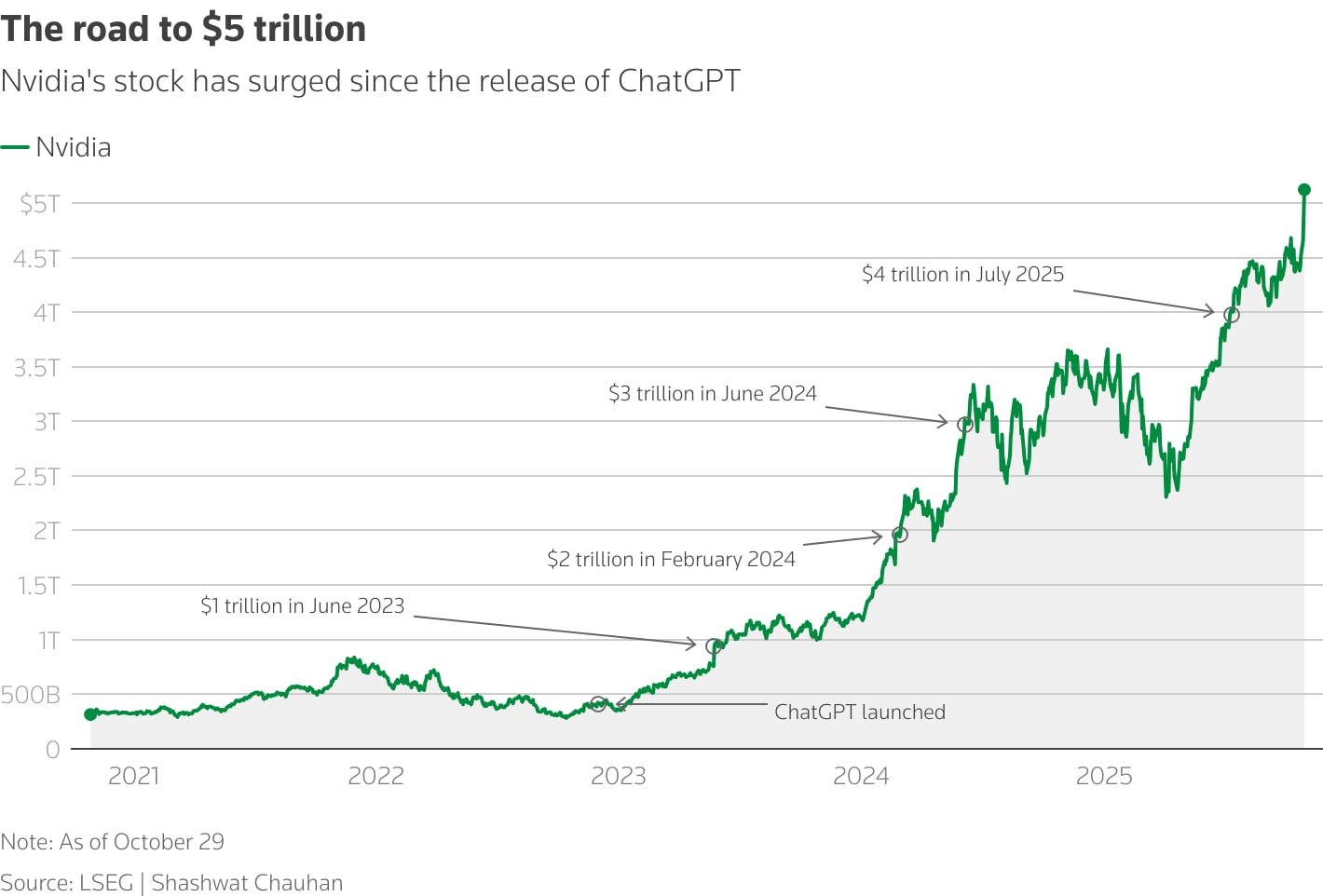
Embracing AI: Transforming Jobs and Creating New Opportunities

We’ve all heard it: “AI is coming for your job.”

For some, it sparks fear. For others, fascination. But the truth? AI isn’t just replacing jobs—it’s reinventing them, and more importantly, it’s creating entirely new ways to earn a living. Whether you’re in a 9-to-5 grind, freelancing, or dabbling in weekend side hustles, artificial intelligence is opening doors you didn’t even know existed.

Let’s break it down.

The Shifting Job Landscape

AI is changing how work works.

Routine tasks—like data entry, scheduling, and even writing basic reports—are being automated at scale. That means certain roles (especially ones heavy on repetitive tasks) are at risk of becoming obsolete or heavily reduced. But at the same time, new roles are emerging just as fast:

Machine learning operations (MLOps) professionals  
AI specialists and prompt engineers  
AI ethics consultants  
Data curators and AI trainers  
Automation strategists in HR, marketing, and IT  

Even if you’re not “technical,” understanding how AI fits into your industry makes you exponentially more valuable.

AI Isn’t Stealing Jobs—People Who Use AI Might Be

Let’s be real: it’s not AI alone that’s a threat—it’s people who know how to use AI.

Think about a copywriter who uses ChatGPT to draft faster, an analyst who builds predictive dashboards in Power BI using AI features, or a designer who uses AI to prototype faster. They’re not replaced—they’re amplified.

If you’re not learning how to collaborate with AI, you may find yourself replaced by someone who is.

Side Hustles Supercharged by AI

Here’s where it gets exciting: AI isn’t just for the corporate world. It’s a tool for creators, solopreneurs, and side-hustlers to work smarter, not harder.

Some ideas:

1. Content Creation at Scale

AI tools like ChatGPT, Jasper, and Writesonic can help generate blog posts, marketing copy, product descriptions, and even eBooks. Combine this with SEO knowledge, and you’ve got a blogging business or niche content site that earns through affiliate links or ad revenue.

2. AI-Powered Design

Not a graphic designer? No problem. Tools like Midjourney and Canva’s AI features let you create high-quality visuals, logos, and even merchandise mockups. People are selling AI-generated designs on platforms like Etsy, Redbubble, and Shopify.

3. Automation-as-a-Service

Learn Zapier, Make (formerly Integromat), or Notion AI and start offering automation consulting to overwhelmed solopreneurs or small businesses. Many don’t know how to streamline repetitive tasks—they’ll pay someone who does.

4. AI Tutoring or Prompt Coaching

If you’re good at using AI, teach others. Launch a micro-course or offer 1:1 coaching on how to write effective prompts, integrate AI into workflows, or build no-code AI apps. People are making real money doing this.

5. AI-Enhanced Freelancing

Writers, developers, marketers, and designers can all boost productivity by integrating AI into their process. Faster output = more projects = more income.

The Key: Learn to Leverage, Not Fear

The people winning in the AI age aren’t necessarily the most technical—they’re the most adaptable. They’re curious. They tinker. They learn fast.

Whether you’re protecting your career or launching a new income stream, AI isn’t something to ignore—it’s something to master. The best part? You don’t need a PhD in machine learning. You need an internet connection, some curiosity, and the courage to experiment.

Final Thoughts:

The AI revolution isn’t coming. It’s here. The question isn’t whether your job will change—it’s how you’ll evolve with it. Will you watch others ride the wave, or will you learn to surf?

The future isn’t automated. It’s augmented—by you.