Published by everythingcryptoitclouds.com | August 15, 2025
The digital finance landscape is experiencing a seismic shift that few saw coming. As Bitcoin touches new record highs above $124,000 and the global cloud computing market races toward a staggering $2.2 trillion valuation by 2030, we’re witnessing the convergence of two technological revolutions that are fundamentally reshaping how we think about money, data, and digital infrastructure.
The numbers tell a compelling story. Crypto-collateralized lending has exploded to an all-time high of $53.09 billion in Q2 2025, representing a massive 27.44% quarter-over-quarter growth [1]. Meanwhile, the cloud computing sector continues its relentless expansion, growing at a compound annual growth rate of 16.6% and projected to surge from $781.27 billion in 2025 to $911 billion in 2026 [2]. But these aren’t just isolated trends—they’re interconnected forces that are creating unprecedented opportunities and challenges in the digital economy.
The Crypto Leverage Revolution: $53 Billion and Counting
The cryptocurrency lending market has reached a critical inflection point that demands our attention. According to Galaxy Research’s comprehensive Q2 2025 analysis, the total crypto-collateralized lending market has expanded to $53.09 billion, with DeFi applications alone accounting for $26.47 billion—a staggering 42.11% increase from the previous quarter [1].
This explosive growth isn’t happening in a vacuum. The surge in crypto leverage is being driven by three fundamental forces that are reshaping the entire digital asset ecosystem. First, we’re seeing a reflexivity effect where rising asset prices fuel increased borrowing activity, creating a self-reinforcing cycle of growth. As Bitcoin and other major cryptocurrencies reach new highs, investors are increasingly willing to use their digital assets as collateral to access additional capital.
Second, increased competition among lending platforms is driving down borrowing costs while improving service quality. This competitive dynamic has created more attractive rates and better scalability, making crypto-backed lending accessible to a broader range of investors. The market is no longer dominated by a few players—instead, we’re seeing a diverse ecosystem of both centralized finance (CeFi) and decentralized finance (DeFi) platforms competing for market share.
Third, and perhaps most significantly, digital asset treasury companies (DATCOs) have emerged as a major new source of demand. These entities, which hold cryptocurrencies as part of their corporate treasury strategies, are increasingly turning to CeFi lenders to finance their operations and expansion plans. This institutional adoption represents a fundamental shift in how businesses view cryptocurrency—not just as a speculative asset, but as a legitimate form of corporate treasury management.
The market concentration tells its own story about the maturation of this sector. Tether dominates the CeFi lending space with $10.14 billion in outstanding loans, commanding a 57.02% market share. Nexo follows with $1.96 billion (11.01% market share), while Galaxy holds $1.11 billion (6.23% market share). Together, these top three players control 74.26% of the tracked CeFi lending market [1].
But perhaps the most remarkable aspect of this growth is its resilience. The crypto lending market has grown by $10.59 billion (+147.5%) since the bear market trough of $7.18 billion in Q4 2023. This recovery demonstrates not just the cyclical nature of crypto markets, but the underlying structural demand for crypto-backed financial services.
September’s Altcoin Season: The $2 Trillion Rotation Begins
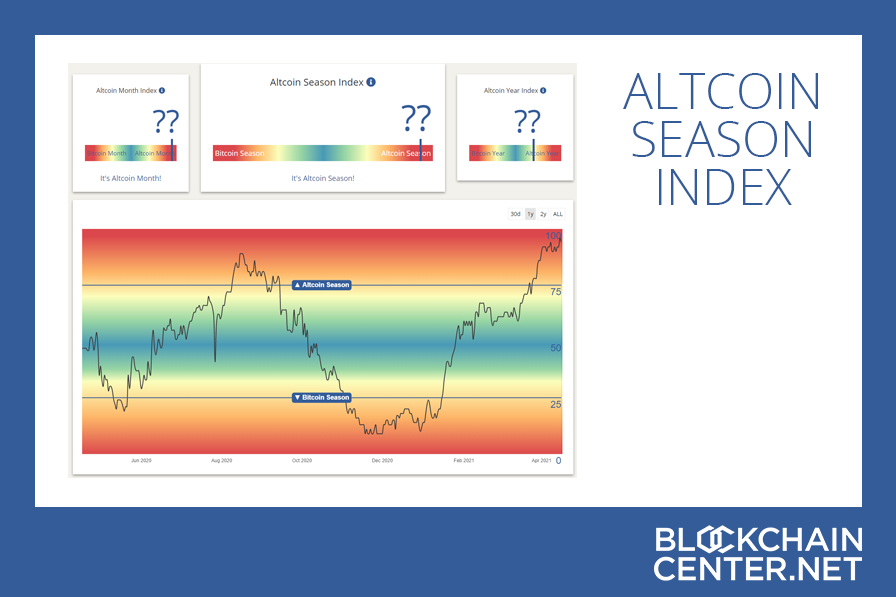
As we move into September, market analysts are predicting the beginning of what could be the most significant altcoin season in years. Coinbase Institutional’s latest research identifies three key drivers that could shift market leadership from Bitcoin to alternative cryptocurrencies, potentially triggering a massive capital rotation worth trillions of dollars [3].
The first driver is the softening of Bitcoin dominance. Bitcoin’s share of the total cryptocurrency market value has shown signs of weakening after peaking earlier this year. This isn’t just a temporary fluctuation—it represents a fundamental shift in how capital flows through the crypto ecosystem. Historically, as Bitcoin dominance declines, capital flows first into large-cap altcoins like Ethereum, Solana, and XRP, before eventually trickling down to mid-cap and small-cap tokens. This rotation effect creates opportunities for investors who can position themselves ahead of the trend.
The second factor is the dramatic improvement in liquidity conditions across major cryptocurrency exchanges. Traders are now seeing tighter bid-ask spreads and deeper order books, making it significantly easier to enter and exit altcoin positions without incurring heavy slippage. This improved liquidity is particularly important for institutional investors and larger players who might otherwise avoid less-traded tokens due to execution concerns.
The third and perhaps most crucial driver is the renewed appetite for risk among cryptocurrency investors. As macroeconomic conditions stabilize and market volatility remains contained, investors are increasingly willing to seek higher returns in riskier crypto assets. This environment is particularly conducive to sustained inflows into the altcoin market, especially if Bitcoin’s price consolidates rather than surging to new highs.

The performance data already shows early signs of this rotation. While Bitcoin is up an impressive 27.2% year-to-date, several major altcoins are significantly outperforming. Ethereum has gained 37.9%, XRP has surged 49%, and even traditionally volatile assets like ADA have posted gains of 8.96% [3]. This outperformance suggests that the market is already beginning to price in the expected altcoin season.
Cloud Computing’s $2.2 Trillion Infrastructure Boom
While the cryptocurrency world captures headlines with its dramatic price movements and leverage growth, the cloud computing sector is quietly building the infrastructure that will support the next generation of digital finance. The numbers are staggering: the global cloud computing market is projected to reach $2.2 trillion by 2030, growing from its current base of $781.27 billion in 2025 [4].
This growth isn’t just about traditional enterprise applications moving to the cloud. We’re witnessing a fundamental transformation in how financial services, cryptocurrency platforms, and blockchain networks operate. The integration of artificial intelligence and machine learning with cloud infrastructure is unlocking new levels of efficiency and capability that were previously impossible.
The convergence of AI and cloud computing is particularly relevant for cryptocurrency platforms and DeFi protocols. These systems require massive computational resources to process transactions, maintain security, and provide real-time analytics to users. Cloud infrastructure provides the scalability and reliability needed to support the growing crypto ecosystem, while AI enhances everything from fraud detection to automated trading strategies.
Private cloud adoption is being driven by data sovereignty concerns, particularly relevant for cryptocurrency exchanges and financial institutions that must comply with varying regulatory requirements across different jurisdictions. The ability to maintain control over data location and access while still benefiting from cloud scalability has become a critical competitive advantage [5].
Edge computing and IoT integration represent another major trend that’s reshaping the cloud landscape. For cryptocurrency mining operations and blockchain networks, edge computing can reduce latency and improve efficiency by processing data closer to where it’s generated. This is particularly important for high-frequency trading applications and real-time blockchain analytics.
The Convergence: Where Crypto Meets Cloud
The intersection of cryptocurrency growth and cloud computing expansion is creating entirely new categories of business opportunities. Cryptocurrency mining operations are increasingly relying on cloud infrastructure to scale their operations efficiently. Cloud mining platforms have emerged as a major trend in 2025, offering investors exposure to cryptocurrency mining without the need to purchase and maintain expensive hardware [6].
The scalability benefits are obvious. Traditional cryptocurrency mining requires significant upfront capital investment in specialized hardware, ongoing maintenance costs, and access to cheap electricity. Cloud mining platforms abstract away these complexities, allowing investors to participate in mining operations through cloud-based contracts. This democratization of mining access is expanding the total addressable market for cryptocurrency mining beyond traditional tech-savvy investors.
But the convergence goes deeper than just mining. Cryptocurrency exchanges and DeFi platforms are leveraging cloud infrastructure to handle the massive transaction volumes and computational requirements of modern digital finance. The ability to scale computing resources up or down based on demand is crucial for platforms that experience significant volatility in user activity.
Data analytics and artificial intelligence are becoming increasingly important for cryptocurrency platforms. Cloud computing provides the computational power needed to analyze massive datasets, identify trading patterns, and provide real-time insights to users. This capability is particularly valuable for institutional investors who require sophisticated analytics tools to make informed investment decisions.
The security implications are equally significant. Cloud providers offer enterprise-grade security features that many cryptocurrency platforms couldn’t afford to implement independently. This includes advanced encryption, multi-factor authentication, and continuous monitoring for suspicious activity. As the cryptocurrency industry matures and attracts more institutional investment, these security features become increasingly important.
Market Implications and Investment Opportunities
The convergence of crypto leverage growth and cloud computing expansion is creating a new category of investment opportunities that savvy investors are beginning to recognize. The $53 billion crypto lending market represents just the beginning of what could become a much larger ecosystem of crypto-backed financial services.
For investors, the key is understanding how these trends reinforce each other. The growth in crypto lending creates demand for more sophisticated infrastructure, which drives cloud computing adoption. Meanwhile, improved cloud infrastructure enables more efficient and secure crypto platforms, which attracts more users and capital to the ecosystem.
The altcoin season predictions for September add another layer of complexity and opportunity. If Coinbase’s analysis proves correct, we could see a significant rotation of capital from Bitcoin into alternative cryptocurrencies. This rotation would likely benefit platforms and services that support a broad range of digital assets, rather than those focused exclusively on Bitcoin.
The timing is particularly interesting given the broader macroeconomic environment. With traditional interest rates remaining elevated and inflation concerns persisting, investors are increasingly looking for alternative sources of yield. Crypto-backed lending offers attractive returns, while cloud computing stocks provide exposure to one of the fastest-growing sectors in the technology industry.
Regulatory Considerations and Risk Management
As these markets continue to grow and converge, regulatory considerations become increasingly important. The crypto lending market, in particular, operates in a complex regulatory environment that varies significantly across different jurisdictions. Investors and platforms must navigate evolving regulations while building sustainable business models.
The integration of cloud computing with cryptocurrency operations also raises important questions about data sovereignty and regulatory compliance. Financial institutions and cryptocurrency platforms must ensure that their cloud infrastructure meets the regulatory requirements of all jurisdictions in which they operate.
Risk management becomes particularly crucial as leverage levels increase across the crypto ecosystem. The $53 billion in crypto-collateralized lending represents significant systemic risk if not properly managed. Platforms must implement robust risk management frameworks that can handle the volatility inherent in cryptocurrency markets.
Looking Ahead: The Future of Digital Finance Infrastructure
As we look toward the remainder of 2025 and beyond, the convergence of cryptocurrency growth and cloud computing expansion seems likely to accelerate. The infrastructure being built today will support the next generation of digital financial services, from decentralized autonomous organizations (DAOs) to programmable money and beyond.
The $2.2 trillion cloud computing market projection for 2030 suggests that we’re still in the early stages of this transformation. Similarly, the crypto lending market’s growth to $53 billion represents just a fraction of the total addressable market for crypto-backed financial services.
For businesses and investors, the key is positioning for this convergence rather than viewing these trends in isolation. The companies that successfully bridge the gap between traditional cloud computing and emerging cryptocurrency applications are likely to capture disproportionate value as these markets continue to grow and mature.
The September altcoin season predictions add urgency to these considerations. If we do see a significant rotation of capital into alternative cryptocurrencies, it could accelerate the adoption of more diverse crypto-backed financial services and drive additional demand for the cloud infrastructure needed to support them.
Conclusion: Riding the Wave of Digital Transformation
The convergence of $53 billion in crypto leverage and the $2.2 trillion cloud computing boom represents more than just impressive growth numbers—it signals a fundamental transformation in how we think about money, data, and digital infrastructure. As we move into September and the potential beginning of altcoin season, investors and businesses have an opportunity to position themselves at the forefront of this digital revolution.
The key is understanding that these aren’t separate trends but interconnected forces that are reshaping the entire landscape of digital finance. The companies and investors who recognize this convergence and position themselves accordingly are likely to benefit disproportionately as these markets continue to grow and mature.
Whether you’re an individual investor looking to diversify your portfolio, a business considering crypto treasury strategies, or a technology company building the infrastructure for tomorrow’s digital economy, the time to act is now. The perfect storm of crypto growth and cloud expansion is creating opportunities that may not come again for years.
References
[1] Galaxy Research. “The State of Crypto Leverage – Q2 2025.” Galaxy Digital, August 14, 2025. https://www.galaxy.com/insights/research/the-state-of-crypto-leverage-q2-2025
[2] Hostinger. “Top software development trends in 2025: AI, security, and what’s next.” Hostinger Tutorials, August 2025. https://www.hostinger.com/tutorials/software-development-trends
[3] CoinDesk. “3 Reasons Why Altcoins Are Likely to Outperform Starting in September: Coinbase Research.” CoinDesk Markets, August 15, 2025. https://www.coindesk.com/markets/2025/08/15/altcoin-season-could-begin-in-september-as-bitcoin-s-grip-on-crypto-market-coinbase-institutional
[4] Yahoo Finance. “Cloud Computing Market Surges to $2281.1 billion by 2030.” Yahoo Finance, August 2025. https://finance.yahoo.com/news/cloud-computing-market-surges-2-133000144.html
[5] Cloudian. “Private Cloud in 2025: Trends, Technologies, and Best Practices.” Cloudian Guides, August 2025. https://cloudian.com/guides/private-cloud/private-cloud-in-2025-trends-technologies-and-best-practices/
[6] Coin Central. “8 Major Cloud Mining Trends and Platform Reviews in 2025.” Coin Central, August 2025. https://coincentral.com/8-major-cloud-mining-trends-and-platform-reviews-in-2025-secure-and-profitable-new-options-for-cryptocurrency-mining-2/
 Crypto, IT & Cloud