AI Reality Check: What Last Week’s Stock Crash Means for Broadcom, AMD, Oracle, and Meta

Author: everythingcryptoitclouds.com

Introduction: The Jolt to the AI Trade

Last week, the seemingly unstoppable AI stock rally hit a major speed bump. A sharp selloff, triggered by disappointing news from key players, sent shockwaves through the market, raising the specter of an “AI bubble.” While the overall AI narrative remains robust, the correction served as a crucial reality check, reminding investors that even the most promising growth stories are subject to market scrutiny.

The focus of this correction centered on two major infrastructure providers: Broadcom (AVGO) and Oracle (ORCL). Their struggles quickly dragged down other AI-exposed giants, including Advanced Micro Devices (AMD) and Meta Platforms (META). This article breaks down the reasons behind the crash, analyzes the short-term outlook for the next four weeks, and provides a forecast for early 2026.

AI Crash Visualization

Anatomy of the Selloff: Broadcom and Oracle’s One-Two Punch

The market correction was primarily ignited by a one-two punch from two companies whose fortunes are deeply tied to the AI infrastructure buildout.

Broadcom’s Margin Scare: Despite reporting better-than-expected quarterly results and strong guidance, Broadcom’s stock plummeted by 11%. The core concern was a warning from management that gross margins would be lower in the short term. This is due to the higher up-front costs associated with producing complex custom AI chip systems and server racks. Furthermore, the CEO tempered expectations for a major deal with OpenAI in 2026, suggesting the immediate revenue boost might not be as explosive as investors had hoped.

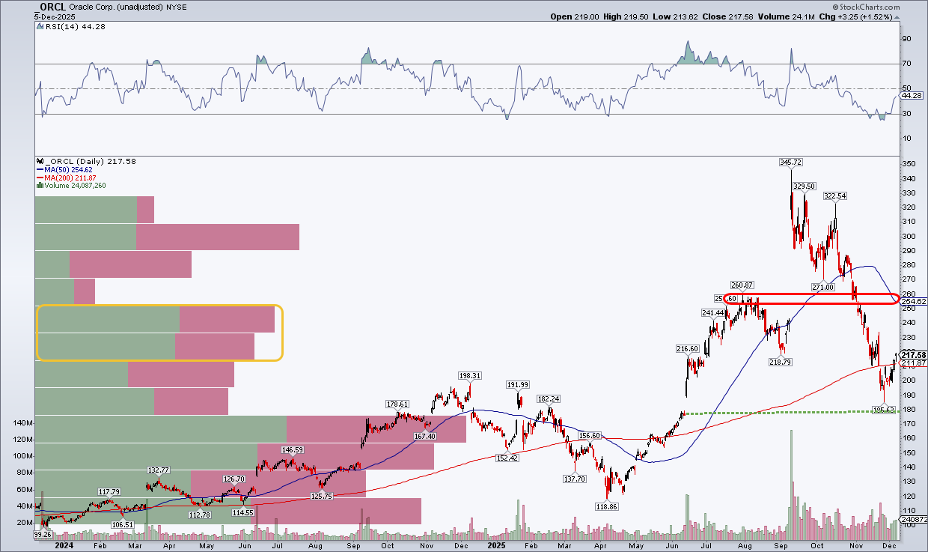
Oracle’s Financing Disappointment: Oracle’s stock had already plunged 10% before dropping another 4.5% in the wake of its mixed earnings report (beating on earnings per share but missing on revenue). Investors were particularly disappointed by the lack of detail on how the company plans to finance its massive, debt-fueled AI data center expansion. This raised questions about the sustainability and profitability of the aggressive infrastructure spending required to compete in the AI cloud space.

The combination of Broadcom’s margin concerns and Oracle’s financing uncertainty created a wave of “AI angst,” leading to a broader selloff in the sector.

Oracle Broadcom Chart

Short-Term Outlook: The Next Four Weeks

The next four weeks, often characterized by holiday trading and year-end portfolio adjustments, will be crucial for these stocks.

| Company | Crash Reason | Short-Term Outlook (Next 4 Weeks) |
| :— | :— | :— |
| Broadcom (AVGO) | Margin contraction on custom AI chips. | Analysts are largely recommending to “buy the dip,” viewing the selloff as an overreaction to short-term margin pressure. The underlying demand for their custom chips from hyperscalers remains robust. |
| Oracle (ORCL) | Missed revenue and financing uncertainty. | Volatility is likely as the market digests the debt concerns. A clear communication from management regarding their CapEx financing strategy could stabilize the stock, but until then, it remains under pressure. |
| Advanced Micro Devices (AMD) | General AI trade selloff. | Expected to stabilize quickly. The drop was largely collateral damage from the Broadcom/Oracle news. Strong demand for its EPYC CPUs and Instinct GPUs in the data center market provides a solid floor. |
| Meta Platforms (META) | General AI trade selloff. | Strongly positioned for a rebound. News of trimming the metaverse budget to prioritize AI spending is a positive signal for investors. The stock is likely to benefit from the “flight to quality” within the AI sector. |

Early 2026 Forecast: The Infrastructure Boom Continues

Despite the recent correction, the long-term forecast for the AI infrastructure sector remains overwhelmingly bullish, especially as we head into early 2026. The fundamental driver is the massive, non-negotiable capital expenditure (CapEx) being committed by the world’s largest tech companies.

Meta’s AI Commitment: Meta Platforms is a prime example of this long-term commitment. The company is aggressively shifting resources away from its metaverse division to focus on building out its AI capabilities. Analysts project Meta’s 2026 CapEx to reach an astonishing $109 billion, more than triple its 2023 spending. This colossal investment is primarily directed at AI infrastructure, including the purchase of chips and the construction of data centers.

The Demand for Silicon: This spending spree directly benefits chipmakers like Broadcom and AMD. Broadcom’s custom chip business, despite the short-term margin hit, is poised for massive growth as it supplies hyperscalers like Meta and Google. Similarly, AMD is forecast to see a 20%+ increase in revenue in 2026, driven by the insatiable demand for its high-performance EPYC and Instinct GPUs in the data center. The AI arms race is far from over, and these companies are the essential suppliers.

Oracle’s Long Game: While Oracle faces short-term financing questions, its long-term strategy hinges on becoming a major player in the AI cloud. The massive data center buildout, while costly, is a necessary step to capture future AI-driven revenue. If the company can effectively communicate its financing plan and execute on its AI pipeline, the stock could see a significant recovery in 2026.

AI Data Center

Conclusion: A Correction, Not a Collapse

The recent AI stock selloff was a healthy, albeit painful, market correction. It was driven by specific, company-level concerns about margins and financing, not a collapse in the underlying demand for artificial intelligence.

For investors, the message is clear: the AI revolution is still in its early stages, and the long-term trend of massive infrastructure spending is intact. The next four weeks may see continued volatility as the market finds its footing, but the outlook for early 2026 remains bright. The companies that are the essential building blocks of the AI future—Broadcom, AMD, Oracle, and Meta—are poised to be the biggest beneficiaries of this sustained, multi-year boom.

How to Invest $1000 in Crypto for 2026: A Guide to the Best Crypto Stocks

As the world of cryptocurrency continues to mature, investors are increasingly looking for ways to gain exposure to this burgeoning asset class without directly purchasing volatile digital coins. Crypto-related stocks offer a compelling alternative, providing a way to invest in the underlying technology and infrastructure of the digital asset economy. With 2026 shaping up to be a pivotal year for the crypto market, now is an excellent time to consider which stocks are best positioned for growth. This guide will explore how to strategically invest $1000 in the most promising crypto stocks for the coming year.

The 2026 Crypto Landscape: A Perfect Storm for Growth?

Several key factors are converging to create a potentially explosive environment for the crypto market in 2026. Analysts are predicting a significant bull run for Bitcoin, with some forecasts projecting a price of over $140,000. This optimism is fueled by increasing institutional investment, particularly through spot crypto exchange-traded funds (ETFs), and a more favorable political climate in the United States. Furthermore, major financial institutions like Morgan Stanley are entering the crypto space, with plans to launch crypto trading on their E*TRADE platform in 2026. This confluence of events suggests that companies with exposure to the crypto ecosystem are poised for substantial growth.

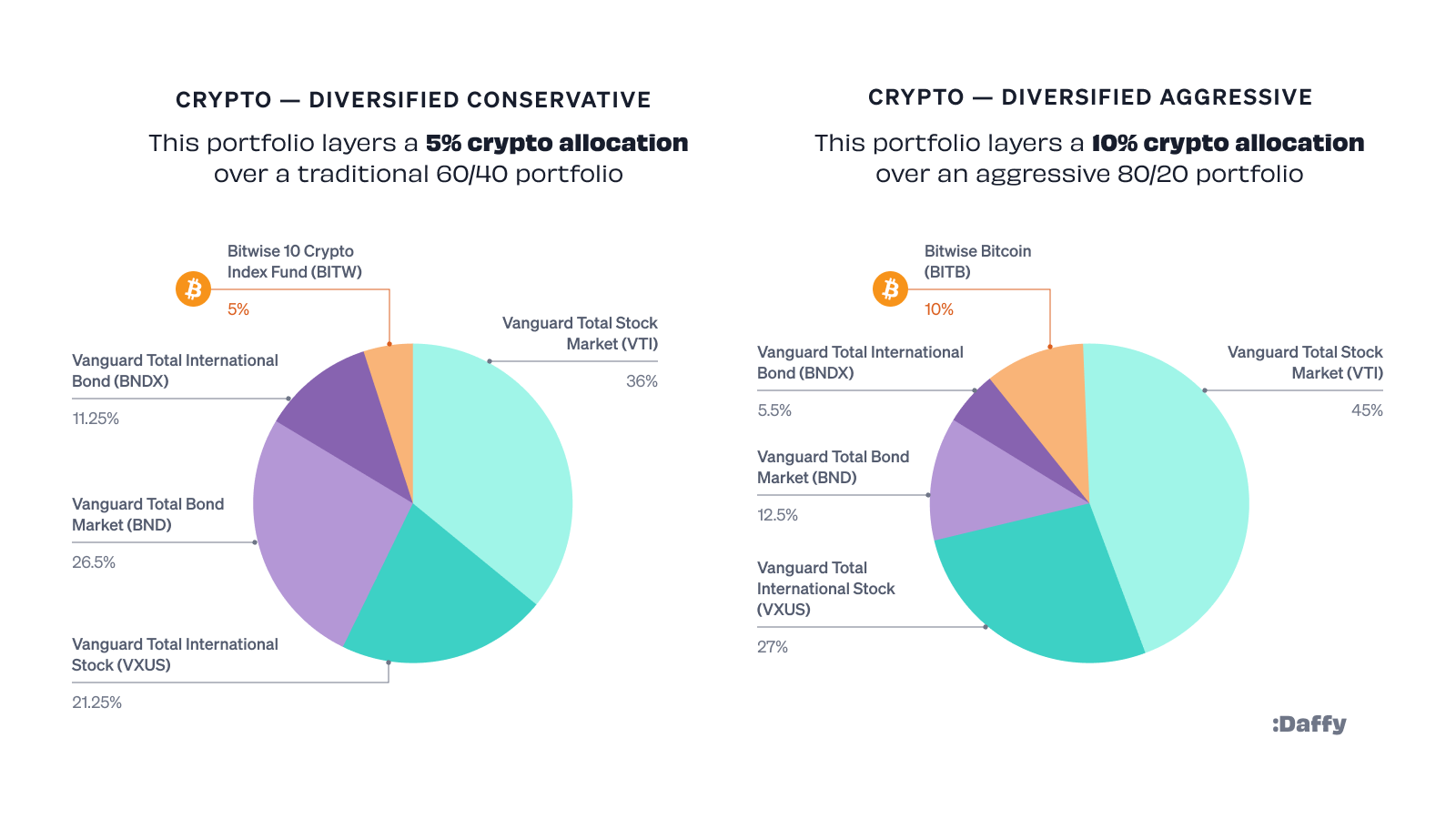
Crypto Portfolio Diversification

How to Invest $1000: A Diversified Approach to Crypto Stocks

With a $1000 investment, a diversified approach is crucial to mitigate risk while maximizing potential returns. A well-balanced portfolio could include a mix of cryptocurrency mining stocks and more established companies with significant blockchain and crypto-adjacent operations. This strategy allows you to capitalize on the high-growth potential of miners while also benefiting from the stability of larger, more diversified companies.

| Stock Category | Investment Allocation | Rationale |
| :— | :— | :— |
| Cryptocurrency Mining Stocks | 40% ($400) | Direct exposure to the profitability of crypto mining, which is highly correlated with cryptocurrency prices. |
| Blockchain & Crypto-Adjacent Stocks | 60% ($600) | Exposure to the broader blockchain ecosystem, including exchanges, payment processors, and technology providers, offering a more stable and diversified investment. |

Top Crypto Mining Stocks to Watch

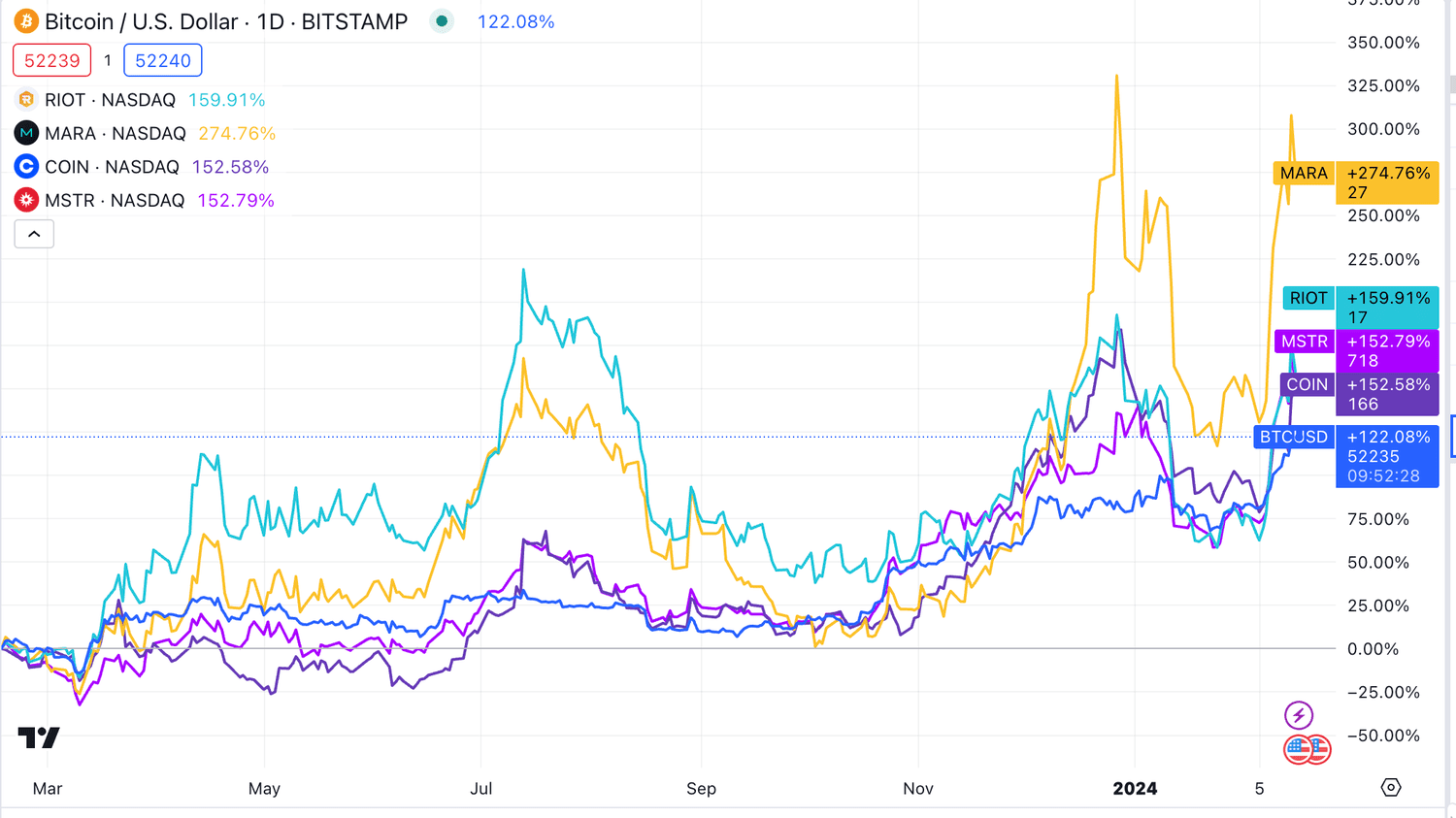
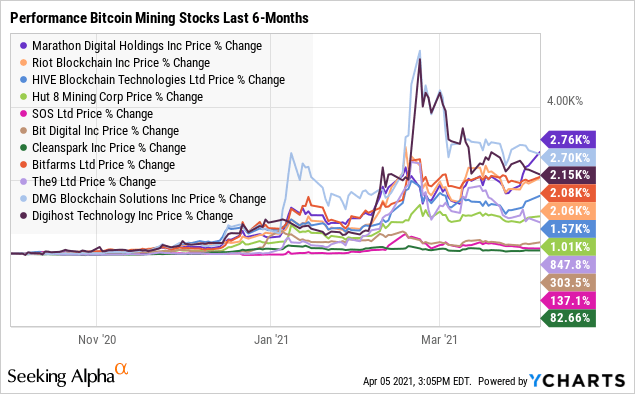
Cryptocurrency mining stocks are at the forefront of the digital asset revolution, and their performance is closely tied to the price of cryptocurrencies like Bitcoin. As crypto prices rise, so do the profit margins for miners, making these stocks a high-risk, high-reward investment.

Bitcoin Mining Stocks

Here are some of the top crypto mining stocks to consider for your 2026 portfolio:

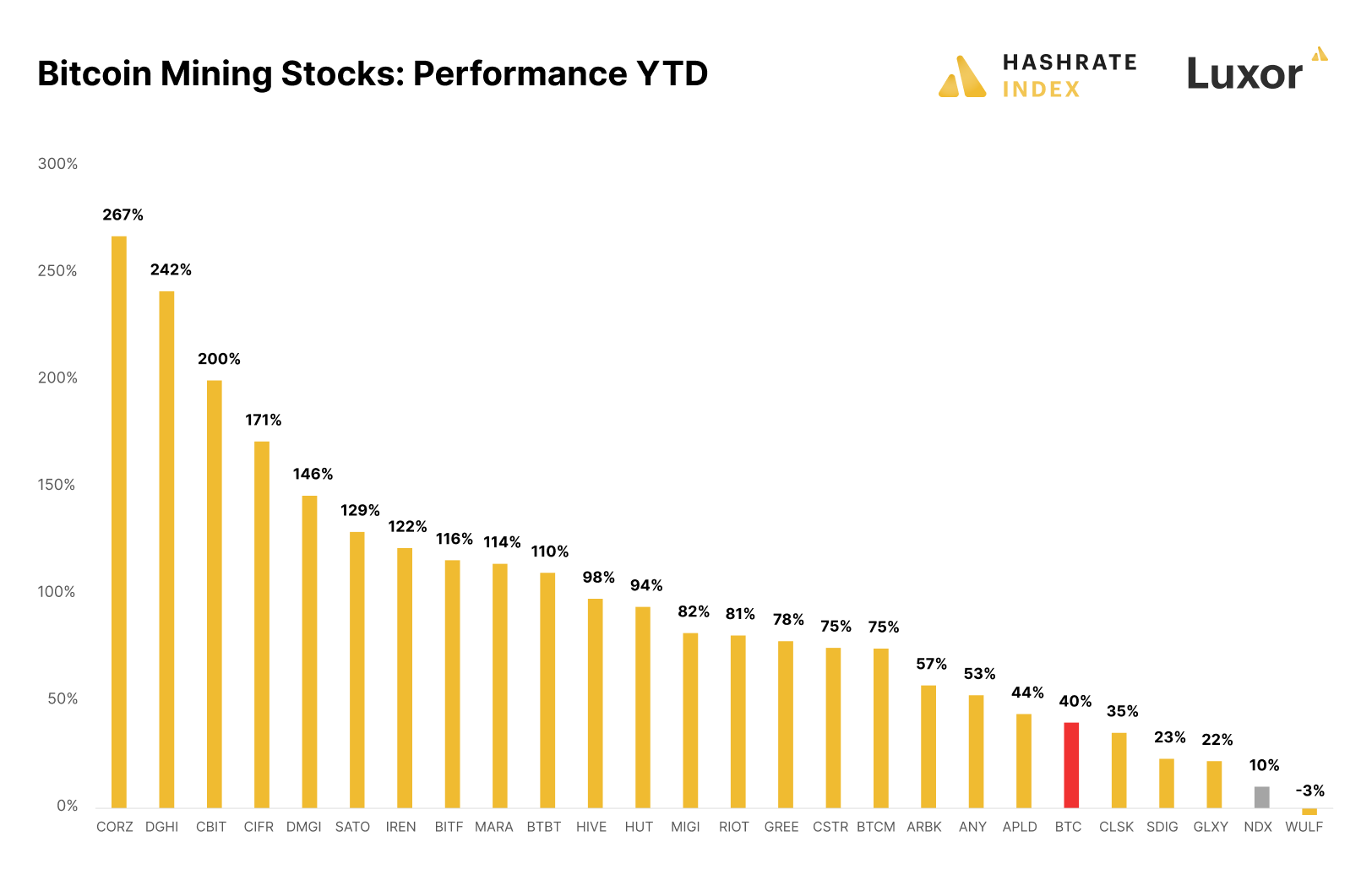
  • Marathon Digital Holdings (MARA): As one of the largest Bitcoin miners in the U.S., MARA has been aggressively expanding its operations and boasts a significant Bitcoin treasury. Its focus on efficiency and scale makes it a compelling investment.
  • Riot Platforms (RIOT): RIOT is another major player in the Bitcoin mining space, with a strong balance sheet and a commitment to expanding its hash rate. The company’s strategic focus on low-cost energy makes it well-positioned for long-term growth.
  • CleanSpark (CLSK): CLSK stands out for its commitment to sustainable energy, with a significant portion of its operations powered by low-carbon sources. This ESG-friendly approach, combined with its rapid growth, makes it an attractive option for socially conscious investors.

Mining Stocks Performance

Top Blockchain and Crypto-Adjacent Stocks

For investors seeking a more diversified and less volatile entry into the crypto space, blockchain and crypto-adjacent stocks offer an excellent alternative. These companies are involved in various aspects of the crypto ecosystem, from exchanges and payment processing to the underlying technology that powers it all.

Crypto Stocks Comparison

Here are some of the top blockchain and crypto-adjacent stocks to consider:

  • Coinbase (COIN): As the leading U.S. cryptocurrency exchange, Coinbase is a direct beneficiary of the growing adoption of crypto. Its user-friendly platform and institutional-grade services make it a cornerstone of the crypto economy.
  • Nvidia (NVDA): While primarily known for its graphics processing units (GPUs) used in gaming and AI, Nvidia’s technology is also essential for cryptocurrency mining. As the demand for high-performance computing continues to grow, so will the demand for Nvidia’s products.
  • Block (SQ): Formerly known as Square, Block has embraced cryptocurrency with its Cash App, which allows users to buy and sell Bitcoin. The company is also actively developing other Bitcoin-related products and services, making it a key player in the future of finance.

Conclusion: Riding the Crypto Wave in 2026

The year 2026 is poised to be a landmark year for the cryptocurrency market. By strategically investing in a diversified portfolio of crypto-related stocks, you can position yourself to capitalize on the immense growth potential of this transformative technology. Whether you choose to invest in high-growth mining stocks or more established blockchain and crypto-adjacent companies, a well-researched and diversified approach will be key to navigating the exciting and ever-evolving world of crypto investing.

Disclaimer: This article is for informational purposes only and does not constitute financial advice. Investing in cryptocurrency and crypto-related stocks involves significant risk, and you should always conduct your own research and consult with a qualified financial advisor before making any investment decisions.

Dreamcash: The Revolutionary Mobile-First Crypto Trading Platform That’s Changing Everything (Get 10,000 Free Points!)

Dreamcash Mobile Trading Platform

Published September 26, 2025 | Author: everythingcryptoitclouds.com

The cryptocurrency trading landscape is experiencing a seismic shift, and at the epicenter of this transformation stands Dreamcash—a revolutionary mobile-first crypto wealth platform that’s redefining how we think about digital asset trading. With its tagline “Trading so good it feels like a dream,” Dreamcash isn’t just another trading app; it’s a comprehensive ecosystem that combines artificial intelligence, automated yield strategies, and zero-friction onboarding to democratize crypto wealth building for everyone.

In an industry where complexity has long been the barrier to entry, Dreamcash emerges as the solution that bridges the gap between sophisticated institutional-grade tools and the intuitive user experience that modern smartphone users demand. The platform launched its exclusive invite-only waitlist in August 2025, and the response has been nothing short of extraordinary—with over 40,000 signups and more than $500 million in pre-launch trading volume already recorded [1].

What makes Dreamcash particularly compelling is its strategic partnership with Hyperliquid, a proven infrastructure that processes over $10 billion in daily trading volume [2]. This partnership ensures that users have access to institutional-grade liquidity and execution from day one, while the platform’s AI-driven analytics provide insights that were previously available only to professional traders and hedge funds.

The timing of Dreamcash’s launch couldn’t be more perfect. As the cryptocurrency market continues to mature and institutional adoption accelerates, there’s a growing demand for platforms that can provide professional-grade tools without the complexity that has traditionally characterized crypto trading. Dreamcash addresses this need head-on with its mobile-first approach, recognizing that the future of finance is increasingly mobile and that users expect the same level of sophistication and ease of use from their trading platforms as they do from their favorite social media apps.

The Vision Behind Dreamcash: Democratizing Crypto Wealth Building

The fundamental vision driving Dreamcash is elegantly simple yet profoundly ambitious: to democratize crypto wealth building through intelligent tools, automated strategies, and zero-friction onboarding. This vision represents a departure from the traditional approach to cryptocurrency trading, which has often been characterized by steep learning curves, complex interfaces, and barriers that exclude all but the most technically sophisticated users.

Hubert Johnson, Head of Marketing at Dreamcash, articulates this vision with remarkable clarity: “We’re building the future of how people interact with crypto markets. Imagine having AI-driven insights, automated yield strategies, and professional-grade tools accessible through an interface as simple as your favorite social app” [3]. This statement encapsulates the core philosophy that drives every aspect of Dreamcash’s development—the belief that sophisticated financial tools should be accessible to everyone, not just institutional investors and crypto veterans.

The democratization of crypto wealth building represents more than just making trading more accessible; it’s about fundamentally changing the relationship between individuals and financial markets. Traditional wealth building has long been the domain of those with significant capital, extensive financial knowledge, or access to professional advisors. Dreamcash challenges this paradigm by providing tools that level the playing field, allowing anyone with a smartphone to access the same sophisticated strategies and insights that were previously available only to institutional investors.

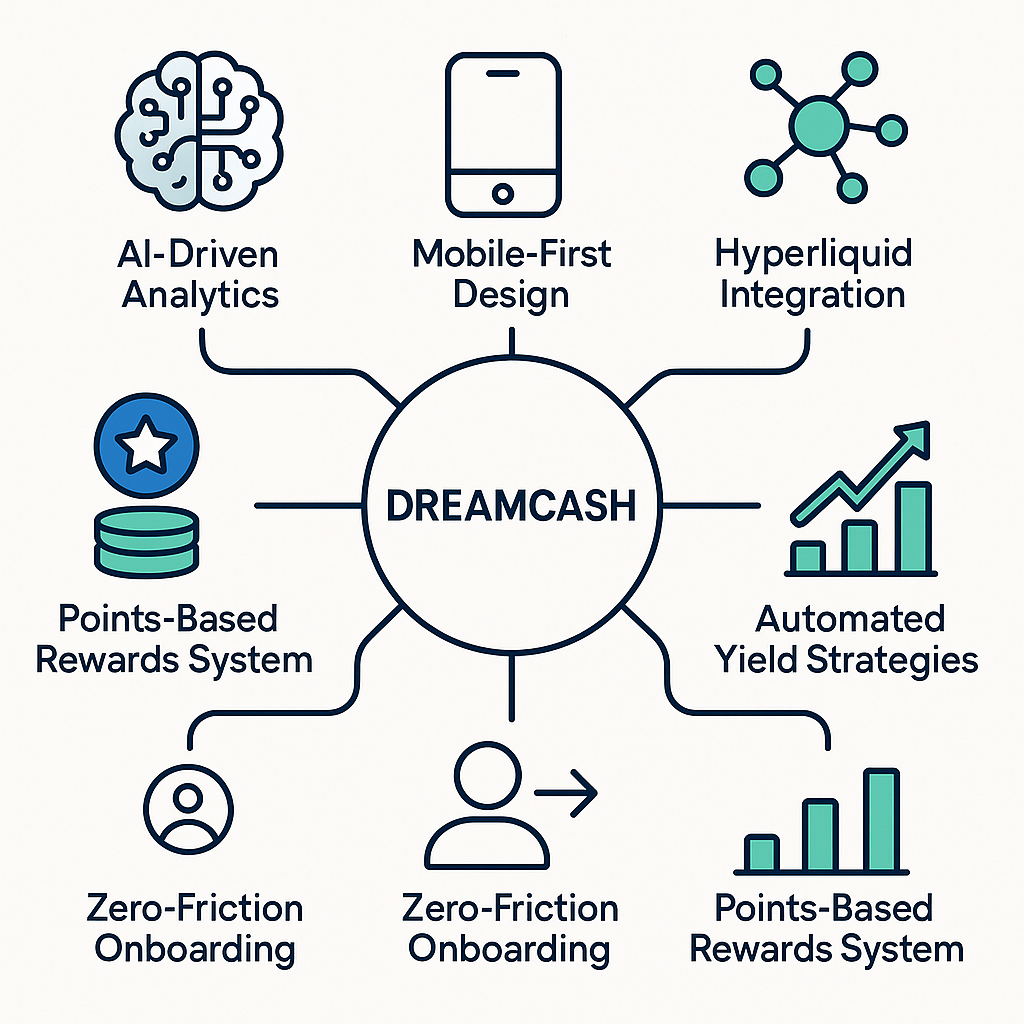
This democratization is achieved through several key innovations that distinguish Dreamcash from traditional trading platforms. The platform’s AI-driven analytics provide users with market insights and opportunity identification that would typically require extensive research and analysis. The automated yield strategies eliminate the need for users to actively manage their positions, allowing them to benefit from sophisticated trading strategies without requiring deep technical knowledge. The zero-friction onboarding process removes the traditional barriers that have prevented many potential users from entering the crypto market.

The mobile-first design philosophy reflects a deep understanding of how modern users interact with technology. Rather than treating mobile as an afterthought or a simplified version of a desktop platform, Dreamcash has been designed from the ground up for mobile users. This approach recognizes that smartphones have become the primary computing device for most people and that the future of finance will be increasingly mobile-centric.

Revolutionary Features That Set Dreamcash Apart

Dreamcash Key Features and Benefits

Dreamcash’s revolutionary approach to crypto trading is built on several key features that collectively create an experience unlike anything currently available in the market. These features represent years of development and a deep understanding of both the technical requirements of sophisticated trading and the user experience expectations of modern mobile applications.

The AI-driven analytics system represents perhaps the most significant innovation in Dreamcash’s feature set. This system leverages advanced machine learning algorithms to analyze market data, identify trading opportunities, and provide users with actionable insights. The AI system is powered by a partnership with RysoAI, which brings institutional-grade artificial intelligence capabilities to retail users [4]. This partnership ensures that Dreamcash users have access to the same level of market analysis and opportunity identification that professional traders and hedge funds rely on.

The AI system operates continuously, monitoring market conditions across multiple cryptocurrencies and identifying patterns that might indicate profitable trading opportunities. Unlike traditional technical analysis tools that require users to interpret charts and indicators, Dreamcash’s AI system provides clear, actionable recommendations that users can act on with confidence. The system also learns from user behavior and market outcomes, continuously improving its recommendations and adapting to changing market conditions.

Automated yield strategies represent another groundbreaking feature that sets Dreamcash apart from traditional trading platforms. These strategies are designed to generate consistent returns regardless of market direction, using sophisticated techniques such as delta-neutral positioning and arbitrage opportunities. The automated nature of these strategies means that users can benefit from professional-grade trading techniques without needing to understand the underlying mechanics or actively manage their positions.

The delta-neutral strategies are particularly innovative, as they allow users to generate yield even in volatile or declining markets. These strategies work by taking offsetting positions that profit from market inefficiencies rather than directional price movements. This approach provides a level of stability and predictability that is rare in cryptocurrency trading, making it particularly attractive to users who want exposure to crypto markets without the extreme volatility typically associated with digital assets.

The zero-friction onboarding process eliminates many of the traditional barriers that have prevented mainstream adoption of cryptocurrency trading. Traditional crypto exchanges often require extensive know-your-customer (KYC) procedures, complex account setup processes, and significant technical knowledge just to begin trading. Dreamcash streamlines this process, allowing users to begin building their crypto portfolios immediately upon downloading the app.

This streamlined onboarding is achieved through innovative approaches to identity verification and risk management that maintain security while eliminating unnecessary friction. The platform uses advanced fraud detection and risk assessment algorithms to identify and prevent malicious activity while allowing legitimate users to access the platform quickly and easily. This approach represents a significant advancement in balancing security with user experience in the cryptocurrency space.

The Hyperliquid integration provides Dreamcash users with access to institutional-grade liquidity and execution capabilities. Hyperliquid is a proven infrastructure platform that processes over $10 billion in daily trading volume, providing deep liquidity across multiple cryptocurrency pairs [5]. This integration ensures that Dreamcash users can execute trades quickly and at competitive prices, even for large positions that might experience slippage on smaller exchanges.

The integration with Hyperliquid also provides access to advanced order types and trading features that are typically available only on professional trading platforms. These features include advanced stop-loss orders, trailing stops, and sophisticated position management tools that help users optimize their trading strategies and manage risk effectively.

The Points-Based Rewards System: Gamifying Crypto Engagement

One of the most innovative aspects of Dreamcash’s approach to user engagement is its comprehensive points-based rewards system, which gamifies the crypto trading experience while providing tangible benefits to early adopters. This system represents a sophisticated approach to user acquisition and retention that goes far beyond traditional referral programs or promotional offers.

The points system operates on multiple levels, providing rewards for various types of engagement with the platform. Users earn one point per second simply for being on the waitlist, creating a passive income stream that rewards early adoption and continued engagement [6]. This passive earning mechanism ensures that users are continuously accumulating value even when they’re not actively using the platform, creating a strong incentive for long-term engagement.

Daily check-ins provide an additional 20,000 points, encouraging users to regularly interact with the app and stay engaged with the platform. This daily engagement mechanism helps build habits and ensures that users remain connected to the Dreamcash ecosystem even during the pre-launch phase. The substantial point reward for daily check-ins reflects the platform’s understanding of the value of consistent user engagement and the importance of building strong user habits early in the relationship.

The referral system provides the most substantial point rewards, with users earning 54,000 points for each successful referral [7]. This generous referral reward reflects the platform’s focus on organic growth and word-of-mouth marketing, recognizing that satisfied users are the best advocates for the platform. The referral system also creates a network effect, where each new user potentially brings additional users to the platform, accelerating growth and building a strong community of engaged users.

🎯 EXCLUSIVE OFFER: Use referral code TY74CU to get 10,000 FREE points when you sign up! Join Dreamcash with 10,000 bonus points

The exclusive rewards available through the points system add an element of prestige and exclusivity that appeals to early adopters. The Gold App Icon, available to users who achieve five or more referrals, provides a visible status symbol that distinguishes early supporters of the platform [8]. This exclusive reward will never be available again after the platform launches, creating a sense of urgency and exclusivity that motivates users to actively participate in the referral program.

The Executive Black Card, available to users who achieve ten or more referrals, represents the pinnacle of the pre-launch rewards system. This exclusive status symbol provides not only prestige but also potential access to additional platform benefits and features. Like the Gold App Icon, the Executive Black Card will never be available again after launch, making it a truly exclusive reward for the most engaged early adopters.

The points system is designed with future utility in mind, with strong indications that points will convert to platform benefits or potentially tokens after the official launch. While no official token airdrop has been confirmed, the structure and emphasis of the points system strongly suggest that early participants will receive lasting recognition and benefits for their early support of the platform [9].

Technical Infrastructure: The Hyperliquid Advantage

The technical foundation of Dreamcash is built on a strategic partnership with Hyperliquid, one of the most robust and proven infrastructure platforms in the cryptocurrency space. This partnership provides Dreamcash with access to institutional-grade capabilities that would be extremely difficult and expensive to develop independently, while allowing the platform to focus on user experience and innovation rather than infrastructure development.

Hyperliquid processes over $10 billion in daily trading volume, making it one of the largest and most liquid cryptocurrency trading infrastructures in the world [10]. This massive scale provides several critical advantages for Dreamcash users, including deep liquidity across multiple trading pairs, competitive pricing, and the ability to execute large trades without significant market impact. The scale of Hyperliquid’s operations also provides stability and reliability that is essential for a platform targeting mainstream adoption.

The liquidity provided by Hyperliquid is particularly important for the types of automated strategies that Dreamcash offers. Delta-neutral strategies and arbitrage opportunities often require the ability to execute trades quickly and at specific prices, making deep liquidity essential for their success. The Hyperliquid partnership ensures that Dreamcash’s automated strategies can operate effectively even during periods of high market volatility or unusual trading conditions.

The technical architecture of the Hyperliquid platform also provides advanced risk management and security features that are essential for institutional-grade trading. These features include sophisticated position monitoring, automated risk controls, and advanced security measures that protect user funds and trading positions. The proven track record of Hyperliquid in handling large volumes and maintaining security provides confidence that Dreamcash users’ assets and trading activities are protected by best-in-class infrastructure.

The integration between Dreamcash and Hyperliquid is designed to be seamless from the user perspective, with all the complexity of the underlying infrastructure hidden behind Dreamcash’s intuitive mobile interface. Users benefit from the sophisticated capabilities of Hyperliquid without needing to understand or interact with the technical complexities of the underlying system. This approach allows Dreamcash to provide institutional-grade capabilities with consumer-grade simplicity.

The Hyperliquid partnership also provides Dreamcash with access to advanced trading features and order types that are typically available only on professional trading platforms. These features include sophisticated stop-loss orders, trailing stops, and advanced position management tools that help users optimize their trading strategies and manage risk effectively. The availability of these advanced features through Dreamcash’s simple mobile interface represents a significant advancement in making professional trading tools accessible to retail users.

Market Position and Competitive Landscape

Dreamcash enters a cryptocurrency trading market that is both highly competitive and rapidly evolving, with established players ranging from traditional exchanges like Coinbase and Binance to newer mobile-first platforms like Robinhood and newer entrants. However, Dreamcash’s unique combination of features and approach creates a distinct market position that differentiates it from existing competitors.

The mobile-first approach represents a significant competitive advantage in a market where most established platforms were originally designed for desktop use and later adapted for mobile. While many existing platforms offer mobile apps, these are often simplified versions of their desktop platforms or mobile adaptations that don’t fully leverage the unique capabilities and user experience expectations of mobile devices. Dreamcash’s ground-up mobile design allows it to provide a user experience that is optimized for how people actually use their smartphones.

The AI-driven analytics and automated strategies represent another significant competitive differentiator. While some platforms offer basic technical analysis tools or simple automated features, Dreamcash’s partnership with RysoAI provides access to institutional-grade artificial intelligence capabilities that are not available on other retail platforms [11]. This AI integration provides users with insights and opportunities that would typically require extensive research and analysis, creating a significant value proposition for users who want to benefit from sophisticated trading strategies without developing the expertise to implement them independently.

The zero-friction onboarding process addresses one of the most significant barriers to entry in the cryptocurrency market. Traditional exchanges often require extensive documentation, verification processes, and waiting periods before users can begin trading. Dreamcash’s streamlined approach allows users to begin building their crypto portfolios immediately, removing a major source of friction that prevents many potential users from entering the market.

The points-based rewards system and gamification elements also represent a unique approach to user engagement that is not commonly found in traditional cryptocurrency trading platforms. While some platforms offer referral bonuses or promotional rewards, Dreamcash’s comprehensive points system creates ongoing engagement and provides lasting value to early adopters. This approach helps build a strong community of engaged users who have a vested interest in the platform’s success.

The integration with Hyperliquid provides access to liquidity and execution capabilities that rival or exceed those available on major exchanges, while the mobile-first design and user experience innovations provide a level of accessibility and ease of use that is not available on traditional institutional platforms. This combination allows Dreamcash to compete effectively with both retail-focused platforms and institutional-grade trading systems.

The Future of Mobile Crypto Trading

Dreamcash Referral and Points System

Dreamcash represents more than just another trading platform; it embodies a vision of the future of cryptocurrency trading that is mobile-first, AI-powered, and accessible to everyone. The platform’s approach reflects several key trends that are reshaping the financial services industry and points toward a future where sophisticated financial tools are available to anyone with a smartphone.

The mobile-first approach reflects the reality that smartphones have become the primary computing device for most people around the world. This trend is particularly pronounced among younger demographics, who are increasingly comfortable conducting all aspects of their financial lives through mobile devices. Dreamcash’s recognition of this trend and its commitment to providing a truly mobile-native experience positions it well to capture this growing market segment.

The integration of artificial intelligence into trading and investment decisions represents another major trend that is reshaping the financial services industry. As AI technology continues to advance and become more accessible, platforms that can effectively leverage AI to provide value to users will have a significant competitive advantage. Dreamcash’s partnership with RysoAI and its focus on AI-driven analytics positions it at the forefront of this trend.

The democratization of sophisticated financial tools is another key trend that Dreamcash embodies. Traditional wealth management and sophisticated trading strategies have long been available only to high-net-worth individuals and institutional investors. Technology is increasingly making these tools accessible to a broader audience, and platforms that can effectively democratize access to sophisticated financial strategies will capture significant market share.

The gamification of financial services is an emerging trend that Dreamcash has embraced through its points-based rewards system. As younger generations become a larger portion of the investing population, platforms that can make financial services engaging and rewarding will have an advantage in attracting and retaining users. Dreamcash’s comprehensive gamification approach goes beyond simple rewards to create an engaging experience that encourages long-term participation.

The focus on user experience and simplicity represents a broader trend in financial services toward platforms that prioritize ease of use and accessibility. As financial services become increasingly digital, platforms that can provide sophisticated capabilities through simple, intuitive interfaces will have a significant advantage. Dreamcash’s commitment to making professional-grade tools accessible through a simple mobile interface positions it well to benefit from this trend.

Getting Started: Your Path to 10,000 Free Points

For readers interested in joining the Dreamcash revolution, the process is straightforward and rewarding. The platform’s invite-only waitlist provides early access to the platform and the opportunity to begin accumulating points immediately. The points system provides multiple ways to earn rewards, with the potential for these points to convert to lasting benefits or tokens after the platform’s official launch.

Step 1: Download and Register
The first step is to download the Dreamcash app from the App Store or Google Play and complete the registration process. During registration, be sure to enter the referral code TY74CU to receive an immediate bonus of 10,000 points Join here with bonus points. This bonus provides a significant head start in the points accumulation process and demonstrates the platform’s commitment to rewarding early adopters.

Step 2: Begin Earning Points
Once registered, users automatically begin earning one point per second simply for being on the waitlist. This passive earning mechanism ensures that points accumulate continuously, even when users are not actively engaging with the app. The passive earning rate may seem small, but it adds up significantly over time, particularly for early adopters who join during the pre-launch phase.

Step 3: Daily Engagement
Daily check-ins provide an additional 20,000 points, making regular engagement with the app highly rewarding. The daily check-in process is simple and quick, requiring just a few seconds of interaction with the app. However, the point reward is substantial, making daily engagement one of the most efficient ways to accumulate points quickly.

Step 4: Social Media Engagement
Following Dreamcash on social media platforms provides additional point bonuses and helps users stay informed about platform developments and updates. The social media engagement rewards recognize the value of building a strong community around the platform and encourage users to become advocates for Dreamcash within their social networks.

Step 5: Referral Activity
The referral program provides the most substantial point rewards, with 54,000 points awarded for each successful referral. Users receive a unique referral code that they can share with friends, family, and social networks. The generous referral rewards make sharing the platform with others highly beneficial, while also helping to build the Dreamcash community through organic growth.

Step 6: Exclusive Rewards
Users who achieve five or more referrals unlock the Gold App Icon, while those who achieve ten or more referrals receive the Executive Black Card. These exclusive rewards will never be available again after the platform launches, making them truly unique status symbols for early adopters. The exclusive nature of these rewards creates additional motivation for active participation in the referral program.

Investment Implications and Market Opportunity

The emergence of Dreamcash represents a significant development in the cryptocurrency trading space with important implications for investors, traders, and the broader digital asset ecosystem. The platform’s innovative approach to mobile trading, AI integration, and user experience represents a new paradigm that could influence the development of the entire cryptocurrency trading industry.

From an investment perspective, Dreamcash’s approach addresses several key pain points that have limited mainstream adoption of cryptocurrency trading. The complexity of traditional trading platforms, the lack of sophisticated tools for retail users, and the barriers to entry created by cumbersome onboarding processes have all contributed to limiting the growth of the cryptocurrency trading market. Dreamcash’s solutions to these problems position it to capture significant market share as cryptocurrency adoption continues to grow.

The total addressable market for cryptocurrency trading continues to expand rapidly, driven by increasing institutional adoption, growing retail interest, and the development of new financial products and services built on blockchain technology. Platforms that can effectively serve this growing market while providing superior user experience and innovative features are likely to capture disproportionate value as the market continues to mature.

The AI integration and automated strategies offered by Dreamcash also represent a significant advancement in making sophisticated trading techniques accessible to retail users. As artificial intelligence technology continues to advance and become more accessible, platforms that can effectively leverage AI to provide value to users will have a significant competitive advantage. The partnership with RysoAI positions Dreamcash at the forefront of this trend.

The mobile-first approach reflects broader trends in how people interact with financial services and technology. As smartphone adoption continues to grow globally and younger generations become a larger portion of the investing population, platforms that are designed specifically for mobile use will have significant advantages over those that treat mobile as an afterthought.

The points-based rewards system and potential for future token distribution also create interesting dynamics for early adopters. While no official token airdrop has been confirmed, the structure of the points system and the emphasis on early adoption suggest that participants in the pre-launch program may receive significant benefits when the platform officially launches. This creates an asymmetric risk-reward opportunity for early participants.

Conclusion: The Dawn of a New Era in Crypto Trading

Dreamcash represents more than just another cryptocurrency trading platform; it embodies a vision of the future where sophisticated financial tools are accessible to everyone, where artificial intelligence enhances human decision-making, and where mobile technology enables seamless interaction with global financial markets. The platform’s innovative approach to user experience, technical infrastructure, and community building positions it as a potential leader in the next generation of cryptocurrency trading platforms.

The combination of AI-driven analytics, automated yield strategies, zero-friction onboarding, and mobile-first design creates a unique value proposition that addresses many of the barriers that have limited mainstream adoption of cryptocurrency trading. The strategic partnership with Hyperliquid provides the technical foundation necessary to deliver institutional-grade capabilities through a consumer-friendly interface.

The points-based rewards system and focus on community building demonstrate a sophisticated understanding of user engagement and the importance of creating lasting relationships with users. The exclusive rewards available to early adopters create strong incentives for participation while building a community of engaged advocates for the platform.

For individuals interested in participating in the future of cryptocurrency trading, Dreamcash offers an opportunity to join a revolutionary platform during its early stages. The generous rewards for early adoption, combined with the potential for lasting benefits from the points system, create compelling reasons to participate in the pre-launch program.

The cryptocurrency trading industry is at an inflection point, with increasing institutional adoption, growing retail interest, and rapid technological advancement creating opportunities for platforms that can effectively serve this evolving market. Dreamcash’s innovative approach and strong technical foundation position it well to capitalize on these trends and potentially become a leader in the next generation of cryptocurrency trading platforms.

As we look toward the future of finance, platforms like Dreamcash that prioritize accessibility, innovation, and user experience will play an increasingly important role in democratizing access to sophisticated financial tools and opportunities. The revolution in cryptocurrency trading has begun, and Dreamcash is positioned at the forefront of this transformation.

Ready to join the revolution? Use referral code TY74CU to get 10,000 FREE points and be part of the future of crypto trading: https://dreamcash.xyz/share?code=TY74CU


References

[1] ETF.com – “Dreamcash Begins Rollout of Trading Platform with Hyperliquid Integration via Waitlist Access” (August 5, 2025) – https://www.etf.com/sections/news/dreamcash-begins-rollout-trading-platform-hyperliquid-integration-waitlist-access

[2] Yahoo Finance – “Dreamcash Begins Rollout of Trading Platform with Hyperliquid Integration” (August 5, 2025) – https://finance.yahoo.com/news/dreamcash-begins-rollout-trading-platform-221040657.html

[3] ETF.com – “Dreamcash Begins Rollout of Trading Platform with Hyperliquid Integration via Waitlist Access” (August 5, 2025)

[4] Bitrue Blog – “Dreamcash Airdrop: A Complete Guide for Early Participants” (September 17, 2025) – https://www.bitrue.com/blog/how-to-participate-dreamcash-airdrop

[5] ETF.com – “Dreamcash Begins Rollout of Trading Platform with Hyperliquid Integration via Waitlist Access” (August 5, 2025)

[6] Bitrue Blog – “Dreamcash Airdrop: A Complete Guide for Early Participants” (September 17, 2025)

[7] Bitrue Blog – “Dreamcash Airdrop: A Complete Guide for Early Participants” (September 17, 2025)

[8] Bitrue Blog – “Dreamcash Airdrop: A Complete Guide for Early Participants” (September 17, 2025)

[9] Airdrops.io – “Potential Dreamcash Airdrop » How to be eligible?” – https://airdrops.io/dreamcash/

[10] ETF.com – “Dreamcash Begins Rollout of Trading Platform with Hyperliquid Integration via Waitlist Access” (August 5, 2025)

[11] Bitrue Blog – “Dreamcash Airdrop: A Complete Guide for Early Participants” (September 17, 2025)

Mastering Market Psychology: The Ultimate Guide to Cryptocurrency Fear and Greed Index in 2025

Published by everythingcryptoitclouds.com | August 25, 2025

In the volatile world of cryptocurrency trading, emotions often drive market movements more than fundamental analysis or technical indicators. Fear can trigger massive sell-offs that create exceptional buying opportunities, while greed can fuel unsustainable rallies that end in spectacular crashes. Understanding and quantifying these psychological forces has become crucial for successful crypto investing, which is where the Cryptocurrency Fear and Greed Index emerges as an indispensable tool for modern traders and investors.

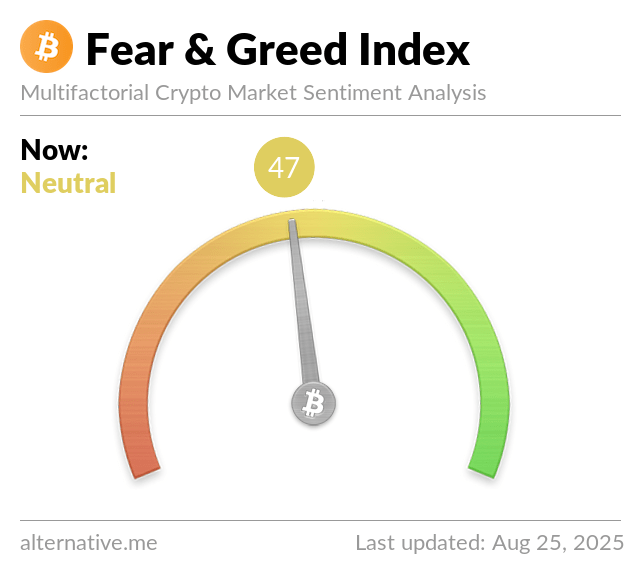
The Fear and Greed Index, currently reading 47 and sitting in neutral territory as of August 25, 2025, represents one of the most sophisticated attempts to measure market sentiment in the cryptocurrency space. This powerful indicator has evolved from a simple concept borrowed from traditional finance into a comprehensive analytical framework that processes multiple data streams to provide real-time insights into the collective psychology of crypto market participants.

What makes this index particularly fascinating is its ability to capture the emotional extremes that characterize cryptocurrency markets. Unlike traditional financial markets, where institutional participation and regulatory oversight tend to dampen emotional swings, crypto markets remain highly susceptible to sentiment-driven movements. The Fear and Greed Index serves as a psychological barometer, helping traders navigate these emotional currents and make more rational investment decisions.
Fear and Greed Index Gauge

The current neutral reading of 47 comes after a significant shift from greed territory just days ago, when the index reached 60 following Bitcoin’s historic climb to $124,128. This dramatic swing from greed to neutrality in such a short timeframe perfectly illustrates the rapid emotional shifts that characterize cryptocurrency markets and demonstrates why understanding sentiment analysis has become essential for anyone serious about crypto investing.

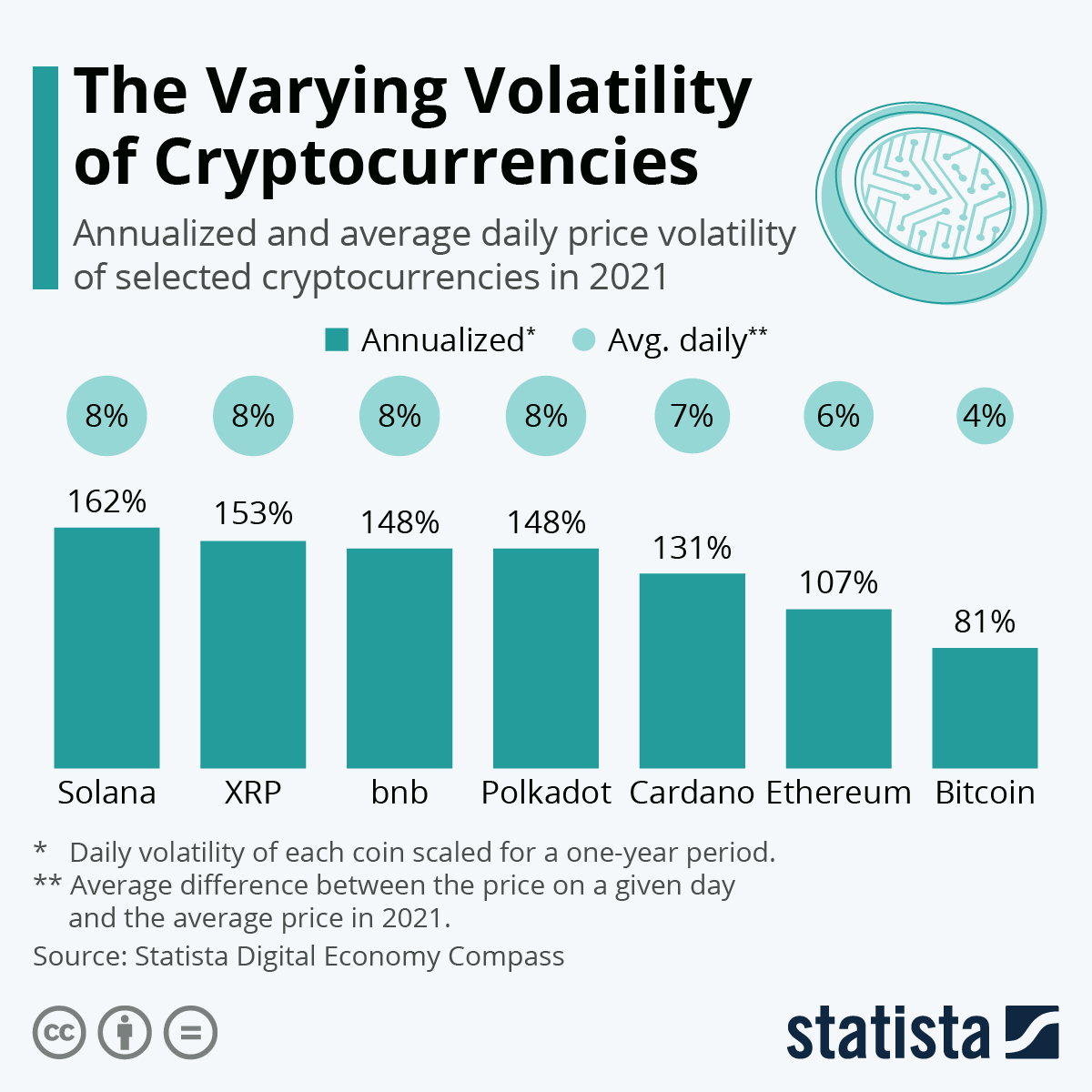
The index operates on a scale from 0 to 100, where extreme fear (0-24) often signals oversold conditions and potential buying opportunities, while extreme greed (75-100) frequently indicates overbought markets ripe for correction. The neutral zone (25-74) represents periods of balanced sentiment, though these can quickly shift as market conditions evolve. Understanding these ranges and their implications forms the foundation of sentiment-based trading strategies that have proven remarkably effective in cryptocurrency markets.

The Science Behind Market Sentiment: Understanding the Fear and Greed Index

The Cryptocurrency Fear and Greed Index represents a sophisticated fusion of quantitative analysis and behavioral psychology, designed to capture the complex emotional dynamics that drive cryptocurrency markets. Unlike simple price-based indicators, this index synthesizes multiple data sources to create a comprehensive picture of market sentiment, providing insights that go far beyond what traditional technical analysis can offer.

The index draws its conceptual foundation from Warren Buffett’s famous investment philosophy: “Be fearful when others are greedy, and greedy when others are fearful.” This contrarian approach recognizes that markets often move in cycles driven by collective emotions, creating opportunities for those who can identify and act against prevailing sentiment. In cryptocurrency markets, where emotional extremes tend to be more pronounced than in traditional finance, this principle becomes even more powerful.

The mathematical framework underlying the index involves weighted aggregation of six distinct components, each capturing different aspects of market psychology. This multi-dimensional approach ensures that the index reflects genuine sentiment shifts rather than temporary fluctuations in any single metric. The weighting system has been carefully calibrated based on historical analysis of how different factors correlate with actual market turning points, creating a robust indicator that has demonstrated remarkable predictive value over multiple market cycles.

What sets the cryptocurrency version apart from its traditional finance counterpart is its focus on the unique characteristics of digital asset markets. The inclusion of social media sentiment analysis, for instance, reflects the outsized role that platforms like Twitter play in shaping crypto market narratives. Similarly, the emphasis on Bitcoin dominance acknowledges the unique dynamics of the crypto ecosystem, where Bitcoin often serves as a safe haven during periods of uncertainty.

The index updates every twelve hours, providing traders with timely insights into evolving market sentiment. This frequency strikes an optimal balance between responsiveness to genuine sentiment shifts and stability that prevents overreaction to temporary noise. The regular update schedule also allows traders to incorporate sentiment analysis into their daily decision-making processes, whether they’re managing long-term portfolios or executing short-term trading strategies.

The psychological foundation of the index rests on well-established principles of behavioral finance, particularly the concepts of loss aversion and herd mentality. During periods of extreme fear, loss aversion causes investors to overreact to negative news and sell assets at prices below their intrinsic value. Conversely, during periods of extreme greed, herd mentality drives investors to chase rising prices without adequate consideration of risk, creating unsustainable bubbles that eventually burst.

Deconstructing the Components: The Six Pillars of Sentiment Analysis

The Fear and Greed Index derives its analytical power from six carefully selected components, each weighted according to its historical correlation with market turning points and its reliability as a sentiment indicator. Understanding these components and their individual contributions provides crucial insights into what drives the overall index reading and how to interpret changes in market sentiment.

Volatility Analysis (25% Weight) forms the largest component of the index, reflecting the fundamental relationship between market uncertainty and price volatility. This component compares current Bitcoin volatility to its average levels over the previous 30 and 90 days, providing context for whether current market conditions represent normal fluctuations or unusual stress. Rising volatility typically indicates increased fear as investors become uncertain about future price direction, while declining volatility suggests growing confidence and a shift toward greed.

The volatility component captures more than just price movements; it reflects the underlying uncertainty that drives investor behavior. When markets experience high volatility, investors become more risk-averse, leading to selling pressure and further price declines. Conversely, periods of low volatility often coincide with growing investor confidence, creating conditions for sustained price appreciation. The 25% weighting reflects the strong historical correlation between volatility patterns and major market turning points.

Market Momentum and Volume (25% Weight) represents the second-largest component, analyzing buying and selling pressure through volume patterns. This component examines whether current trading volumes are unusually high or low compared to recent averages, providing insights into the intensity of market participation. High buying volumes during price increases typically indicate greed-driven behavior, as investors rush to participate in rising markets. Conversely, high selling volumes during price declines often reflect fear-driven capitulation.

The volume analysis goes beyond simple quantity measurements to examine the quality of market participation. Sustained high volumes during price advances suggest genuine buying interest rather than temporary speculation, while declining volumes during rallies may indicate weakening momentum. The component also considers the distribution of volume across different price levels, helping identify whether current market activity represents accumulation by long-term investors or distribution by those looking to exit positions.
Crypto Market Sentiment Analysis

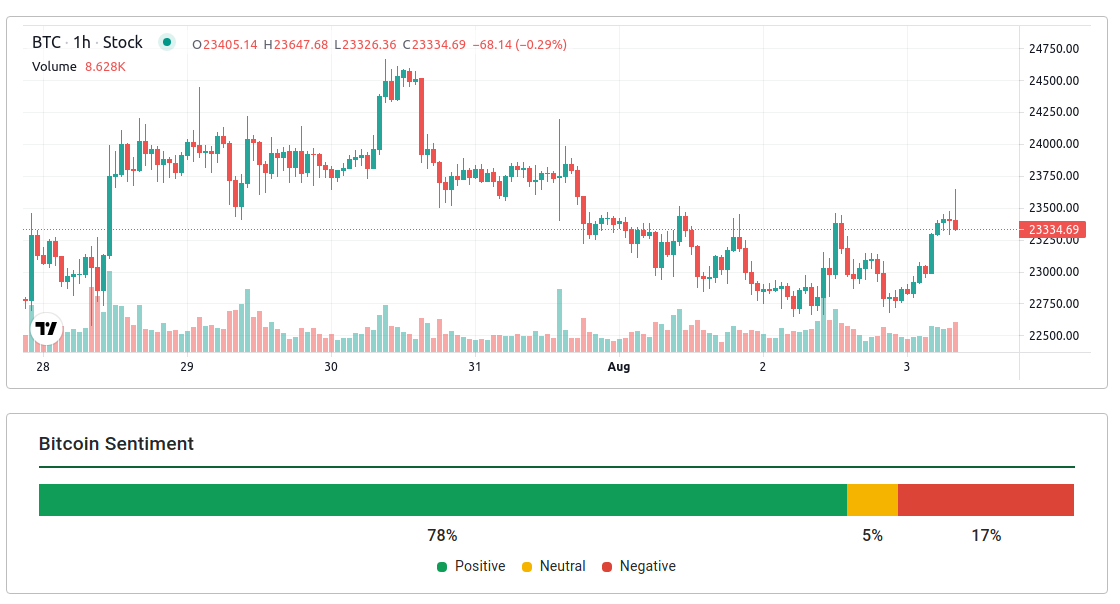
Social Media Sentiment (15% Weight) captures the unique role that social platforms play in cryptocurrency markets, where news and opinions spread rapidly and can significantly impact prices. This component monitors hashtag interactions, engagement rates, and sentiment patterns across major social media platforms, particularly Twitter, where much of the crypto community’s discourse occurs. High engagement rates with positive sentiment typically indicate growing greed, while negative sentiment with high engagement often signals increasing fear.

The social media component employs sophisticated natural language processing algorithms to analyze not just the volume of mentions but also the emotional tone and context of discussions. This analysis helps distinguish between genuine sentiment shifts and artificial manipulation attempts, providing more reliable insights into authentic market psychology. The 15% weighting reflects the significant but not overwhelming influence of social media on actual trading behavior.

Direct Surveys (15% Weight) provide the most straightforward measurement of investor sentiment by directly asking market participants about their expectations and attitudes. These weekly surveys typically gather 2,000 to 3,000 responses from active crypto traders and investors, asking questions about market direction, risk appetite, and investment intentions. The survey component offers unique insights because it captures conscious investor attitudes rather than inferring sentiment from market behavior.

The survey methodology employs careful sampling techniques to ensure representative responses across different investor categories, from retail traders to institutional participants. Questions are designed to elicit honest responses about genuine investment intentions rather than wishful thinking or social desirability bias. The 15% weighting acknowledges that while surveys provide valuable direct insights, they may not always translate immediately into actual market behavior.

Bitcoin Dominance (10% Weight) reflects the unique dynamics of cryptocurrency markets, where Bitcoin often serves as a safe haven during periods of uncertainty. Rising Bitcoin dominance typically indicates fear-driven behavior, as investors retreat from riskier altcoins to the relative safety of Bitcoin. Declining dominance often signals greed-driven risk-taking, as investors venture into altcoins seeking higher returns.

The Bitcoin dominance component captures important portfolio allocation decisions that reflect broader risk appetite in the crypto ecosystem. During fear periods, investors tend to consolidate holdings in Bitcoin, viewing it as the most established and liquid cryptocurrency. During greed periods, investors diversify into altcoins, hoping to capture outsized returns from smaller, more volatile assets. The 10% weighting reflects the importance of this dynamic while acknowledging that dominance patterns can be influenced by factors beyond pure sentiment.

Google Trends Analysis (10% Weight) examines search patterns to understand public interest and concern about cryptocurrency markets. This component analyzes search queries related to Bitcoin and cryptocurrency, looking for patterns that indicate fear or greed. Searches for terms like “Bitcoin crash” or “crypto bubble” typically indicate fear, while searches for “how to buy Bitcoin” or “best cryptocurrency” suggest growing greed and interest.

The Google Trends component provides insights into broader public sentiment beyond active market participants, capturing the interest of potential new investors who may not yet be active in crypto markets. This forward-looking aspect makes it particularly valuable for identifying emerging trends before they fully manifest in market behavior. The search analysis also helps distinguish between different types of interest, separating genuine investment curiosity from crisis-driven information seeking.

Current Market Analysis: Navigating the Neutral Zone

The current Fear and Greed Index reading of 47, firmly planted in neutral territory, represents a fascinating inflection point in cryptocurrency market psychology. This reading comes after a dramatic journey from extreme greed territory just days ago, when the index reached 60 following Bitcoin’s historic ascent to $124,128. The rapid transition from greed to neutrality provides valuable insights into the current market dynamics and offers important clues about potential future direction.

The shift from greed to neutral sentiment coincides with Bitcoin’s correction from its all-time high, dropping approximately 9% to current levels around $113,000. This price action, while significant in absolute terms, represents a relatively modest correction by cryptocurrency standards, yet it has been sufficient to cool the excessive optimism that characterized the market just days earlier. The speed of this sentiment shift illustrates the hair-trigger nature of crypto market psychology, where confidence can evaporate quickly when prices begin to decline.

Several factors have contributed to the current neutral reading, creating a complex web of influences that traders must navigate carefully. The anticipation surrounding Federal Reserve Chairman Jerome Powell’s remarks at the Jackson Hole Symposium has introduced macroeconomic uncertainty that extends beyond cryptocurrency markets. This broader economic context has tempered the pure crypto-focused optimism that drove the recent greed reading, as investors consider how monetary policy changes might affect risk asset valuations.

The neutral reading also reflects a market in transition, where neither fear nor greed dominates decision-making processes. This psychological state often precedes significant directional moves, as markets consolidate sentiment before breaking toward new extremes. Historical analysis suggests that extended periods in neutral territory are relatively rare in cryptocurrency markets, which tend to gravitate toward emotional extremes more quickly than traditional financial markets.

From a technical perspective, the neutral sentiment aligns with Bitcoin’s current price action, which has been characterized by consolidation around key support levels rather than panic selling or euphoric buying. This price behavior suggests that while the immediate greed-driven momentum has subsided, underlying demand remains sufficient to prevent a descent into fear territory. The market appears to be digesting recent gains while evaluating new information that could drive the next major move.

The composition of the current neutral reading provides additional insights into market dynamics. The volatility component has increased as Bitcoin’s price swings have become more pronounced, contributing to the decline from greed territory. However, volume patterns remain relatively healthy, suggesting that current price action represents normal profit-taking rather than panic selling. Social media sentiment has cooled from the euphoric levels seen during Bitcoin’s run to new highs, but remains generally positive rather than turning negative.

Bitcoin dominance patterns offer another perspective on current market psychology. The recent stability in Bitcoin’s market share relative to altcoins suggests that investors are neither fleeing to safety (which would increase dominance) nor aggressively risk-seeking (which would decrease dominance). This balanced approach to portfolio allocation aligns with the neutral sentiment reading and suggests that investors are taking a wait-and-see approach to current market conditions.

The survey component of the index reveals interesting nuances in investor attitudes. While overall sentiment has cooled from extreme optimism, most respondents continue to express cautious optimism about medium-term prospects. This suggests that the current neutral reading may reflect temporary uncertainty rather than a fundamental shift in long-term bullish sentiment. Investors appear to be pausing to reassess rather than abandoning their positive outlook entirely.

Google Trends data provides additional context for the current sentiment reading. Search patterns show continued interest in cryptocurrency topics, but with a shift from purely speculative queries toward more educational and analytical searches. This pattern suggests that while immediate FOMO (fear of missing out) has subsided, underlying interest in cryptocurrency remains strong, potentially providing a foundation for future sentiment improvements.

Trading Strategies: Harnessing Sentiment for Profit

The Fear and Greed Index offers multiple strategic approaches for cryptocurrency traders and investors, each tailored to different risk tolerances, time horizons, and market philosophies. Understanding how to effectively incorporate sentiment analysis into trading decisions can significantly enhance returns while helping manage risk during volatile market conditions.

The Contrarian Approach represents the most fundamental application of Fear and Greed Index analysis, based on the principle that extreme sentiment readings often coincide with market turning points. This strategy involves buying when the index shows extreme fear (0-25) and selling when it indicates extreme greed (75-100). The contrarian approach recognizes that markets tend to overshoot in both directions, creating opportunities for those willing to act against prevailing sentiment.

Implementing contrarian strategies requires significant psychological discipline, as it involves buying when negative news dominates headlines and selling when optimism reaches fever pitch. Historical analysis shows that some of the most profitable cryptocurrency investments have been made during periods of extreme fear, when quality assets trade at significant discounts to their intrinsic value. Similarly, taking profits during extreme greed periods has helped investors avoid major drawdowns during subsequent corrections.

The contrarian approach works particularly well in cryptocurrency markets because of their tendency toward emotional extremes. Unlike traditional financial markets, where institutional participation and regulatory oversight moderate sentiment swings, crypto markets can experience rapid shifts from euphoria to despair. These extreme movements create more pronounced opportunities for contrarian investors willing to act against crowd psychology.

Successful contrarian trading requires careful position sizing and risk management. Rather than investing all available capital when the index reaches extreme fear, sophisticated traders scale into positions gradually, recognizing that sentiment can remain extreme longer than expected. Similarly, profit-taking during extreme greed periods should be systematic rather than all-or-nothing, allowing investors to capture gains while maintaining exposure to potential continued upside.

Divergence Analysis offers a more nuanced approach to sentiment-based trading, focusing on discrepancies between index readings and actual price movements. This strategy looks for situations where sentiment and price action tell different stories, potentially indicating underlying strength or weakness not reflected in current market psychology. For example, if the Fear and Greed Index shows extreme fear while Bitcoin’s price remains relatively stable or even increases, this divergence might suggest underlying buying pressure that could drive future price appreciation.

Divergence analysis requires careful attention to the relationship between sentiment and price action over time. Positive divergences occur when sentiment improves faster than prices, potentially indicating that a rally is building momentum. Negative divergences happen when sentiment deteriorates while prices remain elevated, possibly signaling that a correction is approaching. These patterns can provide early warning signals for major market moves.

The effectiveness of divergence analysis depends on understanding the typical lag between sentiment shifts and price movements. In some cases, sentiment changes precede price movements by days or weeks, while in others, price action leads sentiment changes. Experienced traders learn to recognize these patterns and adjust their strategies accordingly, using divergence analysis as a timing tool rather than a directional indicator.

Trend Confirmation Strategies use the Fear and Greed Index to validate signals from other technical or fundamental analysis tools. Rather than relying solely on sentiment readings, this approach combines index data with traditional indicators like moving averages, support and resistance levels, or fundamental metrics. When multiple indicators align with sentiment readings, it increases confidence in trading decisions and can lead to more successful outcomes.

For example, a trader might wait for both a technical breakout above key resistance and a shift from fear to neutral sentiment before entering a long position. This multi-factor approach reduces the likelihood of false signals and helps ensure that trades are supported by both technical and psychological factors. Similarly, the combination of negative technical signals and extreme greed readings might provide strong confirmation for short positions or profit-taking decisions.

Trend confirmation strategies work particularly well for traders who prefer higher-probability setups over frequent trading opportunities. By requiring alignment between sentiment and other factors, these strategies typically generate fewer signals but with higher success rates. This approach suits traders who prioritize capital preservation and prefer to wait for optimal entry and exit points rather than attempting to capture every market move.
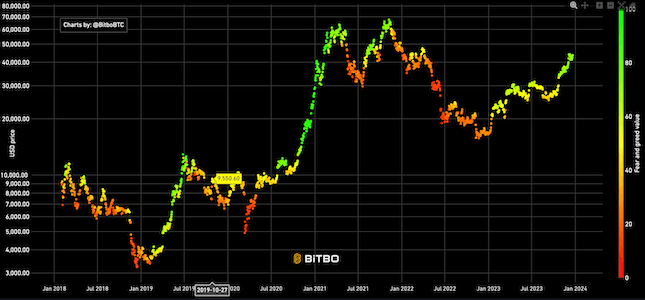
Fear and Greed Index Chart

Dynamic Position Sizing represents an advanced application of sentiment analysis, where portfolio allocation adjusts based on current index readings. This strategy recognizes that risk-adjusted returns can be optimized by increasing exposure during periods of extreme fear and reducing exposure during periods of extreme greed. Rather than maintaining static position sizes, dynamic allocation allows investors to capitalize on sentiment-driven market inefficiencies.

The dynamic sizing approach typically involves establishing baseline portfolio allocations that adjust based on sentiment extremes. For example, an investor might maintain a 5% cryptocurrency allocation during neutral sentiment periods, increase to 10% during extreme fear, and reduce to 2% during extreme greed. These adjustments allow investors to increase exposure when assets are likely undervalued and reduce exposure when they may be overvalued.

Implementing dynamic position sizing requires careful planning and disciplined execution. Investors must establish clear rules for allocation adjustments and stick to them regardless of current market narratives or emotional impulses. The strategy also requires sufficient liquidity to make allocation changes without significant transaction costs or market impact.

Short-Term Momentum Trading uses rapid sentiment changes to identify short-term trading opportunities. This approach focuses on the speed of sentiment shifts rather than absolute readings, recognizing that rapid changes in market psychology often precede significant price movements. Traders using this strategy monitor the index for sudden shifts and position themselves to capitalize on the resulting price action.

Momentum trading based on sentiment requires quick decision-making and efficient execution capabilities. Traders must be prepared to act rapidly when sentiment shifts occur, as the most profitable opportunities often have short windows. This approach works best for experienced traders with access to advanced trading platforms and the ability to monitor markets continuously.

The key to successful momentum trading lies in distinguishing between genuine sentiment shifts and temporary noise. Experienced traders learn to recognize patterns in sentiment changes that typically precede significant price movements, allowing them to position themselves advantageously before the broader market reacts to changing psychology.

Risk Management and Limitations: Understanding the Boundaries

While the Fear and Greed Index provides valuable insights into market psychology, successful implementation requires understanding its limitations and incorporating appropriate risk management techniques. Like any analytical tool, the index is not infallible and should be used as part of a comprehensive trading and investment framework rather than as a standalone decision-making mechanism.

The Non-Predictive Nature of the index represents its most important limitation. The Fear and Greed Index measures current sentiment rather than predicting future price movements. While extreme sentiment readings often coincide with market turning points, the timing and magnitude of these turns cannot be precisely predicted using sentiment analysis alone. Markets can remain in extreme sentiment territory longer than expected, potentially causing significant losses for traders who assume immediate reversals.

This limitation requires traders to maintain realistic expectations about what sentiment analysis can and cannot accomplish. The index excels at identifying when markets may be psychologically stretched in one direction or another, but it cannot specify exactly when or how corrections will occur. Successful traders use sentiment readings to inform their decision-making process while relying on other tools for precise timing and risk management.

The non-predictive nature also means that sentiment-based strategies require patience and discipline. Contrarian positions taken during extreme sentiment periods may not immediately prove profitable, requiring traders to maintain positions through potentially adverse short-term price movements. This psychological challenge can be particularly difficult during extreme fear periods, when negative news continues to dominate headlines even after positions are established.

Market Correlation Risks present another significant limitation, particularly during periods of extreme market stress. While the Fear and Greed Index can help identify sentiment extremes, it cannot eliminate the correlation risks that characterize cryptocurrency markets during crisis periods. When broader financial markets experience significant stress, cryptocurrency assets tend to move together regardless of individual fundamentals or sentiment readings.

The correlation issue becomes particularly problematic during “risk-off” periods, when investors flee from all risky assets simultaneously. During such periods, even assets with strong fundamentals and attractive sentiment readings may experience significant declines as part of broader market liquidation. Traders must recognize that sentiment analysis works best during normal market conditions and may provide less reliable signals during systemic stress periods.

Understanding correlation risks requires monitoring broader financial market conditions alongside cryptocurrency-specific sentiment indicators. When traditional markets show signs of stress, cryptocurrency traders should adjust their expectations and risk management accordingly, recognizing that sentiment-based strategies may be less effective during periods of high correlation.

Data Quality and Manipulation Concerns represent ongoing challenges for sentiment-based analysis. The components of the Fear and Greed Index rely on various data sources, each with potential quality issues or manipulation risks. Social media sentiment, for example, can be artificially influenced through coordinated campaigns or bot activity. Similarly, survey responses may not always represent genuine trading intentions or may be biased toward particular outcomes.

The index creators employ various techniques to address data quality concerns, including filtering mechanisms for social media analysis and careful survey methodology design. However, traders should remain aware that no sentiment indicator is completely immune to manipulation or data quality issues. Diversifying across multiple sentiment indicators and combining sentiment analysis with other analytical approaches can help mitigate these risks.

Regular validation of sentiment signals against actual market behavior helps identify periods when data quality issues may be affecting index reliability. Experienced traders develop intuition for recognizing when sentiment readings seem disconnected from underlying market reality, allowing them to adjust their strategies accordingly.

Institutional vs. Retail Sentiment Divergence creates additional complexity in interpreting Fear and Greed Index readings. The index primarily captures retail investor sentiment through its various components, but institutional investor behavior may differ significantly from retail sentiment. During periods when institutional and retail sentiment diverge, the index may provide misleading signals about overall market direction.

This divergence can be particularly pronounced during major market transitions, when institutional investors may be accumulating positions while retail sentiment remains negative, or vice versa. Understanding the composition of market participants and their likely behavior patterns helps traders interpret sentiment readings more accurately and avoid potential pitfalls.

Monitoring institutional activity through on-chain analysis, exchange flows, and other indicators can provide complementary insights to retail-focused sentiment measures. Combining these different perspectives creates a more complete picture of market psychology and helps identify situations where sentiment-based strategies may be more or less effective.

Timing and Execution Challenges represent practical limitations that can significantly impact the effectiveness of sentiment-based strategies. Even when sentiment analysis correctly identifies market turning points, poor timing or execution can result in losses. The index updates every twelve hours, which may not provide sufficient granularity for short-term trading strategies, while longer-term strategies may require patience that many traders find difficult to maintain.

Successful implementation of sentiment-based strategies requires careful attention to execution details, including entry and exit timing, position sizing, and transaction costs. Traders must also consider market liquidity conditions, as sentiment extremes sometimes coincide with reduced liquidity that can make position establishment or liquidation more difficult and expensive.

Advanced Applications: Beyond Basic Sentiment Analysis

As cryptocurrency markets mature and institutional participation increases, sophisticated traders are developing advanced applications of Fear and Greed Index analysis that go beyond simple contrarian strategies. These advanced techniques combine sentiment analysis with other analytical frameworks to create more nuanced and potentially profitable trading approaches.

Multi-Timeframe Sentiment Analysis involves examining sentiment patterns across different time horizons to identify more robust trading opportunities. While the standard Fear and Greed Index provides daily readings, advanced traders construct their own sentiment indicators using different lookback periods and update frequencies. This approach helps distinguish between temporary sentiment fluctuations and more meaningful psychological shifts that are likely to drive sustained price movements.

The multi-timeframe approach typically involves analyzing short-term sentiment (daily readings), medium-term sentiment (weekly averages), and long-term sentiment (monthly trends). When sentiment readings align across multiple timeframes, it provides stronger conviction for trading decisions. Conversely, divergences between timeframes can signal potential turning points or highlight the need for additional caution.

Implementing multi-timeframe analysis requires careful data management and analytical capabilities. Traders must maintain historical sentiment data and develop systems for calculating rolling averages and identifying trend changes across different time horizons. This complexity makes the approach more suitable for sophisticated traders with advanced analytical tools and experience.

Sector-Specific Sentiment Analysis recognizes that different cryptocurrency sectors may experience varying sentiment patterns. While the standard Fear and Greed Index focuses primarily on Bitcoin and broad market sentiment, advanced traders develop specialized indicators for specific sectors like DeFi, NFTs, or layer-one protocols. This granular approach can identify opportunities in sectors that may be experiencing different psychological dynamics than the broader market.

Sector-specific analysis requires deep understanding of the unique factors that drive sentiment in different cryptocurrency niches. DeFi sentiment, for example, may be more influenced by regulatory developments and protocol innovations, while NFT sentiment might be more driven by cultural trends and celebrity endorsements. Developing effective sector-specific indicators requires specialized knowledge and data sources beyond those used in broad market analysis.

The sector approach can be particularly valuable during periods when cryptocurrency markets are experiencing rotation between different themes or sectors. By identifying sectors with improving sentiment while others deteriorate, traders can position themselves to benefit from these rotational dynamics rather than simply following broad market trends.

Sentiment Momentum Indicators focus on the rate of change in sentiment rather than absolute readings. These indicators recognize that rapid sentiment shifts often precede significant price movements, even when absolute sentiment levels remain within normal ranges. By measuring sentiment acceleration and deceleration, these indicators can provide earlier signals than traditional sentiment analysis approaches.

Momentum-based sentiment analysis typically involves calculating derivatives of sentiment readings, such as daily changes, weekly changes, and acceleration measures. When sentiment momentum reaches extreme levels, it often indicates that psychological conditions are building for significant market moves. This approach can be particularly effective for identifying turning points before they become apparent in absolute sentiment readings.

The momentum approach requires sophisticated mathematical analysis and careful parameter selection. Traders must determine appropriate lookback periods for momentum calculations and establish thresholds for identifying significant momentum shifts. The complexity of this analysis makes it more suitable for quantitative traders with strong mathematical backgrounds.

Cross-Asset Sentiment Correlation involves analyzing relationships between cryptocurrency sentiment and sentiment indicators from other asset classes. This approach recognizes that cryptocurrency markets do not exist in isolation and that broader financial market psychology can significantly influence crypto sentiment patterns. By understanding these relationships, traders can anticipate sentiment shifts in cryptocurrency markets based on developments in traditional finance.

Cross-asset analysis typically involves monitoring sentiment indicators for stocks, bonds, commodities, and currencies alongside cryptocurrency sentiment measures. During periods of high correlation, developments in traditional markets may provide leading indicators for cryptocurrency sentiment changes. Conversely, periods of low correlation may indicate that cryptocurrency markets are driven by crypto-specific factors rather than broader financial market psychology.

Implementing cross-asset sentiment analysis requires access to sentiment data from multiple markets and the analytical capability to identify meaningful relationships. This approach is most suitable for institutional traders or sophisticated individual investors with access to comprehensive market data and analytical tools.

The Future of Sentiment Analysis in Cryptocurrency Markets

As cryptocurrency markets continue to evolve and mature, sentiment analysis tools like the Fear and Greed Index are likely to become increasingly sophisticated and influential in trading decisions. Understanding the trajectory of these developments can help traders prepare for future opportunities and challenges in sentiment-based investing.

Artificial Intelligence and Machine Learning Integration represents one of the most promising areas for advancement in sentiment analysis. Current sentiment indicators rely primarily on relatively simple aggregation methods, but future versions are likely to incorporate advanced AI techniques that can identify more subtle patterns in market psychology. Machine learning algorithms could potentially identify sentiment patterns that human analysts miss, leading to more accurate and timely sentiment indicators.

AI-powered sentiment analysis could also address some current limitations, such as social media manipulation and data quality issues. Advanced algorithms could potentially distinguish between genuine sentiment expressions and artificial manipulation attempts, leading to more reliable sentiment readings. Natural language processing improvements could also enable more nuanced analysis of social media content, capturing subtle emotional nuances that current systems miss.

The integration of AI and machine learning will likely require significant computational resources and expertise, potentially creating advantages for institutional investors and sophisticated trading firms. However, as these technologies become more accessible, individual traders may also benefit from improved sentiment analysis tools that provide more accurate and actionable insights.

Real-Time Sentiment Processing represents another area of likely advancement, as current sentiment indicators typically update every twelve hours or daily. Future systems may provide real-time sentiment readings that update continuously as new data becomes available. This increased frequency could enable more responsive trading strategies and better timing of entry and exit decisions.

Real-time processing would be particularly valuable for short-term trading strategies that seek to capitalize on rapid sentiment shifts. However, it would also require careful filtering to distinguish between meaningful sentiment changes and temporary noise. The challenge will be developing systems that provide timely updates while maintaining the reliability and stability that make sentiment analysis useful for decision-making.

Institutional Sentiment Integration will likely become increasingly important as institutional participation in cryptocurrency markets continues to grow. Current sentiment indicators focus primarily on retail investor psychology, but future versions may need to incorporate institutional sentiment measures to provide complete market psychology pictures. This could involve analyzing institutional trading patterns, regulatory filings, and other data sources that reflect institutional investor attitudes.

The integration of institutional sentiment could significantly improve the predictive power of sentiment analysis, as institutional investors often have longer time horizons and different information sources than retail investors. Understanding when institutional and retail sentiment diverge could provide valuable insights into potential market turning points and help traders position themselves advantageously.

Regulatory Impact Assessment will become an increasingly important component of sentiment analysis as cryptocurrency regulation continues to develop globally. Future sentiment indicators may need to incorporate regulatory sentiment measures that assess how policy developments are likely to affect market psychology. This could involve analyzing regulatory announcements, policy proposals, and enforcement actions to gauge their potential impact on investor sentiment.

Regulatory sentiment analysis could help traders anticipate market reactions to policy developments and position themselves accordingly. As cryptocurrency markets become more sensitive to regulatory developments, understanding the sentiment implications of policy changes will become increasingly valuable for successful trading and investment strategies.

The evolution of sentiment analysis in cryptocurrency markets will likely create new opportunities for sophisticated traders while potentially reducing the effectiveness of simple sentiment-based strategies. As these tools become more widely available and understood, their predictive power may diminish, requiring traders to develop more advanced and nuanced approaches to sentiment-based investing.

Conclusion: Mastering the Psychology of Crypto Markets

The Cryptocurrency Fear and Greed Index represents far more than a simple market indicator—it serves as a window into the collective psychology that drives one of the world’s most dynamic and volatile financial markets. As we have explored throughout this comprehensive analysis, understanding and effectively utilizing sentiment analysis can provide significant advantages for traders and investors willing to master its complexities and limitations.

The current neutral reading of 47 offers a perfect case study in the practical application of sentiment analysis. This reading, representing a significant shift from the greed territory of just days ago, illustrates how quickly market psychology can change and how these changes can create both opportunities and risks for market participants. The transition from extreme optimism following Bitcoin’s new all-time high to more measured sentiment as prices corrected demonstrates the dynamic nature of cryptocurrency market psychology.

The six-component framework underlying the Fear and Greed Index provides a sophisticated approach to quantifying market sentiment that goes far beyond simple price-based indicators. By incorporating volatility analysis, volume patterns, social media sentiment, direct surveys, Bitcoin dominance, and search trends, the index captures multiple dimensions of market psychology that collectively provide insights into the emotional state of market participants. Understanding how these components interact and contribute to overall sentiment readings enables more nuanced interpretation of market conditions.

The trading strategies we have examined—from basic contrarian approaches to advanced multi-timeframe analysis—demonstrate the versatility of sentiment-based investing. Whether employed as a primary decision-making tool or as confirmation for other analytical approaches, sentiment analysis can enhance trading performance when properly implemented with appropriate risk management techniques. The key lies in understanding that sentiment analysis works best as part of a comprehensive analytical framework rather than as a standalone solution.

The limitations and risks associated with sentiment analysis underscore the importance of maintaining realistic expectations and implementing proper risk management techniques. The non-predictive nature of sentiment indicators, correlation risks during market stress, and potential data quality issues all require careful consideration when developing sentiment-based strategies. Successful practitioners learn to work within these limitations while maximizing the benefits that sentiment analysis can provide.

Looking toward the future, the evolution of sentiment analysis through artificial intelligence, real-time processing, and institutional integration promises to create new opportunities while potentially changing the effectiveness of current approaches. Traders who stay abreast of these developments and adapt their strategies accordingly will be best positioned to benefit from the continued evolution of sentiment analysis tools.

The current market environment, with its neutral sentiment reading and ongoing uncertainty about future direction, provides an excellent opportunity to apply the principles and strategies discussed in this analysis. Whether the market moves toward fear or greed territory in the coming days and weeks, understanding the psychological forces at work will help traders and investors make more informed decisions and potentially capitalize on the emotional extremes that characterize cryptocurrency markets.

Ultimately, mastering the Fear and Greed Index and sentiment analysis more broadly requires combining theoretical understanding with practical experience. The concepts and strategies outlined in this guide provide a foundation, but successful implementation requires practice, patience, and continuous learning. As cryptocurrency markets continue to evolve, those who understand the psychological forces driving market behavior will maintain significant advantages over those who focus solely on technical or fundamental analysis.

The Fear and Greed Index serves as a powerful reminder that behind every price movement, every market trend, and every trading opportunity lies human psychology in all its complexity. By learning to read and interpret these psychological signals, traders and investors can better navigate the challenging but potentially rewarding world of cryptocurrency markets, turning the emotional volatility that characterizes these markets from a source of risk into a source of opportunity.


References

[1] CoinStats. “Crypto Fear & Greed Index.” CoinStats, August 25, 2025. https://coinstats.app/fear-and-greed/

[2] TokenMetrics. “Crypto Fear and Greed Index – What it is and How to Use it?” TokenMetrics Blog, August 22, 2025. https://www.tokenmetrics.com/blog/crypto-fear-and-greed-index

[3] Alternative.me. “Crypto Fear & Greed Index – Bitcoin Sentiment.” Alternative.me, August 25, 2025. https://alternative.me/crypto/fear-and-greed-index/

[4] ChainCatcher. “Data: The current cryptocurrency fear and greed index is 46.” ChainCatcher, August 25, 2025. https://www.chaincatcher.com/en/article/2200237


The Great Divergence: How CPI and PPI Data Exposed the Fault Lines Between Traditional and Crypto Markets

Published by everythingcryptoitclouds.com | August 16, 2025

This week delivered a masterclass in market psychology and the fundamental differences between traditional finance and cryptocurrency markets. What started as a unified rally across both asset classes quickly transformed into a tale of two markets, with traditional equities demonstrating remarkable resilience while crypto assets experienced dramatic volatility. The catalyst? Two seemingly routine economic reports that revealed just how differently these markets interpret and react to inflationary pressures.

The S&P 500 climbed a solid 1.78% for the week, while the Nasdaq rose 1.60%, showcasing the steady confidence that has characterized traditional markets throughout 2025 [1]. Meanwhile, the cryptocurrency landscape painted a starkly different picture. Bitcoin managed only a modest 0.97% gain despite touching new record highs above $124,000, while Ethereum surged an impressive 17.18%, highlighting the growing divergence even within crypto markets themselves [2]. The total cryptocurrency market capitalization rose 3.13% to $4.084 trillion, but this headline figure masks the intense volatility that saw nearly $900 million in long positions liquidated in a single day [2].

Stock Market Chart Patterns

The week’s events underscore a critical evolution in how different asset classes respond to economic data, revealing fault lines that could reshape investment strategies and risk management approaches for years to come. Understanding these dynamics isn’t just academic—it’s essential for anyone navigating the increasingly complex landscape where traditional finance and digital assets intersect.

The CPI Calm: When Good News Was Actually Good News

Tuesday, August 12th began with what markets had been eagerly anticipating: the July Consumer Price Index (CPI) report. In an environment where inflation data has become the primary driver of Federal Reserve policy and market sentiment, the numbers delivered exactly what investors wanted to hear [3].

The headline CPI rose 2.7% annually, coming in below the expected 2.8%, while the monthly increase of 0.2% met expectations precisely. More importantly, core CPI—which excludes volatile food and energy prices and is closely watched by Federal Reserve officials—increased 0.3% monthly and 3.1% annually, just slightly above the forecasted 3.0% [3]. These numbers represented a goldilocks scenario: inflation was cooling but not collapsing, providing the Federal Reserve with the flexibility to consider rate cuts without signaling economic distress.

The market reaction was swift and decisive. Stock market averages posted strong gains immediately following the release, while Treasury yields remained mixed as investors recalibrated their expectations for monetary policy [3]. The data reinforced growing confidence that the Federal Reserve would begin cutting interest rates at their September meeting, with traders ramping up bets on this outcome throughout the day.

What made this CPI report particularly significant was its treatment of tariff impacts. Despite widespread concerns that President Trump’s expanded tariff policies would drive inflation higher, the data showed only modest effects in tariff-sensitive categories. Household furnishings and supplies showed a 0.7% increase, but apparel prices rose just 0.1%, and core commodity prices increased only 0.2% [3]. This suggested that businesses were absorbing much of the tariff costs rather than immediately passing them through to consumers.

The benign inflation reading provided validation for the Federal Reserve’s patient approach to monetary policy. Fed officials had been expressing increasing concern about labor market weakness, and the CPI data gave them cover to shift focus from inflation fighting to economic support. Market-implied probabilities for a September rate cut jumped significantly, with traders also increasing bets on additional cuts later in the year.

For traditional equity markets, this represented an ideal scenario. Lower interest rates would reduce borrowing costs for corporations, potentially boosting earnings and making stocks more attractive relative to bonds. The technology-heavy Nasdaq was particularly responsive, as growth stocks tend to benefit disproportionately from lower discount rates applied to their future cash flows.

The PPI Shock: When Markets Chose Their Own Adventure

If Tuesday’s CPI report was a gentle breeze that lifted all boats, Thursday’s Producer Price Index (PPI) data was a hurricane that separated the wheat from the chaff. The numbers were nothing short of stunning in their deviation from expectations, and the divergent market reactions that followed would define the week’s narrative [4].

The PPI jumped 0.9% in July, compared to the Dow Jones estimate of just 0.2%—a massive miss that represented the biggest monthly increase since June 2022 [4]. Core PPI, excluding food and energy, rose 0.9% against forecasts of 0.3%, while the measure excluding food, energy, and trade services climbed 0.6%, the largest gain since March 2022 [4]. On an annual basis, headline PPI increased 3.3%, well above the Federal Reserve’s 2% inflation target and the biggest 12-month move since February.

The details behind these numbers were equally concerning. Services inflation provided much of the upward pressure, rising 1.1% for the largest gain since March 2022. Trade services margins climbed 2%, reflecting ongoing developments in tariff implementations. Machinery and equipment wholesaling surged 3.8%, while portfolio management fees jumped 5.4% and airline passenger services prices climbed 1% [4].

Economic Data Chart

This is where the story becomes fascinating from a market structure perspective. Traditional equity markets, which had celebrated the benign CPI data just two days earlier, largely shrugged off the PPI surprise. Stock market futures fell initially following the release, and shorter-duration Treasury yields moved higher, but the reaction was measured and contained [4]. The S&P 500 and Nasdaq continued their weekly gains, demonstrating remarkable resilience in the face of what should have been concerning inflationary data.

Cryptocurrency markets, however, told a completely different story. The PPI release triggered significant selling pressure across digital assets, with nearly $900 million in long positions liquidated as traders rushed for the exits [2]. The reaction was swift, brutal, and indiscriminate, affecting everything from Bitcoin to smaller altcoins. Funding rates, which had been falling generally across the crypto ecosystem, reflected the sudden shift in sentiment as leveraged positions were unwound.

This divergence reveals something profound about market structure and participant behavior. Traditional equity markets, dominated by institutional investors with longer time horizons and sophisticated risk management systems, were able to contextualize the PPI data within the broader economic picture. They recognized that producer prices often don’t translate directly to consumer prices, especially when businesses are absorbing costs to maintain market share.

Cryptocurrency markets, with their higher concentration of retail investors, algorithmic trading systems, and leveraged positions, reacted more viscerally to the inflation surprise. The 24/7 nature of crypto trading meant there was no circuit breaker, no closing bell to provide a pause for reflection. The result was a cascade of selling that fed on itself as stop-losses were triggered and margin calls forced additional liquidations.

Institutional Resilience vs. Retail Volatility

The contrasting reactions to the PPI data illuminate fundamental differences in market structure that extend far beyond simple asset class distinctions. Traditional equity markets have evolved over decades to incorporate sophisticated risk management systems, institutional oversight, and regulatory frameworks designed to prevent excessive volatility. When unexpected data emerges, there are mechanisms in place—both formal and informal—that encourage measured responses.

Institutional investors, who dominate traditional equity trading, typically operate with longer investment horizons and more comprehensive analytical frameworks. When the PPI data was released, these investors could quickly contextualize it within their existing economic models. They understood that producer price inflation doesn’t automatically translate to consumer price inflation, especially in an environment where businesses are facing competitive pressures and may choose to absorb costs rather than pass them through immediately.

The presence of professional risk managers, compliance departments, and fiduciary responsibilities also creates natural dampening effects on volatility. Institutional investors can’t simply panic-sell based on a single data point—they have processes, committees, and oversight mechanisms that encourage deliberate decision-making. This institutional infrastructure acts as a stabilizing force during periods of uncertainty.

Cryptocurrency markets, by contrast, operate in a fundamentally different ecosystem. While institutional participation has grown significantly over the past few years, the market structure remains heavily influenced by retail investors, algorithmic trading systems, and leveraged speculation. The absence of traditional market-making mechanisms and the 24/7 trading environment create conditions where volatility can amplify rapidly.

The role of leverage in cryptocurrency markets cannot be overstated. With many platforms offering 10x, 50x, or even 100x leverage, small price movements can trigger massive liquidation cascades. When the PPI data surprised to the upside, algorithmic systems programmed to respond to inflation concerns began selling, which triggered stop-losses and margin calls, which created additional selling pressure in a self-reinforcing cycle.

Cryptocurrency Volatility Chart

The psychological factors are equally important. Cryptocurrency investors, particularly retail participants, tend to be more sensitive to macroeconomic developments that could influence regulatory policy or institutional adoption. Inflation concerns raise the specter of more aggressive Federal Reserve action, which could reduce liquidity and risk appetite across all speculative assets. In a market where sentiment can shift rapidly, the PPI surprise was enough to trigger a broad reassessment of risk.

The Federal Reserve’s Delicate Balancing Act

The divergent market reactions to CPI and PPI data this week highlight the complex challenge facing Federal Reserve policymakers as they navigate between competing economic signals. The central bank finds itself in the unusual position of receiving mixed messages from different inflation measures, each telling a different story about underlying price pressures in the economy.

The benign CPI reading provided ammunition for Fed officials who have been advocating for rate cuts to support a weakening labor market. Consumer price inflation at 2.7% annually, while above the Fed’s 2% target, represents significant progress from the peaks reached in 2021 and 2022. The fact that core inflation came in only slightly above expectations, and that tariff impacts appeared contained, suggested that the disinflationary process remains intact.

However, the PPI surge complicates this narrative significantly. Producer prices are often considered a leading indicator of consumer price trends, as businesses eventually pass through higher input costs to customers. The 0.9% monthly jump in PPI, particularly the strength in services inflation, raises questions about whether the disinflationary trend is as durable as the CPI data suggests.

Fed officials now face the challenge of determining which measure provides a more accurate picture of underlying inflation dynamics. The divergence between CPI and PPI could reflect temporary factors—businesses absorbing tariff costs in the short term, seasonal adjustments, or measurement issues—or it could signal the beginning of a renewed inflationary cycle.

The market’s divergent reactions add another layer of complexity to the Fed’s decision-making process. Traditional equity markets are clearly pricing in rate cuts, with the expectation that the central bank will prioritize economic growth over inflation concerns. Cryptocurrency markets, however, are signaling greater concern about inflation persistence and the potential for more restrictive monetary policy.

This creates a communication challenge for Fed officials. Any signal that they’re taking the PPI data seriously could trigger broader market volatility, while dismissing producer price inflation could undermine their credibility if consumer prices begin accelerating later. The September Federal Open Market Committee meeting has become a critical inflection point where the Fed will need to balance these competing considerations.

Crypto’s Ethereum Outperformance: A Silver Lining in the Storm

While the broader cryptocurrency market struggled with the PPI-induced volatility, Ethereum’s remarkable 17.18% weekly gain stands out as a beacon of strength that deserves deeper analysis [2]. This outperformance occurred against a backdrop of significant market stress and provides important insights into the evolving dynamics within the cryptocurrency ecosystem.

Ethereum’s strength can be attributed to several converging factors that differentiate it from Bitcoin and other digital assets. The network’s transition to proof-of-stake consensus and the ongoing development of layer-2 scaling solutions have positioned it as the infrastructure backbone for decentralized finance (DeFi), non-fungible tokens (NFTs), and emerging Web3 applications. This utility-driven demand provides a different value proposition than Bitcoin’s store-of-value narrative.

The week’s news that BitMine Immersion Technologies, a leading Ethereum treasury company, filed for a $20 billion stock offering to accelerate their ETH purchases likely contributed to the positive sentiment [2]. This represents a significant institutional endorsement of Ethereum’s long-term prospects and demonstrates the growing trend of corporate treasury diversification into digital assets beyond Bitcoin.

Ethereum’s outperformance also reflects the network’s resilience during periods of market stress. While Bitcoin often trades more like a macro asset, correlating with traditional risk assets during periods of uncertainty, Ethereum’s price action is increasingly driven by network fundamentals and ecosystem development. The ongoing growth in DeFi total value locked, increasing transaction volumes, and expanding use cases provide fundamental support that can offset broader market concerns.

The technical infrastructure improvements continue to enhance Ethereum’s appeal to institutional investors. The successful implementation of EIP-1559, which introduced a fee-burning mechanism, has created deflationary pressure on ETH supply during periods of high network activity. Combined with the staking rewards available through proof-of-stake, Ethereum offers multiple sources of yield that are attractive in a low-interest-rate environment.

From a portfolio construction perspective, Ethereum’s outperformance during a week of crypto market stress demonstrates its potential role as a diversifier within digital asset allocations. While it remains correlated with broader crypto market movements, the magnitude and direction of its price action can differ significantly from Bitcoin and other cryptocurrencies, providing opportunities for active management and risk reduction.

The Liquidation Cascade: Anatomy of a Crypto Market Meltdown

The $900 million in long liquidations that occurred on Thursday represents one of the most significant single-day deleveraging events in recent cryptocurrency market history [2]. Understanding the mechanics of this cascade provides crucial insights into the structural vulnerabilities that continue to plague digital asset markets and the amplifying effects of excessive leverage.

The liquidation event began with the PPI data release at 8:30 AM Eastern Time on Thursday. Within minutes of the surprisingly high inflation reading, algorithmic trading systems began executing pre-programmed sell orders based on macroeconomic triggers. These initial sales created downward pressure on Bitcoin and other major cryptocurrencies, which in turn triggered the first wave of automated liquidations on leveraged positions.

Cryptocurrency derivatives markets, which have grown exponentially in recent years, played a central role in amplifying the selling pressure. Platforms offering perpetual futures contracts with high leverage ratios saw massive position closures as prices moved against highly leveraged long positions. The interconnected nature of these markets meant that liquidations on one platform quickly spread to others, creating a domino effect across the entire ecosystem.

The timing of the liquidations was particularly problematic from a market structure perspective. Thursday’s PPI release occurred during Asian trading hours for many cryptocurrency markets, when liquidity is typically lower than during U.S. or European sessions. This reduced liquidity environment meant that the same amount of selling pressure had a more pronounced impact on prices, accelerating the liquidation cascade.

Funding rates, which had been falling generally across the cryptocurrency ecosystem, provided an early warning signal of the stress building in the system [2]. As leveraged long positions accumulated throughout the week following the positive CPI data, funding rates began to normalize from previously negative levels. However, the rapid shift in sentiment following the PPI release caught many traders off-guard, particularly those who had increased their leverage based on the earlier positive inflation data.

The cascade also highlighted the role of cross-margining and portfolio-based risk management systems used by many cryptocurrency exchanges. When Bitcoin and Ethereum prices began falling rapidly, traders with diversified cryptocurrency portfolios found their entire positions at risk, not just their exposure to the specific assets that were declining. This forced additional selling across the entire cryptocurrency spectrum, including altcoins that had no direct relationship to the macroeconomic data that triggered the initial selling.

Traditional Markets: The Wisdom of Institutional Patience

The resilience demonstrated by traditional equity markets in the face of the PPI surprise offers valuable lessons about the benefits of institutional market structure and long-term investment approaches. While cryptocurrency markets were experiencing their liquidation cascade, the S&P 500 and Nasdaq continued their steady weekly gains, demonstrating a level of maturity and stability that comes from decades of institutional development.

Professional portfolio managers approached the PPI data with the context that comes from experience managing through multiple economic cycles. They understood that producer price inflation, while concerning, doesn’t automatically translate to consumer price inflation, especially in an environment where businesses are facing competitive pressures and may choose to absorb costs rather than pass them through immediately. This institutional knowledge prevented the kind of panic selling that characterized cryptocurrency markets.

The presence of sophisticated risk management systems also played a crucial role in maintaining stability. Institutional investors operate with position limits, diversification requirements, and oversight mechanisms that prevent excessive concentration in any single bet. When unexpected data emerges, these systems encourage measured responses rather than emotional reactions. Portfolio managers can’t simply liquidate entire positions based on a single data point—they have processes and procedures that encourage deliberate decision-making.

The longer investment horizons typical of institutional investors also contributed to market stability. While cryptocurrency traders often operate with daily or weekly time frames, institutional equity investors typically think in terms of quarters or years. From this perspective, a single month’s PPI reading, while noteworthy, doesn’t fundamentally alter long-term investment theses or require immediate portfolio adjustments.

Market-making mechanisms in traditional equity markets also provided crucial stability during the volatility. Designated market makers and high-frequency trading firms have obligations to provide liquidity even during periods of stress, which helps prevent the kind of air pockets that can develop in less mature markets. These mechanisms aren’t perfect, but they provide a foundation of liquidity that helps absorb selling pressure without causing excessive price dislocations.

The regulatory framework surrounding traditional equity markets also contributes to stability through transparency requirements, position reporting, and oversight mechanisms. While these regulations can sometimes be seen as burdensome, they create an environment where market participants have better information about underlying conditions and can make more informed decisions about risk management.

Looking Ahead: Implications for Multi-Asset Portfolios

The events of this week provide important insights for investors constructing portfolios that span both traditional and digital assets. The divergent reactions to the same economic data highlight the importance of understanding correlation dynamics and the potential for diversification benefits, even as they also reveal new sources of risk that require careful management.

For investors who maintain exposure to both traditional equities and cryptocurrencies, this week demonstrated both the benefits and challenges of such diversification. On one hand, the resilience of traditional markets provided a stabilizing influence during cryptocurrency volatility. Investors with balanced allocations would have experienced less overall portfolio volatility than those concentrated exclusively in digital assets.

However, the week also highlighted that correlations between asset classes can shift rapidly during periods of stress. While cryptocurrencies and traditional equities often move together during broad risk-on or risk-off periods, they can diverge significantly when reacting to specific types of economic data. This creates both opportunities and risks that require active monitoring and potentially dynamic allocation adjustments.

The role of leverage in amplifying volatility across different asset classes also deserves careful consideration. While traditional equity markets generally operate with lower leverage ratios, the availability of margin trading and derivatives means that excessive leverage can create similar cascade effects. The cryptocurrency market’s experience this week serves as a cautionary tale about the systemic risks that can emerge when leverage becomes too concentrated.

From a risk management perspective, the week’s events underscore the importance of position sizing and diversification across different types of assets and investment strategies. Investors who had concentrated their cryptocurrency exposure in highly leveraged positions experienced disproportionate losses, while those who maintained more conservative position sizes were better able to weather the volatility.

The different time horizons and market structures that characterize traditional and digital asset markets also suggest the need for different approaches to portfolio management. Strategies that work well in traditional equity markets may not be appropriate for cryptocurrency investments, and vice versa. This requires investors to develop expertise across multiple asset classes and investment approaches.

The Broader Economic Context: Inflation, Policy, and Market Evolution

This week’s market divergence occurred against the backdrop of broader economic and policy developments that continue to shape the investment landscape. The mixed signals from CPI and PPI data reflect the complex inflationary dynamics that policymakers and investors are grappling with as the economy navigates the aftermath of pandemic-era fiscal and monetary stimulus.

The tariff policies implemented by the Trump administration add another layer of complexity to inflation dynamics. While the CPI data suggested that tariff impacts have been relatively contained so far, the PPI surge raises questions about whether businesses will be able to continue absorbing these costs indefinitely. The divergence between consumer and producer prices may represent a temporary phenomenon that eventually resolves through higher consumer prices, lower business margins, or some combination of both.

Federal Reserve policy remains the crucial variable that will determine how these inflationary pressures ultimately resolve. The central bank’s September meeting has taken on heightened importance as officials weigh the competing signals from different inflation measures. The market’s divergent reactions to CPI and PPI data provide additional complexity, as Fed officials must consider not just the economic data but also the financial stability implications of their policy decisions.

The international context also matters significantly for both traditional and digital asset markets. Central banks around the world are grappling with similar inflation challenges, and policy coordination—or the lack thereof—can have significant implications for capital flows and currency dynamics. Cryptocurrency markets, in particular, are sensitive to regulatory developments in major jurisdictions, which can create additional sources of volatility beyond purely economic factors.

The ongoing evolution of market structure in both traditional and digital asset markets continues to create new dynamics that investors must navigate. The growth of algorithmic trading, the expansion of derivatives markets, and the increasing interconnectedness of global financial systems all contribute to the complexity of modern portfolio management.

Conclusion: Navigating the New Reality of Multi-Asset Investing

This week’s divergent market reactions to CPI and PPI data provide a compelling case study in the evolving dynamics of modern financial markets. The resilience of traditional equities in the face of concerning producer price inflation, contrasted with the violent reaction in cryptocurrency markets, highlights fundamental differences in market structure, participant behavior, and risk management approaches that investors ignore at their peril.

The $900 million liquidation cascade in cryptocurrency markets serves as a stark reminder of the amplifying effects of excessive leverage and the importance of understanding the structural vulnerabilities that exist in less mature markets [2]. While Ethereum’s 17.18% weekly gain demonstrates that opportunities exist even during periods of broader market stress, the overall cryptocurrency market’s reaction to the PPI surprise underscores the continued importance of careful risk management and position sizing.

For traditional equity investors, the week provided validation of the benefits that come from institutional market structure and long-term investment approaches. The S&P 500’s 1.78% gain and the Nasdaq’s 1.60% advance occurred despite economic data that could have justified significant concern about inflation persistence [1]. This resilience reflects the maturity and stability that comes from decades of institutional development and regulatory oversight.

The Federal Reserve faces an increasingly complex challenge as it navigates between competing economic signals and divergent market reactions. The September FOMC meeting will provide crucial insights into how policymakers weigh the benign CPI data against the concerning PPI surge, and how they factor in the different messages being sent by traditional and digital asset markets.

Looking ahead, investors must prepare for a world where correlation dynamics can shift rapidly and where different asset classes may react very differently to the same economic developments. The events of this week demonstrate both the potential benefits of diversification across traditional and digital assets, as well as the new sources of risk that such diversification can create.

The key to successful navigation of this environment lies in understanding the fundamental differences between asset classes, maintaining appropriate position sizes and leverage levels, and developing the expertise necessary to manage across multiple types of markets and investment strategies. As the lines between traditional finance and digital assets continue to blur, the ability to understand and manage these dynamics will become increasingly important for investment success.

The great divergence of this week may be just the beginning of a new era in which traditional and digital asset markets increasingly march to the beat of different drummers. Investors who can understand and adapt to these evolving dynamics will be best positioned to capitalize on the opportunities while managing the risks that this new reality presents.


References

[1] User-provided market data for week ending August 15, 2025

[2] User-provided cryptocurrency market data and liquidation information

[3] CNBC. “CPI inflation report July 2025.” CNBC Economy, August 12, 2025. https://www.cnbc.com/2025/08/12/cpi-inflation-report-july-2025.html

[4] CNBC. “PPI inflation report July 2025: Wholesale prices rose 0.9% in July, much more than expected.” CNBC Economy, August 14, 2025. https://www.cnbc.com/2025/08/14/ppi-inflation-report-july-2025-.html

Understanding Microsoft AOVPN: Key Features and Benefits

Microsoft AOVPN stands for Microsoft Always OVirtual Private Network. It is a remote access solution that is built into Windows 10 and is designed to provide seamless and consistent connectivity for domain-joined, nondomain-joined, or Azure AD–joined devices1AOVPN allows users to access corporate resources securely over the internet, without the need for user interaction or manual configuration2. AOVPN also supports various features and integrations, such as:

These are some of the main aspects of Microsoft AOVPN, but there are more details and nuances that are beyond the scope of this brief explanation. Microsoft AOVPN is meant to be the successor to DirectAccess, which is another remote access solution that has been used for years. However, AOVPN offers more flexibility, compatibility, and security than DirectAccess23. Microsoft AOVPN is available in all Windows editions, and can be deployed and managed with various tools, such as PowerShell, Microsoft Endpoint Configuration Manager, Intune, Windows Configuration Designer, or any third-party mobile device management (MDM) tool1.

Advertisements

Can you explain more about web3?

Web3 is a term that refers to the idea of a new version of the internet that is based on blockchain technologies and decentralized protocols. Web3 aims to give users more control over their data, identity, and digital assets, as well as to enable new forms of online collaboration and innovation. Some of the features of web3 include:

These are some of the main aspects of web3, but there are many more details and nuances that are beyond the scope of this brief explanation. Web3 is still a developing and evolving movement, and there are different opinions and perspectives on its definition, vision, and implications. Web3 also faces various challenges and risks, such as scalability, security, regulation, environmental impact, and social impact. Web3 is not a fixed or final state of the internet, but rather a direction and a possibility for the future of the web1234

Altcoin day trading madness: 100% rebound in hours for Polygon, Maker

The volatility of the cryptocurrency space was on full display again on Monday, as several altcoins experienced gigantic price rebounds following the market crash of the past week or so.

Two altcoins in particular doubled in value in just over 12 hours leading into Monday morning, as Polygon (MATIC) and Maker (MAKER) recorded over 100% growth amid a strong market bounce.

Polygon climbed from a valuation of $0.75 late on Sunday afternoon, to a peak of $1.51 by early on Monday morning — marking 101% gains in less than a day.

The rapid rebound comes shortly after Polygon suffered 72% losses in less than a week, as it fell from a valuation of $2.68 to $0.74 since May 18.

A similar pattern was observed in the governance token of the MakerDAO protocol, Maker, on Monday. The coin price rose from $1,835 on Sunday, to $3,694 by Monday morning, equating to a 101% increase.

Like Polygon, Maker’s miraculous pump follows a 71% decline since the coin hit an all-time high in early May, and a 63% decline in the past week alone.

The intensity of the rebounds experienced by coins on the day appeared to be tied to the severity of their recent market crashes. As such, the altcoin market proved to be the ripest venue for day traders on Monday, many of whom could feasibly have doubled their money between supper and breakfast.

Bitcoin (BTC) and Ether (ETH) were subject to less dramatic rebounds, with the foremost cryptocurrencies gaining 17% and 32% respectively. Both coins experienced less volatility throughout the duration of the recent market pump, and their subsequent losses proved to be less severe, with BTC and ETH losing 51% and 60% respectively since their recent all-time highs.

Many traders rejoice in such volatility, yet the harsh fact remains that day trading is a full-time job, and according to some estimates as little as 1% of day traders actually turn a profit.