The 2026 Imperative: Why HP Gen 12 Servers are the Cornerstone of Your IT Refresh

Author: everythingcryptoitclouds.com

Introduction: The New Era of Compute

The year 2026 marks a critical inflection point for enterprise IT infrastructure. With the relentless growth of data, the operationalization of Artificial Intelligence (AI), and the ever-present threat of cyberattacks, legacy server hardware is no longer a viable foundation for modern business. The need for a strategic server refresh has never been more urgent. At the forefront of this technological shift is the Hewlett Packard Enterprise (HPE) ProLiant Compute Gen12 server family, engineered specifically to meet the demands of this new era [1]. This post explores the transformative capabilities of the HP Gen 12 platform and outlines the compelling advantages of making 2026 the year for your comprehensive server refresh.

HPE ProLiant Gen12 Servers

HPE ProLiant Gen 12: Engineered for the AI-Driven Enterprise

Announced in early 2025, the HPE ProLiant Gen12 servers represent a significant leap in compute power, efficiency, and security [2]. These systems are designed not just to run applications, but to serve as the backbone for next-generation AI and data-intensive workloads.

Unprecedented Performance

The Gen 12 platform delivers a massive performance boost through its support for the latest processor and memory technologies. The servers offer a choice between two industry-leading architectures:

The integration of DDR5 memory and the high core counts of the Intel Xeon 6 and AMD EPYC 9005 processors (as shown in the image below) dramatically increase transaction throughput and reduce latency, making the Gen 12 platform ideal for virtualization, database management, and high-performance computing [3].

AMD EPYC CPU

AI and Security at the Core

The Gen 12 family is built with AI and security as foundational elements. Certain models, such as those optimized for AI, feature integration with accelerators like the NVIDIA GH200 NVL2, making them ready to handle complex machine learning and deep learning models out of the box [4].

On the security front, HPE has further enhanced its Silicon Root of Trust technology, providing an unchangeable fingerprint in the server’s silicon to prevent unauthorized firmware access. This advanced security posture is essential in a landscape where firmware attacks are becoming increasingly sophisticated.

The 2026 Server Refresh Imperative

Beyond the raw technical specifications, a server refresh in 2026 offers compelling strategic and financial advantages that directly impact a business’s bottom line and competitive standing.

1. Strategic AI Readiness

The most significant driver for a 2026 refresh is the need for AI readiness. As AI moves from pilot projects to core business processes, organizations require infrastructure capable of supporting these compute-intensive workloads. Older servers simply lack the necessary GPU support, high-speed interconnects, and memory bandwidth to run modern AI models efficiently. Adopting Gen 12 servers ensures that your IT roadmap is aligned with the future of business intelligence and automation.

2. Enhanced Operational Efficiency and Cost Control

While the initial investment in new hardware is substantial, the long-term operational savings are significant. Newer servers are dramatically more power-efficient, leading to lower energy consumption and reduced cooling costs in the data center [5]. Furthermore, a refresh allows organizations to consolidate workloads onto fewer, more powerful machines, reducing licensing fees, maintenance overhead, and the risk associated with aging hardware. This strategic adoption of advanced technology is key to building a cost-effective IT roadmap for 2026 [6].

Data Center Refresh

3. Mitigating Security and Compliance Risk

The security features of the Gen 12 servers are a crucial advantage. Running outdated hardware exposes organizations to significant security vulnerabilities, as older systems often fall out of vendor support and lack modern security features like the Silicon Root of Trust. A refresh mitigates this risk, ensuring compliance with increasingly stringent data protection regulations and safeguarding critical business assets.

Conclusion: Investing in the Future

The decision to perform a server refresh in 2026 is not merely a hardware upgrade; it is a strategic investment in the future resilience, performance, and intelligence of your organization. The HPE ProLiant Gen 12 servers, with their focus on AI, security, and next-generation compute power, provide the ideal platform for this transition. By embracing this refresh, businesses can move beyond simply maintaining their infrastructure and instead enable the scalable, high-performance environment necessary to thrive in the AI-driven economy of 2026 and beyond.


References

[1] HPE. HPE introduces next-generation ProLiant servers engineered for advanced security, AI, automation and greater performance. [URL: https://www.hpe.com/us/en/newsroom/press-release/2025/02/hpe-introduces-next-generation-proliant-servers-engineered-for-advanced-security-ai-automation-and-greater-performance.html%5D

[2] Forbes. HPE Launches Next-Generation ProLiant Compute Servers. [URL: https://www.forbes.com/sites/moorinsights/2025/02/12/hpe-launches-next-generation-proliant-compute-servers/%5D

[3] HPE. HPE ProLiant Compute DL325 Gen12 – Features & Specs. [URL: https://buy.hpe.com/us/en/compute/rack-servers/proliant-dl300-servers/proliant-dl325-server/hpe-proliant-compute-dl325-gen12/p/1014896093%5D

[4] Wikipedia. ProLiant. [URL: https://en.wikipedia.org/wiki/ProLiant%5D

[5] Meriplex. How to Build a Cost-Effective IT Roadmap for 2026. [URL: https://meriplex.com/how-to-build-a-cost-effective-it-roadmap-for-2026/%5D

[6] Dymin Systems. Budgeting for 2026: Why IT Planning Starts Now. [URL: https://www.dyminsystems.com/about/blogs/business-intelligence/budgeting-for-2026-why-it-planning-starts-now/%5D

AI Reality Check: What Last Week’s Stock Crash Means for Broadcom, AMD, Oracle, and Meta

Author: everythingcryptoitclouds.com

Introduction: The Jolt to the AI Trade

Last week, the seemingly unstoppable AI stock rally hit a major speed bump. A sharp selloff, triggered by disappointing news from key players, sent shockwaves through the market, raising the specter of an “AI bubble.” While the overall AI narrative remains robust, the correction served as a crucial reality check, reminding investors that even the most promising growth stories are subject to market scrutiny.

The focus of this correction centered on two major infrastructure providers: Broadcom (AVGO) and Oracle (ORCL). Their struggles quickly dragged down other AI-exposed giants, including Advanced Micro Devices (AMD) and Meta Platforms (META). This article breaks down the reasons behind the crash, analyzes the short-term outlook for the next four weeks, and provides a forecast for early 2026.

AI Crash Visualization

Anatomy of the Selloff: Broadcom and Oracle’s One-Two Punch

The market correction was primarily ignited by a one-two punch from two companies whose fortunes are deeply tied to the AI infrastructure buildout.

Broadcom’s Margin Scare: Despite reporting better-than-expected quarterly results and strong guidance, Broadcom’s stock plummeted by 11%. The core concern was a warning from management that gross margins would be lower in the short term. This is due to the higher up-front costs associated with producing complex custom AI chip systems and server racks. Furthermore, the CEO tempered expectations for a major deal with OpenAI in 2026, suggesting the immediate revenue boost might not be as explosive as investors had hoped.

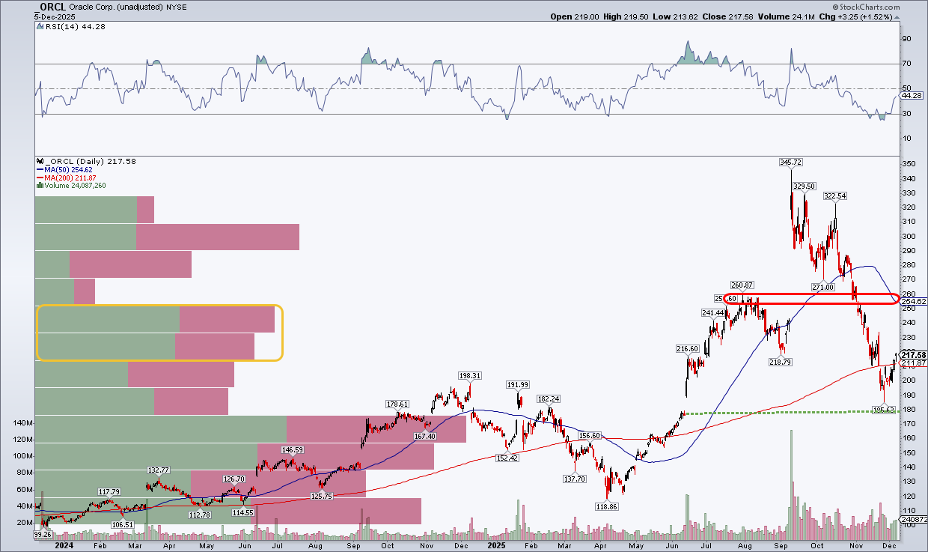
Oracle’s Financing Disappointment: Oracle’s stock had already plunged 10% before dropping another 4.5% in the wake of its mixed earnings report (beating on earnings per share but missing on revenue). Investors were particularly disappointed by the lack of detail on how the company plans to finance its massive, debt-fueled AI data center expansion. This raised questions about the sustainability and profitability of the aggressive infrastructure spending required to compete in the AI cloud space.

The combination of Broadcom’s margin concerns and Oracle’s financing uncertainty created a wave of “AI angst,” leading to a broader selloff in the sector.

Oracle Broadcom Chart

Short-Term Outlook: The Next Four Weeks

The next four weeks, often characterized by holiday trading and year-end portfolio adjustments, will be crucial for these stocks.

| Company | Crash Reason | Short-Term Outlook (Next 4 Weeks) |
| :— | :— | :— |
| Broadcom (AVGO) | Margin contraction on custom AI chips. | Analysts are largely recommending to “buy the dip,” viewing the selloff as an overreaction to short-term margin pressure. The underlying demand for their custom chips from hyperscalers remains robust. |
| Oracle (ORCL) | Missed revenue and financing uncertainty. | Volatility is likely as the market digests the debt concerns. A clear communication from management regarding their CapEx financing strategy could stabilize the stock, but until then, it remains under pressure. |
| Advanced Micro Devices (AMD) | General AI trade selloff. | Expected to stabilize quickly. The drop was largely collateral damage from the Broadcom/Oracle news. Strong demand for its EPYC CPUs and Instinct GPUs in the data center market provides a solid floor. |
| Meta Platforms (META) | General AI trade selloff. | Strongly positioned for a rebound. News of trimming the metaverse budget to prioritize AI spending is a positive signal for investors. The stock is likely to benefit from the “flight to quality” within the AI sector. |

Early 2026 Forecast: The Infrastructure Boom Continues

Despite the recent correction, the long-term forecast for the AI infrastructure sector remains overwhelmingly bullish, especially as we head into early 2026. The fundamental driver is the massive, non-negotiable capital expenditure (CapEx) being committed by the world’s largest tech companies.

Meta’s AI Commitment: Meta Platforms is a prime example of this long-term commitment. The company is aggressively shifting resources away from its metaverse division to focus on building out its AI capabilities. Analysts project Meta’s 2026 CapEx to reach an astonishing $109 billion, more than triple its 2023 spending. This colossal investment is primarily directed at AI infrastructure, including the purchase of chips and the construction of data centers.

The Demand for Silicon: This spending spree directly benefits chipmakers like Broadcom and AMD. Broadcom’s custom chip business, despite the short-term margin hit, is poised for massive growth as it supplies hyperscalers like Meta and Google. Similarly, AMD is forecast to see a 20%+ increase in revenue in 2026, driven by the insatiable demand for its high-performance EPYC and Instinct GPUs in the data center. The AI arms race is far from over, and these companies are the essential suppliers.

Oracle’s Long Game: While Oracle faces short-term financing questions, its long-term strategy hinges on becoming a major player in the AI cloud. The massive data center buildout, while costly, is a necessary step to capture future AI-driven revenue. If the company can effectively communicate its financing plan and execute on its AI pipeline, the stock could see a significant recovery in 2026.

AI Data Center

Conclusion: A Correction, Not a Collapse

The recent AI stock selloff was a healthy, albeit painful, market correction. It was driven by specific, company-level concerns about margins and financing, not a collapse in the underlying demand for artificial intelligence.

For investors, the message is clear: the AI revolution is still in its early stages, and the long-term trend of massive infrastructure spending is intact. The next four weeks may see continued volatility as the market finds its footing, but the outlook for early 2026 remains bright. The companies that are the essential building blocks of the AI future—Broadcom, AMD, Oracle, and Meta—are poised to be the biggest beneficiaries of this sustained, multi-year boom.

Crypto in 2026: From Speculation to Financial Revolution

Author: everythingcryptoitclouds.com

Introduction

The year is 2026, and the cryptocurrency landscape has transformed in ways that few could have predicted. What was once a niche, speculative asset class has now firmly planted its roots in the global financial system. The conversation has shifted from “if” to “how” cryptocurrencies will be integrated into our daily lives. This is not just another bull run; it’s a fundamental rewiring of our financial infrastructure. In this post, we’ll explore the key trends shaping the crypto world in 2026, from the maturation of the market to the tokenization of real-world assets and the evolution of decentralized finance (DeFi).

Blockchain Fintech

The Great Convergence: Crypto Meets Mainstream Finance

The most significant development in the crypto space is its convergence with traditional finance (TradFi). Major institutional players like BlackRock and JPMorgan, once skeptics, are now actively involved in the market. This has brought a new level of legitimacy and stability to the industry. The launch of spot Bitcoin ETFs has opened the floodgates for institutional capital, and we are now seeing a hybrid financial system emerge where digital assets are seen as “better tools” for a wide range of financial activities.

Tokenization: The Next Frontier

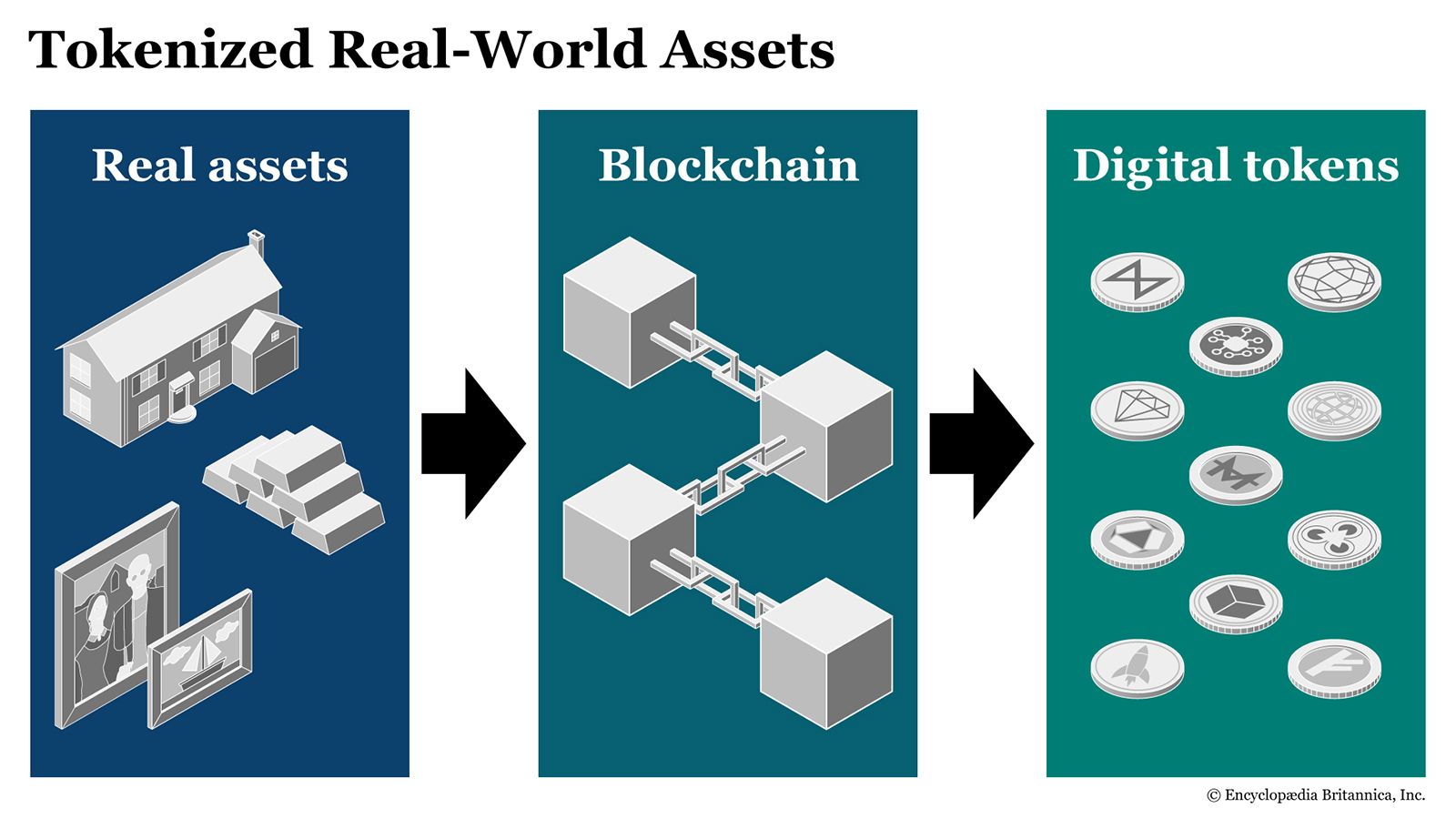
Tokenization, the process of converting real-world assets into digital tokens on a blockchain, is no longer a futuristic concept. It’s happening now, and it’s set to unlock trillions of dollars in value. From real estate to private credit, assets that were once illiquid are now being fractionalized and traded on-chain. This is democratizing access to investment opportunities and creating a more efficient and transparent financial system.

Asset Tokenization

DeFi 2.0: A More Mature and Regulated Ecosystem

Decentralized Finance (DeFi) has come a long way from its “wild west” days. In 2026, DeFi is a more mature and regulated ecosystem, with a focus on compliance and institutional-grade products. Stablecoins have become the new cash layer, facilitating seamless payments and cross-border transactions. The integration of AI is also making DeFi platforms more secure and efficient, with AI-driven risk management and automated yield optimization.

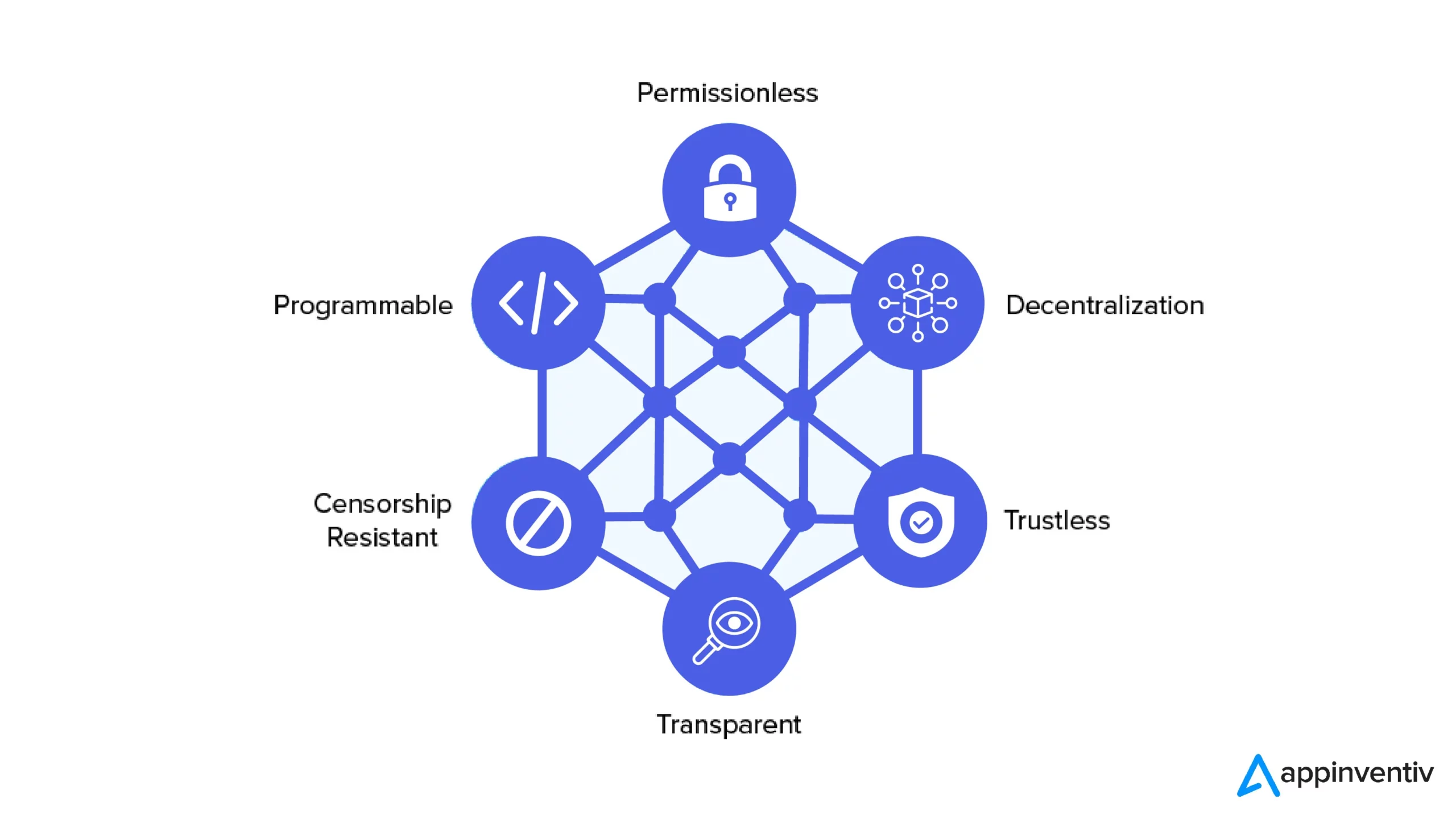
DeFi Concept

The Road Ahead: Scalability, AI, and Regulation

The crypto industry is still evolving, and there are several key developments that will shape its future. Layer 2 scaling solutions are making blockchains faster and cheaper to use, paving the way for mass adoption. Artificial intelligence is being integrated into every aspect of the crypto ecosystem, from security to trading. And finally, regulatory clarity is providing the certainty that businesses and investors need to confidently participate in the market.

Blockchain Network

What About the Price?

No discussion of crypto would be complete without mentioning the price. While the market remains volatile, the long-term outlook is bullish. Some analysts are predicting that Bitcoin could reach as high as $200,000 by the end of 2026, with other major cryptocurrencies like Ethereum also poised for significant growth. However, it’s important to remember that these are just predictions, and you should always do your own research before investing.

Conclusion

The crypto revolution is well underway. In 2026, we are witnessing the birth of a new financial system that is more open, transparent, and efficient than ever before. The journey has just begun, and the most exciting innovations are still to come. The future of finance is being built on the blockchain, and it’s a future that we can all be a part of.

Zcash Explodes 27.75% as Arthur Hayes’ $10,000 Prediction Ignites Privacy Coin Renaissance

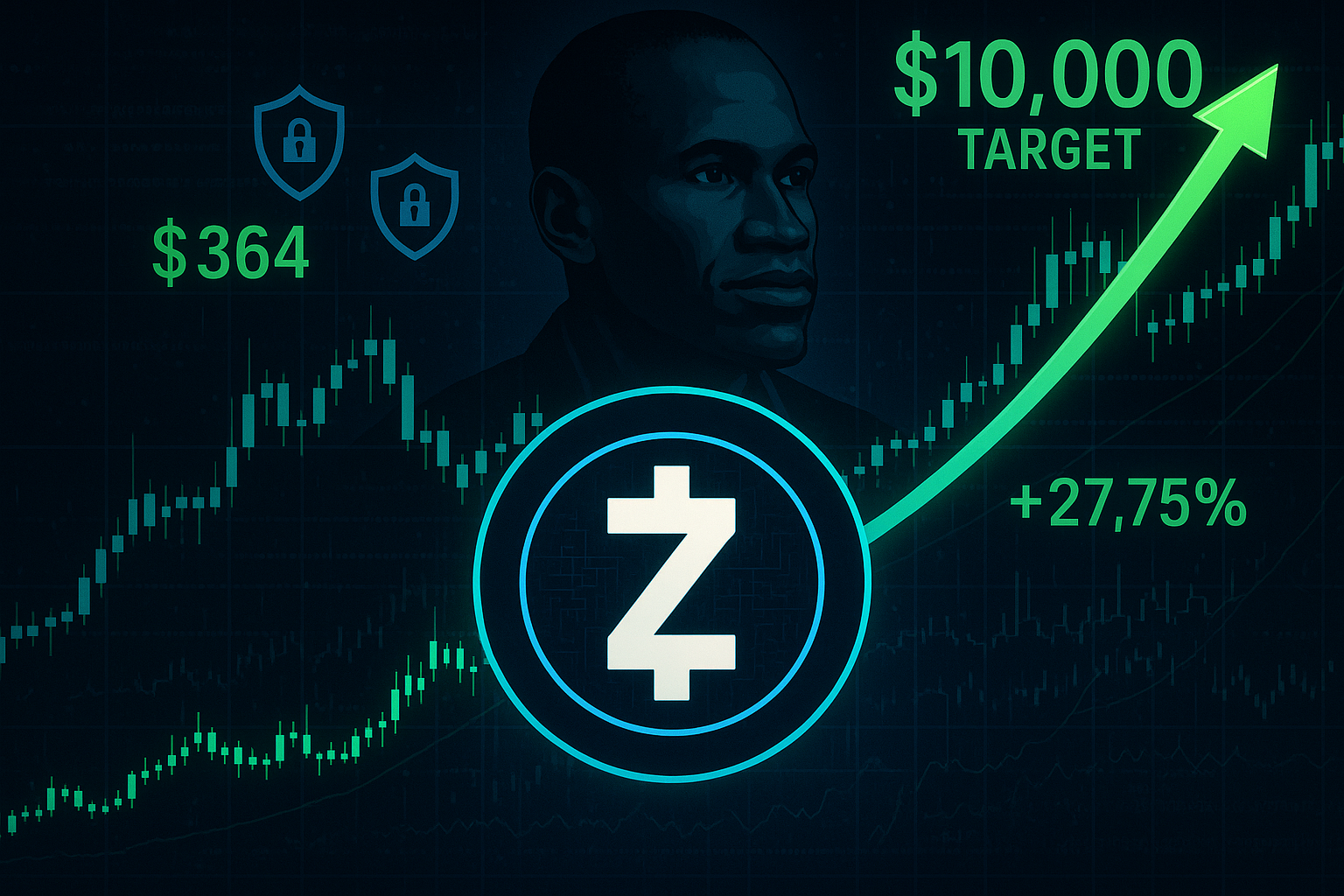
Zcash Surge Hero Image

The privacy-focused cryptocurrency Zcash has surged past $364, marking a dramatic 27.75% increase in just 24 hours as BitMEX co-founder Arthur Hayes’ bold $10,000 price prediction sends shockwaves through the cryptocurrency market.

The cryptocurrency landscape witnessed one of its most spectacular single-day rallies on October 27, 2025, as Zcash (ZEC) exploded past the $364 mark, delivering a staggering 27.75% gain that has catapulted the privacy-focused digital asset into the spotlight of institutional and retail investors alike [1]. This extraordinary surge, which has added over $1 billion to Zcash’s market capitalization and propelled it into the top 25 cryptocurrencies by market cap, represents far more than a typical crypto pump—it signals the beginning of what many analysts are calling the “Privacy Coin Renaissance” of 2025 [2].

The catalyst for this remarkable price action can be traced directly to a seemingly casual social media post by Arthur Hayes, the influential co-founder of BitMEX and one of cryptocurrency’s most respected thought leaders. Hayes’ description of Zcash as a “vibe check” accompanied by his audacious $10,000 price prediction has unleashed a wave of Fear of Missing Out (FOMO) that has swept through trading floors from Wall Street to retail investment apps, transforming what was once considered a niche privacy coin into one of the year’s most talked-about investment opportunities.

But this surge represents more than just speculative fervor. With Zcash’s highly anticipated halving event scheduled for November 18, 2025—just three weeks away—the convergence of Hayes’ endorsement, institutional validation through Grayscale’s $102 million fund launch, and the fundamental supply reduction mechanics of the upcoming halving has created what technical analysts are describing as a “perfect storm” for sustained upward price momentum.

The Arthur Hayes Effect: When Crypto’s Oracle Speaks, Markets Listen

Arthur Hayes has earned his reputation as one of cryptocurrency’s most prescient voices through a combination of technical acumen, market timing, and an uncanny ability to identify emerging trends before they become mainstream. His latest endorsement of Zcash, delivered through what he casually termed a “vibe check” on social media, has proven once again why his market calls carry such extraordinary weight in the digital asset ecosystem.

The immediate market response to Hayes’ Sunday evening post was nothing short of spectacular. Within hours of his $10,000 price prediction going live, Zcash experienced one of the most dramatic intraday rallies in its history, surging from $272 to a peak of $355 before stabilizing above the $364 level [1]. This represents not just a significant price movement, but a validation of Hayes’ continued influence in an increasingly crowded field of cryptocurrency analysts and influencers.

Hayes’ track record lends considerable credibility to his Zcash prediction. At the WebX 2025 conference in Tokyo, his bold forecast that Hyperliquid’s HYPE token could appreciate 126 times over three years triggered an immediate 4% price increase, demonstrating the market’s faith in his analytical capabilities [1]. His previous calls on Bitcoin’s trajectory during the 2020-2021 bull run, his early identification of the DeFi summer phenomenon, and his prescient warnings about the 2022 crypto winter have established him as one of the few voices in the space whose predictions consistently translate into market-moving events.

The psychology behind Hayes’ influence extends beyond mere technical analysis. As the co-founder of BitMEX, one of the world’s largest cryptocurrency derivatives exchanges, Hayes possesses an intimate understanding of market microstructure, institutional flow patterns, and the behavioral dynamics that drive cryptocurrency price discovery. His $10,000 Zcash target, while seemingly aggressive, is grounded in a sophisticated understanding of privacy coin fundamentals, regulatory tailwinds, and the growing institutional demand for financial privacy solutions.

What makes Hayes’ Zcash endorsement particularly significant is its timing. Coming at a moment when privacy coins have faced increasing regulatory scrutiny in some jurisdictions while simultaneously experiencing growing adoption in others, his public support signals a belief that the privacy coin sector is entering a new phase of mainstream acceptance. The fact that his prediction has already triggered such substantial institutional interest—evidenced by Grayscale’s rapid fund accumulation and the explosion in futures open interest—suggests that Hayes may once again be ahead of a major market trend.

Institutional Validation: Grayscale’s $102 Million Vote of Confidence

The institutional cryptocurrency landscape has undergone a dramatic transformation in 2025, with traditional financial institutions increasingly recognizing digital assets as legitimate investment vehicles. Against this backdrop, Grayscale’s launch of a dedicated Zcash fund that has already accumulated over $102 million in assets under management represents a watershed moment for privacy-focused cryptocurrencies [1].

Grayscale’s decision to create a Zcash investment vehicle, despite charging a substantial 2.50% management fee, demonstrates the asset manager’s confidence in both the long-term viability of privacy coins and the sophisticated demand from accredited investors seeking exposure to this specialized sector [1]. The rapid accumulation of assets—reaching nine figures in just weeks since the fund’s launch—indicates that institutional appetite for privacy-focused investments extends far beyond the speculative retail market.

This institutional validation carries implications that extend well beyond simple price appreciation. Grayscale’s involvement in the Zcash ecosystem significantly increases the probability of a future Exchange-Traded Fund (ETF) conversion, which would provide mainstream investors with regulated, accessible exposure to privacy coin investments [1]. The precedent set by Bitcoin and Ethereum ETF approvals suggests that regulatory acceptance of cryptocurrency investment products continues to evolve in a favorable direction, particularly for assets with strong institutional backing and clear use cases.

The derivatives market has responded to this institutional interest with remarkable enthusiasm. Zcash futures open interest has skyrocketed from less than $20 million before the Grayscale announcement to nearly $334 million as of October 27, 2025 [1]. This sixteen-fold increase in derivatives activity reflects not just speculative interest, but the establishment of sophisticated hedging and arbitrage strategies by institutional market participants who view Zcash as a legitimate asset class worthy of complex financial engineering.

Sunday’s futures trading volume of $713 million, while below the year’s peak of $3.25 billion, represents a substantial increase in institutional participation [1]. The fact that this volume was achieved on a weekend—traditionally a period of reduced institutional activity—suggests that the Zcash rally has captured the attention of global trading desks operating across multiple time zones.

The institutional embrace of Zcash also reflects a broader recognition of privacy as a fundamental requirement in the evolving digital economy. As central bank digital currencies (CBDCs) advance toward implementation and government surveillance capabilities expand, the demand for financial privacy solutions among both individual and institutional users has grown exponentially. Grayscale’s investment thesis likely recognizes this trend, positioning Zcash not just as a speculative investment, but as a hedge against the erosion of financial privacy in an increasingly monitored economic system.

Technical Analysis: Charting the Path to New All-Time Highs

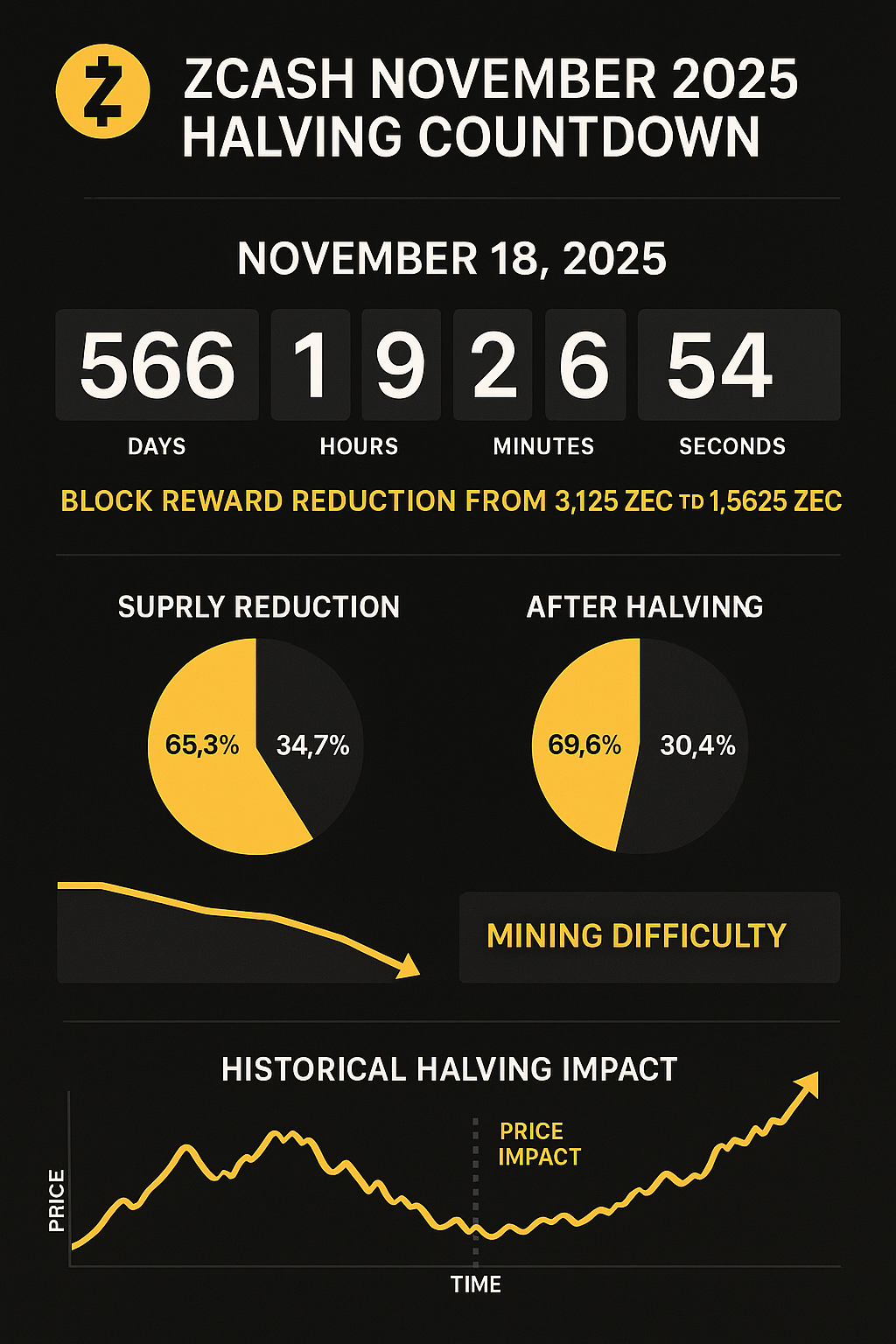
Zcash Halving Countdown

From a technical analysis perspective, Zcash’s current price action represents a textbook example of a breakout from a prolonged accumulation phase into what Wyckoff Theory practitioners recognize as the markup phase—a period characterized by sustained institutional demand and systematic price appreciation [1]. The cryptocurrency’s movement above key resistance levels has established a bullish trend structure that technical analysts believe could carry ZEC toward new all-time highs in the coming weeks.

The immediate technical landscape presents a compelling picture for continued upward momentum. Zcash is currently challenging critical resistance at its all-time high of $372 and the R1 Pivot Point at $381 [1]. A decisive break above the $381 level would open the path toward the R2 Pivot Point at $436, representing approximately 20% upside potential from current levels. This target aligns closely with multiple technical indicators suggesting that the current rally has substantial room for continuation.

The Moving Average Convergence Divergence (MACD) indicator continues to display strongly bullish characteristics, with green histogram bars above the zero line growing progressively larger [1]. This pattern indicates that buying momentum is not only sustained but accelerating, suggesting that the current price movement represents genuine accumulation rather than speculative froth. The MACD’s behavior during this rally mirrors patterns observed during previous Zcash bull runs, providing historical context for the current price action.

However, technical analysis also reveals important cautionary signals that sophisticated traders are monitoring closely. The Relative Strength Index (RSI) has reached 73, well above the traditional overbought threshold of 70 [1]. While overbought conditions can persist during strong trending moves, this reading suggests that short-term consolidation or pullback may be necessary before the next leg higher can commence. The weekly RSI reading of 88 represents an extreme overbought condition that has historically preceded significant corrections in Zcash’s price history [1].

The primary Pivot Point support level at $303 represents a crucial technical floor for the current rally [1]. A healthy pullback to this level would represent approximately 17% downside from current prices and would provide an attractive entry opportunity for investors who missed the initial surge. Such a correction would also serve to reset overbought technical indicators while maintaining the overall bullish trend structure.

Zcash’s position relative to its key moving averages provides additional confirmation of the bullish trend. The cryptocurrency is currently trading well above both its 50-week and 100-week Exponential Moving Averages, indicating that the long-term trend structure remains intact [1]. This positioning is particularly significant given that previous Zcash bull runs have typically maintained this technical relationship throughout their duration.

The volume profile accompanying this price surge provides further validation of the move’s authenticity. Unlike pump-and-dump schemes characterized by unsustainable volume spikes, Zcash’s rally has been accompanied by steadily increasing participation across multiple timeframes and trading venues. This organic volume growth suggests that the price appreciation reflects genuine market demand rather than artificial manipulation.

The November 18 Halving: A Catalyst for Sustained Growth

The cryptocurrency community has long recognized halving events as among the most significant fundamental catalysts in digital asset markets. Zcash’s upcoming halving, scheduled for November 18, 2025—less than three weeks away—represents a critical inflection point that could sustain and amplify the current price rally well into 2026 [7].

The mechanics of Zcash’s halving are straightforward but profound in their implications. On November 18, the block reward paid to miners will be reduced from 3.125 ZEC to 1.5625 ZEC, effectively cutting the daily issuance of new Zcash tokens by 50% [7]. This supply shock, occurring at a time when demand is accelerating due to institutional adoption and Arthur Hayes’ endorsement, creates a fundamental imbalance that historically has driven significant price appreciation in halving-enabled cryptocurrencies.

Historical analysis of previous Zcash halvings provides compelling evidence for the bullish case. The cryptocurrency’s first halving in 2020 preceded a rally that saw ZEC appreciate from approximately $35 to over $300—a gain of more than 750% [7]. While past performance does not guarantee future results, the fundamental supply-demand dynamics that drove that rally remain intact and may be even more pronounced given the current institutional interest in privacy coins.

The timing of this halving is particularly fortuitous given the broader cryptocurrency market environment. Unlike previous halving events that occurred during bear markets or periods of regulatory uncertainty, the November 2025 halving is taking place during a period of increasing institutional adoption, regulatory clarity, and growing mainstream acceptance of cryptocurrency as an asset class. This favorable macro environment could amplify the traditional halving effect, potentially driving more sustained price appreciation than historical precedent might suggest.

Mining economics provide additional support for the bullish halving thesis. The 50% reduction in block rewards will immediately impact miner profitability, likely forcing less efficient operations to cease mining activities. This reduction in mining pressure, combined with Zcash’s difficulty adjustment algorithm, should result in improved economics for remaining miners while reducing the constant selling pressure that newly minted coins typically create in the market.

The psychological impact of the approaching halving cannot be understated. Cryptocurrency markets are driven as much by narrative and expectation as by fundamental analysis, and the halving represents one of the most powerful bullish narratives in the digital asset ecosystem. The fact that this halving is occurring just weeks after Arthur Hayes’ $10,000 prediction has created a confluence of bullish catalysts that could sustain buying pressure well beyond the halving date itself.

Smart money appears to be positioning ahead of the halving event. The dramatic increase in futures open interest and the rapid accumulation of assets in Grayscale’s Zcash fund suggest that sophisticated investors are building positions in anticipation of post-halving price appreciation. This pre-positioning could create additional upward pressure as the halving date approaches, potentially driving prices higher even before the supply reduction takes effect.

Privacy Coin Renaissance: Zcash Leading the Charge

Privacy Coins Renaissance

The broader cryptocurrency market in 2025 has witnessed a remarkable shift in investor sentiment toward privacy-focused digital assets, with Zcash emerging as the undisputed leader of what analysts are calling the “Privacy Coin Renaissance.” This sectoral rotation reflects growing awareness of financial privacy as a fundamental right and a practical necessity in an increasingly surveilled digital economy.

The catalyst for this privacy coin revival extends beyond simple speculative interest. As governments worldwide advance central bank digital currency (CBDC) initiatives that promise unprecedented visibility into individual financial transactions, demand for privacy-preserving alternatives has grown exponentially among both retail and institutional users. Zcash, with its sophisticated zero-knowledge proof technology and optional privacy features, has positioned itself as the premier solution for users seeking to maintain financial autonomy in the digital age.

Zcash’s technological advantages in the privacy coin sector are substantial and growing more relevant with each passing month. Unlike mixing services or privacy solutions that rely on obfuscation techniques, Zcash’s implementation of zk-SNARKs (Zero-Knowledge Succinct Non-Interactive Arguments of Knowledge) provides mathematically provable privacy that cannot be compromised through blockchain analysis or other surveillance techniques. This technological moat has become increasingly valuable as regulatory authorities and compliance departments seek privacy solutions that can satisfy both user demands and regulatory requirements.

The network’s on-chain metrics provide compelling evidence of growing adoption and utility. Shielded transactions—Zcash’s signature privacy feature—have reached multi-month highs, indicating that users are increasingly utilizing the network’s privacy capabilities rather than simply holding ZEC as a speculative investment [2]. This organic usage growth suggests that Zcash is transitioning from a purely speculative asset to a utility token with genuine real-world application.

Corporate and institutional adoption of privacy-preserving technologies has accelerated dramatically in 2025, driven by increasing awareness of data security risks and competitive intelligence concerns. Major corporations are beginning to recognize that financial privacy is not just a personal preference but a business necessity in competitive markets where transaction data can reveal strategic information to competitors, suppliers, and other stakeholders.

The regulatory environment for privacy coins has evolved more favorably than many observers expected. Rather than implementing blanket bans, most major jurisdictions have adopted nuanced approaches that distinguish between privacy tools used for legitimate purposes and those employed for illicit activities. This regulatory maturation has provided the clarity that institutional investors require to allocate capital to privacy-focused investments.

Zcash’s compliance-friendly approach has positioned it advantageously within this evolving regulatory landscape. The network’s transparent pool allows for full auditability when required, while the shielded pool provides privacy when desired. This dual-mode architecture enables users to satisfy regulatory requirements while maintaining privacy options—a balance that has proven attractive to institutional adopters who must navigate complex compliance frameworks.

The privacy coin sector’s performance in 2025 has been remarkable, with Zcash leading a broad-based rally that has seen privacy-focused cryptocurrencies outperform the broader market by substantial margins. This sectoral strength reflects not just speculative interest but fundamental recognition that privacy-preserving technologies represent a critical infrastructure component of the future digital economy.

Market Psychology and the FOMO Phenomenon

The psychological dynamics driving Zcash’s current rally extend far beyond traditional technical and fundamental analysis, encompassing complex behavioral patterns that have transformed rational market participants into momentum-driven buyers caught in the grip of Fear of Missing Out (FOMO). This psychological phenomenon, while often dismissed by traditional financial analysts, represents a powerful market force that can sustain price movements far beyond what fundamental analysis might suggest.

The FOMO effect surrounding Zcash has been particularly pronounced among sophisticated investors who typically pride themselves on disciplined, research-driven investment approaches. Clemente, a board member of treasury company K9Strategy, publicly acknowledged being “filled with so much FOMO” that he could not remain on the sidelines despite his usual cautious approach [1]. This admission from a professional investor highlights the psychological power of Hayes’ endorsement and the broader market dynamics at play.

The social media amplification of Zcash’s rally has created a feedback loop that continues to drive new participants into the market. Each price milestone achieved generates additional social media discussion, which in turn attracts new investors who fear missing out on further gains. This cycle has been particularly evident on cryptocurrency-focused platforms where discussions of Zcash’s performance have dominated trending topics and generated millions of impressions.

Professional traders have noted the unusual characteristics of the current FOMO cycle. Unlike previous privacy coin rallies that were driven primarily by retail speculation, the current Zcash surge has attracted significant institutional participation from the outset. This institutional involvement has provided a foundation of legitimacy that has encouraged additional retail participation, creating a broader and potentially more sustainable rally than previous privacy coin bull runs.

The psychological impact of Arthur Hayes’ $10,000 price target cannot be understated in driving FOMO behavior. Round numbers possess particular psychological significance in financial markets, and Hayes’ target represents a 27-fold increase from current levels—a gain that, while ambitious, falls within the realm of historical cryptocurrency performance during major bull runs. The specificity and boldness of this target have captured imaginations and provided a concrete goal around which bullish sentiment can coalesce.

Market microstructure analysis reveals the behavioral patterns typical of FOMO-driven rallies. Order book dynamics show consistent buying pressure across multiple price levels, with buyers willing to pay progressively higher prices rather than waiting for pullbacks. This behavior, while potentially unsustainable in the long term, can drive prices substantially higher in the short term as supply becomes increasingly scarce.

The international nature of cryptocurrency markets has amplified the FOMO effect by creating continuous buying pressure across global time zones. As Asian markets close and European markets open, fresh waves of buyers enter the market, sustaining momentum that might otherwise dissipate during traditional market hours. This 24/7 trading environment has proven particularly conducive to sustained FOMO-driven rallies.

Risk Assessment and Cautionary Considerations

While the bullish case for Zcash appears compelling across multiple analytical frameworks, sophisticated investors must carefully consider the substantial risks inherent in any investment that has appreciated 550% in just 30 days [1]. The extreme nature of this price movement, while potentially justified by fundamental developments, also introduces significant volatility and downside risk that could result in substantial losses for investors who enter at current levels.

The technical indicators present a mixed picture that demands careful interpretation. While the MACD and moving average relationships support continued bullish momentum, the RSI readings at both daily and weekly timeframes have reached extreme overbought levels that historically have preceded significant corrections [1]. The weekly RSI reading of 88 is particularly concerning, as this level has marked major tops in previous Zcash bull runs.

Regulatory risk remains a persistent concern for privacy coin investments despite the generally favorable regulatory evolution in 2025. Government attitudes toward financial privacy can shift rapidly in response to geopolitical events, security concerns, or changes in political leadership. Investors must consider the possibility that regulatory crackdowns on privacy coins could emerge with little warning, potentially devastating valuations regardless of underlying technological merit or adoption trends.

The concentration of buying interest around Arthur Hayes’ endorsement creates a single-point-of-failure risk that sophisticated investors must acknowledge. Should Hayes modify his bullish stance or express concerns about Zcash’s valuation, the resulting selling pressure could be severe given the extent to which current prices appear to reflect his influence. This key-person risk is amplified by the relatively thin trading volumes in privacy coin markets compared to major cryptocurrencies like Bitcoin and Ethereum.

Market liquidity concerns become particularly acute during periods of high volatility. While Zcash’s trading volumes have increased substantially during the current rally, the cryptocurrency’s market depth remains limited compared to larger digital assets. This liquidity constraint means that large sell orders could drive disproportionate price declines, creating additional risk for institutional investors or high-net-worth individuals holding substantial positions.

The halving event, while generally bullish for cryptocurrency prices, also introduces timing risks that investors must consider. Historical analysis shows that halving events can be “buy the rumor, sell the news” scenarios where prices appreciate in anticipation but decline once the actual event occurs. The fact that Zcash’s current rally has occurred so close to the November 18 halving date raises questions about whether the supply reduction benefits have already been priced into current valuations.

Competition within the privacy coin sector presents another risk factor that could impact Zcash’s long-term prospects. While ZEC currently leads the privacy coin renaissance, other projects with different technological approaches or regulatory strategies could emerge as preferred solutions for specific use cases. The cryptocurrency sector’s history of rapid technological evolution suggests that current market leaders cannot assume permanent dominance.

Macroeconomic factors could also impact Zcash’s trajectory regardless of privacy coin-specific developments. Changes in global liquidity conditions, interest rate policies, or risk appetite could drive capital flows away from speculative cryptocurrency investments toward traditional safe-haven assets. The correlation between cryptocurrency prices and broader risk assets has increased in recent years, making digital assets more susceptible to macroeconomic shocks.

Investment Implications and Strategic Considerations

For investors considering exposure to Zcash at current levels, the decision framework must balance the compelling fundamental and technical bullish case against the substantial risks inherent in any asset that has experienced such dramatic price appreciation. The investment implications extend beyond simple buy-or-sell decisions to encompass portfolio construction, risk management, and strategic timing considerations that could determine long-term investment success.

The case for Zcash investment rests on several pillars that appear likely to provide sustained support for higher valuations. The institutional validation provided by Grayscale’s $102 million fund launch demonstrates that sophisticated investors view privacy coins as a legitimate asset class worthy of significant capital allocation [1]. This institutional interest, combined with the approaching halving event and Arthur Hayes’ influential endorsement, creates a confluence of bullish catalysts that could drive continued price appreciation.

The technological moat that Zcash has established in the privacy coin sector provides a competitive advantage that could prove durable over time. As privacy concerns continue to grow among both individual and institutional users, Zcash’s proven zero-knowledge proof technology positions it advantageously to capture increasing market share in the privacy-preserving financial services sector. This technological leadership, combined with the network’s compliance-friendly architecture, suggests that ZEC could maintain its position as the preferred privacy coin for institutional adoption.

From a portfolio construction perspective, Zcash offers exposure to several investment themes that appear likely to drive returns in the coming years. The privacy coin thesis, the halving cycle dynamics, and the broader cryptocurrency adoption trend all support the inclusion of ZEC in diversified digital asset portfolios. However, the concentration risk associated with privacy coin investments suggests that position sizing should be carefully considered relative to overall portfolio risk tolerance.

The timing considerations for Zcash investment are particularly complex given the proximity of the November 18 halving event. Historical analysis suggests that halving-related price appreciation often begins months before the actual event and can continue for extended periods afterward. However, the fact that Zcash has already experienced substantial gains in anticipation of the halving raises questions about optimal entry timing for new investors.

Dollar-cost averaging strategies may be particularly appropriate for Zcash investment given the asset’s high volatility and the difficulty of timing optimal entry and exit points. This approach allows investors to build positions over time while reducing the impact of short-term price fluctuations on overall investment returns. The strategy is particularly relevant for investors who believe in the long-term privacy coin thesis but are concerned about current valuation levels.

Risk management considerations are paramount for any Zcash investment strategy. The use of stop-loss orders, position sizing limits, and profit-taking strategies can help investors participate in potential upside while limiting downside exposure. The extreme volatility that characterizes privacy coin markets makes these risk management tools essential for preserving capital during inevitable market corrections.

The international regulatory landscape for privacy coins continues to evolve, creating both opportunities and risks for investors. Jurisdictions that embrace privacy-preserving technologies may see increased adoption and investment flows, while those that implement restrictive policies could drive capital toward more favorable regulatory environments. Investors must monitor these regulatory developments closely and consider their potential impact on Zcash’s long-term prospects.

Future Outlook and Price Projections

Looking beyond the immediate excitement surrounding Arthur Hayes’ $10,000 price prediction and the approaching November halving, the long-term outlook for Zcash depends on several key factors that will determine whether the current rally represents the beginning of a sustained bull run or a speculative bubble destined for correction.

The most optimistic scenarios for Zcash’s future involve widespread adoption of privacy-preserving technologies across both retail and institutional markets. As governments worldwide implement increasingly sophisticated financial surveillance systems, demand for privacy coins could grow exponentially, driving Zcash toward or beyond Hayes’ ambitious $10,000 target. This scenario assumes continued technological leadership, favorable regulatory treatment, and successful execution of network upgrades that enhance both privacy and scalability.

More conservative projections focus on Zcash’s potential to capture a significant share of the growing cryptocurrency market while maintaining its position as the leading privacy coin. Under this scenario, ZEC could reasonably target the $1,000-$3,000 range over the next 12-24 months, representing substantial gains from current levels while remaining within historical cryptocurrency valuation frameworks. This projection assumes continued institutional adoption, successful navigation of regulatory challenges, and sustained interest in privacy-preserving technologies.

The technical analysis framework provides additional context for future price projections. The immediate targets of $420-$436 represent logical near-term objectives based on pivot point analysis and historical resistance levels [1][2]. Achievement of these targets would establish a foundation for further gains toward the $1,000 level, which represents a psychologically significant milestone that could attract additional institutional and retail investment.

The halving event scheduled for November 18 provides a fundamental catalyst that could drive price appreciation well into 2026. Historical analysis of cryptocurrency halving events suggests that the most significant price gains often occur 6-18 months after the actual supply reduction takes effect, as market dynamics adjust to the new supply-demand equilibrium. This timeline suggests that Zcash’s most substantial gains may still lie ahead, even after the current rally.

However, several risk factors could derail these optimistic projections. Regulatory crackdowns on privacy coins, technological challenges, increased competition, or broader cryptocurrency market corrections could all impact Zcash’s trajectory regardless of fundamental developments. The extreme nature of current valuations also suggests that any negative developments could result in severe price corrections that test investor resolve and confidence.

The institutional adoption trajectory will likely prove crucial in determining Zcash’s long-term success. If Grayscale’s fund continues to attract assets and additional institutional investment products emerge, the resulting legitimacy and accessibility could drive sustained demand growth. Conversely, if institutional interest wanes or regulatory concerns emerge, the lack of retail-driven demand could limit Zcash’s growth potential.

Global macroeconomic conditions will also influence Zcash’s future performance. Periods of economic uncertainty and currency debasement have historically driven interest in alternative monetary systems, potentially benefiting privacy coins like Zcash. However, economic stability and rising interest rates could reduce speculative demand for high-risk cryptocurrency investments.

The technological roadmap for Zcash includes several upgrades that could enhance the network’s capabilities and drive additional adoption. Improvements to transaction throughput, privacy features, and interoperability with other blockchain networks could expand Zcash’s addressable market and support higher valuations. The successful implementation of these upgrades will be crucial for maintaining technological leadership in the competitive privacy coin sector.

Conclusion: Navigating the Privacy Coin Revolution

Zcash’s extraordinary 27.75% surge following Arthur Hayes’ $10,000 price prediction represents far more than a typical cryptocurrency rally—it signals the emergence of privacy coins as a legitimate and increasingly essential component of the digital asset ecosystem. The confluence of institutional validation, approaching halving dynamics, and growing privacy awareness has created a perfect storm of bullish catalysts that could sustain Zcash’s momentum well beyond current levels.

The investment case for Zcash rests on solid fundamental foundations that extend beyond speculative enthusiasm. The cryptocurrency’s technological leadership in privacy-preserving technologies, combined with its compliance-friendly architecture and growing institutional adoption, positions it advantageously to capitalize on the increasing demand for financial privacy solutions. The approaching November 18 halving event provides an additional catalyst that could drive sustained price appreciation through 2026 and beyond.

However, investors must carefully balance these compelling opportunities against the substantial risks inherent in any asset that has experienced such dramatic price appreciation. The extreme overbought technical conditions, regulatory uncertainties, and concentration risks associated with privacy coin investments demand sophisticated risk management approaches and careful position sizing considerations.

For investors willing to navigate these challenges, Zcash offers exposure to several powerful investment themes that appear likely to drive returns in the coming years. The privacy coin revolution, institutional cryptocurrency adoption, and halving cycle dynamics all support the inclusion of ZEC in diversified digital asset portfolios, provided that investors maintain appropriate risk management disciplines and realistic expectations about volatility and potential drawdowns.

The ultimate success of Zcash’s current rally will depend on the cryptocurrency’s ability to transition from speculative momentum to sustainable adoption and utility. The early signs are encouraging, with institutional interest growing, network usage increasing, and regulatory clarity improving. However, the path forward will likely include significant volatility and periodic corrections that test investor resolve and confidence.

As the privacy coin renaissance continues to unfold, Zcash’s position as the sector leader provides both opportunities and responsibilities. The cryptocurrency’s ability to maintain technological leadership, navigate regulatory challenges, and deliver on the promises that have driven its current valuation will determine whether Arthur Hayes’ $10,000 prediction proves prescient or overly optimistic.

For now, Zcash stands at a critical juncture where fundamental developments, technical momentum, and market psychology have aligned to create one of 2025’s most compelling cryptocurrency investment opportunities. Whether this alignment proves sustainable will depend on the complex interplay of technological innovation, regulatory evolution, and market dynamics that will shape the future of privacy-preserving digital assets.

The privacy coin revolution is just beginning, and Zcash’s current rally may represent the opening chapter of a much larger story about financial privacy, technological innovation, and the evolution of money in the digital age. Investors who can successfully navigate the risks and opportunities ahead may find themselves well-positioned to benefit from one of the most significant trends in the cryptocurrency ecosystem.


References

[1] FX Leaders. “Zcash Surges Past $364 as Arthur Hayes’ $10K Prediction Ignites FOMO Rally.” October 27, 2025. https://www.fxleaders.com/news/2025/10/27/zcash-surges-past-364-as-arthur-hayes-10k-prediction-ignites-fomo-rally/

[2] AInvest. “ZCash Surges 20% in 24 Hours, Entering Top 25 Cryptocurrencies with Market Cap of Over $1 Billion.” October 27, 2025. https://www.ainvest.com/news/zcash-surges-20-24-hours-entering-top-25-cryptocurrencies-market-cap-1-billion-2510/

[3] Crypto News. “Zcash price jumps over 30% in a day as Arthur Hayes eyes $10k target.” October 27, 2025. https://crypto.news/zcash-price-jumps-over-30-in-a-day-as-arthur-hayes-eyes-10k-target/

[4] Coinpedia. “Arthur Hayes ZEC Coin Price Prediction Sends Zcash Soaring Past $350.” October 27, 2025. https://coinpedia.org/news/arthur-hayes-zec-coin-price-prediction-sends-zcash-soaring-past-350/

[5] Bitrue. “Arthur Hayes $10000 ZEC Prediction: A Realistic Analysis.” October 27, 2025. https://www.bitrue.com/blog/arthur-hayes-10000-zec-prediction-analysis

[6] CoinTribune. “Bitcoin starts a correction after its all-time high – Technical analysis of August 20, 2025.” August 20, 2025. https://www.cointribune.com/en/bitcoin-starts-a-correction-after-its-all-time-high-technical-analysis-of-august-20-2025/

[7] CoinMarketCap. “Zcash (ZEC) Price Prediction For 2025 & Beyond.” October 26, 2025. https://coinmarketcap.com/cmc-ai/zcash/price-prediction/

[8] Bitget News. “Zcash Halving to Take Place in November.” October 20, 2025. https://www.bitget.com/news/detail/12560605024109

[9] CoinDCX. “Zcash Price Prediction 2025–2030: Will ZEC Cross $350?” 2025. https://coindcx.com/blog/price-predictions/zcash-price/

[10] NiceHash. “Zcash halving countdown.” 2025. https://www.nicehash.com/countdown/zec-halving-2028-11-16-12-00

[11] YouTube. “Zcash’s Massive Surge: Arthur Hayes’ Prediction Sparks 30% Rally.” October 27, 2025. https://www.youtube.com/watch?v=BEapDprHHAw

The UK’s New Digital ID: A Revolution in Work, Security, and Services

The UK government has announced a significant step into the digital future with a new, mandatory digital ID scheme. Set to be rolled out by the end of the current Parliament, this initiative aims to fundamentally change how individuals prove their identity, particularly for the crucial “Right to Work” checks that all employers must conduct. While promising to streamline access to government services and combat illegal employment, the plan has also sparked a nationwide debate about privacy, security, and the very nature of identity in the 21st century.

What is the Digital ID?

At its core, the new digital ID will be a free, secure application on your smartphone, similar to the NHS App or mobile banking apps. It will serve as an authoritative proof of identity, containing essential information such as your name, date of birth, nationality or residency status, and a biometric photo. The government is also considering including an address. This digital credential will replace the need for physical documents like passports and utility bills for many identity verification processes.

The new digital ID will be accessible via a smartphone app.

The Drive to Combat Illegal Working

The primary driver behind this mandatory scheme is the government’s stated goal of tackling illegal working. By making a digital ID the sole method for proving the Right to Work, the government aims to eliminate the use of forged documents and create a more robust, auditable system for employers. Prime Minister Keir Starmer has emphasized that this will “make it tougher to work illegally in this country, making our borders more secure” [1]. This move is part of a broader strategy to address illegal migration by removing the “pull factor” of employment.

Digital verification aims to streamline and secure the Right to Work check process.

Streamlining Services and Enhancing Security

Beyond immigration control, the government highlights numerous benefits for citizens. The digital ID promises to simplify access to a wide range of services, including applying for driving licences, accessing tax records, and claiming welfare benefits. The system is being designed with “state-of-the-art encryption and authentication technology” to protect user data [2]. A key security feature is that if a phone is lost or stolen, the digital ID can be instantly revoked and reissued, offering greater protection than physical documents. The system is also designed to enhance privacy by only sharing the specific information required for a given transaction, rather than exposing all the data on a physical ID.

The scheme aims to provide secure and streamlined access to a range of government services.

A Contentious Debate: Privacy vs. Security

Despite the promised benefits, the digital ID proposal has been met with significant opposition. Civil liberties groups like Liberty and Big Brother Watch have raised alarms about the potential for mass surveillance and the creation of a centralized government database of personal information. A petition against the idea has already garnered over a million signatures [3]. Critics, including opposition parties, have expressed concerns about data security and the potential for the system to be used against law-abiding citizens. The history of ID card proposals in the UK is fraught with controversy, with a previous attempt by Tony Blair’s government being scrapped in 2010.

The Road Ahead

The government has stated its intention to launch a public consultation later this year to gather feedback on the scheme’s design and implementation. A key focus of this consultation will be ensuring inclusivity, with plans for outreach programs and face-to-face support for those who are not digitally native or do not own a smartphone. Following the consultation, legislation is expected to be introduced in Parliament early next year, with the mandatory requirement for Right to Work checks coming into effect by the summer of 2029 at the latest.

Conclusion

The UK’s new digital ID scheme represents a pivotal moment in the country’s approach to identity, security, and public services. It offers a vision of a more efficient, secure, and streamlined future. However, it also raises profound questions about privacy and the balance of power between the state and the individual. As the government moves forward with its plans, the ensuing public debate and consultation will be crucial in shaping a system that is not only technologically advanced but also commands the trust and confidence of the people it is designed to serve.

References

[1] GOV.UK. (2025, September 26). New digital ID scheme to be rolled out across UK. https://www.gov.uk/government/news/new-digital-id-scheme-to-be-rolled-out-across-uk

[2] GOV.UK. (2025, September 26). Digital ID scheme: explainer. https://www.gov.uk/government/publications/digital-id-scheme-explainer/digital-id-scheme-explainer

[3] BBC News. (2025, September 26). New digital ID will be mandatory to work in the UK. https://www.bbc.com/news/articles/cn832y43ql5o

Morgan Stanley to Launch Crypto Trading for E*Trade Customers: The Wall Street Revolution That’s Reshaping Digital Finance

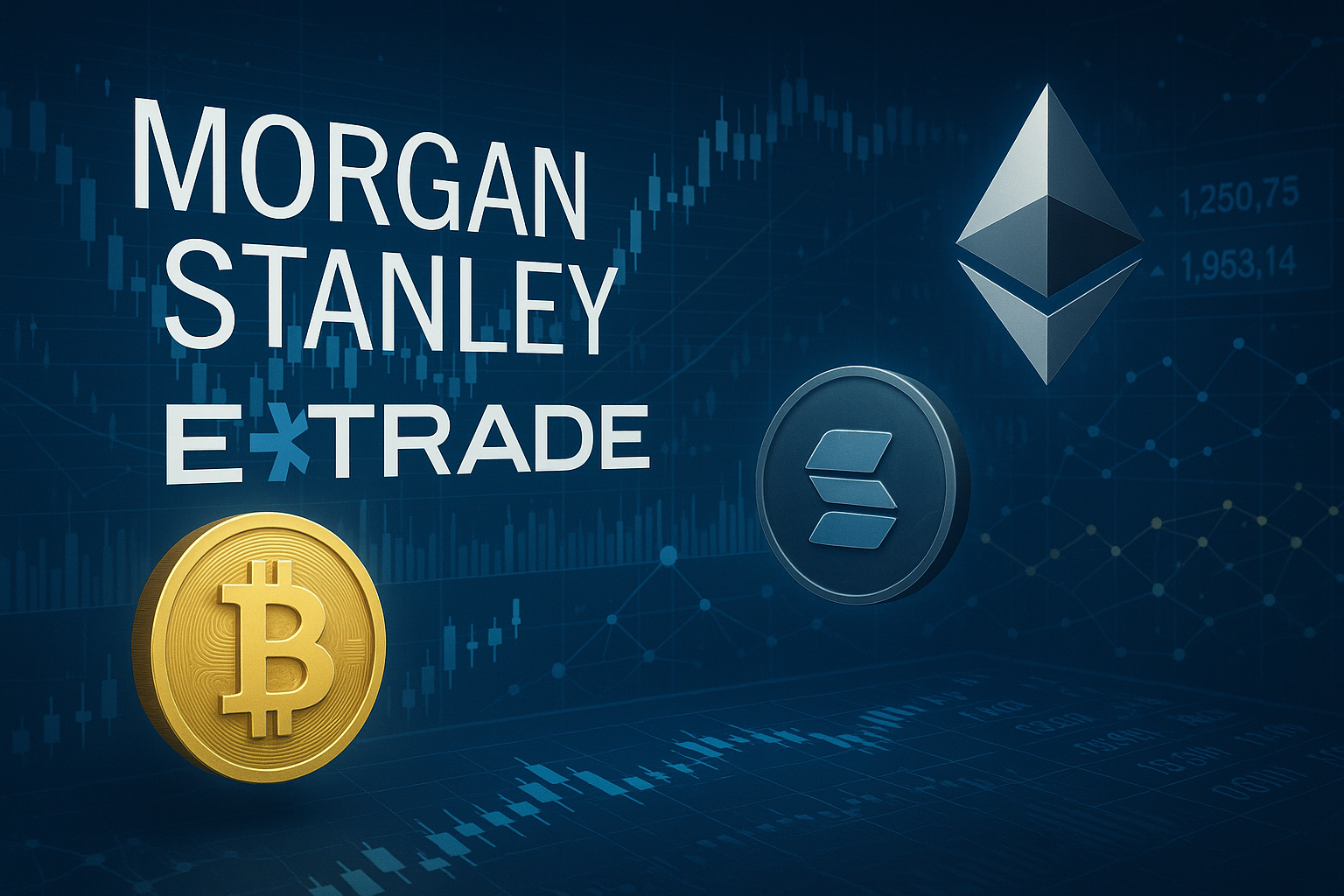
Morgan Stanley E*Trade Crypto Trading Launch

Published September 26, 2025 | Author: everythingcryptoitclouds.com

In a groundbreaking move that signals the complete transformation of Wall Street’s relationship with cryptocurrency, Morgan Stanley has announced its plans to launch direct crypto trading for E*Trade customers in the first half of 2026. This isn’t just another financial institution dipping its toes into digital assets—this represents a seismic shift that could fundamentally reshape how institutional wealth management approaches cryptocurrency investment and custody.

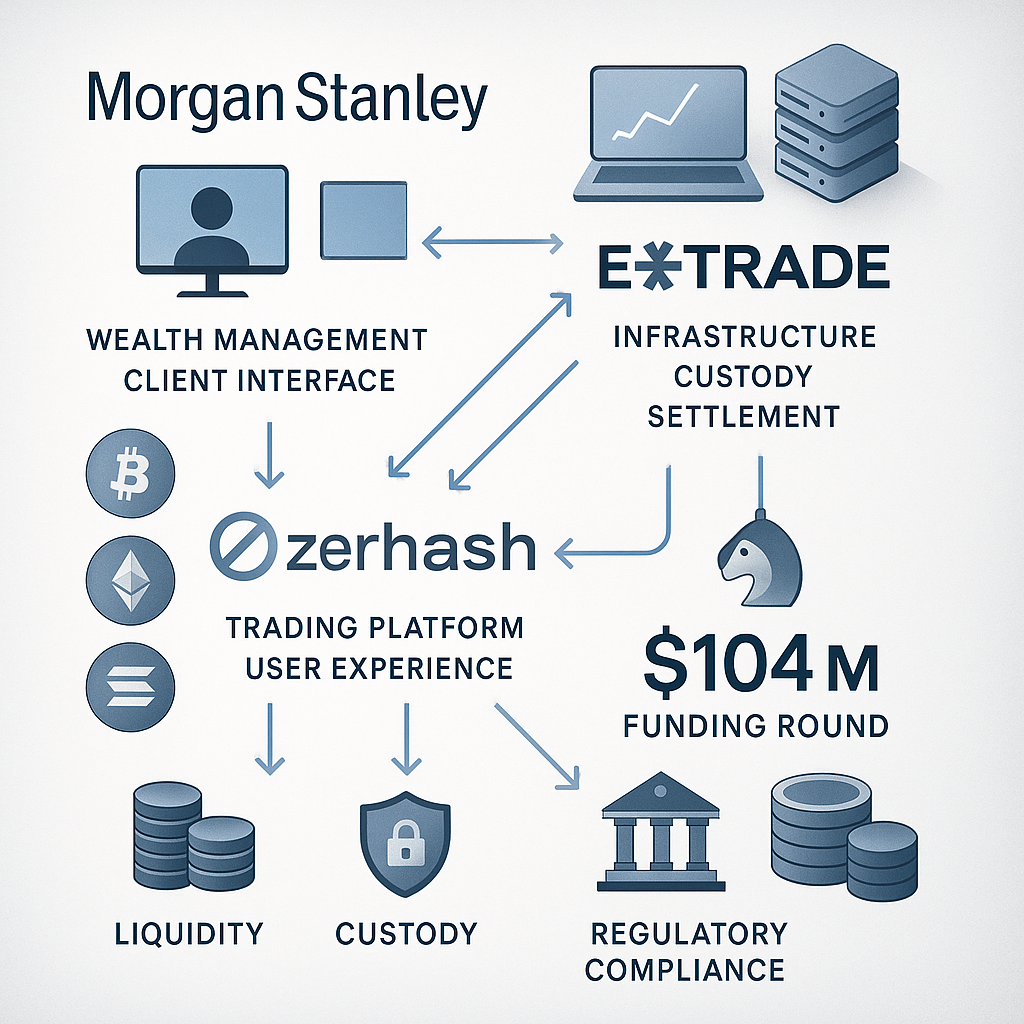
The announcement, made on September 23, 2025, comes at a time when the cryptocurrency market has reached an unprecedented $3.9 trillion valuation, with Bitcoin commanding $2.25 trillion and Ethereum holding $506 billion of that total market capitalization [1]. What makes this development particularly significant is not just the scale of Morgan Stanley’s commitment, but the sophisticated infrastructure partnership they’ve forged with Zerohash, a crypto infrastructure provider that recently achieved unicorn status with a $104 million funding round [2].

The Strategic Partnership That’s Changing Everything

Morgan Stanley’s approach to crypto trading represents a masterclass in strategic partnership development. Rather than attempting to build cryptocurrency infrastructure from scratch—a process that could take years and cost hundreds of millions—the financial giant has partnered with Zerohash, one of the industry’s leading embedded crypto solutions providers [3].

This partnership is far more than a simple vendor relationship. Morgan Stanley has taken an investment stake in Zerohash, demonstrating a level of commitment that goes beyond typical service provider arrangements [4]. The timing couldn’t be more strategic, as Zerohash recently completed a $104 million Series D-2 funding round led by Interactive Brokers, with Morgan Stanley, SoFi, and Apollo Global Management participating as strategic investors [5].

The partnership structure reveals Morgan Stanley’s sophisticated understanding of the crypto ecosystem. Zerohash will handle the complex technical infrastructure including liquidity provision, custody services, and settlement operations, while Morgan Stanley focuses on what it does best: client relationship management and wealth advisory services. This division of labor allows both companies to leverage their core competencies while delivering a seamless experience to E*Trade customers.

Jed Finn, head of wealth management at Morgan Stanley, emphasized the strategic nature of this approach in an internal memo obtained by CNBC: “We are well underway in preparing to offer crypto trading through a partner model to E-Trade clients in the first half of 2026” [6]. The use of the phrase “partner model” is particularly significant, as it indicates Morgan Stanley’s recognition that cryptocurrency requires specialized expertise that’s best obtained through strategic alliances rather than internal development.

MembersCap: The Early Adopter Validating Institutional Demand

One of the most compelling aspects of Morgan Stanley’s crypto trading initiative is the early validation it has received from sophisticated institutional clients. MembersCap, a Bermuda-regulated investment manager specializing in tokenized reinsurance investments, has already begun using the service, providing crucial real-world testing and validation of the platform’s capabilities [7].

MembersCap’s involvement is particularly noteworthy given the company’s innovative approach to traditional finance. Founded in 2024, MembersCap has pioneered the tokenization of institutional-grade reinsurance investments, creating the first tokenized reinsurance fund designed for sophisticated digital asset investors [8]. In July 2025, the company launched this groundbreaking fund in partnership with Archax, a digital asset exchange, broker, and custodian [9].

The significance of MembersCap’s early adoption extends beyond simple beta testing. In September 2025, MembersCap became the first company to use the new London Stock Exchange blockchain-based platform for private funds, demonstrating their position at the forefront of financial innovation [10]. Their decision to utilize Morgan Stanley’s crypto trading infrastructure validates the platform’s capability to serve sophisticated institutional clients with complex requirements.

This early institutional adoption addresses one of the key challenges facing traditional financial institutions entering the crypto space: proving that their infrastructure can handle the demands of professional investment managers. MembersCap’s successful use of the platform provides Morgan Stanley with a powerful case study demonstrating institutional-grade reliability and functionality.

The Cryptocurrency Landscape: A $3.9 Trillion Opportunity

To understand the magnitude of Morgan Stanley’s strategic move, it’s essential to examine the current state of the cryptocurrency market. What began as a niche asset class dismissed by many traditional financial institutions has evolved into a $3.9 trillion market that can no longer be ignored by serious wealth managers [11].

The market composition reveals the maturation of the cryptocurrency ecosystem. Bitcoin, with its $2.25 trillion market capitalization, has established itself as the digital equivalent of gold—a store of value that institutional investors increasingly view as a necessary portfolio component [12]. Ethereum, commanding $506 billion in market cap, represents the infrastructure layer of decentralized finance, hosting thousands of applications and smart contracts that are reshaping financial services [13].

The inclusion of Solana as one of the three cryptocurrencies available at launch demonstrates Morgan Stanley’s sophisticated understanding of the crypto ecosystem. Solana’s recent achievement of 107,664 transactions per second in a single block has positioned it as a leading platform for high-frequency trading and institutional applications [14]. This technical capability makes Solana particularly attractive to institutional clients who require high-performance blockchain infrastructure for their operations.

The growth trajectory of the cryptocurrency market has been nothing short of extraordinary. From a total market capitalization of less than $1 billion in 2013 to nearly $4 trillion today, cryptocurrencies have demonstrated a compound annual growth rate that far exceeds traditional asset classes [15]. This growth has been driven not just by retail speculation, but increasingly by institutional adoption, regulatory clarity, and the development of sophisticated financial products.

Regulatory Environment: The Trump Administration’s Crypto-Friendly Stance

The timing of Morgan Stanley’s crypto trading launch is inextricably linked to the dramatic shift in regulatory sentiment following the Trump administration’s return to power. The administration’s supportive stance toward cryptocurrency regulation has created an environment where traditional financial institutions feel confident making substantial investments in crypto infrastructure [16].

This regulatory shift represents a complete reversal from the uncertainty that characterized much of the previous regulatory environment. Where banks once faced unclear guidance and potential enforcement actions for crypto-related activities, they now operate in a framework that actively encourages innovation and institutional participation in digital asset markets [17].

The impact of this regulatory clarity cannot be overstated. It has enabled Morgan Stanley to move forward with confidence, knowing that their crypto trading initiative aligns with government policy rather than potentially conflicting with it. This regulatory support has also contributed to the broader institutional adoption wave that includes not just Morgan Stanley, but competitors like Charles Schwab and Robinhood expanding their crypto offerings [18].

The regulatory environment has also facilitated the type of strategic partnerships that make Morgan Stanley’s approach possible. Zerohash’s ability to provide comprehensive crypto infrastructure services depends on clear regulatory frameworks that define custody requirements, compliance obligations, and operational standards. The current regulatory clarity has enabled these partnerships to flourish, creating the foundation for institutional-grade crypto services.

Technical Infrastructure: The Zerohash Advantage

Crypto Infrastructure Partnership

The technical architecture underlying Morgan Stanley’s crypto trading initiative represents a sophisticated approach to financial technology integration. Zerohash’s role as the infrastructure provider encompasses multiple critical functions that would be extremely challenging for a traditional bank to develop independently.

Zerohash’s liquidity provision capabilities are particularly crucial for institutional clients. The company has developed relationships with multiple cryptocurrency exchanges and market makers, enabling them to provide competitive pricing and deep liquidity across all supported cryptocurrencies [19]. This liquidity infrastructure ensures that E*Trade clients can execute large trades without significant market impact, a critical requirement for institutional investors.

The custody services provided by Zerohash represent another critical component of the technical infrastructure. Cryptocurrency custody requires specialized security measures, including multi-signature wallets, hardware security modules, and sophisticated key management systems [20]. Zerohash has invested heavily in developing institutional-grade custody solutions that meet the security and compliance requirements of traditional financial institutions.

Settlement operations in the cryptocurrency space involve complex interactions between traditional banking systems and blockchain networks. Zerohash’s settlement infrastructure handles the conversion between fiat currencies and cryptocurrencies, manages blockchain transaction fees, and ensures compliance with anti-money laundering and know-your-customer requirements [21]. This technical complexity would represent a significant development challenge for Morgan Stanley to tackle independently.

The integration between Zerohash’s infrastructure and Morgan Stanley’s existing ETrade platform requires sophisticated API development and real-time data synchronization. The seamless user experience that ETrade customers will enjoy depends on complex backend systems that handle account management, trade execution, and portfolio reporting across both traditional and digital assets [22].

Competitive Landscape: Positioning Against Robinhood and Schwab

Morgan Stanley’s entry into direct crypto trading places the firm in direct competition with established players who have already captured significant market share in retail crypto trading. Understanding this competitive landscape is crucial for assessing the potential impact of Morgan Stanley’s initiative.

Robinhood has established itself as a leader in retail crypto trading, offering a wide range of cryptocurrency options through an intuitive mobile-first interface [23]. The platform’s success has been built on simplicity, low fees, and accessibility for retail investors. However, Robinhood’s focus on retail customers leaves an opportunity for Morgan Stanley to differentiate through institutional-grade services and comprehensive wealth management integration.

Charles Schwab has taken a more conservative approach, providing clients with access to Bitcoin and Ethereum exchange-traded funds rather than direct cryptocurrency ownership [24]. This approach reduces complexity and regulatory risk but also limits the potential returns and flexibility that direct ownership provides. Morgan Stanley’s direct ownership model represents a more aggressive approach that could attract clients seeking greater control over their cryptocurrency investments.

The competitive advantage that Morgan Stanley brings to this market extends beyond just cryptocurrency trading. The firm’s comprehensive wealth management platform allows for sophisticated portfolio construction that integrates traditional and digital assets. This holistic approach appeals to high-net-worth clients who want their cryptocurrency investments managed alongside their traditional portfolios by experienced wealth advisors.

Morgan Stanley’s brand reputation and regulatory compliance capabilities also provide significant competitive advantages. Wealthy clients often prioritize security and regulatory compliance over features like low fees or extensive cryptocurrency selection. Morgan Stanley’s established reputation in wealth management and their partnership with Zerohash’s institutional-grade infrastructure addresses these priorities effectively.

The Tokenization Revolution: Beyond Simple Crypto Trading

Wall Street Crypto Adoption

Perhaps the most forward-looking aspect of Morgan Stanley’s crypto initiative is their focus on tokenization of traditional financial assets. Jed Finn’s internal memo revealed that the firm views cryptocurrency trading as merely “the tip of the iceberg” in a broader transformation of wealth management through distributed ledger technology [25].

Tokenization represents the process of creating digital representations of traditional assets on blockchain networks. This technology enables fractional ownership, 24/7 trading, programmable compliance, and automated settlement for assets that have traditionally been illiquid or difficult to trade [26]. The potential applications span real estate, private equity, bonds, commodities, and virtually any asset class that can be legally represented digitally.

The efficiency gains from tokenization are substantial. Traditional asset transfers often require days or weeks to settle, involve multiple intermediaries, and incur significant transaction costs. Tokenized assets can settle in minutes, reduce intermediary fees, and enable new forms of financial innovation through smart contract automation [27].

Morgan Stanley’s focus on tokenization positions the firm at the forefront of a transformation that could reshape the entire wealth management industry. “Tokenized substitutes for cash begin paying interest as soon as it hits the wallet,” Finn noted in his memo, highlighting the immediate efficiency gains that tokenization can provide [28]. This capability could revolutionize cash management for wealthy clients, eliminating the opportunity cost of holding non-interest-bearing cash balances.

The development of Morgan Stanley’s proprietary wallet solution is a critical component of their tokenization strategy. This wallet will serve as the custody solution for clients’ digital assets, but more importantly, it will provide the foundation for holding and managing tokenized versions of traditional assets [29]. The wallet’s development represents a significant technical undertaking that will position Morgan Stanley to offer innovative financial products that competitors cannot match.

Market Implications and Industry Transformation

The announcement of Morgan Stanley’s crypto trading initiative has implications that extend far beyond the firm itself. As one of the most conservative and prestigious names on Wall Street, Morgan Stanley’s embrace of cryptocurrency sends a powerful signal to the entire financial services industry about the legitimacy and permanence of digital assets.

The wealth management industry has been watching Morgan Stanley’s approach to cryptocurrency with particular interest. Wealth management accounts for nearly half of Morgan Stanley’s total revenue, making the firm more dependent on this business line than most of its competitors [30]. This dependence means that Morgan Stanley’s strategic decisions in wealth management often influence industry-wide trends.

The success of Morgan Stanley’s crypto initiative could accelerate adoption across the wealth management industry. Competitors who have been hesitant to offer direct cryptocurrency trading may feel compelled to develop similar capabilities to avoid losing clients to Morgan Stanley. This competitive dynamic could lead to rapid industry-wide adoption of crypto trading capabilities.

The institutional validation that Morgan Stanley’s entry provides could also impact cryptocurrency valuations and market dynamics. When a firm with Morgan Stanley’s reputation and client base begins offering direct crypto trading, it signals to the market that cryptocurrencies have achieved a level of institutional acceptance that supports higher valuations [31].

The integration of cryptocurrency trading with traditional wealth management services also has the potential to change how clients think about portfolio construction. Rather than viewing cryptocurrencies as speculative investments separate from their traditional portfolios, clients may begin to see digital assets as legitimate portfolio components that deserve strategic allocation alongside stocks, bonds, and other traditional assets.

Risk Management and Regulatory Compliance

Morgan Stanley’s approach to crypto trading demonstrates sophisticated risk management that addresses the unique challenges of digital asset custody and trading. The partnership with Zerohash allows Morgan Stanley to leverage specialized expertise in cryptocurrency risk management while maintaining oversight and control over client relationships.

The custody risks associated with cryptocurrency are fundamentally different from traditional asset custody. Cryptocurrency custody requires secure key management, protection against cyber attacks, and sophisticated backup and recovery procedures [32]. The irreversible nature of blockchain transactions means that security breaches or operational errors can result in permanent loss of assets, making robust security measures essential.

Regulatory compliance in the cryptocurrency space involves navigating a complex web of federal and state regulations that continue to evolve. Anti-money laundering requirements, know-your-customer obligations, and reporting requirements for cryptocurrency transactions require specialized compliance systems and procedures [33]. Zerohash’s expertise in crypto compliance allows Morgan Stanley to meet these requirements without developing internal capabilities from scratch.

The reputational risks associated with cryptocurrency trading are also significant for a firm like Morgan Stanley. Any security breaches, compliance failures, or operational issues could damage the firm’s reputation and client relationships. The partnership structure with Zerohash helps mitigate these risks by leveraging proven infrastructure and expertise while maintaining appropriate oversight and control.

Market risk management for cryptocurrency trading requires sophisticated systems for monitoring volatility, managing position limits, and providing appropriate client education about the risks of digital asset investment. Morgan Stanley’s wealth management platform will need to integrate cryptocurrency risk metrics with traditional portfolio risk management to provide clients with comprehensive risk reporting.

Financial Projections and Revenue Potential

The revenue potential from Morgan Stanley’s crypto trading initiative is substantial, reflecting both the size of the cryptocurrency market and the firm’s extensive client base. With wealth management representing nearly half of Morgan Stanley’s revenue, successful crypto adoption could have a meaningful impact on the firm’s financial performance [34].

Trading revenue from cryptocurrency transactions could be significant given the higher volatility and trading frequency typical in crypto markets compared to traditional assets. Cryptocurrency trading volumes often exceed those of traditional assets, and the bid-ask spreads in crypto markets can be wider than those in traditional markets, potentially generating higher trading revenue per transaction [35].

Custody and wallet services represent another revenue opportunity that could prove particularly lucrative. Unlike traditional asset custody, cryptocurrency custody involves ongoing technical services and security measures that justify higher fees. The development of Morgan Stanley’s proprietary wallet solution positions the firm to capture this revenue stream while providing enhanced services to clients [36].

The tokenization services that Morgan Stanley plans to offer could represent an entirely new revenue category. As the firm helps clients tokenize traditional assets, they could earn fees for structuring, custody, and ongoing management of these tokenized investments. The efficiency gains from tokenization could also enable Morgan Stanley to offer new financial products with attractive fee structures [37].

Asset management fees on cryptocurrency holdings could also contribute significantly to revenue. As clients allocate larger portions of their portfolios to cryptocurrencies, the assets under management subject to Morgan Stanley’s fee structure will increase. Given the higher volatility of cryptocurrencies, the dollar value of assets under management could grow more rapidly than with traditional assets [38].

Technology Integration and User Experience

The success of Morgan Stanley’s crypto trading initiative will depend heavily on the seamless integration of cryptocurrency capabilities with the existing E*Trade platform. This integration represents a significant technical challenge that requires careful coordination between Morgan Stanley’s technology teams and Zerohash’s infrastructure.

The user experience for ETrade customers must feel familiar and intuitive while providing access to sophisticated cryptocurrency trading capabilities. This means integrating crypto trading into the existing ETrade interface without overwhelming users with complexity or creating confusion about the differences between traditional and digital asset trading [39].

Real-time portfolio reporting that combines traditional and digital assets represents another significant technical challenge. Cryptocurrency prices can be highly volatile and trade 24/7, requiring continuous price updates and portfolio valuation. The integration of this real-time data with traditional portfolio reporting systems requires sophisticated data management and processing capabilities [40].

Order management systems for cryptocurrency trading must handle the unique characteristics of digital asset markets, including different trading hours, settlement procedures, and market structures. The integration of these systems with Morgan Stanley’s existing order management infrastructure requires careful design to ensure reliability and performance [41].

Mobile accessibility will be crucial for the success of the crypto trading platform. Cryptocurrency markets operate continuously, and clients expect to be able to monitor and trade their digital assets from mobile devices at any time. The mobile integration must provide full functionality while maintaining the security standards required for financial transactions [42].

Future Expansion and Strategic Vision

Morgan Stanley’s crypto trading initiative represents just the beginning of a broader strategic vision for digital asset integration across the firm’s wealth management platform. The “tip of the iceberg” comment from Jed Finn suggests that the firm has ambitious plans for expanding their digital asset capabilities beyond simple trading [43].

The development of additional cryptocurrency offerings seems likely as the platform matures and client demand grows. While the initial launch will support Bitcoin, Ethereum, and Solana, the infrastructure being developed could easily accommodate additional cryptocurrencies as they gain institutional acceptance and regulatory clarity [44].

International expansion of crypto trading capabilities could represent a significant growth opportunity. As regulatory frameworks for cryptocurrency trading develop in other jurisdictions, Morgan Stanley could leverage their Zerohash partnership to offer crypto trading to clients in international markets where the firm has a presence [45].

The integration of decentralized finance (DeFi) protocols could represent the next frontier for Morgan Stanley’s crypto capabilities. DeFi protocols offer sophisticated financial services including lending, borrowing, and yield generation that could be attractive to institutional clients. However, the regulatory and technical challenges of DeFi integration would require careful consideration and development [46].

Institutional crypto services beyond retail trading could also represent a significant expansion opportunity. Morgan Stanley could leverage their crypto infrastructure to offer services to corporate clients, including treasury management, payment processing, and blockchain-based financial products [47].

Conclusion: A Watershed Moment for Institutional Crypto Adoption

Morgan Stanley’s announcement of crypto trading for E*Trade customers represents far more than just another financial institution adding cryptocurrency services. This initiative signals a fundamental shift in how Wall Street views digital assets—from speculative investments to legitimate portfolio components that deserve institutional-grade infrastructure and professional management.

The sophisticated partnership with Zerohash demonstrates that successful crypto adoption requires specialized expertise and infrastructure that traditional financial institutions are wise to obtain through strategic alliances rather than internal development. The early validation from sophisticated clients like MembersCap provides confidence that the platform can meet the demanding requirements of institutional investors.

The timing of this initiative, coinciding with favorable regulatory developments and a $3.9 trillion cryptocurrency market, positions Morgan Stanley to capture significant market share in the rapidly growing institutional crypto market. The firm’s focus on tokenization and distributed ledger technology beyond simple crypto trading suggests a vision for transforming wealth management that extends far beyond current market offerings.

As the first half of 2026 approaches and Morgan Stanley’s crypto trading platform launches, the financial services industry will be watching closely to see how clients respond and whether competitors follow suit. The success of this initiative could accelerate institutional crypto adoption across Wall Street, fundamentally changing how wealth managers approach digital asset investment and custody.

The revolution in institutional cryptocurrency services has begun, and Morgan Stanley’s comprehensive approach to crypto trading, custody, and tokenization positions the firm at the forefront of this transformation. For investors, wealth managers, and the broader financial services industry, this represents a watershed moment that could reshape the landscape of digital asset investment for years to come.


References

[1] Reuters – “Morgan Stanley to offer crypto trading on ETrade platform through Zerohash tie-up” (September 23, 2025)
[2] CNBC – “Startup Zerohash raises $104M from Morgan Stanley, SoFi, Apollo” (September 23, 2025)
[3] CoinDesk – “Interactive Brokers (IBKR) Leads $104M Zerohash Round” (September 23, 2025)
[4] CNBC – “Morgan Stanley plans to offer crypto trading through E-Trade next year” (September 23, 2025)
[5] Globe Newswire – “Interactive Brokers leads zerohash capital raise” (September 23, 2025)
[6] CNBC – “Morgan Stanley plans to offer crypto trading through E-Trade next year” (September 23, 2025)
[7] Artemis – “MembersCap unlocks reinsurance capital as first to use new London Stock Exchange platform” (September 15, 2025)
[8] PR Newswire – “Members Capital Management Completes Initial Deployment of Tokenised Reinsurance Fund” (July 4, 2025)
[9] MembersCap Press Release (July 8, 2025)
[10] CoinDesk – “London Stock Exchange Unveils Blockchain-Based Platform for Private Funds” (September 15, 2025)
[11] Reuters – “Morgan Stanley to offer crypto trading on E
Trade platform through Zerohash tie-up” (September 23, 2025)
[12] CoinMarketCap Data (September 2025)
[13] CoinMarketCap Data (September 2025)
[14] Solana Network Performance Data (August 2025)
[15] Historical Cryptocurrency Market Data
[16] CNBC – “Morgan Stanley plans to offer crypto trading through E-Trade next year” (September 23, 2025)
[17] Industry Analysis – Regulatory Environment Changes (2025)
[18] Reuters – “Morgan Stanley to offer crypto trading on E*Trade platform through Zerohash tie-up” (September 23, 2025)
[19] Zerohash Technical Documentation
[20] Cryptocurrency Custody Best Practices (Industry Standards)
[21] Zerohash Settlement Infrastructure Overview
[22] Financial Technology Integration Analysis
[23] Robinhood Crypto Trading Platform Analysis
[24] Charles Schwab Cryptocurrency Offerings Review
[25] CNBC – “Morgan Stanley plans to offer crypto trading through E-Trade next year” (September 23, 2025)
[26] Tokenization Technology Overview (Industry Analysis)
[27] Distributed Ledger Technology Benefits Analysis
[28] CNBC – “Morgan Stanley plans to offer crypto trading through E-Trade next year” (September 23, 2025)
[29] Morgan Stanley Wallet Development Plans
[30] Morgan Stanley Financial Reports (2024)
[31] Institutional Crypto Adoption Impact Analysis
[32] Cryptocurrency Security Best Practices
[33] Crypto Regulatory Compliance Requirements
[34] Morgan Stanley Revenue Analysis
[35] Cryptocurrency Trading Volume Analysis
[36] Digital Asset Custody Revenue Models
[37] Tokenization Service Revenue Potential
[38] Asset Management Fee Projections
[39] User Experience Design Principles
[40] Real-time Portfolio Management Systems
[41] Cryptocurrency Order Management Requirements
[42] Mobile Trading Platform Standards
[43] CNBC – “Morgan Stanley plans to offer crypto trading through E-Trade next year” (September 23, 2025)
[44] Cryptocurrency Market Expansion Analysis
[45] International Crypto Regulation Overview
[46] Decentralized Finance Integration Challenges
[47] Institutional Crypto Services Market Analysis

AmericanFortress and Litecoin Introduce Privacy-First Wallet: The Revolutionary Partnership That’s Redefining Cryptocurrency Security

Published by everythingcryptoitclouds.com | September 11, 2025

AmericanFortress and Litecoin Partnership

In a groundbreaking development that promises to reshape the cryptocurrency privacy landscape, the Litecoin Foundation and AmericanFortress have announced their partnership to launch the world’s most private Litecoin wallet. This collaboration, unveiled on September 8, 2025, represents a paradigm shift in how we approach cryptocurrency security, privacy, and user experience, addressing the critical $1.2 billion annual loss to crypto phishing scams while maintaining full regulatory compliance [1].

The partnership between these two industry leaders comes at a pivotal moment when cryptocurrency adoption is accelerating, but security vulnerabilities continue to plague the ecosystem. With phishing attacks reaching unprecedented levels and traditional wallet addresses creating confusion and risk for users, the AmericanFortress Litecoin Wallet introduces revolutionary “Send-to-Name” technology that fundamentally eliminates the most common attack vectors while preserving the privacy and decentralization principles that define cryptocurrency [2].

This isn’t merely another wallet launch—it’s the introduction of a comprehensive privacy infrastructure that positions Litecoin at the forefront of the privacy-focused cryptocurrency movement. By integrating MimbleWimble Extension Blocks (MWEB), FortressNames™ technology, and advanced cryptographic protocols, this wallet delivers what David Schwartz, Project Director at the Litecoin Foundation, describes as “a milestone for privacy infrastructure, not just for Litecoin, but for the entire crypto ecosystem” [3].

The significance of this partnership extends beyond technical innovation to address fundamental challenges facing cryptocurrency adoption. Traditional wallet addresses—those long, complex strings of characters that users must copy and paste—have become the primary vector for phishing attacks and user error. The AmericanFortress solution replaces these vulnerable address strings with human-readable names and auto-generated stealth addresses, creating a user experience that rivals traditional banking apps while delivering unprecedented privacy protection.

The Privacy Crisis in Cryptocurrency: Understanding the $1.2 Billion Problem

The cryptocurrency industry faces a privacy and security crisis that threatens to undermine mainstream adoption. According to recent data, $1.2 billion was lost to crypto phishing scams in the United States alone during 2024, with the vast majority of these attacks exploiting the complexity and vulnerability of traditional wallet address systems [4]. This staggering figure represents not just financial losses, but a fundamental failure of current cryptocurrency infrastructure to protect users from increasingly sophisticated attack vectors.

The root of this problem lies in the inherent design of cryptocurrency addresses. Traditional wallet addresses are long, alphanumeric strings that are virtually impossible for humans to memorize or verify accurately. When users copy and paste these addresses, they create multiple opportunities for attackers to intercept and modify the destination, redirecting funds to malicious wallets. This vulnerability has been exploited through various methods, including clipboard malware, fake websites, and social engineering attacks that trick users into sending funds to incorrect addresses.

The psychological impact of these losses extends far beyond the immediate financial damage. Each successful phishing attack erodes public confidence in cryptocurrency systems and creates barriers to adoption among mainstream users who view the technology as inherently risky and complex. This perception problem has significant implications for the long-term growth and legitimacy of the cryptocurrency ecosystem, particularly as institutional investors and regulatory bodies evaluate the maturity and security of digital asset infrastructure.

Traditional privacy solutions in the cryptocurrency space have often required users to make difficult trade-offs between security, usability, and regulatory compliance. Privacy coins like Monero and Zcash offer strong anonymity features but face increasing regulatory scrutiny and exchange delistings. Layer-2 privacy solutions often require technical expertise to implement correctly and may not provide comprehensive protection across all transaction types. The result has been a fragmented privacy landscape where users must choose between convenience and security, often leaving them vulnerable to attacks or regulatory complications.

The AmericanFortress and Litecoin partnership addresses these challenges through a fundamentally different approach that prioritizes privacy by design rather than privacy as an add-on feature. By integrating privacy protections at the protocol level and combining them with intuitive user experience improvements, this solution eliminates the traditional trade-offs that have hindered privacy adoption in the cryptocurrency space.

Revolutionary Send-to-Name Technology: Eliminating Phishing at the Source

Privacy Wallet Features

The cornerstone of the AmericanFortress Litecoin Wallet is its revolutionary Send-to-Name technology, which represents a fundamental reimagining of how cryptocurrency transactions are initiated and secured. This system replaces the vulnerable copy-paste address model with human-readable names and automatically generated stealth addresses that are unique to each sender-receiver pair, creating a transaction environment that is both more secure and more intuitive than traditional cryptocurrency wallets [5].

The technical implementation of Send-to-Name technology involves sophisticated cryptographic protocols that generate unique stealth addresses for every transaction between specific users. When a user wants to send Litecoin to another person, they simply enter that person’s FortressName™—a human-readable identifier like “@johnsmith”—rather than a complex wallet address. The system then automatically generates a one-time stealth address that is known only to the sender and receiver, eliminating the possibility of address interception or modification by malicious actors.

This approach fundamentally disrupts the attack vectors that phishing scams rely upon. Traditional phishing attacks work by intercepting or modifying wallet addresses during the copy-paste process, redirecting funds to attacker-controlled wallets. With Send-to-Name technology, there are no addresses to intercept or modify—each transaction uses a unique, automatically generated address that cannot be predicted or replicated by attackers. This creates what Mehow Pospieszalski, CEO of AmericanFortress, describes as “bulletproof privacy without compromising on speed, usability, or interoperability” [6].

The user experience improvements delivered by Send-to-Name technology extend beyond security to address fundamental usability challenges that have hindered cryptocurrency adoption. Users no longer need to carefully verify long address strings, worry about typos that could result in lost funds, or maintain complex address books for frequent recipients. Instead, they can send cryptocurrency as easily as sending an email or text message, using memorable names that are both human-readable and cryptographically secure.

The system also incorporates advanced features designed for the emerging AI-driven economy. AI agents can use FortressNames™ to conduct autonomous transactions without requiring human intervention to verify addresses or manage complex cryptographic keys. This capability positions the AmericanFortress Litecoin Wallet as infrastructure for the programmable economy, where AI systems will need to conduct secure, private transactions on behalf of users and organizations.

From a technical perspective, the Send-to-Name system leverages the AF Token to secure the integrity of the decentralized Names database and power the dynamic address computation that makes stealth addresses possible. This creates a self-sustaining ecosystem where the security and functionality of the privacy features are maintained through cryptoeconomic incentives rather than centralized control, preserving the decentralized principles that are fundamental to cryptocurrency systems.

MWEB Integration: Layer-2 Privacy That Preserves Litecoin’s Core Values

The integration of MimbleWimble Extension Blocks (MWEB) into the AmericanFortress Litecoin Wallet represents a sophisticated approach to privacy that maintains compatibility with Litecoin’s existing infrastructure while adding powerful confidentiality features. MWEB technology, which has been under development for several years, provides a Layer-2 privacy solution that allows users to conduct confidential transactions without compromising the transparency and auditability that regulators and institutions require from blockchain systems [7].

MimbleWimble, the privacy protocol that underlies MWEB, was originally proposed as a way to improve both privacy and scalability in blockchain systems. The protocol uses a combination of cryptographic techniques, including Confidential Transactions and CoinJoin-style transaction aggregation, to obscure transaction amounts and participant identities while maintaining the mathematical properties that allow network participants to verify the integrity of the blockchain without revealing sensitive information.

The implementation of MWEB as an extension block system allows Litecoin to maintain backward compatibility with existing wallets and infrastructure while providing opt-in privacy features for users who require them. This approach addresses one of the key challenges facing privacy-focused cryptocurrencies: the need to balance privacy with regulatory compliance and network effects. Users can choose to conduct transactions through the MWEB system when privacy is required, or use standard Litecoin transactions when transparency is preferred or required by regulatory frameworks.

The technical architecture of MWEB integration in the AmericanFortress wallet is designed to make privacy the default setting while preserving user choice and regulatory compliance options. When users initiate transactions through the wallet, the system automatically routes them through MWEB unless specifically configured otherwise, ensuring that privacy protection is applied consistently without requiring technical expertise from users. This default-privacy approach represents a significant departure from traditional privacy solutions that require users to actively opt-in to privacy features.

The privacy protections provided by MWEB extend beyond simple transaction obfuscation to include comprehensive metadata protection. Traditional blockchain analysis techniques rely on transaction graph analysis, timing correlation, and amount correlation to deanonymize users and track fund flows. MWEB’s transaction aggregation and confidential transaction features disrupt these analysis techniques by breaking the transaction graph and hiding transaction amounts, making it significantly more difficult for observers to track user activity or build comprehensive profiles of user behavior.

The scalability benefits of MWEB integration also contribute to the overall value proposition of the AmericanFortress Litecoin Wallet. By aggregating multiple transactions into single MWEB blocks, the system reduces the on-chain footprint of privacy transactions while improving throughput and reducing fees. This creates a positive feedback loop where increased privacy adoption leads to improved network efficiency, making privacy features more attractive to cost-conscious users and supporting broader adoption of privacy-preserving transaction methods.

C-Filtering and IP Protection: Comprehensive Privacy Beyond Transaction Data

Crypto Privacy Security

While transaction privacy is crucial, comprehensive cryptocurrency privacy requires protection against network-level surveillance and IP address correlation attacks. The AmericanFortress Litecoin Wallet addresses these concerns through advanced C-filtering technology that prevents IP-to-wallet deanonymization when wallets connect to public servers, creating a comprehensive privacy solution that protects users at multiple layers of the network stack [8].

C-filtering, or client-side filtering, represents a sophisticated approach to privacy that allows wallets to retrieve blockchain data without revealing which specific transactions or addresses they are interested in. Traditional cryptocurrency wallets must query blockchain nodes for information about specific addresses, creating a correlation between IP addresses and wallet addresses that can be exploited by network observers to deanonymize users. C-filtering eliminates this correlation by allowing wallets to download filtered blockchain data without revealing their specific interests to network nodes.

The implementation of C-filtering in the AmericanFortress wallet involves the use of Bloom filters and other probabilistic data structures that allow the wallet to specify its data requirements in a way that provides plausible deniability about which specific transactions or addresses it is monitoring. This approach ensures that even if network traffic is intercepted or analyzed, observers cannot determine which addresses belong to specific users based on their network activity patterns.

The privacy benefits of C-filtering extend beyond simple IP address protection to include comprehensive metadata privacy that prevents various forms of network analysis. Traffic analysis attacks, which attempt to correlate network activity patterns with transaction timing and amounts, are disrupted by the probabilistic nature of C-filtering requests. Timing correlation attacks, which attempt to link wallet synchronization events with transaction broadcasts, are prevented by the batch processing approach used in C-filtering implementations.

The technical implementation of C-filtering in the AmericanFortress wallet is designed to be transparent to users while providing comprehensive protection against network-level surveillance. The wallet automatically generates appropriate filter parameters based on user activity patterns and privacy requirements, ensuring that privacy protection is applied consistently without requiring manual configuration or technical expertise from users. This automated approach eliminates the privacy risks associated with misconfigured privacy settings while ensuring that protection is applied comprehensively across all wallet operations.

The integration of C-filtering with other privacy features in the AmericanFortress wallet creates a comprehensive privacy solution that addresses multiple attack vectors simultaneously. While MWEB provides transaction-level privacy and Send-to-Name technology eliminates address-based attacks, C-filtering ensures that network-level metadata does not compromise the privacy protections provided by these other systems. This layered approach to privacy represents a significant advancement over single-point privacy solutions that may leave users vulnerable to attacks at other layers of the system.

Zero-Knowledge Proofs and Regulatory Compliance: Privacy Without Compromise

One of the most significant challenges facing privacy-focused cryptocurrency solutions is the need to balance user privacy with regulatory compliance requirements. The AmericanFortress Litecoin Wallet addresses this challenge through the innovative use of zero-knowledge proofs that allow users to demonstrate compliance with regulatory requirements without revealing sensitive transaction details or compromising their privacy [9].

Zero-knowledge proofs are cryptographic protocols that allow one party to prove to another party that they know a specific piece of information without revealing the information itself. In the context of cryptocurrency privacy, zero-knowledge proofs can be used to demonstrate that transactions comply with regulatory requirements—such as anti-money laundering (AML) rules or tax reporting obligations—without revealing transaction amounts, participant identities, or other sensitive details that could compromise user privacy.

The implementation of zero-knowledge proofs in the AmericanFortress wallet is designed to provide selective disclosure capabilities that allow users to prove specific compliance requirements to authorized parties while maintaining comprehensive privacy protection against unauthorized surveillance. This approach enables users to satisfy regulatory obligations without sacrificing the privacy protections that are essential for financial autonomy and security in the digital age.

The technical architecture of the zero-knowledge proof system incorporates advanced cryptographic techniques, including zk-SNARKs (Zero-Knowledge Succinct Non-Interactive Arguments of Knowledge) and other privacy-preserving proof systems that have been extensively tested and validated in production cryptocurrency systems. These proof systems allow users to generate cryptographic evidence that their transactions comply with specific regulatory requirements without revealing the underlying transaction data that would be necessary for traditional compliance verification methods.

The regulatory compliance features of the AmericanFortress wallet are designed to be forward-compatible with evolving regulatory frameworks while preserving user privacy and autonomy. The system incorporates flexible proof generation capabilities that can be adapted to meet different regulatory requirements across various jurisdictions, ensuring that users can maintain compliance with local laws while benefiting from comprehensive privacy protection.

The integration of zero-knowledge proofs with other privacy features in the AmericanFortress wallet creates a comprehensive solution that addresses the traditional trade-off between privacy and compliance. Users can conduct private transactions using MWEB and Send-to-Name technology while maintaining the ability to demonstrate compliance with regulatory requirements through selective disclosure of specific transaction attributes. This approach represents a significant advancement in privacy-preserving compliance technology that could serve as a model for other cryptocurrency systems seeking to balance privacy with regulatory requirements.

AI Agent Integration and the Programmable Economy

The AmericanFortress Litecoin Wallet is designed not just for human users, but for the emerging AI-driven economy where autonomous agents will need to conduct secure, private transactions on behalf of users and organizations. This forward-looking approach positions the wallet as critical infrastructure for the programmable economy, where AI systems will manage increasingly complex financial operations that require both privacy and security [10].

The AI agent integration capabilities of the AmericanFortress wallet leverage the Send-to-Name technology to enable autonomous systems to conduct transactions without requiring human intervention for address verification or security validation. AI agents can use FortressNames™ to identify transaction recipients and automatically generate secure stealth addresses, eliminating the risk of address-based attacks while enabling fully automated transaction processing.

The technical implementation of AI agent support involves sophisticated API interfaces and cryptographic protocols that allow AI systems to securely manage private keys and conduct transactions while maintaining comprehensive audit trails and security controls. The wallet provides programmatic interfaces that enable AI agents to access privacy features, generate compliance proofs, and manage complex multi-party transactions without compromising security or privacy protections.

The privacy features of the AmericanFortress wallet are particularly important for AI agent applications, where transaction privacy can protect sensitive business logic, competitive information, and user data from unauthorized surveillance. AI agents conducting transactions on behalf of users or organizations need comprehensive privacy protection to prevent competitors, malicious actors, or unauthorized parties from analyzing transaction patterns to extract sensitive information about business operations, user behavior, or strategic decisions.

The regulatory compliance capabilities of the wallet are also crucial for AI agent applications, where autonomous systems must be able to demonstrate compliance with various regulatory requirements without human intervention. The zero-knowledge proof system enables AI agents to generate compliance evidence automatically while maintaining privacy protection, ensuring that autonomous systems can operate within regulatory frameworks without compromising user privacy or business confidentiality.

The integration of AI agent capabilities with the comprehensive privacy features of the AmericanFortress wallet represents a significant advancement in cryptocurrency infrastructure that anticipates the needs of the emerging digital economy. As AI systems become increasingly sophisticated and autonomous, the need for secure, private, and compliant transaction infrastructure will become critical for enabling the full potential of AI-driven economic systems.

Market Impact and Industry Implications

The launch of the AmericanFortress Litecoin Wallet represents a significant milestone in the evolution of cryptocurrency privacy and security, with implications that extend far beyond the Litecoin ecosystem to influence the broader cryptocurrency industry and regulatory landscape. This partnership demonstrates that privacy and regulatory compliance are not mutually exclusive, potentially reshaping how regulators, institutions, and users approach privacy-focused cryptocurrency solutions [11].

The market impact of this wallet launch is likely to be multifaceted, affecting Litecoin’s competitive positioning, the broader privacy coin market, and the development of privacy-focused cryptocurrency infrastructure. Litecoin, which has historically been positioned as “digital silver” to Bitcoin’s “digital gold,” gains a significant competitive advantage through this privacy upgrade that differentiates it from other proof-of-work cryptocurrencies while maintaining its core values of decentralization and security.

The demonstration that comprehensive privacy features can be implemented while maintaining regulatory compliance addresses one of the key concerns that have limited institutional adoption of privacy-focused cryptocurrencies. Traditional privacy coins have faced increasing regulatory scrutiny and exchange delistings due to concerns about their potential use for illicit activities. The AmericanFortress approach, which combines strong privacy protection with selective disclosure capabilities, provides a model for privacy implementation that could satisfy both user privacy needs and regulatory compliance requirements.

The technical innovations introduced by the AmericanFortress Litecoin Wallet, particularly the Send-to-Name technology and comprehensive privacy architecture, are likely to influence the development of other cryptocurrency projects and privacy solutions. The success of this approach could accelerate the adoption of similar technologies across the cryptocurrency ecosystem, leading to improved privacy and security standards industry-wide.

The partnership also has significant implications for the enterprise cryptocurrency market, where privacy and compliance requirements have limited the adoption of cryptocurrency solutions for business applications. The combination of privacy protection, regulatory compliance, and AI agent integration capabilities positions the AmericanFortress wallet as infrastructure for enterprise cryptocurrency adoption, potentially opening new markets and use cases for cryptocurrency technology.

The broader implications for cryptocurrency regulation are also significant, as this wallet demonstrates that privacy-preserving cryptocurrency systems can be designed to support regulatory compliance and law enforcement needs. This could influence regulatory approaches to privacy-focused cryptocurrencies and potentially lead to more nuanced regulatory frameworks that recognize the legitimate privacy needs of cryptocurrency users while addressing concerns about illicit use.

Technical Architecture and Security Considerations

The technical architecture of the AmericanFortress Litecoin Wallet represents a sophisticated integration of multiple privacy and security technologies that work together to provide comprehensive protection while maintaining usability and regulatory compliance. Understanding the technical implementation details is crucial for evaluating the security properties and potential limitations of this privacy solution [12].

The wallet’s architecture is built around a layered security model that provides multiple independent privacy protections, ensuring that the compromise of any single privacy mechanism does not result in complete privacy loss. The Send-to-Name technology operates at the address generation layer, MWEB provides transaction-level privacy, C-filtering protects network-level metadata, and zero-knowledge proofs enable selective compliance disclosure. This layered approach creates redundant privacy protections that significantly increase the difficulty of successful privacy attacks.

The cryptographic foundations of the wallet rely on well-established and extensively audited cryptographic primitives, including elliptic curve cryptography for key generation and digital signatures, advanced hash functions for address generation and proof systems, and proven zero-knowledge proof constructions that have been validated in production cryptocurrency systems. This conservative approach to cryptographic implementation reduces the risk of implementation vulnerabilities while ensuring compatibility with existing Litecoin infrastructure.

The key management system incorporates advanced security features designed to protect user funds and privacy even in the event of device compromise or physical attacks. The wallet uses hierarchical deterministic (HD) key generation to create unique keys for each transaction while maintaining the ability to recover all keys from a single seed phrase. The integration with hardware security modules and secure enclaves provides additional protection for high-value accounts and enterprise users.

The network security architecture includes comprehensive protection against various forms of network-based attacks, including man-in-the-middle attacks, traffic analysis, and network surveillance. The C-filtering implementation uses multiple network nodes and probabilistic data structures to prevent any single node from gaining complete visibility into user transaction patterns. The wallet also incorporates Tor integration and other network privacy tools to provide additional protection against network-level surveillance.

The software security architecture follows industry best practices for secure software development, including comprehensive code auditing, formal verification of critical cryptographic components, and regular security updates to address emerging threats. The wallet’s modular architecture allows for rapid deployment of security updates and feature enhancements while maintaining backward compatibility with existing user accounts and transaction history.

Future Roadmap and Development Plans

The AmericanFortress Litecoin Wallet represents the first phase of a comprehensive roadmap that extends well beyond the initial beta release to encompass advanced features, broader ecosystem integration, and enterprise-grade solutions. Understanding the planned development trajectory provides insight into the long-term vision for privacy-focused cryptocurrency infrastructure and the potential impact on the broader cryptocurrency ecosystem [13].

The immediate roadmap focuses on the successful deployment of the beta version in September 2025, with comprehensive testing and user feedback integration to ensure that the privacy and security features function correctly across various use cases and operating environments. The beta release will include all core privacy features—Send-to-Name technology, MWEB integration, C-filtering, and zero-knowledge proof capabilities—while providing a foundation for additional feature development and ecosystem integration.

The production release planned for Q1 2026 will incorporate lessons learned from the beta testing period and add enterprise-grade features designed for institutional users and high-volume applications. These features include advanced key management capabilities, multi-signature support, institutional custody integration, and enhanced compliance reporting tools that enable organizations to use privacy-focused cryptocurrency solutions while meeting their regulatory and audit requirements.

The AI agent integration capabilities planned for Q1 2026 represent a significant expansion of the wallet’s functionality to support the emerging programmable economy. These features will include comprehensive API interfaces for AI systems, automated compliance verification, smart contract integration, and advanced transaction orchestration capabilities that enable AI agents to conduct complex multi-party transactions while maintaining privacy and security protections.

The longer-term roadmap includes expansion beyond Litecoin to support multiple cryptocurrencies and blockchain networks, creating a comprehensive privacy infrastructure that can serve the entire cryptocurrency ecosystem. This multi-chain approach will leverage the Send-to-Name technology and privacy architecture developed for Litecoin to provide consistent privacy and security features across different blockchain platforms.

The development team is also working on advanced privacy features that will further enhance the wallet’s capabilities, including improved metadata protection, enhanced network privacy, and integration with emerging privacy technologies such as confidential smart contracts and privacy-preserving decentralized finance protocols. These features will ensure that the AmericanFortress wallet remains at the forefront of privacy technology as the cryptocurrency ecosystem continues to evolve.

Conclusion: A New Era of Cryptocurrency Privacy and Security

The partnership between AmericanFortress and the Litecoin Foundation represents a watershed moment in the evolution of cryptocurrency privacy and security, demonstrating that comprehensive privacy protection can be achieved while maintaining regulatory compliance, user-friendly design, and robust security. This collaboration addresses fundamental challenges that have hindered cryptocurrency adoption while positioning Litecoin at the forefront of the privacy-focused cryptocurrency movement.

The revolutionary Send-to-Name technology eliminates the $1.2 billion phishing problem that has plagued the cryptocurrency industry, while the integration of MWEB, C-filtering, and zero-knowledge proofs creates a comprehensive privacy solution that protects users at multiple layers of the system. The forward-looking AI agent integration capabilities position this wallet as critical infrastructure for the emerging programmable economy, where autonomous systems will require secure, private, and compliant transaction capabilities.

The success of this partnership could have far-reaching implications for the cryptocurrency industry, regulatory landscape, and broader adoption of privacy-preserving financial technologies. By demonstrating that privacy and compliance are not mutually exclusive, the AmericanFortress Litecoin Wallet provides a model for privacy implementation that could influence the development of other cryptocurrency projects and potentially reshape regulatory approaches to privacy-focused digital assets.

As the cryptocurrency ecosystem continues to mature and evolve, the need for comprehensive privacy and security solutions will only increase. The AmericanFortress Litecoin Wallet represents a significant step forward in addressing these needs while maintaining the decentralization, security, and user empowerment principles that define the cryptocurrency movement. This partnership marks the beginning of a new era where privacy is not a luxury or afterthought, but a fundamental feature of cryptocurrency infrastructure that enables users to transact with confidence, security, and autonomy in the digital economy.

References

[1] Crypto.news. “Exclusive: Litecoin Foundation and AmericanFortress to launch privacy-focused wallet.” September 8, 2025. https://crypto.news/exclusive-litecoin-foundation-and-americanfortress-to-launch-privacy-focused-wallet/

[2] AmericanFortress. “American Fortress SDK: Secure Web3 Wallet Integration for Phishing Protection.” 2025. https://americanfortress.io/

[3] AInvest. “Litecoin Gets Stealth Upgrade: Privacy Meets Regulation in New Wallet.” September 9, 2025. https://www.ainvest.com/news/litecoin-stealth-upgrade-privacy-meets-regulation-wallet-2509/

[4] AmericanFortress. “Phishing Statistics and Security Solutions.” 2025. https://americanfortress.io/

[5] Crypto.news. “Exclusive: Litecoin Foundation and AmericanFortress to launch privacy-focused wallet.” September 8, 2025.

[6] AInvest. “Litecoin Gets Stealth Upgrade: Privacy Meets Regulation in New Wallet.” September 9, 2025.

[7] Litecoin Foundation. “MWEB Integration and Privacy Features.” 2025.

[8] AmericanFortress. “C-Filtering and Network Privacy Protection.” 2025.

[9] AInvest. “Litecoin Gets Stealth Upgrade: Privacy Meets Regulation in New Wallet.” September 9, 2025.

[10] AmericanFortress. “AI Agent Integration and Programmable Economy.” 2025.

[11] Crypto.news. “Exclusive: Litecoin Foundation and AmericanFortress to launch privacy-focused wallet.” September 8, 2025.

[12] AmericanFortress. “Technical Architecture and Security Documentation.” 2025.

[13] AmericanFortress. “Development Roadmap and Future Plans.” 2025.

What a Digital Euro on Ethereum or Solana Means for Europe’s Monetary Sovereignty: The Battle for Financial Independence in the Digital Age

Published by everythingcryptoitclouds.com | August 27, 2025

Digital Euro Concept
The Digital Euro represents Europe’s strategic response to maintain monetary sovereignty in an increasingly digitized global financial system

In a development that could fundamentally reshape the global financial landscape, European Union officials are seriously considering launching the Digital Euro on public blockchains like Ethereum or Solana, marking a dramatic departure from earlier plans for a closed, centrally controlled system. This strategic pivot, accelerated by the recent passage of the United States’ GENIUS Act stablecoin legislation, represents far more than a technological upgrade—it embodies Europe’s determination to preserve its monetary sovereignty in an era where digital currencies are rapidly becoming the new battleground for global financial dominance [1].

The implications of this decision extend far beyond the technical specifications of blockchain platforms or the mechanics of central bank digital currencies (CBDCs). At its core, this represents a fundamental question about the future of monetary policy, financial independence, and geopolitical power in the digital age. As the European Central Bank (ECB) prepares to make its final decision by October 2025, the choice between Ethereum’s established ecosystem and Solana’s high-performance architecture will determine not only how Europeans interact with digital money but also whether Europe can maintain its financial autonomy in the face of mounting pressure from US dollar-denominated stablecoins and an increasingly assertive American digital currency strategy.

The urgency surrounding this decision has been dramatically heightened by the passage of the US GENIUS Act in July 2025, which provides a comprehensive regulatory framework for dollar-backed stablecoins and positions the United States to dominate the emerging digital payments landscape. This legislation represents a clear strategic move by the United States to leverage its existing monetary hegemony into the digital realm, creating what ECB officials describe as an existential threat to European monetary sovereignty. The response from European policymakers has been swift and decisive: accelerate the Digital Euro project and consider deployment on public blockchains that could provide immediate access to global crypto infrastructure and decentralized finance (DeFi) ecosystems.

The technical and strategic considerations surrounding the choice between Ethereum and Solana reveal the complexity of balancing innovation with sovereignty, accessibility with control, and global interoperability with regulatory compliance. Ethereum offers the maturity of a battle-tested ecosystem with robust smart contract capabilities and extensive developer infrastructure, while Solana provides the high-throughput performance necessary for consumer-scale payments and the low transaction costs essential for widespread adoption. Each platform presents distinct advantages and challenges that will shape not only the Digital Euro’s functionality but also its ability to serve as an effective tool for preserving European monetary independence.

The broader context of this decision encompasses a rapidly evolving landscape where traditional concepts of monetary sovereignty are being challenged by the borderless nature of digital currencies and the network effects that favor early movers in the digital payments space. The ECB’s own analysis reveals the stark reality facing European policymakers: if US dollar stablecoins become widely adopted in the eurozone for payments, savings, and settlement, the ECB’s control over monetary conditions could be fundamentally weakened, creating dynamics similar to those observed in dollarized economies where local monetary policy becomes subordinated to external forces [2].

This challenge is compounded by the strategic intent behind US stablecoin policy, which extends far beyond technological innovation to encompass clear geopolitical objectives. Through executive orders, congressional testimony, and public statements, the US administration has made explicit its goal of protecting the dollar’s global dominance by expanding its use on digital platforms worldwide while simultaneously reducing borrowing costs by increasing demand for US Treasuries through stablecoin reserve holdings. This represents a sophisticated strategy to leverage digital currency adoption as a tool for maintaining and extending American financial hegemony in the 21st century.

The European response must therefore be understood not merely as a technological initiative but as a comprehensive strategy for digital financial independence that encompasses monetary policy autonomy, regulatory sovereignty, and geopolitical positioning. The choice of blockchain platform for the Digital Euro will determine whether Europe can successfully navigate the transition to digital money while preserving the policy tools and institutional frameworks that have underpinned European monetary stability and independence since the creation of the euro.

Understanding the full implications of this decision requires examining not only the immediate technical and economic considerations but also the long-term strategic dynamics that will shape the global financial system as it becomes increasingly digitized. The success or failure of the Digital Euro initiative will have profound consequences not only for European monetary policy but also for the broader question of whether sovereign nations can maintain meaningful control over their monetary systems in an era of global digital currencies and decentralized financial networks.

The Monetary Sovereignty Crisis: How US Stablecoins Threaten European Financial Independence

The threat to European monetary sovereignty posed by US dollar-denominated stablecoins represents one of the most significant challenges to the eurozone’s financial independence since the currency’s creation. According to the European Central Bank’s comprehensive analysis published in July 2025, the widespread adoption of dollar stablecoins in the euro area could fundamentally undermine the ECB’s ability to conduct effective monetary policy, creating a scenario where European financial conditions become increasingly dependent on US monetary policy decisions and dollar-denominated financial instruments [2].

The mechanics of this threat are both subtle and profound, operating through multiple channels that collectively erode the foundations of monetary sovereignty. In the payments sphere, stablecoin adoption is gaining significant traction in remittances and e-commerce, with major US payment networks including Visa and Mastercard already integrating stablecoins into their global offerings. This integration creates a pathway for dollar-denominated digital currencies to penetrate European payment systems, potentially displacing euro-denominated transactions and reducing the ECB’s visibility into and control over monetary flows within the eurozone.

Perhaps more concerning is the potential for large-scale merchants to shift their transaction processing to stablecoin-based systems. The ECB notes that major US retailers including Walmart and Amazon are actively exploring stablecoin adoption, which could result in massive volumes of cash and card transactions being processed outside traditional European financial infrastructure. This shift would not only reduce the effectiveness of European monetary policy transmission mechanisms but also create dependencies on US-controlled payment rails that could be leveraged for geopolitical purposes.

The settlement and savings functions of stablecoins present additional challenges to European monetary sovereignty. Stablecoins are increasingly used for settling trades in decentralized finance protocols, cryptocurrency exchanges, and tokenized asset markets, creating parallel financial infrastructure that operates independently of European regulatory oversight and monetary policy influence. In emerging institutional use cases, stablecoins support delivery-versus-payment mechanisms and interbank transactions, offering speed, global accessibility, and interoperability advantages that traditional European payment systems struggle to match.

The interest-bearing capabilities of certain stablecoin platforms pose perhaps the most direct threat to European banking stability and monetary policy effectiveness. While stablecoins themselves typically do not offer interest, various platforms enable users to earn returns through lending, liquidity provision, and yield farming activities that can generate returns similar to traditional savings accounts, albeit with higher risks. The ECB warns that if interest-bearing stablecoins become common and businesses begin using them extensively, they could divert deposits from traditional European banks, jeopardizing financial intermediation and hampering credit availability throughout the eurozone.

This concern is particularly acute in Europe, where banks play a central role in the financial system and deposits represent their primary source of refinancing. The potential for stablecoins to disintermediate European banks could create systemic risks to financial stability while simultaneously reducing the effectiveness of monetary policy transmission through the banking sector. The ECB’s analysis suggests that such a shift could pose significant risks to financial stability and undermine the institutional foundations of European monetary policy.

The network effects inherent in digital currency adoption amplify these concerns, creating dynamics where early dominance becomes increasingly difficult to challenge. As the ECB notes, the larger the footprint of US dollar stablecoins in European markets, the harder these positions become to unwind due to the economies of scale and network effects that characterize digital payment systems. This creates a potential scenario where gradual adoption of dollar stablecoins could lead to irreversible changes in European monetary dynamics, echoing patterns observed in dollarized economies where local currencies become subordinated to external monetary forces.

The strategic implications extend beyond immediate monetary policy concerns to encompass broader questions of financial sovereignty and geopolitical independence. If US dollar stablecoins achieve widespread adoption in cross-border transactions and tokenized settlement systems, they could cement early dominance in critical areas of digital finance, providing the United States with strategic and economic advantages including cheaper debt financing and enhanced global influence. For Europe, this scenario would likely result in higher financing costs relative to the United States, reduced monetary policy autonomy, and increased geopolitical dependency on US financial infrastructure and policy decisions.

The ECB’s analysis reveals the sophisticated nature of US strategy in this domain, noting that American support for stablecoins extends far beyond technological innovation to encompass explicit geopolitical objectives. Through executive orders, congressional testimony, and public communications, the US administration has articulated a clear dual strategy: protecting the dollar’s global dominance by expanding its use on digital platforms worldwide, and reducing US borrowing costs by increasing demand for US Treasuries through stablecoin reserve holdings. This represents a coordinated effort to leverage digital currency adoption as a tool for maintaining and extending American financial hegemony in the digital age.

The timing and scope of the US GENIUS Act, passed in July 2025, underscore the strategic nature of American stablecoin policy. This comprehensive regulatory framework for payment stablecoins provides regulated dollar-backed tokens with significant advantages in global markets while creating regulatory clarity that facilitates widespread adoption. The legislation effectively positions the United States to dominate the emerging digital payments landscape by providing a clear regulatory pathway for dollar-denominated stablecoins while maintaining barriers for competing currencies and systems.

European policymakers have recognized the existential nature of this challenge, with ECB executive board member Piero Cipollone warning in April 2025 that US stablecoins could move deposits from European banks and strengthen the dollar’s global role. Cipollone specifically noted that measures taken by the Trump administration “to promote crypto-assets and U.S. dollar-backed stablecoins” are raising concerns for “Europe’s financial stability and strategic autonomy,” highlighting the direct connection between US digital currency policy and European monetary sovereignty [3].

The response to this challenge requires a comprehensive strategy that addresses both the immediate competitive threats posed by US stablecoins and the longer-term structural changes needed to preserve European monetary sovereignty in the digital age. The ECB has identified several policy levers for addressing these challenges, including support for properly regulated euro-denominated stablecoins, acceleration of the Digital Euro project, and stronger global coordination on stablecoin regulation. However, the effectiveness of these measures will depend critically on the strategic choices made regarding the technical architecture and deployment strategy for the Digital Euro itself.

The Technical Battleground: Ethereum vs Solana for Digital Euro Infrastructure
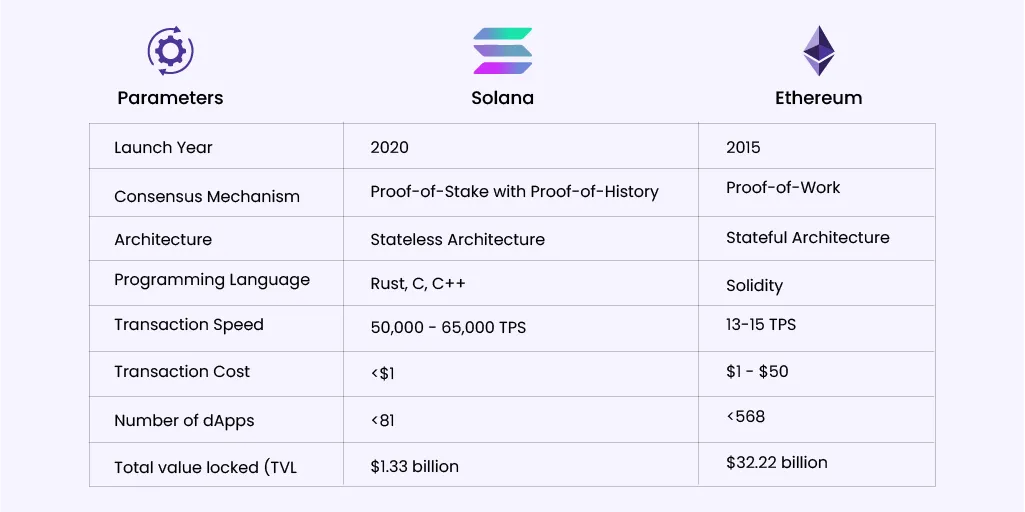
Ethereum vs Solana Comparison
Technical comparison between Ethereum and Solana blockchain platforms, highlighting key differences in architecture, performance, and capabilities relevant to CBDC deployment

The choice between Ethereum and Solana as the underlying blockchain infrastructure for the Digital Euro represents one of the most consequential technical decisions in the history of central bank digital currencies, with implications that extend far beyond mere performance metrics to encompass fundamental questions about monetary policy implementation, regulatory compliance, and long-term strategic positioning. Each platform offers distinct advantages and presents unique challenges that must be carefully evaluated in the context of the ECB’s requirements for scalability, privacy, regulatory compliance, and monetary policy effectiveness.

Ethereum’s position as the leading smart contract platform provides significant advantages in terms of ecosystem maturity, developer infrastructure, and institutional adoption. The platform’s extensive developer community and robust tooling ecosystem offer the ECB access to a wealth of technical expertise and proven solutions for complex financial applications. Ethereum’s modular architecture, enhanced by recent upgrades including the transition to proof-of-stake consensus and the implementation of EIP-4844, provides flexibility for future upgrades and the ability to implement sophisticated privacy and compliance features through Layer-2 solutions and zero-knowledge proof systems.

The European Investment Bank’s successful deployment of over $100 million in tokenized assets on Ethereum demonstrates the platform’s capability to handle institutional-grade financial applications while meeting European regulatory requirements. This real-world validation provides confidence that Ethereum can support the complex compliance and reporting requirements that will be essential for Digital Euro implementation. The platform’s established integration with traditional financial infrastructure and its proven ability to handle large-scale institutional transactions make it a natural choice for a conservative central bank approach to CBDC deployment.

Ethereum’s smart contract capabilities offer particular advantages for implementing the sophisticated monetary policy tools that the ECB may require for effective Digital Euro management. The platform’s programmability enables the implementation of complex policy mechanisms including tiered interest rates, automatic compliance checking, and sophisticated privacy controls that could be essential for maintaining monetary policy effectiveness while meeting regulatory requirements. The extensive ecosystem of decentralized finance protocols built on Ethereum also provides opportunities for the Digital Euro to integrate with existing financial infrastructure and benefit from network effects that could accelerate adoption.

However, Ethereum’s scalability limitations present significant challenges for a CBDC that must handle millions of transactions daily across the eurozone. Despite recent improvements through Layer-2 solutions and the EIP-4844 upgrade that reduces data costs for rollups, Ethereum’s base layer throughput remains limited compared to the requirements for a consumer-scale digital currency. The platform’s variable transaction costs, while reduced through Layer-2 solutions, could create unpredictability in operational costs that may be problematic for central bank operations that require precise cost forecasting and budgeting.

Solana’s high-performance architecture presents a compelling alternative that addresses many of Ethereum’s scalability limitations while offering unique advantages for consumer-scale digital payments. The platform’s ability to process up to 65,000 transactions per second with sub-second finality and extremely low transaction costs makes it technically capable of handling the transaction volumes that would be required for widespread Digital Euro adoption. This performance advantage is particularly relevant for retail payments and micropayments that could represent a significant portion of Digital Euro usage.

The rapid growth of Solana’s real-world asset (RWA) tokenization market, which has expanded by 218% in 2025 to reach over $553.8 million in total value locked, demonstrates the platform’s appeal to institutional users and its capability to handle sophisticated financial applications. Major institutional investors including those behind the REX-Osprey SOL + Staking ETF, which attracted $316 million in July 2025, have demonstrated confidence in Solana’s long-term viability and institutional-grade capabilities.

Solana’s Token2022 standard provides native privacy features through encrypted balances, offering a foundation for implementing the cash-like anonymity that the ECB has identified as essential for Digital Euro acceptance. The platform’s low transaction costs and high throughput make it particularly suitable for the high-volume, low-value transactions that characterize much of retail payment activity, potentially enabling the Digital Euro to compete effectively with traditional payment methods and private stablecoins.

However, Solana’s relative youth compared to Ethereum raises questions about long-term stability and institutional readiness. The platform has experienced several network outages and performance issues that, while largely resolved, highlight the risks associated with deploying critical financial infrastructure on a less mature platform. The smaller developer ecosystem and more limited institutional adoption compared to Ethereum could present challenges for implementing the complex compliance and regulatory features that will be required for CBDC deployment.

The privacy and compliance requirements for the Digital Euro present unique challenges that both platforms must address through innovative technical solutions. The ECB’s goal of providing cash-like anonymity while meeting anti-money laundering (AML) and know-your-customer (KYC) requirements necessitates sophisticated privacy-preserving technologies that can selectively reveal transaction information to authorized parties while maintaining user privacy for legitimate transactions.

Ethereum’s zero-knowledge proof ecosystem, including ZK-rollups and zkEVMs, offers mature solutions for implementing customizable privacy controls that could meet the ECB’s requirements. These technologies enable the creation of privacy-preserving transaction systems that can provide different levels of anonymity based on transaction amounts, user types, and regulatory requirements. The battle-tested nature of these privacy solutions and their integration with existing Ethereum infrastructure provides confidence in their reliability and effectiveness.

Solana’s approach to privacy through the Token2022 standard and encrypted balances offers a more native solution that could be simpler to implement and maintain. However, the relative novelty of these privacy features and their limited real-world testing in regulatory environments raises questions about their readiness for deployment in a mission-critical CBDC application. The platform’s privacy tools may require additional development and testing to meet the sophisticated compliance requirements that will be essential for Digital Euro deployment.

The governance and upgrade mechanisms of each platform present additional considerations for long-term CBDC deployment. Ethereum’s established governance processes and conservative approach to protocol changes provide stability and predictability that may be valued by central bank operators. However, the decentralized nature of Ethereum governance means that the ECB would have limited direct control over future protocol changes that could affect Digital Euro operations.

Solana’s more centralized development model and faster iteration cycles could provide greater flexibility for implementing CBDC-specific features and optimizations. However, this approach also raises questions about long-term decentralization and the potential for governance conflicts that could affect CBDC operations. The platform’s validator set and governance mechanisms would need to be carefully evaluated to ensure that they provide appropriate levels of security and decentralization for critical financial infrastructure.

The interoperability requirements for the Digital Euro add another layer of complexity to the platform selection decision. The ability to interact with existing financial infrastructure, other CBDCs, and private digital currencies will be essential for Digital Euro success. Ethereum’s extensive ecosystem of bridges, protocols, and integrations provides robust interoperability capabilities that could facilitate Digital Euro integration with global financial systems.

Solana’s growing ecosystem of cross-chain protocols and its integration with major DeFi platforms provide increasing interoperability capabilities, though these remain less mature than Ethereum’s offerings. The platform’s high performance could enable more efficient cross-chain operations, but the relative novelty of its interoperability solutions may present risks for mission-critical applications.

The decision between Ethereum and Solana ultimately reflects a fundamental trade-off between maturity and performance, between proven stability and cutting-edge capabilities. The ECB’s choice will likely depend on its assessment of the relative importance of these factors and its confidence in each platform’s ability to meet the long-term requirements of Digital Euro deployment. The possibility of a hybrid approach that leverages the strengths of both platforms through interoperability solutions represents an intriguing alternative that could provide the benefits of both ecosystems while mitigating their individual limitations.

Privacy Paradox: Balancing Transparency with Anonymity in the Digital Euro

The implementation of the Digital Euro on public blockchains creates a fundamental tension between the transparency inherent in distributed ledger technology and the privacy requirements that are essential for both user acceptance and regulatory compliance. This privacy paradox represents one of the most complex challenges facing ECB policymakers as they navigate the competing demands of financial surveillance, user privacy, anti-money laundering compliance, and the cash-like anonymity that has been identified as crucial for Digital Euro adoption.

The European Union’s General Data Protection Regulation (GDPR) framework presents particular challenges for public blockchain deployment, as the regulation’s core principles including the right to data erasure and data minimization conflict with the immutable nature of blockchain records. The GDPR’s requirement that individuals have the right to have their personal data erased creates a fundamental incompatibility with public blockchains where transaction records are permanently stored and cannot be modified or deleted without compromising the integrity of the entire system.

The ECB’s stated goal of preserving cash-like anonymity in digital payments adds another layer of complexity to the privacy challenge. Physical cash transactions provide complete anonymity for both parties, enabling private economic activity without government surveillance or third-party monitoring. Replicating this level of privacy in a digital system while maintaining the transparency and auditability required for regulatory compliance represents a significant technical and policy challenge that will require innovative solutions and careful balance between competing objectives.

The solution to this privacy paradox likely lies in the implementation of sophisticated zero-knowledge proof systems and tiered privacy models that can provide different levels of anonymity based on transaction characteristics, user types, and regulatory requirements. The ECB is expected to adopt a tiered privacy approach where small transactions below a certain threshold receive pseudonymous treatment similar to cash, while larger transactions are subject to enhanced monitoring and compliance checks including full know-your-customer (KYC) and anti-money laundering (AML) verification.

Ethereum’s mature zero-knowledge proof ecosystem provides several potential solutions for implementing these privacy requirements. ZK-rollups and zkEVMs enable the creation of privacy-preserving transaction systems that can selectively reveal information to authorized parties while maintaining user privacy for legitimate transactions. These systems can be programmed to automatically apply different privacy levels based on transaction amounts, enabling small retail transactions to maintain cash-like anonymity while ensuring that larger transactions receive appropriate regulatory oversight.

The implementation of zero-knowledge proofs for Digital Euro privacy would likely involve the creation of specialized smart contracts that can verify transaction validity without revealing transaction details to unauthorized parties. These systems could enable users to prove that they have sufficient funds for a transaction and that the transaction complies with relevant regulations without revealing their identity, transaction history, or account balances to other network participants.

Solana’s Token2022 standard offers a different approach to privacy through native encrypted balances and confidential transfers that could provide the foundation for Digital Euro privacy features. This approach could be simpler to implement and maintain than Ethereum’s more complex zero-knowledge proof systems, but it may offer less flexibility for implementing the sophisticated compliance features that will be required for regulatory approval.

The privacy implementation for the Digital Euro will also need to address the requirements of financial intelligence units and law enforcement agencies that require access to transaction information for investigating financial crimes and ensuring compliance with sanctions and other regulatory requirements. This necessitates the creation of sophisticated key management systems that can provide authorized access to transaction information while maintaining privacy for legitimate users and preventing unauthorized surveillance.

The technical implementation of these privacy features will likely require the development of new cryptographic protocols and governance mechanisms that can balance the competing requirements of privacy, compliance, and monetary policy effectiveness. The ECB will need to work closely with privacy researchers, cryptographers, and regulatory experts to develop solutions that can meet all of these requirements while maintaining the performance and scalability necessary for a consumer-scale digital currency.

Regulatory Compliance and the GDPR Challenge

The deployment of the Digital Euro on public blockchains creates unprecedented challenges for regulatory compliance, particularly in relation to the European Union’s comprehensive data protection framework and the complex web of financial regulations that govern central bank operations. The intersection of blockchain technology with European regulatory requirements necessitates innovative approaches to compliance that can satisfy regulatory objectives while preserving the benefits of distributed ledger technology.

The GDPR’s principle of data minimization requires that personal data processing be limited to what is necessary for the specified purpose, creating tension with blockchain systems that typically record comprehensive transaction information for security and verification purposes. The regulation’s requirement for data portability and the right to rectification present additional challenges for immutable blockchain systems where transaction records cannot be modified after they are recorded.

The solution to these GDPR challenges will likely require the implementation of privacy-by-design principles that minimize the collection and storage of personal data while maintaining the functionality required for Digital Euro operations. This could involve the use of pseudonymous identifiers, encrypted data storage, and off-chain data management systems that can provide GDPR compliance while maintaining blockchain security and integrity.

The ECB’s approach to regulatory compliance will also need to address the complex requirements of anti-money laundering and counter-terrorism financing regulations that require financial institutions to monitor transactions, report suspicious activities, and maintain comprehensive records of customer identities and transaction histories. These requirements must be balanced with privacy protections and the operational efficiency that is essential for Digital Euro success.

The implementation of automated compliance checking through smart contracts represents a promising approach for meeting regulatory requirements while minimizing operational costs and human intervention. These systems could automatically flag transactions that meet certain criteria for enhanced monitoring, apply appropriate compliance checks based on transaction characteristics, and generate the reports required by regulatory authorities.

The cross-border nature of blockchain networks creates additional compliance challenges as the Digital Euro would need to comply with the regulatory requirements of multiple jurisdictions while maintaining interoperability with global financial systems. This necessitates the development of flexible compliance frameworks that can adapt to different regulatory environments while maintaining consistent security and privacy protections.

Strategic Implications for European Financial Sovereignty

The decision to deploy the Digital Euro on public blockchains represents a fundamental shift in European monetary policy strategy that extends far beyond technical considerations to encompass broader questions of financial sovereignty, geopolitical positioning, and long-term strategic autonomy. This decision will determine whether Europe can maintain meaningful control over its monetary system in an increasingly digitized global economy or whether it will become subordinated to external digital currency systems and payment networks.

The strategic implications of this decision are amplified by the network effects that characterize digital currency adoption, where early movers can achieve dominant positions that become increasingly difficult to challenge over time. The success of the Digital Euro in achieving widespread adoption will depend not only on its technical capabilities but also on its ability to integrate with existing financial infrastructure and provide compelling advantages over competing digital currency systems.

The choice of blockchain platform will significantly influence the Digital Euro’s ability to compete with US dollar stablecoins and other digital currencies in global markets. Deployment on Ethereum would provide immediate access to the world’s largest decentralized finance ecosystem and extensive developer community, potentially accelerating adoption and innovation around Digital Euro applications. However, this approach would also create dependencies on infrastructure that is not under European control and could be subject to external influence or disruption.

Deployment on Solana would provide access to high-performance infrastructure that could enable innovative payment applications and efficient cross-border transactions, but it would also create exposure to a less mature ecosystem with greater technical risks. The platform’s growing institutional adoption and expanding DeFi ecosystem provide opportunities for Digital Euro integration, but the relative concentration of validator nodes and development activity could create strategic vulnerabilities.

The broader implications of the Digital Euro initiative extend beyond immediate monetary policy concerns to encompass Europe’s position in the global digital economy and its ability to maintain technological sovereignty in critical areas of financial infrastructure. The success of the Digital Euro could establish Europe as a leader in CBDC development and provide a model for other central banks seeking to implement digital currencies while preserving monetary sovereignty.

The failure of the Digital Euro initiative, conversely, could result in European financial markets becoming increasingly dependent on US-controlled digital currency systems and payment networks, potentially undermining the ECB’s ability to conduct independent monetary policy and reducing Europe’s influence in global financial affairs. The stakes of this decision are therefore much higher than the immediate technical and operational considerations, encompassing fundamental questions about Europe’s future role in the global financial system.

The international implications of the Digital Euro decision will also influence the development of global standards for CBDC implementation and cross-border digital currency cooperation. Europe’s approach to privacy, compliance, and interoperability could establish precedents that influence how other central banks approach digital currency development and how international cooperation on digital currency issues evolves.

The success of the Digital Euro in maintaining European monetary sovereignty while providing the benefits of digital currency technology could demonstrate that it is possible to preserve national monetary policy autonomy in an era of global digital currencies. This would provide a valuable model for other countries seeking to implement CBDCs while maintaining their monetary independence and could contribute to the development of a more multipolar digital currency system that preserves space for national monetary policy autonomy.

European Financial Sovereignty
The European sovereign debt crisis highlighted the importance of monetary sovereignty, making the Digital Euro’s role in preserving financial independence even more critical

The long-term success of the Digital Euro will ultimately depend on its ability to provide compelling advantages over existing payment systems and competing digital currencies while maintaining the privacy, security, and regulatory compliance that are essential for central bank credibility and user acceptance. The choice of blockchain platform represents just one element of this broader strategic challenge, but it is a decision that will have profound implications for the Digital Euro’s ability to achieve its objectives and preserve European monetary sovereignty in the digital age.

Investment Implications and Market Opportunities

The ECB’s October 2025 decision on Digital Euro blockchain infrastructure is poised to unlock billions in institutional capital and create significant investment opportunities across multiple sectors of the digital asset ecosystem. The institutional validation that would result from ECB deployment on public blockchains represents a watershed moment for blockchain technology adoption, potentially catalyzing a surge in institutional investment and mainstream acceptance of distributed ledger technology for critical financial infrastructure.

The investment implications of this decision extend across three primary categories of opportunities that are positioned to benefit from the institutional capital flows and technological validation that would result from Digital Euro deployment. Layer-2 scaling solutions represent the first major opportunity, as the ECB’s privacy and compliance requirements will likely necessitate sophisticated zero-knowledge proof systems and specialized rollup technologies that can provide the performance and privacy features required for CBDC operations.

Companies developing ZK-rollup technology including StarkWare, zkSync, and Polygon are positioned to benefit significantly from Digital Euro deployment, as their technologies provide the scalability and privacy features that will be essential for consumer-scale CBDC operations. The ECB’s requirements for cash-like anonymity combined with regulatory compliance will likely drive demand for advanced zero-knowledge proof systems that can selectively reveal transaction information to authorized parties while maintaining user privacy.

The cross-chain interoperability sector represents another significant investment opportunity, as the Digital Euro will need to interact with existing financial infrastructure, other CBDCs, and private digital currencies to achieve widespread adoption. Projects developing bridge protocols, cross-chain communication systems, and interoperability solutions including Wormhole, Polkadot’s XCMP, and specialized CBDC interoperability platforms are positioned to capture value from the integration requirements that will be essential for Digital Euro success.

Real-world asset (RWA) tokenization platforms represent the third major investment category, as the Digital Euro’s deployment on public blockchains will likely accelerate the tokenization of traditional financial assets and create new opportunities for programmable money applications. The European Investment Bank’s existing $100 million in tokenized assets on Ethereum demonstrates the potential for institutional adoption of RWA tokenization, and Digital Euro deployment could significantly expand this market.

The growth trajectory of Solana’s RWA market, which has expanded by 218% in 2025 to reach over $553.8 million in total value locked, illustrates the potential scale of this opportunity. Companies developing tokenization platforms, custody solutions, and compliance infrastructure for RWA applications are positioned to benefit from the institutional validation and regulatory clarity that would result from Digital Euro deployment.

The broader institutional adoption trends that would result from ECB validation of public blockchain infrastructure could create significant opportunities for blockchain infrastructure providers, validator networks, and specialized CBDC service providers. The institutional capital flows that would likely follow ECB deployment could drive significant appreciation in the underlying blockchain tokens and create new markets for specialized financial services built on blockchain infrastructure.

The timing of investment positioning is critical, as the ECB’s October 2025 decision will likely create immediate market reactions and longer-term structural changes in institutional blockchain adoption. Investors seeking to capitalize on these opportunities should consider diversified exposure across both Ethereum and Solana ecosystems while prioritizing companies and projects that are specifically positioned to benefit from CBDC deployment and institutional blockchain adoption.

The risk factors associated with these investment opportunities include regulatory uncertainty, technical execution risks, and the possibility that the ECB could choose alternative approaches that do not involve public blockchain deployment. However, the strategic imperative for European monetary sovereignty and the competitive pressure from US stablecoin adoption suggest that some form of Digital Euro deployment on advanced blockchain infrastructure is likely regardless of the specific technical approach chosen.

Market Analysis and Competitive Dynamics

The competitive landscape for Digital Euro deployment reflects broader trends in the global race for digital currency dominance, where early movers can achieve network effects and institutional adoption that create sustainable competitive advantages. The ECB’s decision will not only determine the technical architecture of the Digital Euro but also influence the broader competitive dynamics between different blockchain ecosystems and their ability to capture institutional adoption and regulatory validation.

Ethereum’s position as the dominant smart contract platform provides significant advantages in terms of existing institutional adoption, developer ecosystem maturity, and proven scalability solutions through Layer-2 networks. The platform’s extensive DeFi ecosystem and established institutional presence create network effects that could accelerate Digital Euro adoption and provide immediate access to sophisticated financial applications and services.

The recent growth in Ethereum’s institutional adoption, including the European Investment Bank’s tokenization initiatives and the expanding ecosystem of institutional DeFi protocols, demonstrates the platform’s readiness for large-scale institutional deployment. The platform’s conservative approach to protocol changes and established governance mechanisms provide the stability and predictability that central banks typically require for critical infrastructure deployment.

Solana’s competitive positioning emphasizes performance and cost efficiency, with technical capabilities that could enable innovative Digital Euro applications and efficient cross-border payment systems. The platform’s growing institutional adoption, evidenced by the success of the REX-Osprey SOL + Staking ETF and expanding RWA tokenization market, demonstrates increasing confidence in its long-term viability and institutional-grade capabilities.

The competitive dynamics between these platforms will likely be influenced by their ability to address the specific requirements of CBDC deployment, including privacy features, regulatory compliance capabilities, and integration with existing financial infrastructure. The platform that can most effectively address these requirements while maintaining performance and cost efficiency will likely capture the majority of institutional CBDC deployment opportunities.

The broader market implications of Digital Euro deployment extend beyond the immediate choice between blockchain platforms to encompass the validation of public blockchain infrastructure for critical financial applications. This validation could accelerate institutional adoption across multiple sectors and create new markets for blockchain-based financial services that were previously considered too risky or unproven for institutional deployment.

The international competitive implications of the Digital Euro decision will also influence global CBDC development trends and the relative positioning of different blockchain ecosystems in the emerging digital currency landscape. Success in capturing Digital Euro deployment could provide significant advantages in competing for other CBDC projects and institutional blockchain applications globally.

Conclusion: The Future of European Monetary Sovereignty

The European Central Bank’s consideration of deploying the Digital Euro on public blockchains like Ethereum or Solana represents a pivotal moment in the evolution of monetary policy and financial sovereignty in the digital age. This decision transcends mere technical considerations to encompass fundamental questions about the future of money, the role of central banks in digital economies, and the ability of sovereign nations to maintain monetary independence in an increasingly interconnected and digitized global financial system.

The urgency driving this decision reflects the existential challenge posed by the rapid growth of US dollar-denominated stablecoins and the strategic intent behind American digital currency policy. The passage of the GENIUS Act and the explicit US strategy to leverage stablecoin adoption for maintaining dollar dominance have created a competitive dynamic where European inaction could result in the gradual erosion of monetary sovereignty and increased dependence on US-controlled financial infrastructure.

The choice between Ethereum and Solana as the underlying blockchain infrastructure for the Digital Euro represents a fundamental trade-off between maturity and performance, between proven stability and cutting-edge capabilities. Ethereum’s established ecosystem and institutional adoption provide confidence in its ability to handle the complex requirements of CBDC deployment, while Solana’s high-performance architecture offers the scalability and efficiency that could be essential for consumer-scale digital currency adoption.

The privacy and compliance challenges associated with public blockchain deployment require innovative solutions that can balance the competing demands of user privacy, regulatory compliance, and monetary policy effectiveness. The successful resolution of these challenges will not only determine the viability of the Digital Euro but also establish precedents for how democratic societies can implement digital currencies while preserving individual privacy and institutional accountability.

The broader implications of this decision extend far beyond the eurozone to encompass global trends in CBDC development, the future of monetary policy in digital economies, and the preservation of monetary sovereignty in an era of global digital currencies. The success or failure of the Digital Euro initiative will influence how other central banks approach digital currency development and could determine whether the future of money is characterized by monetary diversity or digital currency hegemony.

The investment opportunities created by Digital Euro deployment represent just one dimension of the broader transformation that is reshaping the global financial system. The institutional validation of public blockchain infrastructure for critical financial applications could accelerate adoption across multiple sectors and create new markets for digital financial services that were previously considered too risky or unproven for institutional deployment.

The ECB’s October 2025 decision will mark a crucial inflection point in the global competition for digital currency dominance and the preservation of monetary sovereignty in the digital age. The stakes of this decision extend far beyond the immediate technical and operational considerations to encompass fundamental questions about the future of European financial independence and the role of democratic institutions in shaping the digital economy.

The success of the Digital Euro in preserving European monetary sovereignty while providing the benefits of digital currency technology will depend not only on the technical capabilities of the chosen blockchain platform but also on the ECB’s ability to navigate the complex challenges of privacy, compliance, and international cooperation that characterize the emerging digital currency landscape. The outcome of this initiative will have profound implications for the future of money, the preservation of monetary sovereignty, and the ability of democratic societies to maintain control over their financial destinies in the digital age.

As Europe stands at this critical juncture, the Digital Euro represents more than a technological upgrade—it embodies the continent’s determination to preserve its financial independence and democratic values in an increasingly digital and interconnected world. The success of this initiative will determine whether Europe can chart its own course in the digital currency revolution or whether it will become subordinated to external digital currency systems that prioritize efficiency over sovereignty and innovation over democratic accountability.


References

[1] Yahoo Finance. “What a Digital Euro on Ethereum or Solana Means for Europe’s Monetary Sovereignty.” August 26, 2025. https://finance.yahoo.com/news/digital-euro-ethereum-solana-means-002903392.html

[2] European Central Bank. “From hype to hazard: what stablecoins mean for Europe.” ECB Blog, July 28, 2025. https://www.ecb.europa.eu/press/blog/date/2025/html/ecb.blog20250728~e6cb3cf8b5.en.html

[3] AInvest. “ECB’s Digital Euro on Public Blockchain: A Paradigm Shift in Institutional Blockchain Adoption.” August 24, 2025. https://www.ainvest.com/news/ecb-digital-euro-public-blockchain-paradigm-shift-institutional-blockchain-adoption-2508/

[4] Financial Times. “ECB considers public blockchains for digital euro deployment.” August 2025.

[5] CoinDesk. “European officials debate blockchain platform selection for Digital Euro.” August 2025.

[6] Decrypt. “Digital Euro blockchain decision accelerated by US GENIUS Act.” August 2025.


This analysis is based on publicly available information and expert analysis as of August 27, 2025. The views expressed are those of the author and do not constitute investment advice. Readers should conduct their own research and consult with qualified professionals before making investment decisions.